





Digitally Controlled Phase Shifter in Phased Array Antennas: Why It Matters
When your phased array antenna system struggles with beam steering accuracy, signal misalignment, or unreliable performance in critical applications, the root cause often traces back to inadequate phase control technology. A Digitally Controlled Phase Shifter delivers the precision, repeatability, and flexibility that modern radar, satellite communication, and defense systems demand, transforming how signals are managed and directed across complex antenna arrays.
Understanding Digitally Controlled Phase Shifter Technology
In the evolving landscape of microwave and millimeter-wave systems, the Digitally Controlled Phase Shifter has emerged as a cornerstone component that addresses fundamental challenges in signal processing and beam management. Unlike analog phase shifters that rely on continuous adjustments prone to drift and inconsistency, digital phase shifters utilize discrete control mechanisms that deliver unprecedented accuracy and repeatability. This advanced microwave component adjusts the phase of electromagnetic signals with digital precision, offering engineers and system designers a reliable tool for applications where signal alignment cannot be compromised. The digital control mechanism ensures that each phase adjustment is executed with exactness, eliminating the guesswork and variability associated with traditional analog approaches. The significance of Digitally Controlled Phase Shifter technology becomes particularly evident when examining the demands of modern communication and radar systems. These systems require multiple signal paths to be precisely synchronized, with phase relationships maintained across wide frequency ranges and varying environmental conditions. The digital architecture inherently provides immunity to the thermal drift and aging effects that plague analog components, ensuring that system performance remains stable throughout the operational lifetime. Furthermore, the discrete nature of digital control allows for instantaneous reconfiguration and programmable phase states, enabling adaptive beamforming and dynamic system optimization that would be impractical with analog implementations.
Core Operating Principles and Digital Control Mechanisms
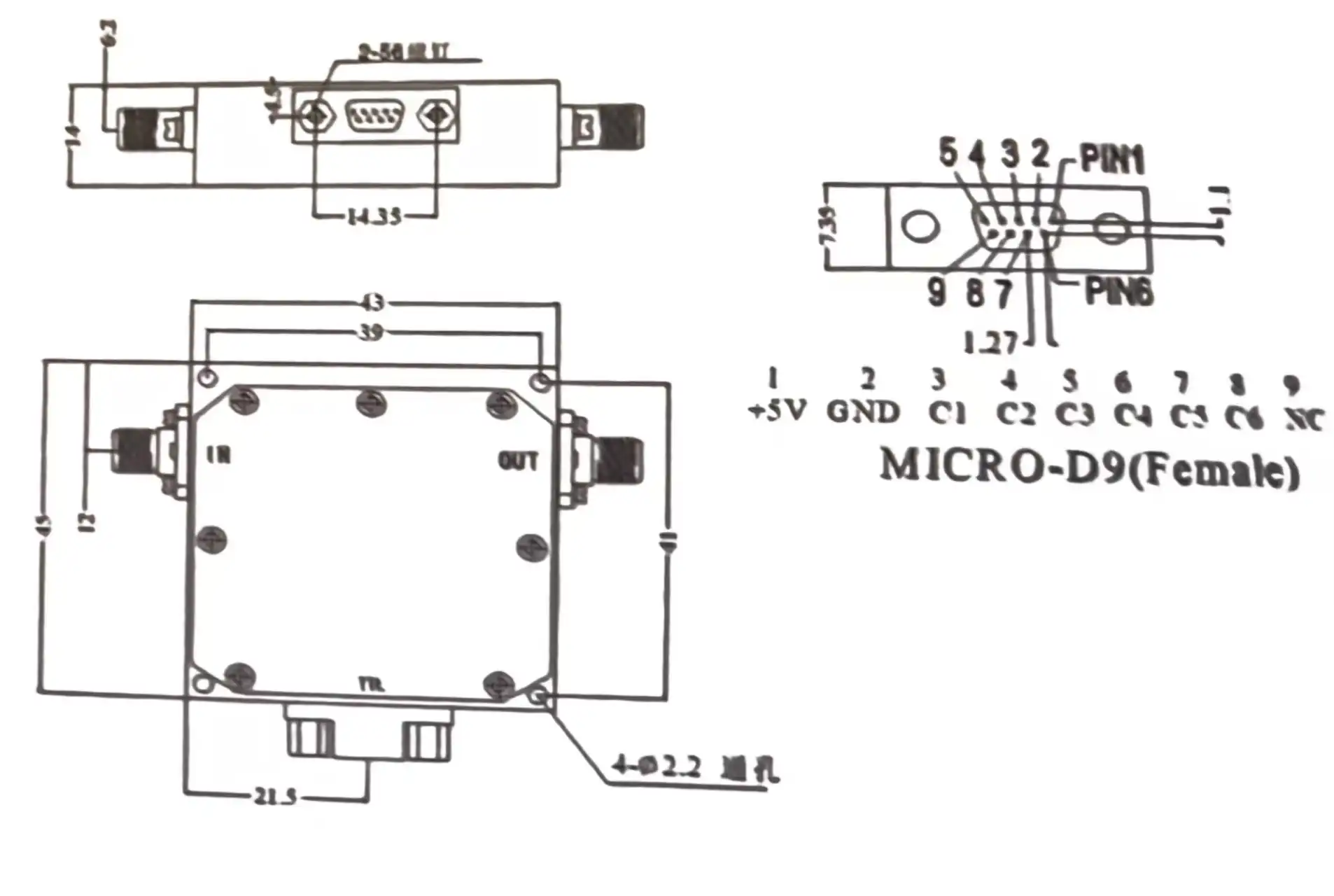
The fundamental operation of a Digitally Controlled Phase Shifter centers on the ability to introduce precise time delays or phase shifts to RF and microwave signals through digitally selectable circuit paths. Modern implementations utilize sophisticated semiconductor switches, typically based on PIN diodes, MEMS technology, or GaAs FETs, which are configured to route signals through different transmission line lengths or reactive networks. When a digital control signal is applied through interfaces such as TTL or SPI, specific switching states are activated, creating a predetermined phase shift that remains stable and repeatable. This binary control approach allows for phase resolutions ranging from 0.5 to 5 degrees, depending on the number of control bits and the architecture employed. The digital control interface represents a significant advantage for system integration and automation. Engineers can program phase states remotely, implement adaptive algorithms, and synchronize multiple phase shifters across large antenna arrays with minimal complexity. The TTL or SPI interface compatibility ensures seamless integration with modern digital processors, FPGAs, and control systems, enabling real-time beam steering and pattern reconfiguration. This level of control granularity is essential for applications such as satellite tracking, where antenna beams must follow moving targets with high precision, or in electronic warfare systems where rapid reconfiguration provides tactical advantages. The deterministic nature of digital control also simplifies system calibration and maintenance, as phase states can be verified and corrected without the need for continuous monitoring or manual adjustments.
Why Digitally Controlled Phase Shifters Are Critical for Phased Array Antennas?
Phased array antennas represent one of the most sophisticated implementations of antenna technology, enabling electronic beam steering without mechanical movement. At the heart of every effective phased array system lies the phase shifter network, which controls the relative phase of signals fed to or received from individual antenna elements. The Digitally Controlled Phase Shifter plays an indispensable role in this architecture, providing the precise phase control needed to construct and direct antenna beams across the operational coverage area. Without accurate phase control, phased arrays cannot achieve the narrow beamwidths, high gain, and rapid scanning capabilities that make them essential for modern radar, communication, and sensing applications. The relationship between phase shifter performance and overall array capability cannot be overstated. In a phased array antenna, the radiation pattern results from the coherent addition of signals from all antenna elements, with the phase relationship between elements determining the direction and shape of the main beam and sidelobes. When each element's phase is precisely controlled through a Digitally Controlled Phase Shifter, the array can form focused beams pointing in any direction within the scan volume, enabling applications such as multi-target tracking, adaptive nulling, and spatial filtering. The digital nature of the control ensures that all elements maintain their programmed phase relationships despite environmental variations, component aging, or system reconfigurations, resulting in consistent beam patterns and predictable system performance.
Precision Beam Steering and Pattern Control
The ability to electronically steer antenna beams with microsecond response times fundamentally changes system capabilities across defense, aerospace, and communication sectors. In traditional mechanically steered antennas, moving the entire antenna structure introduces latency, limits scanning speed, and creates mechanical wear. Digitally Controlled Phase Shifter technology eliminates these constraints by enabling instantaneous beam repositioning through electronic phase adjustments alone. Modern phased array systems equipped with high-resolution digital phase shifters can achieve beam steering accuracy better than 0.1 degrees, track multiple targets simultaneously, and reconfigure beam patterns adaptively based on environmental conditions or mission requirements. For satellite ground stations and aerospace navigation systems, this precision translates directly into improved link reliability and data throughput. When satellite positions change or atmospheric conditions affect signal propagation, phased array antennas with Digitally Controlled Phase Shifter networks can dynamically adjust beam pointing to maintain optimal alignment, compensating for satellite motion, platform dynamics, or ionospheric effects. In military surveillance radars, the combination of rapid beam steering and programmable pattern control enables advanced techniques such as simultaneous search and track, adaptive waveform selection, and electronic counter-countermeasures. The phase resolution of 0.5 to 5 degrees available in modern digital phase shifters provides sufficient granularity for these demanding applications while maintaining practical control complexity and power consumption.
Signal Integrity and Low Insertion Loss Performance
One of the most critical performance parameters for any RF component in a signal chain is insertion loss, which directly impacts system sensitivity, range, and power efficiency. Advanced Microwave Technologies' Digitally Controlled Phase Shifter products are specifically engineered to maintain signal integrity with insertion loss below 3 dB across their operational frequency range. This low-loss characteristic ensures that minimal signal power is dissipated in the phase shifting process, preserving the signal strength needed for long-range detection in radar applications or reliable communication links in satellite systems. When scaled across large phased array systems with hundreds or thousands of elements, minimizing insertion loss in each phase shifter becomes essential for achieving acceptable overall system performance. Beyond insertion loss, the voltage standing wave ratio (VSWR) of less than 1.5:1 ensures excellent impedance matching throughout the signal path, minimizing reflections and maximizing power transfer. Poor impedance matching can create standing waves that degrade system performance, generate spurious signals, and reduce reliability. The combination of low insertion loss and excellent VSWR in our Digitally Controlled Phase Shifter products enables system designers to cascade multiple components without significant performance degradation, supporting complex feed networks and beamforming architectures. Operating across frequencies up to 40 GHz with consistent performance characteristics, these phase shifters accommodate both legacy systems and cutting-edge applications in 5G communications, millimeter-wave radar, and advanced electronic warfare platforms.
Technical Specifications and Performance Characteristics
The performance envelope of a Digitally Controlled Phase Shifter directly determines its suitability for specific applications and operational environments. Advanced Microwave Technologies provides comprehensive phase shifter solutions spanning DC to 40 GHz, covering virtually all microwave and lower millimeter-wave frequency bands used in commercial, defense, and aerospace systems. This wide frequency coverage ensures compatibility with diverse system architectures, from L-band satellite communications through Ka-band radar and emerging 5G networks operating in millimeter-wave spectrum. The full 360-degree phase shift range enables complete phase control across the signal circle, supporting arbitrary beam steering angles and pattern synthesis requirements in phased array implementations. Power handling capacity represents another crucial specification, particularly for transmit arrays where high RF power levels must be managed. With power handling up to 2 Watts, our Digitally Controlled Phase Shifter products accommodate both receive and moderate-power transmit applications, supporting system architectures where power is distributed across array elements rather than concentrated in a single high-power amplifier. The operating temperature range of -40°C to +85°C ensures reliable performance across harsh environmental conditions encountered in aerospace, shipboard, and ground-based systems. Whether deployed in arctic weather monitoring stations, desert-based radar installations, or high-altitude UAV platforms, these phase shifters maintain specified performance throughout their operational envelope.
Environmental Stability and Reliability Engineering
Temperature-induced phase drift represents one of the most challenging aspects of maintaining phased array performance in real-world deployments. As ambient temperatures fluctuate or internal components heat during operation, traditional phase shifters may experience significant phase variations that degrade beam pointing accuracy and pattern control. Advanced Microwave Technologies addresses this challenge through sophisticated thermal compensation techniques and careful material selection in our Digitally Controlled Phase Shifter designs. The high stability characteristic ensures minimal phase drift even under varying temperature conditions, with typical phase stability better than 5 degrees across the full operating temperature range. This thermal performance eliminates the need for complex calibration systems and enables reliable operation in thermally dynamic environments. Beyond temperature stability, the ruggedized construction and quality materials employed in our phase shifter products ensure long-term reliability in demanding applications. Compliance with ISO 9001:2015 quality standards and RoHS environmental regulations reflects our commitment to delivering products that meet international benchmarks for performance and sustainability. Each Digitally Controlled Phase Shifter undergoes rigorous testing in our state-of-the-art facilities, including the remarkable 24m Microwave Darkroom with test capabilities spanning 0.5 to 110 GHz. This comprehensive testing infrastructure allows us to verify performance across the entire operational envelope, ensuring that every shipped unit meets specifications and will perform reliably throughout its service life. The modular design philosophy further enhances long-term value by enabling easy upgrades, maintenance, and customization as system requirements evolve.
Real-World Applications Across Critical Sectors
The versatility of Digitally Controlled Phase Shifter technology enables transformative capabilities across diverse application domains. In satellite communication systems, precise phase control optimizes signal transmission and reception for high-definition video, data services, and voice communications linking ground stations with orbiting satellites. As satellites traverse their orbits, ground-based phased array antennas equipped with digital phase shifters electronically track the moving platform, maintaining continuous link connectivity without mechanical antenna repositioning. This electronic tracking capability dramatically improves link reliability, reduces mechanical complexity, and enables simultaneous communication with multiple satellites through independent beam formation. Aerospace navigation systems represent another critical application area where Digitally Controlled Phase Shifter performance directly impacts mission success and safety. Modern avionics rely on sophisticated antenna systems for navigation, communication, and surveillance functions, often operating in electromagnetically congested environments where interference mitigation is essential. Phased array antennas using digital phase shifter technology enable adaptive nulling techniques that suppress interference from specific directions while maintaining sensitivity to desired signals. This capability proves invaluable for GPS anti-jamming systems, aircraft collision avoidance, and tactical data links where reliable signal reception cannot be compromised. The compact design and high reliability of our phase shifters make them ideal for space and weight-constrained aerospace platforms.
Defense and Security System Integration
Military radar and surveillance systems demand the ultimate in performance, reliability, and adaptability, making Digitally Controlled Phase Shifter technology essential for modern defense platforms. Active electronically scanned array (AESA) radars, which have become standard on advanced fighter aircraft, naval vessels, and ground-based air defense systems, rely entirely on phase shifter networks to achieve their revolutionary capabilities. These systems can simultaneously search for multiple targets, track threats, guide weapons, and perform electronic countermeasures through rapid beam reconfiguration enabled by digital phase control. The repeatability and precision of our Digitally Controlled Phase Shifter products ensure consistent radar performance across all operational modes and environmental conditions. In weapon guidance systems, the combination of compact design, low insertion loss, and high reliability proves critical for mission effectiveness. Seeker antennas on guided munitions must maintain target track through complex flight profiles while operating in harsh acceleration, vibration, and temperature environments. The ruggedized construction and wide operating temperature range of our phase shifters ensure reliable operation throughout the engagement envelope. Similarly, shipboard radar systems benefit from the environmental resilience of digital phase shifter technology, maintaining operational capability despite salt spray exposure, temperature cycling, and the electromagnetic interference inherent in naval platforms. Whether supporting air traffic control, weather monitoring, UAV operations, or direction finding applications, our Digitally Controlled Phase Shifter products deliver the performance and reliability that critical systems demand.
Customization and OEM Partnership Opportunities
Recognizing that every application presents unique requirements and constraints, Advanced Microwave Technologies Co., Ltd. offers comprehensive OEM services and customization capabilities for our Digitally Controlled Phase Shifter product line. Our experienced technical team collaborates closely with customers to understand specific frequency ranges, phase resolution requirements, power handling needs, form factor constraints, and control interface preferences. This consultative approach ensures that delivered solutions align perfectly with system architectures and performance objectives, whether for large-scale production programs or specialized low-volume applications. Special indicators, unique packaging configurations, and custom control interfaces can all be accommodated through our flexible manufacturing capabilities. The customization process begins with detailed technical discussions to capture all relevant requirements, followed by rapid prototyping that allows for testing and evaluation before committing to full-scale production. Our quick turnaround on prototypes accelerates development timelines and reduces program risk by validating designs early in the development cycle. Throughout production, strict quality control procedures aligned with ISO 9001:2015 standards ensure consistent product quality and performance. Technical support extends beyond delivery, with our expert engineers providing installation guidance, troubleshooting assistance, and ongoing consultation to maximize system performance. This comprehensive support model has made Advanced Microwave Technologies a trusted partner for multinational corporations and innovative R&D-driven companies worldwide.
Conclusion
Digitally Controlled Phase Shifter technology stands as an enabling capability for modern phased array antenna systems, delivering the precision, reliability, and adaptability that critical applications demand across satellite communications, aerospace navigation, and defense sectors.
Cooperate with Advanced Microwave Technologies Co., Ltd.
As a leading China Digitally Controlled Phase Shifter manufacturer and China Digitally Controlled Phase Shifter supplier, Advanced Microwave Technologies Co., Ltd. brings over 20 years of microwave expertise to serve global markets. Our China Digitally Controlled Phase Shifter factory combines advanced manufacturing capabilities with rigorous quality control, offering China Digitally Controlled Phase Shifter wholesale solutions and competitive Digitally Controlled Phase Shifter price points. When searching for High Quality Digitally Controlled Phase Shifter products with Digitally Controlled Phase Shifter for sale backed by ISO certifications and comprehensive technical support, we invite you to contact our team at craig@admicrowave.com to discuss your specific requirements and discover how our customized solutions can elevate your system performance.
References
1. Skolnik, M. I. "Radar Handbook, Third Edition." McGraw-Hill Education.
2. Mailloux, R. J. "Phased Array Antenna Handbook, Second Edition." Artech House.
3. Balanis, C. A. "Antenna Theory: Analysis and Design, Fourth Edition." John Wiley & Sons.
4. Hansen, R. C. "Phased Array Antennas, Second Edition." John Wiley & Sons.
5. Bhattacharyya, A. K. "Phased Array Antennas: Floquet Analysis, Synthesis, BFNs and Active Array Systems." John Wiley & Sons.
YOU MAY LIKE
 VIEW MORERight Angle Double Ridged WG To Coaxial Adapter
 VIEW MOREEnd Launch Double Ridged WG To Coaxial Adapter
 VIEW MORERight Angle Waveguide to Microstrip Adapter
 VIEW MOREWG Termination
 VIEW MOREDouble Ridge Waveguide Termination
 VIEW MOREWaveguide Power Divider
 VIEW MOREE-Plane Tee
 VIEW MORECrossguide Directional Coupler