





Best Antenna Near Field Measurement Probe for 5G Testing
The rapid deployment of 5G networks has introduced unprecedented challenges in antenna testing, particularly at millimeter-wave frequencies where traditional far-field measurement techniques become impractical due to space constraints and cost limitations. Engineers developing 5G base stations, massive MIMO arrays, and beamforming systems face a critical pain point: how to accurately characterize antenna performance when far-field distances extend beyond available laboratory space. The best Antenna Near Field Measurement Probe for 5G testing must deliver precision measurements across frequencies up to 110 GHz while accommodating the complex beam patterns inherent in electronically steered arrays. This comprehensive guide examines the technical requirements, selection criteria, and performance characteristics that define superior near-field probes, enabling engineers to make informed decisions that ensure reliable 5G antenna validation and accelerate product development cycles.
Understanding Antenna Near Field Measurement Probe Technology for 5G Applications
The transition to 5G technology has fundamentally transformed antenna measurement requirements, making the Antenna Near Field Measurement Probe an indispensable tool in modern microwave laboratories. Unlike conventional far-field measurements that require distances calculated by 2D²/λ (where D is the antenna aperture and λ is wavelength), near-field techniques allow measurements at significantly reduced ranges by capturing electromagnetic field distributions close to the antenna under test and mathematically transforming them to equivalent far-field patterns. This approach proves particularly valuable for 5G applications operating in the FR2 frequency range (24.25-52.6 GHz) where massive MIMO antenna arrays can span several meters, requiring far-field distances exceeding practical laboratory dimensions. Advanced Microwave Technologies Co., Ltd. specializes in manufacturing high-precision Antenna Near Field Measurement Probes designed specifically for 5G testing environments. Our probes function as key equipment in various near-field measurement systems including planar near-field, cylindrical near-field, spherical near-field, and time-domain configurations. Each probe type serves distinct testing scenarios: planar systems excel for highly directive antennas with gains exceeding 15 dBi, cylindrical configurations provide 360-degree coverage in one coordinate plane for fan beam antennas, while spherical systems deliver complete angular coverage essential for low-gain omnidirectional antennas. The electromagnetic field sampling capabilities of these probes directly influence measurement accuracy, with our designs achieving ±0.5% measurement precision across the entire frequency spectrum from 10 MHz to 110 GHz.
The physics underlying near-field measurements involves capturing both amplitude and phase information at numerous points on a defined surface surrounding the antenna under test. The Antenna Near Field Measurement Probe acts as a highly sensitive electromagnetic sensor, detecting electric field components, magnetic field components, or both depending on probe architecture. Our dual-mode probes simultaneously measure orthogonal field polarizations, reducing measurement time by eliminating the need for probe rotation or multiple scanning passes. This efficiency becomes critical when characterizing 5G active antenna systems that may contain hundreds of radiating elements, each requiring individual calibration. The probe's receiving characteristics must be precisely known and compensated during data processing to extract the true antenna pattern, a requirement we address through pre-calibrated, traceable designs that maintain consistency across manufacturing lots and field deployments.
Technical Requirements Driving 5G Antenna Near Field Measurement Probe Design
The unique characteristics of 5G wireless technology impose stringent technical requirements on Antenna Near Field Measurement Probe design that exceed previous generation specifications. Frequency coverage represents the primary challenge, as 5G systems operate across both sub-6 GHz bands (FR1) and millimeter-wave frequencies extending to 52.6 GHz and beyond (FR2). Our probes support operations from 10 MHz to 110 GHz, encompassing all current and anticipated 5G frequency allocations plus substantial margin for next-generation 6G research. This ultra-wideband capability requires careful attention to probe aperture dimensions, with smaller waveguide openings necessary at higher frequencies to maintain appropriate spatial resolution while avoiding excessive field perturbation. The probe must sample electromagnetic fields at intervals satisfying Nyquist criteria, typically λ/2 or finer, demanding positioning accuracies better than λ/50 for accurate main beam characterization and λ/100 for precise sidelobe measurements. Dynamic range specifications pose another critical challenge in 5G antenna testing using Antenna Near Field Measurement Probe technology. Modern beamforming antennas exhibit main beam gains exceeding 30 dBi while regulatory requirements mandate sidelobe suppression below -20 dB relative to peak gain. Measuring this 50+ dB dynamic range requires probes with excellent pattern stability, minimal internal reflections, and low cross-polarization characteristics. Our high-durability composite materials provide mechanical stability that prevents pattern distortion across temperature variations and physical handling, while precision manufacturing ensures consistent electromagnetic performance. The probe's connector interfaces (SMA and N-Type options) maintain phase stability during cable flexure as the probe traverses the scanning surface, a critical factor since phase errors directly corrupt the near-field to far-field transformation algorithms.
Measurement speed considerations significantly influence Antenna Near Field Measurement Probe selection for 5G production environments. Traditional single-probe systems require sequential sampling across thousands of spatial points, with scan durations extending to hours for electrically large arrays. Multi-probe array architectures dramatically reduce test time by capturing data at multiple locations simultaneously, but introduce complexity in system calibration and data synchronization. Advanced Microwave offers both single-probe configurations optimized for research and development applications requiring maximum flexibility, and multi-element probe arrays designed for high-throughput production testing. Our probe positioning systems achieve scanning velocities up to 500 mm/second while maintaining positional accuracy better than 25 micrometers, enabling rapid data acquisition without sacrificing measurement integrity. This combination of speed and precision proves essential when characterizing 5G base station antennas during manufacturing, where test throughput directly impacts production economics.
Optimizing Antenna Near Field Measurement Probe Selection for Different 5G Test Scenarios
Selecting the optimal Antenna Near Field Measurement Probe configuration requires careful analysis of specific testing objectives, antenna characteristics, and operational constraints. For 5G base station antenna validation, planar near-field systems utilizing horn-based probes with 10-15 dBi gain provide excellent spatial filtering that rejects multipath reflections from chamber walls and fixtures. These higher-gain probes function as angular bandpass filters, accepting energy primarily from directions near boresight while attenuating signals from wide angles. This directivity proves advantageous in non-ideal measurement environments where perfect anechoic conditions prove difficult to achieve. Our standard pyramidal horn probes paired with ortho-mode transducers enable simultaneous dual-polarization measurements, capturing both vertical and horizontal field components in a single scan pass. The ortho-mode transducer splits orthogonal polarizations to separate receiver channels, maintaining high port-to-port isolation (typically >30 dB) that prevents polarization crosstalk from corrupting cross-polarization measurements critical for evaluating 5G MIMO antenna performance.
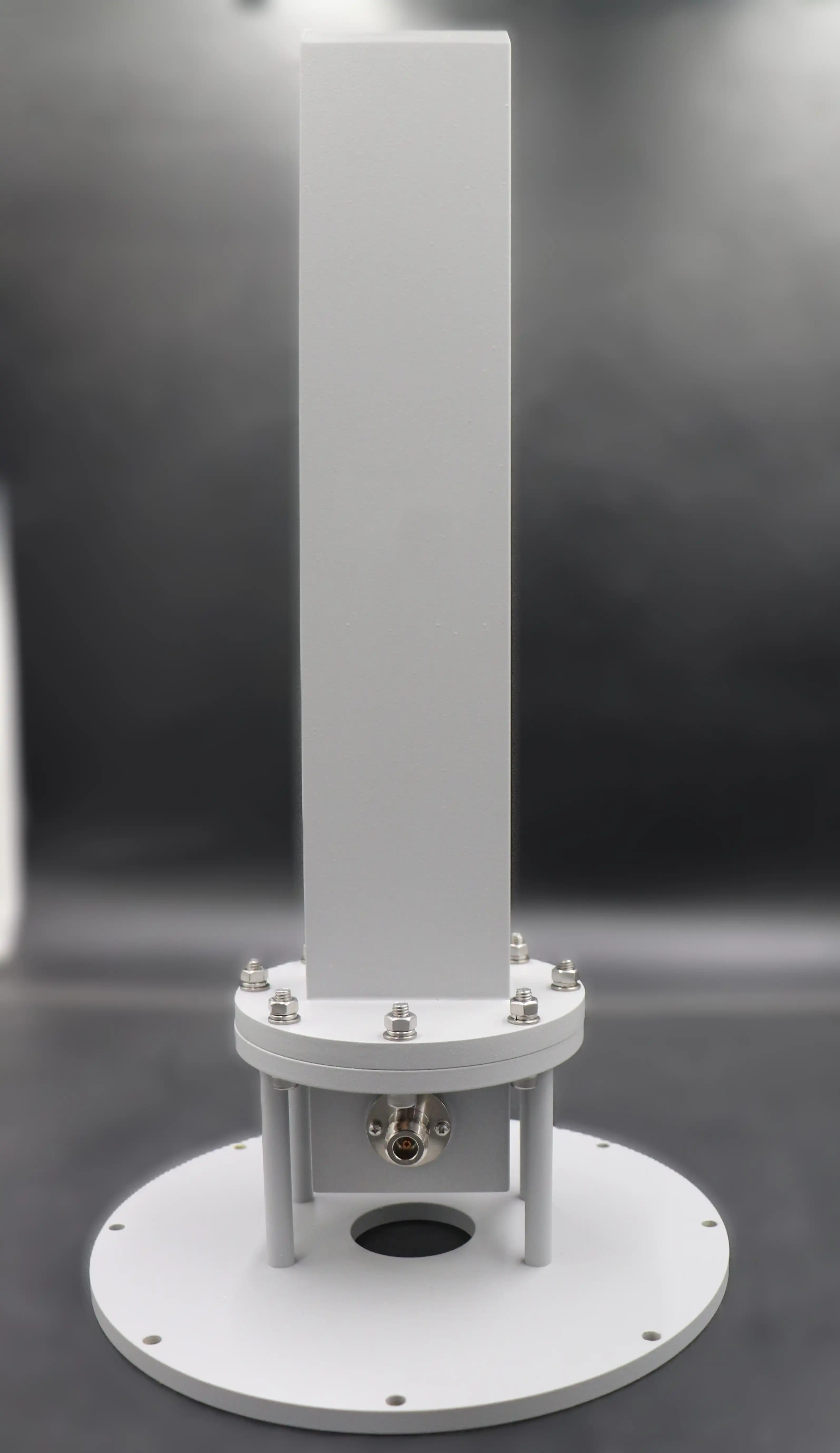
For omnidirectional and low-gain 5G antenna applications such as mobile device antennas and distributed antenna system elements, spherical near-field measurement configurations using open-ended waveguide Antenna Near Field Measurement Probes deliver superior results. These probes exhibit modest gain (approximately 6 dBi) approaching omnidirectional response across wide angular ranges, allowing the probe attitude relative to the antenna under test to vary substantially without introducing significant pattern errors. The low directivity minimizes requirements for probe pattern compensation during data processing, simplifying the near-field to far-field transformation calculations. Advanced Microwave manufactures precision open-ended waveguide probes with carefully controlled aperture dimensions that provide predictable, well-characterized patterns readily incorporated into transformation algorithms. The probes' compact physical dimensions facilitate close-proximity measurements essential when testing electrically small 5G antennas where maintaining adequate signal-to-noise ratios challenges system dynamic range capabilities.
Specialized 5G testing scenarios such as active antenna system characterization and over-the-air performance validation require customized Antenna Near Field Measurement Probe configurations. Active antenna systems integrate radio frequency front-ends directly with antenna elements, eliminating traditional RF connectors that would enable conducted testing. These systems must be characterized wirelessly using probe-based near-field techniques, but the antenna behavior changes dynamically based on beamforming control settings. Our probes support both transmission and reception modes, enabling measurement of antenna radiation patterns (probe receiving) and antenna sensitivity patterns (probe transmitting). For production testing environments requiring high throughput, our multi-probe array systems position multiple Antenna Near Field Measurement Probes around the device under test, simultaneously capturing near-field data that reduces total test time by factors of ten or more compared to sequential single-probe scanning. This parallel measurement approach proves essential for cost-effective manufacturing of 5G equipment where test time directly impacts production capacity and product pricing.
Advanced Measurement Capabilities Enabled by High-Performance Antenna Near Field Measurement Probes
Modern 5G antenna development demands measurement capabilities extending beyond traditional gain and pattern characterization, requiring Antenna Near Field Measurement Probe systems that support comprehensive electromagnetic analysis. Beam peak direction accuracy represents a critical parameter for beamforming antennas, as even small angular errors accumulate across coverage zones to create interference and capacity limitations. High-precision near-field measurements using our calibrated probes enable beam direction determination with accuracy better than 0.1 degrees, providing manufacturers the data necessary to optimize phase shifter settings and compensate for manufacturing variations. The probe's mechanical positioning accuracy directly influences angular resolution, with our systems maintaining repeatability within 0.01 degrees through precision motion control and laser alignment systems. This level of accuracy becomes essential when validating massive MIMO arrays containing hundreds of elements where individual element phase errors combine to produce beam pointing deviations.
Polarization purity measurements constitute another domain where superior Antenna Near Field Measurement Probe design delivers competitive advantages. Many 5G systems employ dual-polarized antenna elements to achieve spatial multiplexing gains, transmitting independent data streams on orthogonal polarizations to double spectral efficiency. Realizing these capacity improvements requires antennas with high cross-polarization discrimination, typically exceeding 25 dB across the operational beam width. Measuring cross-polarization performance demands probes with excellent inherent polarization purity, as probe cross-polarization directly contaminates measurement results. Advanced Microwave Technologies manufactures Antenna Near Field Measurement Probes with cross-polarization rejection exceeding 40 dB through careful design of feed networks and precision manufacturing of symmetric structures. Our dual-mode probes incorporate independent receive chains for orthogonal polarizations, enabling simultaneous co-polar and cross-polar measurements that fully characterize antenna polarization behavior in a single scan sequence.
Wideband modulated signal measurements represent an emerging requirement for 5G antenna testing that challenges traditional continuous-wave measurement approaches. 5G New Radio employs channel bandwidths ranging from 5 MHz in FR1 to 400 MHz in FR2, using complex modulation schemes (256-QAM) that create signals with high peak-to-average power ratios. Validating antenna performance with these realistic signals requires Antenna Near Field Measurement Probe systems supporting wideband vector signal analysis. Our probes maintain stable amplitude and phase response across instantaneous bandwidths exceeding 1 GHz, enabling capture of near-field data while the antenna under test radiates actual 5G waveforms. This capability facilitates measurements of error vector magnitude spatial distributions, revealing how antenna pattern shapes affect signal quality across coverage zones. The resulting data guides antenna designers toward configurations that minimize signal distortion while maximizing coverage uniformity, critical factors determining 5G network performance.
Overcoming Common Challenges in 5G Antenna Near Field Measurement Probe Applications
Implementing Antenna Near Field Measurement Probe systems for 5G testing presents numerous practical challenges that significantly impact measurement reliability and efficiency. Truncation errors represent one of the most common pitfalls, occurring when the scanning surface fails to capture all significant radiated energy from the antenna under test. The near-field to far-field transformation algorithms assume measured data represents the complete field distribution, and energy radiating beyond the scan boundaries aliases back into the computed far-field pattern creating artificial features. For 5G antennas with wide beamwidths or significant backlobe radiation, ensuring adequate scan area coverage requires careful planning. Advanced Microwave provides comprehensive measurement planning services, using electromagnetic simulation to predict required scan dimensions based on antenna specifications. Our engineers work closely with customers to configure probe scanning systems with sufficient measurement aperture, typically extending three to five beamwidths beyond the antenna physical aperture in all directions.
Multipath interference and reflections pose persistent challenges in near-field measurement environments, particularly at millimeter-wave frequencies where absorber performance degrades. Electromagnetic energy reflecting from chamber walls, positioning hardware, and cable assemblies combines with direct signals reaching the Antenna Near Field Measurement Probe, creating standing wave patterns that corrupt phase measurements. Our probes incorporate time-domain gating capabilities compatible with advanced measurement receivers, enabling separation of direct and reflected signal components in the temporal domain. By processing only the direct signal arrival, time-gating effectively removes multipath contributions without requiring perfect anechoic environments. This technique proves particularly valuable when conducting 5G antenna measurements in cost-constrained facilities where installing extensive absorber treatments becomes economically prohibitive. Our application engineers provide time-gate parameter optimization services, helping customers achieve optimal multipath rejection while preserving measurement bandwidth and spatial resolution.
Probe-antenna interaction effects introduce systematic errors that become increasingly problematic at shorter measurement distances typical of compact near-field ranges. The Antenna Near Field Measurement Probe presents a scattering obstacle that perturbs the field being measured, with perturbation magnitude increasing as probe size approaches the wavelength and distance to the antenna under test decreases. Advanced Microwave addresses this challenge through multiple approaches: electrically small probe designs minimize scattering cross-sections, careful probe orientation maintains symmetry that simplifies correction algorithms, and comprehensive probe characterization provides accurate scattering models incorporated into data processing. Our high-durability composite materials offer advantageous electromagnetic properties, presenting minimal dielectric loading while maintaining mechanical robustness necessary for production environments. For applications requiring absolute minimum interaction, our ultra-compact millimeter-wave probes reduce effective scattering areas to levels where interaction effects fall below measurement uncertainty floors determined by system noise and positioning accuracy.
Integrating Antenna Near Field Measurement Probe Systems with Modern 5G Test Infrastructure
Successful deployment of Antenna Near Field Measurement Probe technology requires seamless integration with comprehensive test infrastructure encompassing signal generation, data acquisition, motion control, and analysis software. Advanced Microwave offers complete turnkey measurement systems where all components are pre-integrated and validated, eliminating compatibility concerns and accelerating deployment timelines. Our systems incorporate state-of-the-art vector network analyzers or signal analyzers with frequency coverage matching probe specifications, providing the dynamic range and measurement speed necessary for production testing. The signal generation subsystems support both continuous-wave and modulated signal formats, enabling characterization under conditions matching actual 5G operational scenarios. High-speed digitizers capture probe output signals with sampling rates exceeding 5 GSPS, preserving wideband signal fidelity while providing temporal resolution enabling time-domain gating for multipath rejection. Motion control systems represent critical components determining measurement throughput and accuracy when implementing Antenna Near Field Measurement Probe configurations. Our systems employ precision servo-controlled positioners with closed-loop feedback maintaining position accuracy better than 10 micrometers across the entire scanning volume. The motion controllers support multiple scanning trajectories including rectilinear raster scans optimized for planar configurations, helical paths for cylindrical systems, and coordinated multi-axis movements for spherical geometries. Scan speed optimization algorithms balance measurement time against positional settling requirements, automatically adjusting velocities based on required stopping accuracy at each measurement point. For production environments, our systems support teach-and-repeat operation where scan paths are programmed once and executed consistently across multiple units under test, ensuring measurement repeatability essential for manufacturing quality control.
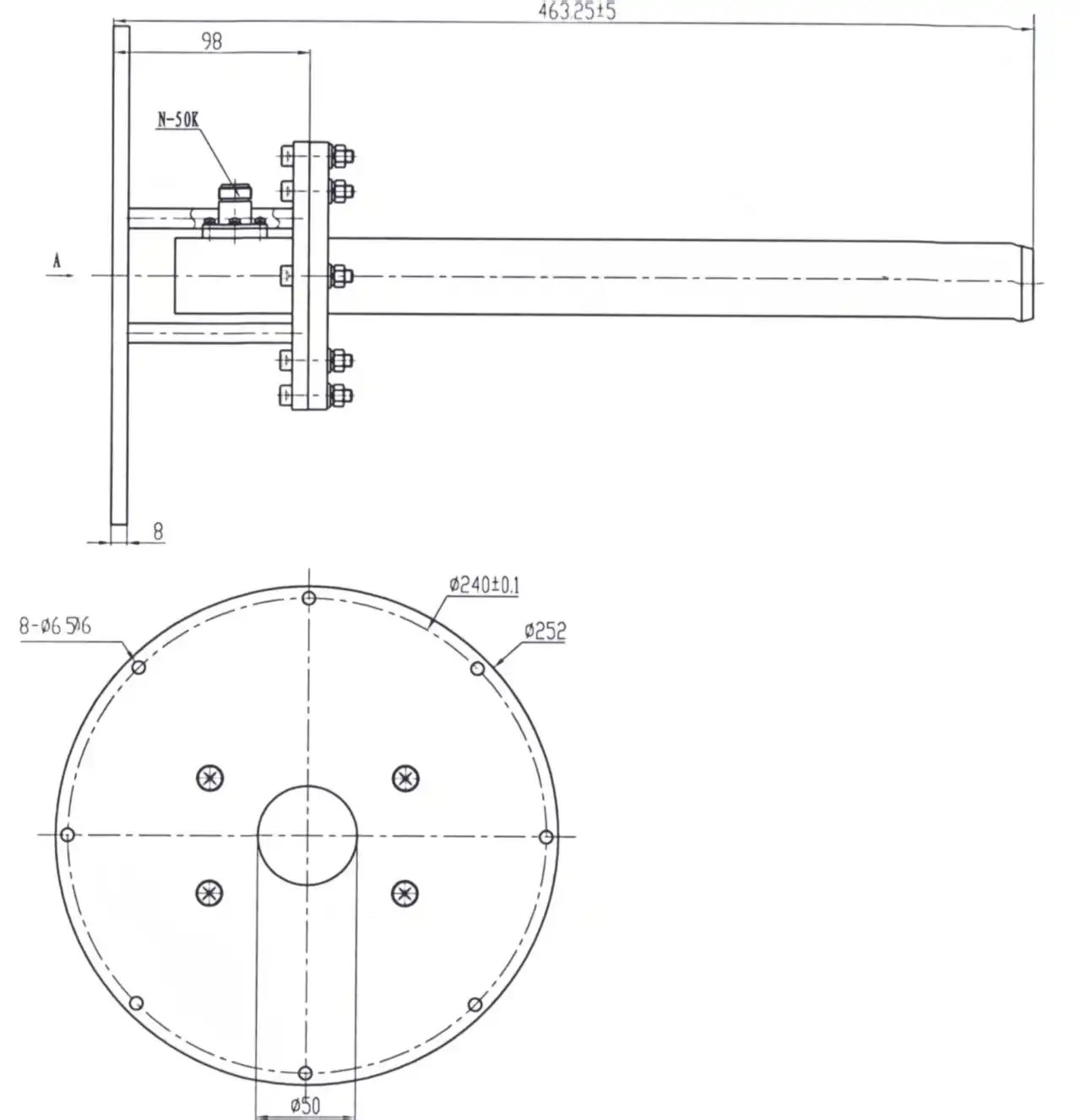
Software integration represents the final critical element transforming raw near-field data into actionable antenna performance metrics. Advanced Microwave provides comprehensive measurement software implementing proven near-field to far-field transformation algorithms validated against international standards. The software accepts near-field data from our Antenna Near Field Measurement Probe systems, applies probe pattern correction based on stored probe characterization files, performs spatial filtering to manage truncation errors, and computes far-field antenna patterns through Fast Fourier Transform techniques. Advanced visualization tools present three-dimensional pattern data as polar plots, rectangular cuts, contour maps, and interactive 3D graphics facilitating rapid interpretation of complex beam patterns. Automated compliance testing modules compare measured performance against specifications derived from industry standards such as 3GPP requirements for 5G base stations, generating comprehensive test reports documenting conformance or identifying deviations requiring corrective action. This integrated approach transforms complex near-field measurements into practical engineering data guiding product development and manufacturing decisions.
Cost-Benefit Analysis of Advanced Antenna Near Field Measurement Probe Investments for 5G Development
Organizations developing 5G products face important decisions regarding test equipment investments, balancing capabilities against budgets. High-performance Antenna Near Field Measurement Probe systems represent significant capital expenditures, but deliver compelling value propositions through multiple mechanisms. Eliminating far-field range requirements provides immediate facility cost savings, as near-field systems operate in compact anechoic chambers requiring 90% less volume than equivalent far-field ranges. For organizations testing antennas at millimeter-wave frequencies where far-field distances extend tens of meters, this space reduction translates to facility construction savings exceeding millions of dollars. Our 24-meter Microwave Darkroom exemplifies state-of-the-art near-field facilities, providing precise measurement capabilities from 500 MHz to 110 GHz in a compact footprint supporting both research and production applications. The controlled environment enables year-round testing independent of weather conditions affecting outdoor ranges, improving schedule predictability and accelerating development cycles. Measurement time reductions enabled by advanced Antenna Near Field Measurement Probe configurations directly improve engineering productivity and manufacturing throughput. Traditional far-field measurements require rotating the antenna under test through elevation and azimuth angles, with mechanical settling times between measurement points limiting overall scan duration. Near-field systems with stationary antennas and rapidly scanning probes achieve equivalent angular sampling in fraction of the time. Our multi-probe array systems further accelerate testing through parallel data acquisition, reducing characterization time for massive MIMO arrays from hours to minutes. For production environments processing hundreds of units daily, these time savings multiply into substantial capacity increases without proportional labor cost growth. Organizations can defer expensive facility expansions by implementing efficient test systems that maximize utilization of existing infrastructure.
Risk mitigation represents another critical value driver for quality Antenna Near Field Measurement Probe systems in 5G product development. Inaccurate antenna measurements lead to costly design iterations, delayed product launches, and potential field failures after deployment. Our ISO 9001:2015 certified manufacturing processes ensure consistent probe performance meeting published specifications, while pre-calibration and traceability to national standards provide confidence in measurement accuracy. The ±0.5% measurement uncertainty achievable with our probes enables early detection of subtle antenna performance deviations before they propagate through production volumes. This quality assurance capability proves particularly valuable for 5G equipment where regulatory compliance testing adds months to product launch timelines and certification failures force expensive redesigns. Investing in proven measurement solutions from established manufacturers like Advanced Microwave Technologies reduces technical risks while demonstrating due diligence to customers and regulatory authorities.
Conclusion
Selecting the best Antenna Near Field Measurement Probe for 5G testing demands careful evaluation of technical specifications, application requirements, and long-term strategic objectives. Superior probes deliver precision measurements across ultra-wide frequency ranges, support multiple scanning geometries, and integrate seamlessly with comprehensive test infrastructure.
Cooperate with Advanced Microwave Technologies Co., Ltd.
Partner with Advanced Microwave Technologies Co., Ltd., your trusted China Antenna Near Field Measurement Probe manufacturer, supplier, and factory offering wholesale High Quality Antenna Near Field Measurement Probe for sale at competitive prices. With over 20 years of expertise, ISO certifications, and a 24m Microwave Darkroom testing facility, we deliver customized OEM solutions with fast delivery and comprehensive after-sales support. Contact craig@admicrowave.com today for inquiries. Bookmark this resource for future reference when optimizing your 5G antenna measurement capabilities.
References
1. Joy, E. B., & Paris, D. T. (1988). "Spatial Sampling and Filtering in Near-Field Measurements." IEEE Transactions on Antennas and Propagation, National Institute of Standards and Technology.
2. Hansen, J. E. (Ed.). (2012). "Spherical Near-Field Antenna Measurements." IET Electromagnetic Waves Series, Institution of Engineering and Technology.
3. Yaghjian, A. D. (1986). "An Overview of Near-Field Antenna Measurements." IEEE Transactions on Antennas and Propagation, National Institute of Standards and Technology.
4. Newell, A. C., & Stubenrauch, C. F. (1984). "Effect of Random Errors in Planar Near-Field Measurement." IEEE Transactions on Antennas and Propagation, National Institute of Standards and Technology.
5. International Telecommunication Union. (2020). "Testing Methods and Measurement Requirements for 5G Base Station Antennas." ITU-R Recommendation SM Series, Spectrum Management.
YOU MAY LIKE
 VIEW MOREWaveguide Fixed Attenuator
 VIEW MOREWaveguide Probe Coupler
 VIEW MOREHigh Power Waveguide Circulator
 VIEW MOREHigh Power Waveguide Differential Phase Shift Circulator
 VIEW MOREWaveguide Variable Attenuator
 VIEW MOREHigh Power Waveguide Isolator
 VIEW MOREWG Bandpass Filter
 VIEW MOREWG Harmonic Filter