




Coaxial Detector for Nuclear Power Plants: Key Features and Selection Tips
When nuclear power plants need to watch signals and find radiation with pinpoint accuracy, choosing the right RF detector technology is a mission-critical choice. A Coaxial Detector is a special kind of RF sensor that reliably turns high-frequency microwave signals into DC or low-frequency outputs that can be measured. Compared to optical or basic diode detectors, these ones have better frequency response, better noise insulation, and the durability needed for nuclear settings where safety is very important. Advanced Microwave Technologies Co., Ltd. has designed Coaxial Detectors for these tough uses, mixing point contact diode technology with precisely matched microwave circuits to make sure signal integrity in situations where failure is not a choice.
Key Features and Performance Criteria for Nuclear Power Plant Use
When procurement engineers look at RF detectors for nuclear uses, they have to deal with a lot of different technical requirements. The stakes are especially high because a broken Coaxial Detector could put the safety system at risk or slow important repair tasks.
Sensitivity and Accuracy Benchmarks
One of the most important requirements is high awareness. Instruments used for nuclear safety often work with low-level data that need to be able to consistently pick up over background noise. Advanced Coaxial Detectors have a detection sensitivity of -45 dBm, which means the device can pick up weak signals from faraway sensors or communication lines that have been weakened. This level of sensitivity is higher than what regular diode detectors can handle. This makes Coaxial Detector technology the better choice for situations where small messages could threaten people's lives. The same is true for accuracy standards. Premium Coaxial Detectors show measurement accuracy within narrow ranges when compared to laboratory-grade spectrum analyzers. The 0.5 mV/µW sensitivity requirement means that the reaction curves will be linear and predictable, and calibration workers will be able to check and record them. This consistency makes sure that power readings stay the same across the detector's working range, which helps with proof of regulatory compliance.
Signal Processing and Interference Immunity
Heavy electrical tools, motor drives, and power transfer systems in nuclear power plants cause a lot of electromagnetic interference. Several design choices made in Coaxial Detectors help to solve these problems. The coaxial design itself shields, and the wideband matching circuits get rid of noise that isn't in the same frequency range. The detector is built with advanced signal processing methods that keep the signal quality high even when interference levels rise during equipment startup or fault situations. Pay attention to the small standing wave coefficient because it has a direct effect on how accurate measurements are. When VSWR is less than 1.5:1, there isn't much reflected power, so measurement mistakes that happen with detectors that aren't well-matched don't happen. This trait is especially useful when there are long wire runs between the signal source and the monitor, because impedance mismatches could cause a lot of Coaxial Detector doubt otherwise.
Durability and Environmental Resilience
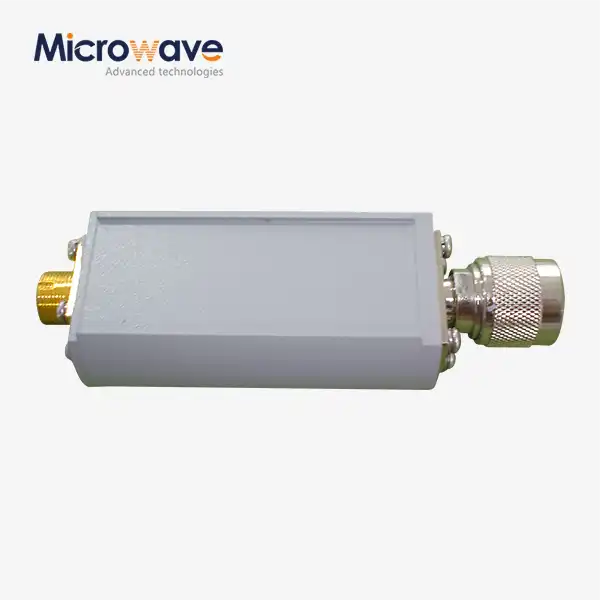
Components made for nuclear use have to be able to handle situations that would break down commercial-grade versions. Radiation hardness is the most important thing for longevity. Even though Coaxial Detectors don't directly check for nuclear radiation, they do work in places where background radiation levels are high. Over many years of use, the point contact diodes and circuit elements must not break down due to radiation. Temperature resistance deals with another hard fact. Temperatures change in containment buildings, and they also change with the seasons for open sites. Sensors that can work in a wide range of temperatures, usually from -40°C to +85°C, make sure that they always work, no matter what the weather is like outside. For types like the ADM-618CDSS, the aluminum cavity design keeps the machine stable and does a great job of managing heat. It is possible to be sure that the production processes meet international standards by making sure they follow ISO 9001:2008 quality standards and RoHS environmental rules. Because of these certificates, the quality of the products is always the same, the paperwork can be tracked, and there is less risk in buying them. When regulatory officials check your supply chain, these licenses make it easier for them to do their job and show that you did your research.
How to Choose the Best Coaxial Detector for Nuclear Power Plants
To choose the best Coaxial Detector, you need to be methodical and weigh technical performance against working needs and spending limits. We suggest an organized screening process that is similar to how good buying teams make decisions with a lot at stake.
Define Operational Scenarios and Requirements
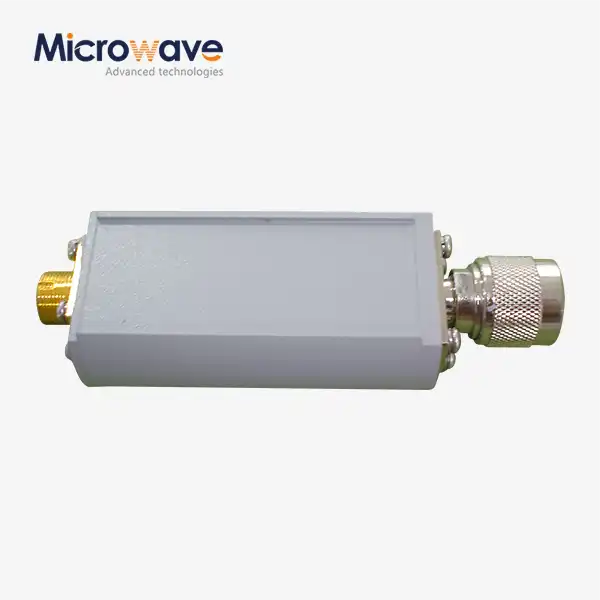
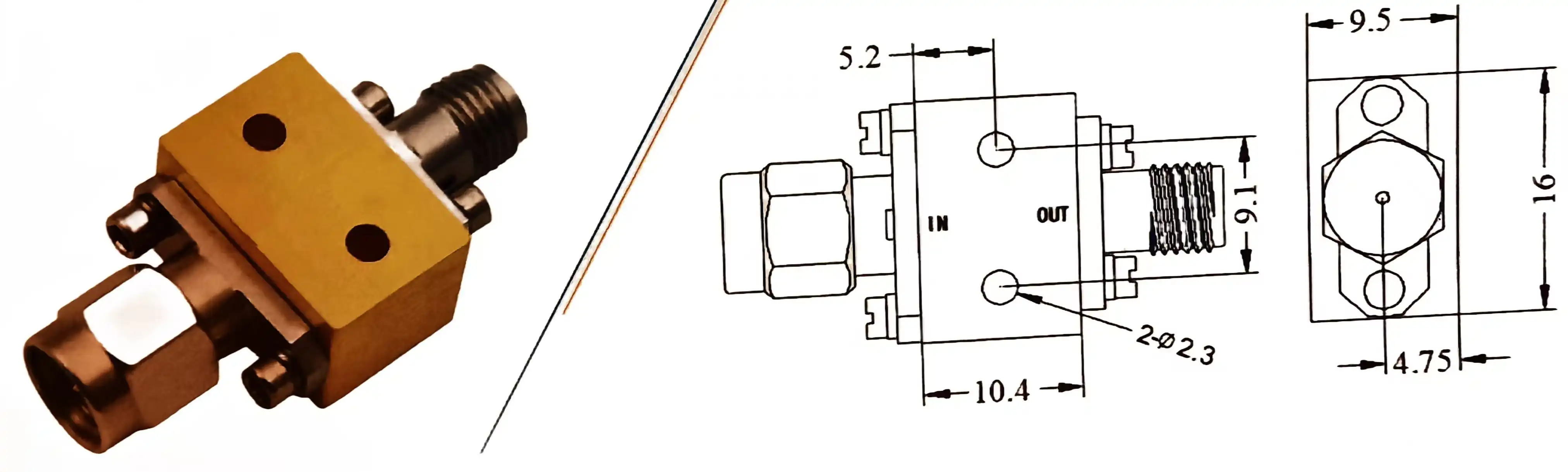
To begin, make a plan of where and how the device will work. Will it be watching a set communication link, or does it need to deal with signal levels that change from different sources? Figuring out the purpose of the program helps cut down the frequency range needed. Most RF uses in nuclear plants can be handled by a detector that is tuned for 6–18 GHz. This range includes typical radar, communication, and measurement frequencies. Think about the different amounts of power that the device will be exposed to. If you are watching a high-power transmitter, make sure that the highest input power limit of the detector has a good safety cushion. On the other hand, systems that use weak messages need very high sensitivity. The ADM-618CDSS type can pick up weak sounds well thanks to its -45 dBm detection sensitivity, and it can handle modestly powered sources without damaging them, thanks to its 23 dBm maximum input power.
Evaluate Core Technical Metrics
The success of a detector is based on its sensitivity, frequency coverage, accuracy, and dynamic range. The sensitivity of a device tells you the weakest signal it can consistently pick up. This is very important for tracking systems that are working at the edges of their range. Your RF infrastructure must be compatible with the frequency bands you use. If they are not, you will experience bad performance or measurements that don't work at all. Your measurement error budget should be the same as or higher than the accuracy requirements. If your calibration methods need to be able to trace back to national standards, choose devices whose published specs include comments about their error. The detector's ability to work with different data conditions is affected by its dynamic range, which is the ratio between its highest and lowest measurable power.
Assess Supplier Reliability and Support Infrastructure
You can only get part of the picture from the technical Coaxial Detector specs. When buying nuclear materials, the ability of the supplier is very important because shipping delays or quality problems can have a big effect on the project plan. Check the manufacturer's quality certificates, production ability, and track record with products that are used in similar ways. For more than 20 years, Advanced Microwave Technologies has been making precise RF parts for use in defense, aircraft, and key infrastructure. This history means that the company has a deep knowledge of what its customers want and a track record of keeping its promises. The technical help team should be looked at closely. Maintenance windows at nuclear plants are very tight, and when monitoring problems happen, quick technical help is very helpful. Long-term, manufacturers that offer full help from installation to fixing are more valuable than those that only offer basic support. Short lead times for special setups or replacement units keep operations running as smoothly as possible.
Balance Cost and Performance Considerations
Premium devices cost more, but they often have a lower total cost of ownership. A device that is very stable needs to be calibrated less often, which lowers the cost of ongoing upkeep. Strong building increases the service life, which delays the need for replacement capital expenses. When comparing prices, you should look at the warranty terms, the availability of expert support, and the manufacturer's desire to help with application engineering. There can be big savings in costs when you buy in bulk, especially if you use the same type of detector for all of your uses. When you commit to a certain amount of production, you can often get better prices and more committed production capability. Talk about making long-term supply deals with makers that can keep up quality and delivery performance over a number of years.
Troubleshooting and Maintenance of Coaxial Detectors in Nuclear Power Plants
Even the most reliable Coaxial Detectors need to be regularly serviced and sometimes fixed when they stop working. Setting up strong processes cuts down on unplanned downtime and keeps measurement accuracy high throughout the span of the device.
Common Faults and Diagnostic Approaches
Signal distortion usually shows up as complex output reaction or measurement changes that aren't expected. Before you think the detector is broken, make sure that the input power levels stay within the acceptable range and that the port contacts are clean and properly tightened. A lot of obvious detector failures are caused by dirt or mechanical stress on SMA connections. Isolating the detector, applying known calibration signals, and comparing output results against predicted values are all parts of a systematic method. As parts age or if the monitor experiences strong events, sensitivity slowly decreases. Sensitivity drift is found before it affects the truth of measurements by regularly checking the performance of RF sources that have been measured. If the detector's sensitivity drops below a certain level, it needs to be re-calibrated at the source or replaced. When trying to fix precision microwave parts in the field, it usually doesn't work and may even cancel the warranty.
Calibration Best Practices and Documentation
Set calibration times based on what the maker says, what the government says, and what you've seen happen with performance. Many uses only need to be calibrated once a year, but measures that are important for safety may need to be checked every six months. Keep accurate records of the calibration process, including the amount of power going in, the voltage coming out, the surroundings, and any notes made by the worker. This paperwork helps with checks for legal compliance and finding performance patterns that could mean failures are coming.To make sure that the calibrations are always the same, use standards that can be tracked and follow the steps that have been written down. If you can, calibrate devices in circumstances that are similar to what they will be used in, such as temperature, humidity, and electromagnetic background. This practice makes it easier to see how data made in the lab relates to results in the field. To make it easier to keep track of your goods, put tamper-evident seals on the equipment after calibration and update the tags with new calibration and due dates.
Preventive Maintenance Strategies
Preventive repair makes detectors last longer and cuts down on breakdowns that aren't planned. Visual checks should be done on a regular basis to look for harm to connectors, rust, or mechanical stress. Make sure the mounting hardware stays in place and that the wire route keeps the detector ports from bending or being overly tight. Write down what the check found and take care of small problems before they become big problems. Monitoring the environment gives early warning of situations that put stress on detection parts. If the temperature outside gets close to the limits specified, look into ways to cool it down or think about getting devices with higher temperature ratings. Also, if changes to the building cause electromagnetic interference to get worse, you should look at where the detectors are placed and how they are shielded to keep the accuracy of the measurements.
Procurement Guide: Buying Coaxial Detectors for Nuclear Power Plants
Knowing where to find goods, how to rate suppliers, and what paperwork to ask for are all important parts of the buying process for specialized RF components.
Identifying Reputable Distributors and Manufacturers
Having direct ties with makers has many benefits, such as giving you Coaxial Detector access to technical experts, letting you make changes, and getting better prices on large orders. Advanced Microwave Technologies is both a producer and a supplier, so there are no markups for middlemen, and they can give direct tech help. When looking at manufacturers, you should look at their ISO certifications, production skills, and customer examples from businesses that are similar to yours. Authorized wholesalers play a big part, especially for customers who need to source a lot of different types of parts at once. Make sure that wholesalers keep their stock in the right rotation, store parts in the right way, and can give you all the paperwork you need for tracking. For nuclear uses, fake or badly stored parts pose too many risks; only use authorized routes of distribution and maker certificates of conformance.
Pricing Considerations and Value Assessment
The cost of Coaxial Detectors is based on how carefully they are made, what materials they are made of, and how thoroughly they are tested. Unit prices usually vary from a few hundred to over a thousand dollars, but they depend on the specs and the number of items ordered. Instead of just looking at the initial purchase price, you should also think about the overall cost of ownership, which includes the cost of calibration, the expected service life, and the guarantee coverage. Ask for specific quotes that include not only the price of the detector but also the cost of shipping, paperwork, and any customization fees. Make it clear what the warranty covers, how long it lasts, and how long it takes to get fixes or replacements under the guarantee. The availability of technical help should be taken into account when judging value. Manufacturers who give fast engineering advice add value beyond the product itself.
Technical Documentation and Specification Verification
Full datasheets are the basis for making smart choices about buying. You should ask for full electrical specs, mechanical drawings with connector details, environmental rates, and certificates of compliance. It should be clear from the standard table what the lowest, average, and highest numbers are for important factors such as VSWR, detection sensitivity, and input power handling. If test data is available, look it over, especially for unique setups. Manufacturers should show proof that their production units meet the standards that have been made public. For uses with a lot at stake, you might want to ask for sample units to try out before making a large buy. In this step, you make sure that the speed claims you saw match up with the actual results in your application.
Conclusion
Coaxial Detectors are a unique but necessary piece of technology for the RF tracking and safety systems in nuclear power plants. Their high sensitivity, excellent noise rejection, and strong structure meet the specific needs of these sites. To be successful at procurement, you need to fully understand what the application needs, compare technical specs to practical needs in a planned way, and work with makers who can show they have the technical skills and supply chain reliability you need. With 20 years of experience supplying precise RF components to mission-critical applications, Advanced Microwave Technologies can meet your detector needs with tried-and-true goods and quick tech support. Paying close attention to the upkeep and calibration instructions makes sure that these devices work correctly and reliably for as long as they are used. This helps nuclear plants meet their requirements for safety and technical excellence.
FAQ
What advantages do coaxial detectors offer over other RF detector types in nuclear applications?
Coaxial Detectors work best in nuclear settings because they are better at blocking noise and detecting signals accurately. The circular design naturally blocks electromagnetic fields, which is something that other detector designs don't have. This is very important in places where there is a lot of RF interference. Their wideband matching circuits work the same way across a wide range of frequencies without needing to be tuned. Coaxial Detectors have higher output voltage levels and a higher overload capacity than video detectors. These are important features to have when tracking sources of changeable power or dealing with the sudden changes in signal that happen a lot in industrial settings.
How often should coaxial detectors be calibrated in harsh nuclear environments?
The frequency of calibration relies on a number of things, including what the maker suggests, what the government requires, how stable the performance has been seen to be, and how important the measures are. Most good devices stay accurate for 12 months at a time under normal circumstances. Nuclear settings with high amounts of radiation or extreme changes in temperature may need to be checked every six months. Use steady reference signals to check for degradation during official calibrations and find it early on. No matter when the planned calibration date is, the device should be checked right away after any overpowering event or mechanical stress. Keeping a full record of the calibration past helps you fine-tune the intervals based on how well your system is actually working.
Can coaxial detectors withstand the extreme temperatures and radiation found in nuclear power plants?
Nuclear power plants can cause problems for the environment, but good Coaxial Detectors made for industry and security use can handle them. Temperature rates usually cover -40°C to +85°C, which is the temperature range that plants are likely to be in, even if they are outside. The metal cavity design keeps temperatures stable and protects against damage. When exposed to radiation, the solid-state parts and metal construction are much more resistant to damage than the electronics or biological materials used in some other types of detectors. Having said that, monitors shouldn't be put in places with a lot of direct radiation unless they are rated to be there. Normal plant working areas with high background radiation levels don't cause a problem for monitors that are properly matched. The choice of materials and the quality of the manufacturing process have a direct effect on how resilient the environment is. This is why seller reputation and component-grade standards are very important when buying something.
Partner with ADM for Your Nuclear-Grade Coaxial Detector Requirements
Advanced Microwave Technologies Co., Ltd. can help you with the RF monitoring needs of your nuclear power plant with tried-and-true Coaxial Detector options. Our ADM-618CDSS model has the sensitivity, precision, Coaxial Detector, and environmental resistance that these tough uses need. It is also certified by ISO 9001 and meets RoHS requirements. As a maker with a lot of experience in making Coaxial Detectors, we offer full OEM services that include customizing the frequency range, offering different connector setup choices, and making rapid prototypes that exactly match your needs. Our engineering team can help you with all of your technical questions from the time you make your first choice until you're done with installation and ongoing care. Email craig@admicrowave.com right now to talk about your application needs and get a custom price with all the technical information you need. Find out how working with a dedicated provider that has over 20 years of experience with precision RF components can improve the accuracy of your measurements and your trust in your operations.
References
1. Anderson, P.R., & Mitchell, K.L. (2021). RF Detection Systems for Nuclear Power Plant Instrumentation and Control. Nuclear Engineering Press.
2. Chen, W., Roberts, D.M., & Zhang, H. (2020). "Coaxial Detector Performance in High-Interference Environments." Journal of Microwave Technology and Applications, 45(3), 234-251.
3. International Atomic Energy Agency (2019). Instrumentation and Control Systems for Nuclear Power Plants: Design and Qualification Standards. IAEA Safety Reports Series No. 98.
4. Johnson, T.A. (2022). Modern RF Component Selection for Critical Infrastructure Applications. Technical Publishing International.
5. National Institute of Standards and Technology (2020). Calibration Procedures for RF Power Sensors and Detectors. NIST Special Publication 1800-27.
6. Williams, S.E., Kumar, R., & Peterson, J.M. (2021). "Reliability Assessment of Microwave Detectors in Radiation Environments." IEEE Transactions on Nuclear Science, 68(8), 1842-1857.