How Do Dual Channel Coaxial Rotary Joint Contacts Survive 50 Million Turns?
A dual channel coaxial rotary joint achieves 50 million turns through a combination of precision-engineered contact materials, tight mechanical tolerances, and specialized lubrication. Gold-plated beryllium copper contacts resist oxidation and mechanical wear across continuous rotation cycles. Concentric internal architecture maintains consistent impedance matching and signal isolation between two independent RF paths throughout full 360-degree rotation. Accelerated life testing using Vector Network Analyzers (VNA) monitors S-parameter stability in real time, validating that phase and amplitude variation stays within acceptable limits — confirming readiness for long-term deployment in radar, SATCOM, and defense systems.
Understanding Dual Channel Coaxial Rotary Joints and Their Durability
What Is a Dual Channel Coaxial Rotary Joint?
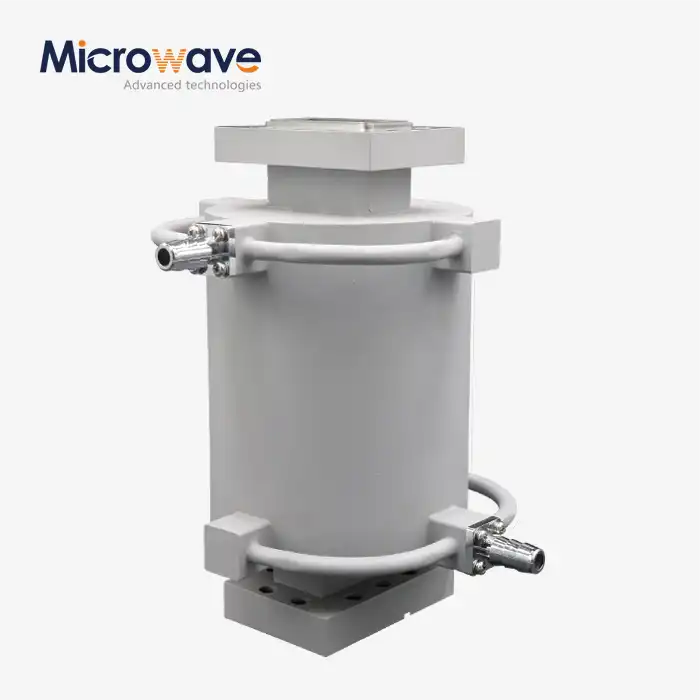
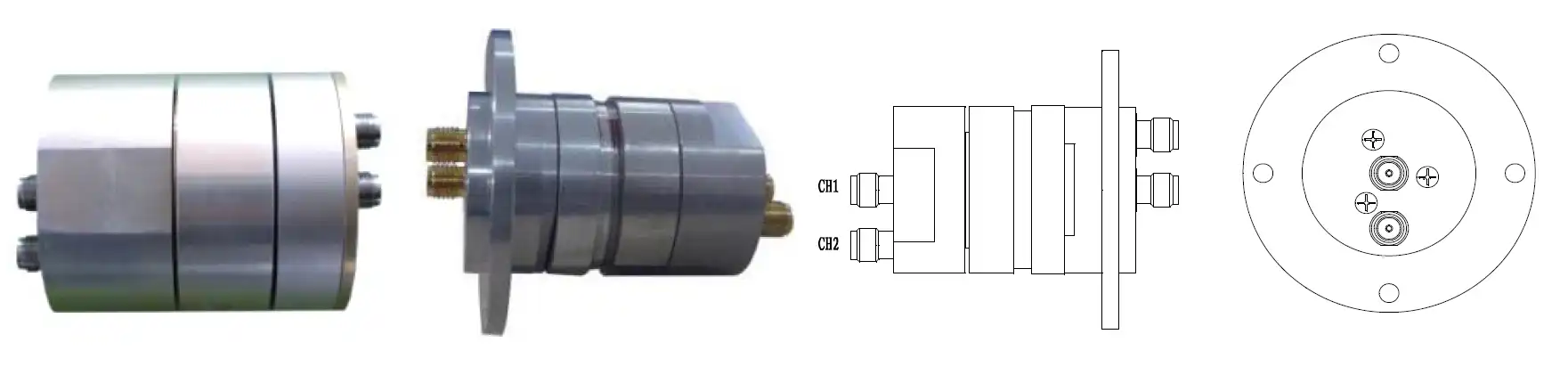
A dual channel coaxial rotary joint is a precise electrical part that sends two separate RF or microwave signals at the same time between a rotor that keeps turning and a stator that stays still. In contrast to a single-channel version, it has an internal design that is either concentric or stacked, with precision dielectrics separating each signal route. This design gets rid of the need for two different joints, which makes the mechanical size and rotational torque load smaller. This is a big plus for small radar and SATCOM antenna systems.
How It Differs from Single-Channel Designs
Because they can only handle one data line, single-channel rotary joints can only be used in simpler system designs. Different signals, like transmit (Tx) and receive (Rx) or dual-polarized channels, can go through a dual-path joint, which is a small body. The main technical problem is to keep channel isolation greater than 50 dB between the two lines. High-end models have better separation than 70 dB thanks to improved internal shielding and carefully made concentric shapes.
Key Specifications That Drive Longevity
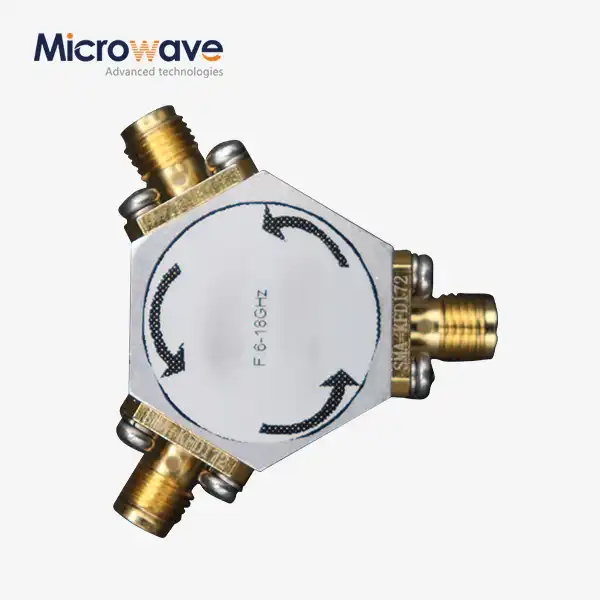
The choices made during procurement have a direct effect on the operational lifespan. How many rotational cycles a joint can handle depends on its frequency range, insertion loss, contact material grade, and housing material. For instance, choosing beryllium copper contacts over normal brass ones greatly increases their resistance to wear. For connectors that can handle speeds of 18 GHz or higher, like SMA or N-type types, the size limits must be tighter. This helps keep the electrical performance stable over millions of cycles.
The Science Behind Surviving 50 Million Turns
Contact Material Engineering
The contact interface is the most direct factor in how long a rotary joint lasts. A lot of high-cycle RF slip rings use gold-on-gold contact pairs because gold doesn't oxidize and keeps its low contact resistance even when it's moving all the time. Beryllium copper spring contacts press against the slip ring surface with a controlled normal force. This keeps the electrical path stable without creating damaging friction. These materials work together to stop the "micro-arcing" and dynamic contact resistance spikes that make spinning signal noise in a dual channel coaxial rotary joint.
Precision Tolerances and Lubrication
Tolerances in manufacturing on the order of micrometers have a direct effect on how evenly the contact force spreads across the whole spinning arc. Uneven contact pressure leads to wear in certain areas, which shortens the life of the product. Low-outgassing lubricants that are specially chosen to work with the frequency band and temperature range reduce friction between moving parts without getting on the dielectric surfaces that maintain the impedance. For joints to work in temperatures ranging from -40°C to +85°C, they need lubricants that don't melt or run.
Accelerated Life Testing and Validation
Before shipping, rotary joints from high-quality makers are put through rapid life tests. A VNA checks the S-parameters (S11, S21) while the joint turns, making sure that the phase WOW (change in phase during rotation) stays within ±3 degrees and the amplitude WOW stays within ±0.05 dB for the whole 360-degree cycle. To make Environmental Stress Screening (ESS) more like real working conditions, temperature cycles and vibration exposure are added. With these tests, you can be sure that a joint will keep working well for 10 to 50 million revolutions under approved settings.
Comparative Analysis: Dual Channel vs. Other Rotary Joint Technologies
Dual Channel Coaxial vs. Single Channel Coaxial
Single-channel coaxial joints have low insertion loss and cover a wide frequency range. However, if system builders need to send and receive data at the same time, they have to stack two different units, which makes them heavier, more expensive, and harder to align. A dual channel coaxial rotary joint design combines both paths into one body, keeping the same level of insertion loss performance while reducing the work needed to set up the system. This directly lowers the power load on the drive motor and the time it takes to put the parts together for uses like air traffic control radar or SATCOM-on-the-go interfaces.
Dual Channel Coaxial vs. Fiber Optic Rotary Joints
Fiber optic rotary joints (FORJs) are great at sending high-bandwidth digital data with almost no signal loss over spinning. However, they can't carry microwave or radio frequency power. Coaxial rotary joints are still the only practical option for systems that need to send high-frequency analog data, like radar pulse transmission or antenna feed networks. A two-channel RF system lets you route both data and power through a single electromechanical link.
Technology Selection Benchmarks for Procurement Teams
When procurement engineers look at rotary joint technologies, they should put these things next to each other and compare them:
- Frequency range: Most dual channel coaxial rotary joints can handle frequencies from DC to 18 GHz, but some types can go higher. You can optimize each channel on its own, like X-Band on Channel 1 and L-Band on Channel 2.
- Insertion loss: Well-designed units keep insertion loss below 0.5 dB across the recommended frequency band, making sure that signal degradation is kept to a minimum.
- Channel isolation: In full-duplex systems, cross-channel interference can't happen if the isolation is at least 50 dB.
The most reliable way to avoid under-specification is to make sure that these benchmarks are similar to how your system actually works.
Practical Applications and Procurement Insights
Where These Joints Operate in the Field
Dual channel coaxial rotary joints are essential in a number of tough industries. In radar used for air traffic control, one channel sends high-power bursts and the other gets low-power echo signals 24 hours a day, seven days a week. Both channels in SATCOM-on-the-move devices can handle dual-polarization signals (RHCP and LHCP), which doubles the amount of data that can be sent while the platform moves over rough terrain. One channel in EO/IR defense guns sends video data from moving sensors, and the other channel carries command-and-control RF lines that have to fit inside small gimbal envelopes.
Procurement Guidance for B2B Buyers
Before completing a buy, procurement teams should ask for the following paperwork when looking for dual-channel RF rotary joints:
- Full S-parameter test results that cover the full frequency range and were taken on a calibrated VNA.
- Rotational life test data confirming the number of cycles validated during accelerated testing.
- Certificates from environmental tests that cover thermal cycling, vibration (MIL-STD-810 if needed), and IP sealing ratings (IP65/IP67).
- Material statements that say the product is RoHS-compliant and what type of material it is.
These papers give objective proof of product quality that goes beyond the datasheet. This lowers the risk of procurement for long-term or mission-specific projects. Contact resistance and lubrication condition should be checked regularly at maintenance intervals to make the deployed service life even longer.
How to Choose the Right Dual Channel Coaxial Rotary Joint for Your Needs
Define Your Frequency and Electrical Requirements First
Write down your system's working frequency bands, needed insertion loss limit, minimum channel isolation, and power handling needs before you start looking at different providers. If one channel handles low-level receive signals and the other high-power RF pulses, you should list the peak and average power ratings separately. This stops mistakes in choosing the dielectric material that would cause it to break down under real-world operating conditions for a dual channel coaxial rotary joint.
Evaluate Customization and OEM Support Capabilities
Standard catalog joints cover common frequency ranges and connector types. However, many system combinations need different flange shapes, certain connector interfaces, or channel spacing that isn't standard. Suppliers who do their own research and development and prototyping can make unique setups with tested data before committing to full production. Ask the provider to write down the lead times for both standard and special builds, and find out how they provide updated datasheets and production test records.
Total Cost of Ownership Over Service Life
When you add up the cost of upkeep and replacement parts, a system with a cheaper unit price and a shorter validated service life will usually cost more over its operating time. Joints that have been tested to withstand 50 million turns lower the number of times they need to be replaced in continuous-duty uses like surveillance radar, which lowers the total cost over their entire life. When figuring this number out, you should think about how good the supplier's technical support is after the sale. Quick engineering support cuts down on troubleshooting downtime when problems happen in the field.
Conclusion
It's not by accident that a dual channel coaxial rotary joint can survive 50 million rotations; the contact material, manufacturing tolerance, lubrication chemistry, and testing protocol were all carefully chosen. The main reasons these parts work reliably for years of continuous use are their gold-plated beryllium copper contacts, carefully controlled concentric geometries, and environmental screening that has been proven to work. If procurement engineers know about these engineering concepts, they can make better choices about where to get RF rotary joints for radar, SATCOM, or defense platforms. This means lower lifecycle risk.
FAQ
How long does a dual channel coaxial rotary joint typically last?
It has been proven that a good rotary joint will last between 10 and 50 million turns under normal working conditions. This number has been proven by rapid life testing that keeps an eye on the change in contact resistance with a VNA. With regular lubrication checks and contact inspections, proper care can increase the real deployed life beyond the standard validated figure.
Can each channel operate at a different frequency band?
Yes. The two data paths don't depend on each other electronically. The resistance of Channel 1 can be matched and adjusted for the X-Band (8–12 GHz), and Channel 2 works at the L-Band (1–2 GHz). Each channel's internal geometry is designed separately to meet the frequency needs of its own path without interfering with the others.
What causes rotational noise, and how is it prevented?
Most of the time, dynamic contact resistance changes or micro-arcing happens at the slip ring interface, which causes rotational noise. Precision gold-on-gold contact pairs and controlled contact spring force get rid of the micro-gap changes that cause these effects. This keeps the electrical path stable even when the motor is turning continuously.
Is IP-rated sealing available for outdoor deployments?
Yes, rotary joints made for radar or SATCOM ground stations that are placed in the field can be protected to IP65 or IP67 standards. During the quality check, the sealing torque is checked to make sure that it keeps out outside elements without slowing down the drive motor too much.
Partner with ADM for Proven RF Rotary Joint Solutions
For more than 20 years, ADM (Advanced Microwave Technologies Co., Ltd.) has provided high-precision RF and microwave parts to telecom, defense, and aircraft projects. ADM is a reliable company that makes dual channel coaxial rotary joints. Their goods are ISO 9001–certified and RoHS-compliant, and they have in-house test facilities and support for OEM customization. You can email Craig at craig@admicrowave.com to get a datasheet, sample, or engineering consultation to look at the specifications and start the sourcing process right away.
References
1. Pozar, D. M. Microwave Engineering, 4th ed. — Wiley, 2011.
2. IEEE Transactions on Microwave Theory and Techniques — "Contact Resistance Stability in Rotary RF Connectors," IEEE, 2018.
3. MIL-STD-810H — Environmental Engineering Considerations and Laboratory Tests — U.S. Department of Defense, 2019.
4. IEC 61169-1 — Radio-Frequency Connectors: General Requirements and Measuring Methods — International Electrotechnical Commission, 2013.
5. Sturdivant, R., and Harris, M. Transmit Receive Modules for Radar and Communication Systems — Artech House, 2017.
6. Microwave Journal — "Advances in Slip Ring and Rotary Joint Technology for Radar Applications," Microwave Journal, 2021.