Basic Introduction to Power Amplifier
Power amplifiers are an important part of current precision engineering, industrial testing, and telecommunications equipment. At their core, an AC Power Amplifier functions as a customizable power source that can produce stable, variable-frequency AC signals with great accuracy. Unlike regular utility power, these specialized tools either recreate a clean grid or purposely add voltage errors. This lets engineers test how well equipment works when it's put under real-world electrical stress. AC power amplifiers are essential for crossing the gap between low-level signal output and high-power application needs. They can do this whether they are simulating 400Hz avionics bus power, testing EV charging systems against unstable grid scenarios, or running electrodynamic shakers for vibration analysis.
Understanding AC Power Amplifiers: Basic Principles and Working Mechanism
In the last twenty years, power amplification technology has changed a lot. This is because electricity systems are getting more complicated, and regulations are getting tighter. When buying, teams know how these tools work, and they can make decisions that are in line with their technical needs.
What Defines an AC Power Amplifier
An AC power amplifier takes in a signal, like a sine wave, a square wave, or a complex transient pattern, and boosts its voltage or current while keeping the signal's original properties. In contrast to fixed-output power sources, these amplifiers react flexibly to changing input directions. This makes them essential for tasks that need to accurately copy waveforms. In testing labs around the world, the technology is used as a controlled grid model. The equipment being tested has to show that it can handle voltage drops, frequency changes, and harmonic pollution that happen in real-life electricity networks. The basic design is made up of several important steps. The reference signal is buffered and scaled by input conditioning circuits. The power stage, which can be linear or switching-mode, then boosts this signal to drive large loads. Feedback devices keep an eye on the output voltage and current all the time and fix any problems they see right away to keep the signal's integrity. Digital signal processors in more advanced models allow for customizable waveform creation, which lets users create complex disturbances that meet international standards.
Core Operating Principles and Key Components
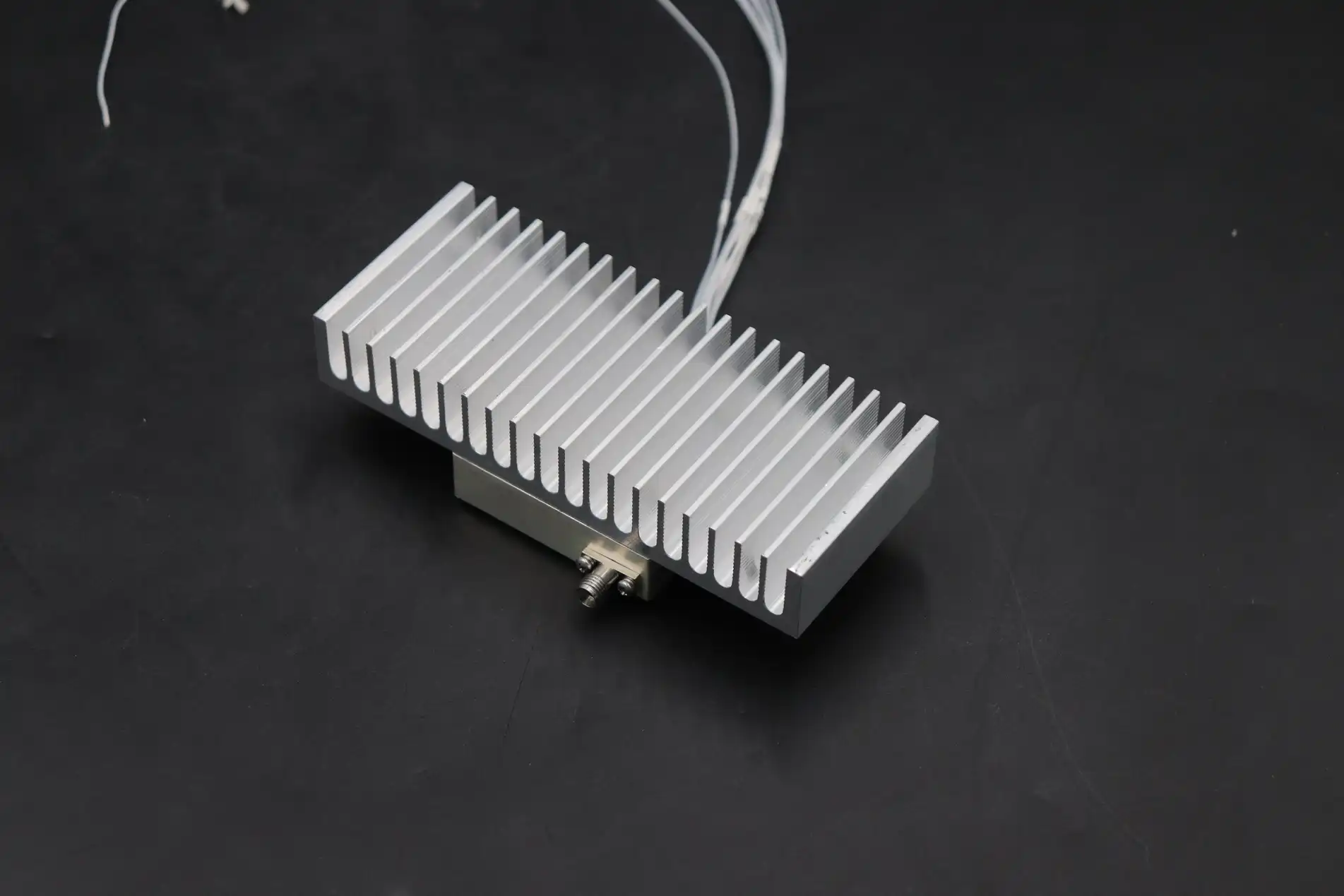
Electronic control and reliable power supply are at the heart of these systems' operations. Linear amplifiers use Class A, AB, or H designs, and the output transistors work in their active area. This gives the signal a very pure quality, with Total Harmonic Distortion below 0.1%. This method works great for apps that need very clean power, but it's not very efficient, only converting 40 to 60 percent of the energy it uses. Getting rid of the heat becomes a big engineering problem that needs a lot of cooling equipment. In switching-mode systems, pulse-width modulation quickly changes the states of output transistors from fully on to off. This method gets efficiency levels above 85%, which greatly lowers the need for thermal control and makes it possible for small form factors. But the switching process adds high-frequency noise that needs to be aggressively filtered to meet strict requirements for output purity. Modern hybrid designs use both methods, using switching efficiency to send a lot of power and linear steps for final output filtering. Some important parts are high-current transformers with carefully managed leakage inductance, output capacitor banks that keep the voltage stable when loads change, and complex safety circuits that keep the system safe from overcurrent, overvoltage, and thermal runaway. Real-time input is provided by instrumentation-grade measurement circuitry, an AC Power Amplifier, which allows closed-loop control with response times recorded in microseconds.
Core Performance Metrics and Troubleshooting of AC Power Amplifiers
You need to know how technical specs translate into real-world performance in order to choose the right amplifier. These factors tell us if a system will regularly meet the needs of an application or if it will bring small problems that make test validity less certain.
Diagnosing Common Signal Integrity Issues
Output waveform distortion shows up in a number of different ways, and each of these patterns points to a different cause. If the AC power amplifier flat-tops, it means it has hit its voltage limit, which could be because it is too small or has too much output filtering resistance. This problem usually happens when running loads with a lot of capacitance that need a lot of charging power. Either the load capacitance needs to be lowered, the amplifier's voltage value needs to be raised, or the output voltage needs to be lowered. Crossover distortion makes a notch close to the zero-crossing point, which is where the output pattern changes direction. This effect usually happens in Class AB linear amplifiers that don't have enough bias current or output transistors that are getting old. It's not very noticeable at low frequencies, but it gets loud above 1kHz and makes it very hard to measure THD. The problem can be fixed by replacing parts in the output stage or making changes to the bias networks, but most sealed units need to be serviced at the factory to do this. Oscillation happens when a high-frequency wobble shows up on top of the desired pattern. Some of the reasons for this are bad output filters and unstable feedback loops when driving dynamic loads. When the features of a load pass a certain point, like when a power factor adjustment capacitor engages, oscillations often happen quickly. Adding series inductance or resistance from the outside to the output can stop these swings, but it hurts the dynamic performance and economy. For better results, either change the internal adjustment networks or choose an amplifier that can handle dynamic loads better.
Systematic Troubleshooting Methodology
When an amplifier acts in a way that you wouldn't expect, we suggest using an organized diagnostic method. To start, find the source of the problem: unplug the load and make sure the amplifier gives a clean signal to a resistive reference load. If the problem still happens when there is no load attached, it's likely an internal problem that needs maker service. If problems only happen when the load is applied, the issue is with the load itself or how the amplifier and load combine. An oscilloscope can be used to measure the load power factor and the shape of the current pattern. If the current patterns are very distorted, it means that the loads are not linear and may be too high for the amplifier's crest factor value. Not only figure out the real power (Watts), but also the apparent power (VA), which includes the reactive parts. A purely reactive load can set off safety at what seems like very low power levels in many amplifiers that are limited based on VA. Thermal problems often manifest as intermittent protection shutdowns after extended operation. Make sure there is enough air flow and that the temperature stays within the ranges specified. Even though switching amplifiers are very efficient, they still produce a lot of heat when they run at high power. For example, a 10kVA unit that is 90% efficient still produces 1kW of waste heat that needs to be removed. Linear amplifiers can lose up to half of their input power as heat, so they need strong cooling systems.
Choosing the Right AC Power Amplifier: Evaluation and Comparison for Business Needs
There are a lot of different technologies and form factors on the market for amplifiers, and each one is best for a certain type of application. Making sure that these traits match the needs of the business guarantees the best performance and lowest costs.
Amplifier Classifications and Technology Comparison
Voltage amplifiers make sure that the voltage is delivered accurately, AC Power Amplifier, and they can usually achieve better than 0.5% control even when the load current changes within the stated capacity. When exact voltage levels are needed for compliance testing, like making sure equipment works right at standard voltage ±10%, these units really shine. The design focuses on lowering the output resistance so that it works like a perfect AC power amplifier and keeps the set voltage even when the load changes. On the other hand, current amplifiers control the output current and let the voltage change based on the load resistance. In places where controlled current is more important than voltage, these specialty units power magnetic field coils, electroplating baths, and other things. They are different from voltage-type systems because their output impedance is higher. Some more advanced types have modes that can be chosen so that they can work as either voltage or current sources, based on the needs of the application. Power amps for music use focus on having a wide frequency range (20Hz–20kHz) with very low noise and distortion levels. Even though these specs look good for use in the lab, audio amps don't have the fine control and measurement tools needed for metrology tasks. Their safety features are designed to work best with certain types of loudspeakers, but they might not always be able to protect against short circuits and overloads that happen a lot in development testing settings.
Evaluating Efficiency, Linearity, and Noise Performance
How efficient you are has a direct effect on your building needs and running costs. If you run a 10kVA linear amplifier at 50% efficiency, it uses 20kW of power from the wall and loses 10kW as heat. If this machine runs nonstop for a year at normal industrial power rates, it will cost tens of thousands of dollars in energy. At 90% efficiency, the similar switching amplifier uses only 11.1kW, which saves over $15,000 a year and needs a lot less cooling power. However, the job cycle of the application must be taken into account in this estimate; units that only work sometimes may not be worth the extra cost for high-efficiency designs. Linearity specs tell you how closely the output follows the input over the whole range of amplitudes. When complex signals are amplified, nonlinearity shows up as harmonic distortion and intermodulation products. When the amplifier needs to play back minor waveform features, high-linearity designs keep the variation from the ideal transfer function to less than 0.01%. For example, in a Power Hardware-in-the-Loop simulation, the amplifier controls real power equipment by digital simulation signals. This level of accuracy is needed to keep the simulation from adding errors. Random noise and planned interference are both part of noise performance. Broadband noise shows up on oscilloscope lines as a haze and is usually measured in microvolts RMS over a certain frequency. Because of how they work, switching amplifiers produces higher amounts of noise, but they can work well enough with strong filtering. Common-mode noise, which is a voltage that shows up the same on both output lines compared to ground, can mess up measurements in sensitive equipment and needs extra care when connecting to data gathering systems.
Application-Specific Selection Criteria
For test engineering purposes, you need different things than for production purposes. Flexibility is often more important than efficiency when making a new product. Being able to write any waveform, quickly change settings, and connect to automated test systems speeds up the development process. It is best to have programmable models that have a lot of transmission ports (GPIB, Ethernet, USB) and a lot of built-in waveform collections. Because test equipment often fails in strange ways, protection features should be able to handle frequent short circuits and overloads without breaking. During production burn-in and stress testing, dependability and speed are given more weight than flexibility. Energy economy and thermal control are very important because some equipment may run nonstop for years. Often, simpler designs with fewer customizable features are more reliable over time and cost less. Rack-mounted models that work as a master and slave make it easier to add more power while keeping the system's interface simple. Schools and study labs need tools that can handle a wide range of experiments. Moderate power amounts (1-3kVA), wide frequency ranges, and full measurement skills are the most useful. The amplifier can model reactive loads and test bidirectional power converters without any extra equipment because it can work in four quadrants, which means it can both source and sink current. Built-in data logging and screen image tools make it easier to keep records for reports and papers.
Procurement Insights: How to Buy AC Power Amplifiers for Your Business
Strategic sourcing of power amplification tools requires weighing current technical needs against the costs of ownership and long-term support needs.
Sourcing Channels and Supplier Evaluation
Direct connections with manufacturers are good for businesses that have standard needs and can buy in bulk. Manufacturers offer the best deals on large sales, and they can change the specs to fit your exact needs. Technical support is given directly by engineering teams that know the internal design details. This speeds up the application and fixes help. This method, the AC Power Amplifier, on the other hand, needs longer lead times and usually bigger minimum order quantities. Authorized wholesalers keep stock on hand so that orders can be delivered right away, which is very important when projects can't wait 8–12 weeks for plant lead times. They combine the needs of many customers, which lets more people buy goods that would be out of reach if they had to be bought in very small amounts directly. Distributors with a lot of experience can help you find the right goods for your needs and offer alternatives if it turns out to be too hard to meet your requirements. Higher unit prices and maybe fewer ways to customize are the costs of this trade-off. Online markets have become good places to sell standard models because they make prices clear and make the buying process easier. But technical help may be restricted, and there are worries about the authenticity of the product when buying from third-party sellers. We only suggest this route for clear needs where internal experts can handle setup and use without help from the vendor. When buying things from the market, it may be hard to manage warranties and get testing services.
Total Cost Analysis Beyond Purchase Price
Initial acquisition cost represents only a fraction of lifetime ownership expenses. Different types of amplifiers have very different installation needs. For example, linear amplifiers may need a lot of three-phase power and their own cooling system, while small switching amplifiers can work with normal single-phase circuits. These differences in infrastructure can make it more expensive to install and take longer to complete a project when changes are needed to the facilities. Schedules for calibration and upkeep have a direct effect on running budgets. To stay in specs, precision instruments need to be calibrated once a year, which can cost anywhere from a few hundred to several thousand dollars, based on how complicated the amplifier is and how high the measurement level it is set to. Some companies include calibration in deals with longer warranties, while others charge extra for it. Replace cooling fans, reform capacitors, and clean filters as part of proactive maintenance to extend service intervals and avoid unexpected downtime that can stop whole product development programs. The amount of energy used over a ten-year period is often the same as or more than the price of the unit itself. Find the yearly operating hours, multiply by the rated input power at normal load levels, and add the cost of energy in your area to the total cost of the project. Don't forget about the cooling systems—every watt that the AC Power Amplifier loses has to be taken back by the building's HVAC systems, which means that the energy impact is actually doubled. When used for more than 20 hours a week, high-efficiency designs give a strong return on investment.
Conclusion
AC power amplifiers serve as essential instruments across diverse industrial sectors, from renewable energy validation to aerospace testing and consumer electronics certification. Understanding the fundamental distinctions between linear and switching architectures, evaluating specifications like THD and crest factor, and recognizing application-specific requirements empowers procurement teams to make informed decisions. The technology continues evolving rapidly, with wide-bandgap semiconductors and regenerative designs promising dramatic improvements in efficiency and capability. Strategic equipment selection, proper installation, and proactive maintenance practices maximize return on investment while ensuring reliable performance throughout extended service lives. Organizations that view these systems as long-term infrastructure assets rather than commodity purchases position themselves for sustained competitive advantage.
FAQ
What distinguishes AC power amplifiers from variable transformers or motor-generator sets?
Variable transformers adjust voltage manually but lack regulation and waveform control. Motor-generator sets convert power mechanically but are inefficient and slow. AC power amplifiers provide precise electronic regulation, stable output under load changes, programmable waveforms, and advanced measurement capabilities unmatched by mechanical systems.
How do I determine required power ratings for my application?
Calculate peak apparent power using voltage, current, and power factor. Size the amplifier at 1.3–1.5 times this value for safety and transients. Consider the crest factor for inductive loads like motors or transformers. When unsure, consult manufacturers with full load details for accurate model recommendations.
What warranty and support terms should I expect?
Typical warranties last 1–3 years and cover manufacturing defects. Extended options may be available. Check exclusions like misuse or unauthorized modifications. Evaluate support channels, response times, and repair turnaround. Request customer references to verify actual service quality and reliability before purchasing.
Partner with ADM for Precision Power Solutions Beyond Standard Amplification
Advanced Microwave Technologies Co., Ltd has more than 20 years of experience with RF and microwaves, so they can help you with your tough test and measurement needs. We are best at making waveguide kits, cable parts, and antenna systems that are used in defense and satellite communication. But we also know what our customers need in terms of test infrastructure in a wider sense. Our engineering team can help you with system-level integration problems and make sure that the power boosting options you choose work well with RF signal chains and measurement systems.
Procurement professionals seeking an Ac Power Amplifier supplier benefit from our established global logistics network and commitment to responsive technical support. While we don't manufacture power amplifiers directly, our system integration experience positions us to recommend reliable partners and provide the complementary RF components essential to complete test setups. Contact our engineering team at craig@admicrowave.com to discuss how our precision microwave components can enhance your test infrastructure to explore our comprehensive product portfolio designed for mission-critical applications where performance cannot be compromised.
References
1. Rashid, M.H. (2017). Power Electronics Handbook: Devices, Circuits, and Applications Engineering. Butterworth-Heinemann, 4th Edition.
2. Kazimierczuk, M.K. (2015). Pulse-Width Modulated DC-DC Power Converters. John Wiley & Sons, 2nd Edition.
3. International Electrotechnical Commission (2020). IEC 61000-4-11: Electromagnetic Compatibility - Testing and Measurement Techniques - Voltage Dips, Short Interruptions and Voltage Variations Immunity Tests.
4. U.S. Department of Defense (2004). MIL-STD-704F: Aircraft Electric Power Characteristics. Department of Defense Interface Standard.
5. Basso, C.P. (2016). Designing Control Loops for Linear and Switching Power Supplies: A Tutorial Guide. Artech House Publishers.
6. Mohan, N., Undeland, T.M., and Robbins, W.P. (2003). Power Electronics: Converters, Applications, and Design. John Wiley & Sons, 3rd Edition.