




Analog vs Digital Beamforming in 5G Antenna with Phase Shifter
Analogue or digital beamforming is a crucial decision for procurement engineers when building a 5G antenna with phase shifter. Analogue beamforming uses RF phase shifters to direct beams before they are converted to signals. It is cost-effective and uses little power, making it ideal for small cell placements. Digital beamforming works on signals in the baseband, which lets multiple beams be controlled at the same time and allows for adjustable nulling. This makes it perfect for large MIMO systems that need to be very efficient with spectrum. The choice you make will rely on how complicated your application is, how much power you have, and how fast it needs to run.
Understanding Beamforming in 5G Antennas with Phase Shifters
Beamforming changes the way that wireless messages get to their targets. Instead of sending energy out in all directions at the same rate, beamforming focuses communication on certain users or listeners. This makes the signal stronger and lessens interference. This method is now necessary for 5G networks because of the millimeter-wave bands and crowded user areas that need precise signal control.
The Role of Phase Shifters in Beam Steering
Phase shifters are the basic building blocks that make beamforming possible. These devices change the direction of the beam by changing the phase link between antenna parts in an array. In real life, constructive interference happens in the desired direction when each radio element sends the same signal but with carefully determined phase offsets. On the other hand, destructive interference stops signals in other areas. This computer steering doesn't involve any mechanical movement, so beams can be changed quickly, which is important in 5G settings that are always changing.
Precision phase shifter systems made by Advanced Microwave Technologies Co., Ltd. are made for these kinds of tough jobs. With more than 20 years of experience, we know that even small phase mistakes (usually less than 2 degrees) can hurt the accuracy of beamforming and the performance of the system.
How Analog Beamforming Operates
Before data translation, phase shifting is done in the RF domain by analogue beamforming. Each antenna part is linked to an analogue phase changer that changes the phase of the signal based on digital orders or control voltages. After being moved, the signals are mixed through a feed network until they hit a single transceiver chain. This design cuts down on the amount of pricey RF parts, especially analog-to-digital and digital-to-analog processors. This means that less power is used and the hardware costs less.
But you give up some freedom in exchange. Most analogue systems can only handle one beam per polarisation at a time. This means they can't serve multiple people at once or quickly adjust to new channel conditions. The phase precision is also affected by the type of phase shifter component used, such as whether it is a dielectric vane, a ferrite, or a semiconductor. Each type has a different insertion loss profile and switching speed.
Digital Beamforming Architecture and Advantages
When you use digital beamforming of a 5 G antenna with phase shifter, you can change the phase in the baseband digital domain. Each part of the antenna is linked to its own RF chain, which is made up of mixers, filters, amplifiers, and converters. After digitisation, complex signal processing methods figure out in real time what the best phase and amplitude weights are for each element. This design gives you the most freedom because it lets you make multiple independent beams at the same time, cancel out interference in real time, and precisely move nulls toward sources that are interfering.
The main problems are the amount of processing and device multiplication. For every extra radio part, a full RF chain is needed, which greatly increases the cost, power use, and physical size. Also, digital beamforming devices make a lot of heat, so they need strong ways to handle that heat. For these reasons, all-digital methods work better in situations where the performance is worth the money, like in cities with many big base stations that serve hundreds of users or in defence apps that need flexible anti-jamming features.
Performance and Design Considerations of 5G Antennas with Phase Shifters
When designing phased array antennas, you need to pay close attention to how they are integrated and how their performance changes over time. How phase shifters are connected to spreading parts, feed networks, and control systems has a big effect on how the whole system works.
Design Principles for Phase Shifter Integration
Electrical performance, mechanical limitations, and heat control must all be balanced in phased array designs. The beam steering range and grating lobe reduction are directly affected by the distance between the antenna elements. Usually, the distance between elements stays below half-wavelength to avoid radiation patterns that aren't needed. There are two ways to add phase shifters: behind each element (in a distributed design) or in a centralised beamforming network. Each has its own benefits when it comes to insertion loss, tuning complexity, and failure modes.
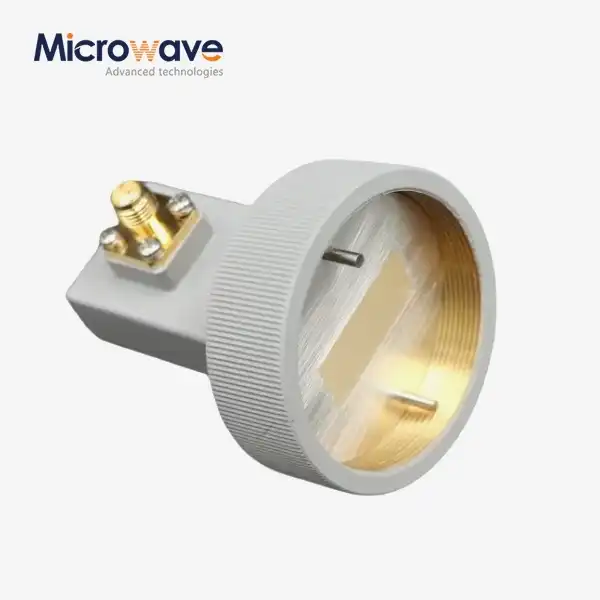
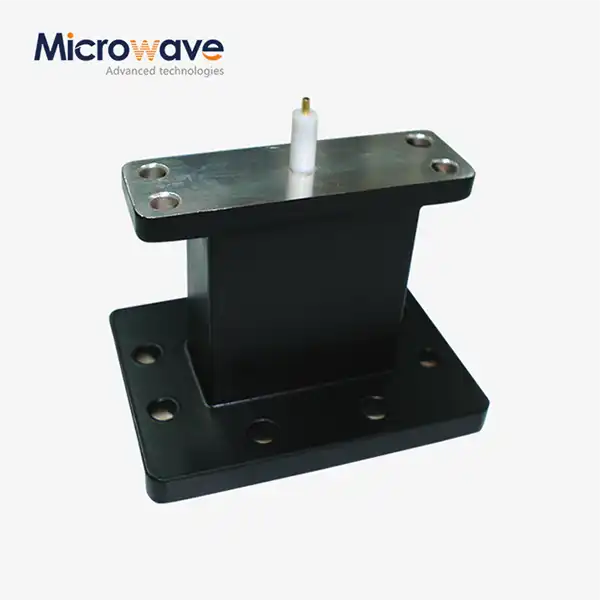
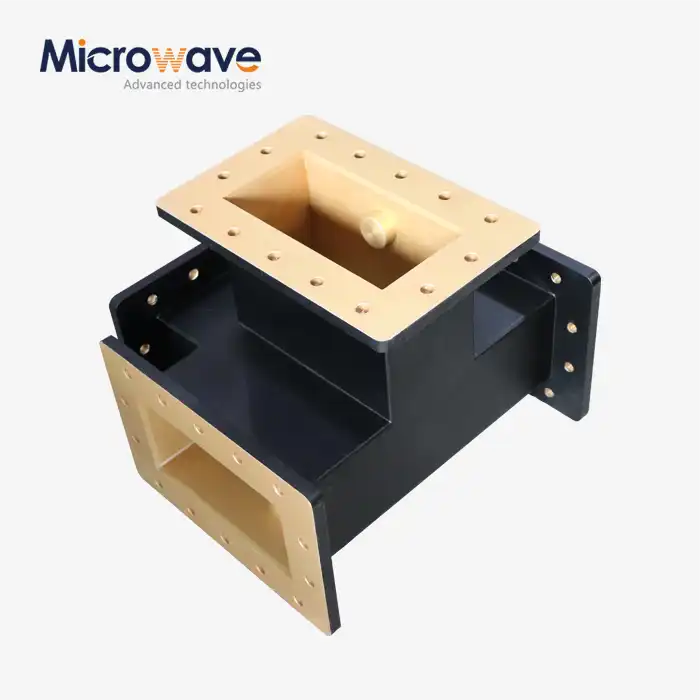
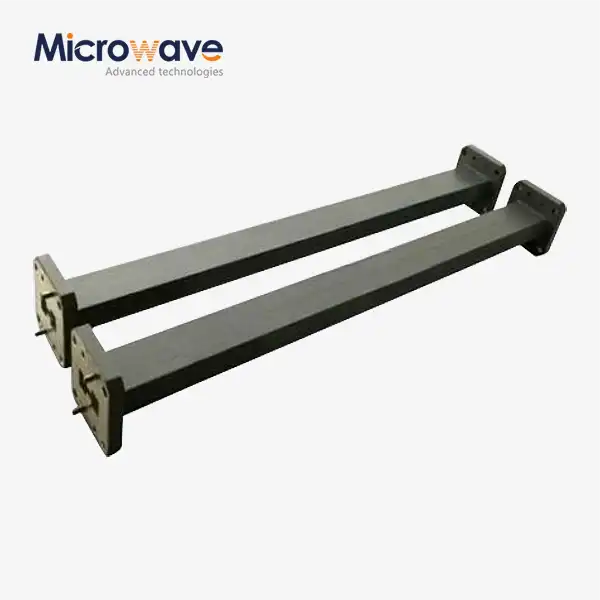
We have seen that the design of the feed network has a big effect on phase stability across a wide range of temperature and frequency levels using our measurement tools, such as our 24-meter microwave lab that can test up to 110 GHz in the far field. We are experts at making waveguide-based phase shifters, which are better at handling power and have lower insertion loss than microstrip options. This makes them ideal for high-power satellite ground stations and phased array radar systems.
Comparing Key Performance Metrics
There are a number of technical details that need to be carefully compared when choosing between analogue and digital beamforming options. These measurements have a direct effect on how well the radio system works when it is used in the real world.
Beamforming Accuracy: Digital systems are more accurate because software programs can make up for differences between parts and changes in the surroundings. Analogue systems depend on the accuracy of physical phase shifters to keep the beam pointing within 0.5 to 1 degrees, based on the frequency of tuning.
Power Efficiency: Because they share a single RF chain across the whole array, analogue designs use a lot less power per antenna element. Ten times as much power can be used by digital systems, which is an important thing to keep in mind for small cell sites with limited backhaul capability.
Hardware Complexity: Analogue beamforming cuts down on the number of parts needed, but passive networks have to be made with great care. For digital methods to work, they need a lot of digital signal processing power, fast data processors, and FPGA or ASIC processing power.
Bandwidth Capabilities of 5g antenna with phase shifter: Digital beamforming works best in wideband mode because phase changes can work with any signal bandwidth. Analogue phase shifters have phase shifts that change based on frequency, which could limit the immediate bandwidth or require more than one shifter section to make up for it.
When procurement teams understand these trade-offs, they can better match technical needs with financial facts and rollout schedules.
Phase Shifter Types and Selection Criteria
Different beamforming designs work best with different phase changer technologies. Semiconductor-based shifters that use PIN diodes or MEMS switches are popular in commercial 5G base stations that use analogue or mixed beamforming because they can switch quickly and fit into small spaces. Most of the time, these devices can handle modest amounts of power and work across cellular frequency bands.
Some types of waveguide phase shifters, like rotary vane and dielectric vane designs, work really well in high-power situations where they don't need to mitigate multipaction. These situations include military radar systems and satellite communication ground stations. Our waveguide shifters keep phase accuracy better than ±1 degree over the full range of mechanical travel and show insertion loss change below ±0.1 dB, no matter what phase setting is used. This is important for keeping the integrity of the antenna pattern.
Ferrite phase shifters can change the phase without switching back and forth, which is good for some radar uses. The choice relies on the frequency range, the amount of power that needs to be handled, the switching speed that needs to be met, and the environmental conditions, such as temperature changes, vibrations, and working in a vacuum.
Choosing Between Analog and Digital Beamforming for Your 5G Antenna Needs
In order to choose the best beamforming method, you need to fit technical skills to application needs while also taking into account the total cost of ownership. Before committing to a certain design, procurement teams should look at a number of important choice factors.
Application-Specific Requirements and MIMO Configurations
Massive MIMO setups, which use 64, 128, or even 256 radio elements, are the next big thing in 5G bandwidth improvement. To get the most out of spatial diversity, these systems need digital or mixed beamforming. In cities with a lot of traffic, the extra money spent on hardware is worth it because it lets dozens of people use the same frequency-time resource at the same time on separate bands.
On the other hand, cost-effectiveness and power efficiency are more important than multi-user features in rural service extension scenarios. The performance of analogue beamforming is good enough to move capacity to certain areas while staying within budget. In business settings, small cell deployments usually use analogue methods to direct beams through hallways or toward meeting rooms without needing complicated equipment.
Defence and aircraft uses have their own specific needs. Phased array radar systems that track targets use digital beamforming's adaptable features to tell the difference between things that are close together and get rid of jammer signals. As we've worked with defence companies to provide waveguide assemblies and phase shifters, we know that reliability, phase stability across a wide range of temperatures, and clear supply chain tracking are just as important as raw performance requirements.
Cost Analysis and Total Cost of Ownership
The initial prices of buying something are only one part of the overall cost. Because there are fewer RF components in analogue beamforming systems, they usually cost 30 to 50 percent less up front. Digital systems need a bigger initial investment, but they might have cheaper running costs because they can be upgraded automatically and optimised from afar.
Lifecycle factors include how hard it is to maintain, how often it needs to be calibrated, and the risk of technology becoming obsolete. Once they are set up correctly, analogue phase shifters, especially those with mechanically-tuned waveguide designs, can work reliably for decades with little maintenance. Digital systems may need software changes from time to time and can gain from Moore's Law by upgrading their parts.
Energy prices are becoming a bigger factor in purchasing choices. A digital beamforming base station could use several kilowatts more power than an analogue one, which would mean big running costs over the course of ten years. Thermal management infrastructure, like cooling systems and bigger containers, adds both one-time and ongoing costs that buyers need to plan for in their budgets.
Real-World Implementation Insights
A lot of commercial phone companies use hybrid beamforming designs, which blend digital processing on smaller subarray groups with analogue phase shifting at the RF front end. This method makes the most of digital beamforming's freedom while keeping hardware costs and power use low. Hybrid systems can work with multiple beams at the same time and use fewer RF chains than fully digital systems.
More and more, satellite ground station operators ask for digitally controlled analogue phase changers. This is especially true for those in charge of LEO arrays that need to track beams across the sky. These gadgets have the ability to handle power and low insertion loss of waveguide construction, but they also have electronic control interfaces that work with tracking systems that run themselves. Ground station integrators have bought these kinds of systems because they like how reliable the waveguides are and how they work with current digital control protocols.
Fully digital beamforming testbeds are often asked for by research institutions that are developing next-generation communication systems. These tools allow for the testing and development of algorithms before they are used in the real world. In exchange for more experimental freedom, they are more expensive and complicated.
Purchasing Guide: Procuring 5G Antennas with Phase Shifters Featuring Analog or Digital Beamforming
To be successful at buying, you need to know what your suppliers can do, set realistic deadlines, and make sure of quality. Because phased array components are so specialised, it's important to choose a provider carefully and be clear about what you need.
Supplier Qualification and Certification Requirements
Checking the qualifications of suppliers before buying 5G antennas with phase shifter parts helps avoid quality problems and problems with the supply chain. ISO 9001 approval means that quality management systems are well-established, but mission-critical apps need more attention. Defence and aircraft buyers should make sure that the goods they are buying are registered with ITAR or another export control system, if necessary.
RoHS compliance ensures that most markets are responsible for the earth and follow the rules. To keep multipaction from breaking down, suppliers to the satellite transmission market should show that they can hermetically seal products and know how to do vacuum tests. Our ISO 14001:2015 environmental management certification shows that we are committed to using environmentally friendly methods in all of our production processes.
Verification of manufacturing potential is important for more than just getting certified. When you visit suppliers' factories, you can find out if they have the right test tools, like vector network analysers that work with your frequency ranges, weather rooms for changing temperatures, and anechoic chambers for making sure antenna patterns are correct. With our 24-meter microwave lab and measurement tools that work from 0.5 GHz to 110 GHz, we can confirm performance specs that many of our rivals can only guess at by simulating them.
Pricing Structures and Lead Time Expectations
Prices for phase shifters vary a lot depending on the technology, frequency range, and level of customisation needed. In large quantities, commercial-grade semiconductor phase changers for 5G uses below 6 GHz could cost between $20 and $100 per element. Depending on the needs, precision waveguide phase shifters for radar or satellite use usually cost between $500 and $5,000 per unit.
More money needs to be spent on full antenna systems that include beamforming networks. Due to the number of RF links, analogue beamforming hardware with 32 elements could cost between $15,000 and $40,000. Digital beamforming hardware with the same number of elements could cost between $80,000 and $200,000. Custom designs cost more because of the time and money it takes to develop them, make prototypes, and test them to make sure they work properly.
Costs and the number of orders affect how long it takes to make something. Standard catalogue phase shifter parts may be sent out within two to four weeks. It usually takes between 8 and 16 weeks from the time you place an order for customised waveguide assemblies that are made to fit specific frequency bands, power handling needs, or mechanical connections. It could take 6 to 9 months to make complex phased array antennas with built-in beamforming networks, especially if approval tests and paperwork are added on.
Technical Support and Customization Capabilities
Long-term project success depends on ongoing expert help. Suppliers should include installation instructions, such as the right pressure values for waveguide flanges, suggested mounting angles for heat management, and steps for calibrating the equipment. Help with troubleshooting is needed when systems suddenly lose performance or become sensitive to their surroundings.
We provide OEM services that let businesses get solutions that are completely unique and meet their needs. During the planning process, our engineering team works together to make sure that all of your needs are met. This includes changing the types of flanges to fit certain mounting configurations, the frequency ranges to match new spectrum allocations, and the power handling changes needed for specific uses. Rapid development services can send evaluation units within weeks, so you can try and make changes before committing to large-scale production.
When choosing a seller, you should pay attention to the warranty terms and the ability to fix things. Standard warranties usually cover production flaws for 12 to 24 months. For deployments of vital equipment, you may be able to get longer warranties or service agreements. Figuring out whether fixes can be done in the field or if the machine needs to be recalibrated in the factory helps with planning maintenance funds and spare parts strategies.
Future Trends and Innovations in 5G Antenna Beamforming with Phase Shifters
Keeping up with new technologies lets you make forward-looking buying decisions that keep your competitive edge and increase the value of your investments. In the next few years, beamforming designs are likely to change in a number of ways.
Advancements in Hybrid Beamforming Approaches
As semiconductors get better and algorithms get better, hybrid designs keep changing. Intelligent subarray partitioning and combined analog-digital processing in next-generation designs cut down on the number of RF chains needed for a given amount of performance. These improvements make the technology cheaper while keeping a lot of the freedom of digital beamforming.
More and more, machine learning algorithms are improving beamforming weights by looking at past channel trends and guessing how users will behave. Instead of only responding to user presence, predictive beamforming can direct beams to areas where users are likely to show, cutting down on delay and making handoffs work better. These methods work especially well with mixed designs that balance the need for computing power with the ability to respond quickly.
Intelligent surfaces that can be reconfigured are a new technology that can be used with standard beamforming. These passive or semi-passive metasurface screens change the electromagnetic properties of signals to send them in the right way. This makes beamforming work in the propagation environment as well. When combined with regular phased arrays, it might be possible to use new distribution methods to improve coverage and handle interference.
Preparing for 6G and Next-Generation Standards
Moving toward 6G will raise frequency ranges into millimeter-wave and maybe even terahertz bands. As bands get shorter, phase shifter technologies need to change in order to keep insertion loss and phase accuracy at a good level. At these frequencies, it's physically impossible to integrate semiconductors, which could spark new interest in advanced waveguide and dielectric lens-based beamforming methods.
For 6G uses like hologram communication and industrial robotics, which need very low delay, beamforming adaptation rates of 5 G antennas with phase shifters will need to be faster. The phase changer needs to be able to switch between beams faster while still keeping the phase coherent. Real-time digital beamforming at wider bandwidths will require more computer power, which will lead to the creation of specialised gear and better algorithms.
Strategies for buying things should give more weight to sellers who show they are investing in study and have a clear plan for meeting these new needs. When buyers work with companies that are actively creating next-generation phase shifter technologies, they can get new features as standards become more established without having to deal with disruptive equipment changes.
Strategic Recommendations for Future-Ready Procurement
Modularity and software-defined functions make tools last longer by letting them be upgraded in the field as technology changes. By naming open ports and standard protocols, you can be sure that your system will work with new baseband processing tools and network management systems. Keeping your options open by avoiding private lock-in lets you use the best parts from new sources as they come out.
Strategic benefits can be gained by working with sources who can do both current production and advanced research. We are always putting money into improving our production methods and measurement tools so that we can meet the needs of new frequency bands and performance standards before they become popular in the market. Because we have a lot of experience with waveguides and are ready to work with partners on new, unique designs, partners can lead technology changes instead of following them.
Long-term supply deals with qualified makers lower the risk of running out of parts and prices going up and down. Precision RF parts are very specialised, so production capacity can't grow quickly when demand goes up. Strategic buyers get a steady supply of goods at a good price by making long-term promises that allow suppliers to spend on growing their capacity and making their processes better.
Conclusion
When choosing between analogue and digital beamforming for 5G antenna setups with phase shifters, performance needs must be weighed against practical and financial limitations. Analogue designs offer low-cost beam steering for uses where supporting multiple users at the same time isn't necessary. Digital beamforming gives you the most options and ability, but it requires a lot of money for tools and power. More and more, hybrid methods offer a useful middle ground that takes the best parts of both fields.
A successful procurement relies on carefully screening suppliers, making realistic requirements, and paying attention to costs that go beyond the initial purchase price. As 5G networks get better and 6G development speeds up, it will be important to keep working with new makers who can adapt to changing needs in order to keep infrastructure competitive.
FAQ
1. What determines whether analog or digital beamforming suits my application better?
The choice is mostly based on three things: how many users you need to handle at the same time, how much power you have available, and how much it costs. Digital beamforming works best when it can serve a lot of people at once with separate beams, which is common in crowded cities. When cost and power efficiency are more important than multi-beam freedom, analogue beamforming is a good choice for single-beam tracking or directional coverage. More and more, hybrid designs offer a modest level of multiuser capability at controlled levels of cost and power.
2. How do phase shifter specifications affect overall antenna performance?
Accuracy in phase has a direct effect on the accuracy of beam aiming and the amount of sidelobes. The total link budget and system effectiveness are based on insertion loss. Beam form accuracy is affected by how linear the phase shifter is across its adjustment range. For purchasing, make sure the phase accuracy is within 2 degrees for most uses, and check how the insertion loss changes as the phase settings are changed. Stable loss (within 0.1 dB) means the design is good. Power handling is important for space uses, especially in satellite and radar systems that need to work without any vibrations in a vacuum.
3. What maintenance requirements should I expect for phased array systems?
Each design has its own maintenance needs. Periodically calibrating analogue systems with mechanical phase shifters is needed to make sure that the phase accuracy hasn't changed because of wear and tear on the parts. Digital systems need to have their software updated and their RF chains replaced every so often as parts wear out. Environmental factors are very important. For example, systems outside are subject to weather, changes in temperature, and the possibility of water getting in, all of which speed up decline. Plan to check the settings once a year and keep extra parts for important systems on hand to keep downtime to a minimum while they are being fixed.
Partner with a Trusted 5G Antenna with Phase Shifter Supplier
Advanced Microwave Technologies Co., Ltd has been making precise waveguide systems, phase shifters, and beamforming networks for mission-critical uses for more than 20 years. Our ISO 9001:2015 certification and cutting-edge 24-meter microwave darkroom make sure that every 5g antenna with phase shifter assembly we ship meets strict performance standards. We work with defence companies, satellite operators, and telecommunications developers who need products that are reliable and have been tested thoroughly.
Our OEM services offer solutions that are made to fit your exact needs, from making a sample to delivering a large batch of products. Our engineering team works together to make sure that the plans we make are the best ones for your needs, whether you need waveguide phase shifters for high-power satellite ground stations or digitally controlled systems for next-generation base stations. Contact craig@admicrowave.com to talk to one of our technical experts about your needs and find out why top companies choose ADM as their 5G antenna with phase shifter maker.
References
1. Andrews, J.G., et al. (2014). "What Will 5G Be?" IEEE Journal on Selected Areas in Communications, 32(6), 1065-1082.
2. Guerreiro, J., Dinis, R., and Montezuma, P. (2018). "Analytical Performance Evaluation of Precoding Techniques for Nonlinear Massive MIMO Systems with Channel Estimation Errors." IEEE Transactions on Communications, 66(4), 1440-1451.
3. Hong, W., et al. (2017). "Multibeam Antenna Technologies for 5G Wireless Communications." IEEE Transactions on Antennas and Propagation, 65(12), 6231-6249.
4. Kutty, S. and Sen, D. (2016). "Beamforming for Millimeter Wave Communications: An Inclusive Survey." IEEE Communications Surveys & Tutorials, 18(2), 949-973.
5. Mailloux, R.J. (2005). Phased Array Antenna Handbook, 2nd Edition. Boston: Artech House.
6. Roh, W., et al. (2014). "Millimeter-Wave Beamforming as an Enabling Technology for 5G Cellular Communications: Theoretical Feasibility and Prototype Results." IEEE Communications Magazine, 52(2), 106-113.