




Why Average Power Rating Matters in Termination Waveguide Selection?
It's not just picking a part from a catalogue when choosing a termination waveguide—it's about keeping expensive RF systems from getting damaged in a way that can't be fixed. The average power number tells you how much constant power a termination waveguide can safely take in and send out without breaking down or losing its performance. If procurement teams don't pay attention to this standard, the results can be anything from signal distortion and higher VSWR to total component failure, which could damage sensitive equipment upstream, like solid-state power amplifiers or travelling wave tube amplifiers. Knowing the average power rate is important for mission-critical systems like radar, satellite ground stations, and aircraft communication systems, where downtime directly costs money and operations.
Understanding Termination Waveguides and Average Power Rating
What Makes Termination Waveguides Essential in High-Frequency Systems
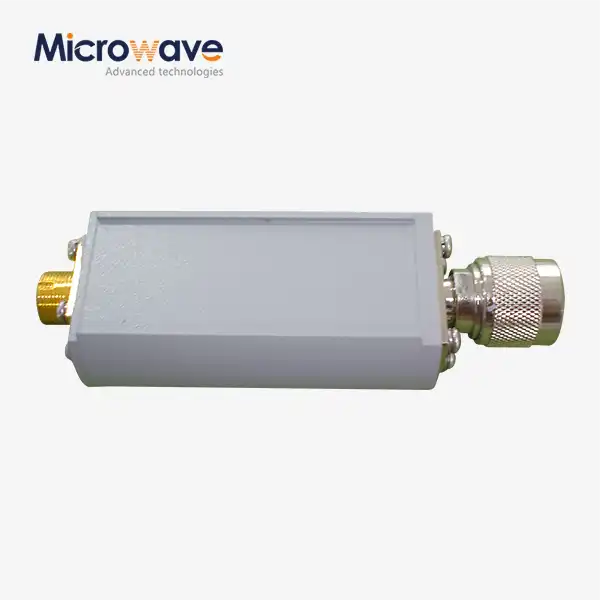
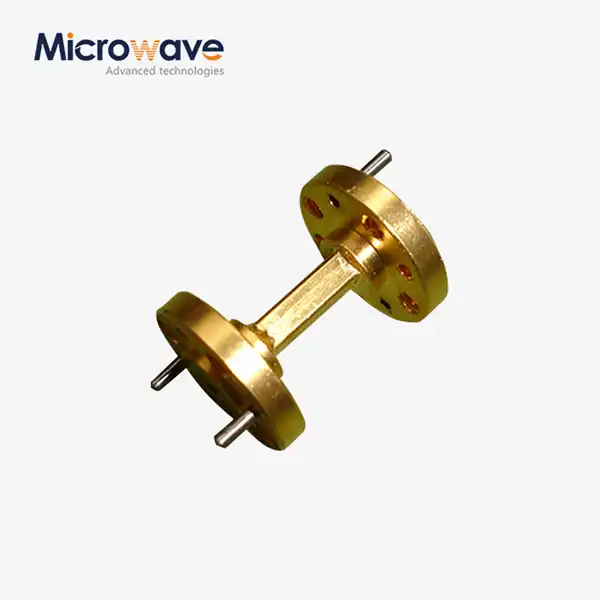
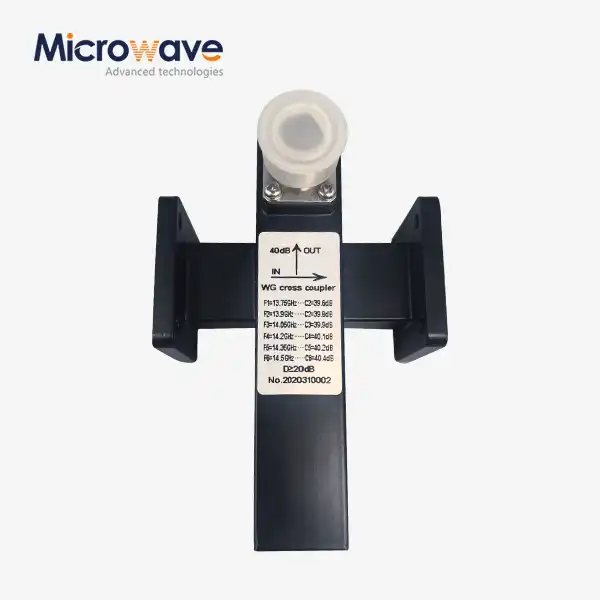
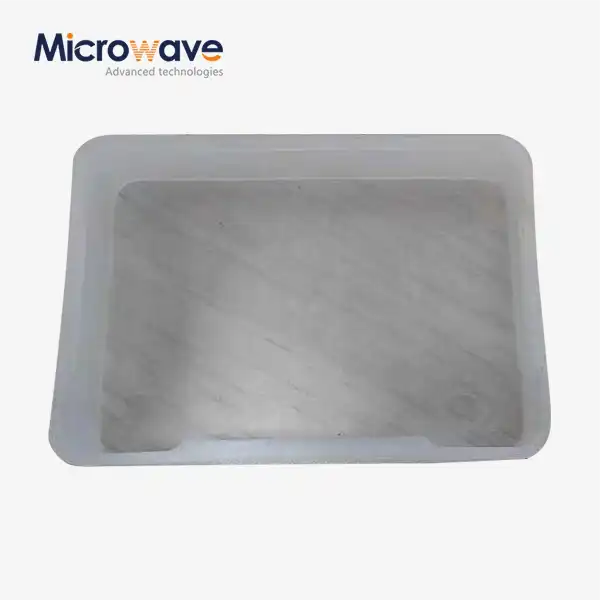
As a precision-engineered energy collector, a termination waveguide turns electromagnetic signals into heat energy while keeping impedance matching across certain frequency bands. In contrast to simple resistive loads, these devices use curved dielectric structures, which are usually carbon-impregnated wedges or silicon carbide elements. These structures change the termination waveguide's characteristic resistance over time to match the load. This design keeps echoes to a minimum and keeps VSWR values below 1.15:1 across all operating bandwidths. They are used as termination waveguides in radar calibration, satellite uplink protection, and lab tests to make the antennas work like they should without sending energy into the nearby spectrum.
Defining Average Power Rating and Its Physical Basis
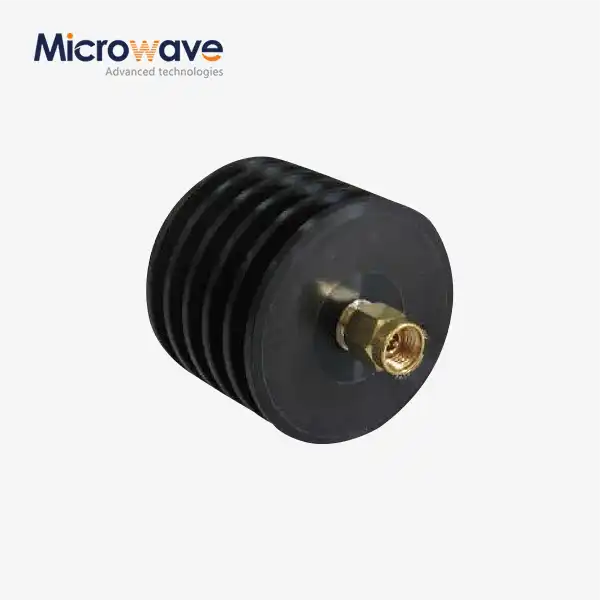
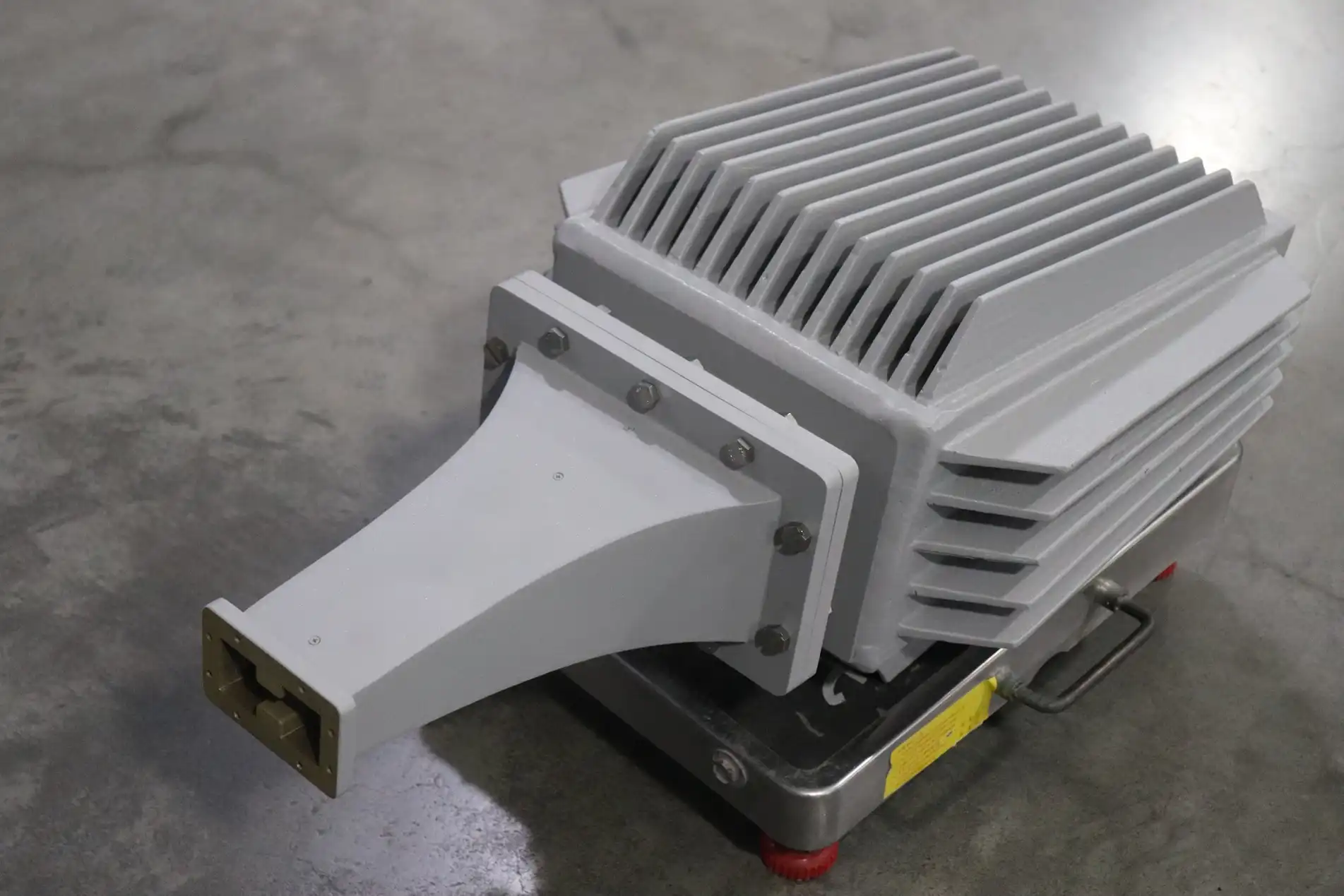
The average power number tells you how much heat a termination waveguide can handle over a long period of time while it's operating in continuous wave mode without going over safe temperature limits. This measure is directly related to the device's heat dissipation design. Air-cooled units with convective fins can usually handle 50 to 500 watts of load, while liquid-cooled models with water jackets can handle loads in the kilowatt range. The grade takes into account the specific heat capacity of the absorbing elements, the ambient working temperature, and the thermal conductivity of the housing materials (copper for high efficiency and aluminium for weight-sensitive aircraft uses). If you go over this number, thermal runaway happens. This is when rising temperatures damage the dielectric qualities of materials that absorb electricity, creating a feedback loop that speeds up failure.
How Power Rating Connects to System Longevity
Respecting normal power levels makes parts last a lot longer. Field installations have shown that running termination waveguides at 70–80% of maximum capacity can double the life of units compared to units that are pushed to their limits. This margin accounts for things in the environment that might affect the system, such as bad airflow, lower cooling efficiency at higher elevations, and sudden power surges during system transients. Understanding this link is helpful for procurement managers who are looking for parts for long-term radar sites or satellite ground stations that are on all the time. It means fewer replacements, shorter maintenance windows, and more accurate lifetime costs.
Critical Factors Behind Average Power Rating Importance
Thermal Management: The Primary Engineering Challenge
Thermal management is the most important engineering problem. The average power number is mostly determined by how much heat is lost. If electromagnetic energy comes into a termination waveguide, it can be turned into heat at rates that are higher than 100 watts per cubic centimetre in high-power systems. Without enough thermal paths, temperatures inside rise quickly. Silicon carbide absorbers can handle 1000°C, but solder joints, flange seals, and materials used for the housing break down at much lower temperatures. To set safe continuous working limits, engineers who build these systems figure out the heat flux density, the thermal resistance from the absorber to the housing, and the cooling capacity through convection or conduction.
Material Selection and Its Impact on Power Handling
Power level is greatly affected by the choice of absorbing materials. Lossy ceramics or graphite composites might be used for low-power sensor loads that handle data at the milliwatt level. Refractory materials are needed in industrial and defence settings. Silicon carbide has excellent thermal conductivity (120 W/m·K), and its electrical qualities stay fixed over a wide temperature range. Ferrite-based filters work very well at lower frequencies, but they have problems above a certain temperature, where the magnetic qualities break down permanently. New developments in material science keep pushing the limits of power density, which lets designers make devices that are smaller without losing cooling performance.
Common Failure Modes Linked to Inadequate Power Rating
Most of the time, things break because of thermal stress cracks. When you heat and cool things over and over, the metal housings and ceramic absorbers expand at different rates. This causes the dielectric wedge to crack and create discontinuities that cause the VSWR to spike. Overpowering can cause voltage breakdown, which causes arcing inside the termination waveguide cavity. This carbonises the surfaces and changes the impedance matching forever. When the flow of water is interrupted in liquid-cooled units, they burn down completely in seconds at full power. These types of failure show why specifications for purchases must include working conditions, duty cycle analysis, and derating factors that are right for the purpose.
Comparing Termination Waveguides Based on Average Power Rating
Performance Variations Across Frequency Bands and Power Levels
Termination waveguides have different properties based on the frequency range they are meant to work with. X-band (8–12 GHz) units are often used in marine radar and satellite communications. They have power levels of 100–300 watts on average when they are air-cooled. Ka-band termination waveguides (26-40 GHz) are used for new 5G backhaul and defence uses, but they have to fit into smaller spaces. Air-cooled versions can only handle 50–100 watts, while liquid-cooled versions can handle 200+ watts. Lower frequency S-band (2-4 GHz) devices used in weather radar take advantage of bigger sizes to reach 500–1000 watt values by increasing the surface area of their fins and making the airflow better.
Evaluating Trade-Offs Between Cost and Capability
For projects that need to stay within a budget, standard catalogue items with modest power ratings and higher VSWR tolerances are often the best choice. A commercial-grade WR-90 termination waveguide with a power rating of 200 watts average and a VSWR of 1.20:1 could cost $300 to $500 and be fine for testing in the lab or for non-critical uses. Precision military-grade versions that can handle 300 watts of power, have a 1.05:1 VSWR, and are made to withstand shock and pressure can cost more than $2000. The difference in price is due to more than just power handling. It also includes strict quality control, the ability to track supplies, and a lot of paperwork that is needed to follow defence buying rules.
Industry Benchmark Analysis
Different leading makers have different design ideas. Offerings from Pasternack focus on quick availability and standard form factors, which makes them popular for prototype development and quick-turn projects where delivery speed is more important than performance. Werlatone is an expert in high-power termination waveguides with advanced liquid cooling systems. They focus on radio emitters and particle accelerators, which regularly lose several thousand watts of power. As experts in our field, Advanced Microwave Technologies Co., Ltd., we can create unique solutions that strike a good balance between these two extremes. These solutions combine precise manufacturing with adaptable design to meet specific power rating needs without adding unnecessary costs that are unnecessary.
Practical Guidance: How to Select Termination Waveguides by Average Power Rating
Establishing System Power Demands with Safety Margins
First, correctly measure or figure out how much continuous power your system can send to the termination waveguide. Pulsed transmission radar systems need to be carefully looked at. For example, a 10 kW peak power radar with a 10% duty cycle produces 1 kW of average power, so the termination waveguide needs to be rated for at least 1.25 to 1.5 kW to allow for safety gaps. Engineers at satellite ground stations have to think about amplification overload and power that is reflected because of antenna mismatches. Write down the worst-case possibilities, such as the highest allowed transmitter output, any possible standing wave inputs, and environmental factors that could lower the signal's power, such as high altitude (where less dense air affects cooling) or high ambient temperatures.
Analyzing Critical Specifications Beyond Power Rating
Second is frequency range compatibility; make sure that the termination waveguide's bandwidth covers your working frequencies with enough room to spare. A device rated 8.2-12.4 GHz can cover X-band with some band-edge rolloff, but a device rated 8.0-12.0 GHz might have worse VSWR at the edges. The properties of a material are important, especially in places with high temperatures. For example, aluminium housings are lighter for use in the air, but copper is 60% better at conducting heat. The ability to place something depends on its size, the type of flange (UG-cover or CPR), any orientation restrictions, and the amount of space needed for cooling airflow or pipe hookups.
Installation Best Practices for Thermal Optimization
The way the fan is mounted has a big effect on natural convection cooling. For example, vertical installs with fins lined up to encourage airflow through the chimney effect can be 20–30% more efficient than horizontal designs. Liquid-cooled termination waveguides need the right amount of coolant (usually 1-2 liters/minute for kilowatt-class units) and glycol mixes that are rated for the temperature ranges they will be used in. Between mounting surfaces and heat sinks, thermal interface materials fill in any gaps left by air that acts as a thermal barrier. We suggest keeping an eye on thermocouples in high-power setups to make sure that the operating temperatures stay within the acceptable ranges during long job cycles.
Verification Methods and Compliance Checks
Swept VSWR readings across the whole frequency range should be part of the post-installation testing process to make sure the installation went well, and the components are still in good shape. Check the recorded values against the manufacturer's specifications and look into any differences that are bigger than 10%. Verification of power handling usually involves slowly increasing the power while keeping an eye on the rate at which the temperature rises—stable thermal balance means the cooling system is working properly. For mission-critical defence uses, make sure you get test results that show MIL-STD-202 temperature cycling, vibration resistance per MIL-STD-810, and humidity exposure testing. This will make sure that the parts work well throughout their deployment lifetimes.
Procurement Considerations for High-Quality Termination Waveguides
Evaluating Supplier Certifications and Quality Systems
ISO 9001:2015 approval means that quality management is organised, but it also sets minimum standards. For export-controlled uses, defence companies should check that the application has both AS9100 aerospace approval and ITAR registration. Ask for proof that your measurements can be tracked back to national standards labs. For example, network analyser calibration certificates, power meter verification records, and heat chamber qualifications show that you can trust your measurements. The ISO 9001:2008 certification, RoHS compliance, and more than 20 years of experience in manufacturing at Advanced Microwave Technologies Co., Ltd. give you peace of mind that every termination waveguide meets documented standards through strict testing methods.
Custom OEM Services for Unique Power Rating Requirements
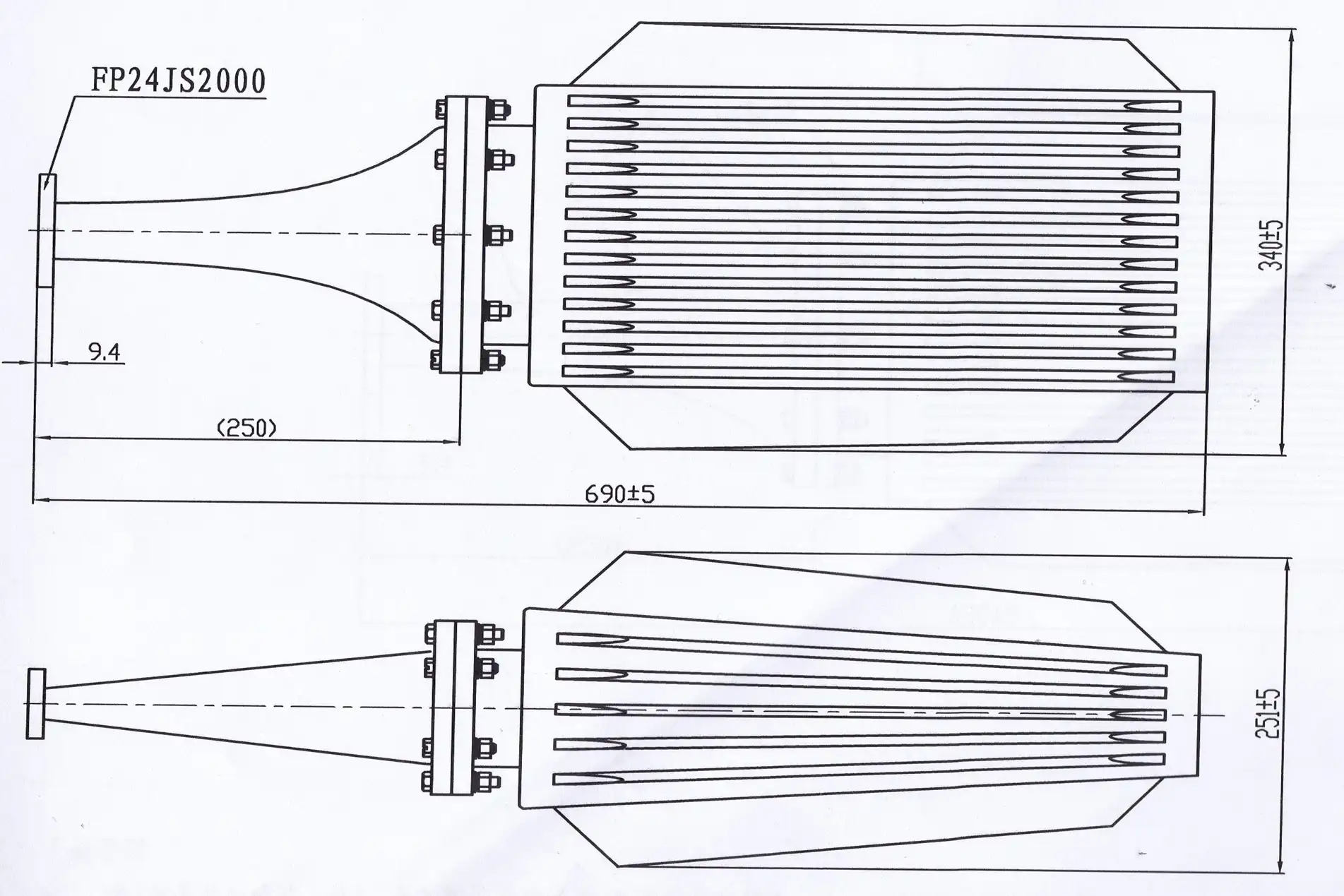
About 60 to 70% of uses can be met by standard catalogue items, but there is still a big need for unique solutions. OEM services let you make changes like increasing the power levels by upgrading the cooling systems, shifting the frequency bands by increasing the size, or making mechanical changes for odd mounting arrangements. Prototyping lets you test things out before committing to large-scale production. Within 3–4 weeks, you can get engineering samples that can be used to test system integration and performance. Our technical support team works with procurement engineers to turn application requirements into specifications that can be used to make the product. This makes sure that the product provided exactly meets practical needs.
Logistics and Lead Time Management
Delivery trustworthiness has become an important factor in buying things because of problems in the global supply chain. Make sure you know if the lead times you're given are just for making or also include the time it takes to get the materials. Getting exotic materials can add weeks to plans. Set up a buffer stock of important spares, especially for systems that are used in rural areas where a broken part can stop activities. Bulk price structures often offer savings of 15–25% on amounts greater than five units, which makes strategic purchasing a good idea from an economic point of view. Before delivery, ask for technical paperwork packages that include dimensional models, material certifications, and test data. This will allow you to plan installation methods and acceptance test plans ahead of time.
Conclusion
When choosing termination waveguides for demanding RF systems, the average power level is the most important factor. This standard combines thermal engineering, material science, and electrical performance into a single measure that can be used to directly predict how reliable parts will be and how long a system will last. When procurement professionals fully understand the effects of power ratings—taking into account the need for thermal management, frequency-specific performance characteristics, and application-specific safety margins—they can make smart choices that avoid costly failures and lower the total cost of ownership. As microwave systems keep getting better at higher frequencies and power densities, it becomes more useful to work with experienced makers who can give both standard solutions and custom engineering.
FAQ
1. How do I determine the correct power rating for pulsed radar applications?
To find the average power, multiply the peak power by the duty cycle and then add a 1.25 to 1.5x safety limit. Check both the average thermal rate and the peak power specs to make sure they are correct. People often get the wrong idea about how to handle thermal management with radar systems that have 1% duty cycles. For example, a 50 kW peak emitter with 1% duty cycle still produces 500 watts of power on average, which means it needs a lot of cooling infrastructure.
2. Can environmental conditions affect a termination's power rating?
Of course. Installations at high elevations make the air less dense, which lowers the efficiency of atmospheric cooling by about 3% for every 1000 feet above sea level. The thermal gradient that moves heat away from a surface decreases as the temperature rises. For example, a termination waveguide that can handle 300 watts at 25°C might only be able to handle 225 watts at 50°C. When asking for quotes, you should always be clear about the real working conditions so that you get the right-rated parts.
3. What distinguishes low-power from high-power waveguide terminations?
Low-power units (less than 50 watts) usually have short, curved dielectric absorbers that don't cool themselves and are only a few inches long. Large heat sinks with finned surfaces or liquid cooling jackets are used in high-power designs. These can weigh several kilograms and be 12 inches or more in length. Different materials are used for collecting energy. High-power units use refractory ceramics like silicon carbide that can withstand high temperatures, while low-power units may use simpler alloys that lose energy.
Partner with ADM for Precision Termination Waveguide Solutions
Advanced Microwave Technologies Co., Ltd. has been making and supplying termination waveguides for more than twenty years and is very good at what they do. Our tech team knows how important it is for average power rating and system reliability to work together, so they can give you options that exactly meet your needs. We offer full support from the initial planning stage through delivery of the hardware, whether you need standard WR-series air-cooled termination waveguides for lab use or special liquid-cooled designs for kilowatt-level satellite ground stations. Our advanced measurement capabilities up to 110 GHz, ISO-certified production processes, and fast prototyping services all work together to make sure you get parts that meet strict performance standards. Get in touch with craig@admicrowave.com right away to talk to one of our technical experts about your specific power rating needs. We're ready to be your trusted termination waveguide source for mission-critical purposes.
References
1. Pozar, David M. Microwave Engineering: Waveguide Components and Termination Load Design, 4th Edition. Wiley Publishing, 2012.
2. Saad, Theodore S. High-Power Microwave Terminations: Thermal Management and Material Selection Strategies. IEEE Transactions on Microwave Theory and Techniques, Volume 58, Issue 7, 2010.
3. Harvey, A.F. Microwave Engineering Handbook: Passive Components and Waveguide Assemblies, Institution of Engineering and Technology, 2007.
4. Collin, Robert E. Foundations for Microwave Engineering: Termination and Matched Load Theory, 2nd Edition. McGraw-Hill Education, 2001.
5. Montgomery, C.G., Dicke, R.H., and Purcell, E.M. Principles of Microwave Circuits: Waveguide Terminations and Power Handling, MIT Radiation Laboratory Series Volume 8, Boston Technical Publishers, 1964.
6. Rizzi, Peter A. Microwave Engineering: Passive Technologies and Component Design, Prentice Hall International, 1988.