




Which is better, a helix antenna or a patch antenna?
The answer depends on your specific application. A quadrifilar helix antenna excels in satellite communications, GPS navigation, and UAV systems due to its omnidirectional coverage, circular polarization, and resistance to multipath interference. Patch antennas, conversely, suit cost-sensitive, space-constrained applications like IoT sensors and WLAN devices where directional gain and compact form factors matter most. B2B procurement teams must evaluate radiation patterns, polarization needs, environmental durability, and integration complexity to match antenna performance with operational demands and budget realities.
Understanding Helix and Patch Antennas
Helix Antenna Design Fundamentals
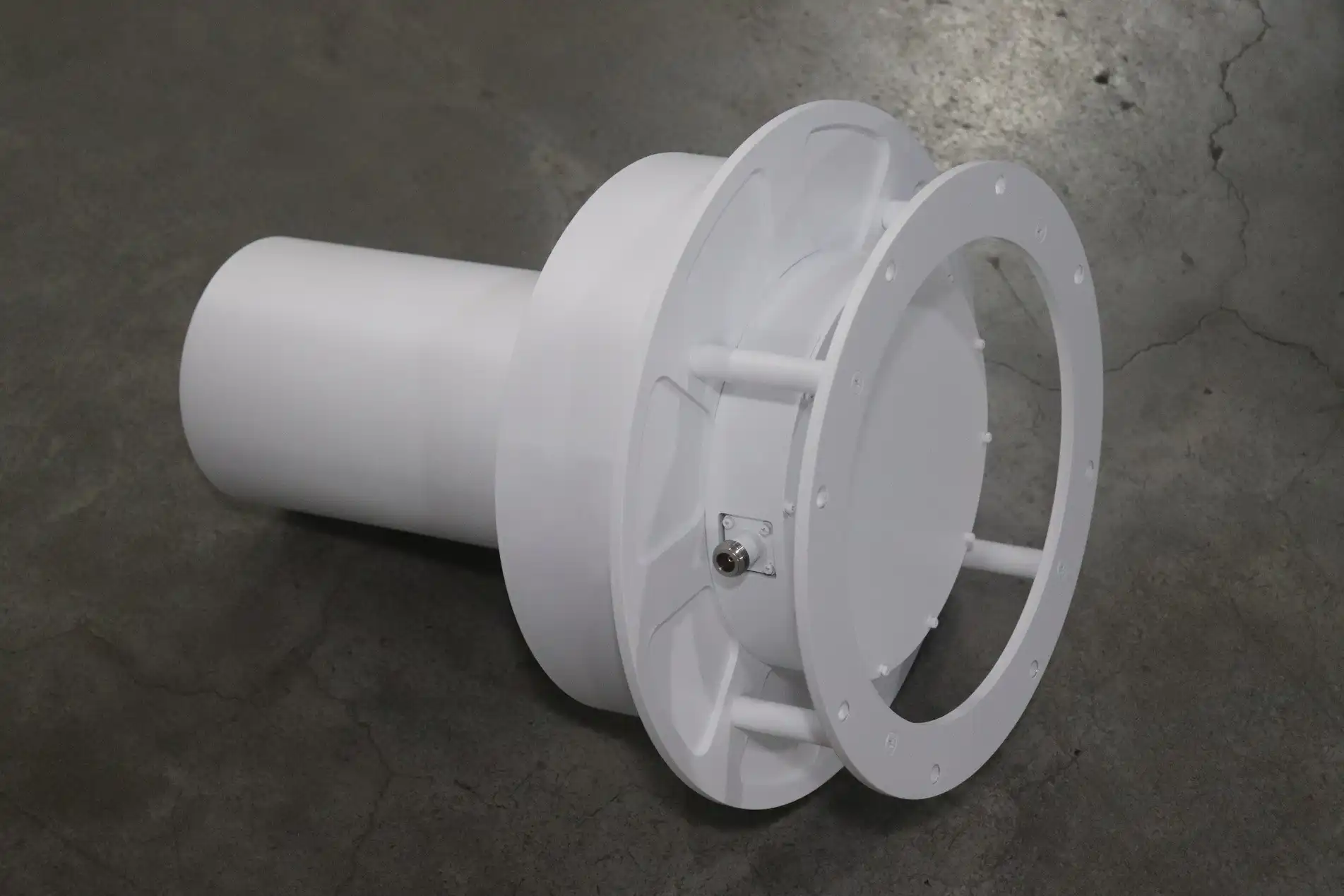
Helix antennas work by sending electricity along a spiral wire, which makes axial radiation that is not parallel to the coil's plane. The quadrifilar helix antenna takes this idea a step further by using four helical elements wound around a central shaft. Each element is fed with a series of 90-degree phase changes ranging from 0° to 270°. This feeding arrangement makes a cardioid-shaped radiation pattern with very pure circular polarization, usually with axial ratios below 3 dB over a beamwidth of 120° to 160°. The quadrifilar configuration keeps the signal lock even when satellite elevation angles drop to the sky or when UAVs make sharp turns. This is not possible with monofilar or bifilar configurations. The antenna doesn't need an external ground plane, so it can be put into composite housings or cylinder-shaped cases without losing its signal. Advanced designs from companies like Advanced Microwave Technologies Co., Ltd use dielectric ceramic cores to make things smaller or flexible printed circuit boards to make things lighter for use in space.
Patch Antenna Construction Principles
Patch antennas are made up of a metal radiator that is either rectangular or circular and a ground plane that is split from it by a thin dielectric base. When the radiator is excited using edge feeding, probe coupling, or aperture means, it creates a resonant chamber that sends out electromagnetic fields that are linearly polarized. The size of a patch is determined by its half-wavelength at the working frequency. This means that patches are naturally small at microwave frequencies. The need for a ground plane makes a radiation pattern that only goes in one direction. Beamwidths are usually between 70° and 90°, which concentrates energy in one half-sphere. This directional property works well in situations where service zones are clear and reliable, like when RFID readers scan fixed areas or Wi-Fi access points serve indoor areas. Patch antennas fit impedance by carefully adjusting the position of the feed point and the properties of the material. They usually have VSWR values below 2:1 over narrow bandwidths of 2% to 5%.
Comparative Architecture Overview
The differences in structure between quadrifilar helix antenna these kinds of antennas are what make them strong. Helix designs give up small size for coverage in all directions and the ability to change the polarization, while patches give up wide coverage of the radiation pattern for a smaller size and the ability to make more of them. Purchasing teams have to weigh these architectural trade-offs against the needs of each application. For example, a satellite terminal needs the helix's hemispherical coverage to keep the link open no matter which way the platform is facing, while an IoT gateway can benefit from the patch's focused gain to increase range within a defined sector.
Performance and Application Analysis
Radiation Pattern Characteristics
The quadrifilar helix antenna makes a pattern that is almost omnidirectional in azimuth and a cardioid shape in elevation. It gives the same amount of gain from the sky to 10° above the horizon. This wide-angle coverage is very important for platforms that aren't fixed. For example, drones with RTK-enabled GNSS modules can keep their position to within a few centimeters even when they're flying quickly and roughly, because the antenna keeps seeing satellites from all attitude angles. Most of the time, measured gain is between 0 and 3 dBic, with pattern stability being more important than peak directivity. Patch antennas produce a directed pattern that has a high gain of 5 to 9 dBi and is mostly contained within a half-power beamwidth of 65 to 80°. When the emitter and listener stay in the same place, this directed radiation improves the link budget efficiency. This property is used by industrial wireless sensors spread out on factory floors to set up point-to-multipoint networks. These networks have gateway antennas that send energy to known groups of devices, keeping disturbance from neighboring systems to a minimum.
Polarization Properties and Multipath Rejection
The circular polarization that comes with quadrifilar designs is very helpful in places where echoes and signal twisting are common. Maritime satellite phones that work near the coast experience Faraday spin as their signals travel through the ionosphere. RHCP (Right-Hand Circular Polarization) antennas stop this effect, keeping the signal strong where linear polarization would lose 20 dB or more. The antenna's axial ratio performance—a measure of polarization purity—stays below 3 dB throughout the main coverage area. This means that it works with GPS L1/L2, GLONASS, and Galileo all at the same time. Patch antennas make linear polarization, which can be either vertical or horizontal, based on the direction of the feed. Circle polarization can be achieved with dual-feed patches by using hybrid couplers, but this makes things more complicated and causes insertion loss. When electromagnetic waves hit linearly polarized patches in urban canyons, they lose 6 to 10 dB of signal-to-noise ratio (SNR) because echoes arrive with random phase and polarization states. This trade-off is good for situations where multipathing isn't a problem, like rooftop-to-rooftop wireless links with direct lines of sight.
Frequency Range and Bandwidth Considerations
Quadrifilar helix antennas work well from 400 MHz to 10 GHz, and some special versions can even work at Ka-band frequencies. The resonant structure works in a narrowband range, usually between 5% and 15% of the fractional bandwidth, and naturally blocks interference from other bands. Advanced Microwave Technologies Co., Ltd makes helix antennas that work from 1 GHz to 40 GHz and meet the needs of L-band satellite transmissions as well as millimeter-wave 5G uses. The narrow bandwidth works well for programs that clearly describe their spectrum assignments, which means that less front-end filtering is needed. Patch antennas cover the same frequency bands, but their immediate bandwidths are usually only 2% to 5% if they don't have impedance matching networks. When wideband patches use stacked parasitic elements or aperture coupling, they can get 20% to 30% bandwidth, but they have to give up profile height and add gain ripple. IoT apps that use set ISM bands (2.4 GHz, 5.8 GHz) can handle narrow bandwidths, but software-defined radios that need to be able to change frequencies prefer helix designs or other layouts.
Real-World Application Mapping
Satellite communication stations on ships use quadrifilar helix antennas to keep Iridium or Inmarsat connections strong even when the ship tilts, rolls, or yaws. The antenna's omnidirectional design gets rid of the need for mechanical tracking, which makes the system simpler and lowers the cost of upkeep. CubeSats' telemetry devices use QHAs for TT&C (Telemetry, Tracking, and Command) links. This makes sure that base stations can stay in touch even if the satellites tumble during the orbit insertion phases. When base stations serve user units within 90° sectors, patch antennas are most often used for fixed wireless access. Patch arrays are used to shape service zones in municipal Wi-Fi networks that cover public parks. These arrays focus energy on pedestrian areas while blocking backlobes that go to home neighborhoods. Patch antennas are used by RFID sites that scan items on conveyor belts to define questioning zones. This keeps items from being read accidentally from lanes next to them.
Comparative Evaluation for Procurement Decision-Making
Performance Metrics Comparison
When looking at gain specs, quadrifilar helix antennas have a low peak gain (0 dBic to 3 dBic), but they work the same way in the upper half of the sky. When purchasing parts for emergency locator lights, procurement engineers put this pattern stability above absolute gain because they know that relief coordination planes could come from any direction. Patch antennas have a higher peak gain (6 dBi to 9 dBi) within a smaller beamwidth, which makes them better for point-to-point links where alignment can be managed. When receiving satellites, spiral shapes are better because they have lower noise figures. Low-Noise Amplifiers are less likely to be affected by out-of-band jammers and false signals thanks to the antenna's passive filtering through resonant frequency selection. In tests done in the field, comparing QHAs to patches for GPS systems shows that they improve SNR by 3 to 5 dB in cities. This means that time-to-first-fix is faster and position accuracy is better. Patch antennas need extra bandpass filters to work as well as other antennas, which increases the cost and insertion loss. The ability to reject multiple paths sets these systems apart in a big way. Because quadrifilar designs use circular polarization, they reject same-sense reflected signals by 20 dB or more. This is very important for flight guidance because ground reflections mess up altimeter readings. Patch antennas experience multipath-induced fading if they are not used with spatial diversity methods or advanced signal processing algorithms. This is because they do not have this polarization diversity.
Installation Complexity and Environmental Durability
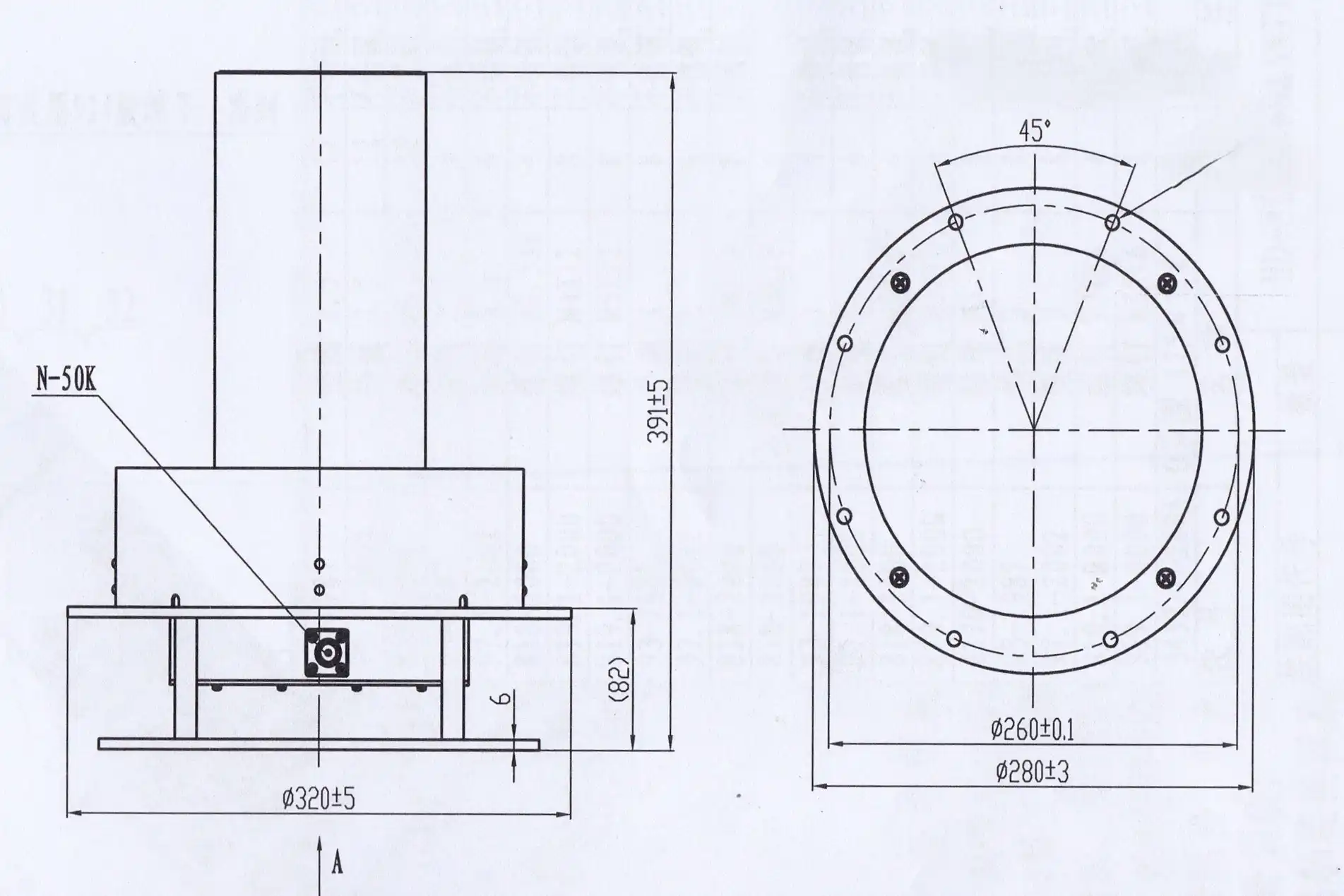
To keep the pattern symmetrical, the quadrifilar helix antenna should be mounted most of the time vertically. However, for omni-azimuth coverage, a tilt of ±15° is fine. Radome covers keep the structure safe from ice buildup and wind loads. Advanced Microwave Technologies Co., Ltd. offers tough models that have been tested to meet MIL-STD-810 environmental standards and can work in temperatures ranging from -40°C to +85°C and can withstand 100 g of shock. To install cables on UAV fuselages without letting RF pass through, they need to be carefully routed and have TNC or SMA connections that can handle more than 20 g RMS of shaking. Patch antennas attach flush to surfaces and don't affect the aerodynamics of enclosure designs in any way. If the flat shape is properly sealed, it can work in harsh conditions. However, if the base and building have different rates of thermal expansion, the resonant frequency can change. To make sure long-term dependability, procurement specs must include requirements for conformal coating and IP grades for connectors. Patches are good for high-volume operations where the cost per unit is higher than the total cost because they can be mass-produced using PCB fabrication methods.
Cost Analysis and Supply Chain Factors
The higher unit costs of quadrifilar helix antennas—$80 to $500, depending on frequency range and level of ruggedization—are due to the need for precise winding and phase-matched feeding networks. When environmental testing, traceability paperwork, and AS9100 compliance are added to custom designs for aircraft or defense uses, the price per unit can go over $2,000. Advanced Microwave Technologies Co., Ltd. keeps common GPS and satellite transmission models in stock and can deliver standard models in 4 to 6 weeks. For unique needs, OEM customization is also possible. Volume pricing for standard patch antennas ranges from $2 to $15 per unit in quantities exceeding 10,000 pieces, making them economically attractive for consumer IoT applications. Custom patches that need certain frequency bands, gain patterns, or base materials cost between $50 and $200 per unit, plus some NRE (Non-Recurring Engineering) fees. For prototypes, the lead time is 8 to 12 weeks, and for production numbers, it's 6 to 8 weeks.
Vendor Qualification and Supply Chain Resilience
The credentials of suppliers must be checked by procurement teams using ISO 9001:2015 certification, RoHS compliance paperwork, and conflict mineral statements. Advanced Microwave Technologies Co., Ltd has quality management systems and ISO 14001:2015 and ISO 45001:2018 certifications, which show that they care about the environment and safety at work. The company has a 24-meter microwave darkroom that lets them scan far-field antennas up to 110 GHz. This gives them test data that can be traced back to NIST standards, which procurement engineers need for approval processes. When thinking about supply chain stability, companies that can make things in the United States and get parts from a variety of places are favored. In aerospace projects where antenna supply delays affect system integration milestones, contractual penalties that back up lead time promises keep the plan from getting off track. If a vendor is ready to hold on to parts until they are expected to be needed or set up consignment inventory arrangements, that shows they are interested in working together, which is good for building long-term buying relationships.
Best Practices for Installation and Optimization
Helix Antenna Mounting Strategies
The first step in installing quadrifilar helix antennas correctly is to make sure they are facing the right way. To keep bidirectional azimuth coverage, the antenna axis must be lined up vertically. Deviations of more than 10° cause pattern distortion, which makes it harder to see satellites at low elevation angles. Ground plane independence gets rid of the need for space that comes with monopole designs, but metallic objects within one wavelength radius can still mess up patterns. For mounting on top of UAV fuselages, you need composite standoffs that keep the structure rigid through vibration profiles and keep the electrical connections separate. When moving cables, you need to pay attention to shield integrity and bend radius limits. For GPS timing apps that need sub-nanosecond accuracy, semirigid coax links keep the phase stable even when the temperature changes. Low-loss wires like LMR-240 or RG-223 can be used in flexible systems for uses that can handle insertion loss of 1 to 2 dB. Specifications for connector torque stop intermittent contacts that show up as position dropouts in guidance systems, which could be against flight safety rules.
Patch Antenna Integration Techniques
Patch antennas need to carefully choose a material that balances the dielectric constant, the loss tangent, and the heat stability. Rogers RO4003C material is good for business uses because it has a 0.0027 dissipation factor at 10 GHz. On the other hand, aircraft designs need RO4350B because it is more stable in size from -55°C to +150°C. To keep the resonant frequency within ±1% across production lots, the requirements for the purchase must include a substrate thickness limit of ±0.002 inches or less. The dimensions of the ground plane affect the clarity of the radiation pattern. Backlobes can't be messed up by edge diffraction if the dimensions are at least 1.5 wavelengths per side. When IoT devices put patches on system PCBs, they need to keep radio keep-out zones separate from digital hardware that makes broadband noise. Using the right grounding methods, like using fences spaced every quarter-wavelength, makes virtual RF walls that stop surface waves from propagating, which would lower gain by 2 to 3 dB otherwise.
Maintenance Protocols for Long-Term Reliability
Environmental exposure degrades antenna performance through multiple mechanisms. UV light weakens radome materials, which makes it more likely that moisture will get in and change the resonant frequencies and VSWR. Every 12 months for outdoor operations, inspection plans should include an eye check for cracks, discoloration, or physical damage. Radome replacements every 5 years make sure that performance stays within the acceptable range until major breakdowns stop operations. Time-domain reflectometry is used to check the health of a connector and find early signs of failure before the signal goes away completely. Contact resistance goes up when connections aren't tight, which causes intermodulation products that break the rules for spectral masks and mess up systems next to them. During yearly maintenance, retorquing connectors to the values stated by the manufacturer stops them from wearing out over time. Advanced Microwave Technologies Co., Ltd. offers detailed maintenance paperwork that includes suggested inspection times that are based on operating environments. This helps proactive asset management programs.
Conclusion
To choose between helix and patch antennas, you need to match technical skills with real-world needs. The quadrifilar helix antenna is the most common choice for uses that need circular polarization, omnidirectional coverage, and multipath rejection. These features make it useful for satellite communications, UAV guidance, and emergency location systems. Patch antennas are useful for low-cost, limited-space uses where directional gain is enough. For example, IoT networks, WLAN infrastructure, and RFID systems use small form factors and the ability to make more of them. To be successful in procurement, you need to look at radiation patterns, environmental longevity, and total lifetime costs while keeping application-specific objectives in mind. Advanced Microwave Technologies Co., Ltd helps people make smart choices by giving them detailed scientific information, letting them customize products, and being open about their supply chain, which lowers the risk of getting parts for important systems.
FAQ
What distinguishes quadrifilar helix antennas from standard helix designs?
Quadrifilar helix antennas use four helices fed in quadrature, producing circular polarization and eliminating zenith nulls. They offer hemispherical coverage with stable axial ratios, ideal for satellite tracking. Standard monofilar helices provide linear polarization and directional radiation, better suited for point-to-point communication.
Can quadrifilar helix antennas support customization for specialized GPS tracking applications?
Yes, they support customization for GNSS bands like GPS, GLONASS, and Galileo. Options include connector types, ruggedization, and flexible substrates for curved surfaces. Wideband matching ensures multi-frequency performance. Prototypes are typically delivered within 4–6 weeks for testing before mass production.
How do I verify antenna quality and authenticity when purchasing online?
Check manufacturer test reports for gain, axial ratio, and VSWR. Look for material certifications, serial tracking, and ISO 9001 compliance. Reliable suppliers provide validated far-field data and traceable testing standards. Request samples and consider third-party testing before bulk purchasing to avoid counterfeit products.
Partner with a Trusted Quadrifilar Helix Antenna Manufacturer
Advanced Microwave Technologies Co., Ltd. makes high-quality antennas and has been doing so for over 20 years. They are ISO-certified for production success. Our line of quadrifilar helix antenna products works from 1 GHz to 40 GHz and has been used for satellite communications, aerospace tracking, and defense data with clear proof of performance. As a top provider of quadrifilar helix antennas, we can keep up with production rates ranging from prototypes to 10,000 or more units, and our prices are fair and can be adjusted to fit your program's needs. You can tell our OEM customization services exactly what frequency bands, mechanical connections, and environmental requirements you need. We can also help you test and prototype up to 110 GHz in our approved microwave darkroom. Talk to our engineering team about your antenna needs at craig@admicrowave.com. We offer detailed datasheets, performance simulations, and evaluation samples that speed up the purchase qualification process and make sure the supply chain is reliable.
References
1. Balanis, C.A. (2016). Antenna Theory: Analysis and Design, Fourth Edition. Hoboken: John Wiley & Sons.
2. Kilgus, C.C. (1975). Resonant Quadrifilar Helix Design. Microwave Journal, Vol. 18, No. 12, pp. 49-54.
3. Kumar, G. & Ray, K.P. (2003). Broadband Microstrip Antennas. Boston: Artech House.
4. Stutzman, W.L. & Thiele, G.A. (2012). Antenna Theory and Design, Third Edition. Hoboken: John Wiley & Sons.
5. IEEE Standard 145-2013. IEEE Standard for Definitions of Terms for Antennas. New York: Institute of Electrical and Electronics Engineers.
6. Kraus, J.D. & Marhefka, R.J. (2002). Antennas for All Applications, Third Edition. New York: McGraw-Hill Education.
_1733809032116.webp)