




What Should You Consider When Selecting a Coaxial Rotary Joint?
You should carefully think about how well it works with other materials, how well it works electrically, and how long it lasts physically before you buy it. Before buying something, people who work in sourcing should think about the working frequency range, VSWR, insertion loss, spinning speed, and expected service life for important coaxial rotary joint uses. It is important to check the provider's reliability, their ability to make changes, and their customer service after the sale. This will ensure long-term dependability and easy integration into systems that need to keep signals intact and be active all the time, such as radar, satellite communication, and aircraft systems.
Understanding Coaxial Rotary Joints: Definition and Working Principles
A coaxial rotary joint is a precise electrical part that lets RF and microwave signals travel between platforms that are still and platforms that are moving around without getting cables tangled up. Unlike regular cables, these devices can rotate in a circle of 360 degrees while keeping the signal's integrity. This is very important for radar tracking, satellite earth stations, and antenna pointing systems. At their core, they work by keeping the characteristic impedance (usually 50Ω) the same across a spinning interface. This keeps signal bounce and distortion to a minimum.
How Do Coaxial Rotary Joints Maintain Signal Integrity During Rotation?
A coaxial rotating joint is made up of precisely polished circular wires that are divided by low-loss dielectrics. When the part turns, spring-loaded contacts or slip ring assemblies keep the electrical paths open and reduce phase variation, which is also known as "Phase WOW." Good units get Phase WOW values within ±1° to ±3°, which is very important for coordinated radar and phased array antenna systems.
Types of Coaxial Rotary Joints and Their Application Suitability
Single-channel coaxial rotating joints can handle a single RF line and work well for simple radio systems or radar feeds. Dual-channel versions can handle two separate signals at the same time, like send and receive channels, using stacked or circular designs that have separation levels above 50dB to stop crosstalk. Complex systems that need more than one frequency band or polarization can use multi-channel setups. When designs are torque-balanced, they lower the mechanical load on drive motors, which makes them last longer in high-speed situations. Knowing these differences helps buying teams quickly match the design of a device to the needs of operations.
Frequency Range and Bandwidth Considerations for Optimal Performance
The operating frequency has a direct effect on the choice of connectors and the internal shape. Standard SMA connections work from DC to 18 GHz, 2.92 mm ports work up to 40 GHz, and 2.4 mm connectors work up to 50 GHz. Broadband designs can work with a lot of different frequency ranges, but they might not have as good an insertion loss performance as narrowband-optimized units. Waveguide rotor joints are needed for applications that need millimeter-wave frequencies, but coaxial versions are smaller and cheaper for activities below 50 GHz.
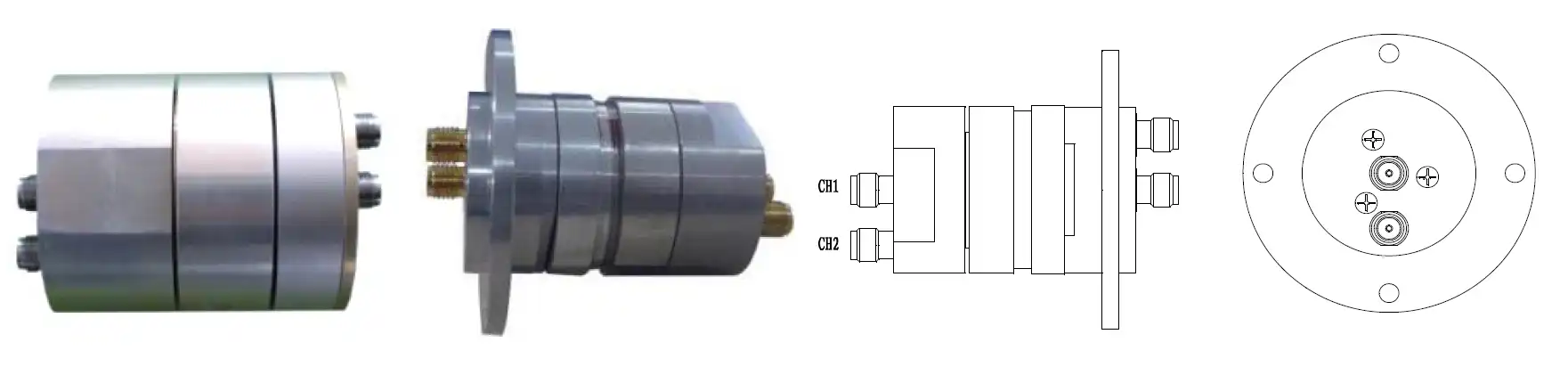
Key Technical Factors to Evaluate When Selecting a Coaxial Rotary Joint
To choose the right rotating joint, you have to find a balance between electricity requirements, mechanical strength, and weather resistance. Procurement engineers have to carefully read through datasheets to find performance metrics that have a direct effect on the signal quality and stability of the system. Here are the most important things that set high-performance units apart from regular ones:
Operating Frequency and Bandwidth Requirements
The frequency range of the coaxial rotary joint must exactly match the requirements of the device. Signal distortion and impedance mismatches happen when the joint bandwidth and practical frequencies don't match up. Broadband joints that work with frequencies from DC to 18 GHz are good for software-defined radars and multi-band transmission systems. Narrowband designs that are designed for certain bands, like X-Band (8-12 GHz), have better insertion loss and VSWR performance for specific uses.
Electrical Performance Specifications: VSWR, Insertion Loss, and Isolation
VSWR, or Voltage Standing Wave Ratio, measures how well impedance matching works; numbers below 1.30:1 mean great performance. Throughout the working band, insertion loss should stay below 0.2 dB for single-channel units and below 0.5 dB for multi-channel designs. For full-duplex communication systems and simultaneous transmit-receive radar designs, dual-channel joints need separation of more than 50 dB to keep signals from interfering with each other.
Mechanical Durability: Torque, Rotational Speed, and Service Life
Different types of units can handle different rotational speeds. Standard units can handle up to 1,000 RPM, while high-speed models can handle 5,000 RPM or more. How long something lasts, in millions of turns, depends on the elements it touches and the strength of the bearings it uses. Gold-plated beryllium copper contacts and precision ball bearings are used in high-end units so they can last for 10 to 50 million spins under normal conditions. Low starting torque, usually less than 5 N·cm, makes positioning motors work less hard and use less power.
Environmental Resilience: Temperature Range, Sealing, and Material Selection
Harsh working conditions require strong building. Temperature ranges for military and aircraft uses need to be between -55°C and +125°C, while -40°C to +85°C are more common for business systems. Ingress protection grades of IP65 or IP67 make sure that outdoor systems are safe from dust and water. Housings made of stainless steel (303/304 grades) don't rust in coastal and marine areas, and aluminum metals make them lighter for use in the air.
If these mechanical factors come together, it means that a coaxial rotating joint meets performance standards that are very important for missions. To avoid expensive integration failures, buyers should give preference to sellers who offer complete datasheets with tested results that have been checked. Environmental stress screening and rapid life testing back up what the maker says and lower the chance of failure in the field.
Comparing Coaxial Rotary Joints with Alternative Solutions
Compared to other technologies, coaxial rotor joints show their pros and cons in terms of how they work. To get the best system design and total cost of ownership, procurement teams need to know where each option really shines.
Slip Rings Versus Coaxial Rotary Joints: Signal Precision Trade-offs
Slip bands that were used in the past can handle power and low-frequency data, but they can't control the resistance needed to send RF signals. At microwave frequencies, slip rings make it harder for signals to travel because they can't hold as many electrical connections at once. Coaxial rotary joints keep 50Ω impedance lines under control. This lets high-frequency operation happen with little insertion loss and phase change. This is why they are essential for precision radar and satellite transmission.
Waveguide Rotary Joints: High-Frequency Performance at a Premium
At millimeter-wave frequencies above 50 GHz, waveguide rotor joints work better than coaxial versions because they have lower insertion loss and can handle more power. These benefits come at the cost of being bigger, heavier, and more difficult to make. For uses below 50 GHz, where space and cost concerns are greater than the small performance advantages of waveguide technology, coaxial rotor joints offer a small and inexpensive option.
Wireless Rotary Solutions: Emerging Technology and Practical Limitations
Wireless rotor couplers and coaxial rotary joints send messages through spinning air gaps using magnetic or capacitive coupling, so there is no direct touch. Even though they offer endless circular life and no upkeep, the way they are used now has frequency limits, higher insertion loss, and vulnerability to interference from the environment. Coaxial rotor joints are still the best choice for high-reliability tasks that can't risk signal integrity.
Practical Procurement Considerations for B2B Buyers
Strategic procurement of coaxial rotary joints requires evaluating supplier capabilities, cost structures, and post-purchase support to ensure supply chain resilience and lifecycle value.
Evaluating Manufacturer Credibility and OEM Capabilities
Reputable manufacturers maintain ISO 9001 certification and demonstrate compliance with RoHS and REACH regulations. Advanced Microwave Technologies Co., Ltd. exemplifies this standard with over 20 years of microwave component experience and ISO 9001:2008 certification. Buyers should verify that suppliers possess in-house testing facilities—such as vector network analyzers calibrated to 110 GHz—to validate electrical specifications. OEM capabilities, including custom connector configurations and frequency optimization, enable tailored solutions for unique system architectures.
Pricing Models, Customization Costs, and Volume Considerations
Pricing varies based on frequency range, channel count, and customization depth. Standard single-channel units operating below 18 GHz represent the most economical choice, while dual-channel and millimeter-wave variants command premium pricing. Customization—such as specialized connector interfaces, extended temperature ranges, or enhanced isolation—increases unit costs but delivers optimized performance. Volume procurement often reduces per-unit pricing, though minimum order quantities may constrain prototype development. Balancing these factors requires clear communication with suppliers during the quotation phase.
Lead Times, Delivery Schedules, and Supply Chain Reliability
Standard catalog items typically ship within two to four weeks, while custom designs require eight to twelve weeks for engineering validation and production. Procurement teams should establish realistic project timelines accounting for prototyping iterations and qualification testing. Suppliers with robust supply chain management and regional distribution networks—such as ADM's global export capabilities—mitigate geopolitical risks and logistics disruptions that could delay critical system deployments.
After-Sales Support: Warranty, Maintenance, and Technical Assistance
Comprehensive after-sales support differentiates premium suppliers from commodity vendors. Warranty coverage should span a minimum of 12 months and address both electrical performance and mechanical failures. Preventive maintenance guidance—including recommended inspection intervals and contact cleaning procedures—maximizes operational lifespan. Access to application engineers for integration troubleshooting and system optimization accelerates deployment and reduces costly rework.
How to Make the Right Selection: Criteria and Decision-Making Framework?
Structured decision-making streamlines coaxial rotary joint selection by aligning technical requirements with operational priorities and business objectives.
Defining Application Requirements and Operational Scenarios
Clear application definitions prevent costly specification mismatches. Aerospace and defense systems demand ruggedized construction, extended temperature ranges, and documented traceability. Satellite ground stations prioritize low insertion loss and high isolation for simultaneous transmit-receive operations. Industrial radar and research applications may accept relaxed environmental specifications in exchange for cost savings. Documenting operational scenarios—including rotational speed profiles, duty cycles, and environmental exposure—guides supplier discussions and ensures proposed solutions meet real-world demands.
Prioritizing Performance Metrics According to System Criticality
Not all specifications carry equal weight. Phased array radars and coaxial rotary joint applications require stringent phase stability, making Phase WOW the dominant selection criterion. High-power transmit systems prioritize peak power handling and thermal management. Space-constrained platforms value compact form factors and low weight. Ranking these priorities enables objective comparison of competing proposals and prevents over-specifying non-critical parameters that inflate costs unnecessarily.
Evaluating Vendor Proposals and Comparing Technical Datasheets
Rigorous datasheet analysis reveals performance nuances that marketing materials obscure. Verify that frequency ranges, VSWR specifications, and insertion loss values are guaranteed across the full operating band rather than at discrete test points. Request dynamic performance data—such as rotational VSWR measurements—to validate stability during motion. Cross-reference claimed service life with test methodology details to distinguish verified performance from theoretical projections. Suppliers willing to provide sample units for independent evaluation demonstrate confidence in their product quality.
Factoring After-Sales Services into Total Cost of Ownership
The initial purchase price represents only one component of lifecycle costs. Reliable after-sales support reduces downtime, extends service intervals, and accelerates troubleshooting. Suppliers offering application-specific training, integration consulting, and responsive technical support deliver superior value despite potentially higher unit costs. Evaluating total cost of ownership—including maintenance requirements, expected replacement intervals, and support responsiveness—reveals the true economic impact of supplier selection.
Conclusion
Selecting the optimal coaxial rotary joint demands rigorous evaluation of electrical performance, mechanical robustness, and environmental compatibility within the context of specific application requirements. Procurement professionals must balance technical specifications—such as frequency range, VSWR, insertion loss, and rotational durability—with practical considerations including supplier credibility, customization flexibility, and after-sales support. Understanding the distinctions between single-channel and multi-channel architectures, comparing coaxial solutions against waveguide and wireless alternatives, and employing structured decision-making frameworks empower buyers to specify components that deliver mission-critical reliability. Partnering with experienced manufacturers ensures access to precision-engineered solutions backed by comprehensive technical assistance and supply chain resilience.
FAQ
1. What frequency ranges do coaxial rotary joints typically support?
Standard coaxial rotary joints cover DC to 18 GHz with SMA connectors, while precision 2.92 mm and 2.4 mm interfaces extend performance to 40 GHz and 50 GHz, respectively. Specialized designs reach 110 GHz for millimeter-wave applications, though waveguide alternatives often prove more practical at these extreme frequencies.
2. How often do coaxial rotary joints require maintenance?
High-quality units demand minimal maintenance when operated within rated parameters. Visual inspections every 12 months and contact cleaning every 10 million revolutions maintain optimal performance. Accelerated wear occurs under excessive torque loads or environmental contamination, necessitating more frequent servicing intervals.
3. Can coaxial rotary joints be customized for specific applications?
Manufacturers routinely customize connector types, frequency optimization, channel configurations, and environmental specifications. Advanced Microwave Technologies Co., Ltd. offers OEM services, including rapid prototyping, application-specific engineering, and integration support to address unique system requirements across defense, aerospace, and telecommunications sectors.
Partner with ADM for Precision-Engineered Coaxial Rotary Joint Solutions
Advanced Microwave Technologies Co., Ltd delivers mission-critical coaxial rotary joint solutions tailored to demanding aerospace, defense, and satellite communication applications. Our two decades of microwave expertise, ISO 9001 certification, and state-of-the-art 110 GHz testing capabilities ensure every component meets stringent electrical and mechanical specifications. Whether you require single-channel simplicity or dual-channel isolation exceeding 70 dB, our engineering team provides comprehensive support from prototyping through full-scale production. As a trusted coaxial rotary joint supplier with global export capabilities, we offer competitive pricing, rapid delivery, and dedicated after-sales assistance. Contact craig@admicrowave.com today to discuss your technical requirements and discover how our customized solutions enhance system performance and operational reliability.
References
1. Pozar, D. M. (2012). Microwave Engineering (4th ed.). Hoboken: John Wiley & Sons.
2. IEEE Std 287-2007, IEEE Standard for Precision Coaxial Connectors (DC to 110 GHz), Institute of Electrical and Electronics Engineers.
3. Bahl, I. J., & Bhartia, P. (2003). Microwave Solid State Circuit Design (2nd ed.). Hoboken: John Wiley & Sons.
4. Collin, R. E. (2001). Foundations for Microwave Engineering (2nd ed.). Piscataway: IEEE Press.
5. Rao, B. L. (1999). Microwave Engineering: Concepts and Fundamentals. Boca Raton: CRC Press.
6. Rizzi, P. A. (1988). Microwave Engineering: Passive Circuits. Englewood Cliffs: Prentice Hall.