




What Makes the Best E-Plane Tee for Waveguide Systems?
When waveguide systems fail to deliver consistent signal quality across complex microwave networks, engineers face cascading performance issues that compromise entire communication infrastructures. The best e-plane tee for waveguide systems combines precision junction design, superior impedance matching, and robust power handling capabilities to ensure minimal insertion loss while maintaining signal integrity across frequencies up to 110 GHz. This critical component determines whether your radar system can accurately detect targets, whether your satellite ground station maintains reliable connectivity, or whether your telecommunications network delivers consistent performance under demanding operational conditions.
Understanding E-Plane Tee Fundamentals in Modern Waveguide Architecture
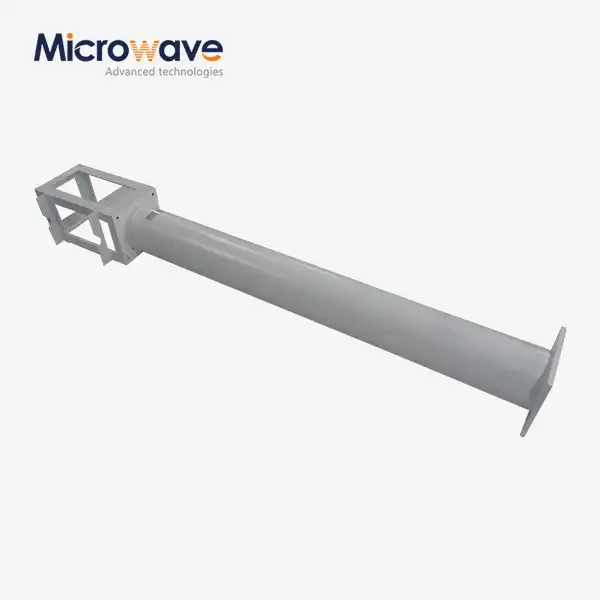
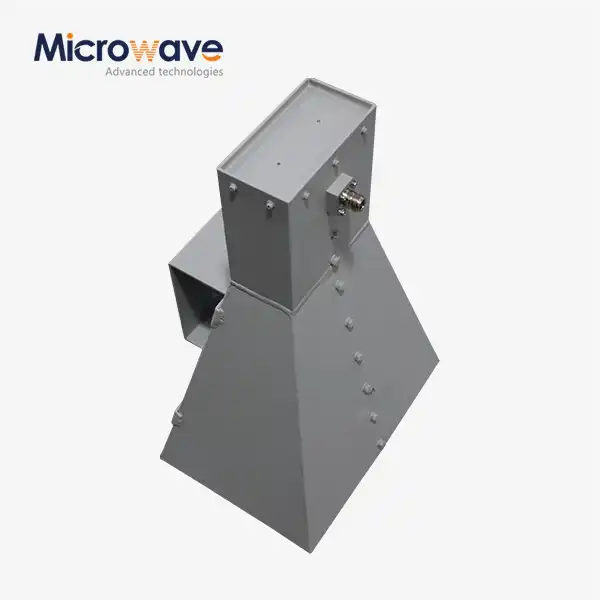
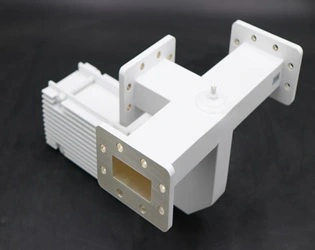
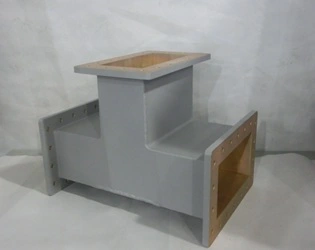
The foundation of exceptional waveguide system performance rests on understanding how an e-plane tee functions within the broader electromagnetic architecture. An e-plane tee represents a three-port waveguide junction where the auxiliary arm connects directly to the broad wall of the main rectangular waveguide, creating a distinctive T-shaped configuration. This specialized geometry positions the side arm parallel to the electric field lines of the dominant TE10 mode, enabling precise power division with controlled phase relationships between output ports. Unlike H-plane tees that connect through the narrow wall, the e-plane tee configuration produces signals that are 180 degrees out of phase between the collinear ports when energy enters through the side arm, making it invaluable for applications requiring specific phase manipulation and power combining capabilities.
The electromagnetic behavior within an e-plane tee demonstrates series-type impedance characteristics, where voltage addition occurs similar to series-connected components in traditional circuit theory. Advanced Microwave manufactures a wide variety of e-plane tees engineered with the junction of the auxiliary arm made on the broad wall of the main waveguide, optimizing the natural field distribution for superior performance. When signals propagate through the waveguide structure, the parallel alignment of electric fields between the main guide and auxiliary arm facilitates efficient energy transfer with minimal discontinuity effects. This fundamental design principle enables the e-plane tee to achieve exceptional power division ratios while maintaining low reflection coefficients across extended frequency ranges. The component functions as both a power divider and combiner, with the direction of energy flow determined by which ports serve as inputs versus outputs. In practical implementations, the symmetrical configuration ensures that power entering through the E-arm splits equally between the two collinear ports, while signals entering the collinear ports combine at the E-arm with predictable amplitude and phase relationships.
The best e-plane tee implementations feature precision-machined internal dimensions that maintain critical tolerances down to micrometers, ensuring consistent electrical performance across production units. Advanced Microwave Technologies Co., Ltd. leverages over 20 years of manufacturing expertise to produce e-plane tees with interior surfaces machined to exceptional smoothness, reducing surface current losses and minimizing insertion loss. The waveguide walls must maintain parallel alignment and perpendicular junctions to prevent mode conversion and unwanted resonances that could degrade performance. Manufacturing precision extends to the corner radii and transition sections, where abrupt geometric changes can create impedance discontinuities that generate reflections. The company's state-of-the-art fabrication facilities employ computer-controlled milling equipment capable of achieving tolerances as tight as plus or minus 0.0005 inches, translating directly to superior electromagnetic performance in the finished product.
Critical Performance Parameters That Define Superior E-Plane Tee Quality
Insertion Loss and Power Handling Excellence
The best e-plane tee for waveguide systems must demonstrate exceptionally low insertion loss to preserve signal strength throughout complex distribution networks. Insertion loss represents the signal attenuation that occurs as electromagnetic energy passes through the component, with even small losses accumulating significantly in systems employing multiple waveguide junctions. Top-tier e-plane tees achieve insertion loss values below 0.2 decibels across their operational bandwidth, ensuring that valuable signal power reaches its intended destination rather than dissipating as heat within the component structure. This performance level becomes critical in satellite communication systems where signals must traverse long transmission paths with minimal degradation, or in radar applications where detection range directly correlates to transmitted and received signal strength. Advanced Microwave's e-plane tee designs incorporate optimized junction geometries that minimize field disruption at the auxiliary arm connection point, reducing insertion loss while maintaining excellent power handling capabilities.
Power handling capacity distinguishes professional-grade e-plane tees from basic commercial components, particularly for aerospace and defense applications involving high-power transmitters. The electromagnetic fields within waveguide structures concentrate energy in specific patterns, with field intensity greatest near the broad walls where the e-plane tee junction resides. Excessive field concentration can lead to dielectric breakdown, corona discharge, or excessive heating that compromises component reliability and system performance. Superior e-plane tee designs distribute electric fields more uniformly across the waveguide cross-section through carefully engineered transition geometries that reduce peak field intensities. Advanced Microwave manufactures e-plane tees capable of handling power levels suitable for demanding applications, with enhanced versions featuring specialized internal treatments and cooling provisions for ultra-high-power scenarios. The robust construction employs high-conductivity materials with excellent thermal properties, enabling continuous operation at elevated power levels without performance degradation. This capability proves essential for weather radar systems that must transmit high-power pulses repeatedly, military surveillance radars requiring extended detection ranges, and satellite ground stations handling multiple high-bandwidth communication channels simultaneously.
Impedance Matching and VSWR Performance
Impedance matching represents another critical parameter that separates excellent e-plane tees from mediocre alternatives, directly impacting signal reflection and overall system efficiency. When impedance discontinuities exist at waveguide junctions, a portion of the incident signal reflects back toward the source rather than propagating forward to the load, creating standing waves that reduce power transfer efficiency and potentially damage transmitter components. The voltage standing wave ratio, commonly abbreviated as VSWR, quantifies the impedance matching quality, with lower values indicating superior matching performance. Premium e-plane tees maintain VSWR values below 1.2 to 1 across their specified frequency range, ensuring that less than one percent of the incident power reflects at each junction. Advanced Microwave Technologies Co., Ltd. achieves this exceptional matching performance through sophisticated electromagnetic simulation during the design phase, followed by precise manufacturing that faithfully reproduces the optimized geometry in physical hardware.
The e-plane tee configuration inherently provides good impedance matching at the auxiliary port where natural field alignment facilitates smooth energy transfer, but the collinear ports require additional engineering attention to minimize reflections. Advanced designs incorporate subtle geometric optimizations at the junction region, including carefully calculated corner radii, transition tapers, and dimensional adjustments that compensate for the electromagnetic discontinuity introduced by the auxiliary arm. These refinements ensure that the e-plane tee presents proper characteristic impedance at all three ports simultaneously across the operational bandwidth. The company's comprehensive testing capabilities, including their remarkable 24-meter microwave darkroom with measurement capabilities spanning 0.5 to 110 gigahertz, enable thorough characterization of impedance performance under actual operating conditions. This extensive test frequency range accommodates everything from legacy communication systems at lower frequencies to cutting-edge 5G and future 6G technologies operating at millimeter-wave frequencies, ensuring that each e-plane tee meets stringent performance specifications before reaching customers.
Material Selection and Manufacturing Excellence in E-Plane Tee Production
Environmental Compliance and Material Properties
Material selection profoundly influences e-plane tee performance, reliability, and environmental compatibility, making it a crucial consideration for responsible manufacturers. The best e-plane tees employ high-conductivity metals that minimize ohmic losses while providing the mechanical strength necessary for precise dimensional stability. Aluminum alloys offer excellent conductivity combined with lightweight properties ideal for airborne and space applications where every gram matters, though they require protective plating to prevent oxidation and ensure long-term performance stability. Brass provides superior machinability enabling tighter manufacturing tolerances and better surface finish, contributing to reduced insertion loss and improved high-frequency performance. For applications demanding absolute minimum loss, copper or silver-plated interiors deliver the highest conductivity available, though at increased material cost and manufacturing complexity. Advanced Microwave Technologies Co., Ltd. produces e-plane tees using materials selected specifically for each application's unique requirements, balancing electrical performance, mechanical properties, environmental resistance, and cost considerations.
All materials used in Advanced Microwave's e-plane tee production are RoHS-compliant, meeting international environmental standards that restrict hazardous substances in electronic equipment. This commitment to environmental responsibility ensures that the company's products comply with regulations in markets worldwide while supporting customers' sustainability initiatives. The RoHS compliance applies not only to the base waveguide materials but also to any plating, surface treatments, or protective coatings applied during manufacturing. Beyond regulatory compliance, the selected materials must withstand the operational environment throughout the component's service life, including temperature extremes, humidity, salt spray in marine applications, vibration and shock in mobile platforms, and potential exposure to fuels, solvents, and other chemicals. The junction of the auxiliary arm receives particular attention during material selection and processing, as this critical region must maintain perfect electrical continuity and mechanical stability under thermal cycling and physical stress. Advanced Microwave's quality control procedures verify material properties and manufacturing consistency, ensuring that every e-plane tee meets the documented specifications for electrical performance, mechanical integrity, and environmental compliance.
Precision Manufacturing and Quality Assurance
Manufacturing precision directly determines e-plane tee performance, with dimensional variations translating immediately to electrical performance degradation. The waveguide interior dimensions must match the design specifications within micrometers to maintain proper cutoff frequency, characteristic impedance, and mode purity throughout the component. Computer-controlled machining centers enable the precision necessary for high-performance e-plane tees, removing material with exceptional accuracy while maintaining surface finish quality that minimizes loss from wall currents. Advanced Microwave employs multi-axis CNC equipment capable of machining complex three-dimensional geometries in single setups, reducing the accumulation of tolerance stackup that occurs when components undergo multiple machining operations with repeated fixturing. This integrated manufacturing approach ensures that the critical junction region where the auxiliary arm meets the main waveguide maintains the precise geometry essential for optimal electromagnetic performance.
Quality assurance processes verify that each manufactured e-plane tee meets all specifications before shipment to customers, protecting both performance requirements and brand reputation. Dimensional inspection using coordinate measuring machines and optical comparators confirms that physical dimensions fall within acceptable tolerance ranges. Electrical testing characterizes insertion loss, return loss, isolation between ports, and power handling capability across the operational frequency range using calibrated network analyzers and high-power test equipment. Advanced Microwave's laboratories are equipped with advanced microwave measurement equipment up to 110 gigahertz, enabling comprehensive performance verification that covers conventional microwave bands and extends into millimeter-wave frequencies for next-generation communication systems. Environmental testing subjects sample units to temperature cycling, humidity exposure, vibration, and other stress conditions that simulate field deployment, verifying that performance remains stable under realistic operating conditions. The company's ISO 9001:2015 certification demonstrates adherence to internationally recognized quality management standards, providing customers confidence that consistent processes govern every aspect of e-plane tee design, manufacturing, and testing.
Application-Specific Considerations for E-Plane Tee Selection and Integration
Satellite Communication and Radar System Requirements
Satellite communication systems impose unique requirements on e-plane tees that must maintain precise signal characteristics across temperature extremes and vacuum conditions encountered in space environments. Ground stations handling multiple frequency bands simultaneously require e-plane tees with broad bandwidth capability to accommodate diverse communication protocols, from voice and data to high-definition video transmission. The component must preserve signal-to-noise ratio throughout the distribution network, as even small degradations accumulate across multiple stages and compromise link margins in space-to-ground communications operating across vast distances. Advanced Microwave's e-plane tees are widely used in satellite communications for signal distribution and splitting, enabling efficient ground station architectures that support multiple simultaneous communication channels. The low insertion loss characteristics ensure efficient signal transfer for HD video, data, and voice communications, while the excellent port-to-port isolation prevents crosstalk between channels that could degrade communication quality.
Radar systems present distinct challenges requiring e-plane tees with exceptional power handling capability and minimal phase distortion across operational frequencies. Air traffic control radar demands ultra-sharp beamforming for accurate aircraft tracking capabilities, particularly in adverse weather conditions where signal quality determines detection reliability. The e-plane tee supports radar applications by distributing power with minimal loss to array elements, enabling coherent signal combining that produces the narrow beamwidths essential for angular resolution and target discrimination. Military surveillance radars employ e-plane tees in phased array architectures where precise amplitude and phase control across hundreds or thousands of radiating elements determines system performance. Advanced Microwave's e-plane tee networks detect threats and distinguish targets through controlled beam steering and adaptive pattern synthesis that respond to the tactical environment. The components withstand the high peak and average power levels characteristic of long-range detection radars, while maintaining the stability necessary for accurate Doppler processing and moving target indication.
Aerospace, Defense, and Telecommunications Integration
Aerospace and defense applications subject e-plane tees to mechanical stress, environmental extremes, and reliability requirements that exceed commercial communication system demands. Aircraft navigation systems rely on e-plane tees for power splitting and combining in radio frequency subsystems that determine aircraft position and support safe flight operations. The components must function reliably despite vibration from engines and aerodynamic buffeting, temperature variations from ground operations to high-altitude cruise, and potential exposure to electromagnetic interference from on-board transmitters and external threats. Advanced Microwave's e-plane tees are crucial for power splitting and combining in navigation and defense systems, ensuring reliable signal transmission in high-frequency applications where performance directly impacts mission success. The compact design fits efficiently into space-constrained avionics bays and equipment racks, while the durable construction withstands the shock loads experienced during carrier landings, tactical maneuvers, and weapon deployment scenarios.
Telecommunications infrastructure employs e-plane tees in base stations, microwave backhaul links, and other communication equipment that forms the backbone of wireless networks. The components optimize long-distance signal propagation in point-to-point microwave links that connect cell towers and switching centers, bringing fast internet connectivity to rural areas underserved by fiber optic infrastructure. Industrial Internet of Things deployments utilize e-plane tees in wireless sensor networks and machine-to-machine communication systems that enable smart manufacturing and infrastructure monitoring. Advanced Microwave manufactures e-plane tees capable of handling frequencies up to 110 gigahertz, ensuring compatibility with the latest communication standards including 5G millimeter-wave bands and anticipated 6G technologies. The customizable options enable system designers to specify e-plane tees with exact dimensions, frequency ranges, and flange configurations that integrate seamlessly into existing infrastructure while providing the performance headroom necessary for future capacity expansion and technology upgrades.
Customization and OEM Services for Specialized Applications
Every application presents distinct requirements that may not align perfectly with standard catalog components, necessitating customization capabilities that distinguish leading manufacturers from basic suppliers. Advanced Microwave Technologies Co., Ltd. understands that unique specifications arise from novel system architectures, frequency allocations, space constraints, power levels, and environmental conditions specific to each customer's deployment scenario. The company offers comprehensive OEM services to customize e-plane tees meeting exact specifications, whether adjustments involve physical dimensions to fit within available space envelopes, frequency range modifications to cover non-standard bands, power handling enhancements for high-power transmitter applications, or specialized flange configurations for compatibility with existing waveguide infrastructure. The engineering team works closely with clients throughout the design and development process, ensuring that each modification aligns perfectly with the operational needs of the integrated system.
The customization process begins with thorough consultation to understand the application requirements, operating environment, performance objectives, and any constraints that influence component design. Advanced Microwave's engineers employ electromagnetic simulation tools to model proposed designs, predicting electrical performance before committing to physical prototyping. This simulation-driven approach reduces development time and cost while increasing the probability that initial prototypes meet all specifications. Once the design is validated through simulation, the company produces prototype units for customer evaluation and testing in actual system configurations. The iterative refinement continues until the e-plane tee delivers optimal results in the specific application, demonstrating that the custom solution integrates seamlessly and provides reliable performance under real-world operating conditions. The commitment to quality and performance guarantees that customized e-plane tees achieve efficiency and long-term success, backed by comprehensive technical support and the confidence that comes from partnering with a manufacturer possessing over 20 years of microwave expertise.
Conclusion
Selecting the best e-plane tee requires evaluating insertion loss, power handling, impedance matching, material quality, and manufacturing precision to ensure optimal waveguide system performance across demanding applications.
Cooperate with Advanced Microwave Technologies Co., Ltd.
Advanced Microwave Technologies Co., Ltd. stands as your trusted China e-plane tee factory, China e-plane tee supplier, and China e-plane tee manufacturer, delivering High Quality e-plane tee solutions with competitive e-plane tee price points and comprehensive China e-plane tee wholesale options. With over 20 years of manufacturing excellence, our ISO-certified facilities produce e-plane tee for sale that meets the demanding requirements of satellite communications, defense, aerospace, and telecommunications industries worldwide. Our state-of-the-art 24-meter microwave darkroom enables precise testing up to 110 gigahertz, ensuring every component meets stringent performance specifications before delivery. We offer rapid prototyping, expert technical support throughout design and integration phases, and efficient manufacturing processes that deliver your custom e-plane tee solutions quickly without compromising quality. Whether you need standard catalog components or fully customized waveguide assemblies tailored to your unique specifications, our experienced engineering team provides the expertise and dedication necessary to optimize your system performance. Contact craig@admicrowave.com today to discuss your e-plane tee requirements and discover how our perfect supply chain system, professional R&D capabilities, strict quality control, and strong after-sales support can accelerate your project success while delivering the reliability your applications demand.
References
1. Pozar, David M. "Microwave Engineering, Fourth Edition." John Wiley & Sons, 2012.
2. Collin, Robert E. "Foundations for Microwave Engineering, Second Edition." IEEE Press, 2001.
3. Balanis, Constantine A. "Advanced Engineering Electromagnetics, Second Edition." John Wiley & Sons, 2012.
4. Ramo, Simon; Whinnery, John R.; Van Duzer, Theodore. "Fields and Waves in Communication Electronics, Third Edition." John Wiley & Sons, 1994.
5. Marcuvitz, Nathan. "Waveguide Handbook." Dover Publications, 1986.