





What Is a High Power Waveguide Isolator and How It Works?
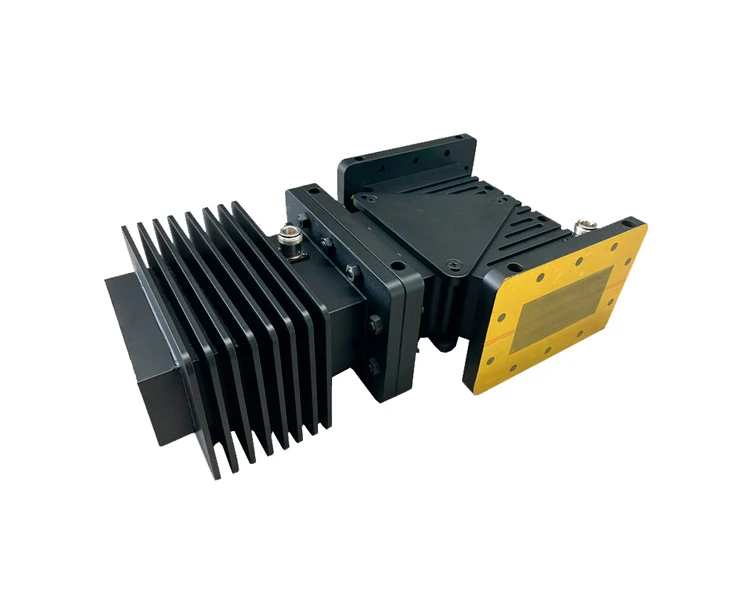
A high power waveguide isolator is a non-reciprocal microwave device that allows electromagnetic waves to pass through in one direction while blocking reflected signals from returning to the source. This critical component protects sensitive transmitter equipment from damage caused by reflected power, operates using ferrite materials under magnetic bias to create directional signal flow, and handles power levels up to 1000 watts while maintaining minimal insertion loss of just 0.3 dB typical across broad frequency ranges.
Understanding High Power Waveguide Isolator Technology
Operating Principles and Ferrite Technology
High power waveguide isolators speak to modern building arrangements inside the microwave and RF industry. These gadgets work as one-way valves for electromagnetic signals, utilizing the special properties of ferrite materials to make directional flag transmission. When uncovered to a attractive field, ferrite materials show non-reciprocal behavior, meaning they connected in an unexpected way with electromagnetic waves traveling in inverse directions. The essential working rule depends on the Faraday revolution impact inside magnetized ferrite components. As microwaves proliferate through the isolator, the polarization of the electromagnetic field pivots due to the attractive inclination connected to the ferrite fabric. This revolution makes valuable impedances for forward-traveling signals whereas creating damaging impedances for switch signals. Our isolators at ADM highlight precision-engineered ferrite centers optimized for particular recurrence groups, guaranteeing solid execution over requesting applications. The attractive predisposition framework employments changeless magnets or electromagnets to make the fundamental field quality for legitimate operation. This cautious building conveys reliable separation execution of 20 dB commonplace whereas keeping up uncommon control taking care of capabilities.
Structural Design and Environmental Performance
The waveguide structure itself plays a significant part in the isolator's execution. Our plans join exact dimensional resistances and high-quality materials like aluminum and copper to minimize flag corruption. The inside geometry guides electromagnetic waves proficiently through the ferrite area whereas keeping up appropriate impedance coordinating all through the transmission path. Temperature solidness speaks to another basic viewpoint of isolator plan. Our units work dependably over temperature ranges from -40°C to +70°C, making them appropriate for unforgiving natural conditions in aviation, defense, and disciple communication applications.
Critical Problems Solved by Waveguide Isolators
Signal Reflection Challenges and Equipment Protection
Modern communication frameworks confront noteworthy challenges related to flag reflection and gear assurance. Control enhancers, especially those working at tall control levels, are greatly helpless to reflected signals that can cause disastrous harm. Indeed little sums of reflected control can make standing wave designs that push speaker components and diminish by and large framework efficiency. Impedance jumbles in transmission frameworks make reflection focuses where signals bounce back toward the source. These reflections not as it were squander transmitted control but moreover make flimsiness in oscillator circuits and recurrence float in exactness frameworks. The budgetary affect of gear disappointment in mission-critical applications can reach hundreds of thousands of dollars in substitution costs and operational downtime. Waveguide isolators address these challenges by giving a defensive boundary between delicate transmitter components and the radio wire framework. They assimilate or divert reflected signals, anticipating them from coming to costly control enhancers or oscillator circuits. This assurance amplifies gear life expectancy essentially and decreases support costs over framework lifecycles.
Performance Benefits in Communication and Radar Systems
In radar applications, isolators avoid target reflections from interferometer with transmitted signals, making strides location exactness and run determination. Lackey communication frameworks depend on isolators to keep up flag quality amid barometrical impedances or recieving wire indicating mistakes. The 800 MHz transmission capacity capability of our isolators guarantees steady assurance over wide recurrence ranges, pleasing different communication channels simultaneously. The separation execution straightforwardly interprets to moved forward framework soundness and diminished clamor figures in delicate recipient circuits. By disposing of undesirable flag ways, isolators upgrade the signal-to-noise proportion and progress generally communication quality.
Core Features and Advanced Functionality
Electrical Performance and Power Handling
Our waveguide isolators incorporate several advanced features designed to meet demanding industrial requirements. The low insertion loss characteristic of 0.3 dB typical ensures minimal signal degradation during normal operation, maintaining signal strength while providing maximum protection against reverse power flow. The high power handling capability of 1000 watts maximum enables deployment in high-power transmission systems without performance degradation, covering most terrestrial and satellite communication applications. The thermal management design efficiently dissipates heat generated during high-power operation, maintaining stable performance parameters. Broad bandwidth operation across 800 MHz ensures compatibility with modern wideband communication systems, supporting multiple signal types simultaneously while maintaining a flat frequency response across the operating band.
Mechanical Design and Magnetic Stability
The compact mechanical design optimizes space utilization in crowded equipment racks and antenna systems. Precision machining ensures repeatable electrical performance while maintaining mechanical integrity under vibration and thermal cycling. The aluminum and copper construction provides excellent corrosion resistance and long-term reliability in challenging environmental conditions. Advanced magnetic circuit design delivers stable bias fields across temperature variations, ensuring consistent isolation performance regardless of ambient conditions. Magnetic shielding prevents external magnetic fields from affecting isolator performance, maintaining reliable operation in electromagnetically noisy environments.
Quality Assurance and Testing
Quality control procedures at every manufacturing stage guarantee consistent performance parameters. Each isolator undergoes comprehensive testing including power handling verification, frequency response measurement, and environmental stress screening before shipment.
Advanced Engineering Technology Explained
Ferrite Interaction and Electromagnetic Operating Mechanism
The heart of High Power Waveguide Isolator innovation lies in the controlled interaction between electromagnetic areas and magnetized ferrite materials. Ferrite materials display interesting attractive properties that alter their interaction with electromagnetic waves based on the heading of wave proliferation. This wonder, known as gyromagnetic reverberation, shapes the premise for non-reciprocal behavior. When appropriately one-sided with a attractive field, ferrite materials make diverse engendering constants for forward and switch traveling waves. The attractive inclination adjusts the attractive spaces inside the ferrite, making an deviated reaction to electromagnetic areas. Forward signals encounter negligible constriction whereas invert signals experience critical misfortune mechanisms. The isolator structure consolidates resistive components deliberately situated to assimilate undesirable reflected vitality. These assimilation materials change over reflected electromagnetic vitality into warm, which is at that point disseminated through the isolator lodging. The warm plan guarantees that this warm scattering does not influence the attractive predisposition or electrical performance.
Structural Precision and Performance Validation
Impedance coordinating systems at both input and yield ports guarantee consistent integration with existing waveguide frameworks. These coordinating areas minimize reflections at the isolator interfacing, keeping up system-wide impedance coherence. The wide transmission capacity coordinating accomplished through our exclusive plan procedures bolsters wideband applications without execution compromise. Manufacturing exactness plays a significant part in accomplishing indicated execution parameters. Dimensional resiliences measured in thousandths of an inch guarantee appropriate electromagnetic field dispersion inside the isolator. Surface wrap up necessities avoid flag misfortunes due to conductor unpleasantness, keeping up moo addition misfortune characteristics. Testing and approval strategies confirm execution over the indicated recurrence extend and control levels. Vector organize analyzer estimations affirm S-parameter determinations whereas high-power testing approves warm execution and control taking care of capabilities.
Key Advantages and Competitive Benefits
Reliability and Cost Efficiency
Waveguide isolators from ADM deliver significant advantages across multiple performance dimensions. The exceptional reliability stems from our rigorous design validation and quality control processes developed over two decades of manufacturing experience, ensuring our isolators consistently meet or exceed specified performance parameters throughout their operational lifetime. Cost-effectiveness represents another major advantage of our isolator solutions, as the competitive pricing structure combined with fast delivery capabilities reduces total project costs and accelerates deployment schedules. Our efficient manufacturing processes and optimized supply chain enable cost savings that we pass along to customers without compromising quality.
Performance Flexibility and Signal Integrity
The wide frequency compatibility of our designs accommodates diverse system requirements with minimal customization, reducing inventory requirements and simplifying system design processes. Engineers can specify standard products for most applications while accessing custom solutions for specialized requirements. Enhanced signal integrity delivered by our isolators translates directly to improved system performance, including lower noise figures, reduced signal distortion, and enhanced stability. These improvements contribute to superior communication quality and increased operational efficiency, often justifying the isolator cost through enhanced overall system capabilities.
Durability and Technical Support
Durability represents a cornerstone of our design philosophy. Premium materials selection and robust construction techniques ensure long-term reliability under demanding operating conditions. Corrosion-resistant coatings and environmental sealing protect against moisture and contamination, extending operational life in harsh environments. Technical support capabilities further distinguish ADM from competitors, as our experienced engineering team provides comprehensive assistance from initial specification through installation and commissioning, ensuring optimal isolator performance and helping customers achieve their system objectives efficiently.
Limitations and Important Considerations
Performance and Environmental Considerations
While High Power Waveguide Isolator provide essential protection and performance benefits, certain limitations require careful consideration during system design. The insertion loss, although minimal at 0.3 dB typical, does represent a reduction in transmitted signal strength, and system link budgets must account for this loss to maintain adequate signal margins. Temperature sensitivity of ferrite materials can affect isolation performance across extreme temperature ranges. While our isolators operate reliably from -40 °C to +70 °C, performance parameters may vary slightly across this range, and critical applications may require temperature compensation or controlled environment installation.
Magnetic and Physical Constraints
Magnetic field sensitivity represents another consideration for installation planning. Strong external magnetic fields can affect isolator performance by altering the internal magnetic bias, so proper separation from magnetic interference sources ensures consistent performance. Magnetic shielding may be required in some installations. Size and weight considerations also become important in space-constrained applications, as waveguide isolators require physical space for the ferrite section and magnetic circuit, which may exceed the dimensions of passive waveguide components. Weight factors are especially critical in aerospace systems where every gram affects overall performance.
Cost and Bandwidth Trade-offs
Cost implications must be balanced against protection benefits and performance improvements. While isolators represent additional system cost, the protection they provide for expensive amplifier equipment typically justifies the investment. Lifecycle cost analysis often shows significant savings through reduced equipment failures and maintenance requirements. Bandwidth limitations may also require multiple isolators for extremely wide frequency coverage. Although our 800 MHz bandwidth covers most applications, some specialized systems may need custom solutions or multiple units to achieve complete frequency coverage.

Waveguide Isolators vs. Alternative Solutions
Comparison with Circulators and Directional Couplers
Waveguide isolators offer distinct advantages compared to alternative protection methods like circulators and directional couplers. Circulators provide similar non-reciprocal behavior but require three ports instead of the two-port configuration of isolators, making isolators more suitable for simple protection applications where the third port functionality is unnecessary. Directional couplers can monitor reflected power but cannot prevent it from reaching sensitive components. They provide measurement capability without protection, requiring additional switching or attenuation circuits for equipment protection. Isolators deliver both inherent directional behavior and active protection through signal absorption.
Advantages over Coaxial and Solid-State Solutions
Coaxial isolators represent an alternative for lower frequency applications but cannot handle the high power levels achievable with waveguide designs. The superior power handling and thermal characteristics of waveguide isolators make them essential for high-power applications above 1 GHz. Solid-state protection circuits offer fast response times but limited power handling capability. While they excel in protecting sensitive receivers, they cannot manage the power levels common in transmitter applications. Waveguide isolators provide passive protection without the complexity and reliability concerns associated with active protection circuits.
System Selection Considerations
Mechanical protection methods like waveguide switches provide complete isolation but require control systems and suffer from switching speed limitations. Isolators provide instantaneous protection without mechanical parts or control complexity, ensuring reliable operation in demanding environments. The choice between alternatives depends on specific application requirements, including frequency range, power levels, protection needs, and system complexity constraints. Our technical team can assist in evaluating options and recommending optimal solutions for specific applications.
Target Applications and Ideal Use Cases
Satellite, Defense, and Aerospace Applications
High power waveguide isolators serve critical roles across diverse industry segments where signal protection and performance are paramount. Satellite communication systems represent a primary application area where isolators protect expensive traveling wave tube amplifiers from reflected signals caused by atmospheric conditions or antenna tracking errors. Defense and military applications utilize isolators in radar systems to prevent target reflections from affecting transmitter stability, and the high power handling capability enables deployment in long-range surveillance radars and missile guidance systems where reliable operation under all conditions is essential. Our isolators meet stringent military specifications for environmental performance and electromagnetic interference. Aerospace applications include navigation systems, weather radar, and communication equipment where equipment failure can have serious safety implications, and the temperature stability and vibration resistance of our isolators ensure reliable operation throughout flight envelopes and environmental conditions.
Telecommunications Infrastructure
Telecommunications infrastructure relies on isolators to protect base station amplifiers from antenna mismatch conditions. The broad bandwidth capability supports multiple communication standards simultaneously, while the high power handling accommodates advanced modulation schemes with high peak-to-average power ratios.
Scientific Research and Test Applications
Scientific research facilities use isolators in particle accelerators, radio astronomy, and atmospheric research systems where precision and reliability are critical. The low insertion loss and excellent phase stability support sensitive measurements and long-term data collection programs. Test and measurement applications benefit from isolator protection of expensive signal generators and amplifiers during device characterization and production testing, and the repeatability and stability of our isolators ensure consistent measurement accuracy across production runs.
Conclusion and Future Technology Trends
High power waveguide isolators remain essential components for protecting valuable microwave equipment while maintaining signal integrity across demanding applications. The technology continues evolving toward higher frequency operation, broader bandwidths, and enhanced power handling capabilities to support emerging communication standards and defense systems. Advanced materials research promises improved temperature stability and reduced size while maintaining exceptional performance characteristics. As system complexity increases and equipment costs rise, the protection and performance benefits provided by quality isolators become even more critical for successful project outcomes.
Frequently Asked Questions
How does magnetic bias affect isolator performance over time?
A: Our isolators use high-quality permanent magnets or temperature-compensated magnetic circuits that maintain stable bias fields over decades of operation. The magnetic materials are selected for long-term stability and resistance to demagnetization. Regular performance monitoring can detect any magnetic degradation, though this is extremely rare with properly designed isolators.
Can waveguide isolators handle pulsed power applications?
A: Yes, our isolators are designed to handle both continuous wave and pulsed power applications up to their maximum power rating. The thermal design accommodates the heating effects of pulsed operation while the electrical design handles the peak power levels. Pulse width and duty cycle considerations may affect the maximum average power handling.
What maintenance requirements do waveguide isolators have?
A: Waveguide isolators require minimal maintenance due to their passive design and robust construction. Periodic inspection of waveguide connections and environmental sealing represents the primary maintenance activity. Performance verification through periodic testing can identify any degradation before it affects system operation. The absence of moving parts or active components minimizes maintenance requirements.
Partner with ADM for Premium High Power Waveguide Isolator Solutions
Advanced Microwave Technologies delivers industry-leading waveguide isolator solutions backed by over 20 years of manufacturing expertise and ISO:9001:2008 certification. As a trusted High Power Waveguide Isolator manufacturer, we provide customized designs, fast delivery, and comprehensive technical support to meet your most demanding applications. Our state-of-the-art 24m microwave darkroom and measurement capabilities up to 110 GHz ensure superior product quality and performance validation. Ready to protect your valuable equipment with reliable isolator technology? Contact us at sales@admicrowave.com to discuss your requirements.
References
1. Pozar, David M. "Microwave Engineering, Fourth Edition." John Wiley & Sons, 2012. Chapter 9: Microwave Filters and Ferrite Devices.
2. Baden Fuller, A.J. "Ferrites at Microwave Frequencies." Peter Peregrinus Ltd, 1987. Sections on Isolator Design and Applications.
3. Collin, Robert E. "Foundations for Microwave Engineering, Second Edition." McGraw-Hill, 1992. Chapter 12: Ferrite Devices and Non-Reciprocal Elements.
4. Lax, Benjamin and Button, Kenneth J. "Microwave Ferrites and Ferrimagnetics." McGraw-Hill Book Company, 1962. Fundamental Theory and Design Principles.
5. Harvey, A.F. "Microwave Engineering." Academic Press, 1963. Chapter 8: Waveguide Components and Ferrite Applications.
6. Soohoo, Ronald F. "Theory and Application of Ferrites." Prentice-Hall Inc, 1960. Physical Principles and Practical Implementations of Ferrite Isolators.
YOU MAY LIKE
 VIEW MOREConical Circular Polarization Horn Antenna
 VIEW MORELadder Membrane Square Dual Circular Polarization Horn Antenna
 VIEW MOREDual Linear Broadband Circular Polarization Horn Antenna
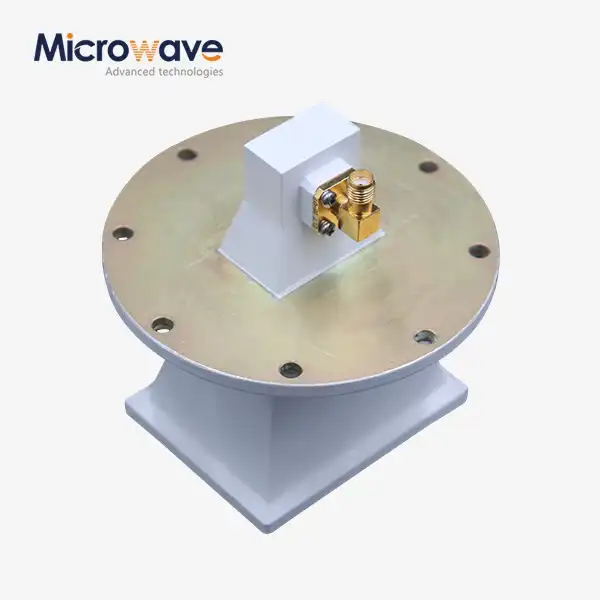 VIEW MOREPyramidal Linear Polarization Horn Antenna
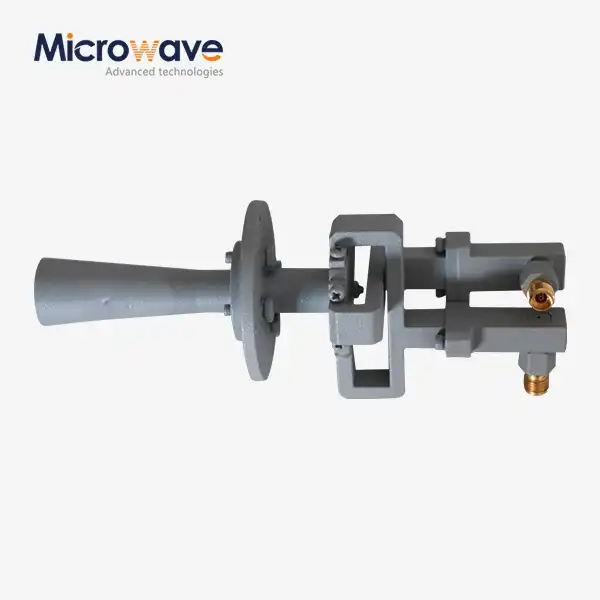 VIEW MOREConical Linear Polarization Horn Antenna
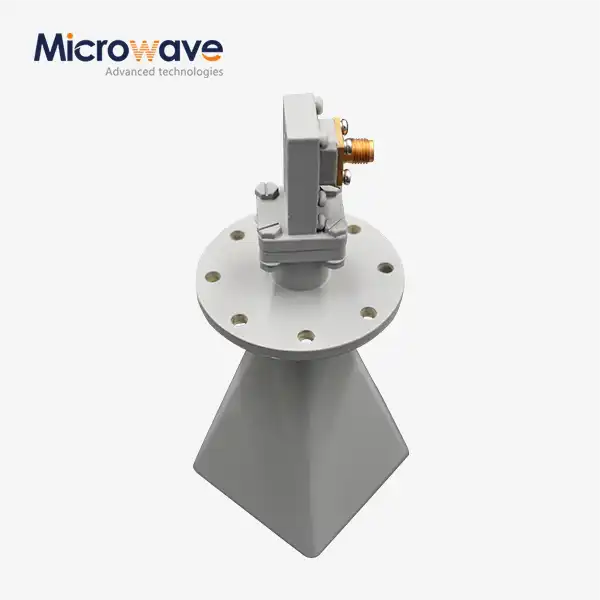 VIEW MORELow Side Lobe Diagonal Linear Polarization Horn Antenna
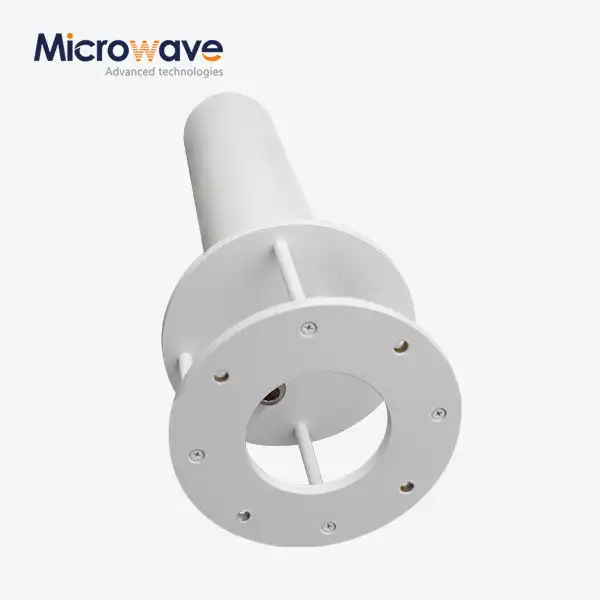 VIEW MOREQuadrifilar Helix Antenna
 VIEW MORECassegrain Antenna