





Waveguide Termination vs Load: Key Differences Explained
Knowing the difference between Waveguide Terminations and waveguide loads is very important when choosing parts for high-frequency RF and microwave systems. It can have a big effect on how well and how reliably the system works. A Waveguide Termination is made to take in electromagnetic energy with little rebound. It matches the impedance of the waveguide to almost completely get rid of Standing Wave Ratio (SWR) problems. Waveguide loads, on the other hand, have wider uses, such as dissipating energy during testing and tuning. Both parts keep harmful mirrored power away from sensitive sources like Traveling Wave Tube Amplifiers (TWTA) and magnetrons, but their design goals, material choices, and use situations are very different. This piece explains these differences so that procurement managers, RF engineers, and system designers can make smart choices about where to get microwaves for defense, satellite communications, and industrial uses.
Introduction
Waveguides are still the most important part of high-power microwave communication. They send data through radar arrays, satellite ground stations, and heating systems in factories. Waveguide Terminations and loads have different but complementary roles in these designs. As precise "signal sinks," Waveguide Terminations take in energy to stop reflections that could make emitters unstable or readings inaccurate. Waveguide loads, on the other hand, do a wider range of jobs, from getting rid of extra power in circulators to setting standards for Vector Network Analyzer (VNA) testing.
When selecting these parts, procurement experts and technical buyers have to make important choices. If you pick the wrong type, you could damage equipment, get wrong measurements, or cause the system to go down, all of which are expensive problems in mission-critical settings. Defense companies have hired us to test radar emitters, satellite operators to protect high-power amplifiers, and research labs to calibrate measuring tools. Through these relationships, we've learned about the most important technical and purchasing factors that affect the choice of a component. This guide talks about the practical differences, important trade-offs, and application-specific needs that are most important to global B2B clients who have to meet high standards for quality and speed.
What Are Waveguide Termination and Waveguide Load?
Defining Waveguide Termination
A Waveguide Termination is an inactive part that is designed to take in RF energy that is moving through a waveguide with very little reflection. It stops standing waves that could change the frequency or damage upstream parts like klystrons and solid-state power amps by matching the waveguide's characteristic resistance. Voltage Standing Wave Ratio (VSWR) numbers below 1.05:1 are achieved by high-quality Waveguide Terminations across certain frequency bands. This is necessary for calibrating radar and checking non-radiating transmitters.
Understanding Waveguide Loads
Waveguide loads are a larger group of parts that are made to bounce or release energy in a controlled way. Even though absorptive loads work like Waveguide Terminations, they put managing heat and power ahead of exceptionally low reflection. When reflective loads are used in specific tests, known impedance mismatches are made on purpose. Sliding terminations are a special kind of load that lets you change the reflection phase while keeping the magnitude the same. This is very important for accurate VNA calibration and source impedance readings.
Electrical and Thermal Performance Comparison
When it comes to narrow frequency bands, Waveguide Terminations usually get better than 30 dB of return loss. To keep high-power activity going all the time, load balance is determined by how well they absorb energy and how well they get rid of heat. For this, they often use water cooling or finned heat sinks. In ground stations for satellite communication, Waveguide Terminations on circulator isolation ports keep amplifiers safe from antenna mismatch. Loads in transmitter test benches consume kilowatts of power during long burn-in cycles. Knowing these trade-offs between temperature and electrical performance helps choose the right components for different work conditions.
Types and Materials of Waveguide Terminations and Loads
Standard and High-Power Termination Designs
Standard Waveguide Terminations can handle power levels ranging from a few milliwatts to several hundred watts. They do this by using resistance elements that get progressively weaker as they go along the length of the waveguide. High-power versions use forced-air or liquid cooling to get rid of kilowatts all the time while keeping the VSWR low. Small coaxial-to-Waveguide Terminations are good for places where room is limited, while flanged rectangular Waveguide Terminations work well with standard waveguide connections in radar and test equipment.
Material Characteristics and Selection
The building elements have a direct effect on how well they work across all frequency bands and power levels:
Ceramics: Aluminum oxide and beryllium oxide ceramics are good at transferring heat and staying stable at high temperatures. They can be used in millimeter-wave terminations that work above 40 GHz and require precise cutting to ensure accurate impedance matching.
Carbon Composites: These are made up of lossy carbon-loaded polymers that can absorb a wide range of frequencies while only handling a modest amount of power. They are widely used as general-purpose terminations for Ku-band and Ka-band satellite systems.
Silicone-Based Absorbers: Magnetic particles are mixed into flexible silicone materials to make compact terminations that work well with thermal cycling. These are chosen in aircraft uses where temperatures can change a lot.
These material choices have an effect not only on how well the electronics work electrically but also on how reliable they are over time when they are exposed to stress, moisture, and mechanical vibration—factors that are very important for defense and aircraft purchase requirements.
Absorptive vs Reflective Load Categories
Absorptive loads turn RF power into heat with almost no back-reflection, making them almost perfect energy drains. Reflective loads, such as open and short circuits, cause purposeful mismatches to test the stability of an amplifier under VSWR stress. Waveguide sliding terminations let you change the reflection phase while keeping the magnitude steady. This lets you use the "ripple technique" to separate measurement system mistakes from the features of the device being tested. To avoid expensive specification mismatches, procurement teams must define load type based on the needs of the application, such as for protection, calibration, or stress testing.
Key Differences Between Waveguide Termination and Waveguide Load
Functional Purpose and Reflection Management
To protect sensitive sources and make sure measurements are accurate, Waveguide Terminations aim for nearly zero reflection and VSWR below 1.10:1. This makes them perfect for testing radar transmitters, since the energy that is returned could cause magnetrons to arc or frequencies to pull apart. Waveguide loads focus on the ability to release energy, being able to handle slightly higher reflection coefficients (VSWR up to 1.30:1) and high power all the time. The decision depends on whether the system needs to control reflections or handle heat.
Application Contexts: Radar vs Communication Systems
Waveguide Terminations allow non-radiating transmitter testing to happen in defense radar uses. This lets high-power radar calibration happen without leaving an electromagnetic mark. To protect traveling wave tube amplifiers, satellite communication systems use loads on circulator dump ports to send reflected radio energy away when weather-related mismatches happen. Industrial microwave heating uses water-cooled loads to keep the magnetron working steadily by soaking chamber reflections. This stops mode skipping, which can mess up the consistency of the process. Understanding these application-specific needs helps buyers choose parts that work best in their unique situation.
Installation and Lifecycle Considerations
Precision flanges on Waveguide Terminations usually need to be installed with torque control to keep electrical contact and avoid air gaps that lower VSWR. Loads that are meant to run continuously have repair plans for the cooling system and thermal tracking. Procurement should check the suitability of mechanical interfaces (standard UG flanges, CPR flanges, or special interfaces) and the amount of time that will be needed for upkeep. Components that pass MIL-STD environmental testing last longer in tough circumstances, which lowers the total cost of ownership even though they cost more at first.
How to Choose Between Waveguide Termination and Waveguide Load
Power Handling and Frequency Range Requirements
Power levels and frequency bands must be measured before terminations and loads can be chosen. Waveguide Terminations that can handle less than 100 watts are good for testing VNAs and receivers in the lab from X-band to W-band. In C-band to Ka-band satellite systems, high-power loads are measured for kilowatt test transmitters and secure circulators. In wideband uses, frequency response flatness is important, but in narrowband radar systems, improved single-band designs with better VSWR performance are better.
Environmental and Operational Conditions
According to MIL-STD-810, aerospace uses need parts that can handle changes in pressure, temperature, and vibration. For shipboard radar systems to work, the finishing must be resistant to corrosion and pass salt-fog tests. Continuous temperature cycling and easy access to coolant are important for industrial radio systems. We've given ruggedized Waveguide Terminations to defense companies that work in desert and arctic situations, where regular market designs would break in a matter of months. To make sure operations are reliable, environmental qualification standards should be made clear in the procurement specs.
Supplier Evaluation and Procurement Factors
In addition to technical requirements, buying teams must also look at the skills of suppliers. Lead times for stock items are usually between two and six weeks, but eight to twelve weeks are needed for unique designs, which include testing the prototype. Different makers have different minimum order numbers (MOQs). Well-known producers may need large orders, but specialized suppliers can make low-MOQ prototypes possible. ISO 9001 certification and RoHS compliance are basic quality standards. AS9100 certification, on the other hand, means that the process rules are up to aircraft standards. Technical support timeliness, such as application engineering help and testing capabilities up to 110 GHz, is what sets partnership-capable vendors apart from transactional ones.
Installing and Maintaining Waveguide Termination vs Load
Installation Best Practices for Waveguide Terminations
Making sure the flange is clean and in the right place is the first step in installing a Waveguide Termination correctly. For metal-to-metal contact, the force must be applied evenly and according to the manufacturer's instructions. For normal UG flanges, this is usually 15 to 25 inch-pounds. To keep the environment sealed, gaskets should be changed when the unit is put back together. For asymmetric Waveguide Terminations, orientation is important; placing absorber elements in the right place in relation to waveguide polarization keeps performance from dropping. Before the system is put together, tests with measured return loss bridges are used to make sure that the VSWR meets the requirements.
Common Installation Pitfalls and Signal Degradation
Several software mistakes make Waveguide Terminations less effective. If you tighten the flanges too much, the waveguide cross-sections can become deformed, which can cause impedance gaps. When you under-tighten, air holes open up that make reflecting better. When you mix flange types (UG vs. CPR), the mechanical balance gets off. Loss and reflection are increased when machine grease or fingerprints are on RF surfaces. We've looked into setups where poorly seated Waveguide Terminations caused 3 dB return loss degradation, which was first thought to be caused by defective components. These mistakes can be avoided by using systematic installation processes and inspection routines.
Maintenance Schedules and Diagnostic Procedures
Regular repair keeps systems reliable and extends the life of parts. Every three months, a visual check finds any physical damage, rust, or coolant leaks. Using VNA measures to check the VSWR once a year can find slow performance loss due to thermal cycles or contamination. For high-power loads, you need to keep an eye on the flow of coolant and do thermal imaging every so often to find hot spots that mean the internal absorber is failing. By keeping track of data trends, predictive maintenance can be used to replace parts before they break down completely and stop activities. In defense and aircraft projects, maintenance records are also used to help with quality audits and configuration management.
Conclusion
To tell the difference between Waveguide Terminations and loads, you need to know which design priority is more important: precise reflection control or strong energy dissipation. Waveguide Terminations are used in situations where very low VSWR is needed for accurate measurements and source protection, while loads focus on heat management for ongoing high-power use and stress tests. Choosing the right materials, the frequency range, the environmental requirements, and the supplier's abilities all play a role in buying choices. Procurement teams make sure that system performance and lifecycle costs are as low as possible by making sure that component specs are in line with practical needs and setting strict rules for installation and maintenance. The points talked about here can help you make smart choices about where to get microwave parts for defense, satellite communications, and industry uses.
FAQ
Q1: What is the primary difference between a waveguide termination and a waveguide load?
The main difference is the focus on style. To protect sensitive RF sources and make sure measurements are accurate, Waveguide Terminations aim for very low reflection (VSWR below 1.10:1). Waveguide loads focus on their ability to get rid of heat energy, being able to handle a little more bounce while still handling high power all the time. Waveguide Terminations are great for precise testing and tuning, while loads are better for protecting high-power transmitters and stress testing.
Q2: Can a waveguide load function as a termination in high-power applications?
Absorptive waveguide loads can be used as Waveguide Terminations in high-power situations where a small increase in VSWR (1.20:1 to 1.30:1) is still okay. High-power loads are often used safely for checking radar transmitters and protecting circulators. For precise tasks like VNA tuning or checking sensitive receivers, you need special Waveguide Terminations that can get the VSWR below 1.05:1. Performance is not affected when component specs are matched to the application's reflection limit.
Q3: How do material choices affect performance across different frequency bands?
The choice of material has a direct effect on efficiency. For millimeter-wave Waveguide Terminations above 40 GHz, ceramics are better at conducting heat and can be machined precisely. Broadband absorption is possible with carbon composites for a wide range of general-purpose uses in both Ku-band and Ka-band. Silicone-based absorbers make it possible to make small designs that work well in aircraft settings where temperatures change quickly. To get the best dependability and value for money, procurement teams should choose materials that are compatible with the frequency range, power handling, and weather conditions.
Partner with ADM for Precision Waveguide Termination Solutions
Advanced Microwave Technologies Co., Ltd. (ADM) has been making high-precision Waveguide Terminations and loads for defense, military, and satellite communication uses for more than 20 years. Our production facilities are ISO 9001-certified, and we can measure up to 110 GHz to make sure that every part meets strict performance requirements. No matter if you need standard catalog Waveguide Terminations for VNA calibration, water-cooled high-power loads for transmitter testing, or unique OEM designs for specific radar systems, our engineering team can help you find the right parts for your needs.
We know how hard it is for defense companies and satellite system integrators to buy things because they have to meet strict quality standards and quickly get expert help. Our fast prototyping process gets evaluation samples to you in just a few weeks, and our global logistics network makes sure that they get to you quickly all over the world. We are a reliable Waveguide Termination provider, and our prices are low without lowering the quality that your mission-critical apps need. Get in touch with craig@admicrowave.com right away to talk about your needs and find out how our waveguide options can improve the performance and stability of your RF system.
References
1. Pozar, D. M. (2011). Microwave Engineering (4th ed.). Hoboken: John Wiley & Sons.
2. Collin, R. E. (2001). Foundations for Microwave Engineering (2nd ed.). New York: IEEE Press.
3. Hickman, I. (1995). Practical RF Handbook (2nd ed.). Oxford: Newnes.
4. Saad, T. S. (1971). Microwave Engineers' Handbook (Vol. 1). Dedham: Artech House.
5. Harvey, A. F. (1963). Microwave Engineering. London: Academic Press.
6. Marcuvitz, N. (1986). Waveguide Handbook. London: Peter Peregrinus Ltd.
YOU MAY LIKE
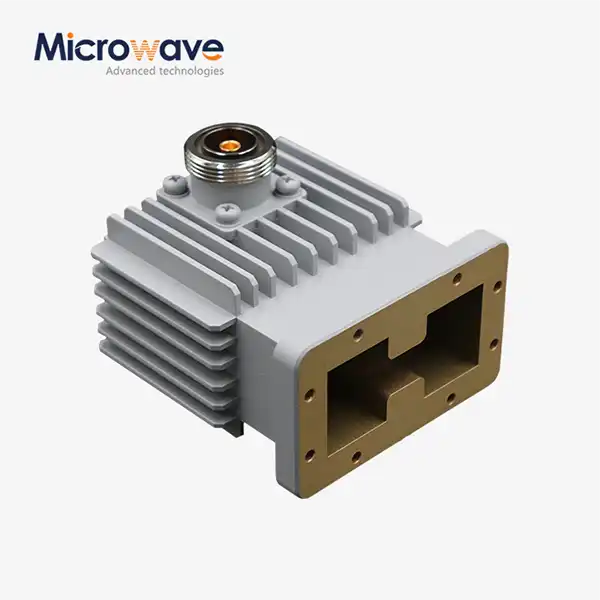 VIEW MOREHigh Power Waveguide to Coaxial Adapter
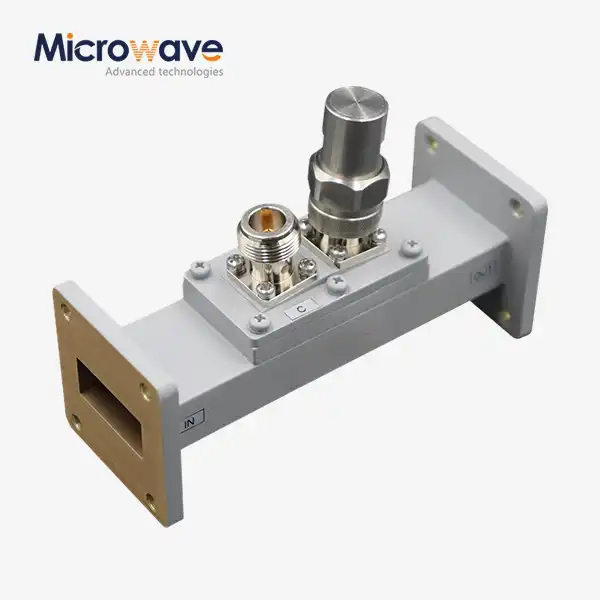 VIEW MOREWaveguide Loop Coupler
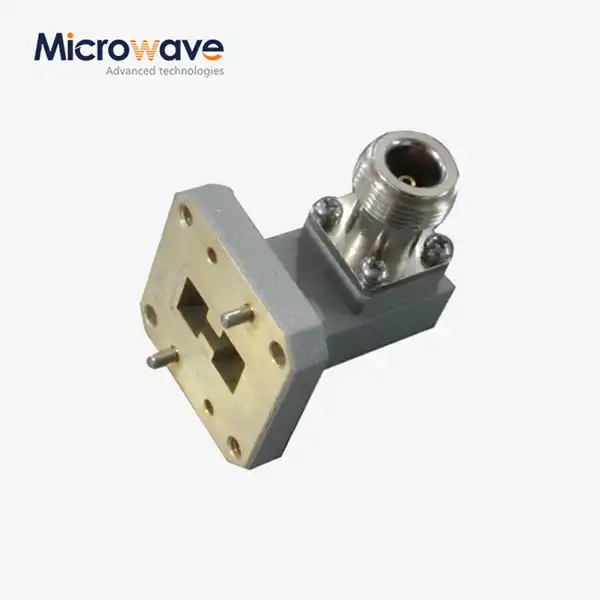 VIEW MORERight Angle Double Ridged WG To Coaxial Adapter
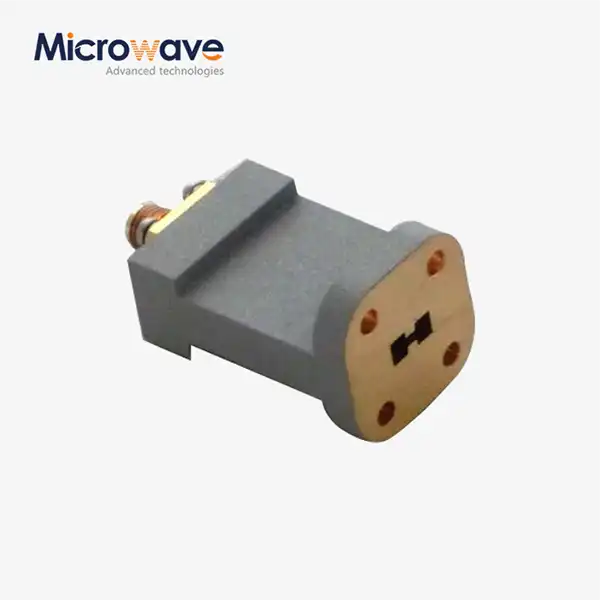 VIEW MOREEnd Launch Double Ridged WG To Coaxial Adapter
 VIEW MORERight Angle Waveguide to Microstrip Adapter
 VIEW MOREE-Plane Tee
 VIEW MOREH-Plane Tee
 VIEW MORECrossguide Directional Coupler