





Waveguide Isolator Applications in Automotive Assembly Systems
Modern automotive assembly systems increasingly rely on advanced microwave and RF technologies to ensure precision, reliability, and quality control throughout production processes. At the heart of these systems lies a critical component: the waveguide isolator. This passive, non-reciprocal device permits electromagnetic signal propagation in one direction while absorbing energy traveling in reverse, functioning essentially as a "microwave diode." Within automotive manufacturing environments—where radar sensor calibration, LIDAR testing, and RF system validation occur continuously—waveguide isolators protect expensive test equipment from reflected power and impedance mismatches that could cause signal instability or catastrophic equipment failure. Their deployment ensures repeatable measurement accuracy, minimizes production downtime, and safeguards the integrity of mission-critical testing infrastructure that underpins today's connected, autonomous vehicle technologies.
Understanding Waveguide Isolators and Their Role in Automotive Assembly Systems
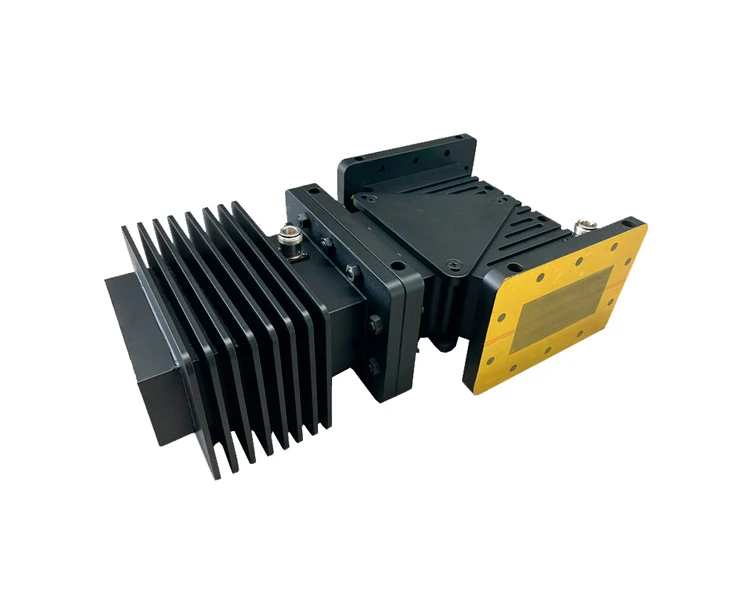
Waveguide isolators use the special features of ferrite materials and magnetic fields to make communication paths that only go in one direction. RF energy tries to go backwards, which can happen because of antenna mismatches, bad connections, or changes in the load during tests. The isolator sends this reflected power into an internal matched termination load, where it safely dissipates as heat. This feature keeps sensitive signal sources safe, like solid-state power amplifiers and vector network analyzers that are often used in car test units.
Operating Principles and Key Benefits
It operates using Faraday's spinning or field displacement notions. A permanent magnet pushes the ferrite material in one direction, causing phase differences in forward and backward signal channels. While backward signals have substantial separation (typically over 20 dB), forward signals have low insertion loss (0.3–0.8 dB). This unevenness protects upstream equipment and boosts the downstream signal. This safeguard aids automobile assembly lines during high-volume sensor testing cycles, when even minor equipment failures can delay production and quality control.
Better signal quality is a basic benefit. When examining a radar module, reflected signals might skew reference measurements and cause inaccurate calibration results. Isolators eliminate reflections to ensure that tests indicate how well the device performs, not simply test setup problems that affect findings. This reliability is essential for testing ADAS parts that must exceed safety regulations.
Frequency Bands and Specifications for Automotive Applications
Automotive radar systems generally employ 24 GHz for short-range duties and 77–81 GHz for long-range tracking and adaptive speed control. In these test scenarios, isolators must perform precisely throughout these bands. Buying teams consider insertion loss, isolation, and average and peak power handling capabilities. Since temperature variations, vibrations, and electromagnetic interference may damage items on assembly lines if not correctly constructed, environmental robustness is particularly critical.
Core Applications of Waveguide Isolators in Automotive Assembly Lines
Putting waveguide isolators in all of a factory's output areas solves a number of technical problems and makes the whole process more efficient. Their uses range from checking individual parts to validating the whole vehicle's system.
Radar and LIDAR Sensor Calibration
Automakers take many precautions to ensure radar trackers match design criteria before installing them. Test sites assess output power, beam patterns, and frequency accuracy with signal generators and spectrum detectors. Source pulling—reflected energy from the equipment being tested—could affect the signal generator's output if these instruments don't include isolators. It would invalidate calibrations. Isolators between the source and sensor absorb these echoes, ensuring reliable readings after thousands of test runs daily.
LIDAR devices handle signals and track time using RF circuitry, while being largely optical. RF interference in test equipment can affect integration testing readings. Strategically placed isolators prevent these signals from mingling between test channels and preserve data purity.
Protection of Microwave Test Instruments
Vector network analyzers (VNAs) and spectrum analyzers are expensive automotive test infrastructure expenditures, costing hundreds of thousands of dollars. These instruments' delicate front-end electronics can be damaged by high reflected power. Sudden mismatches can cause voltage standing wave ratios (VSWR) to exceed safety limits when testing prototype parts with unknown or variable impedances. Isolators block dangerous rays before they reach instrument ports for safety.
Manufacturing engineers at a large vehicle electronics manufacturer reported about how isolators reduced VNA repairs by 73% over 18 months. This reduced direct expenses and eliminated production delays from equipment downtime and recalibration.
Boosting RF System Reliability Throughout Automated Lines
Modern automobile assembly uses robotic handling devices and conveyor-based transport. These mechanical systems emit electromagnetic interference that might affect RF test equipment and reduce measurement accuracy. By preventing interference, isolators safeguard the system. Since they only go one way, they automatically block unwanted signal channels, segregating test regions and keeping RF settings clean even in noisy, high-volume industrial operations.
End-of-line testing stations inspect all automobile communication systems. GPS receivers, cellular connectivity modules, and V2V communication gear are included. These rigorous tests subject the equipment to several signal and load conditions. Isolators protect test equipment from electrical issues caused by automobiles going through the station. This ensures consistent test coverage without manual adjustments.
How to Choose the Right Waveguide Isolator for Automotive Assembly Systems
A lot of technical and practical factors need to be carefully thought through when choosing the right waveguide isolator components. Managers of procurement have to balance the need for success with real issues like budget, delivery schedules, and the difficulty of integrating new systems.
Assessing Critical Parameters
The main criteria for choosing are the frequency range. Most automotive uses are in the 24 GHz and 77–81 GHz bands, but test tools may be able to work in wider ranges. Broadband isolators, like the WR-28 (26.5-40 GHz) or WR-12 (60-90 GHz), cover the whole waveguide bands. They are flexible for multi-application test stations, but they cost more than narrowband options that are optimized for specific center frequencies. By looking at real test protocols, you can tell if the tiny bandwidth edge is worth the money.
There are two types of power handling requirements: normal and peak. Pulsed radar testing makes high amounts of power all at once, while continuous wave (CW) testing puts demands on thermal management. Figuring out duty cycles and pulse features helps find isolators with the right internal termination loads that can get rid of absorbed energy without getting too hot or losing their performance.
Comparing Isolator Types and Material Options
At millimeter-wave frequencies, waveguide isolators work best in high-power, low-loss situations. This makes them a natural choice for testing car radar. They have great magnetic qualities across a wide range of temperatures because they are made of ferrite materials, which are often garnet-based compositions. Coaxial isolators are smaller and cheaper than other types, but they have higher insertion loss at high frequencies. This means they work best for lower-frequency uses or installations with limited room.
The choice of material affects both how well it works electrically and how long it lasts in the surroundings. In industrial settings, where temperatures range from -40°C to +85°C, temperature-compensated magnets keep their stable isolation properties. If the possible parts are going to be installed near ferromagnetic materials or magnetically sensitive equipment, procurement teams should make sure that they say they protect against magnetic fields. This is because stray fields can mess up systems that are close by.
Streamlining Sourcing Through Supplier Evaluation
Established providers with ISO 9001 clearance and a history of manufacturing automotive-grade parts may be trusted. Advance Microwave Technologies Co., Ltd. has made precise microwave parts for over 20 years and follows RoHS and ISO 9001:2015 quality standards. Our technical staff advises customers on balancing needs during the selection phase.
Standard parts can't manage interaction issues; custom solutions are created. Certain test station designs benefit from isolators with bespoke flanges, clamps, and heat management. Custom parts might take six to twelve weeks, depending on complexity. This implies early source contact is crucial for project planning. Ordering in bulk saves 15–30% on unit prices for purchases of fifty or more and keeps your supply chain open for high-volume manufacturing.
Optimizing Performance of Waveguide Isolators in Automotive Systems
Putting in place waveguide isolators is only the first step. To get the most out of them, you need to pay attention to how they are installed, the surroundings, and preventative maintenance procedures.
Addressing Common Technical Challenges
In complicated test setups, insertion loss builds up across components that are linked to each other. This loss is usually very small. When engineers make budgets for link margins, they need to carefully consider isolator losses, cable attenuation, connection losses, and other system factors. When measuring receiver sensitivity, keeping signal levels stable is especially important because it has a direct effect on measurement accuracy.
Signal reflections can happen at the connections between devices, but they can also happen at waveguide terminations that aren't set up right, flanges that are broken, or touch surfaces that are dirty. Assembling should be done with proper torque specs, flange shape, and cleaning being checked on a regular basis. For standard WR waveguide connections, we suggest torque settings between 150 and 180 in-lbs. To make sure they are correct, certified torque wrenches should be used to avoid both under-tightening (which can leave gaps that cause reflections) and over-tightening (which can bend flanges and break components).
Design Principles for High-Power, Low-Loss Applications
As longer detecting ranges become normal, higher power levels are used more and more in testing automotive radar. For these uses, isolators need strong internal loads that can constantly dissipate several watts of power. The choice of material is very important. For example, high-thermal-conductivity substrates and larger terminal resistors make it possible to handle more power. Some designs have forced-air cooling or conductive mounting parts that move heat into the test device base, making good use of the thermal mass that is available.
According to manufacturing documents from a European car tier-one supplier, problems with thermal drift that led to measurements being off during long test cycles were fixed by switching to isolators that could handle 10 watts of power on average. This increase cut test time by 18% by getting rid of the need for cool-down moments between measurement runs.
Maintenance and Troubleshooting Recommendations
Schedules for preventive maintenance should include checking the performance of the isolation on a regular basis using VNA readings. Degradation usually shows up as less reverse isolation before there is a big increase in forward insertion loss. This is an early sign that failure is about to happen. Some common ways that things fail are the internal load getting too hot during high-reflection events, magnetic property changes from being exposed to too much temperature, and damage to the flanges or fastening features.
The first step in troubleshooting is to carefully separate any suspect parts. By switching isolators between test channels, you can find out if performance problems are caused by the part itself or by problems with the system as a whole. Keeping track of standard speed data during the initial installation gives you something to compare against when you're looking into problems. Keeping extra isolators for important test stations reduces the time that they are unavailable when they need to be replaced.
Future Trends in Waveguide Isolators for Automotive Assembly
The car industry's focus on technology means that supporting test equipment, such as RF isolation components, is always changing. Waveguide isolators used to be specialized RF parts, but now they are essential parts of modern infrastructure for putting together cars.

Materials Science and Miniaturization Breakthroughs
New ferrite compositions improve magnetic properties and decrease temperature coefficients, making isolators smaller and lighter without compromising performance. Nanostructured magnetic materials under development might function in W-band (75–110 GHz) for next-generation automobile sensing systems. Since automotive designs are making integrated test equipment difficult to accommodate on production lines, these advancements are very beneficial.
Traditional cutting cannot manufacture waveguides with complex forms, but additive metal printing can. These designs maximize field distributions to reduce insertion loss by 20–30% while maintaining separation performance. These adjustments immediately improve measurement accuracy and allow automation test systems to handle more data.
Integration with Next-Generation Automotive Technologies
RF complexity in electric and self-driving automobile systems has never been higher. Power electronics in electric automobiles produce electromagnetic interference; internal communication systems need better signal separation. Isolators designed for these environments offer greater shielding and screening to withstand intense electrical sounds.
Millimeter-wave 5G connectivity equipment requires different testing methodologies. Broadband isolators in the 24–40 GHz range allow multi-frequency testing in one test station, saving money. As OTA testing becomes the standard for wireless performance, isolators prevent test chamber reflections from skewing antenna pattern measurements, ensuring radiation properties are correctly characterized.
Strategic Procurement Considerations
After recent international events, supply chain resiliency is crucial. Having several suppliers, especially US-based ones, reduces the hazards of being dependent on one. Procurement strategies should balance cost efficiency and supply consistency, as manufacturing line downtime costs more than part price variances.
Technology changes quickly, making it impossible to foresee future needs. Signing framework agreements with selected suppliers locks in costs and capacity while allowing for minimum order requirements. Early supplier involvement in product development helps everyone improve test systems, which may reveal isolation demands that affect system design.
Conclusion
Waveguide isolators have transitioned from specialized RF components to indispensable elements of modern automotive assembly infrastructure. They protect expensive test equipment, make sure measurements are accurate, and improve the general strength of the system. This directly supports the quality and efficiency goals that make car manufacturing competitive. As cars get smarter at recognizing and communicating, the technology demands on supporting test systems and the parts that keep them from communicating with each other will rise. If procurement teams and manufacturing engineers understand these changes, carefully evaluate suppliers' abilities, and use forward-looking sourcing strategies, they can help their companies succeed in this changing environment while staying ahead of the competition in a very competitive global market.
FAQ
Q1: What frequency ranges do automotive-grade waveguide isolators typically support?
Two main bands are used for automotive purposes: 24 GHz is for short-range radar, and 77–81 GHz is for long-range monitoring systems. Waveguide bands WR-42 (18–26.5 GHz), WR-28 (26.5–40 GHz), and WR-12 (60–90 GHz) are often covered by isolators made for these uses. Broadband versions cover whole bands with a bandwidth fraction of about 40%. Narrowband versions work best around certain center frequencies and have tighter limits for insertion loss and separation.
Q2: How do environmental factors affect isolator performance in assembly line settings?
Changing temperatures can change the magnetic properties of ferrite, which could change the center frequency and make separation less effective. Isolators of good quality have temperature-compensated magnets that keep specs the same from -40°C to +85°C. Machine vibrations can break flange connections, leaving gaps that let echoes happen. Automated equipment may send electromagnetic radiation into test systems, but the fact that isolators only work in one way protects them naturally. These problems can be solved by regularly checking and using the right mounting methods.
Q3: What distinguishes custom isolators from standard catalog products?
Custom solutions are made to meet specific integration needs, such as those that involve special bolt types, mounting arrangements, higher power handling, or frequency ranges that aren't common. Custom designs can fit into test setups that don't have a lot of room or have built-in thermal control features. Usually, development takes six to twelve weeks, and tech help makes sure that the product works perfectly for its intended uses. Companies that use standard test designs often benefit from catalog goods because they are easy to get and don't cost as much per unit.
Partner with ADM for Superior Waveguide Isolator Solutions
Advanced Microwave Technologies Co., Ltd. is ready to help you with your car assembly system needs by providing precision-engineered separation solutions and more than twenty years of experience in the field. Our engineering team works directly with sourcing managers and test engineers to find waveguide isolators that are best for your frequency bands, power levels, and working conditions. With ISO 9001:2015 approval, RoHS compliance, and measurement powers up to 110 GHz, we provide parts that meet the high-quality standards needed in the car industry. Our fast OEM services offer development, technical support, and short lead times that keep production plans on track, whether you need standard waveguide configurations or custom-designed kits for specialized test setups. Get in touch with our team at craig@admicrowave.com to talk about your isolation needs with a reputable waveguide isolator maker that cares about your quality, dependability, and operating success.
References
1. Helszajn, J. (2018). Ferrite Phase Shifters and Control Devices for Microwave Systems. Institution of Engineering and Technology Press.
2. Pozar, D. M. (2017). Microwave Engineering, 4th Edition. John Wiley & Sons, Hoboken, New Jersey.
3. Kumar, R. & Singh, A. (2020). "Waveguide Isolator Design for Automotive Radar Test Systems," IEEE Transactions on Microwave Theory and Techniques, Vol. 68, No. 4, pp. 1432-1441.
4. Automotive Electronics Council (2019). AEC-Q200: Stress Test Qualification for Passive Components. AEC Component Technical Committee.
5. Rehnmark, S. (2021). "Millimeter-Wave Test Infrastructure for Autonomous Vehicle Sensor Validation," International Journal of Automotive Technology, Vol. 22, No. 3, pp. 789-803.
6. Baden Fuller, A. J. (2017). Ferrites at Microwave Frequencies. Peter Peregrinus Ltd., London.
YOU MAY LIKE
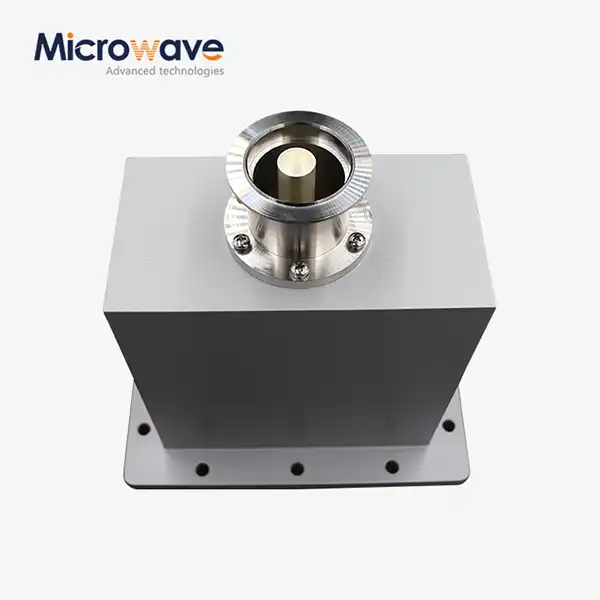 VIEW MOREEnd Launch Waveguide to Coaxial Adapter
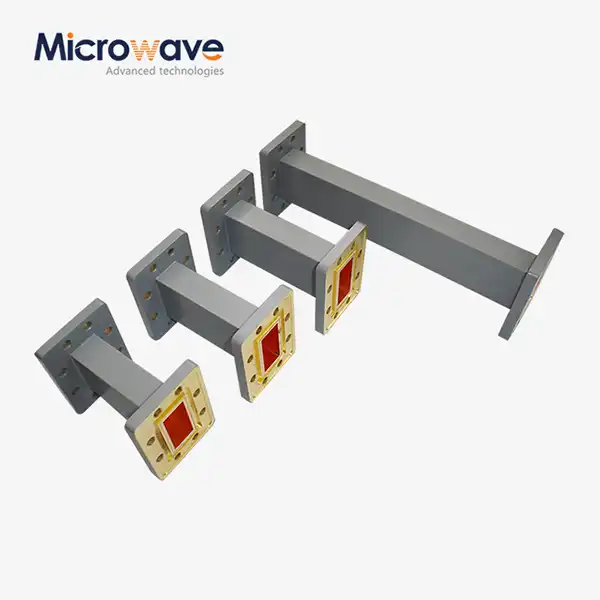 VIEW MORERectangular Straight Waveguide
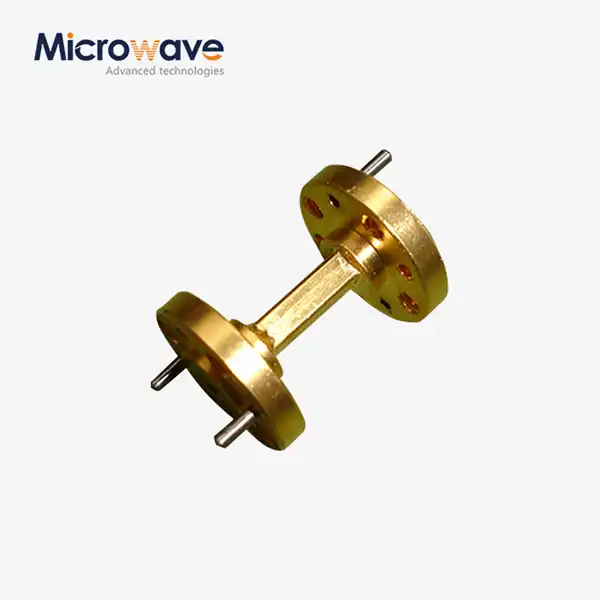 VIEW MORECircular Straight Waveguide
 VIEW MOREInflatable Straight Waveguide
 VIEW MOREWaveguide E Bend
 VIEW MOREFlexible Seamless Waveguide
 VIEW MORERight Angle Waveguide To Coaxial Adapter
 VIEW MORECircular Waveguide To Coaxial Adapter