




Understanding Insertion Loss in High Power Waveguide Circulators
Insertion loss in high-power waveguide circulators is the signal power loss that happens naturally as RF energy moves through the device from input to output. A high-power waveguide circulator works by sending microwave signals one after the other between ports while protecting sensitive transmitter gear from damaging reflections. Insertion loss, which is usually measured in decibels (dB), has a direct effect on how well a system works and how well it handles heat. When kilowatts to megawatts of power are used in mission-critical radar, satellite ground stations, and industrial heating applications, even small dB losses cause a lot of heat to be produced and energy to be lost. This is why insertion loss is one of the most important criteria used to make purchasing choices.
What is Insertion Loss in High Power Waveguide Circulators?
Definition and Measurement
When a high-power waveguide circulator is put into an RF transmission line with exactly matching resistance, the ratio of input power to output power is called insertion loss. It measures resistance losses in ferrite materials, conductor losses along waveguide walls, and dielectric losses in any shielding elements. It is given in decibels. A common standard might say "insertion loss ≤ 0.3 dB at 9.5 GHz," which means that about 7% of the power that is sent to the device turns into heat instead of going where it's supposed to go.
Vector network analyzers that are calibrated and can describe S-parameters across the working frequency band are used for measurements. S21 is the forward transmission coefficient from Port 1 to Port 2, and its value in decibels (dB) shows how much insertion loss there is. Accurate testing and tightening of connectors are very important because mechanical mistakes can cause measurement flaws that are bigger than the device's real performance.
Frequency Dependence and Bandwidth
Most of the time, insertion loss stays the same across the operating span of a circulator. When compared to X-band radar units (8-12 GHz) or Ka-band millimeter-wave systems (26-40 GHz), devices made for C-band satellite communications (4-8 GHz) lose signals in different ways. At lower frequencies, wire losses are the most important because skin effect causes current to concentrate near the waveguide surfaces. As the frequency goes up, molecular dipole relaxation processes take in more electromagnetic energy, causing dielectric and ferrite material losses to increase.
Broadband high-power waveguide circulators with octave or multi-octave bandwidths usually have insertion loss that changes by 0.2 to 0.5 dB over the given range, with best performance at the middle frequency. Narrowband designs have more exact requirements, and their insertion loss can stay within 0.1 dB of each other. This makes them better for fixed-frequency uses like weather radar or industrial plasma generation.
Material and Design Influences
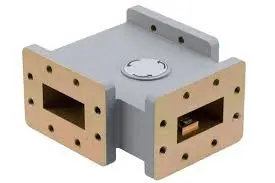
Ferrite materials make up the functional core and allow non-reciprocal behavior by interacting with RF energy through magnetic fields. Most industrial circulators are made of yttrium iron garnet (YIG) and lithium ferrite forms because they have good saturation magnetization and low loss tangent qualities. The accuracy of manufacturing has a direct effect on insertion loss. For example, if the ferrite shape isn't uniform, the bias magnetic field distribution isn't right, or there is contamination during assembly, losses can go up by 50–100% compared to theoretical minimums.
Junction circulators focus ferrite at the Y-junction in the middle, where three waveguide sections meet. This makes the device small, but it can't handle a lot of power. Differential phase shift designs put ferrite disks close to the walls of the waveguide, which is where the electromagnetic field strength is strongest. This lets the heat escape more efficiently, which is important for high average power operation. Our work with clients in particle accelerator applications shows that small changes to the design, like moving ferrite elements a few millimeters to the right place, can cut insertion loss from 0.4 dB to 0.25 dB. This leads to a noticeable increase in the efficiency of the accelerator and lower costs for the cooling system.
Key Benefits of Low Insertion Loss in High Power Waveguide Circulators
Enhanced System Efficiency and Power Handling
Lower insertion loss directly leads to better system efficiency by reducing the amount of energy that is lost as heat. In a 50 kW radar transmitter system, lowering insertion loss from 0.5 dB to 0.2 dB restores about 1.5 kW of useful output power. This is enough to increase the detection range or lower the amount of prime power used. This increase in efficiency affects all parts of the system, which could mean that you don't need to improve your power sources or add more cooling space.
Maintaining the temperature becomes harder as the power level goes up. In a 100 kW industrial microwave heating system, every 0.1 dB of insertion loss creates 2.3 kW of waste heat that is mostly centered in the high-power waveguide circulator housing. When they are in use, high-performance devices with an insertion loss of less than 0.3 dB stay cooler. This lowers the temperature stress on ferrite materials and waveguide joints, which increases the mean time between failures (MTBF) and lowers the cost of ownership over the device's lifetime.
Superior Signal Integrity
Keeping insertion loss low protects the signal-to-noise ratio in RF chains. This is especially important for sensitive receivers that are used after high-power transmission. Radar systems that use circulators as duplexers have a lower noise figure input, which makes it easier to find targets that are far away or have a low cross-section. Both the uplink and downlink margins for satellite ground stations get better, which means they can send and receive more data or work in worse weather.
We work with aircraft integrators who said that the stability of data links got better after they switched to high-power waveguide circulators with 0.15 dB less insertion loss. The effect that built up over several steps of the system kept the signal quality high enough to keep connections going during difficult atmospheric propagation events that used to cause link breaks.
Cost Savings and Reliability
Premium high-power waveguide circulators with improved insertion loss features cost more at first but provide a lot of value over their lifetime. Less cooling is needed, which means lower costs for building equipment and lower energy use for running the business. Longer component lifespans mean that they don't need to be replaced as often, which saves money on shutdown costs. This is especially important for installations that are far away, like ocean bases or communications sites on top of mountains, where maintenance visits are expensive and hard to arrange.
Defense contractors who work with phased array radar systems have found that choosing circulators with 0.25 dB insertion loss instead of 0.4 dB alternatives cuts the total cost of ownership by 18% over ten years of service. This is because the system used less energy, needed less cooling infrastructure, and needed fewer replacement parts.
Comparing High Power Waveguide Circulators: Factors Influencing Insertion Loss
Circulators versus Isolators
Isolators and high-power waveguide circulators both use ferrite-based structures, but they have different jobs that change how insertion loss behaves. A circulator has three or more ports and power flows sequentially through them. An isolator, which is basically a three-port circulator with the third port internally ended, only has two ports. Isolators usually have 0.05 to 0.1 dB less insertion loss than similar circulators. This is because getting rid of the external third port link lowers interface losses and makes it easier to optimize the internal field distribution.
The right pick is determined by the needs of the application. Systems that need to send and receive data at the same time or that need to watch the load need the full circulator ability, even though it means a little more insertion loss. Isolators may be better for pure transmitter protection situations because they are easier to use and slightly more efficient.
Power Rating Considerations
When it comes to building high-power waveguide circulators made for steady operation at kilowatt levels are very different from low-power versions, which has a direct effect on insertion loss. Increasing the size of the waveguide is needed to keep the voltage from dropping and to lower the current density, which naturally lowers circuit losses. However, if the ferrite isn't properly made, the bigger amounts needed for heat escape can lead to more material loss.
Manufacturers like Pasternack and Cobham divide their product lines into groups based on how much power they can handle. Peak power numbers range from 1 kW to over 1 MW, and normal power handling ranges from 100W to 100 kW constant. It is common for devices designed for 50 kW average power to have an insertion loss of 0.25-0.35 dB. However, 5 kW units may be able to achieve 0.15-0.25 dB because their shape is more compact and optimized. Knowing about this balance between power and loss helps buying teams choose the right-rated parts without over-specifying, which raises costs and physical size for no reason.
Ferrite Material Selection
The way a ferrite works depends on its temperature, frequency, and power density. These factors are controlled by basic material science principles. Even though it costs more, yttrium iron garnet (YIG) is chosen for precision uses because it has very low loss and is stable at high temperatures. Lithium ferrite works well enough at a low cost, making it a good choice for business telecommunications and industrial heaters where standards are not as strict.
Nokia and other companies like it post thorough information about the properties of materials that helps engineers guess how insertion loss will behave in certain situations. Temperature factors are usually between 0.002 and 0.005 dB/°C. This means that a high-power waveguide circulator that is 50°C above room temperature might lose an extra 0.1-0.25 dB, which is something that needs to be thought about for systems that don't have active cooling.
Manufacturing Quality and Brand Reliability
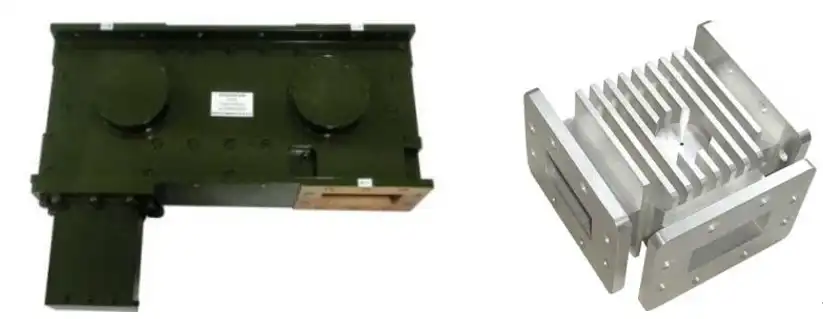
Long-term security and regularity of insertion loss are directly linked to precision production. Manufacturers with a good reputation use strict process controls, such as automated ferrite placement, controlled magnetic biasing during assembly, and 100% RF testing before shipping. Companies like Cobham use their many years of experience in aircraft and defense to make sure that their specs and quality standards make sure that datasheets correctly show the performance that was achieved.
When helping clients with mission-critical applications, we always recommend parts from well-known brands. The higher price (15–25%) compared to common alternatives is always justified by stricter insertion loss requirements (±0.05 dB typical vs. ±0.15 dB), better consistency from unit to unit, and the need for detailed test data documentation for integration into certified systems.
Procurement Considerations: Sourcing High Power Waveguide Circulators with Optimal Insertion Loss
Understanding Technical Specifications
Read datasheets carefully, paying attention to test circumstances and standard limits. Insertion loss values are often reported as upper limits (e.g., "≤ 0.3 dB") for certain frequency and temperature ranges. Check if the standards apply solely at room temperature or across the working range. Low and high temperatures reduce performance by 0.1 to 0.3 dB. Peak and average power handling ratings exist. Warmth and field strength impact insertion loss.
Testing sample units in real-world operating situations reduces the risk of buying high-power waveguide circulators. New sources and unique designs require this. To ensure that products match application demands, criteria including testing insertion loss at different frequencies, power levels, and temperatures are set. Before shipping high-value defence and aerospace projects, we undertake documented factory acceptance testing to ensure functionality and generate responsibility.
Pricing and Lead Time Factors
Catalog circulators from companies like Pasternack can be shipped within days to weeks and have costs that are competitive for normal business uses. They usually have good insertion loss performance (0.3 to 0.5 dB). Custom designs that are designed for certain frequency bands, power levels, or weather conditions can meet better standards (0.15-0.25 dB), but they take 8–16 weeks to make and cost a lot of money, which is only worth it for uses that need to work perfectly.
When dozens or hundreds of units are needed for a production run, volume savings become important. Setting up blanket buy orders or working with distributors to keep goods on hand can cut costs per unit by 15–30% while still making sure that supplies are available on time for production. Technical teams and buying specialists need to be able to talk to each other clearly in order to balance performance needs with budget limits and delivery dates.
Evaluating Supplier Capabilities
When evaluating a supplier, more than just the product details are looked at. Technical help, guarantee coverage, and service after the sale are also looked at. Manufacturers that offer full application engineering help make the best choice of high-power waveguide circulator for each system's needs. They may be able to find stock options that meet those needs at a lower cost than the custom designs that were first requested. Most warranties last between 12 and 24 months, but some, like Cobham, offer longer warranties to show that they are confident in the quality of their products and the dependability of their parts.
When things break down in the field, failure analysis, repair services, and fast replacement programs that come after the sale keep downtime costs to a minimum. We put a lot of emphasis on manufacturers keeping detailed quality records and tracking paperwork, which is needed for aerospace and defense uses that need to know where parts came from and how they work throughout their operating life.
Conclusion
When procurement workers and RF engineers understand insertion loss in high-power waveguide circulators, they can make smart choices that balance performance needs, budget limits, and reliability standards. Keeping insertion loss to a minimum improves system efficiency, makes temperature management easier, and extends the useful life of components. These benefits add up in mission-critical areas like radar, satellite communications, and industrial processing. Optimal insertion loss performance is achieved throughout a product's lifecycle by paying close attention to the choice of material, the quality of making, the way it is installed, and the supplier's abilities. Strategic buying from well-known makers with track records that you can trust offers long-term value that goes beyond initial cost considerations, supporting project success in high-power RF settings that are hard to work in.
FAQ
Q1: How does insertion loss affect my radar system's overall performance?
Insertion loss lowers the power that is sent to your antenna and the strength of the signal that is received and sent back to monitoring circuits. For every 0.5 dB of loss, radar range drops by about 6%, which could make it harder to find targets. Losses that build up in transmitter high-power waveguide circulators, waveguide runs, and antenna feed networks can make performance much worse, so choosing the right parts is very important.
Q2: What insertion loss specification should I target for satellite ground station applications?
Most satellite communication systems need circulators with an insertion loss of less than 0.3 dB in order to get the best link margin. This is especially important for Ka-band frequencies, where air attenuation makes connection difficult. Premium devices that achieve 0.15 to 0.2 dB are better for high-throughput systems because they improve uplink effective isotropic radiated power (EIRP) and downlink G/T (gain-to-noise-temperature ratio).
Q3: Can I reduce insertion loss through better installation practices?
Basic insertion loss is built into the device, but bad fitting can add 0.1 to 0.3 dB through misaligned flanges, dirty interfaces, or mechanical stress. Factory performance is maintained by following the pressure specs given by the maker, keeping the area clean, and checking the alignment with precise tools. Degradation over time can be stopped with regular upkeep, such as replacing gaskets and checking connectors.
Q4: How do I verify a circulator's insertion loss meets datasheet specifications?
Accurate measurement requires calibrated vector network analyzers and the right test fixtures. Full two-port calibration should be done at the high-power waveguide circulator flange planes, the connections should be torqued correctly, and the S21 magnitude should be measured at room temperature across the given frequency range. Results within ±0.05 dB of the ranges listed in the document mean that the performance is good; bigger differences need to be looked into or the provider should be consulted.
Partner with ADM for Superior High Power Waveguide Circulator Solutions
Advanced Microwave Technologies Co., Ltd. (ADM) has been making accurate RF and microwave parts for defense, aircraft, satellite, and commercial uses around the world for more than 20 years. Our engineering team works closely with sourcing specialists and system designers to find the best high-power waveguide circulator specs. This way, we can make sure that the insertion loss is as low as possible while still meeting your performance needs and operating environment.
We use ISO 9001:2015-certified production processes and a state-of-the-art 24m microwave darkroom that can measure up to 110 GHz to make sure that the parts we give meet the strictest requirements. As a reliable high-power waveguide circulator provider, ADM offers full technical support, quick development, and reasonable pricing, whether you need to buy goods from a list or have custom solutions made.
Email our technical sales team at craig@admicrowave.com to talk about the needs of your project, get full datasheets, or set up a trial sample. We are ready to help you succeed by providing you with dependable, high-performance circulator options backed by skilled engineering and quick customer service.
References
1. Helszajn, J. (2008). The Stripline Circulator: Theory and Practice. Hoboken: Wiley-IEEE Press.
2. Linkhart, D.K. (2014). Microwave Circulator Design (2nd ed.). Norwood: Artech House.
3. Baden Fuller, A.J. (1987). Ferrites at Microwave Frequencies. London: Peter Peregrinus Ltd.
4. Pozar, D.M. (2011). Microwave Engineering (4th ed.). Hoboken: John Wiley & Sons.
5. Schloemann, E. (1970). Circulators for Microwave and Millimeter-Wave Integrated Circuits. Proceedings of the IEEE, 76(2), 188-200.
6. Fay, C.E., & Comstock, R.L. (1965). Operation of the Ferrite Junction Circulator. IEEE Transactions on Microwave Theory and Techniques, 13(1), 15-27.