




Application of High Power Coaxial Switches in RF Test Setups
The high power coaxial switch is an important part of current RF test settings because it routes signals accurately across complex measurement systems. During antenna measurement, automated test routines, and multi-port system validation, these specialized devices keep the signal integrity while handling high power levels (from hundreds of watts to several kilowatts). High-power RF switches are different from regular ones because they have better heat management, stronger contact materials, and better internal shapes that stop arcing and make sure they work reliably in tough test circumstances. Because they can easily send messages between different test tools and devices, they are essential in labs for aerospace, defense, and telecommunications, where accurate measurements are important for making products and following rules.
Understanding High Power Coaxial Switches in RF Test Setups
For RF tests, you need parts that can handle both accuracy and power without affecting the accuracy of the measurements. High power coaxial switches fill in this gap by providing controlled signal routes that can be used for tests of low-level receiver sensitivity as well as tests of high-output transmitters.
Fundamental Operating Principles
The basic ideas behind how these switches work are simple but complex. When the switch is turned on, internal contacts physically change the direction of the RF signal through carefully made coaxial structures. The main difference between this and lower-power options is the touch area, insulating strength, and ability to get rid of heat. For test purposes, we've seen that switches usually have gold-plated beryllium copper contacts inside aluminum or brass spaces that are temperature-stabilized. This design keeps the impedance the same across the whole frequency range and stops temperature drift during long test rounds.
Critical Technical Specifications
When purchasing, engineers look at switches for test setups, engineers should pay attention to a number of performance factors. Insertion loss has a direct effect on measurement sensitivity. At frequencies up to 18 GHz, expensive units get values below 0.05 dB. When the voltage standing wave ratio (VSWR) is less than 1.15:1, there isn't much signal bounce that could mess up readings of the antenna pattern or the characterisation of the amplifier. Crosstalk between test ports can't happen if the isolation performance is higher than 70 dB. This is especially important when measuring weak signals next to high-power transmitter outputs. Power handling requirements need to take into account both peak power and continuous wave (CW) situations. For many test purposes, devices with a CW rating of 5 kW at microwave frequencies are needed.
Application-Specific Advantages
These buttons are used in a variety of situations by RF test labs. They let antenna measurement tools quickly switch between different test antennas or polarization states without having to do it by hand. Automated test equipment (ATE) has many high power coaxial switches that let signals go between network analyzers, signal generators, and spectrum analyzers. This makes flexible measurement systems. Coaxial switches are better than other technologies like waveguide switches or relay matrices because they are more consistent, switch faster (usually in less than 50 milliseconds), and work with standard coaxial test cords and plugs. This mix of speed and dependability cuts down on test run times and keeps the calibration stable over thousands of switching operations.
Core Technical Features and Types of High Power Coaxial Switches
Understanding the differences and practical trade-offs between the different technologies is necessary to choose the right switch design. Each version solves a different set of test problems and interface issues.
Mechanical Switch Architectures
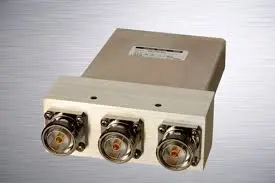
The most popular type of structure in RF test sets is single-pole, double-throw (SPDT). With great separation and little insertion loss, these units send one input to either of two outputs. Double-pole, double-throw (DPDT) switches can do more than this because they can route two separate signal lines at the same time. This is useful for testing differential RF systems or keeping the signal tracks matched for phase-coherent readings. Mechanical switches are very good at handling power and are very reliable over time. Good units are rated for over a million switching rounds. Their main weakness is their slow switching speed—a full shift usually takes 15 to 50 milliseconds—which is fine for most test sequences but could be a problem in high-throughput production settings.
Solid-State and Hybrid Technologies
To control data lines electrically, solid-state RF switches don't have any moving parts. Instead, they use PIN diodes or field-effect transistors (FETs). These switches work in microseconds, which lets you quickly set up tests and change how signals are routed in real time. But solid-state systems can only handle a certain amount of power; most high-frequency units can only handle a few hundred watts. Compared to mechanical counterparts, they also have more insertion loss and less separation. By using both mechanical contacts for signal flow and solid-state control circuits for fast ordering logic, hybrid designs try to get the best of both worlds. These combination designs are becoming more popular in places that test aircraft parts, where both power handling and switching speed are important.
Installation and Integration Best Practices
Proper placement has a big effect on how well switches work and how accurate measurements are. Putting switches on surfaces that conduct heat well helps get rid of the heat that is generated during high-power tests. Short, impedance-matched wire runs between switches and test ports keep standing waves that could mess up measures to a minimum. Shielded wires should be used for control signal routing so that electromagnetic interference doesn't mess up the switching logic during sensitive RF readings. By checking insertion loss and separation on a regular basis with a vector network analyzer (VNA), you can be sure that switches will always work at a calibration-grade level. These actions shorten the time needed to fix problems and increase the time between servicing equipment.
Comparison and Selection Guide for High Power Coaxial Switches in RF Systems
To make smart choices about what to buy, you need to compare performance factors to specific test standards in a planned way. There are many makers of products on the market, and each one has its own technical method and value proposal.
Performance Evaluation Framework
There are a few things that should be carefully looked at when evaluating switches for RF test equipment. When testing low-noise boosters or high-sensitivity receivers, every tenth of a decibel counts because it affects dynamic range. Test efficiency is based on switching speed, especially in automatic production settings where cycle time has a direct effect on costs. Power handling requirements must account for high-power situations with enough safety gaps. For example, selecting switches rated 50% above their maximum predicted power levels gives them heat space and increases their working lifetime. System growth is affected by the number of ports and the freedom of the design. Switches with three or more ports make wiring simpler in sets with more than one instrument.
Comparative Analysis of Leading Solutions
The world market has a lot of choices from well-known brands. Pasternack offers a wide range of common setups and fast shipping, which makes them ideal for quick lab extensions or testing stages. Keysight connects its switches to automatic test software platforms. This makes system integration easier for places that already have their measurement tools set up in a standard way. TE Connectivity works on making designs that are tough enough to withstand harsh environments and meet the needs of defense contractors for performance under shaking and temperature changes. Radiall focuses on ultra-low passive intermodulation (PIM) designs that are important for cellular and satellite test applications that need to keep unwanted signals below -160 dBc.
Cost-Benefit Analysis for Long-Term Investment
The purchase price is only one part of the total costs of owning. Premium switches with better isolation and insertion loss have lower measurement error, which could mean that you don't have to do as much expensive rework when testing close to the limits of the standard. Maintenance plans are affected by mechanical dependability. For example, switches that are rated for five million cycles instead of one million cycles have lower long-term running costs, even though they cost more at first. How often expensive VNA testing has to happen depends on how stable the calibration is. When these things are taken into account, many procurement managers find that mid-range to high-end switches give them a better return on investment than entry-level options. This is especially true in test facilities that are used a lot because downtime directly affects revenue.
Procurement Considerations for High Power Coaxial Switches
Efficient sourcing of critical RF test infrastructure requires navigating technical specs, source skills, and the unique logistics of getting precision microwave parts.
Identifying Qualified Suppliers
There are a few things that set reliable high power coaxial switch makers apart from others. Getting ISO 9001 recognition means that you have set up quality control systems that make sure your manufacturing methods are always the same. RoHS compliance shows that environmental rules are being followed, which affects the spread of tools around the world. Technical support skills are very important. Suppliers that give application engineering help make switch selection and integration easier. Clear information about lead times helps with accurate project planning. Suppliers who keep standard setups in stock usually deliver within two to four weeks, but unique designs may take eight to twelve weeks. Customization choices from the OEM are important when putting switches into custom test setups or when standard connectors don't work with the infrastructure that is already in place.
Pricing Structures and Commercial Terms
Switch prices vary a lot depending on the features and the number of orders. The price range for standard SPDT units that work up to 18 GHz is usually between $800 and $2,500 per unit. Higher frequency or custom setups will cost more. Volume savings usually start at five units, and the tiered price goes all the way up to production numbers over fifty pieces. Most warranties last between one and three years, but some high-end brands offer longer coverage choices. After the sale, there should be calibration services, fix options, and technical support. These are things that become more important as test systems age, and their original settings need to be updated or replaced.
International Logistics and Handling
Special shipping rules need to be followed for microwave parts. Damage during foreign shipping can be avoided with the right packing that protects against static electricity and absorbs shock. Different countries have different documentation needs for customs processing. For defense-related items, export licenses are sometimes needed. Suppliers with a lot of experience offer full paperwork packages that speed up the customs process. Because of how precisely the goods are made, transit insurance should cover the full substitute value. We suggest getting to know sellers who have regional shipping centers or working with specialized transportation companies that know how to handle sensitive RF equipment.
Future Trends and Innovations in High Power Coaxial Switch Technology
Switch technology keeps getting better because RF test standards are always changing. New trends are also changing how systems are built and how they are bought.
Advanced Solid-State and Hybrid Designs
Digital control interfaces are replacing analog activation signals more and more in next-generation switches. Ethernet and USB ports let test automation software be directly integrated, so you don't need separate control gear. Some makers now make switches that can track temperature, switching cycle counts, and contact resistance in real time. This information can be used to plan maintenance and keep surprising breakdowns from happening during important test sessions. Recently made hybrid designs can switch between states in less than five milliseconds and handle power levels close to two kilowatts at microwave frequencies.
Market Drivers Across Key Sectors
Tests for telecommunications are changing quickly because 5G and future 6G systems are moving into millimeter-wave bands. This makes a need for switches that work above 40 GHz and can handle enough power for testing huge MIMO antenna arrays. More and more, aerospace and defense uses need switches that can keep working in very cold or very hot conditions, like places where satellites are tested in cryogenics or where radar systems are tested at high temperatures. As system designs get denser and frequency coordination gets harder, the satellite communication industry needs very low PIM performance.
Strategic Recommendations for Future-Proofing
When building or improving RF test equipment, companies should put freedom and scalability at the top of their list of priorities. Fixed designs are less valuable in the long run than modular switch grids that can be expanded without replacing the whole system. Standardizing on switch platforms that allow for remote software changes keeps devices from becoming useless as communication methods change. Building partnerships with high power coaxial switch providers that offer both standard goods and special engineering services gives you choices when test needs change. We've found that giving groups money to do regular technology reviews helps them figure out the best time to upgrade—usually every five to seven years for production test systems, or when the number of measurements needs to be done grows faster than what the current equipment can handle.
Conclusion
High power coaxial switches are an important part of modern RF test facilities because they allow for flexible signal handling and keep measurements accurate even when power levels are high. A good buying process combines short-term technical needs with long-term ones like dependability, provider support, and how technologies change. Because there are so many models to choose from, ranging from simple mechanical SPDT units to complex mixed designs, there are options for almost every test situation. Companies that regularly check performance specs, know their total operating costs, and work with reliable providers are in a good position to build test infrastructure that will be useful for many product development cycles. Solid-state technologies and digital control interfaces are always getting better, which means that switching speed and system interaction will keep getting better.
FAQ
Q1: Can high power coaxial switches perform hot switching operations?
Most test units need to be cold switched, which means they can only change states when the RF power is turned off. When high power is used for hot switching, contact arcing happens, which hurts performance and shortens the life of the device. There are specialized arc-suppressed mechanical designs or solid-state switches that can do hot switching, but they are very expensive and can't handle as much power as their cold-switched counterparts.
Q2: How does operating frequency affect power handling capability?
There are a number of physical reasons why power rates go down as frequency goes up. The skin effect makes the current move more densely into smaller parts of the wire, which raises the resistance and heat production. As the frequency goes up, the dielectric breakdown voltage gaps get smaller. Maybe a switch that can handle 10 kW at 500 MHz can only handle 3 kW at 10 GHz. Always check the power levels for the frequency you will be using.
Q3: What distinguishes latching from failsafe actuation mechanisms?
Latching switches stay in the position you choose, even when the actuator coil isn't getting power. This keeps the heat from building up, which is especially helpful in test racks with a lot of switches. When the power goes out, failsafe designs go back to a default position immediately. This keeps expensive test equipment safe from high-power signals that get sent in the wrong direction when the power goes out or the control system fails.
Partner with ADM for Reliable High Power Coaxial Switch Solutions
Advanced Microwave Technologies Co., Ltd has been making microwave components for over 20 years and helps companies build world-class RF test infrastructure. ADM has been making high power coaxial switches for a long time and is known for its precise engineering and ability to fully customize products to meet the specific needs of test systems. Our ISO 9001-certified production processes make sure that the quality is the same for both standard and OEM versions. Our global transportation network also makes sure that products get to labs all over the world quickly. Whether you need simple SPDT switches to test an antenna or complex multi-port grids for automatic production test systems, our expert team is here to help you every step of the way. They will help you with the design and integration process as well. Email our engineering experts at craig@admicrowave.com to talk about your unique test needs and get advice on how to choose the best switching options. We keep a collection of common setups that can be used right away, and we also offer customization services for unique uses. Let our expert know-how and years of experience help you set up a test system that will give you accurate readings for years to come.
References
1. Smith, J. R., & Williams, P. T. (2021). RF and Microwave Switch Technology: Design, Implementation, and Testing. Boston: Artech House Publishers.
2. Chen, L., Martinez, A., & Wong, K. (2022). "Performance Characterization of High-Power Coaxial Switches in Automated Test Equipment." IEEE Transactions on Instrumentation and Measurement, 71, 1-12.
3. Anderson, M. B. (2020). Practical RF Test and Measurement: A Technician's Handbook. Indianapolis: Sams Technical Publishing.
4. European Microwave Association. (2023). Guidelines for RF Component Selection in High-Reliability Test Systems. Brussels: EuMA Technical Standards Committee.
5. Thompson, R. D., & Kumar, S. (2022). "Thermal Management Strategies for High-Power RF Switching Systems." Microwave Journal, 65(4), 48-62.
6. Defense Electronics Standards Organization. (2021). MIL-STD-3433: Requirements for Coaxial RF Switches in Mission-Critical Applications. Washington: U.S. Department of Defense.