




Top Benefits of Digitally Controlled Phase Shifter in microwave RF
When radar systems fail to track targets accurately, when phased array antennas drift from their intended beam patterns, or when satellite communication systems experience signal degradation—the root cause often traces back to inadequate phase control. In modern microwave RF applications operating at frequencies from megahertz to tens of gigahertz, maintaining precise phase alignment between signal paths becomes critical for system performance. A Digitally Controlled Phase Shifter addresses these challenges by providing programmable, repeatable phase adjustments with exceptional accuracy, making it an essential component for engineers developing next-generation communication networks, defense radar systems, and aerospace navigation equipment where phase precision directly determines operational success.
Understanding Digitally Controlled Phase Shifter Technology in Modern RF Systems
The foundation of any high-performance microwave system rests on its ability to manipulate signal characteristics with precision and reliability. Digital phase shift technology represents a significant evolution from traditional analog approaches, offering engineers unprecedented control over signal phase through computer-programmable interfaces. Unlike voltage-controlled alternatives that require continuous calibration and suffer from temperature drift, a Digitally Controlled Phase Shifter employs binary logic inputs to select discrete phase states, ensuring consistent performance across varying environmental conditions. Modern digital phase shifter architectures typically utilize switched transmission line configurations or semiconductor switching matrices controlled by TTL or SPI digital interfaces. These implementations provide phase resolution ranging from 0.5 to 5 degrees across full 360-degree coverage, with switching speeds often under one microsecond. The digital control mechanism eliminates the amplitude-phase coupling problems that plague analog designs, where phase adjustments inadvertently alter signal strength. Advanced manufacturing processes enable these components to operate seamlessly across frequency bands extending from DC to 40 GHz and beyond, with insertion losses maintained below 3 dB even at millimeter-wave frequencies.
The precision inherent in digitally controlled phase shift technology stems from its quantized nature. Each phase state corresponds to a specific digital code, creating a lookup table of predetermined configurations that can be rapidly accessed without analog drift concerns. Engineers programming phased array systems particularly value this repeatability—the same digital input always produces identical phase output, regardless of how many switching cycles have occurred or how long the system has operated. This deterministic behavior proves invaluable in applications like electronic warfare systems where split-second phase adjustments must be executed flawlessly, or in satellite ground stations where tracking algorithms depend on predictable phase response to maintain signal lock with moving spacecraft.
High-Precision Beam Steering Capabilities
In phased array radar and communication systems, the ability to electronically steer antenna beams without mechanical movement depends entirely on precise phase control across multiple radiating elements. A Digitally Controlled Phase Shifter enables this functionality by introducing calibrated phase delays to individual antenna feeds, creating constructive and destructive interference patterns that shape the overall radiation pattern. The fine phase resolution available in modern digital implementations—often one degree or better—allows for extremely accurate beam pointing with minimal quantization lobes that could compromise system performance. Consider an air traffic control radar application where multiple aircraft must be tracked simultaneously across different angles and ranges. The system employs hundreds of antenna elements, each connected to its own Digitally Controlled Phase Shifter module. By programming specific phase values into each shifter based on real-time computational algorithms, the radar can form multiple simultaneous beams pointing in different directions, detecting and tracking targets that would be impossible to monitor with mechanically scanned antennas. The digital control interface enables these phase updates to occur thousands of times per second, allowing the system to adapt instantly to changing target dynamics or environmental conditions like precipitation clutter. The repeatability of digital phase control becomes crucial in scenarios requiring beam pattern calibration. Unlike analog systems where drift and component aging gradually degrade performance, digitally controlled implementations maintain their programmed phase states indefinitely. An aerospace navigation system, for example, can store calibration tables mapping digital codes to specific beam directions, confident that these relationships will remain stable throughout the platform's operational lifetime. This consistency eliminates the frequent recalibration cycles required by voltage-controlled alternatives, reducing maintenance burden and improving system availability for mission-critical applications.
Enhanced Signal Integrity Through Low Insertion Loss Design
Signal degradation poses one of the most significant challenges in microwave RF systems, particularly in applications requiring multiple cascaded components. Each passive or active element in the signal chain introduces insertion loss—the reduction in signal power as it passes through the device. Excessive cumulative loss degrades system sensitivity, reduces communication range, and limits the effectiveness of radar detection. Advanced Digitally Controlled Phase Shifter designs address this concern through optimized circuit topologies and high-quality semiconductor switching elements that minimize resistive and reactive losses. Modern implementations achieve insertion loss figures below 3 dB across their operational frequency range, representing an exceptional balance between phase control functionality and signal preservation. This performance derives from careful selection of switching technologies—typically PIN diodes or GaAs FET devices—that exhibit low on-state resistance and high off-state isolation. The circuit architecture distributes these switching elements across transmission line sections dimensioned to maintain characteristic impedance throughout all phase states, preventing reflections that would otherwise increase loss and degrade voltage standing wave ratio specifications. In satellite communication ground terminals, where signals travel enormous distances and arrive with minimal power levels, every decibel of system loss directly impacts link margin and communication reliability. A receive chain employing Digitally Controlled Phase Shifter modules for adaptive interference cancellation must preserve weak signals while performing the necessary phase adjustments. Low insertion loss designs make this possible, allowing the phase shifter to introduce the required phase shifts for nulling interference sources without drowning the desired signal in component noise. The ability to maintain signal integrity while providing precise phase control separates professional-grade implementations from laboratory curiosities, enabling practical deployment in demanding operational environments.
Critical Applications Driving Digitally Controlled Phase Shifter Adoption
The transition from analog to digital phase control technology accelerates across multiple industries as system requirements push beyond what traditional approaches can deliver. Defense and aerospace sectors led initial adoption, driven by requirements for electronically scanned array radars capable of tracking hypersonic threats and phased array communication systems enabling high-bandwidth data links with satellites. These applications demand not only precision and reliability but also radiation hardness and operation across extreme temperature ranges from minus 40 to plus 85 degrees Celsius—specifications that modern Digitally Controlled Phase Shifter products readily meet. Commercial wireless infrastructure represents another major growth sector for digital phase shifter technology. Fifth-generation cellular networks employ massive MIMO antenna arrays with potentially hundreds of radiating elements, each requiring individual phase and amplitude control to form adaptive beams toward specific users while nulling interference. The programmability of Digitally Controlled Phase Shifter modules enables base station equipment to dynamically optimize coverage patterns throughout the day as user distribution changes, maximizing spectral efficiency and network capacity. Unlike mechanical tilt systems limited to fixed adjustments, digital phase control responds instantaneously to network management algorithms, improving quality of service and reducing dropped connections.
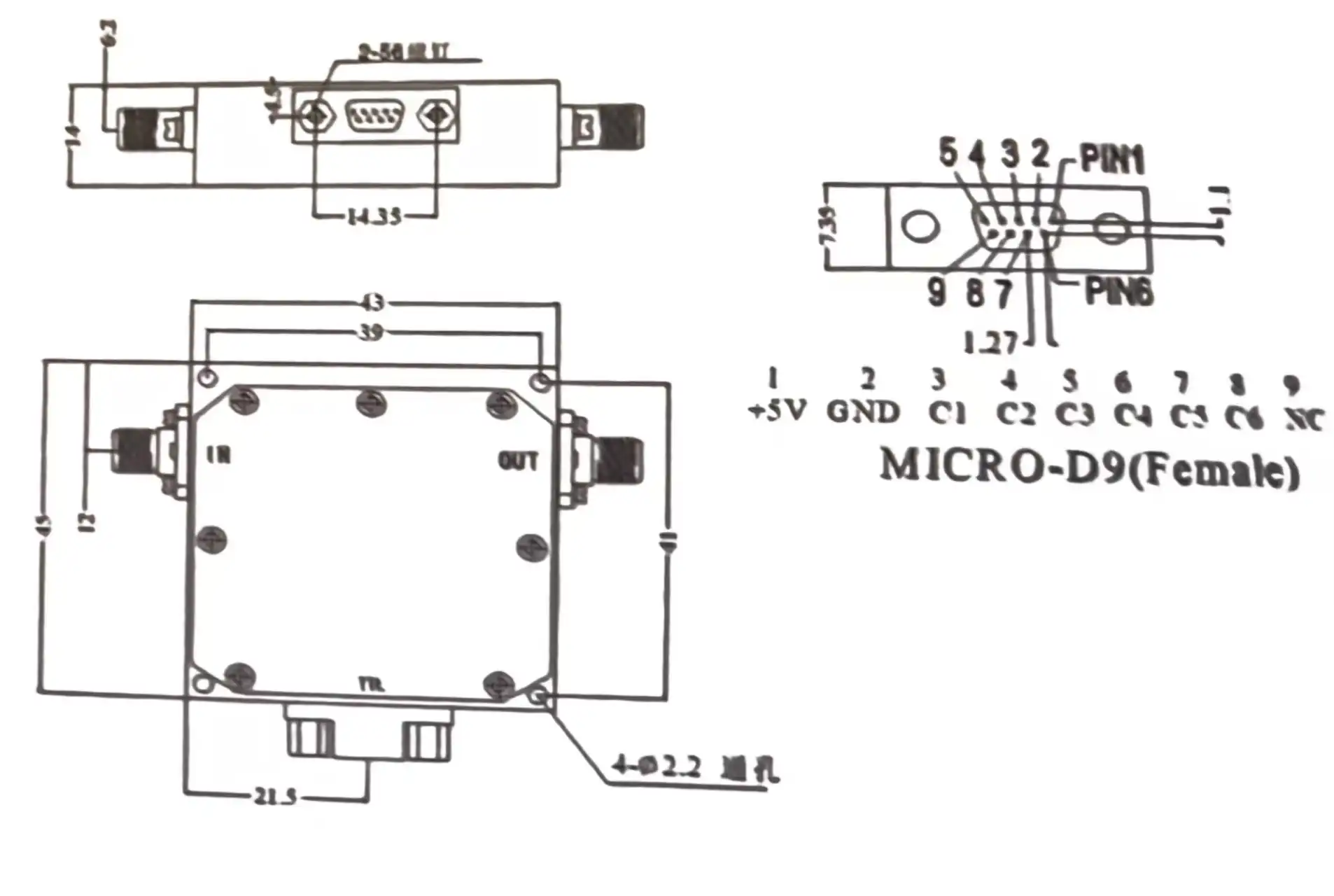
Defense Radar and Electronic Warfare Systems
Modern military radar systems face increasingly sophisticated threats from adversaries employing advanced electronic countermeasures and low-observable platforms. Effective detection and tracking requires adaptive waveform generation, sidelobe cancellation, and rapid beam agility—capabilities enabled by arrays of Digitally Controlled Phase Shifter modules. A surveillance radar protecting critical infrastructure might employ hundreds or thousands of phase shifters arranged in a planar or conformal array configuration, each programmed in real-time to shape radiation patterns optimized for current tactical situations. Electronic warfare applications push digital phase shifter technology to its performance limits. Jamming systems must rapidly scan across frequency bands, generating interference signals directed precisely toward threat emitters while avoiding friendly receivers. The fast switching speed of digital control interfaces—often achieving complete phase reconfiguration in under 500 nanoseconds—enables frequency-agile operation essential for disrupting modern threat radars that employ sophisticated countermeasure-resistant techniques. The deterministic phase response ensures that jamming waveforms arrive at target receivers with exactly the phase relationships required for maximum effectiveness, whether creating noise jamming through random phase modulation or deception jamming through coherent false target generation. Missile guidance systems represent another defense application where Digitally Controlled Phase Shifter reliability proves mission-critical. A seeker antenna scanning for target returns must maintain precise beam pointing despite high-g acceleration, vibration, and temperature extremes encountered during flight. Digital control eliminates the drift and nonlinearity issues that could cause analog phase shifters to lose track lock at critical intercept moments. The ability to store predefined phase sequences in onboard memory allows the seeker to execute complex scan patterns optimized for specific target types, improving probability of acquisition and tracking robustness against countermeasures.
Satellite Communication and Tracking Systems
Satellite ground stations must maintain continuous communication links with spacecraft traversing orbital paths across the sky, requiring antennas to track these moving targets with high accuracy. Traditional mechanical tracking systems employ motors and gearboxes to physically rotate antenna structures, introducing mechanical wear, pointing errors from wind loading, and slew rate limitations. Electronically steered antennas based on Digitally Controlled Phase Shifter arrays eliminate these mechanical constraints, achieving instantaneous beam repositioning limited only by electronic switching speeds rather than motor acceleration curves. A commercial satellite operator managing a fleet of communications satellites benefits from phase-controlled ground terminals capable of rapidly switching between spacecraft during constellation handovers. The digital control interface integrates directly with orbital prediction software, accepting target position coordinates and autonomously calculating the phase shifter settings required to point the antenna beam accurately. This automation reduces operator workload while improving tracking precision, maintaining optimal signal quality throughout passes and maximizing billable data throughput. The elimination of mechanical components also reduces maintenance costs and improves system availability—critical factors for commercial operations where equipment downtime directly impacts revenue.
Advanced satellite systems employ onboard phased arrays for flexible coverage patterns that can be reconfigured in orbit to match changing traffic demands. These spacecraft platforms integrate hundreds of Digitally Controlled Phase Shifter modules behind their antenna apertures, enabling electronic beam shaping that optimizes footprint geometry for specific service areas. A satellite providing maritime connectivity might form narrow spot beams focused on shipping lanes during certain times, then reconfigure to broader coverage for coastal areas during other periods. The reprogrammability of digital phase control allows satellite operators to respond to market opportunities and competitive pressures without launching new hardware, effectively future-proofing their space segment investments.
Technical Advantages Enabling Superior System Performance
The compelling performance characteristics of advanced Digitally Controlled Phase Shifter implementations derive from sophisticated engineering across multiple disciplines—semiconductor physics, microwave circuit design, thermal management, and control systems integration. Modern products from leading manufacturers like Advanced Microwave Technologies Co., Ltd leverage over two decades of microwave expertise to optimize these interrelated factors, delivering components that meet the stringent requirements of professional applications while remaining cost-effective for high-volume deployment. Temperature stability stands out as a particularly important specification for systems operating in uncontrolled environments. Analog phase shifters typically exhibit significant phase drift as temperature changes, requiring complex compensation circuits or frequent recalibration. Digital implementations demonstrate superior thermal performance because their quantized phase states remain locked to the physical dimensions of switching elements and transmission line sections—characteristics that change minimally across temperature extremes. A Digitally Controlled Phase Shifter specified for minus 40 to plus 85 degrees Celsius operation maintains its programmed phase values within specified tolerances throughout this range, ensuring consistent beam patterns whether the system operates in arctic conditions or desert heat.
Wide Frequency Coverage and Bandwidth Capabilities
The frequency range over which a phase shifter maintains acceptable performance directly determines its application versatility. Narrowband designs optimized for specific frequency channels deliver excellent performance but limit system flexibility, particularly problematic as wireless spectrum allocation evolves and new services emerge. Broadband Digitally Controlled Phase Shifter architectures provide operational capability across decade bandwidths or even DC to 40 GHz continuous coverage, accommodating everything from legacy systems to cutting-edge millimeter-wave technologies. This wide frequency coverage stems from distributed circuit topologies that avoid resonant structures with narrowband response characteristics. Rather than employing stub-tuned matching networks optimized for single frequencies, broadband phase shifters utilize gradual impedance transformations and carefully dimensioned transmission line sections that maintain proper electrical lengths across the operating band. The switching elements themselves—often employing advanced semiconductor technologies like GaAs or GaN—contribute low parasitic capacitance and inductance that might otherwise limit high-frequency performance. Practical applications benefit tremendously from multi-octave phase shifter operation. A test and measurement system supporting both legacy equipment operating at X-band frequencies and modern products targeting Ka-band can utilize identical Digitally Controlled Phase Shifter modules throughout its architecture, simplifying inventory management and reducing integration complexity. Research institutions developing next-generation wireless technologies appreciate the flexibility to experiment across wide frequency ranges without committing to specific bands during early development stages. Even systems designed for narrowband operation benefit from broadband components, as manufacturing tolerances and center frequency variations become less critical when the phase shifter provides margin across a wide spectrum.
Compact Integration and Space-Efficient Designs
Size, weight, and power consumption—collectively known as SWaP—constrain system design across numerous applications from airborne platforms to portable test equipment. Digitally Controlled Phase Shifter implementations have evolved from bulky waveguide assemblies toward compact surface-mount modules occupying minimal circuit board real estate while maintaining or even improving performance. Advanced packaging techniques enable complete phase shifter functionality including bias networks, control logic, and RF switching elements within packages measuring just millimeters on a side. This miniaturization proves essential for phased array implementations requiring hundreds or thousands of phase shifter modules. A conformal array antenna installation on an aircraft fuselage might integrate 500 radiating elements in a space-limited radome enclosure, demanding phase shifters small enough to fit behind each element without interfering with neighboring channels. Modern surface-mount Digitally Controlled Phase Shifter packages achieve the necessary density while maintaining adequate thermal dissipation through direct mounting to heat-spreading substrates. The elimination of connectors and cables associated with traditional modular designs further reduces system volume and weight—critical factors when every gram affects aircraft fuel consumption or satellite launch costs.
Modular design philosophies enhance the practical utility of compact phase shifters by standardizing mechanical and electrical interfaces. An equipment manufacturer developing a family of phased array products can adopt a consistent phase shifter module across different system sizes and configurations, achieving economies of scale in procurement while simplifying qualification and reliability testing. Field maintenance becomes more straightforward when technicians need to stock only a single spare part type rather than application-specific variants. This standardization extends beyond individual manufacturers as industry groups develop reference designs and recommended practices that promote interoperability—trends that accelerate as 5G wireless infrastructure deployment drives volume production of phase control components.
Advanced Microwave Technologies Co., Ltd. Product Capabilities
Advanced Microwave Technologies Co., Ltd brings over 20 years of specialized experience in microwave component manufacturing to the production of high-performance Digitally Controlled Phase Shifter products. The company's extensive product portfolio covers frequency ranges from DC to 40 GHz with phase resolution options spanning 0.5 to 5 degrees, accommodating diverse application requirements from precision measurement systems to ruggedized defense electronics. All products maintain ISO 9001:2015 quality certification and RoHS environmental compliance, ensuring consistent manufacturing standards and global regulatory acceptance. The company's state-of-the-art 24-meter microwave darkroom facility enables comprehensive performance validation across the full frequency range up to 110 GHz, providing customers with confidence in published specifications. This advanced test capability allows thorough characterization of critical parameters including insertion loss, phase accuracy, amplitude balance, and return loss under conditions closely matching operational environments. The Antenna Plane Near and Far Field Measuring Recombination Chamber supports detailed radiation pattern analysis for systems integrating multiple Digitally Controlled Phase Shifter modules, ensuring that array-level performance meets design objectives before field deployment. Customization represents a core strength of Advanced Microwave Technologies Co., Ltd's approach to customer support. Standard catalog products cover many common requirements, but specific applications often demand tailored solutions optimizing different performance trades. The company's engineering team works directly with customers to understand unique system constraints and application priorities, developing modified designs that balance competing requirements like bandwidth versus loss, switching speed versus power handling, or size versus thermal performance. This collaborative design process leverages extensive simulation capabilities and rapid prototyping facilities to iterate quickly from concept through production-ready hardware.
Conclusion
Digitally Controlled Phase Shifter technology delivers unmatched precision, reliability, and flexibility for modern microwave RF applications across defense, aerospace, satellite communications, and wireless infrastructure sectors.
Cooperate with Advanced Microwave Technologies Co., Ltd.
Partner with Advanced Microwave Technologies Co., Ltd, a trusted China Digitally Controlled Phase Shifter manufacturer, supplier, and factory offering over two decades of microwave expertise. Our High Quality Digitally Controlled Phase Shifter products feature comprehensive frequency coverage, customizable specifications, and competitive Digitally Controlled Phase Shifter prices. As a leading China Digitally Controlled Phase Shifter wholesale provider with extensive Digitally Controlled Phase Shifter for sale inventory, we deliver complete OEM services including rapid prototyping, technical support, and quick turnaround times. Contact our engineering team at craig@admicrowave.com to discuss your specific requirements and discover how our solutions can optimize your system performance.
References
1. Kebe, M., et al. "A Survey of Phase Shifters for Microwave Phased Array Systems." International Journal of Circuit Theory and Applications, Wiley, 2024.
2. Pozar, David M. "Microwave Engineering." Fourth Edition. Wiley, 2012.
3. Bahl, Inder and Prakash Bhartia. "Microwave Solid State Circuit Design." Second Edition. Wiley-Interscience, 2003.
4. Skolnik, Merrill I. "Radar Handbook." Third Edition. McGraw-Hill Education, 2008.
5. Mailloux, Robert J. "Phased Array Antenna Handbook." Third Edition. Artech House, 2017.
_1733809032116.webp)