




Quadrifilar Helix Antennas for Satellite Communication Systems
Quadrifilar helix antennas represent a pivotal advancement in satellite communication infrastructure, delivering omnidirectional radiation coverage paired with circular polarization that ensures uninterrupted connectivity in demanding operational environments. Our guide addresses the technical specifications, procurement considerations, and performance benchmarks critical to engineers and purchasing managers sourcing precision RF components for mission-critical applications. Drawing on over two decades of manufacturing expertise at Advanced Microwave Technologies Co., Ltd., we illuminate how these specialized antennas solve real-world challenges in aerospace, defense, and telecommunications sectors while meeting rigorous quality standards, including ISO 9001 certification and RoHS compliance.
Understanding Quadrifilar Helix Antennas: Design and Principles
Architectural Foundation and Operating Mechanism
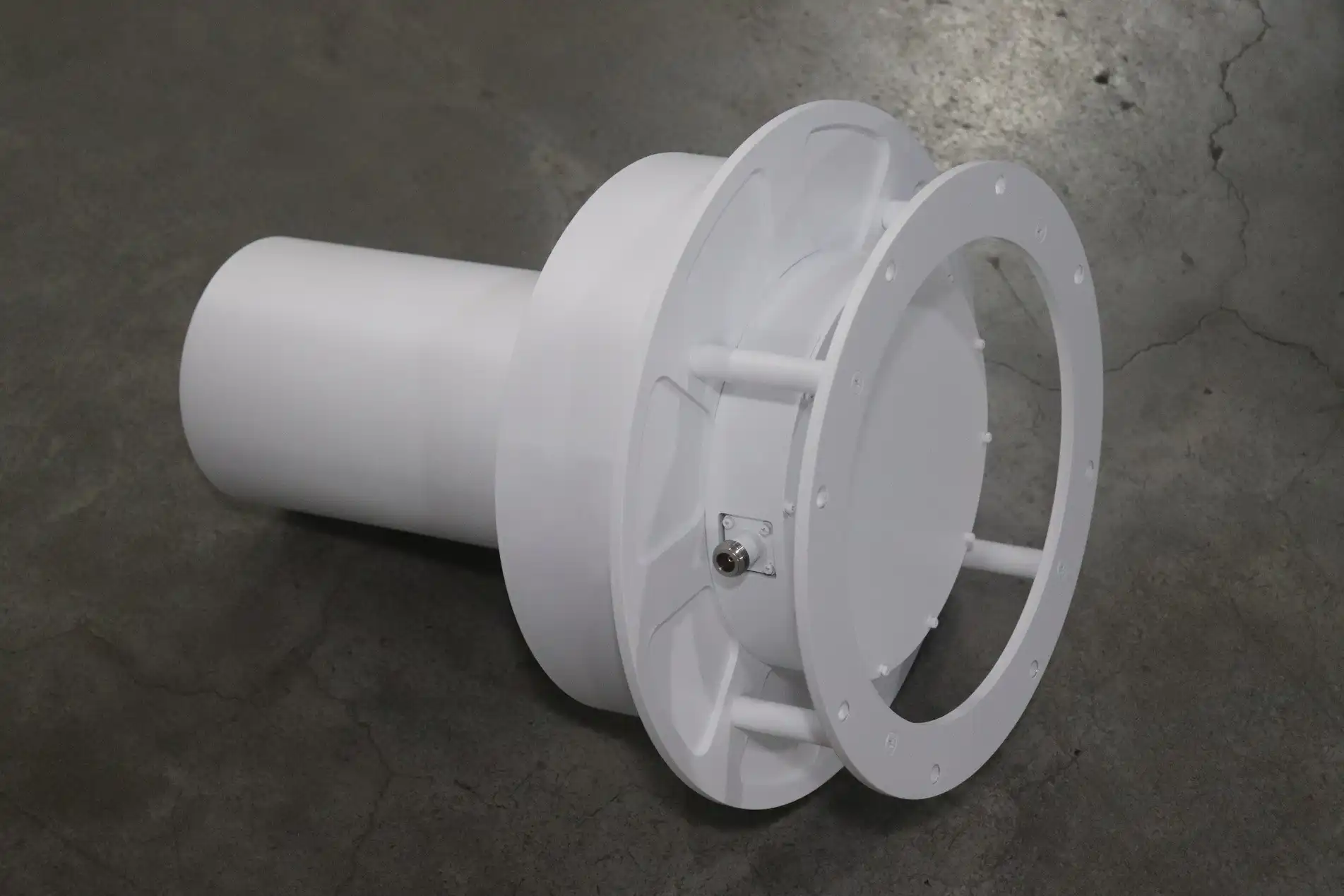
The quadrifilar helix antenna design is made up of four spiral elements that are wound around a central axis. Each element is given a series of 90-degree phase changes to create right-hand circular polarisation. This form makes a cardioid-shaped radiation pattern with the most gain pointing toward the sky and upper hemisphere. This makes it perfect for tracking satellites in low Earth orbit. Traditional monopole or dipole antennas have linear polarization and directional limitations. The quadrifilar helix antenna architecture, on the other hand, keeps the signal strength the same no matter which way the satellite is facing or where the ground station is located.
At ADM, we use precision-wound copper elements with fixed pitch angles in our production process. These elements can work with frequencies from 1 to 40 GHz. In axial mode operation, gains are usually between 0 and 3 dBic, and voltage standing wave ratios stay below 1.5:1 across all operating bandwidths. This consistent performance comes from carefully matching the impedance and designing a balanced feed network. We confirm these two important factors by measuring them in our 24-meter microwave darkroom, which can test in both near- and far-field conditions up to 110 GHz.
Comparative Analysis with Conventional Helical Designs
Standard helical antennas can work in either normal mode or axial mode, and their beamwidths are usually smaller; they need ground planes. The quadrifilar helix antenna version gets rid of ground plane dependence while still providing true hemispherical coverage. This makes installation easier on platforms with limited room, like ships, UAVs, and portable ground stations. Radiation efficiency tests show that quadrifilar helix antennas that are properly designed keep more than 85% efficiency across all of their operational bands. This means that they improve link margins in satellite telemetry applications where every decibel counts.
Testing results from aerospace integrators show that quadrifilar helix antennas regularly work better than patch antennas in settings with multiple paths, especially for mobile receivers that are tracking multiple satellites at the same time. Circular polarization naturally lessens the effects of Faraday rotation that happen during ionospheric propagation. In the worst cases, this can cause linearly polarized signals to lose up to 6 dB. When comparing seller offers, procurement teams looking at antenna solutions for GNSS receivers, automatic identification systems, or satellite data downlinks can do better if they know about these basic performance differences.
Key Benefits and Applications of Quadrifilar Helix Antennas
The real-world benefits of quadrifilar helix antenna technology go far beyond its theoretical details, making operations better in a wide range of application situations. Here are the main reasons why system designers are adopting:
Omnidirectional Coverage: The hemispherical radiation pattern gets rid of the need for mechanical tracking systems. This cuts down on weight, power use, and upkeep needs in satellite ground stations and flying platforms where dependability is very important.
Circular Polarization Purity: Axial ratio readings below 3 dB across the entire upper hemisphere make sure that signals can be received even when satellites are moving around or when aerospace vehicles are doing high-speed maneuvers.
Compact Form Factor: The physical measurements are usually between 0.2 and 0.5 wavelengths tall, which lets them fit into small spaces without affecting their electromagnetic performance or causing structure resonances.
Environmental Resilience: Choices for tough construction with radome protection can handle salt fog, temperature changes from -40°C to +85°C, and shaking levels higher than those required by MIL-STD-810, which is common in defense procurements.
All of these benefits work together to solve problems that keep coming up when people are looking to buy satellite communication systems: they need quadrifilar helix antennas to be reliable even when the weather changes and the platform moves around.
Mission-Critical Application Domains
GPS and GNSS navigation systems used in precision farming, surveying equipment, and self-driving cars depend on quadrifilar helix antennas to keep the satellite locked even when the vehicle's orientation changes quickly. These antennas are used by maritime automatic identification systems on business ships to reliably report a ship's position in rough seas, where other antennas lose their signals. Defence companies ask for quadrifilar helix antennas to be used in tactical communication systems that need to be able to operate in secret without having big antennas that make platform signatures less secure.
Telemetry monitors on the ground for satellites benefit from the wide field of view because they can pick up signals from low-elevation passes where normal high-gain antennas lose track because of air attenuation. Research groups that study the atmosphere and keep an eye on space weather use quadrifilar helix antenna arrays to keep data streams going from constellation satellites that are moving quickly across the sky. Each use case supports the value proposition: easier installation, lower lifecycle costs, and higher operational availability compared to alternatives that are controlled mechanically.
How to Choose the Right Quadrifilar Helix Antenna for Your Needs?
Technical Parameter Assessment Framework
Setting up operational frequency bands that work with your satellite communication architecture is the first step in choosing the right quadrifilar helix antennas. The L-band covers frequencies between 1 and 2 GHz and is used for GPS, Iridium, and Inmarsat. The S-band covers frequencies between 2 and 4 GHz and is used for data and weather satellite downlinks. Higher-frequency versions that go up to X-band (8–12 GHz) are used for defense radar and high-throughput satellite links that need small apertures with modest gain.
To meet standards, you have to balance budget estimates with limitations on space. Mobile platforms prefer low-profile designs that can handle 0–2 dBic gain, while fixed ground stations may be able to handle taller structures that can handle 3–5 dBic gain for better signal margins. Environmental requirements must match the conditions of deployment. For example, marine installations need to be able to resist salt fog according to IEC 60068-2-52 standards, while aerospace applications need to be able to do altitude derating analysis and outgassing certification according to ASTM E595.
Supplier Evaluation and Customization Capabilities
Advanced Microwave Technologies Co., Ltd stands out because it offers a wide range of OEM services that meet specific buying needs. Our engineering team works with clients to change frequency tuning, improve impedance matching for certain wire setups, and make the axial ratio work better across custom angular sectors. The range of materials includes regular fibreglass radomes for business uses and specialised blends that let radar through for defence integration situations.
Technical support is given at all stages of the procurement process, starting with design advice using electromagnetic simulation tools to guess how well the system will work when it's installed. Within three weeks, prototyping services send working models so that validation testing can be done before committing to large-scale production. Our quality management system makes sure that everything can be tracked from the raw materials to the final testing. It does this by keeping track of measurement reports that show frequency response, radiation patterns, and VSWR across a range of temperatures. These reports are necessary for AS9100-certified aerospace supply chains.
Pricing Structures and Warranty Considerations
With volume discounts that get bigger after 100 units, bulk pricing models take into account the economies of scale that OEM integrators benefit from. The standard warranty covers production flaws for 24 months, but it can be extended to 36 months for projects that include accelerated life tests. For catalogue setups, lead times are four weeks, but for fully customized designs that need new tools and environmental approval testing, they are twelve weeks.
Procuring Quadrifilar Helix Antennas: Best Practices and Market Insights
Strategic Sourcing Methodology
A good buying process starts with making sure the seller is who they say they are by checking their certifications. Our ISO 9001:2015 quality management system, ISO 14001:2015 environmental compliance, and ISO 45001:2018 workplace health certifications show that we are dedicated to making sure that our products are always of high quality and that we follow fair production practices. Before buy orders are finalized, performance claims are checked by asking for measurement reports from approved labs. This includes swept frequency VSWR data and sphere radiation patterns for quadrifilar helix antennas.
Coordinated logistics planning is needed to handle large orders well. We keep smart inventory backups for frequency bands with a lot of orders, which cuts down on the time it takes to fill urgent orders. Export paperwork like certificates of origin, RoHS declarations, and REACH compliance statements are sent with shipments, which makes it easier for international buyers to clear customs. Packaging for transportation meets the standards for the ISTA 3A drop test, which keeps fragile RF parts safe during multimodal shipping to remote installation sites.
Cost-Performance Optimization Strategies
When you compare the cost of acquisition to the total cost of ownership, you can find hidden value drivers. Lower-cost options often don't keep the temperature stable, which means they need to be recalibrated more often and cost more to run. Our products are tested to work at temperatures ranging from -40°C to +85°C and have a performance drift of less than 0.2 dB across all operational bands. This makes sure that the link is always available without having to make any changes in the field for quadrifilar helix antennas.
After recent shortages of semiconductors, supply chain resilience became an important thing to think about when buying things. We keep two sources for important parts and keep long-lead items in stock, which protects our buyers from problems that other manufacturers had. This operational discipline helps keep production plans on track with aerospace program goals and defence contract deliverables that have strict penalties for being late.
Future Trends and Innovations in Quadrifilar Helix Antennas
Technology Evolution and Market Dynamics
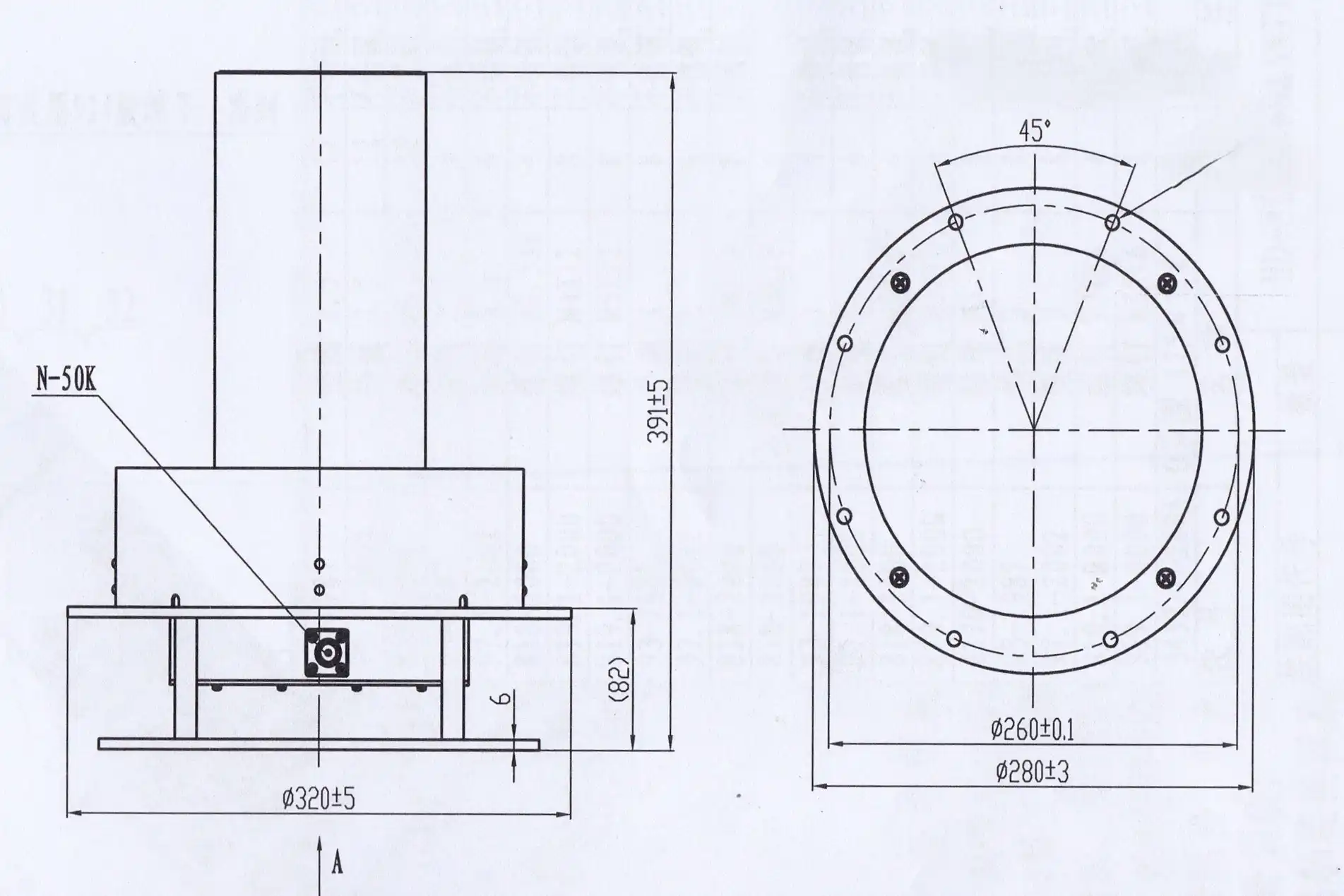
As Starlink, OneWeb, and new competitors launch more low-Earth orbit satellite constellations, there is a greater need for cheap ground terminals that can track multiple satellites at the same time. Next-generation quadrifilar helix antenna designs have low-noise amplifiers and GPS-controlled frequency references built in. These designs offer full receive circuits in small packages that are less than 15 centimeters in diameter. Miniaturisation study focuses on dielectric loading methods that cut down on size by 40% while keeping the same electrical performance. This is important for UAV integration because weight directly affects flight longevity.
Agricultural devices, environmental monitoring networks, and asset tracking systems are all examples of Internet of Things uses that create large markets for simplified quadrifilar helix antenna versions that only work in L-band frequencies. Unit costs for 10,000-piece production runs have dropped below $50 thanks to innovations in manufacturing such as automated winding equipment and injection-molded support structures. This means that price-sensitive commercial applications that used to rely on terrestrial cellular networks can now afford to connect to satellite networks.
Strategic Procurement Recommendations
Defense and aerospace procurement managers should look at suppliers' plans for multi-band quadrifilar helix antenna designs that can support GPS L1/L2/L5 reception and satellite communication links at the same time in a single mechanical assembly. This move toward merging makes antenna farms simpler on platforms in the air, where aerodynamic drag and radar cross-section limit the number of protrusions that can stick out. Setting up early relationships with makers that have proven they can quickly make prototypes and provide the right testing equipment speeds up the time it takes to add new products to next-generation platforms.
Standardising on common quadrifilar helix antenna form factors across multiple frequency bands is good for commercial satellite ground station owners because it saves time and money on supplies and makes maintenance training easier. When you negotiate framework agreements with performance-based pricing based on measured link availability metrics, you make sure that suppliers are rewarded for operational success instead of just selling parts. This way of working together encourages investments in continuous improvement, where manufacturers make designs better based on data from systems that have been used in a variety of locations and weather conditions.
Conclusion
Quadrifilar helix antennas offer unmatched omnidirectional performance and circular polarization purity, which are necessary for secure satellite communication in the aerospace, defense, and internet industries. We looked at the architectural principles that make quadrifilar helix antennas different from other designs, used application case studies to measure the operating benefits, and came up with procurement models that balance technology needs with lifecycle costs. Advanced Microwave Technologies Co., Ltd. has been making products for 20 years and has state-of-the-art testing facilities. They offer ISO-certified products that meet mission-critical reliability standards and full customization services that keep up with changing market needs.
FAQ
1. Are quadrifilar helix antennas suitable for GPS applications?
Quadrifilar helix antennas work really well in GPS and GNSS devices that need to cover the whole hemisphere without using mechanical control. The right-hand circular polarization matches the format of the satellite signal, and the omnidirectional pattern keeps the lock even when the vehicle moves. Our L-band models, which cover 1.575 GHz, have gains of 2 dBic and axial ratios below 3 dB, which meet the needs of car and marine tracking.
2. How do radiation patterns affect signal quality?
The cardioid radiation pattern focuses energy on the upper half-sphere, which is where satellites are seen. This reduces confusion from ground reflections. Pattern consistency across frequency bands keeps link margins stable as satellites move from the horizon to the zenith. Patterns that were measured in our microwave darkroom facility show that performance meets specifications across all temperature ranges.
3. Can antennas be customized for specific frequencies?
By changing the element pitch and diameter, Advanced Microwave Technologies Co., Ltd. lets you choose any frequency from 1 to 40 GHz. Our engineering team improves impedance matching networks for custom wire setups that customers ask for and sends samples within three weeks. Custom frequency versions of quadrifilar helix antennas go through the same qualification testing as regular catalogue items, which makes sure they work reliably.
Partner with ADM for Superior Quadrifilar Helix Antenna Solutions
If you need help with satellite communication, Advanced Microwave Technologies Co., Ltd. has quadrifilar helix antennas that are designed to give you the best performance possible. As a well-known company with ISO 9001:2015 approval and more than 20 years of experience making RF components, we offer unique solutions that cover everything from making prototypes to mass production. Our 24-meter microwave darkroom and measurement tools that can go up to 110 GHz make sure that every antenna meets strict requirements before it is shipped. Whether you need standard L-band GPS antennas or custom X-band designs for use in aerospace, our technical team can help you with everything, from the initial consultation to installation instructions. Get in touch with craig@admicrowave.com right away to talk about your project needs and get full specs. Global business-to-business buyers can take advantage of our low prices on large orders, fast prototyping services, and dependable supply chain, which is supported by smart inventory management that guarantees on-time delivery for important program milestones.
References
1. Kilgus, C.C. (1975). "Resonant Quadrifilar Helix Design," Microwave Journal, Vol. 18, pp. 49-54.
2. Adams, A.T., Greenough, R.K., Wallenberg, R.F., Mendelovicz, A., and Lumjiak, C. (1974). "The Quadrifilar Helix Antenna," IEEE Transactions on Antennas and Propagation, Vol. AP-22, No. 2, pp. 173-178.
3. Rabemanantsoa, J. and Sharaiha, A. (2007). "Size Reduced Multi-Band Printed Quadrifilar Helical Antenna," IEEE Transactions on Antennas and Propagation, Vol. 55, No. 9, pp. 2568-2575.
4. Johnson, R.C. (1993). Antenna Engineering Handbook, Third Edition, McGraw-Hill, Chapter 14: Helical Antennas.
5. Caillet, M., Clénet, M., Sharaiha, A., and Antar, Y.M.M. (2013). "A Compact Printed Quadrifilar Helical Antenna for GNSS Applications," IEEE Antennas and Wireless Propagation Letters, Vol. 12, pp. 1320-1323.
6. Nakano, H., Takeda, H., Honma, T., Mimaki, H., and Yamauchi, J. (1996). "Extremely Low-Profile Helix Radiating a Circularly Polarized Wave," IEEE Transactions on Antennas and Propagation, Vol. 39, No. 6, pp. 754-757.