





Power Amp Output: AC or DC?
When engineers struggle with signal distortion in critical satellite communication systems or radar installations fail to meet performance specifications, one fundamental question often surfaces: is the power amplifier output AC or DC? Understanding this distinction becomes crucial when system reliability depends on precise signal amplification without degradation. At Advanced Microwave Technologies Co., Ltd., our AC Power Amplifier solutions eliminate this confusion by delivering clean, amplified signals that maintain signal integrity across demanding applications from 0.5 to 110 GHz frequency ranges.
Understanding AC Power Amplifier Output Characteristics
The output nature of power amplifiers represents one of the most misunderstood aspects of RF and microwave systems. While the internal circuitry of most amplifiers operates on DC power supplies, the actual output signal transmitted to loads such as antennas or transmission lines is fundamentally alternating in nature. An AC Power Amplifier takes a time-varying input signal and increases its amplitude while preserving the original waveform characteristics. The amplified output oscillates between positive and negative voltage swings, creating the alternating current necessary for electromagnetic wave propagation in communication systems. In professional microwave applications, the distinction becomes even more critical. Advanced Microwave's AC Power Amplifier designs ensure that the output signal contains minimal DC offset while maximizing the AC component that carries actual information. DC components in the output can cause several problems including speaker damage in audio systems, biasing errors in subsequent amplification stages, and impedance mismatches in transmission lines. Our amplifiers incorporate sophisticated output coupling techniques and DC blocking mechanisms that guarantee clean AC output delivery to your critical systems. The frequency response of an AC Power Amplifier determines its suitability for specific applications. At Advanced Microwave Technologies, our amplifiers support frequency ranges spanning from sub-GHz to 110 GHz, accommodating everything from legacy communication protocols to cutting-edge 5G and emerging 6G technologies. This wide bandwidth capability ensures that whether you're amplifying narrowband radar returns or wideband satellite communication signals, the AC Power Amplifier maintains consistent gain and phase characteristics across the entire operational spectrum.
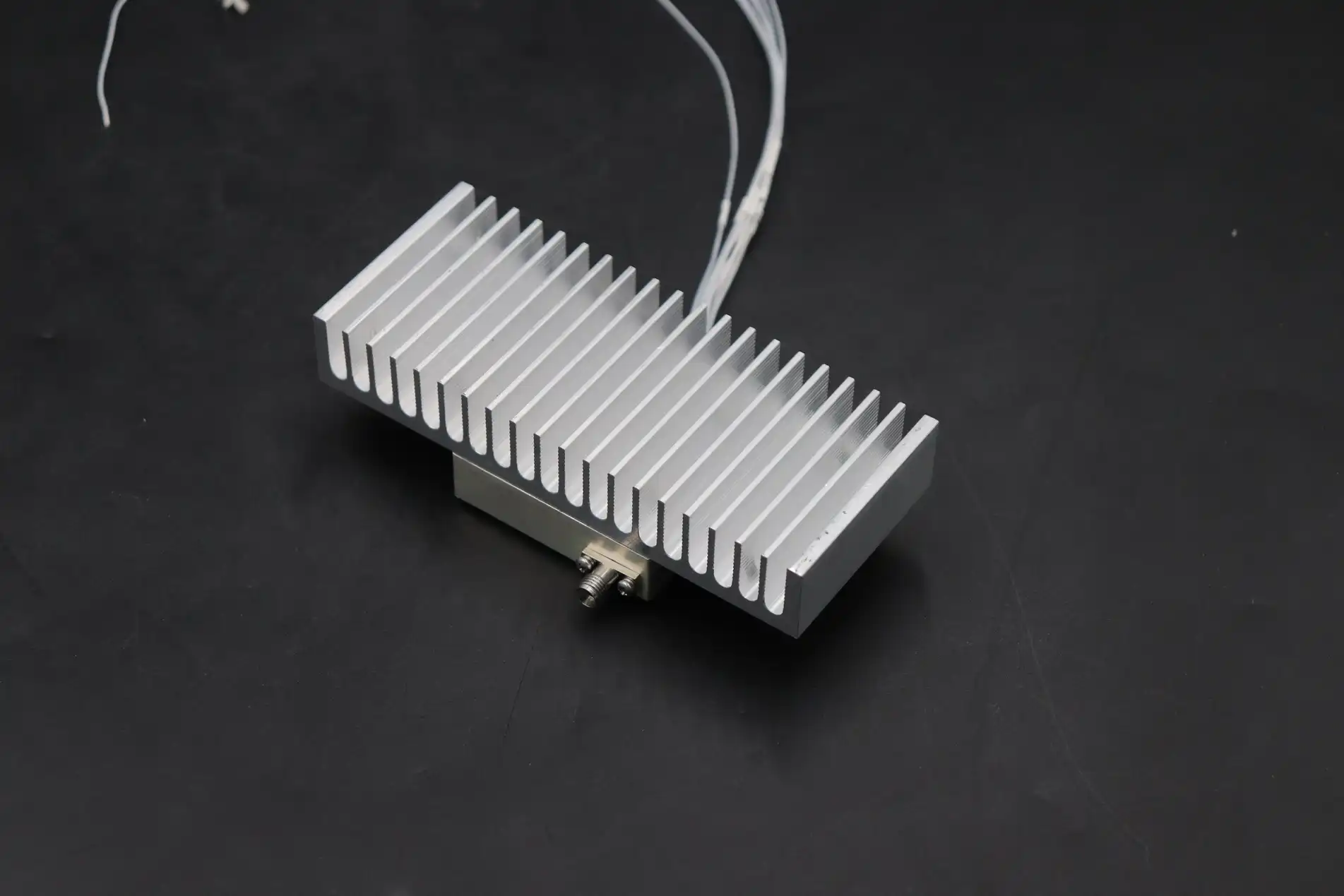
DC Power Supply vs. AC Signal Output in Amplifiers
A common source of confusion stems from the dual role of current in amplifier operation. While amplifiers require stable DC power supplies to energize their transistors and maintain proper biasing conditions, the signal path itself processes and amplifies AC waveforms. Advanced Microwave's AC Power Amplifier architectures utilize carefully regulated DC power rails, often incorporating both positive and negative supply voltages to enable symmetric signal swing. This dual-rail configuration allows the amplifier to faithfully reproduce both positive and negative portions of the input waveform without clipping or distortion. The power supply topology significantly impacts amplifier performance. Our AC Power Amplifier designs feature advanced power management systems that convert input AC mains power to stable, low-noise DC rails through precision rectification and filtering stages. These clean DC supplies then power the amplification circuitry, which modulates this DC power in response to the input AC signal. The result is an amplified AC output where the signal variations contain orders of magnitude more power than the original input, while the DC component remains isolated from the output through coupling networks. Understanding the power flow in an AC Power Amplifier reveals why both AC and DC elements coexist in the system. The DC power supply provides the energy reservoir that gets converted into amplified AC signal power. In a typical class AB amplifier operating in our satellite communication systems, the quiescent DC current through the output transistors remains relatively constant while the signal-induced AC current variations superimpose on this DC bias. However, coupling capacitors or transformers at the output stage block the DC component, ensuring only the amplified AC signal reaches the load. This separation is critical in preventing DC current from flowing through transmission lines or antenna elements where it would serve no useful purpose and could cause component damage.
Signal Coupling Methods in Modern Amplifier Design
The method used to couple amplifier stages and connect to external loads fundamentally determines whether DC components appear at the output. Capacitor coupling, employed extensively in Advanced Microwave's AC Power Amplifier products, uses high-value capacitors that present low impedance to AC signals while blocking DC voltages. This approach offers several advantages including elimination of DC offset errors, protection of downstream components from DC-related damage, and improved impedance matching across the signal frequency range. Our engineers select coupling capacitor values carefully to ensure minimal insertion loss at the lowest operating frequency while maintaining adequate DC blocking capability. Direct coupling or DC coupling represents an alternative approach where amplifier stages connect without intervening capacitors. While this enables amplification down to true DC (zero frequency), it introduces challenges including DC offset accumulation through multiple stages and potential for DC-induced component stress. For microwave and RF applications where information resides entirely in AC signal variations above several hundred kilohertz, capacitor coupling with AC Power Amplifier configurations provides superior performance. Advanced Microwave's designs incorporate precision coupling networks optimized for minimal signal degradation while maintaining robust DC isolation throughout the signal chain.
AC Power Amplifier Performance in Critical Applications
In radar systems demanding precise target detection and tracking, the AC Power Amplifier output characteristics directly impact system performance. Our amplifiers deliver high-purity AC output signals with exceptional spectral cleanliness, minimizing spurious emissions that could create false targets or interfere with adjacent radar channels. The amplified RF pulse emerging from our AC Power Amplifier maintains steep rise and fall times with minimal overshoot, enabling accurate range resolution in both military surveillance and civilian air traffic control applications. With output power levels scalable from watts to hundreds of watts, Advanced Microwave provides solutions matching your specific radar requirements. Satellite communication ground stations represent another demanding application where AC Power Amplifier quality determines link availability and data throughput. Our amplifiers support both uplink transmission and test equipment applications, delivering clean amplified signals across C-band, X-band, Ku-band, and Ka-band frequencies. The linear amplification characteristic ensures minimal intermodulation distortion even when amplifying multiple carriers simultaneously in FDMA systems. Advanced cooling mechanisms incorporating forced air circulation maintain junction temperatures within safe operating ranges during continuous operation, ensuring reliability for 24/7 ground station operations supporting everything from direct broadcast satellites to high-throughput communication payloads.
Technical Specifications That Define AC Power Amplifier Quality
When evaluating an AC Power Amplifier for professional applications, several key specifications determine suitability and performance. Gain flatness across the operating bandwidth indicates how consistently the amplifier boosts signals regardless of frequency. Advanced Microwave's products typically exhibit gain variation under ±1 dB across multi-octave bandwidths, ensuring uniform amplification for both narrowband and wideband signals. This flat response prevents frequency-dependent amplitude distortion that could degrade modulated signal quality in digital communication systems or create measurement errors in antenna test ranges. Output power rating and compression characteristics define the maximum signal levels an AC Power Amplifier can deliver before nonlinear effects degrade signal fidelity. Our amplifiers specify both the linear output power (typically at 1 dB compression point) and saturated output power. For applications requiring high linearity such as QAM modulation in satellite links, operating well below compression maintains low error vector magnitude. Conversely, pulsed radar applications may deliberately operate the AC Power Amplifier in compression to maximize peak power while accepting some pulse shape distortion. Advanced Microwave provides detailed compression curves enabling precise amplifier selection for your specific linearity requirements. The noise figure of an AC Power Amplifier becomes critical in receiver applications or low-noise amplifier chains. While power amplifiers typically exhibit higher noise figures than low-noise amplifiers, minimizing this parameter in high-gain stages prevents degradation of overall system noise temperature. Our high-efficiency designs achieve noise figures competitive with industry benchmarks while delivering the output power levels demanded by transmitter and test equipment applications. The combination of low noise figure and high gain makes Advanced Microwave's AC Power Amplifier products suitable for repeater and relay applications where signal quality preservation is paramount.
Thermal Management in High-Power AC Amplifiers
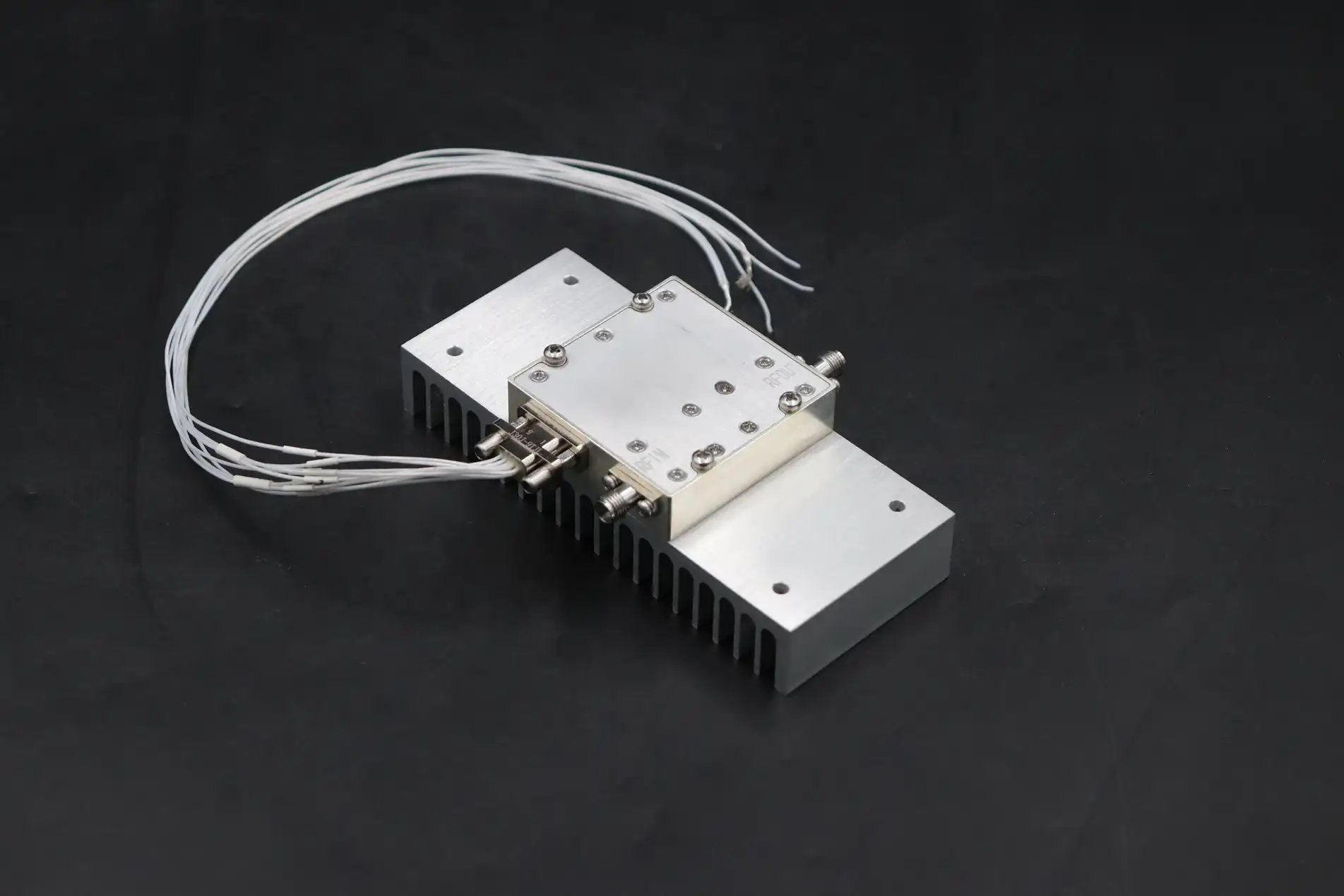
Thermal design represents one of the most critical aspects of AC Power Amplifier engineering, particularly for high-power units operating in continuous duty cycles. Advanced Microwave incorporates advanced thermal management systems including forced air cooling with variable speed fans, optimized heat sink designs with maximized surface area, and thermal interface materials ensuring efficient heat transfer from semiconductor junctions to cooling structures. Our thermal models predict junction temperatures under worst-case operating conditions, ensuring adequate margin below maximum ratings even during extended operation at elevated ambient temperatures. The relationship between thermal performance and reliability cannot be overstated. Every 10-degree Celsius reduction in junction temperature approximately doubles semiconductor device lifetime according to established reliability physics. By maintaining cool operation, our AC Power Amplifier designs achieve mean time between failures exceeding 100,000 hours in typical applications. The robust thermal design also enables operation across extended temperature ranges from -40°C to +60°C ambient, supporting both indoor laboratory environments and outdoor installations in harsh climates where telecommunications and defense systems must operate reliably.
Integration and Customization of AC Power Amplifiers
Advanced Microwave Technologies Co., Ltd. recognizes that standard catalog products cannot meet every application requirement. Our OEM services deliver customized AC Power Amplifier solutions tailored to your specific frequency ranges, power levels, and mechanical constraints. Whether you need a compact amplifier fitting within space-constrained avionics systems or a high-power unit for ground-based radar, our engineering team collaborates with you from initial requirements definition through production and testing. Custom frequency response shaping, specialized output matching networks, and application-specific control interfaces represent just a few of the modifications we routinely implement. The standard 19-inch rackmount configuration of many Advanced Microwave AC Power Amplifier products facilitates integration into existing equipment installations. These amplifiers mount directly in standard equipment racks alongside transmitters, receivers, and signal processing equipment, minimizing interconnect losses and simplifying system layout. Front panel controls and indicators provide local monitoring of critical parameters including output power, temperature, and fault conditions, while remote monitoring interfaces enable integration with supervisory control systems. For OEM customers, we offer customized packaging solutions ranging from compact modules for integration within larger assemblies to ruggedized enclosures meeting MIL-STD environmental specifications.
Testing and quality assurance form integral parts of our AC Power Amplifier manufacturing process. Each unit undergoes comprehensive testing in our 24-meter microwave darkroom equipped with state-of-the-art measurement equipment supporting frequencies to 110 GHz. We verify gain, output power, efficiency, harmonic distortion, and spurious emissions against specifications, providing detailed test data with each shipment. This rigorous testing backed by ISO 9001:2015 certification ensures that the AC Power Amplifier you receive meets or exceeds published specifications and will perform reliably in your application. Our measurement capabilities extend to complex parameters including AM-PM conversion, group delay variation, and multi-tone intermodulation, providing complete amplifier characterization.
Conclusion
Power amplifier output is fundamentally AC in nature, carrying information through time-varying signal amplification while operating from DC power supplies. Advanced Microwave's AC Power Amplifier solutions deliver clean, powerful AC signals across applications from satellite communications to radar systems.
Cooperate with Advanced Microwave Technologies Co., Ltd.
As a leading China AC Power Amplifier factory and China AC Power Amplifier supplier, Advanced Microwave Technologies Co., Ltd. combines over 20 years of manufacturing excellence with cutting-edge measurement capabilities. Our position as a trusted China AC Power Amplifier manufacturer stems from comprehensive product lines including waveguide assemblies, coaxial components, and microwave antennas serving aviation, aerospace, shipboard, weather monitoring, security, UAV, and direction finding applications. Whether seeking High Quality AC Power Amplifier for sale at competitive AC Power Amplifier price points, or requiring China AC Power Amplifier wholesale volumes, our ISO 14001:2015, ISO 9001:2015, and ISO 45001:2018 certifications guarantee environmental responsibility, quality excellence, and workplace safety. Contact our technical team at craig@admicrowave.com to discuss your amplification requirements and discover how our OEM services, rapid prototyping, and expert support can accelerate your project from concept to deployment.
References
1. Bowick, Chris. "RF Circuit Design." Newnes, 2007. Focus on power amplifier output characteristics and coupling methods in RF systems.
2. Gilmore, Rowan and Besser, Les. "Practical RF Circuit Design for Modern Wireless Systems: Active Circuits and Systems." Artech House, 2003. Comprehensive coverage of amplifier topologies and DC/AC signal flow.
3. Krauss, Herbert L., Bostian, Charles W., and Raab, Frederick H. "Solid State Radio Engineering." John Wiley & Sons, 1980. Classic reference on amplifier biasing and signal coupling techniques.
4. Pozar, David M. "Microwave Engineering." John Wiley & Sons, 2011. Industry-standard textbook covering microwave amplifier design and output matching networks.
YOU MAY LIKE
 VIEW MOREHigh Power Waveguide to Coaxial Adapter
 VIEW MOREWaveguide Loop Coupler
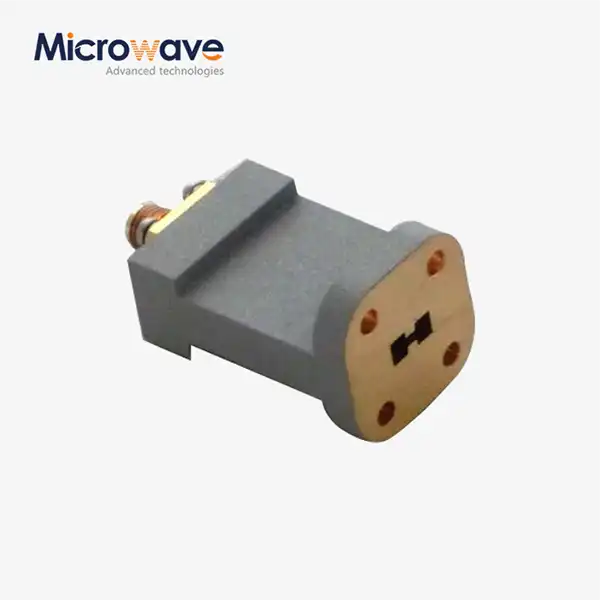 VIEW MOREEnd Launch Double Ridged WG To Coaxial Adapter
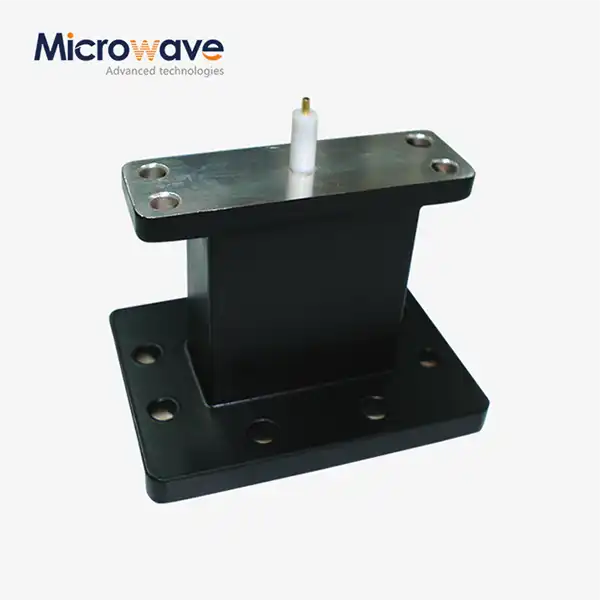 VIEW MOREEnd Launch Waveguide to Microstrip Adapter
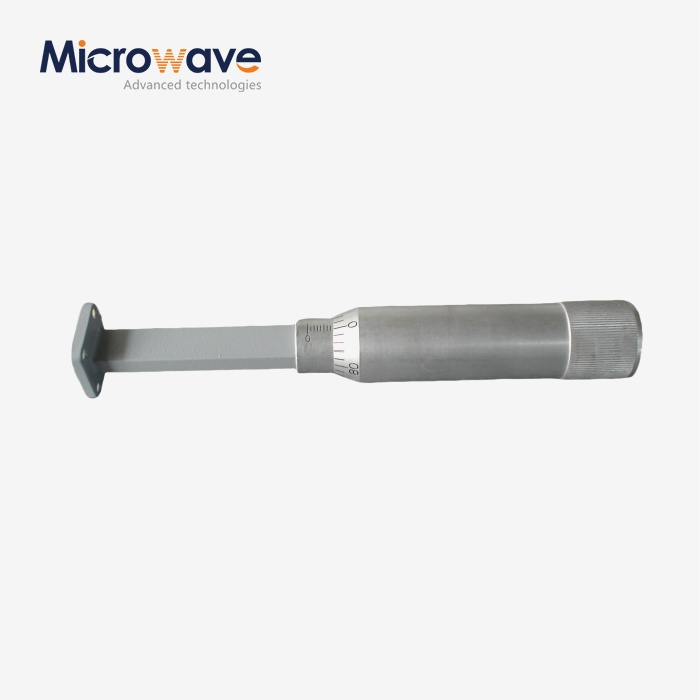 VIEW MOREWaveguide Sliding Termination
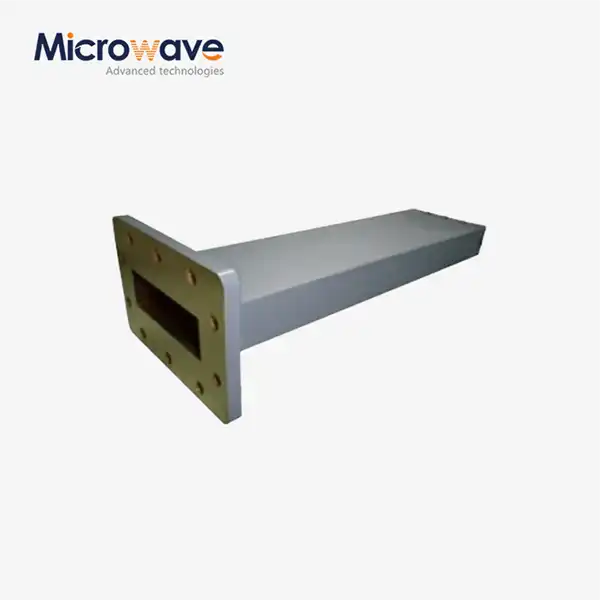 VIEW MOREWaveguide Unmatched Termination
 VIEW MOREMagic Hybrid Tee
 VIEW MOREH-Plane Tee