





what does a coax attenuator do?
Have you ever faced equipment damage from signal overload, distorted measurements, or unstable system performance in your RF testing environment? A Coaxial Variable Attenuator precisely reduces signal strength without waveform distortion, ensuring optimal power levels for telecommunications, aerospace, defense, and satellite communication applications where signal integrity determines mission success.
Understanding the Core Function of Coaxial Variable Attenuators
Signal control represents one of the most critical challenges in modern RF and microwave systems. When signals are too strong, they can overload sensitive receiving equipment, cause intermodulation distortion, and compromise measurement accuracy. When signals are too weak, they fail to meet minimum threshold requirements for proper system operation. This delicate balance requires precision control mechanisms, which is exactly what a Coaxial Variable Attenuator provides. A Coaxial Variable Attenuator functions as a passive component that reduces the amplitude or power of an RF signal while maintaining the signal's waveform integrity. Unlike amplifiers that increase signal strength, attenuators work in the opposite direction by introducing controlled loss into the signal path. The device achieves this through carefully designed resistive networks that dissipate excess power as heat, allowing only the desired signal level to pass through to downstream components. The "variable" aspect means users can adjust the attenuation level to match specific application requirements, typically ranging from 0 to 30 decibels of signal reduction. The precision engineering behind these devices ensures that while power levels change, the signal's essential characteristics remain intact. This capability is particularly crucial in test and measurement scenarios where accurate signal representation is mandatory. In satellite ground stations, for example, received signals from orbiting satellites can vary significantly in strength depending on atmospheric conditions, satellite position, and transmission power. A Coaxial Variable Attenuator allows operators to normalize these varying signal levels to optimal values for processing equipment, preventing both signal saturation and insufficient signal strength.
Critical Technical Parameters That Define Performance
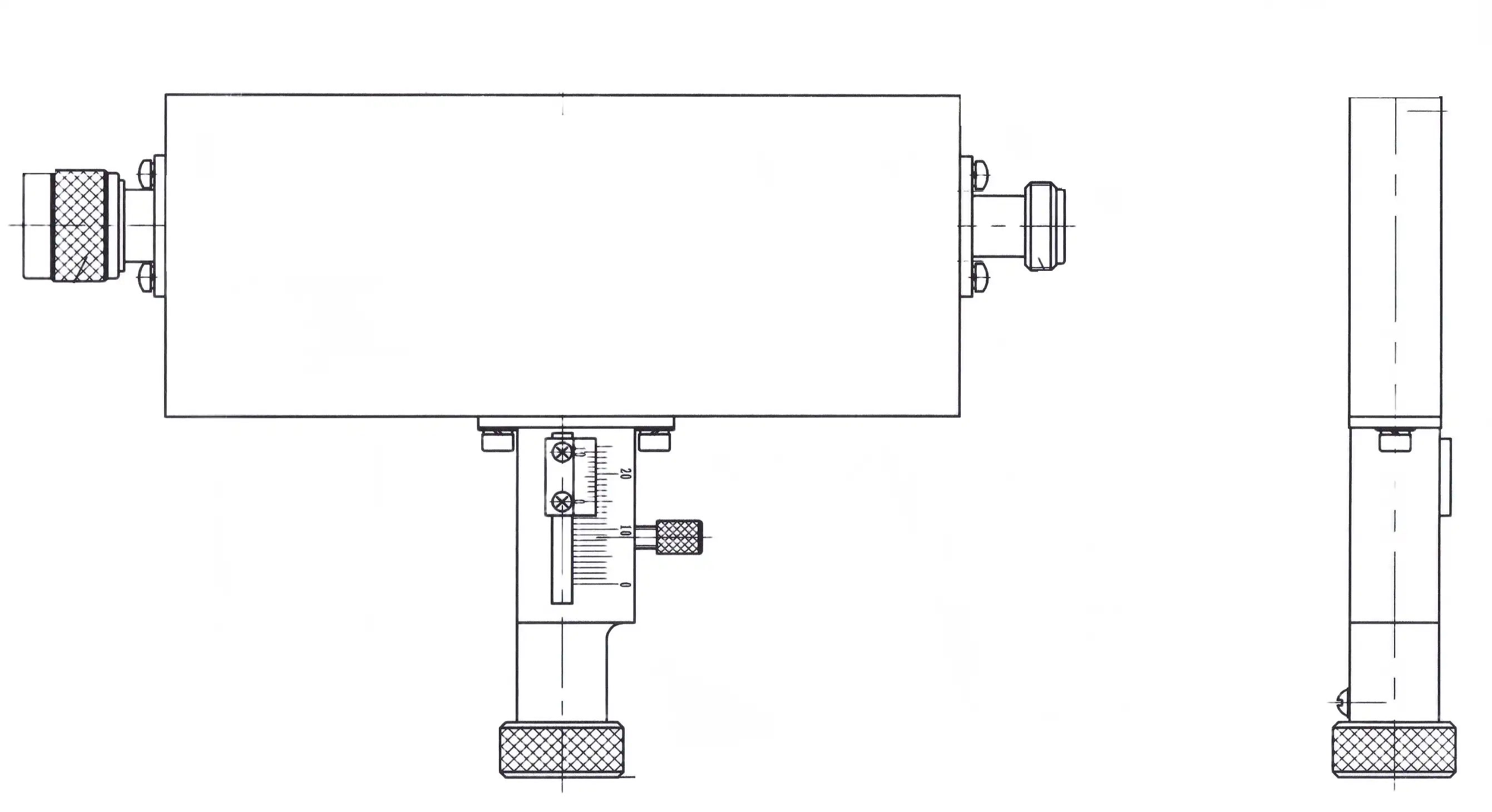
Understanding the technical specifications of a Coaxial Variable Attenuator is essential for selecting the right device for your application. The frequency range determines which communication bands the attenuator can effectively handle. Advanced Microwave provides attenuators covering DC to 18 GHz with customization options extending to 40 GHz, accommodating applications from traditional communication systems to emerging millimeter-wave technologies including 5G infrastructure and advanced radar installations. Attenuation range defines the span of signal reduction available to the user. Most professional-grade Coaxial Variable Attenuators offer 0 to 30 decibels of adjustment, providing flexibility for diverse operational scenarios. The insertion loss specification indicates how much signal degradation occurs even at the minimum attenuation setting, with high-quality units maintaining insertion loss below 1 decibel. This low insertion loss ensures that the attenuator itself doesn't unnecessarily degrade signal quality when minimal attenuation is required. Power handling capacity determines the maximum signal power the attenuator can safely process without damage or performance degradation. Units designed for high-power applications can handle up to 100 watts or more, utilizing advanced thermal management designs with aluminum or stainless steel housings that efficiently dissipate heat. The impedance specification, typically 50 ohms for RF applications, ensures proper matching with standard transmission lines and equipment, preventing signal reflections that would compromise system performance. Voltage standing wave ratio specifications indicate how well the attenuator is matched to the system impedance, with better matching resulting in lower VSWR values and improved signal transfer efficiency.
Applications of Coaxial Variable Attenuators Across Industries
Telecommunications Infrastructure and Network Optimization
In telecommunications networks, signal strength management is fundamental to achieving reliable communication links. Base station installations face unique challenges where transmitter output power must be carefully controlled to avoid interference with adjacent channels while maintaining sufficient signal strength for coverage requirements. A Coaxial Variable Attenuator installed in the transmission chain allows engineers to fine-tune output levels during installation and optimization phases, ensuring compliance with regulatory power limits while maximizing coverage area. Satellite communication ground stations utilize Coaxial Variable Attenuators to manage the dramatic signal level variations inherent in space-to-earth communications. As satellites orbit overhead, signal strength changes due to varying path lengths, atmospheric absorption, and satellite antenna patterns. Variable attenuators in the receive chain allow operators to maintain consistent signal levels into demodulation equipment regardless of these variations. For uplink transmissions, attenuators help calibrate transmitter output power to match link budget requirements, preventing unnecessary power consumption and potential interference with other satellite systems.The deployment of distributed antenna systems in large buildings, stadiums, and transportation hubs requires careful signal distribution to multiple antenna points. Coaxial Variable Attenuators enable system designers to balance signal levels across all distribution points, compensating for varying cable lengths and ensuring uniform coverage throughout the facility. This precise power management prevents some areas from receiving excessive signal strength while others suffer from inadequate coverage, optimizing the overall user experience and system capacity.
Aerospace and Defense Applications
Military and aerospace systems demand the highest levels of performance and reliability from all components, including Coaxial Variable Attenuators. Radar systems utilize these devices to protect sensitive receiver circuits from strong return signals that could cause saturation or damage. When tracking nearby targets, radar returns can be extremely powerful, requiring substantial attenuation to bring signals within the receiver's optimal operating range. Variable attenuators provide the dynamic range adjustment necessary for radar systems to track both distant weak targets and nearby strong targets without requiring multiple receiver chains. Electronic warfare systems rely on Coaxial Variable Attenuators to simulate various threat scenarios during testing and training. By adjusting signal levels precisely, these systems can replicate the signatures of different radar and communication systems, allowing military personnel to practice countermeasure techniques under realistic conditions. The attenuators' ability to maintain signal fidelity while adjusting power levels ensures that waveform characteristics remain accurate, providing high-fidelity training environments. Aircraft navigation and communication systems incorporate variable attenuators in their RF front ends to handle the wide dynamic range of signals encountered during flight operations. Ground-based navigation beacons appear strongest during takeoff and landing when aircraft are nearby, but become much weaker at cruise altitude and distance. Attenuators help normalize these varying signal strengths, allowing navigation receivers to maintain accurate position information throughout all phases of flight. In satellite navigation receivers, attenuators protect front-end amplifiers from interference and jamming signals while allowing desired satellite signals to pass through at appropriate levels.
Laboratory Testing and Measurement Systems
Test and measurement laboratories represent perhaps the most demanding application environment for Coaxial Variable Attenuators. When characterizing amplifiers, mixers, filters, and other RF components, engineers need to sweep input power levels across wide ranges to determine gain compression points, intermodulation performance, and other critical parameters. Variable attenuators provide the precision power control necessary for these measurements, allowing researchers to set exact input levels and observe how devices respond across their operating range. Spectrum analyzer and network analyzer measurements often require attenuators to protect sensitive input stages from overload while measuring high-power signals. A Coaxial Variable Attenuator placed between the device under test and the analyzer input allows engineers to safely measure transmitter outputs, amplifier performance, and other high-power signals without damaging expensive test equipment. The attenuator's low VSWR characteristics ensure that measurement accuracy remains high, as signal reflections would otherwise corrupt measurement results. Antenna testing facilities utilize precision Coaxial Variable Attenuators in their measurement chains to calibrate signal levels and extend the dynamic range of test systems. Advanced Microwave Technologies' 24-meter Microwave Darkroom incorporates sophisticated attenuation control in its Antenna Plane Near and Far Field Measuring Recombination Chamber, enabling precise characterization of antenna patterns, gain, and impedance across frequency ranges from 0.5 to 110 GHz. This exceptional measurement capability allows development of antennas for cutting-edge applications including 5G networks, satellite communications, and advanced radar systems.
Selecting the Right Coaxial Variable Attenuator for Your Application
Matching Specifications to System Requirements
Successful attenuator selection begins with a thorough understanding of your system's operating parameters. The frequency range must encompass all signals your system will encounter, with some margin for future expansion or unexpected operating conditions. For applications spanning multiple communication bands, selecting a Coaxial Variable Attenuator with broadband coverage from DC to 18 GHz or higher provides flexibility and eliminates the need for multiple specialized components. However, for applications with narrow, well-defined frequency ranges, optimizing the attenuator specifically for those frequencies may provide superior performance in terms of insertion loss and VSWR. Power handling requirements demand careful consideration to prevent component failure and ensure long-term reliability. Calculate the maximum signal power that will pass through the attenuator under all operating conditions, including transients and fault scenarios. Select an attenuator with power handling capability significantly exceeding this maximum to provide safety margin and prevent thermal stress on the component. For continuous high-power applications, consider attenuators with enhanced heat dissipation features such as finned housings or provisions for forced-air cooling. Connector compatibility is essential for seamless system integration. Common connector types for Coaxial Variable Attenuators include SMA, N-Type, and BNC interfaces, each offering different frequency capabilities, power handling, and mechanical characteristics. SMA connectors excel in compact installations and provide excellent performance to 18 GHz and beyond, while N-Type connectors offer superior power handling and are preferred for higher-power applications. Ensuring your attenuator's connectors match your system's transmission lines and equipment eliminates the need for adapters that would introduce additional insertion loss and potential reliability concerns.
Quality Indicators and Certification Standards
Professional-grade Coaxial Variable Attenuators should meet recognized international quality standards that ensure consistent performance and reliability. ISO 9001:2015 certification indicates that the manufacturer maintains comprehensive quality management systems throughout the design, production, and delivery process. This certification provides confidence that every component meets specified performance criteria and that manufacturing processes are controlled and documented. Advanced Microwave Technologies holds ISO 9001:2015 certification along with ISO 14001:2015 for environmental management and ISO 45001:2018 for occupational health and safety, demonstrating commitment to excellence across all operational aspects. RoHS compliance ensures that attenuators are manufactured without hazardous materials including lead, mercury, and cadmium, meeting environmental protection standards and regulatory requirements in many jurisdictions worldwide. For organizations with environmental responsibility goals or those supplying products into regulated markets, RoHS-compliant Coaxial Variable Attenuators eliminate potential compliance issues and support sustainable procurement practices. Comprehensive testing and calibration documentation should accompany professional attenuators, providing traceability to national standards and verification of performance specifications. Detailed test data for insertion loss, VSWR, attenuation accuracy, and power handling across the specified frequency range allows engineers to confidently integrate components into critical systems. Manufacturers with advanced testing capabilities, such as Advanced Microwave Technologies' facilities equipped with measurement equipment to 110 GHz, can provide the most comprehensive characterization data for demanding applications.
Advanced Design Considerations for Custom Solutions
OEM Services and Application-Specific Customization
While standard Coaxial Variable Attenuators serve many applications effectively, some scenarios demand customized solutions tailored to unique requirements. Advanced Microwave Technologies offers comprehensive OEM services that transform standard product concepts into optimized solutions for specific applications. Custom frequency ranges extending beyond standard offerings can be developed for emerging communication standards or specialized research applications. Attenuation ranges can be tailored to match exact system requirements, potentially providing finer adjustment resolution over a narrower range or extending maximum attenuation for applications requiring extreme signal reduction. Mechanical customization addresses integration challenges in space-constrained installations or harsh environmental conditions. Custom housing materials and finishes can be specified for applications facing corrosive atmospheres, extreme temperatures, or strict electromagnetic compatibility requirements. Connector orientations, mounting provisions, and physical dimensions can be modified to simplify installation and improve system packaging efficiency. For high-volume production applications, these customizations can significantly reduce overall system costs by eliminating adapters, brackets, and other auxiliary components that would otherwise be necessary. Thermal management enhancements extend the capabilities of Coaxial Variable Attenuators into higher-power applications. Custom heat sink designs, thermal interface materials, and provisions for active cooling allow attenuators to handle power levels beyond standard ratings. For applications with intermittent high-power requirements, thermal analysis and custom designs ensure that transient heating does not compromise performance or reliability. Advanced Microwave Technologies' engineering team provides design support throughout this customization process, leveraging over 20 years of microwave component experience to deliver solutions that meet exact specifications.
Integration with Modern Communication Systems
As communication technologies evolve toward 5G, 6G, and beyond, Coaxial Variable Attenuators must support higher frequencies, wider bandwidths, and more complex modulation schemes. The transition to millimeter-wave frequencies above 24 GHz introduces new challenges in terms of insertion loss, VSWR, and thermal management. Variable attenuators designed for these advanced applications incorporate specialized materials and construction techniques that maintain performance at frequencies where traditional designs begin to fail. Advanced Microwave Technologies' test capabilities spanning 0.5 to 110 GHz enable development and verification of attenuators for even the most demanding future applications. Massive MIMO antenna systems employed in 5G base stations create new requirements for signal distribution and power management. Multiple transmit and receive chains operating simultaneously require careful balancing of signal levels to optimize beamforming performance and minimize interference. Arrays of Coaxial Variable Attenuators provide the individual channel control necessary for these advanced antenna systems, enabling adaptive power allocation based on traffic patterns and propagation conditions. The precision and repeatability of these attenuators directly impact the overall system's capacity and coverage performance. Internet of Things deployments spanning industrial, agricultural, and smart city applications often require specialized RF solutions accommodating diverse power levels and communication protocols. Variable attenuators in IoT gateway equipment allow single hardware platforms to support devices operating at different power levels and distances, reducing inventory complexity and improving deployment flexibility. As IoT networks grow to encompass billions of connected devices, the role of precision signal control components like Coaxial Variable Attenuators becomes increasingly critical to managing this complex electromagnetic environment.
Conclusion
A Coaxial Variable Attenuator provides precise, adjustable signal power reduction essential for telecommunications, aerospace, defense, and testing applications, protecting equipment while maintaining signal integrity across demanding operational environments.
Cooperate with Advanced Microwave Technologies Co., Ltd.
Partner with a China Coaxial Variable Attenuator manufacturer combining 20+ years microwave expertise and ISO-certified quality. As a leading China Coaxial Variable Attenuator supplier and China Coaxial Variable Attenuator factory, we deliver High Quality Coaxial Variable Attenuators with competitive Coaxial Variable Attenuator price and Coaxial Variable Attenuator for sale globally. Our 24m Microwave Darkroom testing facility ensuring 0.5-110GHz measurement precision. China Coaxial Variable Attenuator wholesale options available with fast OEM customization, prototyping, and technical support. Contact craig@admicrowave.com for specifications and quotations today.
References
1. "Attenuators – Coaxial" by Narda-MITEQ, Technical Product Documentation
2. "Attenuator (electronics)" by Wikipedia Contributors, Encyclopedia of Electronic Components
3. "RF Coaxial Attenuators and Terminations" by Molex Engineering Team, Technical Application Guide
4. "Coaxial Attenuators" by Spectrum Elektrotechnik GmbH, Passive Components Technical Manual
YOU MAY LIKE
 VIEW MOREBroadwall Directional Coupler
 VIEW MOREWG Circulator
 VIEW MOREHigh Power Waveguide Differential Phase Shift Circulator
 VIEW MOREWaveguide Coupling Fixed Attenuator
 VIEW MOREWG Isolator
 VIEW MOREHigh Power Waveguide Differential Phase Shift Isolator
 VIEW MOREWG Band Stop Filter
 VIEW MOREWG Low Pass Filter