




What is a phase shifter in an antenna?
Imagine your radar system failing to detect an incoming threat because the antenna beam couldn't adjust fast enough, or your satellite communication dropping during critical data transmission due to misaligned signal phases. These scenarios highlight the critical importance of phase control in modern antenna systems. A phase shifter in an antenna is a specialized microwave component that adjusts the phase angle of radio frequency signals while maintaining their amplitude, enabling precise control over beam direction and signal alignment. Among various types, the Voltage Controlled Phase Shifter stands out as an essential solution for applications requiring dynamic phase adjustment, from military radar systems to next-generation 5G networks and satellite communications.
Understanding Phase Shifters in Antenna Systems
Phase shifters serve as the fundamental control mechanism in modern phased array antenna systems, where multiple antenna elements work together to create directional beams without physical movement. The core principle relies on wave interference, where signals of the same phase amplify each other while out-of-phase signals cancel out. By controlling the phase relationship between individual antenna elements, engineers can electronically steer the antenna beam in different directions, adjust beam width, and optimize signal reception from specific directions while suppressing interference from others. In practical applications, phase shifters route microwave signals through pathways of varying electrical length, introducing controlled delays that shift the relative phase of the output signal. This capability proves indispensable in scenarios where mechanical antenna rotation is impractical or too slow, such as tracking multiple fast-moving aircraft simultaneously, maintaining stable satellite links during vehicle movement, or implementing massive MIMO systems in 5G infrastructure. The Voltage Controlled Phase Shifter technology enables continuous phase adjustment through applied voltage levels, offering superior flexibility compared to traditional mechanical or switched designs.
The Role of Voltage Controlled Phase Shifter Technology
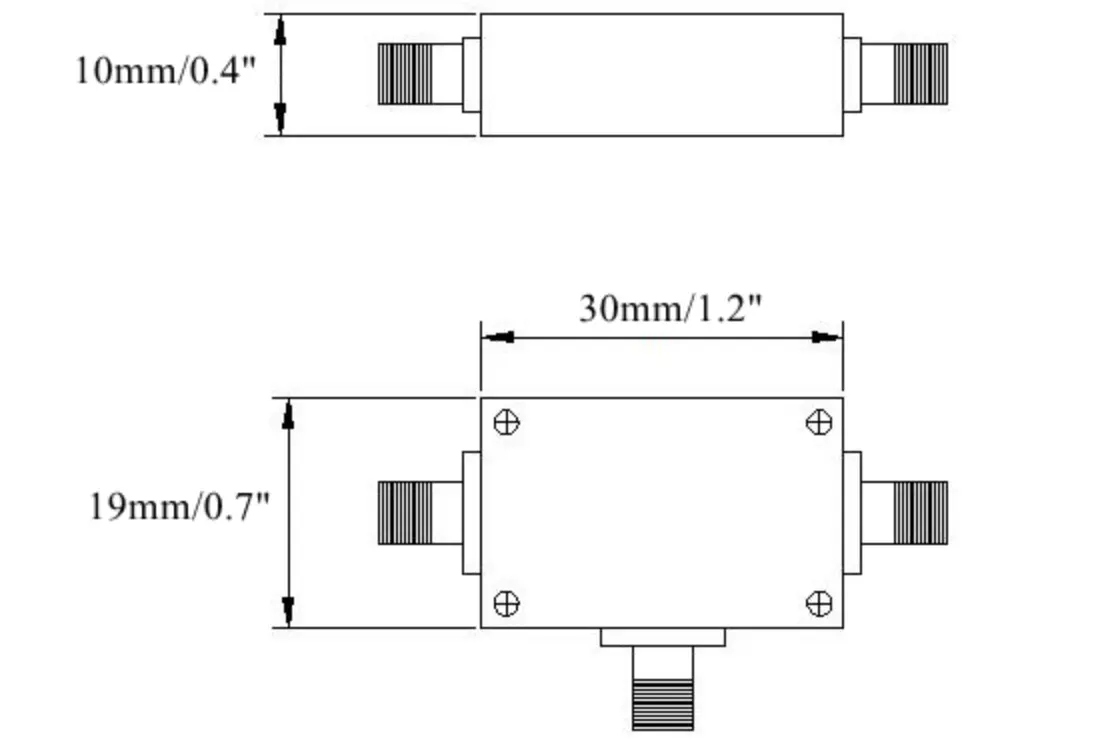
The Voltage Controlled Phase Shifter represents a significant advancement in phase shifting technology, providing linear and continuous phase adjustment in response to varying control voltages. Unlike digital phase shifters that operate in discrete steps or mechanical shifters requiring physical movement, voltage controlled systems offer smooth, real-time phase modulation essential for adaptive beamforming and interference mitigation. This analog control mechanism responds rapidly to changing conditions, making it ideal for applications demanding millisecond-level adjustments such as airborne radar systems tracking multiple targets or satellite ground stations maintaining lock during atmospheric disturbances. Advanced Microwave Technologies Co., Ltd. has developed a comprehensive series of Voltage Controlled Phase Shifter products spanning frequency ranges from DC to 40 GHz, with the capability to deliver full 360-degree phase shift control. These devices achieve remarkably low insertion loss of less than 2 dB while maintaining excellent return loss characteristics exceeding 18 dB, ensuring minimal signal degradation even in demanding high-frequency applications. The linear voltage-to-phase relationship simplifies system integration and calibration, while the compact surface-mount packages enable dense phased array implementations where space constraints are critical.
Types and Control Mechanisms of Antenna Phase Shifters
Modern antenna systems employ several distinct phase shifter architectures, each optimized for specific performance requirements and application constraints. Digital phase shifters utilize switching networks to select between multiple delay paths, providing discrete phase states determined by the number of control bits. A six-bit digital phase shifter, for example, divides the full 360-degree range into 64 distinct phases with 5.625-degree resolution, offering excellent repeatability and computer-controlled precision ideal for large-scale phased arrays. However, the switching elements introduce insertion loss that increases with the number of bits, and the step-wise nature limits performance in applications requiring smooth phase transitions. Analog phase shifters, particularly Voltage Controlled Phase Shifter designs, overcome these limitations by providing continuous phase variation across the operating range. This continuous control eliminates quantization errors and enables sophisticated beamforming algorithms that optimize array patterns in real-time. The varactor-based designs commonly used in Voltage Controlled Phase Shifter implementations leverage voltage-dependent capacitance to create tunable delay networks, achieving broad phase ranges with minimal component count. Advanced designs incorporate temperature compensation and linearization circuits to maintain phase accuracy across varying environmental conditions and control voltage ranges.
Voltage Controlled Phase Shifter Implementation Strategies
Implementing Voltage Controlled Phase Shifter technology effectively requires careful consideration of several critical design parameters. The phase shift linearity defines how uniformly the phase changes across the control voltage range, directly impacting calibration complexity and beamforming accuracy. High-quality Voltage Controlled Phase Shifter designs achieve phase deviation of less than five degrees from ideal linear response, simplifying system-level algorithms and reducing computational overhead in multi-element arrays. Additionally, phase flatness across the operating frequency band ensures consistent beam steering performance regardless of signal bandwidth or carrier frequency. Power handling capability represents another crucial specification, particularly in transmit arrays where high RF power levels must pass through the phase shifter without degradation or damage. Advanced Microwave Technologies Co., Ltd. engineers their Voltage Controlled Phase Shifter products to handle up to 2 watts of continuous RF power while maintaining phase stability, enabling their use in both receive and transmit paths of radar and communication systems. The operating temperature range of -40°C to +85°C ensures reliable performance in extreme environments from Arctic installations to desert military operations, with integrated thermal management preventing phase drift that could compromise system performance.
Critical Applications of Phase Shifters in Modern Systems
Satellite communication systems represent one of the most demanding applications for Voltage Controlled Phase Shifter technology, where precise beam alignment between ground stations and moving satellites is essential for maintaining high data rate links. Phased array ground terminals use arrays of phase shifters to electronically track satellites across the sky without mechanical movement, eliminating the pointing errors and mechanical wear associated with traditional dish antennas. The Voltage Controlled Phase Shifter enables continuous beam adjustment to compensate for satellite motion, atmospheric refraction effects, and platform vibration, ensuring uninterrupted connectivity for critical voice, data, and video services. In aerospace and defense applications, Voltage Controlled Phase Shifter components enable advanced radar capabilities including simultaneous multi-target tracking, synthetic aperture radar imaging, and electronic counter-countermeasures. Airborne early warning systems employ hundreds or thousands of phase shifters to create agile beams that can scan vast airspace volumes in milliseconds while maintaining high detection sensitivity. The low insertion loss characteristics of modern Voltage Controlled Phase Shifter designs preserve the radar's effective range, while the wide operating bandwidth accommodates wideband waveforms that improve target resolution and classification capabilities essential for identifying threats in complex electromagnetic environments.
Telecommunications and 5G Infrastructure
The deployment of fifth-generation wireless networks relies heavily on massive MIMO technology, where base stations employ large phased arrays to create multiple simultaneous beams serving different users. Each beam requires precise phase control to direct energy toward intended receivers while minimizing interference with other users and neighboring cells. Voltage Controlled Phase Shifter technology enables the dynamic beamforming essential for 5G performance, adjusting beam patterns in real-time as users move through the coverage area and network traffic patterns evolve throughout the day. Advanced Microwave Technologies Co., Ltd. provides Voltage Controlled Phase Shifter solutions optimized for telecommunications infrastructure, offering the frequency coverage, linearity, and reliability demanded by commercial network operators. The ability to customize phase shifter specifications including frequency range, control voltage, and package configuration allows system designers to optimize their phased array implementations for specific deployment scenarios, whether urban small cells requiring compact designs or rural macro sites demanding high power handling. The RoHS compliance and ISO 9001:2015 certification ensure these components meet stringent quality and environmental standards required for global telecommunications infrastructure.
Technical Specifications and Performance Optimization
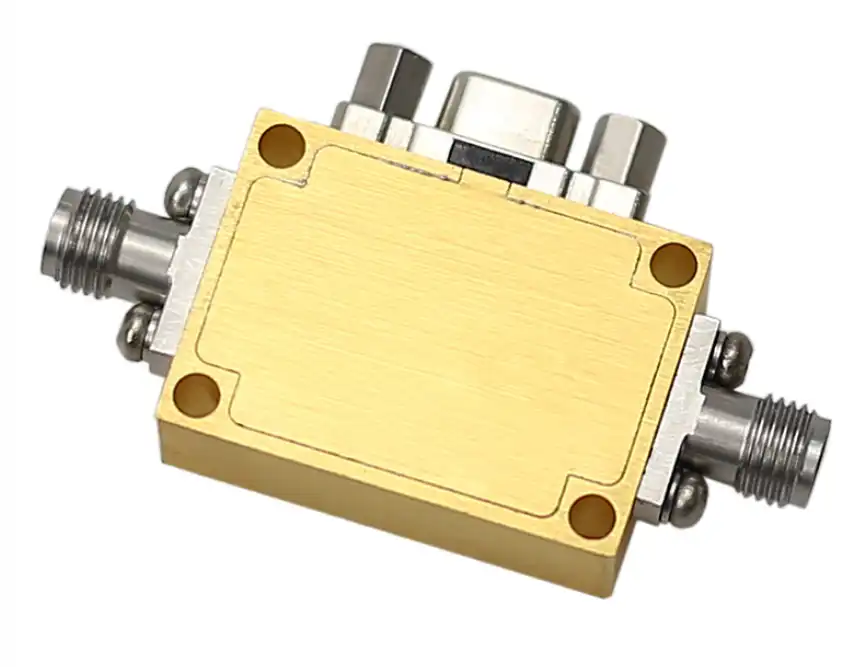
Selecting the appropriate Voltage Controlled Phase Shifter for a given application requires careful analysis of multiple technical specifications and their interaction with overall system requirements. The frequency range defines the operational bandwidth, with modern Voltage Controlled Phase Shifter designs covering octave or multi-octave bands to accommodate frequency-agile systems and multi-band applications. Advanced Microwave Technologies Co., Ltd. offers Voltage Controlled Phase Shifter products spanning 500 MHz to 40 GHz, addressing applications from UHF radar and L-band satellite communications through Ka-band millimeter-wave systems and emerging applications in the V-band and beyond. Insertion loss directly impacts system noise figure in receive arrays and radiated power in transmit arrays, making it a critical performance metric. State-of-the-art Voltage Controlled Phase Shifter implementations achieve insertion loss below 2 dB even at millimeter-wave frequencies, preserving signal quality throughout the phase shifting process. The return loss specification, typically exceeding 18 dB, ensures minimal signal reflection that could create standing waves and degrade array performance. Together, these specifications determine the phase shifter's impact on overall system link budget, with lower insertion loss enabling longer range or higher data rates in communication systems and improved detection sensitivity in radar applications.
Integration and System-Level Considerations
Successfully integrating Voltage Controlled Phase Shifter components into phased array systems requires attention to control circuitry, calibration procedures, and environmental management. The control voltage interface must provide stable, low-noise voltage sources to prevent phase jitter that could broaden beams or increase sidelobe levels. Advanced implementations incorporate digital-to-analog converters with fine resolution and fast settling time, enabling rapid beam steering while maintaining phase accuracy across all array elements. The voltage range of 0V to 20V offered by Advanced Microwave Technologies Co., Ltd. Voltage Controlled Phase Shifter products provides ample dynamic range for full 360-degree phase control while remaining compatible with standard control electronics. Calibration represents a critical step in achieving optimal phased array performance, accounting for manufacturing variations between phase shifters and compensating for temperature-dependent phase drift. Modern array systems store calibration tables mapping control voltages to actual phase shifts for each element, measured across the operating temperature range and frequency band. The linear voltage-controlled phase shift characteristic of high-quality Voltage Controlled Phase Shifter designs simplifies calibration by reducing the number of measurement points required, while the long-term phase stability minimizes the need for frequent recalibration in deployed systems.
Conclusion
Phase shifters, particularly Voltage Controlled Phase Shifter technology, serve as the cornerstone of modern electronically steered antenna systems, enabling precise beam control essential for satellite communications, defense radar, aerospace navigation, and next-generation telecommunications infrastructure. These critical components provide the phase adjustment capability that transforms static antenna arrays into dynamic, adaptive systems capable of tracking multiple targets, maintaining communication links with moving platforms, and optimizing signal quality in complex electromagnetic environments.
Cooperate with Advanced Microwave Technologies Co., Ltd.
As a leading China Voltage Controlled Phase Shifter manufacturer, supplier, and factory established in the 2000s with over 20 years of microwave expertise, Advanced Microwave Technologies Co., Ltd. delivers High Quality Voltage Controlled Phase Shifter solutions at competitive wholesale prices. Our Voltage Controlled Phase Shifter for sale spans DC-40 GHz with customizable specifications, tested in our state-of-the-art 24m Microwave Darkroom featuring measurement capabilities up to 110 GHz. With ISO 9001:2015, ISO 14001:2015, and ISO 45001:2018 certifications ensuring environmental stewardship, quality excellence, and workplace safety, we provide comprehensive OEM services including rapid prototyping, technical support, and global delivery. Contact us today at craig@admicrowave.com to discuss your specific requirements and discover how our China Voltage Controlled Phase Shifter price and performance advantages can enhance your system capabilities.
References
1. Stark, Lawrence. "Microwave Theory of Phased Array Antennas: A Review." Proceedings of the IEEE, Institute of Electrical and Electronics Engineers.
2. Hansen, Robert C. "Phased Array Antennas." John Wiley & Sons, Microwave and Antenna Engineering Series.
3. Mailloux, Robert J. "Phased Array Antenna Handbook." Artech House Publishers, Antenna and Propagation Library.
4. Skolnik, Merrill I. "Introduction to Radar Systems." McGraw-Hill Education, Electrical Engineering Series.