




Microwave Horn Antenna Applications Across Industries
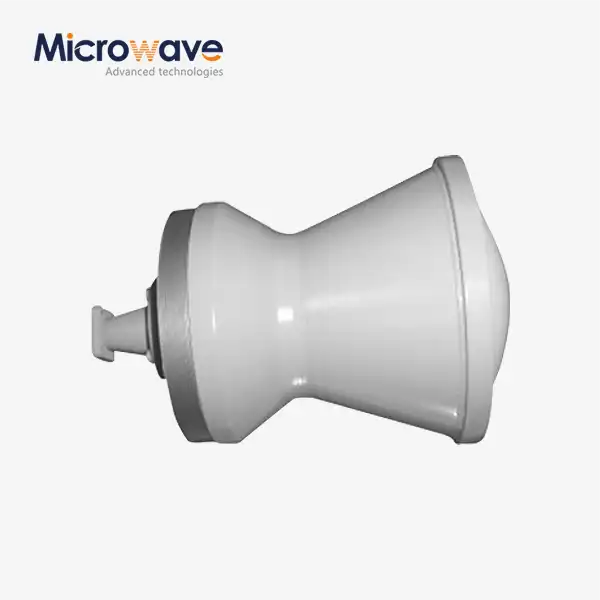
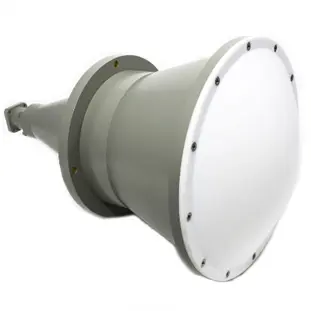
Microwave horn antennas equipped with dielectric lens technology have become indispensable components across mission-critical sectors, from defense and aerospace to telecommunications and industrial automation. The horn lens antenna integrates a precision-engineered lens at the aperture of a standard horn antenna, transforming spherical wavefronts into planar ones. This innovation delivers high gain, enhanced directivity, and compact design—addressing the core challenges procurement engineers face when selecting microwave components for demanding applications where reliability and performance cannot be compromised.
Understanding Horn Lens Antenna Technology and Its Advantages
How Horn Lens Antennas Work
A simple but powerful idea called "phase correction" is at the heart of horn-lens antenna design. In traditional horn antennas, electromagnetic waves are sent out with spherical phase fronts. These fronts introduce phase errors that lower gain and raise sidelobe levels as aperture size increases. The spherical wavefront is turned into a flat one by adding a dielectric lens at the radiating aperture. These lenses are usually made from low-loss materials such as PTFE (Teflon), Rexolite, or Quartz. This phase correction makes the opening much more efficient, which lets the antenna get a higher gain without having to be too long. Applications using millimeter waves, from Ka-band to W-band and beyond, find this technology to be very useful.
Key Performance Advantages for Industrial Users
Horn-lens antennas solve a number of technical problems that buying teams face when they are looking for radio parts. The small size means that less space is needed for installation, which is especially important in radar systems and satellite ground stations that are already full. High aperture efficiency directly leads to stronger signals and better link margins, which means that you don't need as many extra amplifier steps. Planar wavefront generation makes sure that the pattern is more balanced and that there isn't much sidelobe suppression, which keeps interference to a minimum in communication networks that are densely deployed. Extreme temperatures and humidity are no match for materials like PTFE and Rexolite, which means that these antennas can be used outside and in rough situations without breaking. At Ka-band frequencies, the typical insertion loss stays below 0.3 dB, which means that the signal doesn't change much even during long operations.
Comparative Performance Analysis
When horn-lens antennas are used in certain situations, they clearly have benefits over standard antennas. To get the same gain levels, standard pyramidal or conical horns need to be much longer, which takes up important system room and raises the cost of the materials. Even though parabolic reflector antennas have a high gain, they are hard to install and maintain because they are mechanically complicated, can't handle wind loads, and aren't always aligned correctly. Phased array antennas can move beams, but they are much more expensive and use a lot more power, so they can't be used in situations where stable high-gain beams are enough. The horn-lens design strikes a good mix between performance, cost, and dependability. This is especially true for fixed-link microwave systems, measurement tools, and radar uses that don't need beam steering but need accuracy and consistency.
Industrial Applications of Microwave Horn Lens Antennas
Satellite Communications and Ground Station Infrastructure
Horn lens antenna units are used by satellite service providers and ground station integrators to ensure reliable high-frequency communication links. These antennas can be used as feed elements in bigger reflector systems or on their own in E-band and Ka-band mobile backhaul lines. The narrow beamwidth and high gain make it possible to send data over long distances with little loss due to atmospheric attenuation. Horn-lens antennas are used by ground stations that support LEO (Low Earth Orbit) and GEO (Geostationary Earth Orbit) satellites for telemetry, tracking, and command functions. Planar wavefront generation ensures that the signal quality is the same across the aperture, which lowers phase noise and improves the security of data for satellite activities that are very important to the mission.
Defense and Aerospace Radar Systems
Horn-lens antennas are used in radar surveillance systems, navigation aids, and electronic warfare by defense companies and aircraft system designers. The antennas' better sidelobe reduction makes it easier to tell the difference between targets in crowded areas, which cuts down on false alarms and raises awareness of the situation. Automotive radar testing centers use horn-lens antennas set up in the Compact Antenna Test Range (CATR) to make small, echo-free rooms feel like long-range targets. Before they are used, 77 GHz and 79 GHz ADAS (Advanced Driver Assistance Systems) radar modules must be tested with this app. Military monitoring radars use antennas that can keep their patterns stable over a wide range of temperatures. This makes sure that they work the same way in desert and cold operating areas.
Telecommunications Infrastructure and 5G Networks
As phone networks move toward higher frequencies to support 5G and coming 6G technologies, horn-lens antennas are being used in more and more wireless backup systems. With frequencies in the E-band (71–86 GHz) and V-band (57–66 GHz), these antennas make it possible for cell towers and base stations to connect to high-capacity point-to-point lines. The narrow beamwidth lets a lot of links be set up in cities without interfering with each other, which maximizes spectral efficiency. Manufacturers of telecom equipment put horn-lens antennas into millimeter-wave base stations. Their small size and high performance help the base stations handle the high link costs needed for gigabit data rates.
Scientific Instrumentation and Research Applications
For precise measurement systems and experimental setups, research institutions and university laboratories rely on horn-lens antennas. Because they have stable gain and well-defined radiation patterns, these antennas are used as standards in radio astronomy. Horn-lens antennas are used in material evaluation devices to produce uniform plane waves that can be used to measure the dielectric constant. The narrow beam focus is used by industrial-level gaging systems in oil refineries and chemical processing plants to accurately measure the level of liquid in storage tanks, even when there are barriers like agitators or heating coils. Because the antennas can go through small holes without losing their shape, they are perfect for measuring without touching something in tough conditions.
How to Choose the Right Horn Lens Antenna for Your Business Needs
Critical Technical Specifications to Evaluate
Before you can choose the right horn-lens antenna, you need to know which frequency bands your application needs. Operating frequency has a direct effect on the choice of lens material. For example, PTFE works well in lower microwave bands, while quartz and other specialized materials are needed for millimeter-wave and high-power uses. Specifications for gain and beamwidth must match up with link budget estimates and reach needs. Higher-gain antennas have a longer range, but their beamwidth is narrower, so they need to be aligned more precisely when they are installed. The success of the voltage standing wave ratio (VSWR) shows how well power moves from the waveguide to empty space. Values below 1.5:1 are ideal for most uses. In transmit uses, where lens thermal qualities determine the highest continuous wave rates, the ability to handle power becomes very important.
Supplier Evaluation and Quality Assurance
Teams in charge of buying horn lens antennas should make sure that any possible sellers are still certified by ISO 9001 and can give full test results, such as radiation patterns, gain measures, and VSWR plots for the given frequency range. Well-known companies like Keysight Technologies and Rohde & Schwarz, as well as specialized ones like Advanced Microwave Technologies Co., Ltd, offer traceable calibration and the paperwork that is needed to follow the rules. Ask for sample units to test in your specific working environment, paying close attention to the quality of the mechanical construction, the compatibility of the connectors, and the sealing against the environment. You should make sure that the provider can customize waveguide sizes, mounting arrangements, and frequency band tuning to meet the needs of your system.
Customization and Volume Procurement Strategies
OEMs and contract makers often need custom antenna systems that have certain frequency responses, pattern traits, or mechanical connections. Suppliers that offer rapid prototyping can shorten the time it takes to develop a new product, so you can test designs before committing to mass production. When looking to buy in bulk, make sure you can ask for big discounts and that the lead times work with your project schedule. Set up clear quality control processes, such as criteria for incoming inspections and testing methods for acceptance. Long-term ties with suppliers can help you get priority production slots and get technical help when you're having problems. Some suppliers have consignment inventory programs that lower your costs while guaranteeing that parts will be available for production runs.
Enhancing System Performance with Horn Lens Antennas
Optimization Techniques for Maximum Efficiency
For horn-lens antennas to work at their best, installation and coupling details need to be carefully thought out. If you connect the waveguide interface correctly, you can avoid impedance gaps that hurt VSWR and lower efficiency. Accuracy in alignment affects actual gain, especially for designs with a narrow beamwidth, where even small mistakes in angle can cause a lot of pointing loss. Lens dielectric properties can be changed by things in the environment, like changing temperatures. To stop performance drift, thermal analysis is used during system design. The supports that hold things up must stay mechanically stable and keep obstructions that could change radiation patterns to a minimum. Hydrophobic coatings on lens surfaces keep water from building up in outdoor installations, where it would detune the antenna and make it work less well.
Addressing Common System Limitations
Problems that radio devices always have to deal with are signal loss and interference. Horn-lens antennas get around these problems in a number of ways. The high gain focuses the power that is sent out into narrow lines, which increases the link range and improves the signal-to-noise ratio. Low sidelobe levels make it less likely that interference from close emitters or channels will get through. Multipath propagation effects, which cause signals to fade in complex environments, are kept to a minimum by the controlled radiation pattern. The planar wavefront production makes range resolution and target identification more likely when it is added to radar systems. Pattern stability is good for measurement systems because it makes sure that the same results are obtained in different test sessions. Over the antenna's useful life, these performance traits directly lead to better system reliability and lower running costs.
Future-Proofing Infrastructure Investments
As communication technologies move toward terahertz bands and faster data rates, buying high-quality horn-lens antennas makes it possible to make changes in the future. Wideband designs let frequencies be moved around and technologies be switched to without having to replace all the hardware. With modular system designs, antenna parts can be upgraded separately as the need for speed changes. Backward compatibility from suppliers makes sure that new parts work with old systems, which protects your infrastructure investment. As we move to 6G networks that work above 100 GHz, antennas will need to have even tighter tolerances and lower losses. Choosing a source today is a strategic choice that will affect our ability to compete in the long run. Systems that are built with upgrade paths get a better return on investment because they last longer than one generation of technology.
Conclusion
Microwave horn lens antenna technology is a stable technology that is still changing all the time. They meet important performance needs in defense, telecommunications, satellite communications, and industrial measurement. Because they are small, have a high gain, and work reliably in harsh settings, they are important parts for procurement workers who are looking for mission-critical microwave systems. Knowing the benefits of the technology, the specific needs of the application, and the supplier's abilities helps you make smart buying decisions that balance performance, cost, and long-term dependability. As industries move to higher frequencies and stricter requirements, horn-lens antenna technology keeps changing to meet new challenges while keeping the stability that has made it a standard in the industry.
FAQ
What frequency ranges are horn lens antennas best suited for?
Horn-lens antennas work best at microwave and millimeter-wave frequencies, usually between 18 GHz (K-band) and 110 GHz (W-band), and for research purposes, they can work at frequencies lower than terahertz. The frequency band determines the lens material choice. PTFE works well for lower frequencies, but higher bands need special low-loss materials. Bandwidth depends on the type of lens used. Stepped (zoned) lenses are lighter than continuous profile lenses, but they have a slightly lower bandwidth.
How do horn lens antennas compare to parabolic dishes for gain and beamwidth?
For aperture sizes that are the same, horn-lens antennas and parabolic reflectors work about the same in terms of gain and beamwidth. The horn-lens design is better because it is smaller, easier to build, and less affected by wind. This makes it better for situations where these factors are more important than the parabolic reflector's ability to allow for bigger opening sizes. When very high gain or beam steering is needed, parabolic antennas are the best choice. On the other hand, horn-lens designs are best for fixed-link uses that need to be reliable and easy to set up.
What should I consider when making bulk purchases for industrial applications?
When buying in bulk, you have to look at the production capabilities, lead times, and quality control methods of each seller. Make sure the manufacturer is still ISO 9001 certified and gives you test data for each lot. Price levels should be negotiated based on volume, and the warranty should cover all units. Set up rules for acceptance testing and guidelines for new inspections that are in line with your quality standards. Before taking full orders, you might want to ask for qualification samples from each production lot to make sure there is stability.
Partner with ADM for High-Performance Horn Lens Antenna Solutions
Advanced Microwave Technologies Co., Ltd. (ADM) has been making precise horn lens antennas and microwave parts for demanding uses in aerospace, defense, satellites, and telecommunications for more than 20 years. Our ISO 9001-certified facilities make unique antenna solutions that are made to fit your exact needs. These are backed up by thorough testing in our 24-meter anechoic room, which can handle frequencies up to 110 GHz. As a reliable horn-lens antenna provider, we offer quick prototypes, large-scale production, and full technical support, from helping with the design to fixing problems after delivery. Email our engineering team at craig@admicrowave.com to talk about your project needs and find out how our knowledge of waveguide assemblies, RF components, and antenna systems can help you speed up the development of your product while still giving it the performance and dependability that your applications need.
References
1. Balanis, Constantine A. (2016). Antenna Theory: Analysis and Design (4th ed.). Hoboken, NJ: John Wiley & Sons.
2. Olver, A. D., Clarricoats, P. J. B., Kishk, A. A., & Shafai, L. (1994). Microwave Horns and Feeds. New York, NY: IEEE Press.
3. Milligan, Thomas A. (2005). Modern Antenna Design (2nd ed.). Hoboken, NJ: John Wiley & Sons.
4. Stutzman, Warren L., & Thiele, Gary A. (2012). Antenna Theory and Design (3rd ed.). Hoboken, NJ: John Wiley & Sons.
5. Rudge, A. W., Milne, K., Olver, A. D., & Knight, P. (Eds.). (1986). The Handbook of Antenna Design (Volumes 1 & 2). London, UK: Peter Peregrinus Ltd.
6. IEEE Antennas and Propagation Society. (2019). "Millimeter-Wave Horn Antennas for 5G and Beyond: Design Considerations and Industrial Applications." IEEE Transactions on Antennas and Propagation, 67(4), 2120-2135.