




What Is a Broadband Coaxial Circulator and When Do You Need One?
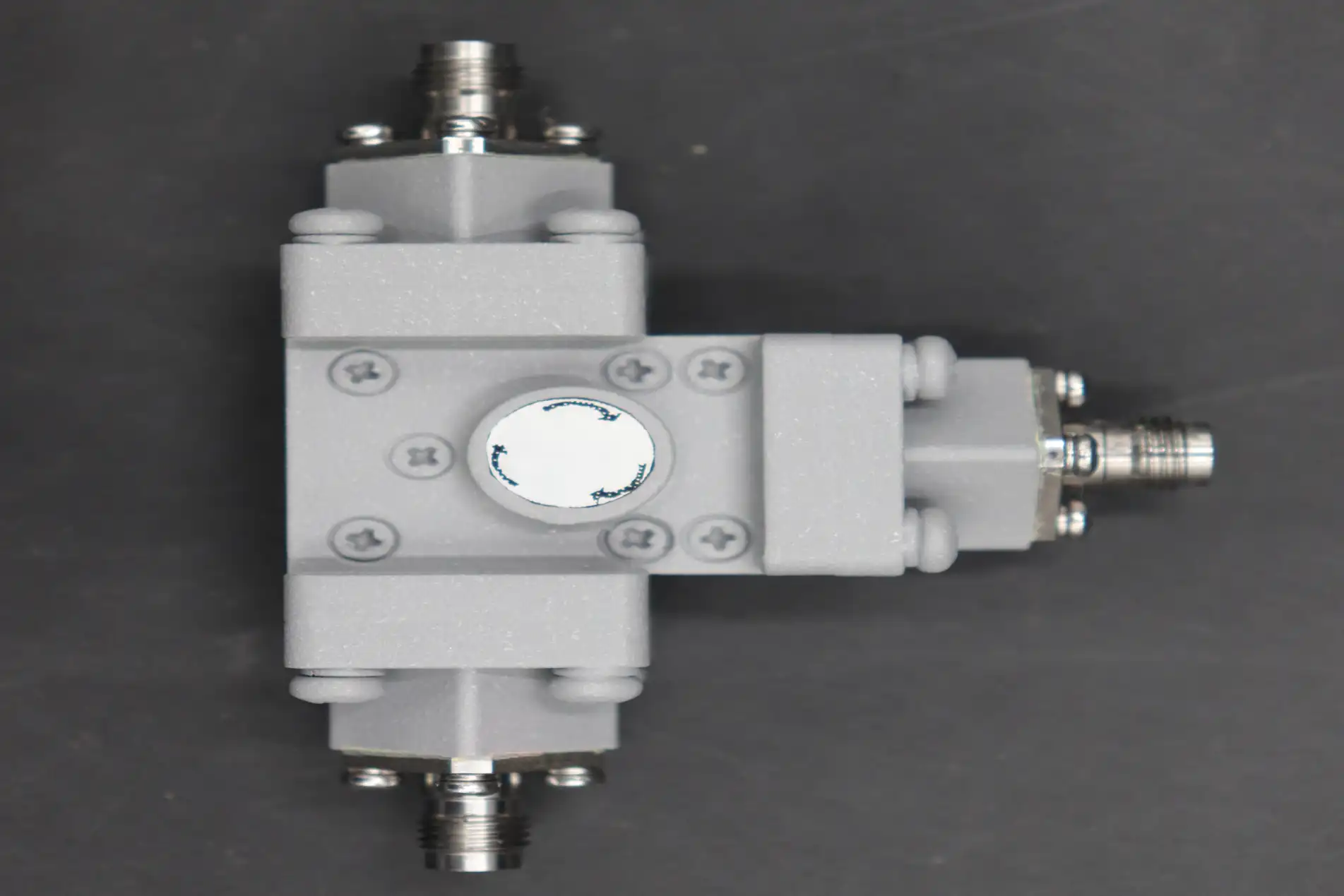
A broadband coaxial circulator is a passive, non-reciprocal three-port RF device that routes microwave signals in one direction while blocking reverse flow — all across a wide frequency spectrum. Unlike conventional narrowband designs that operate at a single resonant frequency, a broadband coaxial circulator uses advanced ferrite material technology and precision-tuned magnetic biasing to sustain low insertion loss and high isolation from DC up to 40 GHz. Whether you're designing radar front-ends, satellite ground stations, or 5G base station RF chains, this component protects sensitive receiver stages and preserves signal integrity across multiple bands simultaneously.
Understanding Broadband Coaxial Circulators
How Signal Circulation Actually Works
Ferromagnetic resonance is what makes a broadband coaxial circulator work. Coming from Port 1, signals leave through Port 2. Signals from Port 2 leave through Port 3, and signals from Port 3 leave through Port 1. Signals going the opposite way are stifled, usually by 20 dB or more. This one-way routing keeps power amps safe from harmful reflected energy and splits the send and receive channels without causing a lot of signal loss.
What Makes the Broadband Version Different
For narrowband circulators to work, the center frequency must stay the same. Broadband versions have low-loss, high-saturation ferrite cores that work with complicated impedance matching networks to make the electrical performance flat across many octaves. The ADM broadband coaxial circulator works from DC to 40 GHz and has an insertion loss of 0.3 dB from DC to 10 GHz, 0.5 dB from 10 to 20 GHz, and 0.8 dB from 20 to 40 GHz. This was confirmed by using a vector network analyzer to perform full-band S-parameter sweeps. At 50Ω resistance and 50W constant power, the device keeps ≥20 dB of isolation across the whole range. It works reliably between −45°C and +85°C.
Applications and Use Cases in B2B Procurement
Where These Devices Solve Real Engineering Problems
Defense, satellite, and industrial procurement teams buy broadband coaxial circulators because they can work with multiple frequency bands, which cuts down on the number of parts needed, makes operations easier, and gets rid of the need for band-switching relay banks.
The following application areas illustrate where the performance profile of a wideband coaxial circulator translates directly into measurable system value:
- Radar and satellite systems: In phased-array radar T/R modules and satellite ground station front-ends, the broadband coaxial circulator sends high-power pulses away from the receiving low-noise amplifiers. A single wideband unit that covers multiple radar bands gets rid of the need for different narrowband components for each channel. This is a known way to lower SWaP in current AESA designs.
- 5G base station RF front-ends: The broadband coaxial circulator separates Tx and Rx data on antenna ports that are shared. At mmWave frequencies, even small improvements in insertion loss lead to noticeable improvements in link budget and receiver sensitivity.
- Test and measurement setups: Broadband coaxial circulators separate incoming and reflected signals across the whole operating range of the instrument, keeping measurement accuracy without the need for band-limited corrections. They are used in vector network analyzer calibration chains and automated test equipment.
- Medical RF devices: RF ablation systems and imaging gear use broadband coaxial circulators to separate low-power tracking routes from high-power therapeutic channels. This stops signal crosstalk that could put patients at risk.
These applications share a common procurement driver: the need for a single, qualified component that performs consistently across diverse operating conditions without requiring redesign when frequency plans change.
Comparing Broadband Coaxial Circulators with Alternatives
Broadband vs. Narrowband vs. Waveguide
To do intelligent buying, you need to understand the trade-offs between the parts. Narrowband coaxial circulators have a slightly smaller insertion loss at their center frequency, but they need to be replaced or switched when the working band changes, which adds up to a big cost over the lifecycle of multi-band platforms. Waveguide circulators can handle more peak power and provide better isolation at millimeter-wave frequencies, but they can't be used in small coaxial assemblies because they are too big and complicated to work with.
Circulator vs. Isolator: A Practical Distinction
It works like a broadband coaxial circulator, but Port 3 is connected to a matched 50Ω load, making it an isolator. It sends signals from Port 1 to Port 2 and takes in reflections at Port 3. An isolator setup is enough when the layout of the system only needs amplifier protection and not full duplexing. But if you ask for a three-port circulator, system designers can send that third port to a different load, a watch channel, or a backup subsystem. This gives them more options without adding to the cost per unit.
Total cost of ownership analysis always shows that broadband versions are better in multi-band setups. Replacing three narrowband units with a single broadband coaxial circulator simplifies procurement, speeds up review cycles for the bill of materials, and lowers the cost of keeping inventory. These are all important factors for procurement managers at defense OEMs and telecom providers.
Procurement Guide: How to Buy Broadband Coaxial Circulators
Key Factors That Drive Sourcing Decisions
Before placing an order, B2B buyers of broadband coaxial circulators should make sure of the following: full-band S-parameter test data (not spot-frequency claims), thermal derating curves for the target operating environment, connector type compatibility with existing coaxial assemblies, and whether the supplier has ISO 9001 and RoHS certifications that can be traced back to the delivered lot.
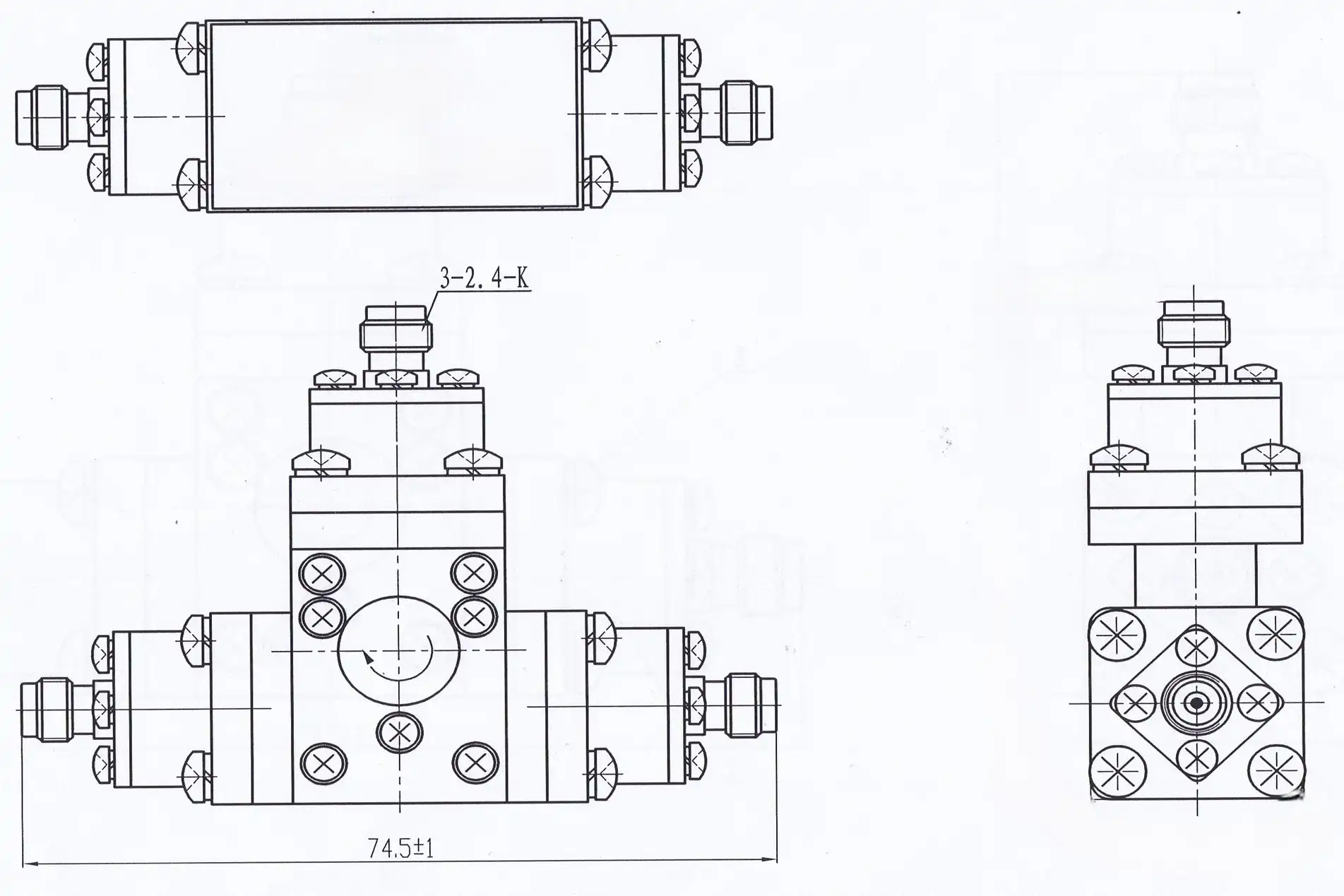
ADM has three main form factors — inline coaxial, bench-top, and surface-mount — allowing integration into existing coaxial circuits without needing to be redesigned mechanically. Custom specifications can be made for OEM and contract manufacturing customers, covering frequency sub-bands, connector interfaces, power ratings, and operating temperature ranges. Prototype turnaround support is also available.
During the early stages of the seller approval process, procurement managers at satellite operators and defense contractors often check practical details like bulk order lead times, export paperwork, and transportation support. ADM has a factory infrastructure that supports global export with traceable supply chain paperwork, backed by more than 20 years of production experience and ISO-certified quality management.
Technical Insights and Design Principles
Materials and Architecture That Define Performance
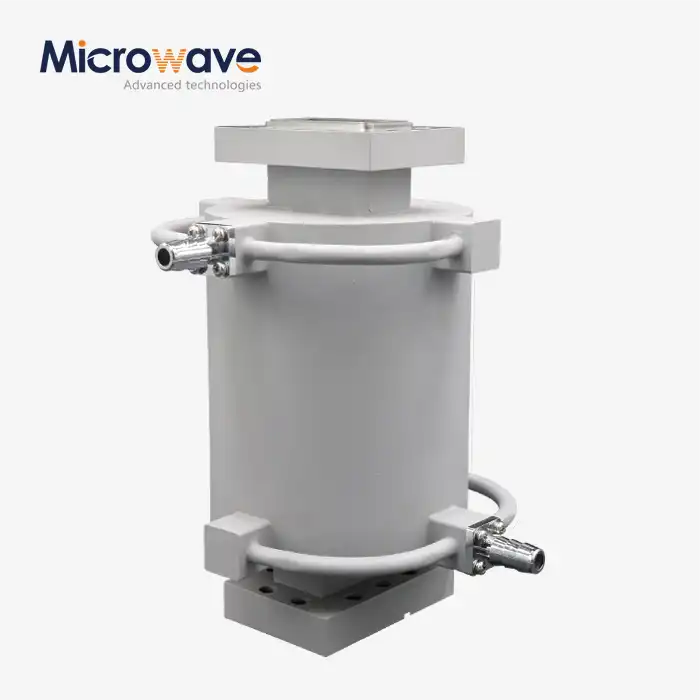
ADM's broadband coaxial circulator has an oxygen-free copper (OFC) cavity that is carefully machined to reduce conductor loss and impedance changes. The ferrite core is made of a low-loss, high-saturation magnetic flux density material, and the permanent magnet assembly has temperature-compensation materials that keep the isolation and insertion loss stable across the full −45°C to +85°C operating range. This is very important for applications in aerospace and outdoor infrastructure.
Copper heat sinks or ceramic thermal interface layers are used in high-power models to control CW dissipation without going into nonlinear operating regimes. The outside housing has two layers of metal EMI protection that stop both radiated emissions and susceptibility. This is a design choice that works well in industrial RF settings with a lot of noise. Making everything in a way that is RoHS-compliant makes sure that it works with international buying rules.
Conclusion
A wideband RF circulator solves one of the most constant signal-routing problems in designing multi-band microwave systems: keeping low-loss, high-isolation, one-way signal flow without adding a lot of different component types across frequency bands. The ADM broadband coaxial circulator can work from DC to 40 GHz and has ≤0.8 dB insertion loss and ≥20 dB isolation. It comes in a small, rugged package that is good for military radar, satellite base infrastructure, 5G front-ends, and precision measurement systems. It has ISO 9001 and RoHS certifications, has been manufactured for over twenty years, and offers full OEM customization support. It is a technically and commercially good choice for buying mission-critical RF platforms.
FAQ
What frequency range does ADM's coaxial circulator cover?
The ADM broadband coaxial circulator has three ports and covers frequencies from DC to 40 GHz. This means that platforms with multiple frequencies don't need any hardware for band switching.
Can a three-port circulator function as an isolator?
A broadband coaxial circulator turns into an isolator when a matching 50Ω load is put on Port 3. Energy that is reflected into Port 2 is taken in at Port 3, which protects the source at Port 1.
How does temperature affect performance?
To keep center-frequency drift to a minimum and maintain separation of ≥20 dB across the rated range of −45°C to +85°C, ADM uses temperature-compensated permanent magnet systems and specific ferrite doping.
What customization options are available?
ADM provides OEM-ready configurations that include custom frequency sub-bands, connector interfaces (SMA, N-type, 2.92mm, etc.), power ratings, and mechanical form factors with support for both prototypes and full production.
Is the device RoHS- and ISO 9001-compliant?
All of ADM's microwave parts are made using quality control systems that are approved by ISO 9001:2015 and meet RoHS environmental compliance standards.
Source Your Broadband Coaxial Circulator from ADM
ADM is a reliable company that has been making broadband coaxial circulators for over 20 years, working with defense, satellite, and telecom OEMs around the world. Our products come with full S-parameter test data, documentation that is ISO 9001-certified, and OEM customization support that is made to fit your system needs. You can email our engineering team at craig@admicrowave.com to get datasheets, comparison data, or a quote that is made just for your procurement program.
References
1. Pozar, D. M. Microwave Engineering, 4th ed. — Wiley, 2011.
2. Collin, R. E. Foundations for Microwave Engineering, 2nd ed. — IEEE Press / Wiley-Interscience, 2001.
3. Helszajn, J. Ferrite Phase Shifters and Control Devices — McGraw-Hill, 1989.
4. IEEE Transactions on Microwave Theory and Techniques — "Wideband Ferrite Circulators: Design Challenges and Performance Optimization," Vol. 58, No. 4 — IEEE, 2010.
5. Microwave Journal — "Broadband Circulator Design for Modern EW and Radar Systems," Vol. 63, No. 7 — Horizon House Publications, 2020.
6. International Journal of RF and Microwave Computer-Aided Engineering — "Temperature-Compensated Ferrite Circulators for Aerospace Applications," Vol. 31, Issue 9 — Wiley, 2021.