




Low Phase Noise Amplifiers Improve Receiver and Radar Performance
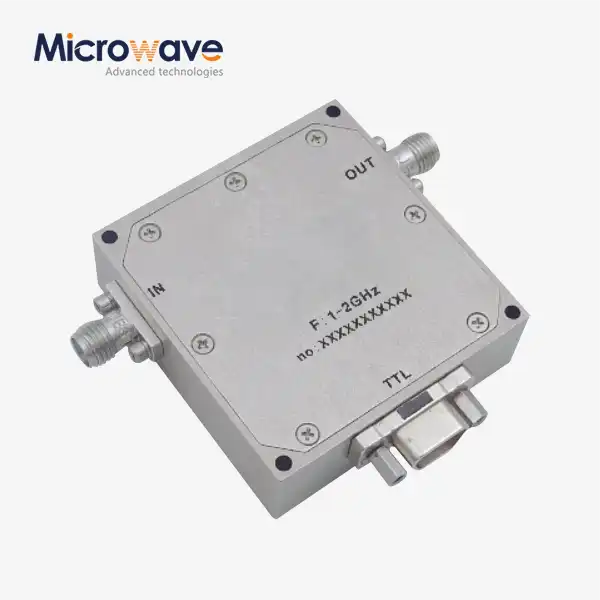
Signal purity is very important for mission-critical radio frequency systems, like those on satellites orbiting the Earth, radar stations watching threats in the air, or high-precision instruments in research rooms. At the heart of these uses is a low phase noise amplifier that cleans the spectrum so that listeners can tell the difference between real signals and background noise, and radar systems can clearly see targets that are far away or moving quickly. These special parts keep carrier signals intact by reducing noise and timing mistakes, which would otherwise hurt modulation accuracy, sensing range, and measurement precision. Choosing the right amplifier architecture has a direct effect on how well a telecommunications ground station, aircraft radar module, or quantum computing control system works. Advanced Microwave Technologies Co., Ltd knows what you need. Our ISO 9001-certified facilities have been making things for more than 20 years and can provide unique RF and microwave solutions that meet strict requirements for use in defense, aircraft, and satellite communication.
Understanding Low Phase Noise Amplifiers: Principles and Benefits
Defining Low Phase Noise Amplifiers and Their Unique Role
Instead of focusing on thermal noise figure like most gain blocks do, a low phase noise amplifier aims for spectral clarity close to the center frequency. Random changes in signal time are called phase noise. They make rings around the carrier in the frequency domain. This is a big problem for high-order modulation methods like 1024-QAM, because too much jitter causes constellation spin, which raises bit error rates and lowers channel capacity.
The difference in engineering is in the transistor devices and circuit designs that are used. Heterojunction Bipolar Transistors made with the Silicon-Germanium or Gallium Arsenide methods have less 1/f noise, which is also known as flicker noise, than standard silicon designs. These amplifiers keep the spectrum clean even when they are as little as 10 Hz away from the carrier. They do this by moving the frequency where flicker noise meets the thermal noise floor into the low kilohertz range.
Core Performance Benefits in Demanding Environments
When purchasing, experts look at amplifiers for phased array radar or satellite transponders; they need to know three important benefits. Better signal integrity keeps modulation accuracy over long transmission lines. This lets deep space sensors keep sending data even when signals get close to the noise floor. When transmitters are more sensitive, they can pick up on weaker return sounds. This means that radar ranges can be increased, or targets that are hard to see against background noise can be found.
Precision in radar and receiver chains also depends on reducing the amount of AM-to-PM conversion that happens. This is where changes in amplitude caused by ripple in the power source or changes in the drive level become phase mistakes. Good designs keep this conversion coefficient below 0.5 degrees per dB so that noises from the outside don't mess up the signal. These traits are very important for system builders who have to balance performance against external stresses like temperature changes from -40°C to +85°C or high vibrations that are common in flying platforms.
Applications and Frequency Ranges of Low Phase Noise Amplifiers
Military and Defense Systems
In setups of phased array radar, low phase noise amplifiers are used in the local oscillator distribution network to split and send signals across hundreds of field elements. Any phase noise added here messes up the return signal energy, making it harder for the system to tell the difference between targets or find small objects with a cross-section, like robotic aerial vehicles or stealth airplanes. To keep angular precision and stop ground clutter from covering up targets, defense companies ask for amplifiers with additive phase noise better than -165 dBc/Hz at 10 kHz offset.
The problems that electronic warfare systems face are similar. When monitoring enemy radio signals or blocking enemy communications, keeping reference signals clean lets you find the exact frequency and act quickly. The amps that power the synthesizers in these systems have to be able to handle shock, shaking, and big changes in temperature, all while keeping the spectral clarity across all frequency bands that are used, from L-band to Ka-band.
Satellite Communication Infrastructure
Ground station uplinks in the X-band and Ku-band need amps that keep the carrier-to-noise ratio stable when changing the frequency. Every decibel of phase noise added on Earth lowers the link budget because signals move very far through space. In satellite transponders, these parts are used in frequency conversion chains. Clean local oscillator signals are needed to get the most video, data, and voice information through.
With unique feed networks and amplifier systems that work from 0.5 GHz to 110 GHz, Advanced Microwave Technologies Co., Ltd. has helped satellite operators. Our 24-meter microwave lab makes it possible to precisely characterize antennas and parts across these frequency bands. This makes sure that goods meet strict performance standards before they are put into use.
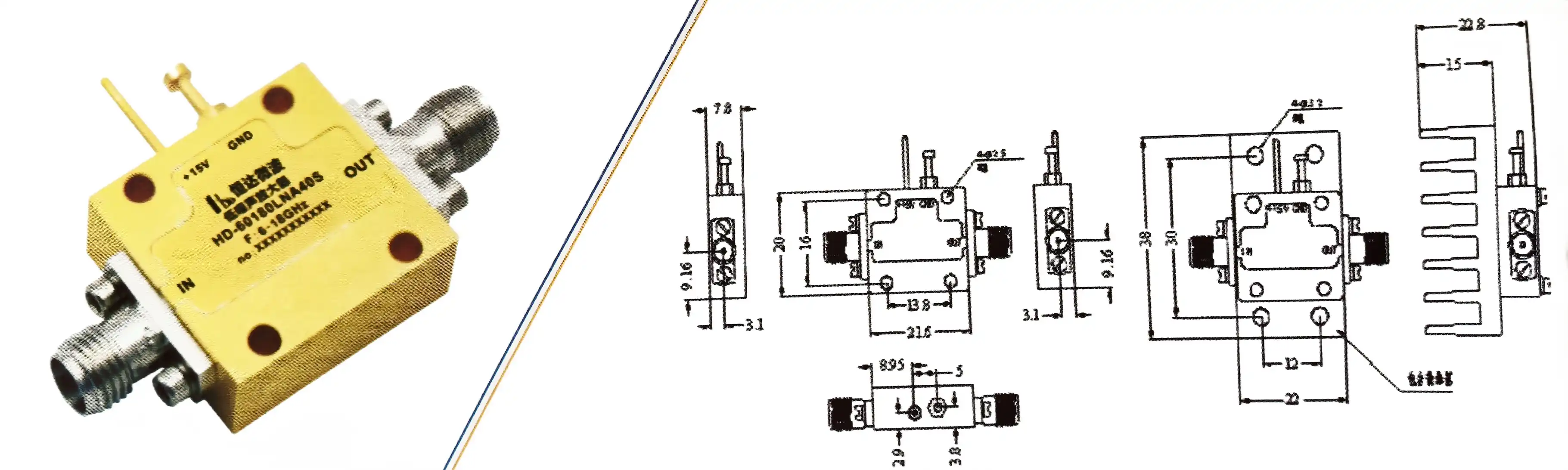
Research and Precision Instrumentation
For quantum computer management systems to work, the messages that change the states of qubits must have very little delay. Phase noise directly causes decoherence, which slows down computations and makes them less accurate. Ultra-stable frequency references are needed for all types of atomic clocks, including those made of Cesium, Rubidium, or optical lattice. In these kinds of systems, amplifiers need to be Allan Variance stable so that measurements are accurate to within 10^-14 levels.
When research groups work on next-generation transmission protocols, high-resolution imaging radar, or radio astronomy devices, they work with suppliers who know how to meet their specific needs. Capable makers are different from common providers because they can adjust component specs, provide thorough phase noise measurement data, and help with integration problems.
How to Design and Implement an Effective Low Phase Noise Amplifier?
Component Selection and Circuit Topology
Choosing the right transistors is the first step in making a good low phase noise amplifier. SiGe HBT devices are better at handling flicker noise than GaAs pHEMT transistors in the sub-10 kHz offset range. This makes them better for uses that need to be sensitive to close-in phase noise. To keep ripple from changing the device's working point, the bias network needs to use voltage regulators with very low noise and power source rejection of more than 70 dB.
The choices for circuit design balance noise, gain, and uniformity. Cascode designs offer high reverse isolation, which stops changes in the load from pulling on the oscillator source. VSWR must stay below 1.5:1 across the working bandwidth for input and output matched networks to keep reflections that cause standing waves and change phase to a minimum. By paying close attention to ground plane continuity and via placement, careful PCB planning can reduce the amount of parasitic inductances and capacitances that hurt high-frequency performance.
Measurement and Validation Protocols
Specialized tools, like cross-correlation signal source detectors, are needed to check how well an amplifier works. These tools get rid of the test source's phase noise, separating the noise from the gadget being tested. Taking readings of residual phase noise at offsets ranging from 10 Hz to 10 MHz gives a full picture of performance, showing that flicker noise is the main type of noise at low offsets and thermal noise is the main type of noise at higher frequencies.
The stability study makes sure that the amplifier stays completely stable over the whole frequency range with a K-factor greater than 1. When the gadget oscillates, it makes terrible phase noise spikes that make it useless. Testing the temperature coefficient gives system designers a way to figure out how much thermal adjustment they need for precise uses by measuring phase drift across the working range.
Troubleshooting Common Implementation Challenges
When engineers put amps into bigger systems, they keep running into the same problems. When the power source filtering isn't good enough, it often shows up as extra signs or more broadband noise. We suggest putting layered bypass capacitors a few millimeters away from the device's power pins and adding ferrite beads to stop high-frequency noise from connecting.
When you run the amplifier close to its 1 dB compression point, far-out phase noise gets worse, and AM-to-PM conversion gets worse. The best result is achieved by keeping a 3 to 5 dB backoff from compression. Load pulling happens when impedance mismatches further downstream send power back into the amplifier, which changes its working point. This effect is lessened by high reverse isolation and good matching, but it is still important to characterize the system at the system level under real load circumstances.
Choosing the Right Low Phase Noise Amplifier: Market Comparison and Procurement Guide
Comparing Amplifier Classes and Trade-Offs
When choosing components, procurement teams have to weigh the pros and cons of phase noise, gain, and distortion. Standard LNAs reduce noise, which makes them good for sensor front ends that need to be sensitive to weak signals. But these devices often add a lot of phase noise, which means they can't be used in local oscillator chains or signal generation lines.
Power amplifiers put output power and efficiency first, which usually means that uniformity and phase noise are sacrificed. When the gain of an amplifier changes, the phase moves, which can be a problem in situations where the delay needs to stay the same. Some gain flatness or output power is lost in specialized designs that aim for low phase noise amplifier performance, but they provide the spectral clarity needed for radar, satellite transmission, and accurate measurement systems.
Evaluating Manufacturers and Product Offerings
Different leading providers have different ideas about how to build amplifiers. Some companies focus on broadband performance and offer products that cover octave or multi-octave frequency bands with mild phase noise requirements. Others focus on narrow bands that work very well, getting better than -170 dBc/Hz at 10 kHz shift in certain microwave frequencies.
Instead of depending on single-point specs, procurement managers should ask for thorough phase noise plots from suppliers when they are reviewing them. The full noise profile shows if the gadget meets the needs at all important angles. Some signs of good manufacturing include meeting MIL-STD-883 environmental screening requirements for aircraft uses, offering sealed packing choices for tough environments, and keeping accurate records of the supply chain.
Leveraging Customization and OEM Partnerships
People who buy in bulk can make changes to the goods that aren't available off the shelf. Setting specific frequency ranges, gain levels, or package forms makes system interaction better and lowers the cost of the bill of materials. Advanced Microwave Technologies Co., Ltd. provides OEM services that start with fast development so that customers can test the products before committing to large-scale production. Our customers work with our engineering team to improve specs, model performance, and confirm designs through thorough testing in our ISO-certified labs.
Lead times and price models are very different between providers. Commodity wholesalers keep standard parts in stock and can send them quickly, but they don't offer much expert help. When you work directly with a maker, you can get technical help, unique solutions, and low prices for large amounts. Forming relationships with strong makers guarantees a steady supply over time and allows for technical cooperation as system needs change.
Enhancing Receiver and Radar Performance: Real-World Case Studies and Future Prospects
Proven Performance Improvements in Operational Systems
A well-known aircraft company improved its weather observation radar by switching out normal amps for units designed to lower phase noise. The change made the close-in phase noise performance 12 dB better, which meant that precipitation targets could be found at a 30% greater range, and the number of false alarms in ground clutter regions dropped by a large amount.
When satellite communication companies added advanced low phase noise amplifiers to their frequency converters at the ground station, they saw a noticeable rise in flow for high-order modulation methods. The size of the error vector got 8% better, which meant that the link budget could safely handle 256-QAM instead of 64-QAM, which had been the upper limit. This directly led to more money coming in from each sensor lease.
Researchers working on optical atomic clocks reported better stability after adding amplifiers with flicker noise corner frequencies below 100 Hz to their microwave reference chains. The Allan Variance at one-second averaging times got almost a thousand times better, putting the systems in a position to lead the way in setting new standards for timekeeping.
Emerging Technologies and Future Development Paths
Next-generation wireless infrastructure, such as 5G millimeter-wave backhaul and new 6G research platforms, needs amplifiers that can work in W-band and higher frequencies with strict phase noise requirements. When low-phase-noise designs are paired with gallium nitride power devices, they can do more than one thing. This cuts down on the number of parts needed and makes the system more reliable.
Improvements in cold electronics make it possible for quantum computing and transmission in deep space to be used. When amplifiers are set to work at 4 Kelvin or lower, they reach noise levels close to the quantum limit while keeping the spectrum clean. More study into topological insulators and two-dimensional electron gas shapes in materials could lead to even less flicker noise, which would push the limits of performance.
As radio designs move toward being software-defined, uniformity and dynamic range of components are required to meet new standards. In the future, amplifiers will need to be able to handle bigger instantaneous bandwidths while still keeping phase unity across multiple channels at the same time. System builders see phase noise costs as an important limit more and more, which encourages component makers and platform developers to work together on development.
Conclusion
Choosing low phase noise amplifiers that keep the signal's spectral clarity has a direct effect on how well sensors, tracking systems, and communication networks work. Defense, military, satellite communication, and research all depend on parts that are designed to reduce phase noise as much as possible by using advanced transistor technologies, circuit designs that work best, and strict testing. As modulation schemes get more complicated and detection needs get stricter, it becomes more and more important for knowledgeable buying teams to work with skilled makers. Engineers can come up with solutions that meet environmental, quality, and supply chain standards and give real operating benefits when they understand the technical factors, application requirements, and customization options.
FAQ
Q1: What distinguishes a low phase noise amplifier from a standard low-noise amplifier?
Standard LNAs try to get the lowest noise figure possible while taking into account how sensitive sensor inputs are to thermal noise. Devices that aim to improve low phase noise amplifier performance focus on cutting down on flicker noise and close-in spectral flaws. This is more important in signal creation and transmission chains than in receiving routes. In local oscillator delivery networks and frequency generation uses, the difference is very important.
Q2: How does power supply quality affect amplifier phase noise performance?
Power source ripple and bandwidth noise change the device bias point directly, which makes false signs and worsens phase noise. This effect is lessened by using layered bypass capacitors near the supply pins and ultra-low noise linear controllers with rejection levels above 70 dB. Not enough screening often leads to strange speed drops in systems that were built well otherwise.
Q3: Why does operating point matter for phase noise optimization?
When you push amps past their 1 dB compression point, the far-field noise floor gets worse, and AM-to-PM conversion gets a lot worse. Linearity and phase noise performance are best when operating 3 to 5 dB below compression. System makers need to make sure they leave enough room in the budget for gain margin to handle changes in signal level without affecting the uniformity of the spectrum.
Partner with Advanced Microwave Technologies Co., Ltd for Superior Low Phase Noise Amplifier Solutions
Working with an experienced maker is key when your radar system needs a wider range of tracking or your satellite ground station needs a clean spectrum to get the most work done. Advanced Microwave Technologies Co., Ltd has been working with radio waves (RF) for more than 20 years and has ISO 9001-certified production and testing facilities that can reach 110 GHz. We work closely with defense companies, aircraft developers, and research institutions to make sure that the low phase noise amplifier options we provide meet all of their exact requirements for phase noise, frequency range, and weather resistance. Our OEM services offer fast response, full technical support, and a reasonable price, no matter how many prototypes you need to test or how many you need to produce. Contact our experts at craig@admicrowave.com to talk about your needs and find out how working with a reputable low phase noise amplifier maker can help you stay ahead of the competition.
References
1. Rohde, U.L. and Poddar, A.K., "Low Phase Noise Oscillator Design and Amplifier Considerations," IEEE Microwave Magazine, Vol. 13, No. 4, 2012.
2. Leeson, D.B., "A Simple Model of Feedback Oscillator Noise Spectrum," Proceedings of the IEEE, Vol. 54, No. 2, 1966.
3. Everard, J.K.A., "Fundamentals of RF Circuit Design with Low Noise Oscillators," John Wiley & Sons, 2001.
4. Rubiola, E., "Phase Noise and Frequency Stability in Oscillators," Cambridge University Press, 2009.
5. Pozar, D.M., "Microwave Engineering," Fourth Edition, John Wiley & Sons, 2011.
6. Maas, S.A., "Noise in Linear and Nonlinear Circuits," Artech House Microwave Library, 2005.