





High Power Waveguide Isolator Design and RF Protection
In current RF systems, it is necessary to keep sensitive receivers safe from mirrored power. A high power waveguide isolator is like a one-way valve for microwave energy. It lets signals go forward but blocks reflections going backwards that could hurt expensive amplifiers, klystrons, or solid-state power sources. This one-way device uses ferrite materials and a magnetic field to make differential phase changes. This keeps the source from being affected by differences in resistance or load. These isolators keep devices working longer, protect signals, and keep them safe in mission-critical systems like radar, satellite uplinks, and military communication systems. They do this by turning unwanted mirrored energy into heat and safely releasing it.
Understanding High Power Waveguide Isolators: Design and Functionality
What Makes a High Power Waveguide Isolator Essential?
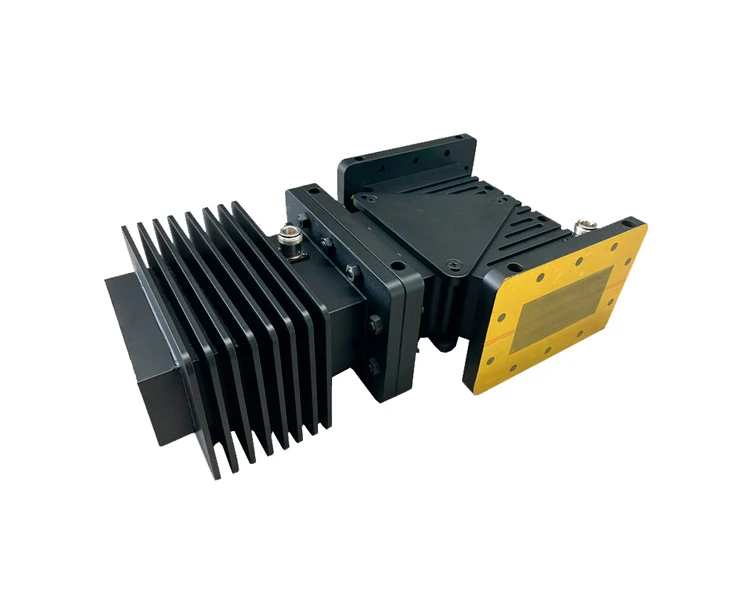
A high power waveguide isolator is basically a passive, two-port device that is designed to send RF energy efficiently in one path while stopping or collecting energy going the other way. This feature keeps high-power sources safe from echoes that can happen because of antenna mismatches, changes in load, or changes in the surroundings. Waveguide versions are better at handling kilowatt to megawatt power levels than coaxial isolators because they better handle heat and have lower insertion loss.
Core Design Principles and Materials
The concept is based on the ideas of Faraday spinning. Inside the waveguide housing, ferrite rods or disks that are magnetic along their length cause a phase shift that doesn't go back and forth. This setup makes sure that forward signals pass with little loss when paired with resistant cards or matching loads, while reverse signals are absorbed and turned into heat. This makes a strong wall between your emitter and the mirrored power, which could be harmful.
The choice of material has a direct effect on how well an isolator works. High-grade ferrites, like Yttrium Iron Garnet (YIG) or spinel types, are picked because they have a low loss slope, a high Curie temperature (often more than 200°C), and magnetic qualities that stay the same at a lot of different temperatures. The body of the waveguide is usually made of aluminum or copper, which are very good at conducting heat and being strong.
Permanent magnets or electromagnets are used to create magnetic biasing. These are set to create the exact field strength needed for the best separation at target frequencies. The working bandwidth is set by the shape of the ferrite and where it is placed in the waveguide. It takes careful planning to keep performance stable over wide frequency ranges, like 800 MHz or more.
Key Operating Mechanisms
Three factors determine how well an isolator works:
Insertion Loss: measures how weak the data is going forward. The waveguide isolators from Advanced Microwave have an average absorption loss of only 0.3 dB. This makes sure that the device transfers energy as efficiently as possible while producing as little heat as possible.
Isolation: Measures the amount of reverse signal reduction, which is usually 20 dB or more. This means that less than 1% of the power that is mirrored goes back to the source, which is a very small amount, but is needed to protect sensitive parts.
Power Handling: Finds the highest amount of power that is safe to use. Our isolators can handle forward power of up to 1000 watts and have a strong thermal design that gets rid of received reverse energy without detuning or breaking down the material.
Frequency bands supported go from L-band to Ka-band, which makes them useful for a wide range of uses, from weather radar to millimeter-wave satellite links. Variants come with custom tuning for narrow-band optimization or broadband freedom, which lets buying teams fit exact specs to system needs.
Key Applications and Advantages of High Power Waveguide Isolators in RF Protection
Where Isolators Make the Difference
High power waveguide isolators are used in places where a system failure is not appropriate. Isolators keep magnetrons from getting reflected when antenna scanning goes wrong, or ice builds up on radomes in radar sites used for both defense surveillance and weather tracking. In satellite ground stations, isolators protect high-power amplifiers during uplink transfer. This keeps the system running smoothly even when there are bursts of a lot of traffic.
Defense communication platforms use isolators to protect receivers in systems that can't be jammed. These systems need parts that can handle high power densities and fast frequency hopping without arcing or thermal runaway. These devices are reliable and keep signal quality and operating consistency even in tough settings, which is good for navigation systems, weather tracking networks, and UAV datalinks.
Advantages Over Alternative Solutions
Waveguide systems are much better than low-power coaxial isolators in a number of important ways. The bigger physical opening spreads out the power density, which lowers the risk of dielectric breakdown and lets the device handle more power. Better thermal management is built in; the waveguide walls efficiently remove heat, and active liquid cooling is a choice for very high-power uses.
Isolators stop reverse energy inside the system, which makes it easier to build and lowers the risk of failure. This is different from circulators, which send mirrored power to a third port. This edge in merging means that the system can be set up faster, with fewer connections, and for less money overall. Because it is built to last and works passively, there are no moving parts or electrical functions, and it needs very little upkeep over many years of use.
Critical Specifications for Procurement
Engineers look at several technical factors when they evaluate isolators. To make sure that the resistance matches, the voltage standing wave ratio (VSWR) must stay below 1.15:1. The practical freedom is based on the bandwidth. For example, an 800 MHz bandwidth allows for multiple channels or frequency-agile systems. Operating temperature range, like -40°C to +70°C, ensures success in harsh climates and difficult placement sites.
The waveguide isolators made by Advanced Microwave meet these requirements and are also manufactured in a way that is ISO 9001:2015 approved and RoHS compliant. This means that they meet the strict paperwork and tracking needs of defense companies and aerospace OEMs. Before being sent out, every unit goes through a lot of tests in our 24-meter microwave lab, which has both near-field and far-field measurement capabilities up to 110 GHz.
Comparing High Power Waveguide Isolators: Making Informed Procurement Decisions
Evaluating Manufacturer Capabilities
On the world market, there are well-known companies like Amphenol, Pasternack, and Narda Microwave, and each has its own strengths. Amphenol is great at making tough military-grade designs that have been tested in a lot of different environments. With Pasternack, you can make quick prototypes and buy products that are already made for popular frequency bands. Narda focuses on very high power waveguide isolator applications that need complex cooling systems.
Advanced Microwave Technologies Co., Ltd stands out because it offers a wide range of customization options at a low cost. With more than 20 years of experience making microwaves, we make sure that stability, cost, and ease of production are all taken into account during the planning phase. Our supply chain is vertically integrated, which means that we control quality and prices without losing performance. This includes processing ferrite and checking the finished product.
Technical Performance and Cost-Effectiveness
When looking at different isolators, you need to think about how much power they can handle and how well they can handle harsh environments. It might look like a device with 0.2 dB insertion loss is better than one with 0.3 dB insertion loss, but the difference only makes a small amount of extra heat—about 45 watts at 10 kW input. The real difference is in how they handle heat and how stable they are over time when they are used all the time.
There is more to cost-effectiveness than just unit price. Lead times, minimum order amounts, and the ability to customize products have a direct effect on how projects are scheduled and how inventory is managed. Our fast delivery, which is usually measured in weeks instead of months, helps purchasing managers meet tight targets without having to pay high fees for speeding or keep too much safety stock on hand.
Custom Solutions and OEM Partnerships
Customized solutions that improve both performance and operations are helpful for bulk sales. During the planning phase, we work with system installers to make changes to the frequency response, flange connections, and heat management so that they can fit the installation requirements. Our engineering team can help you whether you need to increase the pressure for high-altitude flight, make materials that work in space, or add liquid cooling to industrial heating systems.

Co-branding, private labeling, and specialized production capacity are some of the ways that OEM relationships add value. Technical support includes everything from reviewing the specifications at the beginning of the product's lifetime to helping with installation and fixing problems in the field. This makes sure that the product works well with everything else and reduces technical risk.
Maintenance and Optimization Tips for Prolonged Waveguide Isolator Performance
Routine Inspection and Cleaning
Every three months, you should look at the flanges and cooling surfaces to see if there is any damage, rust, or contamination. The insides of high power waveguide isolators must stay dry and free of waste; even small bits can cause arcing at high power levels. Before putting the seal back together, clean the flange surfaces with rubbing alcohol and lint-free cloths to make sure they are clean.
Controls for the environment are very important. Keep the temperature in the room within the limits given, as too much heat can detune the ferrite or lessen the magnetic bias. When installing something outside, make sure that the weatherproofing seals are still in place and that the drainage holes are clear so that water doesn't get in during storms or freeze-thaw cycles.
Troubleshooting Performance Degradation
When insertion loss goes up, it usually means that the ferrite is breaking down or getting dirty. Check the VSWR at a number of different frequencies to see if the problem is broad (which could mean mechanical damage) or frequency-specific (which could mean detuning). Weakened magnetic bias is usually the cause of less separation. Use a Gauss meter to check the state of the magnets and the strength of the field.
Thermal imaging can show hot spots that mean power is being lost in a certain area, possibly because of internal arcing or misalignment. If cleaning and recalibrating don't improve performance, you should call the maker to have the device fixed or replaced at the factory, since internal ferrite components can't be fixed in the field.
System Integration Best Practices
Where you put the isolator matters. As close as possible to the radio output should be installed so that cable loss and VSWR effects from interconnects are kept to a minimum. Make sure there is enough wind around the device. Isolators that are passively cooled still produce heat that needs to be removed for the system to stay stable.
Paying attention to flange types, orientation alignment, and grounding is needed to make sure that neighboring components work with each other. When interfaces don't match, echoes happen that make isolation less effective. To get even joint tension, use torque tools and conductive grease to keep contact resistance and rust to a minimum.
These practices keep systems running efficiently and make devices last longer, protecting your investment and increasing uptime in tough operating settings.
Conclusion
hHigh power waveguide isolators are needed to keep RF systems safe from damage caused by reflected power. This keeps radar, satellite communication, defense, and flight systems running smoothly. Engineers can choose the best option for each application by understanding their design, from choosing the right ferrite material to managing heat. Procurement teams can find parts that meet both technical and financial needs by comparing makers based on performance, ability to customize, and support services. Isolators last longer if they are well taken care of and carefully integrated into other systems. This protects important assets and gets the best return on investment.
FAQ
Q1: What is the expected lifespan of a high power waveguide isolator?
Waveguide isolators can work effectively for 15 to 20 years or longer if they are well taken care of. Lifespan is affected by things like power amount, job cycle, and exposure to the surroundings. When units are used properly and inspected on a regular basis, they usually last longer than the systems they guard.
Q2: How do I select the correct isolator specifications for my application?
First, find out what your working frequency range is, as well as your high and normal power levels and the conditions of your surroundings. Compare these needs to the rates of the isolators, making sure there is enough room—usually 20%—above your maximum working power. Talk to the makers to make sure that the insertion loss, separation, and VSWR levels meet the performance and cost requirements of your system.
Q3: Can high power waveguide isolators be used in outdoor or harsh environments?
Yes, when it's clearly stated. Look for units that have natural scores that cover the highest and lowest temperatures, humidity levels, and heights in your area. Water and dirt can't get in because of weatherproof casings, materials that don't rust, and sealed openings. Isolators from Advanced Microwave work from -40°C to +70°C, making them perfect for most sites on land or in the air.
Partner with ADM for Your High Power Waveguide Isolator Needs
Advanced Microwave Technologies Co., Ltd is ready to help you with your RF security needs with its extensive knowledge and experience. Our high power waveguide isolators have small, low-cost designs that offer low insertion loss, good isolation, and reliable power handling. Quality and following the rules are guaranteed by ISO 9001:2015 approval and RoHS compliance. Our 24-meter microwave lab proves performance up to 110 GHz.
Our team can provide you with off-the-shelf options that can be used right away or custom-engineered isolators that are perfect for specific uses. We offer OEM relationships, fast development, and expert help for the whole span of a product. Email craig@admicrowave.com to talk about the details of your project, get full datasheets, or set up a meeting with one of our engineers. We are a reliable high power waveguide isolator provider, and we want to help you make your system reliable and run smoothly.
References
1. Baden Fuller, A. J. Ferrites at Microwave Frequencies. Institution of Engineering and Technology, 1987.
2. Helszajn, J. Nonreciprocal Microwave Junctions and Circulators. Wiley-IEEE Press, 2001.
3. Pozar, David M. Microwave Engineering, 4th Edition. Wiley, 2011.
4. Collin, Robert E. Foundations for Microwave Engineering, 2nd Edition. Wiley-IEEE Press, 2001.
5. Ishii, T. K. Handbook of Microwave Technology: Components and Devices, Volume 1. Academic Press, 1995.
6. IEEE Standard 149-1979, IEEE Standard Test Procedures for Antennas. Institute of Electrical and Electronics Engineers, 1979.
YOU MAY LIKE
 VIEW MOREWaveguide Circulator
 VIEW MOREMicrowave Fixed Attenuator
 VIEW MOREWaveguide Unmatched Termination
 VIEW MOREWaveguide Sliding Short
 VIEW MORESingle Channel Coaxial Rotary Joint
 VIEW MOREHigh Power Coaxial Switch
 VIEW MOREStandard Horn Antenna
 VIEW MOREDual Linear Broadband Circular Polarization Horn Antenna