





Low Noise Amplifier Basics: Working, Design & Applications
Low noise amplifiers (LNAs) are important front-end parts of RF and microwave devices because they boost weak signals with little noise. For unique designs, a low phase noise amplifier does more than just lower thermal noise; it also keeps the spectral purity very high, which is very important for radar, satellite communications, and precise time. Because these devices have both high gain and very stable phase properties, they are essential in mission-critical settings.
Understanding Low Noise Amplifiers and Phase Noise Fundamentals
We at Advanced Microwave Technologies Co., Ltd. have done a lot of work with defense companies and satellite programmers who need amplifiers that are both sensitive and stable. At the receiving front end, an LNA basically boosts weak signals that come in. How much heat noise the device adds to the data line is shown by its noise figure (NF). Lower NF values keep the purity of the signal, which makes it easier to pick up weak signals.
Phase noise makes things more difficult. In this case, it shows random changes in the phase of the carrier signal that show up as annoying sidebands that take energy away from the carrier frequency. High phase noise hurts system performance in several ways: it increases the number of bit errors in digital communications, messes up radar returns, and lowers the stability of frequency synthesizers.
Traditional LNA vs. Low Phase Noise Design
To get the lowest noise figure possible, standard LNAs carefully choose their transistors and match their inputs. When used in signal production chains or local oscillator distribution networks, these amplifiers may add a lot of phase noise, but they are great at keeping weak signal recognition abilities. To cut down on flicker noise, which is also called 1/f noise, a low phase noise amplifier uses modern transistor technologies such as gallium arsenide (GaAs) field-effect transistors or silicon-germanium heterojunction bipolar transistors (SiGe HBT). This part makes up most of the close-in phase noise when the carrier frequency is less than 10 kHz away.
Measuring Phase Noise Performance
Engineers use specialized test tools, like signal source monitors, to look at phase noise. To take the measurement, a clean reference signal is split into two paths, one that goes through the device being tested and the other that goes through a reference path. The two paths are then joined at a phase detector set up in quadrature. This method gets rid of the noise that comes from the source, leaving only the noise from the speaker.
Phase noise shows up as a graph that shows the noise power spectral density (in dBc/Hz) versus the frequency that is separated from the carrier. Amplifiers that work well can get levels better than -175 dBc/Hz at 100 kHz offset and -165 dBc/Hz at 10 kHz offset. At ADM, our testing labs can measure up to 110 GHz, which lets us fully characterize across the whole frequency range that our defense and aircraft users need.
Design Principles of Low Phase Noise Amplifiers
Paying close attention to circuit design, component choice, biasing methods, and physical layout is needed to make amplifiers that work well with phase noise. Our engineering team at ADM uses these ideas to make unique solutions for radar systems and satellite ground stations.
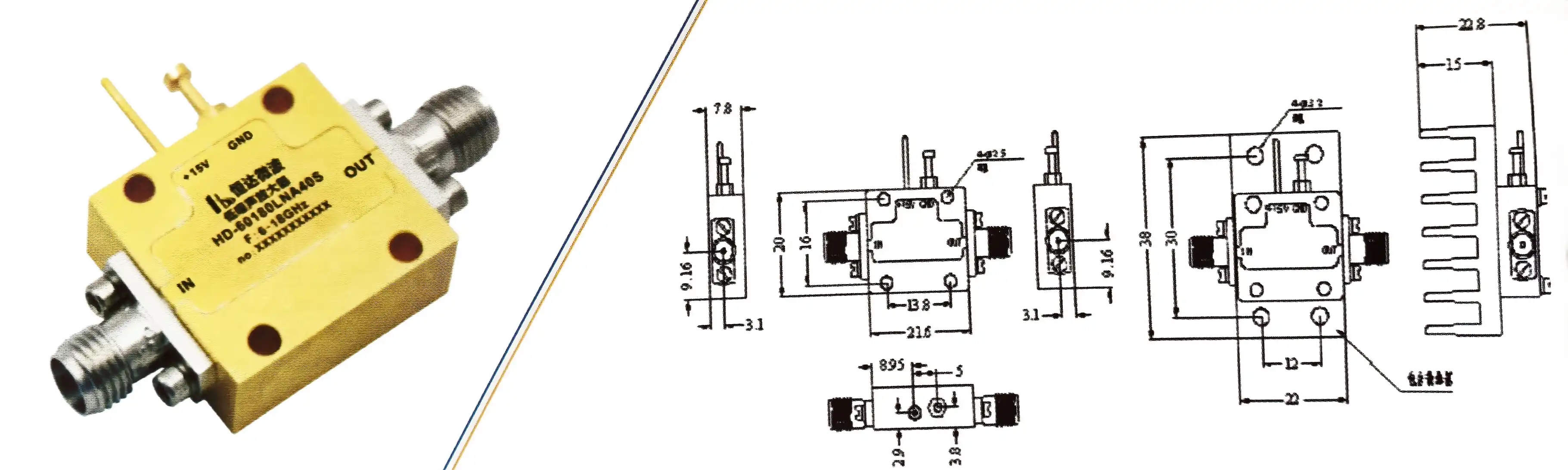
Circuit Architecture Selection
There are two main schemes that are used to create low phase noise amplifiers. In the cascode design, an input stage with a common emission (or common source) is stacked on top of a stage with a common base (or common gate). Compared to single-stage systems, this setup has better uniformity, high gain, and great reverse isolation. The common-base stage protects the input transistor from changes in the output resistance. This lowers the load-pulling effects that would change the oscillator source otherwise.
Another way is to use common-source configurations with inductive source decay. Source degradation makes the uniformity better and keeps the bias point stable when the temperature changes. The method gives up some gain in exchange for a better third-order intercept point (IP3) and less amplitude-to-phase modulation (AM-PM) conversion.
Component Selection and Biasing
The choice of transistor has a big impact on the phase noise floor. With corner frequencies below 1 kHz, SiGe HBT devices have great 1/f noise performance. At millimeter-wave frequencies, GaAs pHEMT (pseudomorphic high electron mobility transistor) devices have very high gain and very low noise. Biasing at the best collector or drain current densities keeps predictability margins at a good level while reducing noise.
Passive parts need the same amount of attention. Thin-film resistors have less noise from the current than thick-film types. Parasitic losses are cut down with air-wound coils and high-Q chip inductors. Multi-layer ceramic capacitors (MLCC) with stable dielectrics stop changes in capacitance that are caused by changes in voltage.
PCB Layout and Thermal Management
Measured speed is greatly affected by physical execution. Common-mode currents that couple noise between stages can't happen if the ground plane is continuous. Controlled resistance communication lines keep the purity of the data. For RF grounding to work, bypass capacitors need to be placed within millimeters of the active device input pins.
Thermal design stops movement caused by temperature. When transistors are run at high temperatures, flicker noise and bias point stability get worse. Copper heat spreaders and liquid cooling connectors for high-power uses are what ADM does. Our production methods, which are ISO 9001:2015 approved, make sure that the quality of the thermal contact material application and mechanical assembly is always the same.
Applications and Benefits of Low Phase Noise Amplifiers
Low phase noise amplifier technology is used by businesses in the defense, aircraft, telecoms, and research sectors to meet ever-higher performance standards. When buying, teams know where these gadgets provide real benefits, and they can back up their specs and budget requests.
Phased Array Radar Systems
There are hundreds or thousands of antenna elements in modern radar systems, and each one needs to be precisely excited by a shared local oscillator. Cumulative phase noise is added when the LO signal is sent through an amplifier chain. Extra phase noise blurs the azimuth response in synthetic aperture radar (SAR) systems that are used for mapping and monitoring of the landscape. This lowers the picture sharpness. When defense companies use active electronically scanned arrays (AESA), they need amplifiers with phase noise levels below -170 dBc/Hz at 100 kHz offset. This is so that targets can still be found in noisy backgrounds.
Satellite Communication Infrastructure
Using frequency converters, ground station uplink emitters change baseband data to microwave frequencies. The phase-locked loop in the synthesizer boosts a reference oscillator, doubles the frequency, and sends it to the upconverter. If you add phase noise to this chain, it will directly hurt the quality of the uplink data. Maintaining the carrier-to-noise ratio is very important for missions in deep space that need to talk to spaceships billions of kilometers away, where the signal power received barely beats thermal noise. Ultra-stable reference distribution amplifiers are used in NASA's Deep Space Network systems to meet this need.
These boosters are also used in broadcast devices by our users who use satellite transmission. Satellites that keep an eye on the weather send constant data that ground sites must pick up, even if the signal is weakening. Designs for receivers with low phase noise make the capture range and tracking stability of the demodulator phase lock loop (PLL) better.
Test and Measurement Instrumentation
In their internal frequency generation chains, spectrum analyzers, signal producers, and network analyzers all have low phase noise amplifier steps. Instrument makers, such as Keysight Technologies and Rohde & Schwarz, fight over phase noise standards because they have a direct effect on the measurement dynamic range. When testing oscillators or amplifiers, the noise floor of the test equipment must stay well below the device being tested. If it doesn't, the results will show the limits of the test equipment instead of how well the device actually works.
Research groups that are building quantum computing systems have to follow very strict rules. To stay coherent during gate processes, qubit control signals need to have very little noise. We've worked with university labs that need phase noise levels as low as -180 dBc/Hz at a 1 MHz shift. This is the limit of what is possible with today's transistor technology.
How to Choose the Right Low-Phase-Noise Amplifier for Your Business Needs?
To choose the best amplifier, you have to weigh the technical specs against project limits like price, delivery time, and source dependability. Professionals in procurement should make this choice in a planned way.
Defining Performance Requirements
First, write down the frequency range, the gain that is needed, the noise figure that is okay, and the key phase noise adjustments for your system. Different uses put more weight on different shift frequencies. When it comes to communications systems, far-out phase noise (1 MHz and above) is what defines neighboring channel rejection. Applications that use Doppler radar give more weight to close-in gaps (1 kHz to 100 kHz) where target returns show up.
Linearity requirements are important when more than one stream is using the same amplifier. The amount of intermodulation distortion is set by the output third-order intercept point (OIP3). The highest linear output power is set by the 1 dB compression point (P1dB). Running amps 3 to 5 dB below compression keeps phase noise performance at its best and stops AM-PM conversion from losing spectral clarity.
Evaluating Supplier Capabilities
Well-known companies like Mini-Circuits give stock items with sure specs that can be used in a wide range of situations. Their large delivery network makes sure that lead times are short and that help is consistent. Analog Devices and Texas Instruments offer combined systems that combine LNAs with mixers or frequency generators, which cuts down on the number of parts needed.
Suppliers who offer design services are good for custom apps. Our research team at Advanced Microwave Technologies Co., Ltd. helps OEM customers from the time they study the first set of specifications until the sample is approved. We have worked in the defense and aircraft industries for more than 20 years, so we know what kind of paperwork is needed for projects that need to be able to track things and make sure they will be available for a long time. Our 24-meter microwave lab and ability to measure up to 110 GHz allow for full analysis over a wide range of frequencies.
Balancing Cost and Customization
Custom amplifiers cost more and take longer to ship than standard amps. Custom development makes sense when an application needs frequency coverage that isn't common, packing restrictions, or environmental requirements that go beyond what's available on the market. Specialized providers can do MIL-STD-883 screening, hermeticity testing, and radiation hardness guarantee, which are all things that military projects often need.
Lead times are very different between providers. Within days, the distribution stock of low phase noise amplifiers is sent out. For custom designs, the first versions usually take 8 to 12 weeks, and then they go through approval testing. Production ramp-up relies on how many parts are available and how much the factory can make. Supply chain risk for long-term projects can be reduced by building partnerships with multiple approved sources.
Conclusion
Low phase noise amplifier versions are used for the most demanding uses in radar, satellite communications, and precision equipment, making low-noise amplifiers important building blocks in current RF systems. Knowing the difference between thermal noise improvement and phase noise control helps you choose the right gadget. The speed that can be reached is determined by circuit design methods such as choosing the layout, choosing the right components, and managing heat. Clearly describing objectives, rating suppliers' skills, and finding a balance between cost and customization needs are all things that help procurement teams. As the need for higher system speed grows, like with 5G rollout, satellite mega-constellations, and quantum computing research, working with makers with a lot of knowledge becomes more useful.
FAQ
Q1: What differentiates a low noise amplifier from a low phase noise amplifier?
As measured by noise figure, a standard LNA keeps thermal noise addition to a minimum, which improves receiver sensitivity. A low phase noise amplifier also manages spectrum purity by reducing flicker noise and AM-PM conversion, which is important for sending and receiving signals as well as just receiving them. Both boost signals, but the improvement goals are different depending on where the machine is and what it does.
Q2: How does excessive phase noise impact system performance?
In digital messaging, high phase noise raises the error vector magnitude (EVM), which makes bit error rates higher. As noise covers up weak returns, radar systems can't see targets as clearly and can't find them as far away. Frequency generators have bad performance with false signals and unreliable output frequencies, which affects parts further down the chain that depend on clean reference signals.
Q3: Can standard LNAs substitute for low-phase-noise designs?
Standard LNAs usually work fine in receive-only situations where the amplifier only processes received signals and doesn't send out reference frequencies. True low-phase-noise designs are needed for signal generation chains, test tools, and local oscillator distribution. When you try to substitute, the system's speed goes down, which may not be clear from the specification sheets until integration testing.
Q4: What procurement factors ensure reliable supply?
Check to see if the quality control systems have ISO 9001 certification. Ask for phase noise test data that shows real measured performance, not just standard specs. Make sure the seller has experience with the type of product you have. For example, aircraft suppliers know how to handle environmental screening needs that business vendors might not. Set up simple ways for people to communicate and offer professional help.
Partner with ADM for Superior Low Phase Noise Amplifier Solutions
We at Advanced Microwave Technologies Co., Ltd. make unique low phase noise amplifier options that are certified by ISO 9001:2015 and follow RoHS rules. Our expert team helps defense companies, satellite developers, and research institutions make plans that work best in tough conditions. Whether your project needs standard waveguide assemblies, custom feed networks, or specialized amplifiers with phase noise below -170 dBc/Hz, our 24-meter microwave lab and 110 GHz measurement tools make sure that everything is checked out completely before it is sent out.
We know that B2B buying teams need low phase noise amplifier providers they can count on to deliver on time and without lowering the quality of their products. Rapid development, design-for-manufacturing advice, and detailed paperwork to help with your approval processes are all part of our OEM services. Get in touch with craig@admicrowave.com to talk about your unique needs. Our engineers will look over your application, suggest the best options, and give you full quotes with reasonable delivery times. Working with a low phase noise amplifier maker that cares about your success through quick help and proven global shipping skills is a big plus.
References
1. Pozar, David M. Microwave Engineering, 4th Edition. Wiley, 2011.
2. Rohde, Ulrich L. and Matthias, A.J. Microwave and Wireless Synthesizers: Theory and Design. Wiley-Interscience, 1997.
3. Agilent Technologies. Phase Noise Characterization of Microwave Oscillators: Frequency Discriminator Method. Application Note 1303, 2008.
4. Everard, Jeremy K.A. Fundamentals of RF Circuit Design with Low Noise Oscillators. John Wiley & Sons, 2000.
5. IEEE Microwave Theory and Techniques Society. IEEE Standard Definitions of Physical Quantities for Fundamental Frequency and Time Metrology. IEEE Std 1139-2008.
6. Maas, Stephen A. Nonlinear Microwave and RF Circuits, 2nd Edition. Artech House, 2003.
YOU MAY LIKE
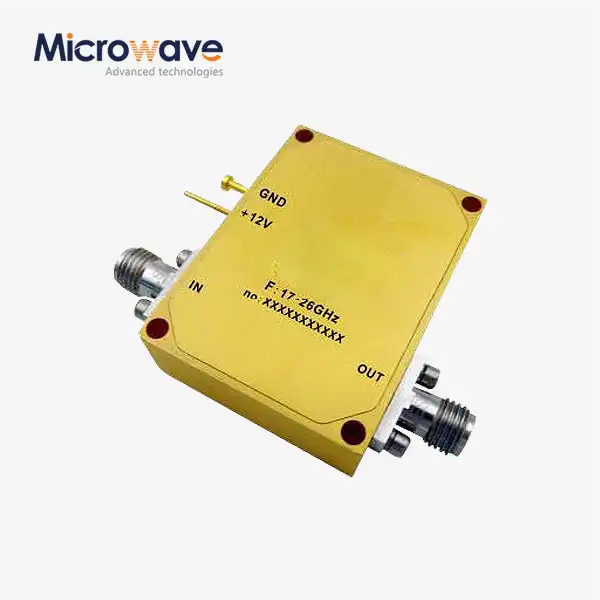 VIEW MORELow Phase Noise Amplifier
 VIEW MOREAc Power Amplifier
 VIEW MOREActive Limiter
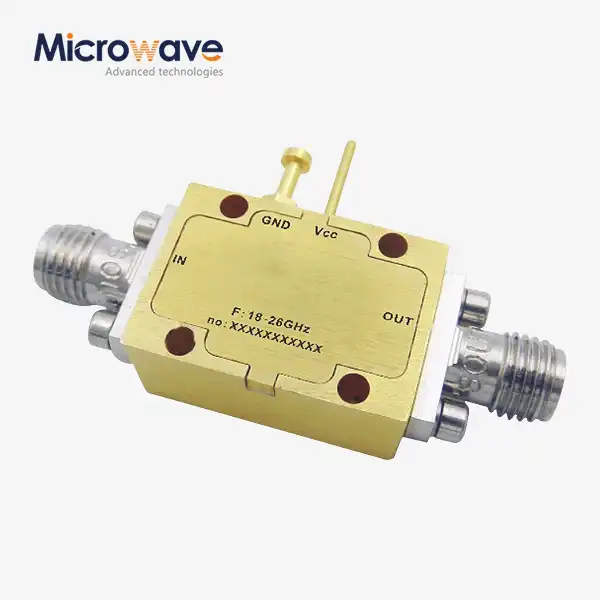 VIEW MOREVoltage Controlled Phase Shifter
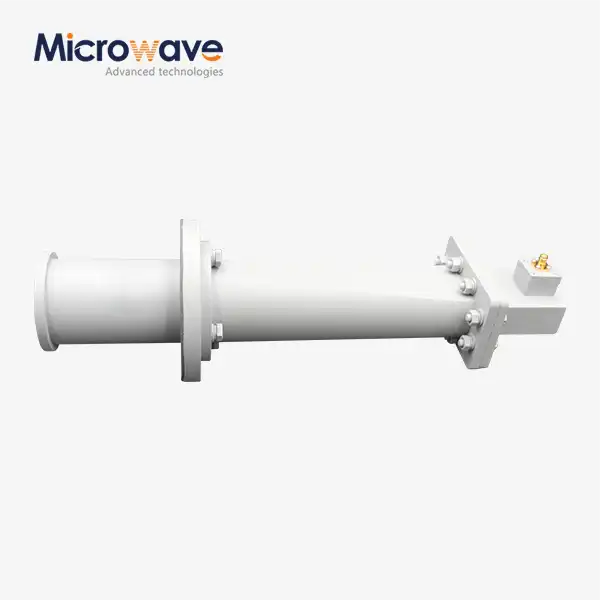 VIEW MORECorrugated Horn and Multimode Horn Antenna
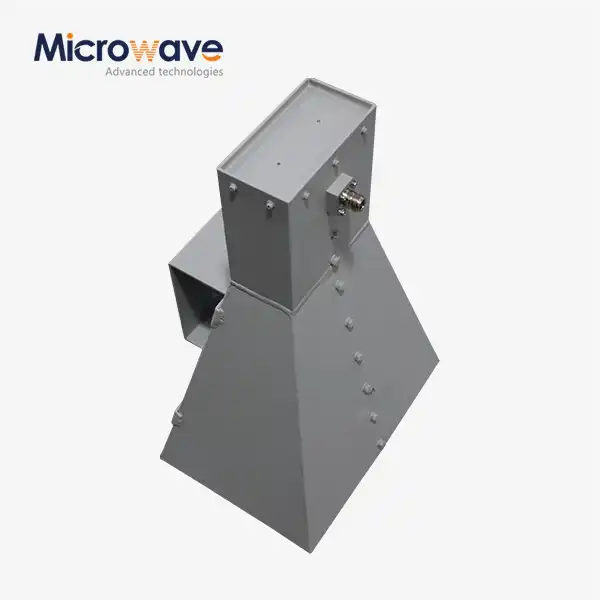 VIEW MOREWideband Double-ridged Horn Antenna
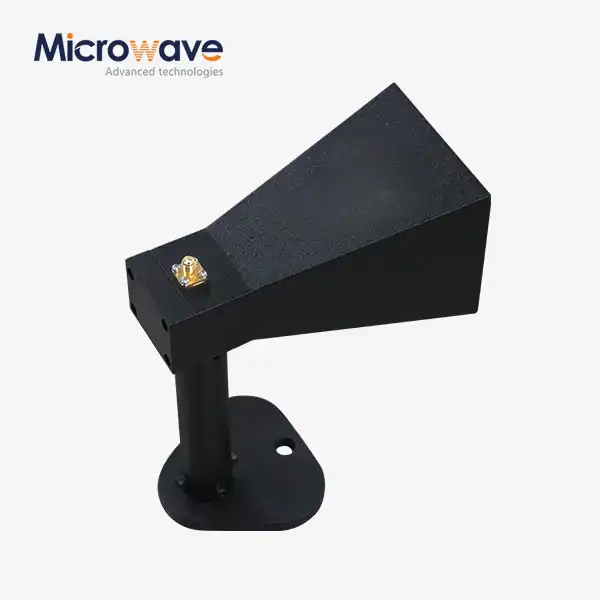 VIEW MOREMini Wideband Double-ridged Horn Antenna
 VIEW MOREUltra Double-ridged Horn Antenna