





How Does a Waveguide Tube Reduce Signal Loss?
A waveguide tube lowers signal loss by keeping electromagnetic energy inside a hollow metal structure. This gets rid of the dielectric losses that come with coaxial wires. The waveguide tube is different from standard transmission lines because it sends data through carefully managed electromagnetic field patterns (TE and TM modes) inside its air-filled hollow. This makes the loss at microwave frequencies much lower. This design keeps shielding materials from absorbing energy and focuses the signal within carefully designed internal dimensions. This keeps reflections to a minimum and improves transmission efficiency for radar, satellite, and internet systems that need to work well.
Understanding Waveguide Tubes and Signal Loss
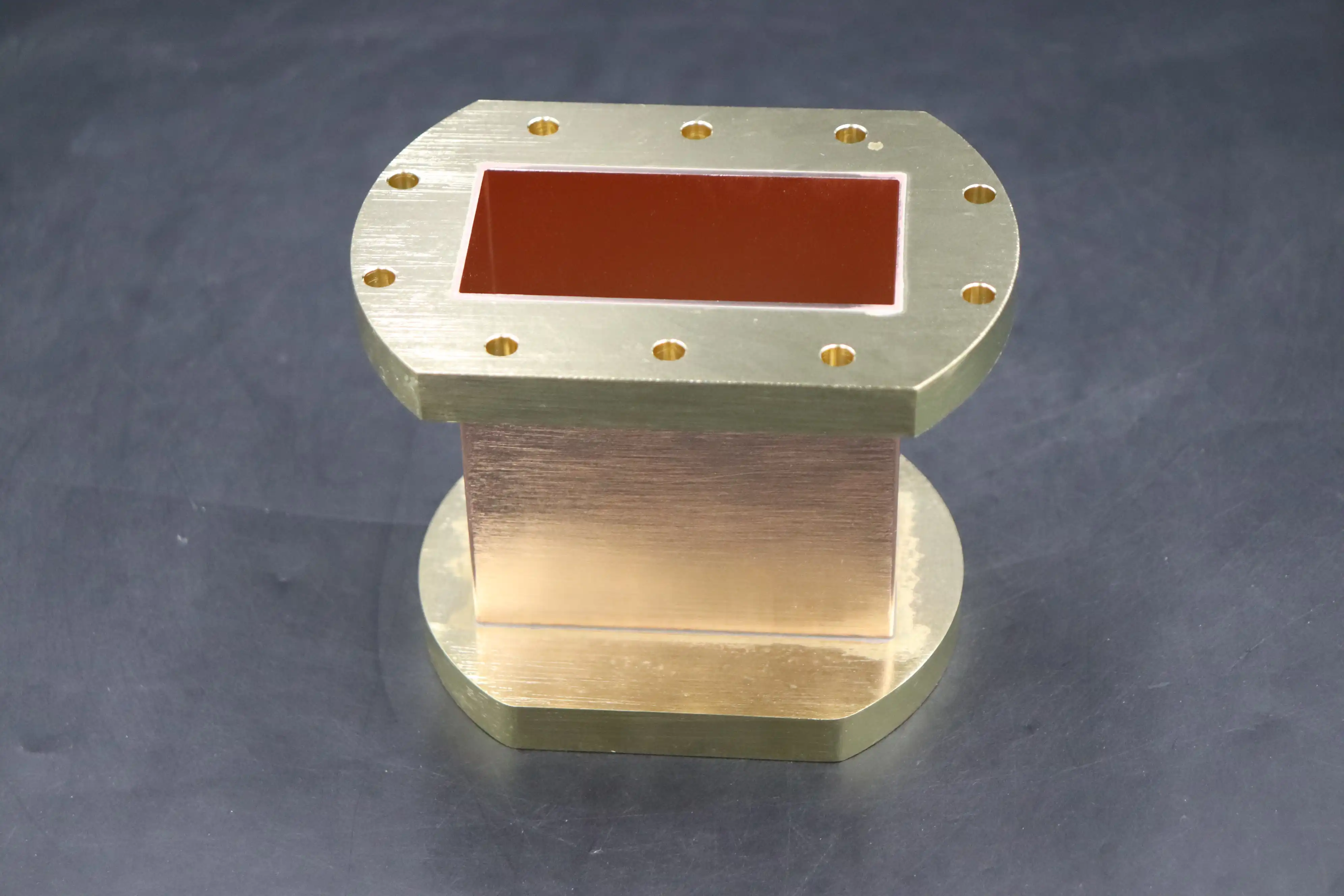
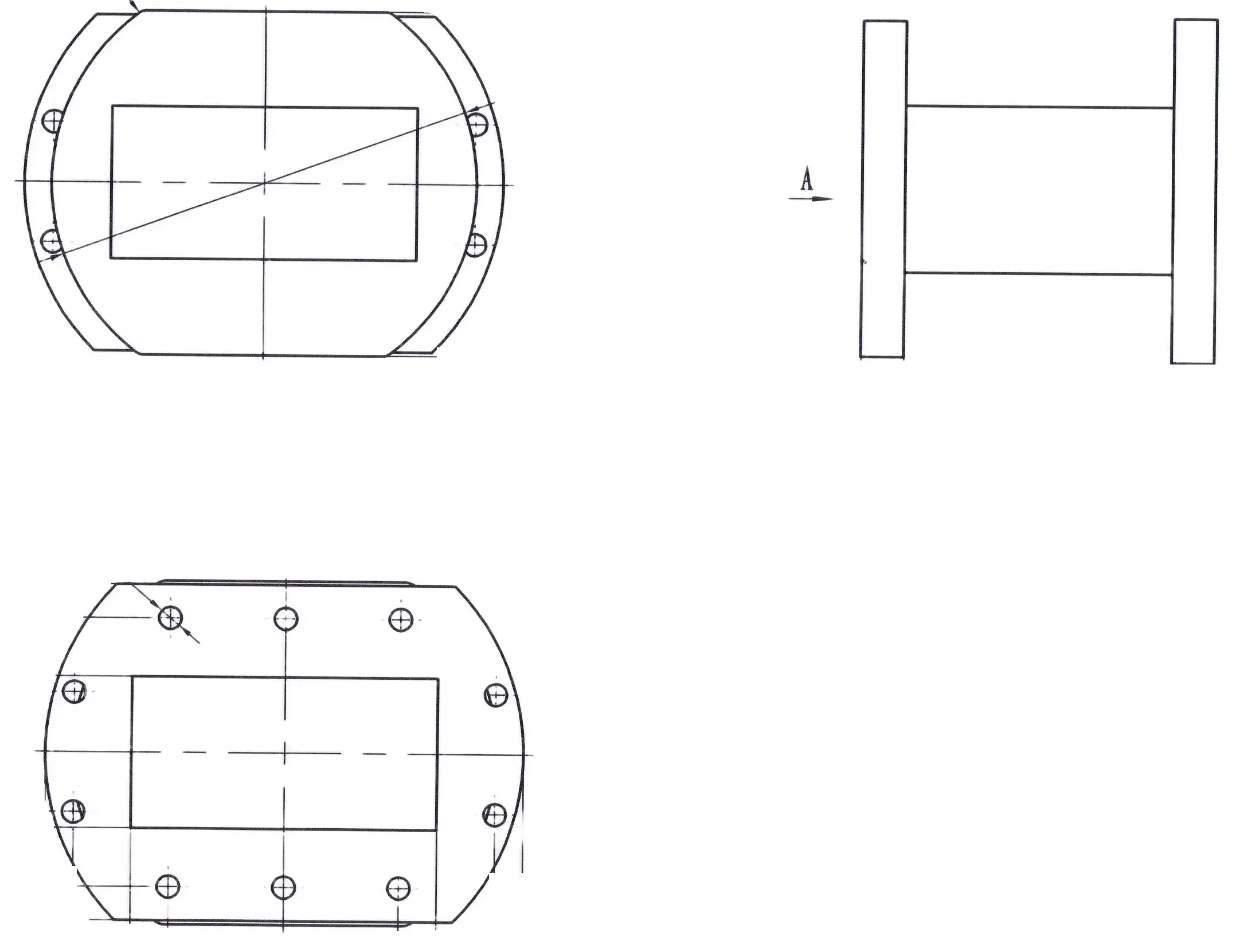
Waveguide tubes are a big change in the way we send high-frequency electromagnetic energy. We at Advanced Microwave Technologies Co., Ltd. have spent more than twenty years perfecting these thin metal structures that guide microwave signals very precisely. The shape of the device is very important. Rectangular waveguide tube geometries are used in most business settings because they keep the polarization fixed and support known dominant modes like TE10. On the other hand, circular shapes are used for specific rotary joint uses where signal rotation is okay.
What Causes Signal Loss in High-Frequency Transmission
There are three main ways that signals get weaker: resistance losses happen when current flows through electrical walls, reflection losses happen when impedance changes, and mode conversion happens when there are irregularities in the geometry. Above 10 GHz, coaxial lines have a lot of problems because the plastic dielectrics inside them soak up energy and generate heat. Air-dielectric waveguide tube assemblies, on the other hand, don't have this problem at all, which is why they are so popular in satellite ground stations and phased array radar systems, where even the smallest changes in volume are significant.
Geometry Variations and Their Performance Impact
The least amount of loss is in rigid rectangular waveguide tubes, but they need to be carefully planned for installation. At X-band frequencies, the curved inner surfaces of flexible waveguide tube sections cause a little more attenuation—about 0.03 dB per foot more than solid versions. This is because they can bend around barriers. Circular waveguide tubes can handle higher power levels and dual polarization, but they need mode suppressors to stop spinning that isn't wanted. At ADM, our engineering team often helps procurement engineers choose the best shape based on frequency range, power handling needs, and mechanical limitations unique to defense and aircraft uses.
Why Waveguides Outperform Alternative Media
Below 1 GHz, coaxial lines are still a good deal, but as frequencies rise into the Super High Frequency bands, waveguide tube technology is a must. At 10 GHz, a typical WR-90 rectangular waveguide tube has a loss of about 0.05 dB/m, while similar coaxial lines have losses of 0.5 dB/m or more. The system works ten times better, with longer transmission runs without amplification, better signal-to-noise ratios, and the ability to handle pulse power in the kilowatt class without dielectric failure. Fiber optics is a good way to send data, but it can't send the raw RF power that weather radar high-gain antennas or magnetron emitters need.
Core Principles Behind Signal Loss Reduction in Waveguide Tubes
Choosing the right material is the first step in designing a low-loss waveguide tube. Our ISO 9001:2015-certified facilities mostly work with aerospace-grade aluminum alloys and very pure copper. Because copper is the best conductor, it has the lowest loss. This is why it is used in laboratory-grade measurement systems and satellite communication uplinks where signal budgets are very small. Aluminum strikes a good balance. Its lighter weight is good for aircraft radar systems, and current surface processes make up for its slightly higher resistance losses compared to copper.
Conductive Materials and Surface Engineering
At millimeter-wave frequencies, surface roughness has a huge effect on how well something works. Precision cutting and etching are used in our manufacturing methods to keep Ra values below 0.8 micrometers. Silver plating makes skin-effect protection even lower, but it needs special coats to keep it from tarnishing in salty settings. At 40 GHz, we require a wall thickness of at least 0.5 mm, even though the skin depth is only 0.3 micrometers. This is to make sure that structural stiffness stops resonance movements that cause false mode changes.
Critical Design Parameters and Dimensional Precision
Each waveguide tube size is directly related to the frequency band it works in. The cutoff frequency is set by the internal width. Below this level, messages weaken exponentially instead of spreading. We make things with ±0.025 mm margins because a 2% mistake in size can move cutoff frequencies by hundreds of megahertz, which could lead to terrible signal rejection. Cross-sectional aspect ratios are established around the world through WR labels. This makes sure that products from different makers can work together and improves single-mode operation within certain bandwidths.
Propagation Modes and Internal Reflection Management
The Transverse Electric (TE) and Transverse Magnetic (TM) modes show how the electromagnetic fields inside the waveguide tube are spread out. In rectangular waveguide tubes, the TE10 mode has the largest single-mode bandwidth and the lowest loss. This is why it is used most often in business settings. In order to keep internal shapes below the next mode's cutoff frequency, we engineer them to have more loss and less crosstalk. That must bend, and joints have smooth transitions. Our 24-meter microwave lab lets us measure reflection coefficients across 0.5–110 GHz, making sure that VSWR stays below 1.15:1 even in complex systems with many E-plane and H-plane bends.
Installation and Maintenance Best Practices to Reduce Signal Loss
If you don't put something correctly, it might not work as well as it should in real life. Aligning the flanges correctly is very important because if they are off by more than 0.5 degrees, reflected losses build up across multiple joints. We suggest using alignment pins and precise tools to make sure everything is straight while putting it together. Equally important are the torque specs. Flanges that are too loose can leak, while flanges that are too tight can bend the gasket materials or damage the sides of the flanges, both of which cause impedance discontinuities that can be seen as VSWR spikes.
Professional Calibration and Connection Integrity
The frequency and power levels determine which gasket to use. Below 18 GHz, conductive rubber seals do a great job of blocking electromagnetic interference (EMI) and making up for small surface imperfections. For frequencies above 26 GHz, we require strong metal contact flanges with knife-edge plugs that bite into lighter matching surfaces to keep the electricity flowing. Pressurized systems that handle peak powers above 10 kW need airtight seals that are tested to 15 PSI and regular checks with pressure gauges. Even tiny leaks let water in, which erodes internal surfaces and forms lossy oxide layers.
Routine Inspection and Preventive Maintenance
Exposure to the environment speeds up decay. In seaside settings, salt fog gets through weak seals and creates electrical films that weaken the signal. As part of our maintenance procedures, we suggest that you check for rust every three months, do VSWR sweeps once a year to find problems before they get worse, and clean with isopropyl alcohol followed by dry nitrogen purges. Microcracks can be made by mechanical stress from heat cycling or structure settling. These cracks are too small to see with the human eye, but time-domain reflectometry can find them. We've made debugging flowcharts that help field techs figure out if signal loss is caused by a problem with the connection, contamination inside the unit, or damage to the structure. This keeps mission-critical communication links up and running as much as possible.
Comparing Waveguide Tubes to Alternative Transmission Solutions
When choosing a transmission line, you have to weigh the costs, losses, flexibility, and power handling. Below 6 GHz, coaxial connections work best because they are flexible, which makes fitting easier, and their loss is still fine. Dielectric losses in PTFE coating rise rapidly as frequencies rise. For example, a half-inch coaxial cable at Ka-band might have 3 dB/m loss, which makes it useless for anything but short patch lines. Waveguide tube systems have fairly flat loss profiles across their working ranges. As frequency goes up, skin-effect resistance goes up, but attenuation only goes up slowly.
Loss Characteristics Across Frequency Bands
At X-band (8–12 GHz), a rigid rectangular waveguide tube gets about 0.04 dB/m, but an expensive low-loss coaxial cable has a hard time getting to 0.4 dB/m. At millimeter-wave frequencies, this difference gets bigger. For example, our WR-28 waveguide tube for Ka-band works at 0.15 dB/m, while cable options become too lossy to use. Fiber optics has almost no RF loss because they work on a totally different physical level, but it can't directly feed antennas because the hardware needed to turn optical signals back into high-power RF is too complicated for broadcast uses.
Deployment Complexity and Cost Analysis
When it comes to initial costs, coaxial options are better because basic cable systems are much cheaper than precision-machined waveguide tube parts. But lifetime economics changes when success is taken into account. A satellite ground station that needs 50 meters of Ka-band transmission line would lose 150 dB with coaxial cable, which would make the system useless, but only 7.5 dB with a waveguide tube. This is significant because it means that multiple expensive amplifier steps are not needed. When installing fixed waveguide tube systems that need special alignment and support structures, the cost of work is higher. However, movable parts can help some with this problem in complicated route situations.
Emerging Applications in 5G Infrastructure
Waveguide tube technology is being used more and more in next-generation wireless networks that work in millimeter-wave frequency bands (24–40 GHz). Short waveguide tube feed networks are used in massive MIMO antenna arrays to send data to hundreds of transmitting elements with little loss. A waveguide tube is the only way to get the power efficiency that these devices need. Coaxial lines would lose too much heat and need active cooling. Our antenna measurement tools make sure that these feed networks work across the full 5G frequency range. This helps companies that make telecommunications equipment improve beamforming performance for high-bandwidth, low-latency uses that will shape the next decade's wireless infrastructure.
Procurement Considerations for Waveguide Tubes
When looking for a waveguide tube provider, it's important to look at more than just price quotes. Different kinds of products are important because defense companies need suppliers that carry standard WR bands and can also make unique cross-sections for their own antenna designs. At ADM, we have a collection that includes the WR-2300 for UHF systems and the WR-10 for W-band systems. We also offer full design-to-manufacturing services for shapes that aren't standard. Lead times are very different. Items in the catalog ship within two weeks, but complicated systems with many bends, changes, and combined parts take four to eight weeks, depending on the finishing requirements and testing needs.
Customization Capabilities and Engineering Support
Off-the-shelf parts don't always meet the exact needs of a machine. Procurement engineers should give more weight to providers that offer parametric customization, such as different types of flanges, built-in harmonic filters, vacuum-rated construction, or tropicalization processes for use in tough environments. Our technical team works directly with the engineering departments of our customers to make ideas better before they are made. They do this by using electromagnetic simulation tools. This upfront investment keeps redesigns from being too expensive and makes sure that first-article setups meet electricity requirements, which is very important for projects with tight budgets and delivery dates.
Quality Certifications and Traceability Requirements
For aerospace and security uses, strict paperwork is needed. RoHS compliance takes care of environmental rules in business markets, while ISO 9001:2015 approval makes sure that processes are always the same. For ITAR-controlled exports, being able to track materials becomes very important. Our quality management system keeps track of all the paperwork from the approval of the raw materials' mills to the final acceptance tests. Test data files have readings from network analyzers, records on physical inspections, and pressure test approvals for parts that are tightly sealed. These records give inspectors peace of mind and give tech teams faith that the gear they deliver will work as expected in mission-critical apps.
Cost Structures and Volume Advantages
Waveguide tube prices include the cost of materials and manufacturing. At the same level of complexity, aluminum parts cost about 40% less than copper ones. However, for low-noise receiver users, the efficiency differences may make the extra cost worth it. Adding a silver plate to something costs 15 to 25 percent more, but it makes it last longer in places that are toxic. With volume agreements, you can save a lot of money. For example, when you make more than 50 units, the costs of the tools are spread out over time, and the production plan is improved. We work with procurement teams to set up blanket buy orders that get competitive prices and allow for flexible inventory management. This is especially helpful for programs with unclear launch dates or phased rollouts that span multiple fiscal years.
Conclusion
Waveguide tubes lower signal loss by getting rid of lossy dielectrics, keeping energy within carefully designed steel limits, and allowing transmission modes that are best for minimizing absorption. Picking the right material, being precise with measurements, and having a good surface finish are all things that affect performance in a way that microwave and millimeter-wave lines can't. Installation and repairs that are done correctly will keep this edge for decades of use in harsh settings. When buying workers and system engineers understand these principles, they can make choices that combine technology needs with budget facts. This makes sure that communication and tracking systems work as well as they can.
FAQ
Q1: How does pressurization improve waveguide performance?
Putting dry nitrogen or dried air under pressure on waveguide tube systems does two things. The higher gas density raises the dielectric breakdown voltage. This lets the waveguide tube handle higher peak power levels without internal arcing, which is very important for radar emitters that send out megawatt bursts. Pressurization also stops wetness from getting inside, which would eat away at internal surfaces and make lossy oxide films. Pressure tracking devices let workers know when a seal fails before it affects performance, which increases the operating life in wet tropical or seaside areas.
Q2: Can waveguides be field-modified during installation?
Straight waveguide tube pieces can't be bent or cut in the field without affecting how well they work electrically. Any change breaks down the exact internal shape that decides the resistance and cutoff frequency. Custom widths and curves must be stated when the product is bought, and it must be made in a controlled environment. Flexible waveguide tube sections let you change the route a bit, but they have minimum bend radius requirements that must be met. Going over these limits causes lasting damage. Before manufacturing starts, accurate measures and space requirements should be given as part of installation planning to take these limitations into account.
Q3: What causes high VSWR in assembled waveguide systems?
Elevated Voltage Standing Wave Ratio is usually caused by link points with different impedances. Physical reasons include misaligned flanges that create air gaps, damaged or misshapen waveguide tube sections that change the cross-sectional dimensions, foreign matter inside the waveguide tube, or flange types that don't work with each other. Reflections can also be caused by moisture buildup or rust products. To fix problems systematically, you have to look at every joint, measure the VSWR without the load connected to separate the parts, and use time-domain reflectometry to find the reflection source in complicated systems.
Partner with ADM for Superior Waveguide Solutions
With more than 20 years of experience making high-quality products, Advanced Microwave Technologies Co., Ltd is ready to help you buy waveguide tubes. Our wide range of products includes standard shapes in both rectangles and circles, as well as fully personalized pieces made to your exact specs. We are a well-known company that makes waveguide tubes for the defense, aircraft, satellite communication, and research industries around the world. Our ISO 9001:2015, ISO 14001:2015, and ISO 45001:2018 standards show that we are committed to quality and the environment. Our 24-meter microwave lab, which can measure up to 110 GHz, makes sure that every piece meets the standards that have been set. You can email our technical team at craig@admicrowave.com to talk about your application needs, ask for engineering samples, or get quotes for mass production. We give your mission-critical projects the accuracy, dependability, and quick help they need.
References
1. Pozar, David M. Microwave Engineering, Fourth Edition. Hoboken: John Wiley & Sons, 2011.
2. Collin, Robert E. Foundations for Microwave Engineering, Second Edition. New York: McGraw-Hill Education, 1992.
3. Ramo, Simon, John R. Whinnery, and Theodore Van Duzer. Fields and Waves in Communication Electronics, Third Edition. New York: John Wiley & Sons, 1994.
4. Saad, Theodore S. Microwave Engineers' Handbook, Volume 1. Dedham: Artech House, 1971.
5. Marcuvitz, Nathan. Waveguide Handbook. New York: McGraw-Hill Book Company, 1951.
6. IEEE Standard 1785-2012. IEEE Standard for Rectangular Metallic Waveguides and Their Interfaces for Frequencies of 110 GHz and Below. Institute of Electrical and Electronics Engineers, 2013.
YOU MAY LIKE
 VIEW MORELog Periodic Antenna
 VIEW MORESlotted Waveguide Array Antenna
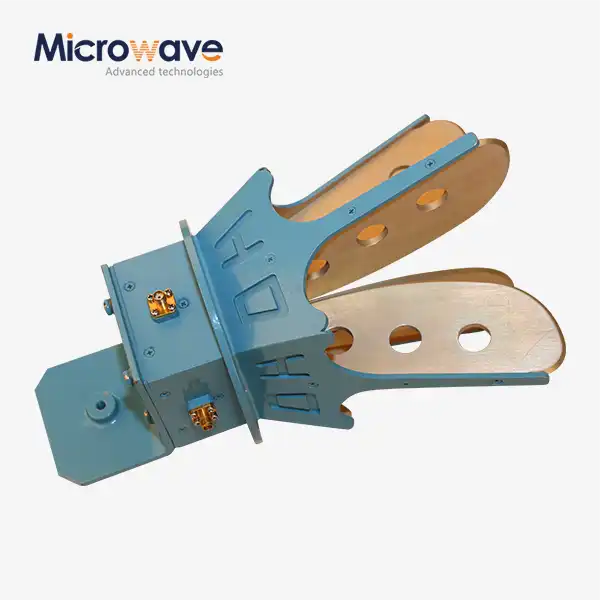 VIEW MOREOpen Boundary Dual Linear Polarization Four Ridged Horn Antenna
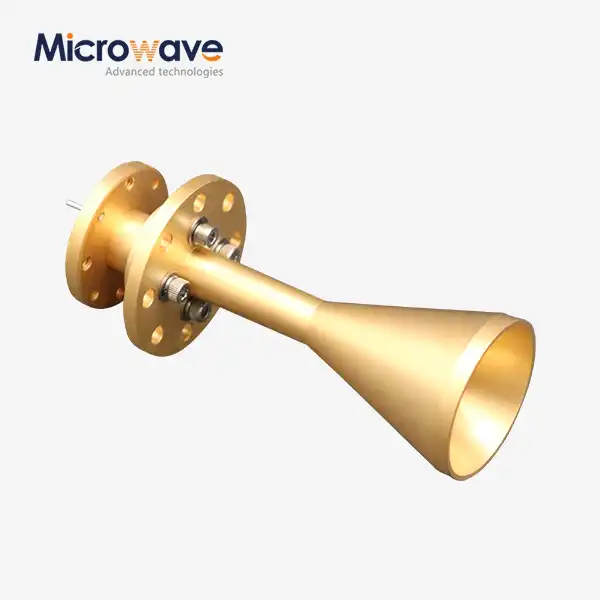 VIEW MOREConical Circular Polarization Horn Antenna
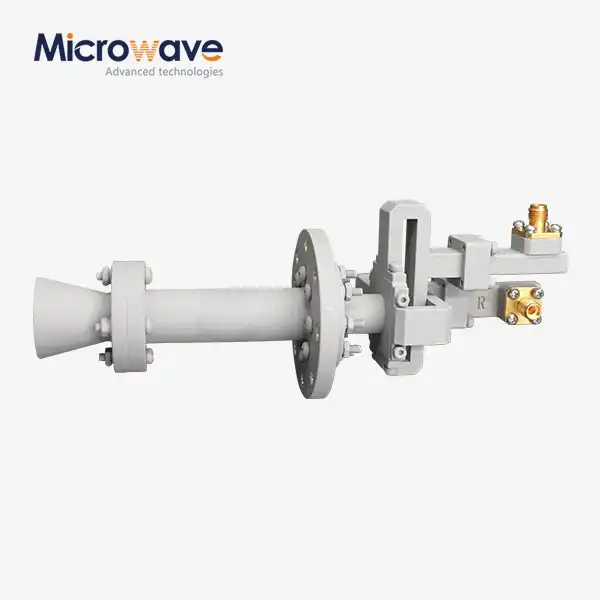 VIEW MOREConical Dual circular Polarization Horn Antenna
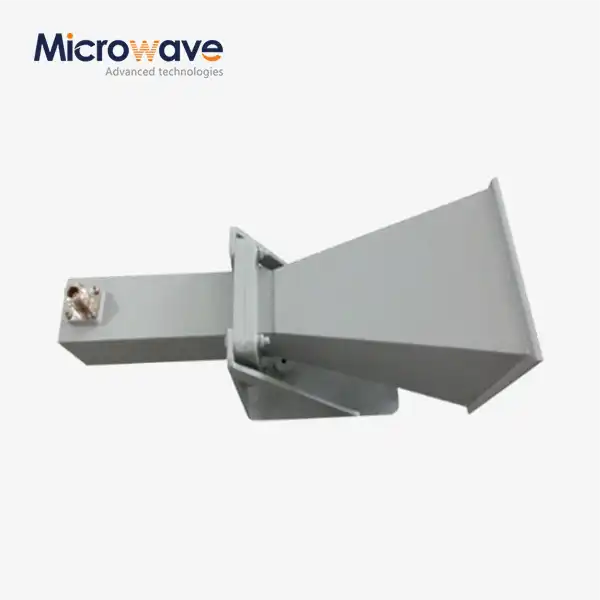 VIEW MORELadder Membrane Square Dual Circular Polarization Horn Antenna
 VIEW MOREQuadrifilar Helix Antenna
 VIEW MORECassegrain Antenna