





How to Select the Right Double Ridge Waveguide Tube for OEM?
Selecting the wrong Double Ridge Waveguide Tube for your OEM project can lead to signal degradation, system incompatibility, and costly redesigns that delay product launches. When engineers face the challenge of integrating broadband microwave components into satellite communications, radar systems, or defense applications, the stakes are high. This comprehensive guide addresses the critical factors you must evaluate when choosing a Double Ridge Waveguide Tube, from frequency range and power handling to material selection and environmental durability, ensuring your OEM solution delivers optimal performance while meeting industry standards and budget constraints.
Understanding Double Ridge Waveguide Tube Technology for OEM Applications
The foundation of successful OEM waveguide selection begins with understanding how Double Ridge Waveguide Tube technology differs from conventional rectangular waveguides. Unlike standard waveguides that operate within limited frequency bands, the Double Ridge Waveguide Tube incorporates two parallel ridges protruding from opposite walls into the waveguide cavity. This innovative geometry fundamentally alters the electromagnetic field distribution, lowering the cutoff frequency while simultaneously extending the upper frequency limit. The result is a remarkable bandwidth expansion that can exceed a 10:1 frequency ratio, compared to the typical 1.5:1 ratio of standard rectangular waveguides. For OEM manufacturers developing multi-band communication systems, radar arrays, or electronic warfare equipment, this extended bandwidth eliminates the need for multiple waveguide sizes and reduces system complexity. The double-ridge configuration creates a concentrated electric field between the ridges, which enables impedance matching across exceptionally wide frequency ranges. Advanced Microwave Technologies Co., Ltd engineers its Double Ridge Waveguide Tube products with precision-machined ridge profiles that optimize field distribution for minimal reflection and maximum power transfer. The ridge height, width, and taper angles are carefully calculated to maintain VSWR specifications below 1.15:1 across the entire operating band. This level of performance is essential for OEM applications where signal integrity directly impacts system functionality, such as in phased array antennas where phase coherence across multiple elements determines beam steering accuracy.
Frequency Range Considerations in Double Ridge Waveguide Tube Selection
Frequency range represents the most fundamental specification when selecting a Double Ridge Waveguide Tube for OEM integration. The operating frequency directly determines which waveguide model suits your application, with each standard model designated by its frequency coverage. Advanced Microwave Technologies offers Double Ridge Waveguide Tube solutions spanning from 1 GHz to 110 GHz, covering everything from L-band satellite communications to W-band millimeter-wave applications. The WRD180 model, for instance, operates from 18 to 40 GHz, making it ideal for Ka-band satellite ground stations and millimeter-wave point-to-point links. Meanwhile, the WRD750 covers 1 to 4 GHz, perfectly suited for S-band radar systems and mobile satellite services. OEM system designers must consider not only the nominal operating frequency but also the margin for frequency drift, modulation bandwidth, and potential future upgrades. A communication system designed for 10 GHz operation with 500 MHz of modulation bandwidth should select a Double Ridge Waveguide Tube with comfortable margins beyond 9.5 to 10.5 GHz to account for temperature-induced frequency variations and component tolerances. The broadband nature of double-ridge technology provides this flexibility inherently, allowing a single waveguide selection to accommodate system evolution without hardware replacement. This forward compatibility represents significant cost savings for OEM manufacturers planning product lines with multiple variants or extended lifecycles.
Material Selection and Surface Treatment Impact on Performance
Material selection profoundly influences the electrical performance, thermal management, weight characteristics, and cost structure of Double Ridge Waveguide Tube implementations in OEM products. Advanced Microwave Technologies fabricates Double Ridge Waveguide Tube components from aluminum, copper, or brass, each offering distinct advantages for specific applications. Aluminum alloys, particularly 6061-T6, provide an exceptional strength-to-weight ratio that makes them indispensable for aerospace and portable systems where every gram matters. A typical aluminum Double Ridge Waveguide Tube assembly weighs approximately 60% less than copper equivalents while maintaining conductivity sufficient for most commercial and military applications where insertion loss of 0.3 to 0.5 dB per meter is acceptable. Copper represents the premium choice when signal loss must be minimized absolutely. The superior electrical conductivity of oxygen-free high-conductivity copper reduces skin effect losses at high frequencies, delivering insertion loss as low as 0.2 dB per meter at millimeter-wave frequencies. This performance advantage becomes critical in long waveguide runs, cascaded systems, or applications where every tenth of a decibel impacts link budget calculations. Defense radar systems tracking targets at maximum range, deep-space communication ground stations, and precision scientific instruments frequently specify copper Double Ridge Waveguide Tube construction despite the weight and cost premiums. Brass offers a middle ground, combining good machinability for complex geometries with adequate electrical performance and natural corrosion resistance.
Surface treatment elevates baseline material performance through specialized plating processes. Silver plating increases surface conductivity by up to 5% compared to bare aluminum while providing oxidation protection that maintains performance over decades of service. The silver layer, typically 5 to 10 microns thick, creates a low-resistance path for RF currents while the underlying aluminum provides structural strength. Gold plating takes environmental protection to the ultimate level, offering exceptional corrosion resistance in marine environments, tropical climates, or chemical processing facilities where conventional finishes degrade rapidly. Although gold-plated Double Ridge Waveguide Tube assemblies command premium pricing, their lifecycle reliability in harsh environments often justifies the investment for critical military and industrial OEM applications.
Critical Performance Parameters for OEM Double Ridge Waveguide Tube Selection
Power Handling Capacity and Thermal Management
Power handling capability determines whether a Double Ridge Waveguide Tube can reliably operate in high-power transmission systems without failure. Unlike solid-state components with discrete maximum ratings, waveguide power limits depend on multiple interacting factors including frequency, atmospheric conditions, surface finish, and duty cycle. The primary failure mechanism in high-power Double Ridge Waveguide Tube applications is voltage breakdown or arcing, which occurs when the electric field intensity exceeds the breakdown threshold of air or fill gas within the waveguide cavity. The concentrated field between the ridges makes double-ridge waveguides inherently more susceptible to breakdown than rectangular waveguides, typically handling 30 to 50% less peak power for equivalent dimensions. Advanced Microwave Technologies specifies power ratings for its Double Ridge Waveguide Tube products based on conservative field calculations and empirical testing across pressure and humidity ranges. A WRD350 model operating at 10 GHz can typically handle 5 kilowatts of continuous-wave power at sea level, but this capacity increases significantly at altitude where reduced atmospheric pressure raises the breakdown threshold. OEM designers of airborne radar systems exploit this characteristic, using the same Double Ridge Waveguide Tube at higher power levels as operating altitude increases. Pulsed applications allow higher peak power provided the average power and pulse duty cycle remain within thermal dissipation limits. A radar transmitter with 1 millisecond pulses at 1% duty cycle can safely operate at ten times the continuous-wave power limit.
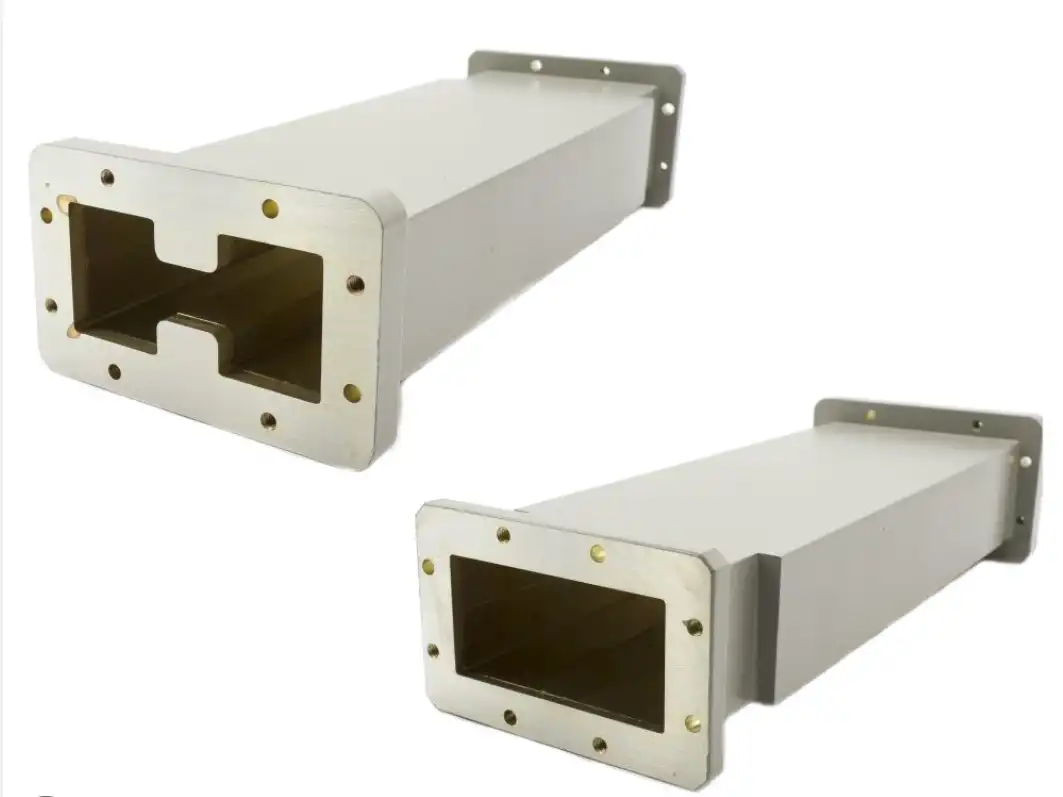
Thermal management becomes paramount in high-average-power applications where ohmic losses heat the waveguide structure. The Double Ridge Waveguide Tube geometry concentrates current density along the ridge edges, creating localized hot spots that can exceed bulk temperatures by 20 to 30 degrees Celsius under sustained operation. Advanced Microwave addresses this through optimized ridge profiles that distribute current more uniformly and optional heat sinking provisions for extreme applications. OEM system integrators should calculate thermal rise based on insertion loss, operating power, duty cycle, and ambient conditions, then verify that junction temperatures remain within material limits. Aluminum waveguides benefit from excellent thermal conductivity that rapidly spreads heat to mounting interfaces, while copper's higher conductivity further reduces loss-generated heat.
VSWR Performance and Impedance Matching
Voltage Standing Wave Ratio specifications define how well a Double Ridge Waveguide Tube matches the characteristic impedance of connected components across its frequency range. VSWR quantifies the magnitude of signal reflections at interfaces, with lower values indicating better matching and higher power transfer efficiency. Advanced Microwave Technologies guarantees VSWR ≤1.15:1 for its Double Ridge Waveguide Tube products, ensuring that over 99% of incident power transmits through the waveguide while less than 1% reflects back toward the source. This exceptional matching performance across multi-octave bandwidths distinguishes quality double-ridge designs from economy alternatives that may exhibit VSWR spikes at band edges or mid-band resonances. The importance of VSWR control extends beyond simple power transfer considerations in OEM system design. High VSWR creates standing wave patterns that cause frequency-dependent amplitude and phase variations, degrading measurement accuracy in test equipment and introducing pattern distortion in antenna systems. Radar systems using pulse compression techniques are particularly sensitive to VSWR-induced phase errors that corrupt matched filter responses and reduce processing gain. Communication receivers employing adaptive equalization can compensate for moderate VSWR effects, but significant reflections overwhelm equalizer capabilities and increase bit error rates. Multi-carrier applications face additional challenges as VSWR causes intermodulation between carriers through nonlinear effects in downstream amplifiers responding to standing wave peak voltages.
OEM engineers selecting Double Ridge Waveguide Tube components should examine VSWR specifications carefully, noting whether guarantees apply across the full specified bandwidth or only over restricted sub-bands. Advanced Microwave provides complete VSWR performance data showing measured values at multiple frequencies spanning each model's range, enabling system designers to evaluate worst-case impacts on their specific applications. Custom Double Ridge Waveguide Tube designs can achieve even better VSWR performance through optimized transitions and impedance taper networks, though standard models suffice for most commercial and military OEM applications. The relationship between VSWR and return loss provides alternative specification formats, with 1.15:1 VSWR corresponding to 26.4 dB return loss or 0.5% reflected power.
OEM Customization Options for Double Ridge Waveguide Tube Solutions
Dimensional Customization and Mechanical Integration
Standard Double Ridge Waveguide Tube models use industry-recognized flange styles and dimensions that facilitate integration with commercial off-the-shelf components, but OEM applications frequently demand customized dimensions to optimize system packaging, weight distribution, or assembly workflows. Advanced Microwave Technologies Co., Ltd provides comprehensive dimensional customization services that transform standard waveguide tubes into precisely tailored solutions matching customer mechanical requirements. Custom length specifications eliminate the need for post-purchase cutting and re-flanging, delivering ready-to-install assemblies that reduce manufacturing costs and assembly time. Length tolerances of ±0.5mm ensure accurate fit-up in precision mechanical assemblies where waveguide positioning affects electrical performance or alignment with optical or mechanical references. Flange customization represents another critical aspect of OEM Double Ridge Waveguide Tube solutions, as interface compatibility determines assembly efficiency and long-term reliability. While UG-style flanges dominate commercial applications, military and aerospace systems often specify MIL-DTL-3922 designs with different bolt patterns, gasket grooves, and mechanical tolerances. Advanced Microwave manufactures Double Ridge Waveguide Tube assemblies with cover flanges, choke flanges, or gasket groove designs matching customer specifications or existing system interfaces. Custom bolt hole patterns accommodate unusual mounting configurations or allow integration with proprietary equipment designs. Flange thickness modifications enable precise control of insertion depth into mating components, critical for applications where penetration depth affects electrical tuning or mechanical stress distribution.
Complex waveguide routing paths often require integrated bends, twists, or transitions that would traditionally necessitate multiple discrete components joined by flanged interfaces. OEM-optimized Double Ridge Waveguide Tube assemblies can incorporate these features into monolithic structures that eliminate flanges and their associated VSWR degradation, weight additions, and assembly steps. A custom assembly might combine a 90-degree E-plane bend with a length of straight waveguide and a transition to different flange type, all fabricated as a single precision-machined unit. This approach reduces parts count, improves electrical performance through elimination of internal reflections, and simplifies installation by replacing multi-component assemblies with single drop-in modules.
Environmental Protection and Operating Temperature Range
Environmental durability requirements drive significant customization decisions for Double Ridge Waveguide Tube implementations in OEM products destined for harsh operating conditions. Advanced Microwave Technologies Co., Ltd designs standard products for -55°C to +85°C operation, covering most terrestrial applications from arctic installations to desert environments. This temperature range ensures reliable performance in commercial aircraft, shipboard systems, and ground-mobile military platforms where equipment experiences extreme seasonal variations and solar heating effects. The material coefficients of thermal expansion are carefully matched between waveguide bodies, flanges, and fasteners to maintain dimensional stability and prevent stress concentrations that could cause fatigue failures over thermal cycles. Applications exceeding standard temperature limits require specialized material selections and design modifications. Space-qualified Double Ridge Waveguide Tube assemblies must survive -100°C in orbital shadow while enduring +120°C under direct solar illumination without vacuum outgassing that could contaminate sensitive optics or detector systems. Advanced Microwave collaborates with OEM spacecraft integrators to specify low-outgassing materials, implement additional stress-relief features, and validate performance across extended temperature ranges through thermal vacuum testing. Cryogenic applications present opposite challenges, as some materials become brittle at liquid nitrogen or liquid helium temperatures while thermal contraction causes dimensional changes that detune precision designs.
Moisture ingress protection escalates from basic environmental sealing to complete hermetic sealing depending on application severity. Standard Double Ridge Waveguide Tube flanged interfaces with properly torqued gaskets provide adequate protection for laboratory instruments and benign industrial environments. Mobile military systems operating in tropical rain, salt spray, or dust storms require sealed flanges with integral O-rings or environmental gaskets that maintain barriers even when connections are subjected to vibration and shock loading. Mission-critical radar and electronic warfare systems often specify pressurized waveguide systems filled with dry nitrogen or sulfur hexafluoride gas to prevent internal condensation and increase voltage breakdown thresholds. Advanced Microwave provides pressure-rated Double Ridge Waveguide Tube assemblies with welded construction and sealed feedthrough transitions for these demanding applications.
Custom Frequency Response and Electrical Performance Optimization
While standard Double Ridge Waveguide Tube models provide multi-octave bandwidth, some OEM applications benefit from electrical performance optimization targeting specific frequency sub-bands or unusual requirements. Advanced Microwave Technologies engineers work with customers to develop custom ridge profiles, cross-sectional dimensions, or transition designs that maximize performance within narrower frequency ranges than standard products cover. A satellite ground station operating exclusively in Ka-band might employ a modified WRD180 design optimized for 27 to 31 GHz that achieves lower insertion loss and better VSWR than the standard model covering 18 to 40 GHz. The optimization involves ridge dimension tuning and potentially modified cutoff frequencies that sacrifice bandwidth extremes for improved mid-band performance. Harmonic suppression represents another electrical customization option where applications generate unwanted frequency components that must be rejected before radiating or coupling into sensitive receivers. Standard Double Ridge Waveguide Tube designs pass all frequencies above cutoff with relatively uniform characteristics, but custom designs can incorporate resonant ridges, distributed absorbers, or corrugation patterns that attenuate specific harmonic bands while preserving fundamental frequency transmission. Radar transmitters and high-power microwave systems exploit these customizations to meet spurious emission limits without requiring external filtering that adds insertion loss and cost. The suppression mechanisms must be carefully designed to avoid degrading fundamental frequency performance through unintended coupling or reflection effects.
High-power OEM applications sometimes require Double Ridge Waveguide Tube designs with enhanced breakdown margins beyond standard specifications. Custom ridge geometries with increased ridge spacing, rounded edges, or modified ridge heights reduce peak field intensities for given power levels, raising voltage breakdown thresholds by 20 to 50% compared to standard configurations. These modifications typically narrow operational bandwidth slightly but deliver proportional improvements in power handling that enable more compact high-power systems. Military radar transmitters and particle accelerator RF systems frequently employ such customizations, accepting modest bandwidth limitations to achieve power densities impossible with standard designs.
Quality Assurance and Testing for OEM Double Ridge Waveguide Tube Components
Manufacturing precision directly determines whether a Double Ridge Waveguide Tube achieves its theoretical performance potential or suffers from dimensional errors that degrade electrical characteristics. Advanced Microwave Technologies maintains ISO 9001:2015 certification and operates precision CNC machining centers capable of dimensional tolerances to ±0.025mm, essential for maintaining ridge gaps and waveguide dimensions within specifications at millimeter-wave frequencies where wavelengths measure only a few millimeters. Computer-controlled manufacturing eliminates human error sources while ensuring complete dimensional traceability from raw material receipt through final inspection. Each Double Ridge Waveguide Tube component undergoes coordinate measuring machine verification of critical dimensions before proceeding to surface treatment and assembly operations. Electrical testing validates that manufactured components meet RF performance specifications across their operating frequency ranges. Advanced Microwave operates a state-of-the-art 24-meter microwave darkroom equipped with near-field and far-field antenna measurement capabilities spanning 0.5 to 110 GHz. This facility enables comprehensive characterization of Double Ridge Waveguide Tube assemblies including VSWR, insertion loss, phase linearity, and power handling under controlled conditions. Vector network analyzer measurements capture complete S-parameter data showing both magnitude and phase performance, revealing subtle impedance variations or resonance effects that scalar measurements might miss. High-power testing verifies breakdown thresholds and thermal performance under realistic operating conditions including peak and average power loading.
OEM customers frequently require additional quality documentation beyond standard test reports, including material certifications tracing raw materials to mill test reports, dimensional inspection data packages with measured values for critical features, and environmental testing results demonstrating compliance with military specifications or customer-specific requirements. Advanced Microwave Technologies Co., Ltd provides comprehensive documentation packages supporting customer quality systems and regulatory compliance requirements. ISO 14001:2015 environmental certification and RoHS compliance documentation address increasingly important environmental and sustainability requirements across global markets. ISO 45001:2018 workplace safety certification demonstrates commitment to manufacturing quality through proper worker training and safe production practices.
Conclusion
Selecting the appropriate Double Ridge Waveguide Tube requires balancing frequency coverage, power handling, environmental durability, and mechanical integration constraints unique to each OEM application. Advanced Microwave Technologies Co., Ltd delivers precision-engineered solutions spanning 1 to 110 GHz with comprehensive customization capabilities.
Cooperate with Advanced Microwave Technologies Co., Ltd.
Advanced Microwave Technologies Co., Ltd stands as your trusted China Double Ridge Waveguide Tube manufacturer and China Double Ridge Waveguide Tube supplier, offering over two decades of microwave engineering excellence. Our China Double Ridge Waveguide Tube factory produces High Quality Double Ridge Waveguide Tube solutions with competitive Double Ridge Waveguide Tube price and extensive China Double Ridge Waveguide Tube wholesale capabilities. Whether you need standard Double Ridge Waveguide Tube for sale or fully customized OEM designs, our ISO-certified facilities and 24m microwave darkroom ensure every component meets the highest performance standards. From rapid prototyping to full-scale production, our experienced engineering team provides comprehensive technical support throughout your project lifecycle. Contact craig@admicrowave.com today to discuss your specific requirements and discover how our perfect supply chain system, advanced R&D capabilities, and strict quality control deliver the waveguide solutions your applications demand.
References
1. Chen, T., & Liu, H. (2021). "Broadband Ridge Waveguide Design for Millimeter-Wave Applications." IEEE Transactions on Microwave Theory and Techniques, 69(8), 3542-3551.
2. Montgomery, C.G., Dicke, R.H., & Purcell, E.M. (2019). Principles of Microwave Circuits. Institution of Engineering and Technology Press.
3. Saad, T.S. (2020). "Double-Ridge Waveguide Technology for Wideband Microwave Systems." International Journal of RF and Microwave Computer-Aided Engineering, 30(4), e22156.
4. Pozar, D.M. (2022). Microwave Engineering (5th ed.). John Wiley & Sons.
5. Ramo, S., Whinnery, J.R., & Van Duzer, T. (2018). Fields and Waves in Communication Electronics (3rd ed.). John Wiley & Sons.
YOU MAY LIKE
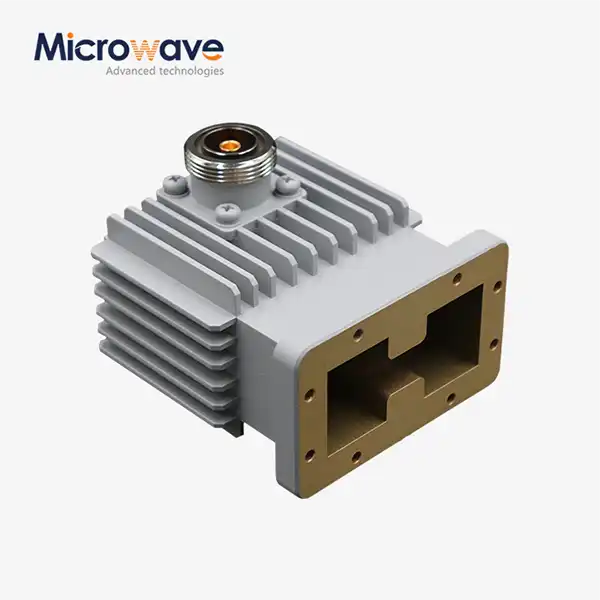 VIEW MOREHigh Power Waveguide to Coaxial Adapter
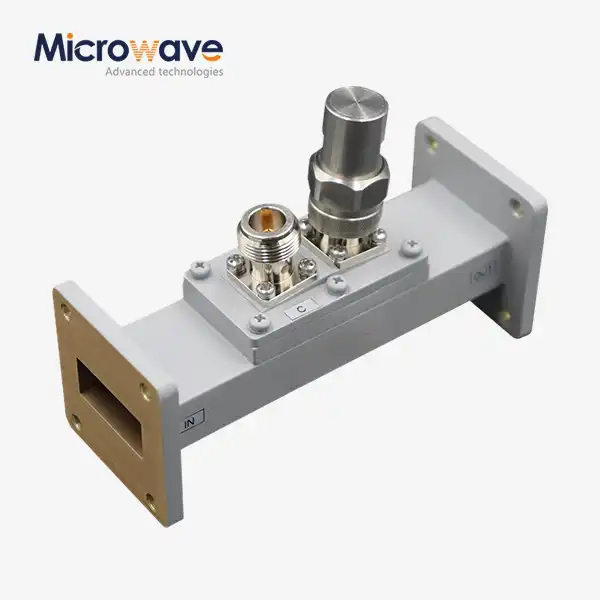 VIEW MOREWaveguide Loop Coupler
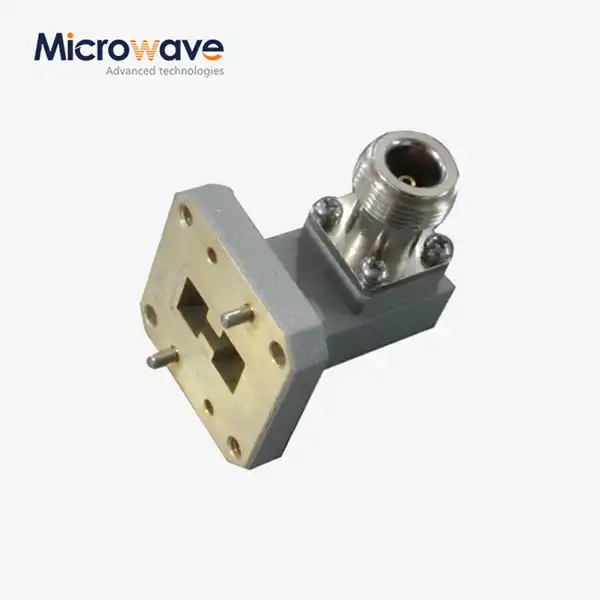 VIEW MORERight Angle Double Ridged WG To Coaxial Adapter
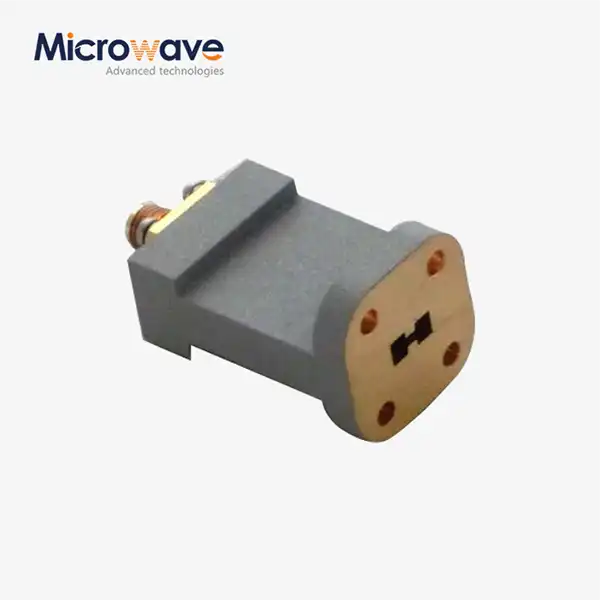 VIEW MOREEnd Launch Double Ridged WG To Coaxial Adapter
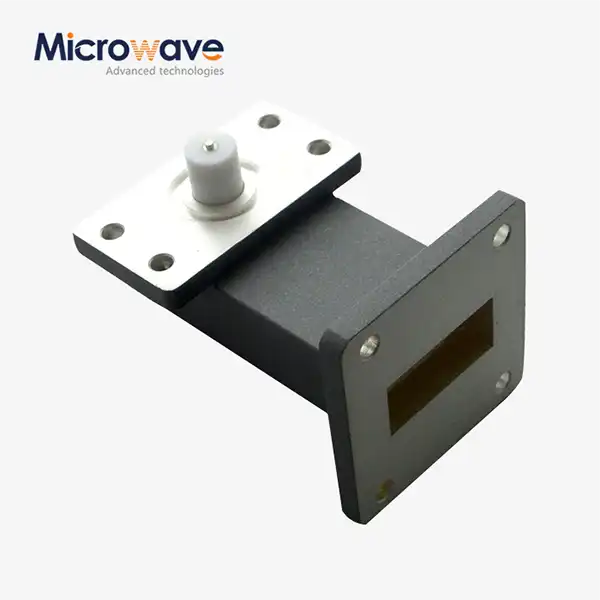 VIEW MORERight Angle Waveguide to Microstrip Adapter
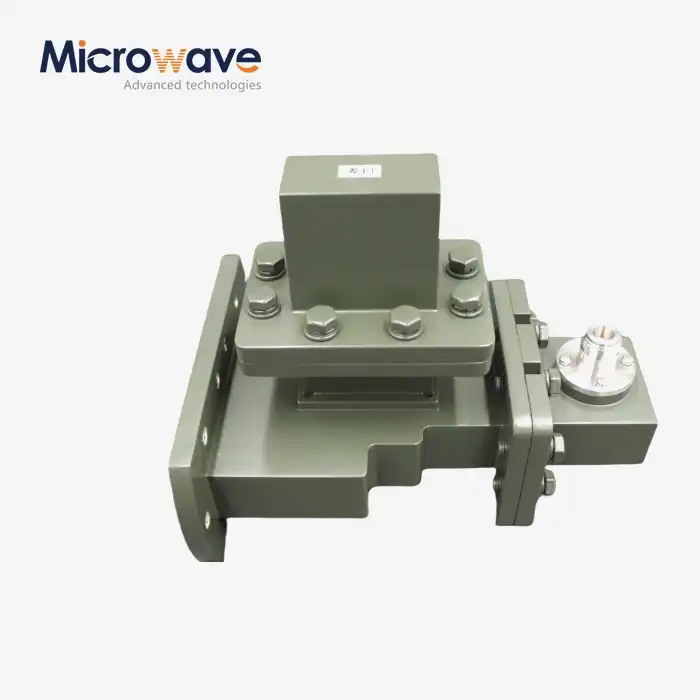 VIEW MOREE-Plane Tee
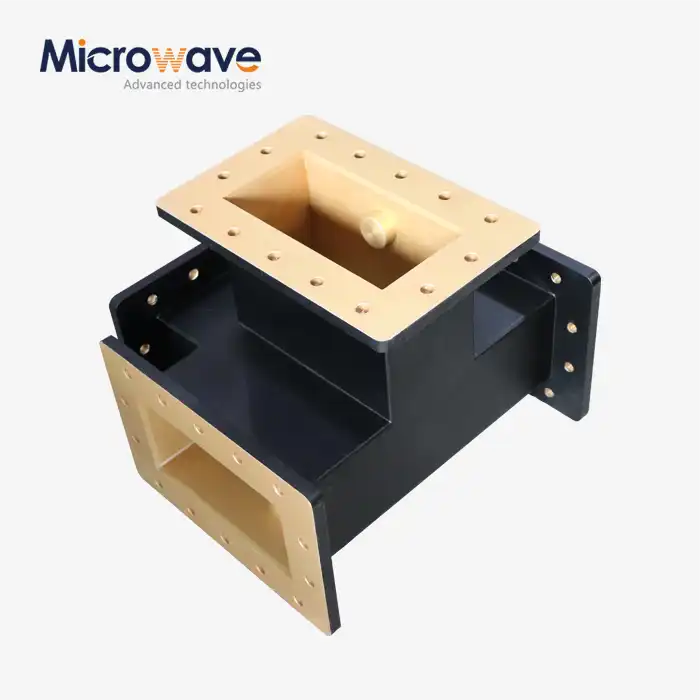 VIEW MOREH-Plane Tee
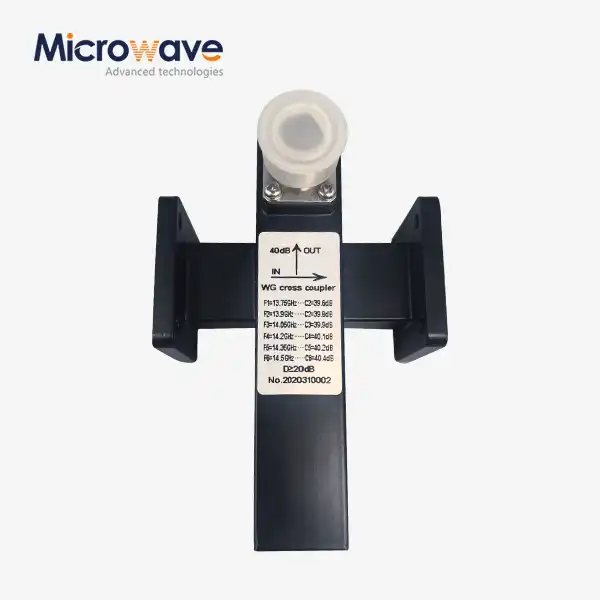 VIEW MORECrossguide Directional Coupler