




How to Choose the Best Parabolic Antenna for VSAT?
Picture this: Your remote mining operation loses connectivity during a critical data transmission, costing thousands in downtime. Your maritime vessel struggles with intermittent satellite signals during crucial navigation. Your defense communication system fails precisely when reliability matters most. These scenarios share one common thread—inadequate parabolic antenna selection for VSAT applications. Choosing the right Parabolic Antenna for Very Small Aperture Terminal systems isn't just about picking the largest dish or the cheapest option; it's about understanding the intricate balance between gain, frequency bands, environmental resilience, and application-specific requirements. This comprehensive guide will walk you through every critical factor you need to consider when selecting a Parabolic Antenna for VSAT, ensuring your satellite communication system delivers optimal performance, reliability, and return on investment in even the most demanding conditions.
Understanding Parabolic Antenna Fundamentals for VSAT Applications
The Parabolic Antenna represents the cornerstone of modern VSAT communication systems, and understanding its fundamental principles is essential before making any purchasing decision. A Parabolic Antenna operates by using its distinctive curved reflector surface to concentrate electromagnetic signals onto a focal point where the feed horn is positioned. This design provides exceptional directivity and signal concentration capabilities that make it indispensable for satellite communications requiring long-distance signal transmission and reception. The parabolic reflector shape follows a precise mathematical curve that ensures all incoming parallel electromagnetic waves reflect to a single focal point, maximizing signal strength and minimizing interference from unwanted sources. This focused beam characteristic makes the Parabolic Antenna particularly valuable for VSAT applications where bandwidth efficiency and signal clarity are paramount requirements for successful operations.
When evaluating Parabolic Antenna options for VSAT deployments, the relationship between aperture diameter and performance characteristics becomes immediately apparent. Larger aperture diameters provide higher gain levels, which directly translates to stronger signal reception and transmission capabilities over vast distances. Advanced Microwave Technologies Co., Ltd. offers Parabolic Antenna solutions with aperture diameters ranging from 30 centimeters to 12 meters, each customizable to match specific VSAT application requirements. The gain capabilities extend up to 60 dBi, ensuring that even the weakest satellite signals can be captured and amplified effectively. The frequency range coverage spans from 1 GHz to 110 GHz with full customization available, accommodating everything from legacy C-band VSAT systems to cutting-edge Ka-band high-throughput satellite applications. This versatility ensures that whether you're deploying VSAT terminals for maritime communications, remote oil field operations, military tactical networks, or emergency response systems, there's a precisely engineered Parabolic Antenna configuration that matches your technical specifications and operational environment.
Frequency Band Considerations and Their Impact on Performance
Selecting the appropriate frequency band for your Parabolic Antenna VSAT system represents one of the most consequential decisions in your deployment strategy. C-band frequencies, typically operating between 4 to 8 GHz, offer exceptional resistance to rain fade and atmospheric interference, making them ideal for VSAT applications in tropical regions or areas experiencing frequent severe weather conditions. However, C-band Parabolic Antenna systems require larger aperture diameters to achieve comparable gain levels to higher frequency bands, which can impact installation logistics and site requirements. Ku-band frequencies, operating in the 12 to 18 GHz range, provide an excellent balance between antenna size and performance, making them the most popular choice for commercial VSAT deployments. Ku-band Parabolic Antenna systems deliver strong throughput capabilities while maintaining reasonable dish dimensions, typically ranging from 1.2 to 2.4 meters for most applications. The trade-off comes with increased susceptibility to rain attenuation, where heavy precipitation can degrade signal quality by several decibels, potentially impacting link availability during severe weather events.
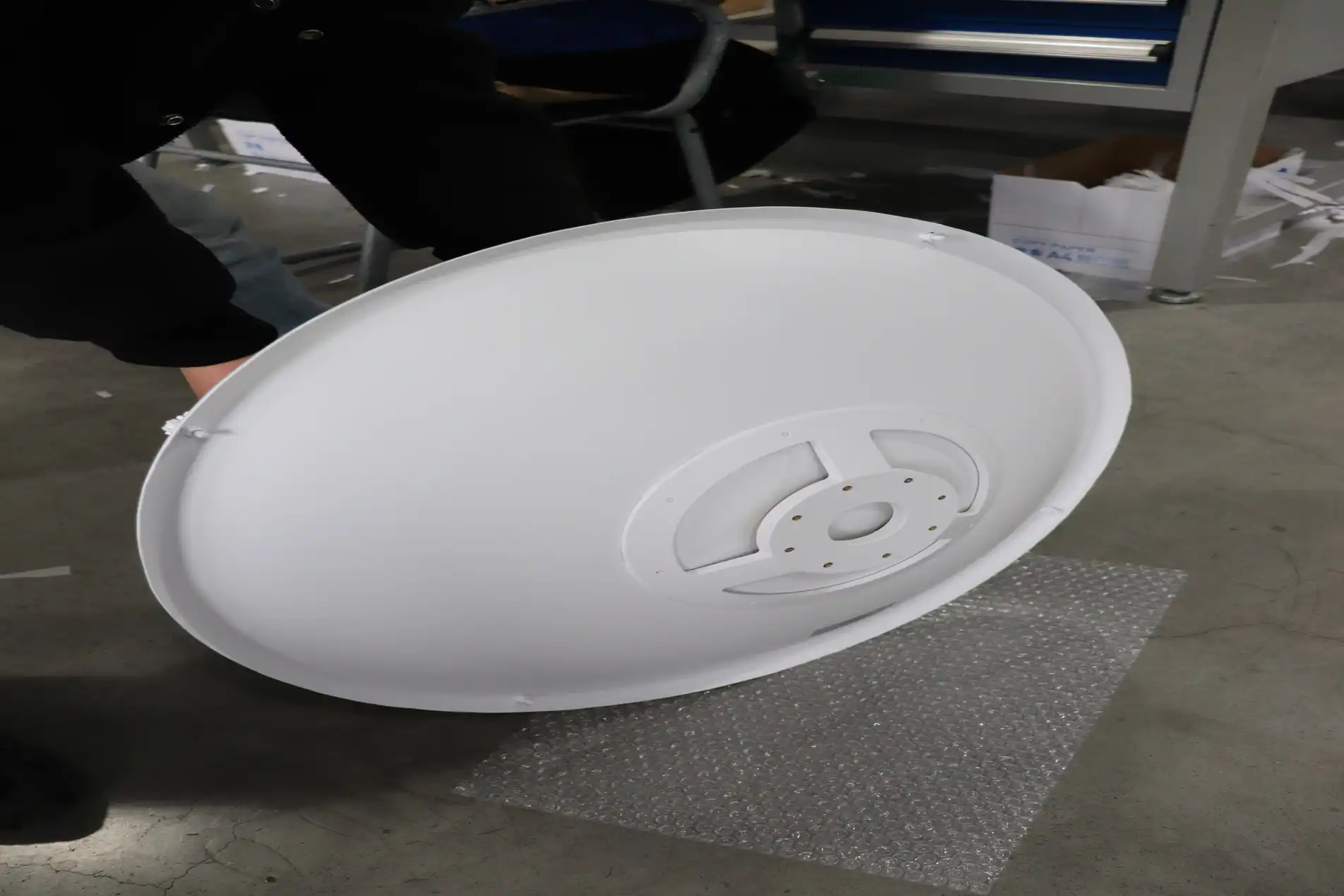
Ka-band frequencies, operating above 26 GHz, represent the frontier of VSAT technology, offering unprecedented bandwidth capabilities and supporting the highest data rates currently available in satellite communications. Ka-band Parabolic Antenna systems can operate with smaller aperture diameters while still delivering impressive gain figures, making them attractive for space-constrained installations or mobile VSAT applications. Advanced Microwave Technologies Co., Ltd. engineers Ka-band Parabolic Antenna solutions with precision surface accuracy and advanced feed designs that maximize efficiency across the entire operational bandwidth. The company's expertise in millimeter-wave antenna technology, evidenced by their 24-meter Microwave Darkroom testing facility with capabilities extending to 110 GHz, ensures that every Ka-band Parabolic Antenna undergoes rigorous performance verification before deployment. However, Ka-band systems face the most significant rain fade challenges, with signal attenuation potentially exceeding 10 dB during intense precipitation events. This makes link budget calculations and potential adaptive coding and modulation schemes essential considerations when deploying Ka-band VSAT systems in regions with challenging weather patterns. The choice between C-band, Ku-band, and Ka-band ultimately depends on your specific operational requirements, geographic location, bandwidth needs, and budget constraints, with each frequency band offering distinct advantages for different VSAT application scenarios.
Critical Performance Specifications for VSAT Parabolic Antennas
Understanding the performance specifications that define Parabolic Antenna capabilities is fundamental to making an informed selection for your VSAT system. Gain, measured in decibels relative to an isotropic radiator (dBi), quantifies how effectively the Parabolic Antenna concentrates radio frequency energy in a specific direction compared to a theoretical omnidirectional antenna. Higher gain translates directly to stronger signal strength, enabling reliable communication over greater distances or through challenging atmospheric conditions. For VSAT applications, gain requirements typically range from 35 dBi for small portable terminals to 60 dBi or higher for large fixed earth stations handling high-capacity trunk connections. Advanced Microwave Technologies Co., Ltd. designs Parabolic Antenna systems that achieve gain levels up to 60 dBi across various frequency bands, utilizing precision manufacturing techniques and optimized feed designs that minimize spillover losses and maximize aperture efficiency. The company's ISO 9001:2015 certification ensures that every Parabolic Antenna meets stringent quality control standards, with performance characteristics verified through comprehensive testing in their state-of-the-art measurement facilities.
Beamwidth represents another crucial specification that determines the angular coverage of the Parabolic Antenna radiation pattern. Narrow beamwidths provide higher gain and better interference rejection but require more precise pointing accuracy, which becomes particularly challenging for mobile VSAT applications or installations in areas prone to structural settling or wind-induced movement. The half-power beamwidth, defined as the angular separation between points where the radiated power drops to half its maximum value, typically decreases as aperture diameter increases or operating frequency rises. For a 1.2-meter Parabolic Antenna operating in Ku-band, the beamwidth might be approximately 1.5 degrees, while a 2.4-meter antenna at the same frequency would exhibit a beamwidth closer to 0.75 degrees. These narrow beamwidths demand robust mounting systems and, in many cases, motorized tracking mechanisms to maintain optimal alignment with the satellite as it appears to drift due to orbital variations or as mobile platforms change position and orientation. Advanced Microwave Technologies Co., Ltd. provides both fixed and adjustable mounting solutions for their Parabolic Antenna products, with engineering support to determine the optimal configuration for your specific VSAT deployment scenario.
Polarization Options and Cross-Polarization Isolation
Polarization characteristics of your Parabolic Antenna significantly impact system capacity and interference mitigation capabilities in VSAT networks. Linear polarization, available in both horizontal and vertical orientations, represents the traditional approach used in many C-band and Ku-band VSAT systems. Circular polarization, available in right-hand and left-hand configurations, offers advantages in certain applications, particularly where Faraday rotation through the ionosphere might otherwise cause polarization misalignment. Advanced Microwave Technologies Co., Ltd. manufactures Parabolic Antenna systems supporting both linear and circular polarization configurations, with the flexibility to accommodate specific satellite transponder requirements. Cross-polarization isolation, which measures the antenna's ability to reject signals of the orthogonal polarization, becomes critically important when frequency reuse techniques are employed to double the available bandwidth. High-performance Parabolic Antenna designs achieve cross-polarization isolation exceeding 30 dB, ensuring that signals of opposite polarization don't interfere with each other even when sharing the same frequency allocation. This capability proves essential in modern VSAT networks where spectral efficiency directly impacts operational costs and system capacity.
The feed system design plays a pivotal role in determining polarization performance and overall Parabolic Antenna efficiency. Primary focus feed designs, where the feed horn is positioned at the focal point directly in front of the reflector, offer simplicity and excellent performance for smaller aperture antennas. Offset feed configurations, where the feed is positioned to one side of the reflector axis, eliminate feed blockage losses and improve efficiency, particularly for larger diameter Parabolic Antenna systems. Advanced Microwave Technologies Co., Ltd. offers both primary focus and back-fed (offset) Parabolic Antenna designs, selecting the optimal configuration based on aperture size, frequency band, and specific application requirements. Their engineering team's extensive experience, backed by over 20 years of microwave antenna development, ensures that feed system design and polarization characteristics are optimized for your particular VSAT deployment scenario. The company's Antenna Plane Near and Far Field Measuring Recombination Chamber enables precise characterization of radiation patterns, gain, and polarization properties across the entire operational frequency range, providing confidence that published specifications accurately reflect real-world performance.
Environmental Factors and Mechanical Design Considerations
Environmental resilience represents a non-negotiable requirement for Parabolic Antenna systems deployed in VSAT applications, where equipment must maintain reliable performance through extreme weather conditions, temperature variations, and prolonged exposure to harsh elements. Wind loading calculations become particularly critical for larger aperture Parabolic Antenna installations, as the substantial surface area exposed to wind forces can generate significant structural loads that must be safely transferred to the mounting system and supporting structure. Advanced engineering analysis, including finite element modeling and computational fluid dynamics simulations, helps predict antenna behavior under various wind conditions and ensures that mechanical designs incorporate adequate safety margins. Advanced Microwave Technologies Co., Ltd. constructs Parabolic Antenna reflectors using high-quality materials including aluminum, steel, and composite structures, each selected based on specific application requirements balancing weight, strength, corrosion resistance, and cost considerations. Aluminum reflectors offer excellent conductivity and natural corrosion resistance, making them ideal for coastal installations or marine VSAT applications where salt spray exposure is inevitable. Steel reflectors provide maximum structural rigidity for large aperture installations, while composite materials enable weight reduction for mobile or transportable VSAT terminals where deployment logistics demand lightweight components.
Surface accuracy specifications directly impact Parabolic Antenna performance, particularly at higher frequencies where wavelengths become comparable to manufacturing tolerances. Root mean square (RMS) surface deviations must be maintained well below one-sixteenth of the operating wavelength to avoid significant gain degradation. For Ka-band Parabolic Antenna systems operating at 30 GHz, where wavelength equals 10 millimeters, surface accuracy requirements typically specify RMS deviations less than 0.5 millimeters across the entire reflector surface. Advanced Microwave Technologies Co., Ltd. employs precision manufacturing processes and rigorous quality control procedures, certified under ISO 9001:2015 standards, to ensure that every Parabolic Antenna meets or exceeds specified surface accuracy tolerances. The company's commitment to environmental stewardship, demonstrated through ISO 14001:2015 certification, extends to material selection and manufacturing processes that minimize ecological impact while maintaining the structural integrity and longevity required for decades of reliable VSAT service. Thermal stability considerations become particularly important for Parabolic Antenna installations in environments experiencing significant temperature variations, where differential thermal expansion could distort the reflector surface or misalign the feed system, degrading electrical performance during extreme temperature excursions.
Mounting Systems and Pointing Accuracy Requirements
The mounting system for your Parabolic Antenna must provide stable, precisely aligned support throughout the operational lifetime of your VSAT installation while accommodating site-specific constraints and environmental loading conditions. Fixed mount configurations offer maximum stability for permanent VSAT earth stations where satellite position remains constant in geostationary orbit, requiring only occasional adjustments to compensate for long-term structural settling or seasonal temperature effects. Adjustable mounting systems incorporate motorized azimuth and elevation drives that enable tracking of non-geostationary satellites or rapid repointing between different orbital positions, essential capabilities for VSAT networks serving multiple satellites or implementing redundancy schemes. Advanced Microwave Technologies Co., Ltd. provides comprehensive mounting solutions tailored to specific installation scenarios, whether rooftop deployments requiring minimal structural loading, ground-based installations demanding maximum stability, or vehicle-mounted configurations for mobile VSAT applications requiring rapid deployment and stowage capabilities. The engineering team considers factors including local wind speeds, seismic activity, available mounting surfaces, and operational requirements when recommending optimal mounting configurations for each Parabolic Antenna installation.
Pointing accuracy requirements become increasingly stringent as Parabolic Antenna beamwidth narrows, with larger aperture systems and higher frequency bands demanding precise alignment to maintain optimal signal strength and avoid interference with adjacent satellites. Typical geostationary VSAT systems require pointing accuracy within 0.1 to 0.2 degrees to ensure the antenna beam remains centered on the target satellite. Advanced Microwave Technologies Co., Ltd. supports customers through the entire installation process, providing detailed pointing calculations, alignment procedures, and when required, supplying antenna control systems that automate the pointing process. The company's expertise extends beyond hardware provision to include system integration support, ensuring that Parabolic Antenna installations achieve specified performance levels and comply with relevant regulatory requirements. Their 24-meter Microwave Darkroom facility enables comprehensive antenna pattern measurements that verify side lobe levels and pointing accuracy, critical parameters for avoiding interference with other satellite systems and meeting licensing requirements imposed by regulatory authorities governing VSAT operations.
Application-Specific Selection Criteria for Different VSAT Deployments
Different VSAT application scenarios impose unique requirements on Parabolic Antenna selection, demanding careful consideration of operational environments, performance expectations, and deployment constraints. Maritime VSAT systems face particularly challenging conditions, with Parabolic Antenna installations subjected to constant motion from ship movement, salt water corrosion, and the need for reliable connectivity regardless of vessel heading or position. Stabilized antenna platforms become essential for maintaining satellite lock as the vessel pitches, rolls, and yaws through varying sea states. Advanced Microwave Technologies Co., Ltd. provides ruggedized Parabolic Antenna solutions specifically engineered for shipboard installations, utilizing corrosion-resistant materials and weatherproof radome enclosures that protect sensitive feed components while maintaining excellent RF transparency across operational frequency bands. The company's experience serving the maritime sector ensures that antenna systems meet stringent vibration specifications and maintain mechanical integrity through years of continuous exposure to harsh marine environments.
Remote site VSAT deployments, common in oil and gas exploration, mining operations, and emergency response scenarios, prioritize reliability and ease of installation in locations with limited infrastructure support. Parabolic Antenna systems for these applications often emphasize transportability, enabling breakdown into manageable components for helicopter or vehicle transport to remote locations, combined with rapid deployment capabilities that minimize installation time and technical expertise required for field setup. Advanced Microwave Technologies Co., Ltd. offers flyaway Parabolic Antenna configurations specifically designed for rapid deployment applications, with integrated mounting hardware, pre-aligned feed systems, and comprehensive alignment tools that enable trained personnel to establish operational VSAT links within hours of arriving at remote sites. The company's customization capabilities extend to designing Parabolic Antenna systems that meet specific logistical constraints, whether weight limitations for air transport, size restrictions for vehicle mounting, or environmental specifications for operations in extreme temperatures, high altitudes, or tropical climates with intense precipitation and humidity.
Defense and Aerospace Applications Requiring Enhanced Performance
Military and aerospace VSAT applications impose the most demanding requirements on Parabolic Antenna systems, with performance specifications extending beyond commercial standards to address tactical mobility, electronic warfare resilience, and mission-critical reliability mandates. Defense sector Parabolic Antenna deployments often require rapid frequency agility to avoid interference or jamming, anti-jam features including null steering capabilities to suppress interference sources, and low probability of intercept characteristics that minimize detectable emissions. Advanced Microwave Technologies Co., Ltd. brings extensive experience serving defense and aerospace customers, with product lines specifically designed to meet stringent military specifications and security requirements. The company's ISO 45001:2018 certification demonstrates commitment to occupational health and safety standards that prove particularly relevant when supporting defense contractors and military organizations with established safety protocols and security clearance requirements for personnel working on classified programs.
Aerospace applications, including aircraft connectivity, unmanned aerial vehicle communications, and space ground stations, demand Parabolic Antenna systems that combine high performance with minimal weight and aerodynamic profiles. Aircraft-mounted VSAT terminals require low-profile radome-enclosed Parabolic Antenna configurations that minimize drag penalties while maintaining sufficient aperture for reliable connectivity throughout flight envelopes spanning vast altitude ranges and geographic coverage areas. Advanced Microwave Technologies Co., Ltd. leverages its advanced testing capabilities, including the 24-meter Microwave Darkroom with comprehensive near-field and far-field measurement systems, to verify that aerospace Parabolic Antenna designs meet critical performance parameters including radiation pattern characteristics, gain stability across operational temperatures, and mechanical reliability through vibration and shock loading representative of aircraft operational environments. The company's engineering team works closely with aerospace customers to develop customized Parabolic Antenna solutions that integrate seamlessly with aircraft systems, meet regulatory requirements for airworthiness, and deliver the performance levels demanded by in-flight connectivity applications serving passengers, crew communications, and operational data links.
Link Budget Analysis and System Performance Optimization
Comprehensive link budget analysis forms the foundation for proper Parabolic Antenna selection in VSAT system design, accounting for all gains and losses between the satellite transponder and ground terminal to ensure adequate signal margins throughout operational conditions. The link budget begins with satellite effective isotropic radiated power (EIRP), which varies across the coverage footprint and determines the signal power density arriving at the ground location. Parabolic Antenna gain directly impacts the received signal level, with every 3 dB increase in antenna gain potentially doubling the data rate or halving the required transmit power. Advanced Microwave Technologies Co., Ltd. provides detailed gain specifications and radiation pattern data for their Parabolic Antenna products, enabling system designers to accurately predict link performance and optimize system configurations for specific VSAT applications. The company's engineering team offers technical support for link budget analysis, helping customers understand the trade-offs between antenna size, frequency band selection, and achievable data rates under various atmospheric conditions.
Atmospheric effects introduce variable losses that must be accommodated through adequate link margins or adaptive transmission techniques that adjust coding rates and modulation schemes based on real-time channel conditions. Rain attenuation represents the dominant impairment for Ku-band and Ka-band VSAT systems, with signal degradation increasing with rainfall intensity and frequency. Statistical models, including the ITU-R recommendation series, provide methods for predicting rain fade probability distributions based on local climate characteristics, enabling system designers to specify Parabolic Antenna sizes and link margins that achieve target availability levels. Advanced Microwave Technologies Co., Ltd. works with customers to understand specific availability requirements and geographic operating regions, recommending Parabolic Antenna configurations that provide appropriate margins for local conditions. The company's global experience, serving customers across diverse climate zones from tropical regions experiencing intense precipitation to arid desert environments, provides practical insights that complement theoretical link budget calculations with real-world performance validation.
Interference Mitigation and Regulatory Compliance
Interference considerations significantly impact Parabolic Antenna selection for VSAT deployments, particularly in crowded orbital positions where multiple satellites occupy closely spaced slots or in frequency bands shared with terrestrial services. Antenna side lobe performance, quantified through side lobe envelope specifications or detailed radiation pattern measurements, determines susceptibility to interference from off-axis sources and potential for causing interference to other systems. Advanced Microwave Technologies Co., Ltd. designs Parabolic Antenna systems that meet or exceed regulatory side lobe masks established by international telecommunications authorities, ensuring compliance with licensing requirements and minimizing coordination complexities with other satellite operators. The company's Antenna Plane Near and Far Field Measuring Recombination Chamber enables precise characterization of side lobe performance across the entire operational frequency range, providing documented verification that antenna designs meet specified regulatory limits.
Cross-polarization discrimination performance becomes particularly important in frequency reuse scenarios where orthogonal polarizations enable doubling available bandwidth without increasing occupied spectrum. Parabolic Antenna systems with excellent cross-polarization isolation, typically exceeding 30 dB across the operational bandwidth, minimize interference between co-channel signals of opposite polarization, preserving the capacity advantages of frequency reuse architectures. Advanced Microwave Technologies Co., Ltd. optimizes feed designs and reflector configurations to maximize cross-polarization performance, utilizing advanced electromagnetic simulation tools validated against measurements performed in their comprehensive test facilities. The company maintains RoHS compliance across their product lines, ensuring that Parabolic Antenna systems meet environmental restrictions on hazardous substances, an increasingly important consideration for international deployments subject to varying regional environmental regulations. This attention to regulatory compliance, combined with technical excellence in antenna design and manufacturing, positions Advanced Microwave Technologies Co., Ltd. as a reliable partner for VSAT system integrators and end users requiring confidence that their Parabolic Antenna installations will meet all applicable technical and regulatory requirements.
Conclusion
Selecting the optimal Parabolic Antenna for VSAT applications requires careful evaluation of technical specifications, environmental conditions, application requirements, and budget constraints. Advanced Microwave Technologies Co., Ltd. provides comprehensive Parabolic Antenna solutions backed by decades of engineering expertise, rigorous quality control, and customer-focused support services.
Cooperate with Advanced Microwave Technologies Co., Ltd.
Partner with Advanced Microwave Technologies Co., Ltd., a premier China Parabolic Antenna factory, China Parabolic Antenna supplier, and China Parabolic Antenna manufacturer offering China Parabolic Antenna wholesale solutions. Our High Quality Parabolic Antenna products deliver exceptional performance with competitive Parabolic Antenna price points, and we maintain extensive Parabolic Antenna for sale inventory. With over 20 years of expertise, ISO certifications, 24-meter Microwave Darkroom testing facilities, and global deployment experience, we provide customized OEM services, rapid prototyping, and comprehensive technical support. Our engineering team stands ready to optimize your VSAT system design, whether for telecommunications, defense, maritime, or remote site applications. Contact craig@admicrowave.com today to discuss your Parabolic Antenna requirements—our experts will guide you through specification development, performance analysis, and custom solutions tailored to your exact needs. Don't compromise on connectivity reliability; bookmark this resource and reach out whenever VSAT antenna challenges arise. Request your technical consultation now and discover how our proven Parabolic Antenna technology can transform your satellite communication capabilities.
References
1. "Satellite Communications Systems Engineering: Atmospheric Effects, Satellite Link Design and System Performance" by Louis J. Ippolito, John Wiley & Sons
2 ."Antenna Theory: Analysis and Design" by Constantine A. Balanis, John Wiley & Sons
3 ."VSAT Networks: Second Edition" by Gerard Maral, Michel Bousquet, and Zhili Sun, John Wiley & Sons
4. "Propagation Effects on Satellite Systems at Frequencies Below 10 GHz: A Handbook for Satellite Systems Design" by Recommendation ITU-R P.618, International Telecommunication Union
5. "The Satellite Communication Applications Handbook: Second Edition" by Bruce R. Elbert, Artech House Publishers