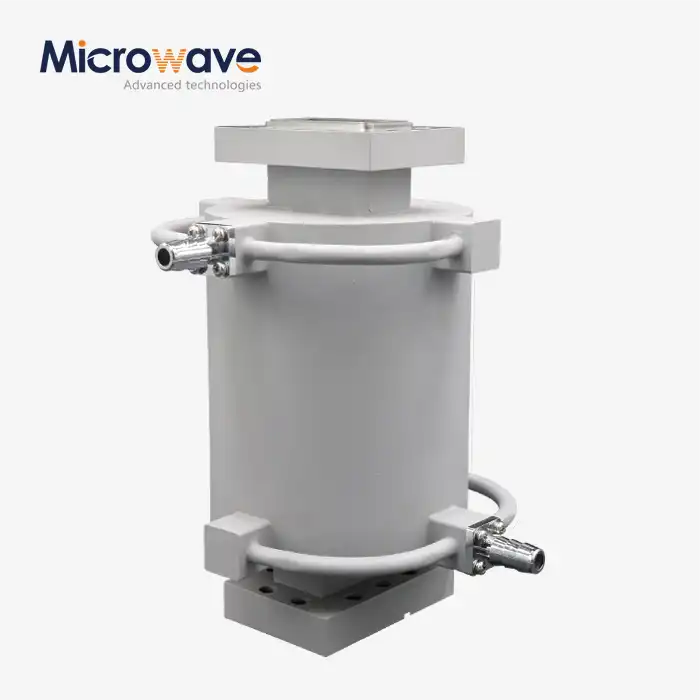
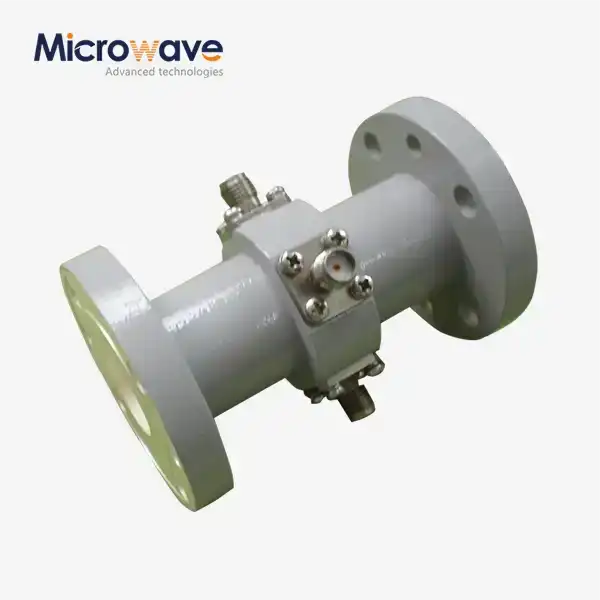
How Long Should a Single Channel Coaxial Rotary Joint Last?
A well-engineered single-channel coaxial rotary joint, operating under rated conditions, typically delivers between 50 million and 500 million rotational cycles before significant performance degradation occurs. In practical terms, this translates to roughly 5 to 20 years of service life, depending on operational tempo and environmental exposure. Military-grade and MIL-STD-810 compliant units often push toward the higher end of that range. Understanding what drives longevity — and what shortens it — gives procurement engineers a measurable advantage when sourcing coaxial RF rotary joints for mission-critical platforms.
Understanding the Lifespan of Single Channel Coaxial Rotary Joints
Every rotary joint has a rated cycle life, but that number doesn't mean much on its own. How long it actually lasts depends on how the electrical specs and mechanical facts work together. Units rated for DC to 18 GHz with SMA interfaces work differently than 40 GHz 2.92 mm versions when the rotational loads are the same. This is because designs for higher frequencies need tighter tolerances on dimensions, which make them more vulnerable to wear.
Insertion loss stability: High-quality rotating joints keep insertion loss below 0.3 dB for the whole time they are rated to last. Gradual loss of more than 0.5 dB usually means that the contacts are wearing out or getting dirty, which needs your attention.
VSWR performance over rotation: Phase WOW, which is the change in phase response during rotation, should stay between ±1° and ±5°. If the drift goes beyond this range, it means that mechanical irregularities are starting to show up in the spinning contact assembly.
Temperature cycling tolerance: MIL-STD-810-compliant units work reliably from -55°C to +85°C. In high-temperature radar environments, operational life is cut by 30–40% because of thermal expansion mismatches in units that don't comply.
These factors are not vague; they can be directly measured during incoming inspection and regular repair windows. This gives engineering teams real data points to use to track the health of a product over time.
Key Factors Influencing the Durability and Performance
The two most important factors that can be changed to make a rotary joint last longer are the material used and the way it is designed. Knowing how they work together helps procurement teams set reasonable goals and objectively evaluate supplier offerings.
Material Composition and Contact Engineering
The material of the house is important. Stainless steel grades 303 and 304 are better at resisting corrosion in marine and outdoor settings. Passivated aluminum alloys, on the other hand, make airborne platforms lighter without lowering their shielding effectiveness. More importantly, the electrical uniformity is set by the contact surface, which is usually made of Beryllium Copper (BeCu) with gold-on-gold plating. This happens over millions of turns. Gold finishing stops rust and keeps the contact resistance low, which directly keeps insertion loss stable over time. When used in high-humidity settings, units with poor contact plating break down after 10 million rounds.
Design Architecture: Single vs. Multi-Channel Configurations
All of the technical improvements are made to one RF line by a single-channel coaxial rotary joint. This focused architecture usually leads to tighter tolerances, better phase stability, and a longer rated cycle life compared to multi-channel assemblies. This is because each extra channel adds mechanical complexity and the chance of misalignment. For uses that need the most accurate signal, like air traffic control radar pedestals or SATCOM-on-the-go terminals, the single-channel configuration is still the best choice. This is because it is simple and lasts a long time.
Material wear is made worse by contact with the environment. In saline environments, corrosion happens faster on areas that aren't covered. Platforms with a lot of vibration, like military ships or unmanned aerial vehicles (UAVs), cause bearing systems to wear out slowly over time. These stressors can be taken care of before installation by choosing enclosures with an IP65 or IP67 rating and MIL-grade connector interfaces.
Comparing Single Channel Coaxial Rotary Joints with Alternatives
As an option for rotating signal transfer, slip rings are the most popular choice, but they work in very different ways. Slip rings are good at handling power and low-frequency data, but they have trouble keeping their characteristic impedance at microwave frequencies. Their brushed contact mechanism adds electrical noise that shows up as signal jitter, which is not acceptable for handling radar echo or watching HD video from spinning electro-optical turrets.
By working in Transverse Electromagnetic (TEM) mode, single-channel coaxial rotary joints keep their 50Ω resistance over a wide range of frequencies. This design gets rid of the cable-wrapping fatigue that breaks down static cabling in dynamic platforms. This lets the platform rotate indefinitely without signal loss. In head-to-head lifecycle tests, precision coaxial rotary joints always last longer than brush-type slip rings in high-frequency settings, usually by two to three times as many cycles.
Custom rotary joints are made to last longer in harsh environments because they are designed to work with certain frequency ranges, connector interfaces, and environmental ratings. Standard catalog types, on the other hand, allow for faster procurement times and work well with less demanding job cycles. The buying decision depends on correctly describing the application's rotational speed, frequency needs, and exposure to the environment before putting out a specification.
Maximizing the Operational Life of Your Rotary Joint
With careful installation and maintenance, the service life can be extended beyond the rated cycle count. Misalignment during installation is the most common reason why bearings wear out too quickly. In continuous rotation, even a 0.5-degree angular offset creates uneven radial loads that damage bearing integrity in a very short amount of time.
Here are core practices that reliably extend single channel coaxial rotary joint service life:
- Torque connector interfaces to specification: To meet specifications, torque the connection surfaces. If you over-torque SMA or 2.92 mm connectors, the contact pin geometry changes, which increases insertion loss right away and permanently.
- Inspect and clean contact surfaces at scheduled intervals: Check and clean the contact surfaces on a regular basis. Particulate contamination in the spinning interface increases contact resistance and creates localized heat, which speeds up wear in both the contact material and the bearing assembly.
- Monitor phase WOW as a leading indicator: Keep an eye on phase WOW as a leading indicator. Rising phase variation during rotation happens before insertion loss degradation that can be measured. This gives maintenance teams an early warning before signal performance drops below system thresholds.
- Match rotational speed to rated RPM: Match the speed of rotation to the rated RPM. Units that are rated for up to 5,000 RPM experience increased centrifugal stress that is beyond their design limits. Bearings last longer when they are used at 80% of their maximum speed.
When you work with an OEM-certified maker, you get access to calibrated test data, installation instructions that are tailored to your needs, and a guarantee that covers your investment over the full service window.
Procurement Guide: Buying Durable Single Channel Coaxial Rotary Joints
When looking at providers of single-channel coaxial rotary joints, people in charge of buying things should expect test data that is written down, not just specification sheets. Some important things to check are the rated cycle count, the insertion loss at end-of-life, the VSWR across the working frequency band, and the phase WOW when the device is loaded. ISO 9001:2015 certification and RoHS compliance show that quality management systems control the whole process of making something, not just the finished item.
Custom orders that are tuned to application-specific frequency ranges, connector interfaces, and environmental rates lower the risk of system integration and the total cost of ownership for large-scale or defense-grade projects. Agreements to buy in bulk, along with warranties and promises of service after the sale, keep the supply chain running smoothly during multi-year programs.
Conclusion
If you properly specify and keep a precision single-channel coaxial rotary joint, it will carry radio waves reliably for millions of rotating cycles and for many years. Longevity isn't just a coincidence; it comes from using good materials, following good design principles, installing things correctly, and working with a factory partner who knows what the purpose is. Instead of just looking at price, procurement teams that look at suppliers' performance data and certification compliance always get better operational results and lower lifecycle costs.
FAQ
How many rotations can a coaxial rotary joint handle before replacement?
A lot of high-precision units can handle between 50 million and 500 million rotating turns. Military-spec models that stay within their stated temperature and speed limits often hit the top of this range.
What causes premature failure in RF rotary joints?
Most of the time, it's because the connector was over-torqued, the installation wasn't aligned correctly, or the motor was running faster than its rated RPM. Material wears out faster when it is heated and cooled more than is allowed by MIL-STD-810.
Does frequency range affect service life?
Designs with higher frequencies need tighter mechanical limits, which makes them a little more prone to wear over time. Quality production with gold-plated BeCu contacts, on the other hand, makes this difference much smaller.
How do I know when a rotary joint needs replacement?
The main signs are rising insertion loss, rising phase WOW, and rising VSWR during rotation. The clearest replacement signal comes from taking baseline measurements at installation and following these parameters over time.
Partner with ADM for Precision Single Channel Coaxial Rotary Joint Solutions
Every coaxial rotary joint that ADM makes is backed by more than 20 years of experience in the business. We are a reliable company that provides single-channel coaxial rotary joints. Our goods are ISO 9001:2015 certified, and we offer OEM customization and committed engineering support from DC to 110 GHz. Click on email craig@admicrowave.com to talk to our team about your application needs and get a price.
References
1. IEEE Transactions on Microwave Theory and Techniques — IEEE, 2021
2. Microwave Engineering — David M. Pozar, Wiley, 2011
3. MIL-STD-810H: Environmental Engineering Considerations and Laboratory Tests — U.S. Department of Defense, 2019
4. RF and Microwave Engineering: Fundamentals of Wireless Communications — Frank Gustrau, Wiley, 2012
5. Journal of Electromagnetic Waves and Applications — Taylor & Francis, 2020
6. Proceedings of the European Microwave Conference (EuMC) — EuMA, 2022