





How efficient are horn antennas?
Horn antennas, especially Waveguide Horn Antennas, have efficiency rates of 80 to 95% in most situations. This makes them one of the most reliable antenna options for high-frequency uses. These special aperture antennas work as impedance transformers, going from guided wave propagation in hollow metal waveguides to free-space settings without any problems. Their high efficiency comes from having very little insertion loss, stable gain characteristics, and better power handling abilities that get rid of common breakdown problems in coaxial feeds above 1 GHz frequencies.
Understanding Horn Antenna Efficiency: Fundamentals and Key Concepts
Horn antenna efficiency depends on several interconnected factors that engineering teams must carefully evaluate during system design. The fundamental operating principle involves creating a gradual impedance transition from the characteristic impedance of the feeding waveguide to the 377-ohm impedance of free space.
Core Design Parameters Affecting Performance
The physical shape has a direct effect on measures of efficiency. The antenna's ability to focus electromagnetic energy is based on its aperture size, and the phase spread across its radiating surface is controlled by its flare length. The best horn designs combine these factors to get the most directional gain while minimising reflection losses. Choosing the right materials is a key part of making sure that efficiency stays consistent. Metals with a high conductivity level lower ohmic losses, and precise production ensures that the impedance matching is correct across the entire frequency range. The quality of the surface finish affects how current flows, which in turn affects the total efficiency ratings.
Frequency Response and Bandwidth Characteristics
Waveguide Horn Antennas behave differently depending on frequency, which buying teams need to know about in order to match them correctly to the right application. Because the electrical aperture size grows as wavelength drops, gain automatically goes up as you move toward the upper end of the operating band. System designers use this feature to make sure they get correct link budget calculations because it gives them predictable performance curves. The useful bandwidth goes from just above the waveguide cutoff frequency to about twice that number. However, the recommended operating range is still where efficiency is highest. The lower frequency limits are set by the size of the feeding waveguide, and the upper frequency limits are set by the need to silence higher-order modes.
Comparing Horn Antennas with Other Antenna Types for Optimal Efficiency
Selecting appropriate antenna technology requires careful analysis of efficiency trade-offs across different operational requirements. Each antenna type offers distinct advantages depending on application constraints and performance objectives.
Performance Metrics Across Antenna Technologies
Absolute gains are higher in parabolic mirror systems and horn antenna frequency range, but they need to be precisely placed mechanically and have complicated feed networks. Horn antennas work better most of the time, are easier to place, and are naturally resistant to damage from the environment. Patch antennas have small dimensions, but they are less efficient and can't handle a lot of power. Slot and dipole antennas work well for broadband uses, but they don't have the directionality control that is needed for communication and precise measurement systems. Waveguide Horn Antennas work very well when stable radiation patterns, high power handling, and consistent testing standards are needed.
Application-Specific Efficiency Considerations
Radar systems work better when the horn receiver stays stable when temperatures change and when it is under mechanical stress. Because it is naturally rugged, it doesn't lose performance over time as some other antenna types do. This is especially important for defence and aerospace uses that can't risk reliability. When measuring microwaves, you need reference standards that are always the same and stay accurate over a wide range of frequencies. In anechoic rooms, horn antennas are the most common way to calibrate equipment because their theoretical gain calculations closely match how well they work in real life.
Horn Antenna Variants and Their Efficiency Profiles
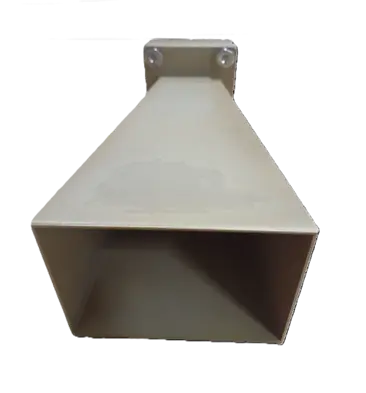
Pyramidal horns work best with rectangular waveguide feeds and keep the linear polarisation pure across the whole working band. When the feed network is set up, conical shapes can work with both linear and circular polarisation modes because they can connect to circular waveguides. Sectoral horns let you control the beamwidth in one plane while keeping the area wider in the plane that is perpendicular to it. For certain radar and communication tasks that need customised coverage zones, this asymmetric design works well.
Maximising Efficiency Through Proper Procurement and Supplier Selection
Strategic procurement decisions significantly impact long-term system performance and operational costs. Understanding supplier capabilities and quality standards helps minimise risks associated with mission-critical antenna deployments.
Critical Evaluation Criteria for Supplier Assessment
The initial buy price isn't the only thing that affects how cost-effective something is; lifecycle maintenance, stable calibration, and access to technical help are also factors. Manufacturers with a good reputation give a lot of information, like thorough performance specs, environmental ratings, and compliance certifications. Lead times are very different depending on how customised the product needs to be and when it needs to be made. Standard catalogue items usually ship within a few weeks, but engineering, prototyping, and testing for unique designs can take up to a few months. Planning procurement timelines around project goals keeps delays from being too expensive.
Quality Standards and Certification Requirements
Having ISO 9001 certification ensures that the processes used for making things and checking the standard are always the same. RoHS compliance deals with environmental rules that are becoming more and more important for global deployments. For defence uses that need long-term environmental testing, military standards may be needed. Waveguide Horn Antennas from well-known brands go through a lot of tests, such as pattern measurements, gain proof, horn antenna frequency range, and environmental stress screening. These thorough test methods confirm performance specs and make sure that operations in the field are reliable.
Custom Solutions and Engineering Support
Standard designs need to be changed for many apps to work best with them. If a supplier has its own technical team, it can change the sizes of the horns, the types of flanges, and the mounting arrangements to fit different needs. This freedom to customise often justifies higher prices by making the system run better. For bulk order management to work, suppliers and buying teams need to work together carefully. The benefits of volume prices must be weighed against the costs of keeping inventory and the time it takes to update technology. Setting up a framework that deals with qualified suppliers makes it easier to make repeat purchases and ensures that prices stay the same.
Enhancing Horn Antenna Performance with Technical Support and Maintenance
Sustained efficiency requires ongoing attention to installation practices, maintenance procedures, and performance monitoring. Comprehensive technical resources enable engineering teams to maximise antenna performance throughout operational lifecycles.
Documentation and Installation Resources
Complete datasheet packages include measured performance data, mechanical drawings, and installation guidelines. These resources help engineering teams properly integrate antennas into larger systems while maintaining optimal performance characteristics. Calibration guides provide procedures for verifying antenna performance and establishing measurement traceability. Regular calibration ensures continued accuracy in measurement applications and helps identify potential degradation before it impacts system performance.
Maintenance Practices for Sustained Performance
Routine maintenance focuses on preserving conductive surface integrity and preventing contamination that could affect RF performance. Waveguide Horn Antennas require minimal maintenance compared to other antenna types due to their simple mechanical construction and absence of active components. Environmental protection becomes critical for outdoor installations. Radome covers protect apertures from weather while maintaining electrical transparency. Proper drainage prevents water accumulation that could cause corrosion or electrical breakdown.
Simulation and Design Validation Tools
Modern electromagnetic simulation software enables performance verification before physical deployment. These tools help engineering teams optimise installation parameters and predict potential interference issues. Simulation results guide procurement decisions by confirming that selected products meet application requirements. Design validation through simulation reduces project risks and minimises costly field modifications. Software packages can model complex installation environments and predict antenna performance under various operating conditions.
Future Trends and Innovations Impacting Horn Antenna Efficiency
Emerging technologies continue advancing horn antenna capabilities while maintaining the fundamental reliability that makes them industry standards. Understanding these developments, Waveguide Horn Antennas helps procurement professionals make informed decisions about technology adoption timing.
Advanced Materials and Manufacturing Techniques
Additive manufacturing enables complex internal geometries previously impossible with traditional machining methods. These advanced structures can improve impedance matching and reduce weight while maintaining electrical performance. New conductive materials offer enhanced corrosion resistance for harsh environment applications. Integrated design approaches combine multiple RF functions within a single mechanical package. These hybrid solutions reduce system complexity and improve overall efficiency by eliminating interconnection losses between separate components.
Market Demand and Customization Trends
The need for customised solutions is growing because there are more and different kinds of uses in the aerospace, industrial, and telecoms markets. Waveguide Horn Antennas are always changing to meet new performance needs while staying cost-effective. When horn parts are combined with other technologies, they form hybrid antenna systems that can do more. These integrated solutions give procurement teams different ways to deal with complicated needs by using a single provider.
Strategic Recommendations for Procurement Excellence
Companies that get involved early in the creation of new technologies can shape design directions and get first access to new solutions. By helping to make industry standards, you can be sure that new goods will meet operational needs. By forming strategic partnerships with top suppliers, you can get access to engineering knowledge and faster help for important tasks. These partnerships often give businesses an edge over their competitors by giving them early access to new technologies and better prices.
Conclusion
It is very efficient to use horn antennas in many different situations. Waveguide Horn Antennas are the best in the business because they combine great performance, reliability, and low cost. They are the best choice for mission-critical systems because they are efficient 80–95% of the time, have predictable gain properties, and can handle more power than other components. Organisations can get the most out of their antenna investments and ensure long-term operational success by understanding the basic design principles, comparative benefits, and the right procurement strategies.
FAQ
1. What determines the efficiency rating of horn antennas?
Horn antenna efficiency depends on impedance matching between the feeding waveguide and free space, aperture design optimisation, material conductivity, and manufacturing precision. Typical efficiency ranges from 80-95% depending on frequency band and design parameters.
2. How do pyramidal and conical horn antennas compare in terms of performance?
Pyramidal horns interface with rectangular waveguides and maintain excellent linear polarisation purity, while conical horns connect to circular waveguides and support both linear and circular polarisation modes. Both types achieve similar efficiency levels when properly designed for their intended applications.
3. What factors should be considered when selecting a horn antenna supplier?
Key evaluation criteria include ISO 9001 certification, technical documentation quality, customisation capabilities, lead times, pricing structure, and post-sale support availability. Established suppliers with proven track records in your application area typically provide the best long-term value.
4. How often should horn antennas be calibrated in measurement applications?
Calibration frequency depends on application accuracy requirements and environmental conditions. Laboratory environments typically require annual calibration, while field-deployed systems may need more frequent verification. Most Waveguide Horn Antennas maintain stable performance for extended periods when properly maintained.
5. What maintenance practices help preserve horn antenna efficiency?
Regular cleaning of conductive surfaces, proper torquing of flange connections, environmental protection through radomes when needed, and visual inspection for corrosion or damage. The simple mechanical construction of horn antennas requires minimal maintenance compared to other antenna types.
Partner with ADM for Superior Waveguide Horn Antenna Solutions
Advanced Microwave Technologies Co., Ltd (ADM) combines over 20 years of manufacturing expertise with state-of-the-art testing capabilities to deliver premium Waveguide Horn Antennas that exceed industry standards. Our ISO 9001 certified production processes and advanced 24m microwave darkroom facility ensure every antenna meets stringent performance specifications. Contact craig@admicrowave.com to discuss your specific requirements with our engineering team and discover how our comprehensive product portfolio and customisation capabilities can optimise your next project.
References
1. Balanis, Constantine A. "Antenna Theory: Analysis and Design" - Comprehensive analysis of horn antenna efficiency parameters and design optimisation techniques.
2. Milligan, Thomas A. "Modern Antenna Design" - Engineering principles for maximising horn antenna performance in contemporary applications.
3. IEEE Standard 149-2021 "IEEE Recommended Practice for Antenna Measurements" - Industry guidelines for horn antenna calibration and performance verification procedures.
4. Silver, Samuel "Microwave Antenna Theory and Design" - Fundamental concepts of waveguide horn antenna efficiency and impedance matching principles.
5. Stutzman, Warren L. "Antenna Theory and Design" - Comparative analysis of horn antenna efficiency versus other antenna technologies across frequency bands.
6. Kraus, John D. "Antennas for All Applications" - Practical applications and efficiency considerations for horn antennas in radar, communication, and measurement systems.
YOU MAY LIKE
 VIEW MOREDouble Ridge Straight Waveguide
 VIEW MOREDouble Ridge Waveguide Transition
 VIEW MOREDouble Ridged Flexible Waveguide
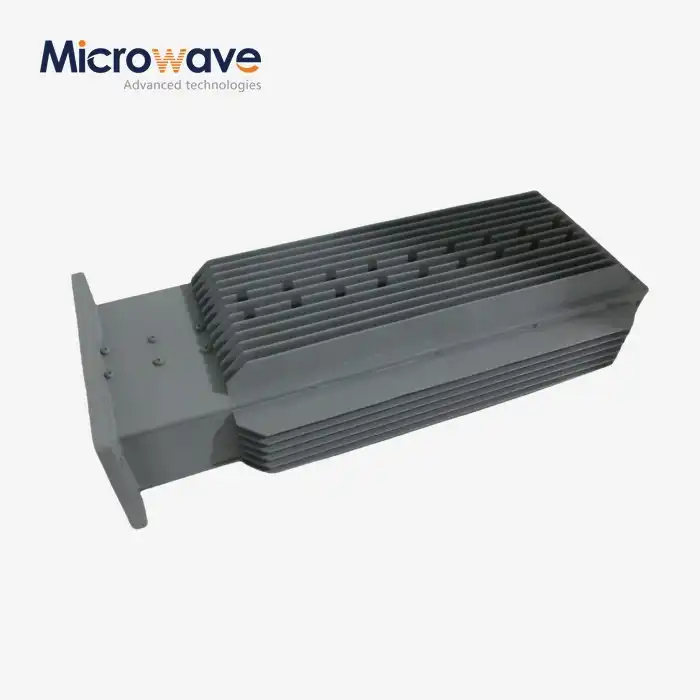 VIEW MOREDouble Ridge Waveguide Load
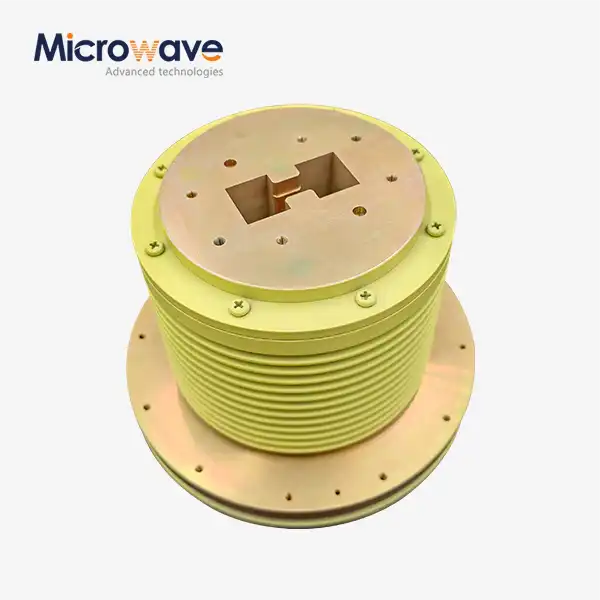 VIEW MOREDouble Ridge Waveguide Rotary Joint
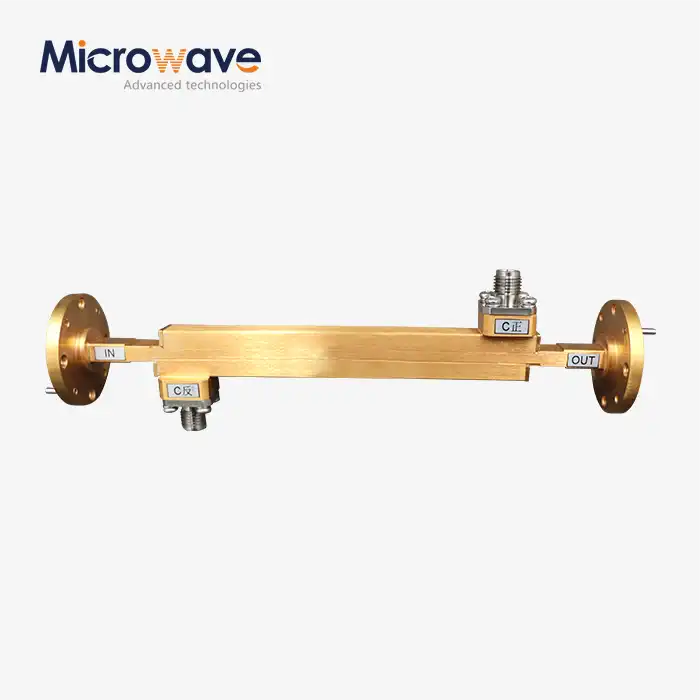 VIEW MOREDouble-Ridged Waveguide Broadwall Directional Coupler
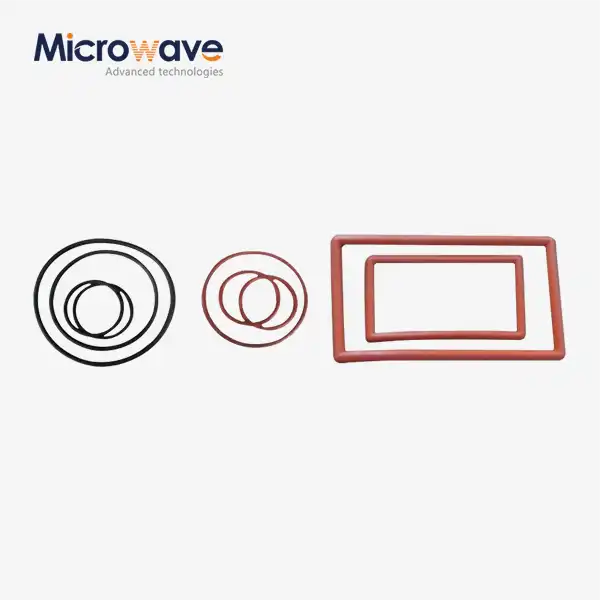 VIEW MOREWaveguide Flange Gasket
 VIEW MOREWaveguide Adjustable Support