




How Does a Parabolic Antenna Improve Signal Directivity?
A parabolic antenna directs signals better because of its unique bent reflection shape. It does this by collimating and focusing electromagnetic waves coming from the feed horn into a very narrow beam. The cone-shaped surface reflects all signals, both coming in and going out, toward a single focus point. This is where the feed antenna is put. There is a small beamwidth because of this. Because of this geometric accuracy, it is possible to have very high gain (often over 30 to 50 dBi) and very little signal loss in places that aren't wanted. This makes point-to-point transmission much farther, cuts down on interference from close sources, and makes the best use of the airwaves. For this reason, parabolic antennas are necessary for microwave backup lines, satellite earth stations, and defense uses that need to be very reliable.
Understanding the Core Principles of Parabolic Antenna Signal Directivity
Signal directivity is a measure of how well an antenna can focus electromagnetic energy in one direction while blocking it in others. When communicating over long distances in areas with a lot of clutter and weak signals, this trait is very important for making sure that the connection is stable.
By using the mathematical features of the parabola itself, parabolic antennas are able to provide better directionality. The parabolic reflector changes dividing circular wavefronts into parallel plane waves that move along the antenna's axis when a feed antenna, usually a waveguide horn or dipole, sends out waves from the focus point. It is based on the idea that any ray coming from the focus point will bounce off the conical surface at an angle equal to the line of symmetry. This makes the phase alignment uniform across the opening.
Key Components Driving Directivity Performance
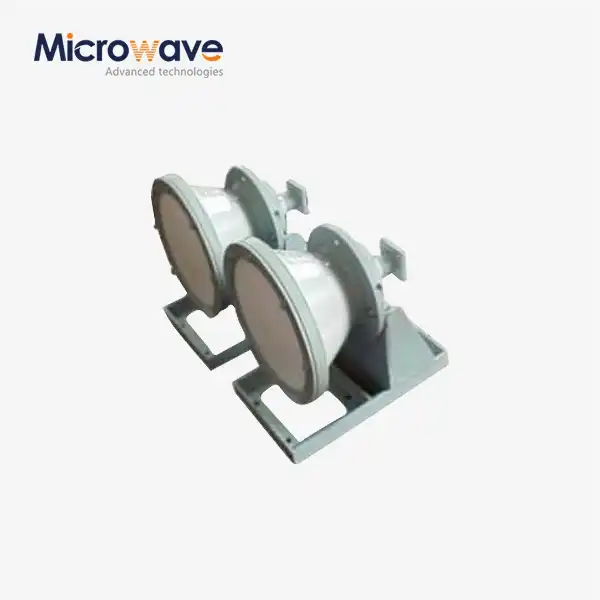
The main part is the reflector dish, which is made of spun aluminum or composite carbon fiber and has a surface that is very precise, to within a fraction of the working frequency. When placed at the determined focus distance, the feedhorn changes directed electrical signals into waves that are sent out into space. The shape of the feed has a direct effect on how well the light works; distributing energy evenly across the reflector improves gain while lowering sidelobe levels. It is important to carefully fit the feedhorn's radiation pattern to the dish's f/D ratio (ratio of focal length to diameter) so that there are no extra losses.
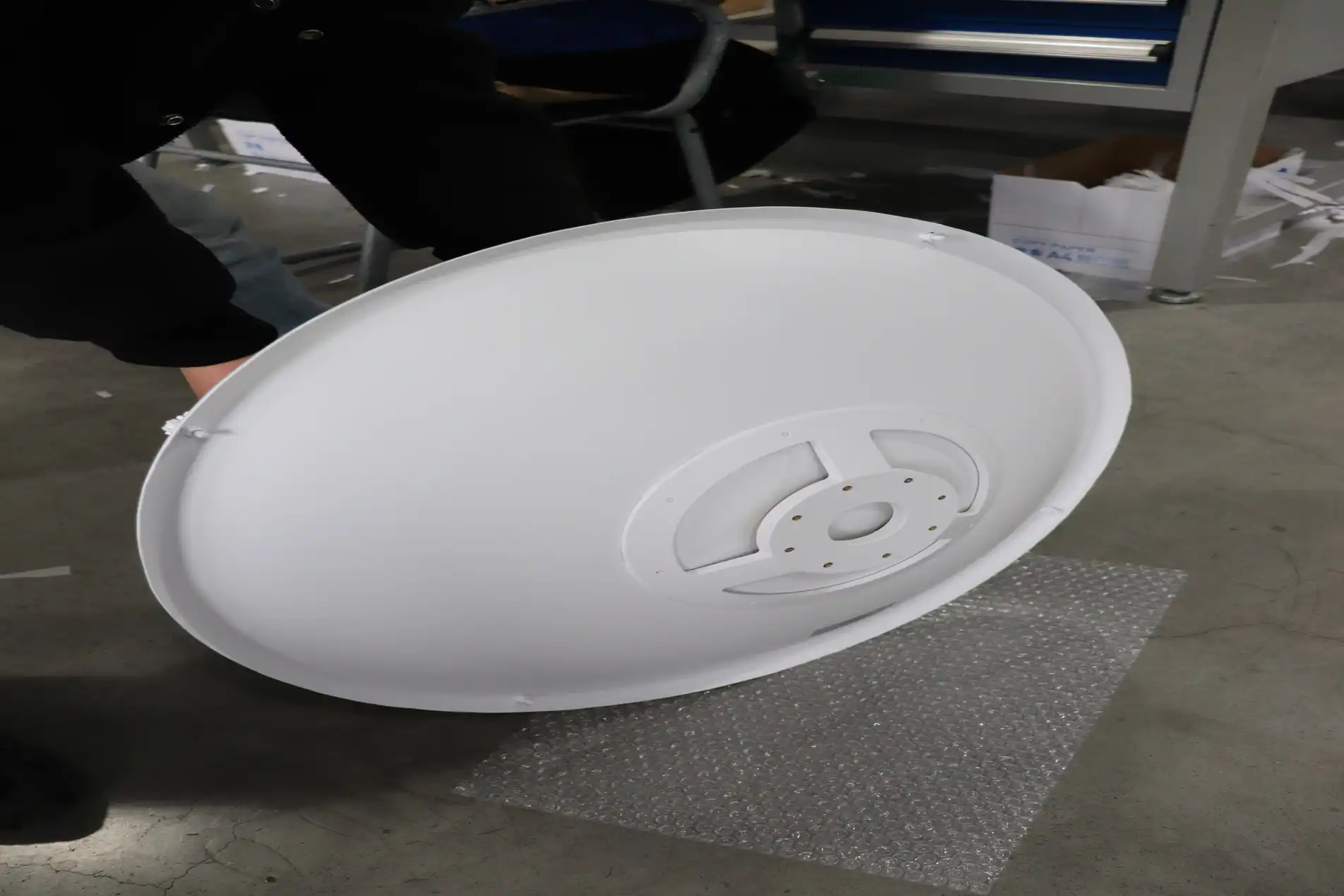
The fixing system and radome are examples of supporting gear. Mounting structures need to be able to handle working wind loads of more than 120 km/h and survival conditions of more than 200 km/h without deforming mechanically in a way that hurts the electrical performance. Radomes, which are often treated to make them slippery for Ka-band satellite uses, keep the feed system safe from the weather while reducing signal loss as little as possible.
Frequency Range Versatility Across Industrial Applications
Parabolic antennas work well over a wide range of frequencies, from UHF bands around 500 MHz to millimeter-wave E-band frequencies close to 110 GHz. This wide range of operations meets the needs of a wide range of applications. Lower frequencies, like C-band and Ku-band, are used by older satellite phones and VSAT networks because they don't get damaged by rain. Higher frequencies, like Ka-band and E-band, allow for multi-gigabit speed for 5G backup and high-resolution radar systems. However, to keep aperture efficiency high, they need tighter surface limits and better feed design.
The narrow beamwidth of parabolic designs—often less than 2 degrees for large-aperture models—makes them great for spatial filtering. This trait lets frequencies be reused in heavily spread networks, where many point-to-point links can use the same channels without interfering with each other as long as there is enough angle separation between beam directions.
The Friis transmission formula is used to figure out parabolic antenna gain. Antenna gain is directly related to opening area and negatively related to wavelength squared. When working at 10 GHz, a reflector with a width of 3 meters usually gives a gain of about 45 dBi, which means that it concentrates power 31,000 times better than an isotropic radiator. Because of this increase, free-space path loss doesn't stop long-distance radio lines from working.
Comparing Parabolic Antennas with Other Antenna Types to Optimize Your Choice
To choose the best antenna type, you need to know how the different designs combine gain, directivity, physical size, and placement difficulty with the needs of the operation.
Antennas with a narrow beamwidth and high gain are called parabolic reflectors. They share rooms with other oriented types, but they're better in some ways. Yagi-Uda antennas are made up of extra parts that are arranged along a boom. They are smaller than parabolic dishes, have a small gain (10–18 dBi), and are easy to set up. Yagis, on the other hand, have bigger beamwidths and lower gain ceilings. This means they aren't as good for microwave frequencies above 6 GHz or for jobs where they need to address very high path loss.
Directivity and Gain Characteristics Across Antenna Families
Panel antennas are often found in cell phone base stations and WISP infrastructure. They get their benefits from printed circuit arrays or curved waveguides placed behind flat reflectors. Even though panel antennas look better and are easier to place on vertical objects, they are still less efficient at opening holes than parabola antennas of the same size. Panel antennas have a bigger beamwidth (30–90 degrees), which works well for sector coverage but isn't as accurate as parabolic systems for point-to-point links that span 10 kilometers or more.
Helicoidal antennas make circular polarization by wrapping a spiral wire around a cylinder-shaped core. They have a modest gain (10–15 dBi) and great axial ratio performance. For GPS devices and satellite phones, where polarization purity is more important than absolute gain, these antennas are used. Helical systems are lighter than parabolic systems and can send signals in any direction (in some setups), but they can't reach the high gain needed for geostationary satellite ground stations or long-haul microwave bridges.
Omni-directional antennas, such as dipoles, collinear arrays, and biconical designs, send out the same amount of signal in all horizontal directions with very little gain (0–8 dBi). These antennas work well for broadcasting, mobile communication nodes, and covering cells where providing service to all directions is more important than saving money on the link budget. When directionality allows frequency coordination, lowers broadcast power requirements, or increases range beyond what omnidirectional systems can support, business-to-business buyers choose parabolic antennas over omnidirectional ones.
Application-Specific Selection Criteria for B2B Deployments
The environment has a big impact on the device you choose. For locations near the coast, you need finishes that don't rust and sealed feed systems with IP67 grades or higher. ASTM B117 testing rules say that marine-grade aluminum metals and polyester powder paints can be used to make parabolic antennas that can handle being exposed to salt spray. Because they have a better front-to-back ratio (more than 60 dB), conical forms can help industrial areas that are close to sources of electromagnetic interference. This is because they block annoying signals from the back quadrants.
Frequency planning can also change the choices people make. XPIC technology works with dual-polarized parabolic antennas to get rid of cross-polarization interference. By sending two different polarizations at the same frequency at the same time, this device pretty much doubles the channel capacity. The prices of tower leases and frequency licensing go down because of this feature. This is very helpful for telecom companies and WISP providers that are trying to be frugal. It is not possible to get this level of spectral efficiency with a screen or a single-polarized Yagi.
Limits on installation are important. The wind has a big effect on a 2.4-meter parabolic dish (parabolic antenna manufacturers), so the towers need to be strengthened and carefully lined up to keep the accuracy of the boresight within 0.1 degrees. Smaller antennas, like panels or Yagis, are easier to place, but they don't have the link gap that carrier-grade networks need to meet their 99.999% uptime goals. People whose job it is to buy things have to compare the performance standards to the total cost of ownership, which includes services like regular adjustments and hardening of structures.
How to Evaluate and Purchase Parabolic Antennas for Business Procurement?
Successful procurement of high-performance parabolic antennas demands rigorous supplier evaluation, a comprehensive technical specification review, and a clear understanding of total system costs beyond the initial purchase price.
Supplier Qualification and Certification Verification
Reputable manufacturers maintain ISO 9001:2015 quality management certification, demonstrating systematic process control across design, manufacturing, and testing operations. Environmental compliance through RoHS directives ensures hazardous substance restrictions, while ISO 14001:2015 certification indicates commitment to sustainable manufacturing practices. These credentials provide procurement assurance that products meet international standards and supplier operations support long-term business continuity.
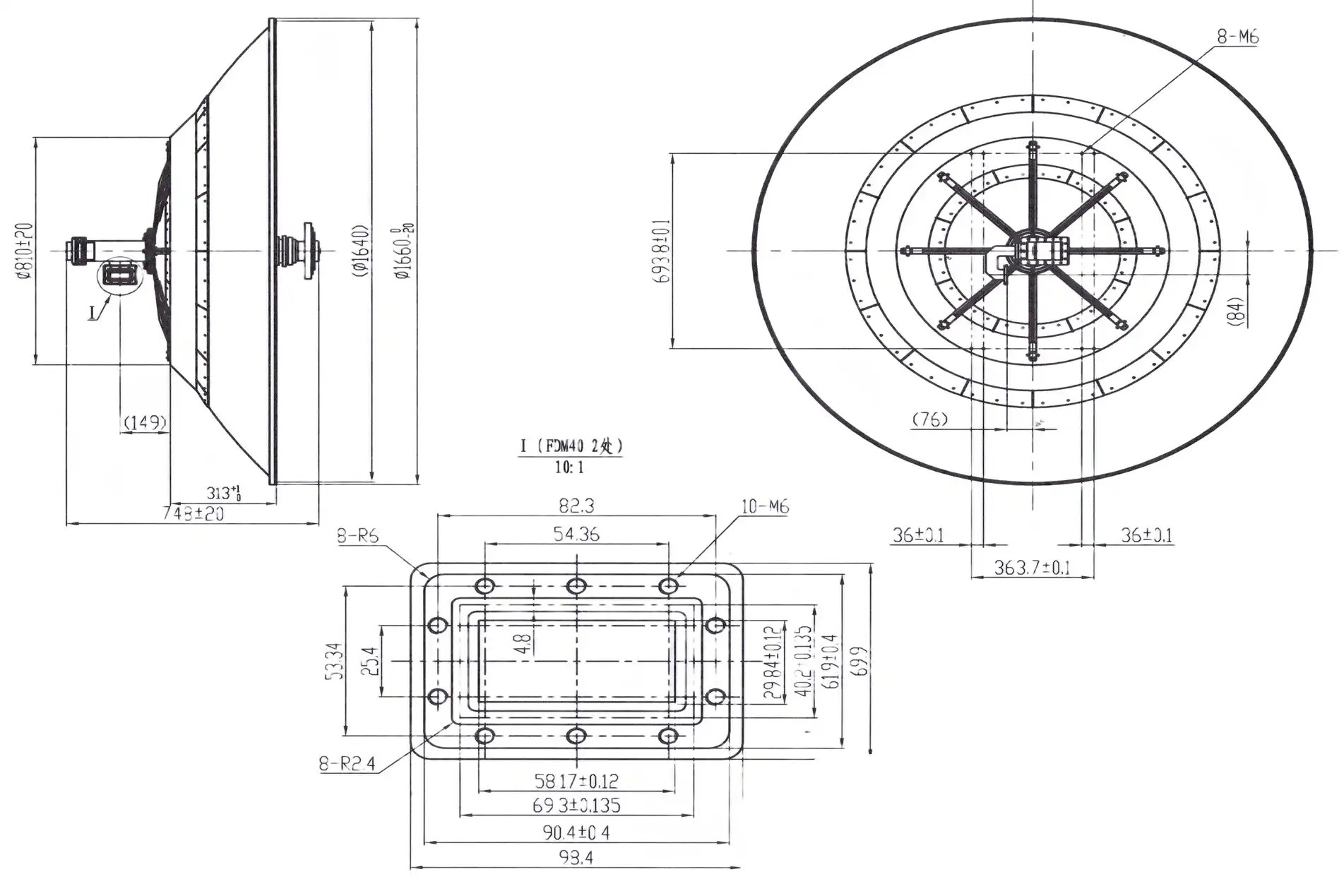
Technical capabilities separate qualified suppliers from commodity vendors. Advanced manufacturing requires precision. CNC forming equipment capable of maintaining reflector surface accuracy to λ/16 RMS error or better. Suppliers operating anechoic chambers with sufficient test ranges—such as our 24-meter microwave darkroom facility—can verify far-field radiation patterns across the full operating frequency range from 0.5 to 110 GHz. Near-field scanning capabilities allow detailed aperture field mapping, identifying surface imperfections before product shipment.
Critical Performance Specifications for B2B Applications
Gain specifications must include tolerance limits (typically ±0.5 dB) and measurement frequency points spanning the operational band. VSWR requirements below 1.3:1 ensure efficient power transfer and minimal return loss. Cross-polarization discrimination exceeding 30 dB enables dual-polarized operation without inter-channel interference, critical for MIMO and XPIC systems.
Mechanical specifications deserve equal attention. Wind survival ratings define the maximum sustained wind velocity the antenna withstands without permanent deformation, typically 200+ km/h for carrier-grade installations. Ice loading ratings specify additional weight the structure supports when radomes accumulate freezing precipitation. Mounting hardware must accommodate tower leg diameters and pole sizes common in target deployment regions.
Complete antenna systems include mounting brackets engineered for specific tower configurations, waveguide or coaxial feed lines with appropriate connectors (CPR137G, WR75, etc.), and feed horn assemblies matched to the reflector geometry. Integrated kits simplify procurement logistics and ensure component compatibility, reducing installation errors that degrade electrical performance. Separately sourced components risk impedance mismatches, mechanical fit issues, and finger-pointing between vendors when system performance falls short.
Cost Analysis and Value Optimization Strategies
Antenna pricing correlates with aperture size, frequency range, and mechanical robustness. A 1.2-meter Ku-band antenna suitable for VSAT applications costs significantly less than a 4.5-meter C-band earth station antenna built to Intelsat or Eutelsat specifications. Procurement professionals should request detailed quotations itemizing the reflector assembly, feed system, mounting hardware, and any optional accessories like de-icing systems or redundant feed configurations.
Total cost of ownership extends beyond purchase price. Installation labor, crane rental for large antennas, and structural engineering assessments add to deployment expenses. Ongoing maintenance includes periodic alignment checks (annually or after severe weather events), feed component replacement due to lightning damage, and radome cleaning to prevent signal attenuation from accumulated debris. Suppliers offering comprehensive technical support—including installation supervision and post-deployment troubleshooting—reduce these lifecycle costs through expertise transfer and rapid issue resolution.
parabolic antenna manufacturers, Balancing budget constraints with performance requirements often involves aperture size optimization. Increasing dish diameter from 2.4 to 3.0 meters boosts gain by approximately 2 dB, extending link range or improving availability during rain fade conditions. Link budget calculations quantify whether this performance improvement justifies the higher cost and installation complexity. Our engineering team assists procurement professionals in performing these analyses, ensuring specifications align with actual operational needs rather than over-engineering solutions.
Conclusion
Parabolic antennas deliver unmatched signal directivity through precise geometric focusing of electromagnetic energy, enabling high-gain, narrow-beamwidth performance essential for modern RF infrastructure. Their ability to concentrate signals overcomes path loss, rejects interference, and supports frequency reuse across satellite communications, microwave backhaul, and defense applications. Selecting the right parabolic antenna requires evaluating technical specifications—including gain, VSWR, and mechanical robustness—against operational requirements and total cost of ownership. Partnering with experienced manufacturers holding ISO certifications and advanced testing facilities ensures product reliability and long-term support. As wireless networks expand into higher frequencies and more demanding environments, parabolic antenna technology remains the backbone of mission-critical point-to-point links worldwide.
FAQ
1. What frequency ranges do parabolic antennas typically support?
Parabolic antennas operate effectively from approximately 500 MHz (UHF) through 110 GHz (W-band), with specific designs optimized for particular bands. Common applications include C-band (4-8 GHz) for satellite communications, X-band (8-12 GHz) for radar and military links, Ku-band (12-18 GHz) for VSAT networks, and E-band (71-86 GHz) for high-capacity 5G backhaul. The operational frequency dictates surface precision requirements—higher frequencies demand tighter tolerances to maintain aperture efficiency.
2. Can the same parabolic antenna serve both WiFi and satellite TV applications?
While the physical reflector could theoretically operate across different frequency bands, practical systems require band-specific feed horns and electronics. A C-band satellite TV feed cannot process 5 GHz WiFi signals due to incompatible frequency response and impedance characteristics. Dual-band antennas exist but employ separate feed assemblies for each frequency range, increasing complexity and cost compared to single-purpose designs.
3. How does antenna size directly influence directivity and signal gain?
Gain increases proportionally with aperture area and inversely with wavelength squared. Doubling the diameter quadruples the capture area, yielding approximately 6 dB additional gain. A 1.2-meter dish at 10 GHz provides roughly 38 dBi gain, while a 2.4-meter dish at the same frequency delivers 44 dBi. Larger antennas also narrow the beamwidth, improving directivity and spatial filtering but requiring more precise alignment and robust mounting structures.
Partner with ADM for High-Performance Parabolic Antenna Solutions
Advanced Microwave Technologies Co., Ltd brings over two decades of engineering excellence to B2B procurement professionals seeking reliable, high-performance parabolic antenna systems. Our ISO 9001:2015-certified manufacturing processes and state-of-the-art 24-meter anechoic chamber testing facility ensure every antenna meets stringent electrical and mechanical specifications before shipment. Whether you need ruggedized reflectors for defense radar applications, precision satellite ground station antennas, or customized dual-polarized systems for telecom backhaul, our technical team provides comprehensive support from initial specification review through installation and beyond. We serve as a trusted parabolic antenna supplier, offering OEM services, rapid prototyping, and global logistics support tailored to your project timeline. Contact craig@admicrowave.com to discuss your specific requirements and discover how our expertise can optimize your communication infrastructure with proven directivity performance.
References
1. Balanis, Constantine A. (2016). Antenna Theory: Analysis and Design, 4th Edition. Wiley-Interscience.
2. Kraus, John D., and Marhefka, Ronald J. (2002). Antennas: For All Applications, 3rd Edition. McGraw-Hill Education.
3. Milligan, Thomas A. (2005). Modern Antenna Design, 2nd Edition. Wiley-IEEE Press.
4. Rappaport, Theodore S. (2014). Microwave and Millimeter Wave Wireless Communications, Cambridge University Press.
5. ETSI EN 302 217-4-2 (2019). Fixed Radio Systems; Characteristics and Requirements for Point-to-Point Equipment and Antennas; Part 4-2: Antennas.
6. IEEE Standard 149-2021. IEEE Recommended Practice for Antenna Measurements.