





Parabolic Antenna Gain and Performance Optimization Guide
To get the best parabolic antenna gain, you need to test the whole thing and make sure that the design, quality of the materials, and environment where it works are all matched. The performance is based on how well the feed horn is aligned, the mirror surface is oriented, and the frequency-specific opening works. Together, these things determine whether your system gains theoretical power or loses power that it could have won. In the real world, engineers who work with radar sites, point-to-point microwave links, and satellite ground stations need to know how mechanical limits, polarization alignment, and weather affect the quality of transmission and link budget gaps.
Understanding the Physics Behind Parabolic Reflector Efficiency
Getting the geometry right is the first thing that needs to be done to make a parabolic reflector antenna work well. When electromagnetic waves come from the feed horn in the middle of the parabola, they hit the curved reflector and turn into parallel plane waves. Collimation directs energy into a narrow beam, which lets people talk on the radio over long distances with very good directionality.
Gains can be directly linked to how accurate the surface is. Root mean square (RMS) surface errors should be less than λ/16, where λ is the working frequency, for the best designs in the business. Changes above this point lead to phase errors that send energy outside the main lobe. The expected top amount of opening efficiency is 80%, but this makes it 55% or less. When procurement engineers buy parts for defense radar systems or telecom backup networks, they should check that the manufacturer's specs include data on the measured surface error. This is very important for mirrors that work above 20 GHz, where accuracy down to the millimeter level is needed.
The stuff you use is also very important. Spin-cast aluminum is also very stiff for its weight and doesn't change temperature when it's heated or cooled. When you use a big opening, carbon fiber materials keep their shape better, but you need to pay close attention to how well they conduct electricity. The coatings must protect the reflector's electrical properties without making it heavier, which would make it less stable in windy conditions. For example, powder-coated finishes that don't rust in salty environments or special slippery layers that stop rain fading must be used.
Feed Horn Design and Illumination Taper Optimization
The feed horn is the most important part of the connection between the reflector and the RF line. The best lighting taper, which is how the power is spread across the surface of the reflector, strikes a mix between sidelobe reduction and main beam gain. Over-illumination, in which too much energy leaks past the sides of the mirror, loses power and makes it easier for interference to happen. When there isn't enough light hitting the reflection, the outer areas aren't used, which wastes possible gain.
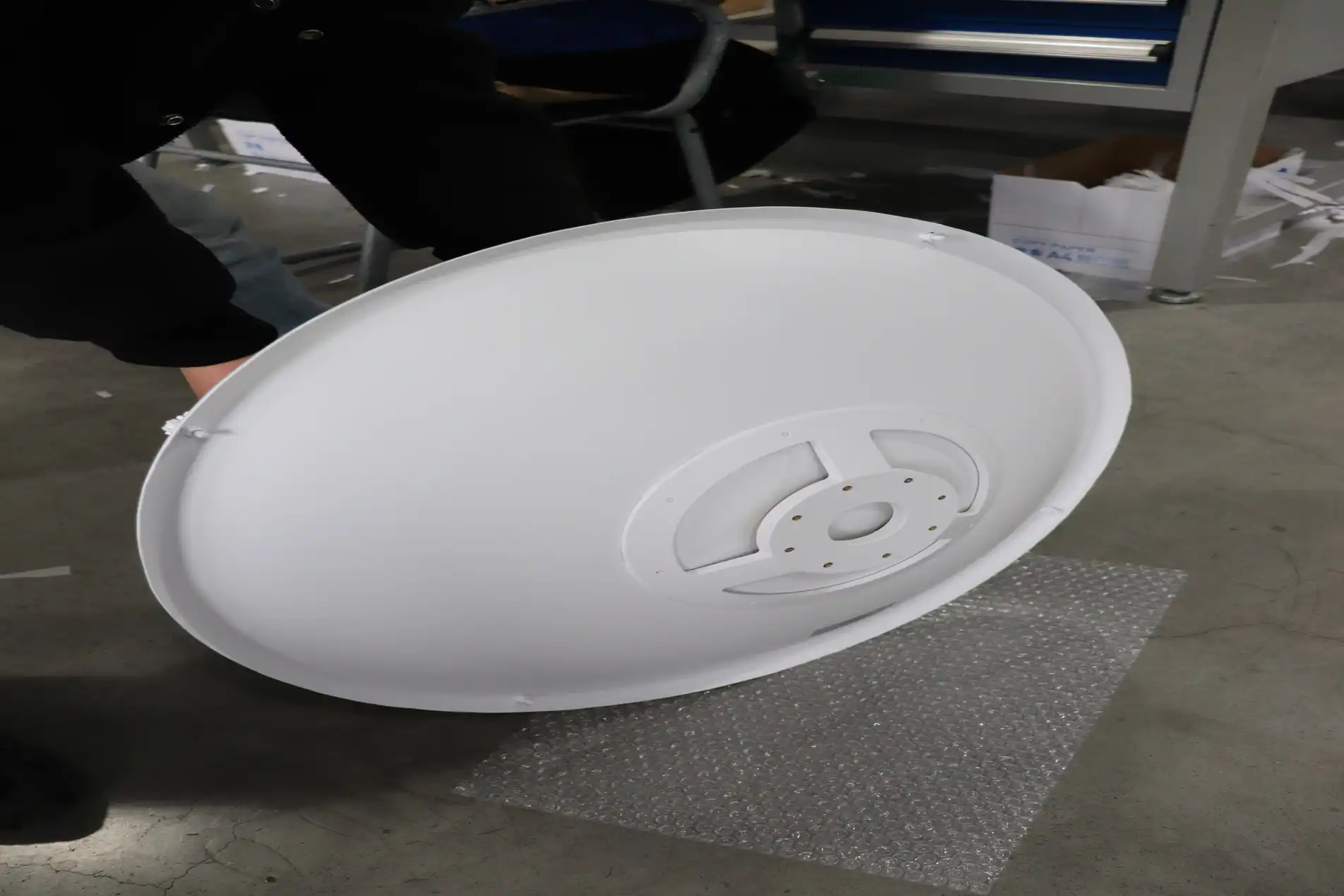
When low cross-polarization discrimination is needed, corrugated horn shapes work very well. The internal corrugations block higher-order modes, creating uniform radiation patterns with XPD values above 35 dB over a wide range of bandwidths. This performance is good for satellite communication ground stations that need to do both uplink and downlink work at the same time. This is because polarization purity directly affects how well frequencies are reused and the interference gaps between satellites nearby.
Dual-mode horns are another way to improve performance. By controlling the phase connections between the TE11 and TM11 modes, these systems achieve very low sidelobe levels without lowering the efficiency of lighting. When pattern accuracy is more important than cost, research institutions that are making measurement tools for characterizing antennas often choose dual-mode feeds.
Because of the small differences in alignment between the feed horn phase center and the reflector focus point of a parabolic antenna, precise attachment gear is needed. Beam squint and pattern distortion can happen with lateral movement of as little as 0.1 wavelengths. Axial spacing mistakes lower aperture efficiency by changing how the phase is spread out across the reflector. Manufacturers who offer automatic adjustment mechanisms with micrometer resolution let field workers account for differences in installation, which is something that system designers who work on full ground station projects really value.
Frequency-Dependent Considerations for Microwave and Millimeter-Wave Bands
Operating frequency fundamentally shapes design priorities. Lower frequency bands like C-band (4-8 GHz) tolerate larger mechanical tolerances but require bigger apertures to achieve equivalent gain. A 3-meter dish delivers approximately 42 dBi at 6 GHz, making it practical for terrestrial microwave links spanning 50+ kilometers. The longer wavelengths also reduce atmospheric attenuation, simplifying link budget calculations in point-to-point networks.
Ku-band and Ka-band systems (12-40 GHz) concentrate more gain into smaller physical footprints but impose stricter construction standards. A 1.2-meter reflector achieves 45 dBi at 14 GHz, suitable for VSAT terminals and mobile satellite communication platforms where size constraints dominate. Rain fade becomes a significant concern above 10 GHz—every additional dB of gain provides margin against weather-induced signal degradation. Procurement specifications for telecom infrastructure in tropical climates routinely demand 3-6 dB excess link margin to maintain availability targets during monsoon seasons.
E-band frequencies (71-86 GHz) enable ultra-high-capacity data links but magnify every imperfection. Surface accuracy requirements tighten to λ/20 or better, driving up manufacturing costs. Feed horn tolerances shrink proportionally—a 50-micron misalignment that's negligible at 6 GHz causes measurable pattern distortion at 80 GHz. Organizations deploying high-frequency networks for 5G backhaul or military surveillance applications must partner with manufacturers possessing millimeter-wave fabrication expertise and metrology equipment capable of validating performance in anechoic chambers with frequency ranges extending beyond 110 GHz.
Measuring and Verifying Radiation Pattern Performance
Pattern measurements reveal how effectively an antenna converts input power into focused directional transmission. The front-to-back ratio quantifies forward gain relative to rearward radiation—values exceeding 65 dB indicate excellent shielding and minimal energy wastage. Sidelobe levels dictate interference rejection capability, with first sidelobe suppression below -20 dB considered baseline performance for commercial applications and -30 dB required for sensitive radar and spectrum monitoring installations.
Near-field scanning techniques enable comprehensive pattern characterization without requiring kilometers of test range. Probe arrays map amplitude and phase across a planar, cylindrical, or spherical surface surrounding the antenna under test. Subsequent mathematical transformation reconstructs the far-field pattern with accuracy rivaling conventional range measurements. This approach proves invaluable for large-aperture systems where physical far-field distances (2D²/λ) become impractically long.
Advanced measurement facilities incorporate recombination chambers that switch between near-field and far-field modes within a single controlled environment. The 24-meter microwave darkroom equipped with antenna plane measurement capability allows verification across the 0.5-110 GHz spectrum, accommodating everything from weather radar feeds to emerging 6G research prototypes. Access to such infrastructure separates manufacturers committed to validated performance from those relying solely on simulation models.
VSWR testing complements pattern analysis by revealing impedance matching quality for parabolic antenna manufacturers. A properly designed antenna system maintains VSWR below 1.3:1 across its operational bandwidth, ensuring minimal signal reflection back toward the amplifier. Poor matching not only wastes power but also risks damaging solid-state amplifiers operating at peak output. Vector network analyzers capture S-parameters that expose resonant anomalies, allowing engineers to fine-tune matching networks before field deployment.
Environmental Stress Factors and Mitigation Strategies
Outdoor installations face continuous environmental assault. Wind loading imposes cyclic stress that can fatigue mounting structures or deform reflectors beyond acceptable tolerances. Survival wind ratings specify the maximum sustained velocity without permanent damage—typically 200 km/h for commercial telecom installations and higher for offshore platforms or exposed mountain sites. Operational wind specifications define the maximum speed where pattern degradation remains within acceptable bounds, usually 120-150 km/h depending on aperture size.
Radome enclosures protect reflectors from ice accumulation and debris impact while introducing insertion loss. Quality radomes constructed from low-loss dielectric materials limit attenuation to 0.3-0.5 dB across their passband. Hydrophobic coatings prevent water films from forming during rain, which otherwise create lossy dielectric layers that severely degrade signal quality above 10 GHz. Telecom operators in regions experiencing frequent precipitation should prioritize radome specifications during procurement to avoid unexpected link outages.
Thermal cycling causes differential expansion between dissimilar materials. Aluminum reflectors paired with steel mounting structures experience stress concentrations during temperature swings from -40°C to +60°C. Proper mechanical design incorporates expansion joints and stress-relief features that maintain alignment throughout seasonal variations. Ground stations supporting 24/7 satellite communication cannot tolerate pointing errors that develop as structures heat during daytime operations.
Salt spray corrosion threatens coastal installations. Powder-coated or anodized aluminum surfaces provide baseline protection, but extended offshore service requires stainless steel hardware and sealed feed horn assemblies rated for IP67 ingress protection. Procurement teams specifying equipment for maritime radar or island telecommunications infrastructure should request ASTM B117 salt spray test certification verifying at least 1000-hour exposure without performance degradation.
System-Level Optimization Beyond the Antenna
Peak antenna performance means little if system components introduce bottlenecks. Low-noise amplifiers positioned immediately after the receiver feed minimize noise figure contributions from subsequent stages. Every 1 dB improvement in system noise temperature translates directly to enhanced link margin—critical for satellite receivers detecting signals weakened by 200,000-kilometer round trips through space.
Transmission line losses erode gains achieved through careful reflector design. The WR-90 waveguide at X-band exhibits approximately 0.03 dB/meter loss compared to 0.15 dB/meter for equivalent flexible coaxial cables. While waveguides cost more and require precise flange alignment, long cable runs in large ground station installations justify the investment. Data link budgets should account for actual path lengths and connector insertion losses rather than assuming ideal lossless conditions.
Polarization matching between antenna and signal source prevents 3 dB losses from cross-polarization. Circular polarization suits satellite communication where spacecraft orientation varies, while linear polarization dominates terrestrial point-to-point microwave networks. Dual-polarized systems operating XPIC techniques for capacity doubling demand isolation exceeding 30 dB between orthogonal ports—a specification verified through manufacturing quality control rather than taken on faith.
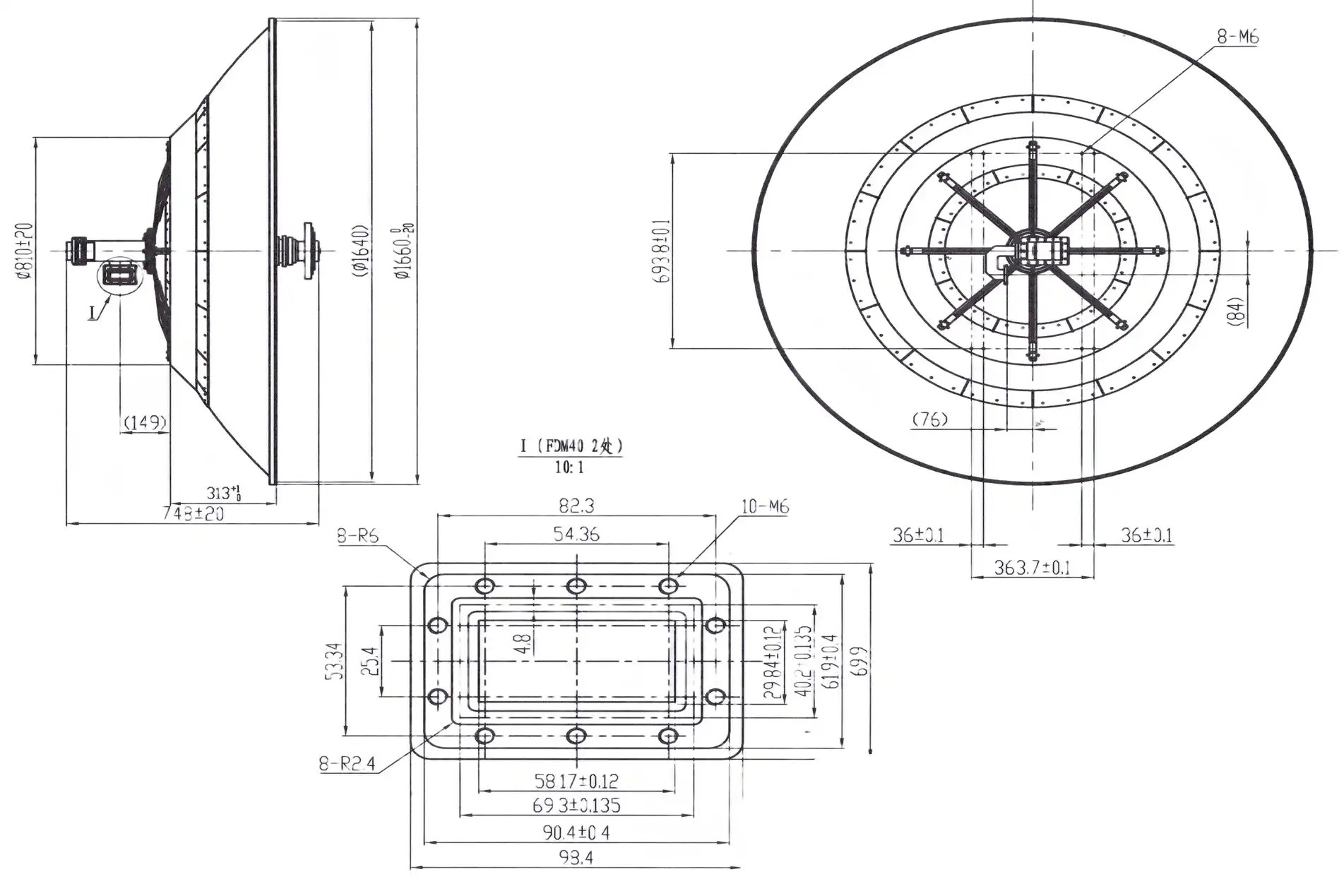
Beamforming networks and phased array integration represent advanced optimization frontiers. While traditional parabolic antennas offer fixed beams requiring mechanical steering, hybrid systems combine reflectors with electronic phase shifters to enable rapid beam scanning across limited sectors. Defense radar applications increasingly adopt these architectures to track multiple targets simultaneously without the latency imposed by mechanical gimbal systems.
Quality Assurance Protocols That Matter to Procurement Teams
Certifications validate claims (parabolic antenna manufacturers). ISO 9001 compliance demonstrates systematic quality management throughout design, manufacturing, and delivery processes. RoHS adherence ensures hazardous substance restrictions meet global regulatory requirements—essential for multinational organizations with standardized procurement policies.
Test reports provide tangible evidence of performance verification. Antenna patterns measured in calibrated anechoic chambers reveal actual sidelobe levels and gain figures rather than simulated predictions. VSWR curves across specified frequency bands confirm matching network adequacy. Mechanical load testing documentation proves structural integrity under rated wind and ice conditions.
Traceability matters in critical infrastructure. Defense contractors and aerospace system integrators require material certifications linking every aluminum billet and fastener to source mills. Counterfeit components have no place in radar installations defending national airspace or satellite terminals supporting emergency response communication. Manufacturers maintaining complete supply chain documentation and serial number tracking provide assurance that meets these stringent requirements.
Customization capability separates commodity suppliers from engineering partners. OEM services that accommodate non-standard frequency ranges, specialized polarization requirements, or unique mounting interfaces enable system integrators to optimize overall platform performance rather than compromising around off-the-shelf limitations. Prototyping support with rapid turnaround allows validation before committing to production quantities—a risk mitigation approach valued by R&D departments exploring emerging applications.
Conclusion
Achieving optimal parabolic antenna gain demands attention to interrelated factors spanning mechanical precision, electromagnetic design, and environmental resilience. Surface accuracy, feed illumination, frequency-specific tolerances, and system-level integration collectively determine whether installations deliver theoretical performance or fall short due to avoidable compromises. Procurement professionals sourcing components for mission-critical applications must evaluate manufacturers based on measurement infrastructure, quality certifications, and demonstrated expertise across the relevant frequency spectrum. Strategic partnerships with suppliers offering comprehensive engineering support, validated test data, and customization capabilities ensure communication networks, radar systems, and satellite ground stations achieve reliability targets while optimizing total ownership costs.
Partner with ADM for Superior Parabolic Antenna Solutions
Advanced Microwave Technologies Co., Ltd. delivers precision-engineered parabolic antenna systems backed by two decades of microwave manufacturing excellence. Our ISO-certified production facilities and 110 GHz measurement capability ensure every reflector, feed horn, and complete assembly meets demanding specifications. Contact craig@admicrowave.com to discuss your requirements with our engineering team and discover how ADM's expertise optimizes your communication, radar, or satellite system performance.
References
1. Balanis, Constantine A. Antenna Theory: Analysis and Design, Fourth Edition. Hoboken: John Wiley & Sons, 2016.
2. Rudge, Alan W., K. Milne, A.D. Olver, and P. Knight. The Handbook of Antenna Design, Volumes 1 and 2. London: Peter Peregrinus Ltd, 1986.
3. Milligan, Thomas A. Modern Antenna Design, Second Edition. Hoboken: John Wiley & Sons, 2005.
4. Love, A.W., ed. Electromagnetic Horn Antennas. New York: IEEE Press, 1976.
5. Silver, Samuel. Microwave Antenna Theory and Design. New York: McGraw-Hill Book Company, 1949.
6. Stutzman, Warren L., and Gary A. Thiele. Antenna Theory and Design, Third Edition. Hoboken: John Wiley & Sons, 2012.
YOU MAY LIKE
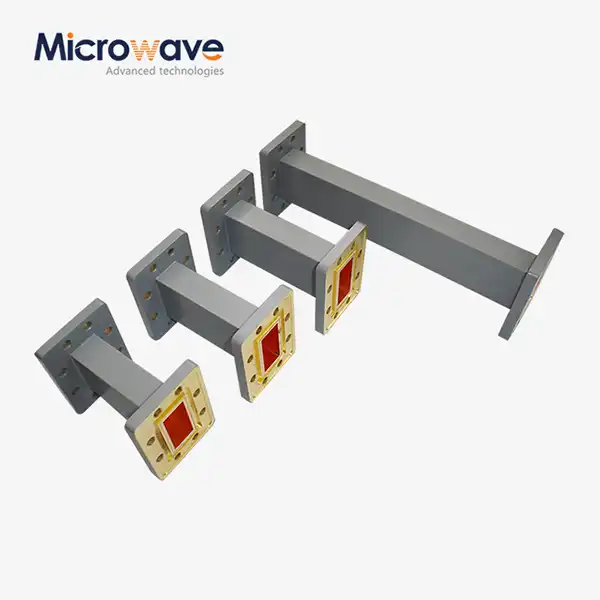 VIEW MORERectangular Straight Waveguide
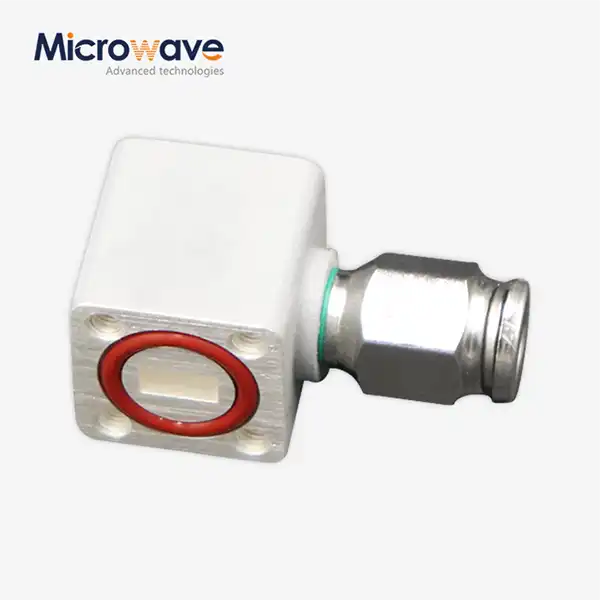 VIEW MOREInflatable Straight Waveguide
 VIEW MOREDouble Ridge Waveguide Termination
 VIEW MOREHigh Power Waveguide Isolator
 VIEW MOREWaveguide Anti-leak Gasket
 VIEW MORECoaxial Cable Adapter
 VIEW MOREDual Channel Coaxial Rotary Joint
 VIEW MORELadder Membrane Conical Dual circular Polarization Horn Antenna