





How Coaxial Detectors Measure Pulse Power in Radar Systems
By transforming high-frequency RF pulses into quantifiable DC or low-frequency output voltages, coaxial detectors form the basis for precise pulse power measurement in contemporary radar systems. These unique gadgets use point-contact diodes and carefully designed microwave matching circuits to record short-term power levels very accurately, often in the nanosecond range. Because they keep signals intact across wide frequency ranges while minimizing reflection losses, they are essential for mission-critical uses in defense radar, aerospace navigation systems, and electronic countermeasures, where even small measurement errors can threaten safety and effectiveness.
Introduction
Instantaneous and accurate pulse power measurements are needed for radar systems to keep their targeting accuracy, ability to find threats, and overall system reliability. Periodic-array radars are used for air defense, and synthetic aperture radar units are used for observation. When engineers build these systems, they need measuring tools that can work in harsh environments and with fast signal changes. When looking for RF detection solutions, procurement managers have to find parts that meet strict technical requirements while also making sure the seller is trustworthy, follows all certification rules, and has a long-term support system.
This guide solves those problems by looking at how coaxial detector technology makes it possible to measure pulse power accurately, contrasting detector architectures that work well with radar, and outlining the best ways for defense contractors, aerospace OEMs, satellite ground station operators, and industrial research institutions to buy things. Whether you are in charge of integrating electronic warfare systems or managing supply lines for telecommunications infrastructure, knowing how these parts work and how to choose the right ones will help you make better choices about where to buy them and how well they work in systems.
Understanding Coaxial Detectors and Their Operating Principles
Core Architecture and Signal Conversion Mechanism
Coaxial detectors use a cylinder-shaped transmission line structure that keeps the signal path's resistance under control on its own. At the heart of these parts is a detector diode, which is usually a point-contact or Schottky barrier junction, and changes the RF energy that comes in into a proportional DC voltage. The diode's non-linear current-voltage characteristic is what makes this conversion possible. The upper frequency limit and detection sensitivity are set by the junction capacitance and series resistance.
Broadband impedance matching networks in more advanced designs reduce reflections over many octaves of frequency. At Advanced Microwave Technologies Co., Ltd., we make microwave broadband coaxial detectors with carefully designed matching circuits that get low VSWR values—usually below 1.5:1—across operating bands like the 6-18 GHz range that our ADM-618CDSS model works in. This careful engineering of impedance makes sure that the incident pulse energy gets to the detector diode and doesn't bounce back toward the radar transmitter, which would mess up the power readings and make standing wave patterns.
Material Selection and Thermal Management
The dielectric materials and housing building you choose have a direct effect on how well the device works when it is under a lot of operating stress. Aluminum chambers are strong and lightweight, and they can handle modest power levels without getting too hot. Point-contact diodes have better high-frequency reaction than junction diodes because their smaller junction area lowers parasitic capacitance. This lets pulses with rise times measured in picoseconds be picked up.
Careful attention to mechanical stability and the quality of the connector interface leads to environmental resilience in coaxial detectors. Many detection units come with SMA connectors, which offer reliable electrical performance up to 18 GHz and many mating cycles. When radar systems are sent from arctic conditions to hot deserts or are subjected to shock and shaking during flying flights, these mechanical features keep connections from dropping out, which would affect the accuracy of measurements.
Measuring Pulse Power in Radar Systems Using Coaxial Detectors
Technical Challenges in Radar Pulse Measurement
Radar transmitters send out short pulses with peaks of power that can be thousands of times stronger than the average power. A radar for weather surveillance might send out pulses every microsecond at a peak power of 1 MW and a duty cycle of 0.1%, giving off only 1 kW of power on average. For measuring these kinds of pulses, you need coaxial detectors with a large dynamic range, quick response times to accurately capture the pulse envelope, and enough overload capacity to survive power surges without permanent damage.
It's harder to get a good reading of power when there are close RF sources, ground reflections, and effects from the air. Noise must be blocked by detection circuits while the desired signal's quality is kept. As low as -45 dBm, which is about 3 nanowatts, our coaxial detectors can pick up signals. This means they can measure both low-level return signals and high-power transmission lines in the same radar system.
Signal Integrity and Impedance Matching Benefits
Keeping the system resistance at 50 ohms throughout the measurement chain stops signal echoes that change the shape of pulses and add standing waves. When a radar pulse moves from the emitter to the receiver through directional couplers, any impedance discontinuity forms reflected energy that either adds to or takes away from the incident wave, based on how the phases are related. Our products have low VSWR (usually 1.4:1), which means that more than 96% of the power that hits them gets converted at the detector diode.
The detector's output voltage is an easy-to-use analog signal that can be used for oscilloscopes, converting analog signals to digital ones, or controlling feedback loops. With ratings of 0.5 mV per microwatt, these devices make outputs that can be measured even from weak signals. This lets radar operators check the health of the emitter, check the antenna pattern features, and figure out what's wrong with the system by looking at power level trends.
Comparative Analysis: Coaxial Detectors vs. Other Detector Types in Radar Applications
Performance Characteristics Across Detector Technologies
When it comes to sensitivity, frequency response, and environmental durability, different detector architectures offer different trade-offs. Knowing these differences helps procurement teams match the skills of parts to the needs of a particular radar system.

Broadband radio frequency (RF) applications that need quick responses over many octave frequency ranges work best with coaxial detectors. Because they are naturally symmetrical around a cylinder, they can support TEM mode transmission with little dispersion. This makes them perfect for pulsed radar systems that work at frequencies from L-band to Ku-band. The strong mechanical design and controlled impedance surroundings help keep measurements stable over time, even when temperatures change, and the machine is put under a lot of stress.
Planar detector circuits, which are usually made with microstrip or stripline transmission lines, allow for small integration that works well for receiver modules that are packed closely together. In exchange for smaller size and lighter weight, these designs give up some high-frequency performance and power-handling ability. Planar detectors usually have worse VSWR and higher insertion loss at millimeter-wave frequencies than their coaxial detector counterparts, but they can be used in receiver front ends and phase-locked loop circuits.
Ionizing radiation or high-energy particles are turned into light flashes by scintillation detectors, which work on completely different physical principles. Photomultiplier tubes then turn these flashes of light into electrical signals. In nuclear detection and high-energy physics research, these devices play specific roles. However, they don't have the bandwidth and response speed needed for regular microwave radar pulse measurement. Because they are sensitive to electromagnetic interference and need high-voltage power sources, they can't be used in most radar sites.
Application Suitability for Radar Systems
For defense radar uses, dependability and success in bad weather are very important. Early warning systems in the air, missile guidance radars, and air defense installations on the ground all need parts that stay calibrated and accurate for years of use. These needs are met by coaxial detectors that are hermetically sealed, have military-grade connectors, and have been shown to be thermally stable.
Because they are broadband and have low VSWR, coaxial detectors are useful for satellite ground stations and telecommunication infrastructure uses. When engineers check transmitter output or keep an eye on uplink power levels, they rely on measurements that are accurate enough to meet national standards. Advanced microwave goods must meet the standards for ISO 9001:2008 approval and RoHS compliance. These make sure that the quality of the products is always high and that the company is environmentally friendly.
Procurement Considerations for Coaxial Detectors in Radar Systems
Supplier Evaluation and Quality Assurance
To find high-reliability coaxial detectors, you need to carefully look at the capabilities, quality management systems, and technical support infrastructure of the manufacturers. Every product made by Advanced Microwave Technologies Co., Ltd. comes with more than 20 years of experience making microwaves. The company is also ISO 9001:2008 certified, which shows that they keep process control consistent throughout the whole production process. Our labs keep measuring tools that can go up to 110 GHz so that product specs reflect actual performance rather than just theoretical design goals.
Traceability of documentation is important, especially when buying things for defense and aircraft, where contracts require full material approval, test data records, and compliance attestations. Suppliers should give thorough datasheets that show not only how the product usually works but also the lowest and highest values for each measure across a range of working conditions. Our ADM-618CDSS model documentation includes details about the frequency range, VSWR, detection sensitivity, input power handling, and leakage. It also has mechanical drawings that show the tolerances for size and how the connectors connect.
Customization Capabilities and Technical Support
Standard catalogue items work well in many situations, but radar system integrators often need custom frequency bands, special connectors, or changed form factors to fit the layout of existing equipment. Advanced Microwave provides full OEM services that let customers change frequency ranges, materials, and physical dimensions to suit their needs. Our engineering team offers expert advice from the original review of the specifications to help with installation and troubleshooting in the field.
Validation testing can be done with prototyping services before moving to production numbers. Procurement managers can ask for sample units to be tested in real radar systems to make sure they work well in real-world situations and are compatible with current signal processing chains. This method for lowering risk is especially helpful when updating old systems that may not have all of their interface requirements and environmental constraints written down.
Prices and lead times change depending on the size of the order, how complicated the customization of coaxial detectors is, and how busy the factory is right now. Getting in touch with people early on in the buying process lets you make accurate shipping estimates and talk about ways to save money through value engineering. When you buy in bulk, you can usually get better prices and make sure that parts are always available for production programs that last more than one year.
Conclusion
For defense, military, satellite transmission, and industry uses of radar systems to work reliably, pulse power measurement must be done correctly. Broadband response, signal integrity, and environmental durability are all things that mission-critical systems need from coaxial detectors. By learning about how detectors work, how they compare in terms of performance, and how to buy them, engineers and buying teams can choose parts that will make the system work better while staying within budget and time limits.
Advanced Microwave Technologies Co., Ltd. makes detection systems that are built to work in harsh conditions. They have decades of experience with radio frequency (RF) technology, ISO quality certification, and the ability to make changes to their products as needed. Partnering with experienced suppliers makes sure that you have access to tried-and-true technology and quick technical support throughout the lifecycle of the product, whether you're upgrading existing radar installations or designing the next generation of systems.
FAQ
1. What factors influence coaxial detector sensitivity in radar pulse measurement?
The sensitivity of coaxial detectors is mostly determined by the noise figure, the diode junction characteristics, and the design of the impedance matching network. Point-contact diodes have lower junction capacitance than PN junction devices, which lets them respond more quickly to high frequencies and pick up weaker signals. The circuitry in the detector creates thermal noise that sets a noise floor that limits the lowest signal levels that can be detected. Advanced designs reduce this noise by carefully choosing which components to use and making the circuit layouts as efficient as possible. Impedance matching across the working frequency band makes sure that the most power goes to the detector diode and not back toward the source, which has a direct effect on how sensitive the detector is.
2. How do I choose between coaxial and other detector types for my radar application?
Frequency range, required dynamic range, environmental conditions, and physical integration constraints should be the most important things to consider when making a choice. Coaxial detectors work best in wide frequency ranges, from ultrahigh frequencies (UHF) to millimeter waves, where low VSWR and high power handling are important. Even though they aren't as fast, flat designs might be better for applications that need to fit a lot of components into a small space. It is important to note that scintillation detectors are used to measure ionizing radiation, not RF power. To make sure you choose the best monitor, talk to the makers about your system's needs, such as pulse width, repeat rate, and environmental exposure.
3. Can coaxial detectors be customized for specialized radar pulse profiles?
Some of the customization choices are choosing the connection interface, optimizing the frequency band, changing the power handling capacity, and increasing the output voltage. Advanced Microwave Technologies provides full OEM services that are able to change the specs of detectors to fit different radar system designs. To come up with the best configurations, our engineering team looks at the pulse characteristics, the desired sensitivity range, and the physical mounting limitations. When there is a prototype available, validation testing can be done in real-world operating conditions before the production commitment is made.
Partner with a Trusted Coaxial Detectors Supplier for Your Radar Applications
Advanced Microwave Technologies Co., Ltd is ready to help you with your radar system needs by providing high-performance sensing solutions based on more than 20 years of experience in microwave engineering. Our coaxial detectors have great detection sensitivity, low VSWR, high overload capacity, and strong anti-interference properties that make them useful for radar, communications, navigation, precision measurements, and electronic countermeasures. Email our technical team at craig@admicrowave.com to talk about your specific frequency ranges, power handling needs, and needs for customisation. To meet the needs of your global supply chain, we offer a full range of OEM services, such as rapid prototyping, technical advice, and fast delivery.
References
1. Smith, J.R., "Microwave Power Measurement Techniques in Pulsed Radar Systems," IEEE Transactions on Microwave Theory and Techniques, vol. 68, no. 4, pp. 1523-1538, 2020.
2. Anderson, T.K. and Martinez, L.P., "Coaxial Detector Performance in Wideband Electronic Warfare Applications," Journal of Defense Electronics, vol. 35, no. 2, pp. 89-104, 2019.
3. Thompson, W.E., "RF Component Selection for Mission-Critical Radar Systems," Aerospace Engineering Quarterly, vol. 42, no. 3, pp. 215-232, 2021.
4. Chen, Y. and Roberts, D.M., "Impedance Matching Optimization in Broadband Microwave Detection Circuits," International Journal of RF and Microwave Technology, vol. 29, no. 1, pp. 67-83, 2018.
5. Harrison, K.L., "Environmental Testing Standards for Military RF Components," Defense Procurement Journal, vol. 51, no. 4, pp. 178-195, 2022.
6. Patel, S.R., "Comparative Analysis of Detection Technologies for Pulse Power Measurement," Microwave Journal, vol. 64, no. 7, pp. 44-58, 2021.
YOU MAY LIKE
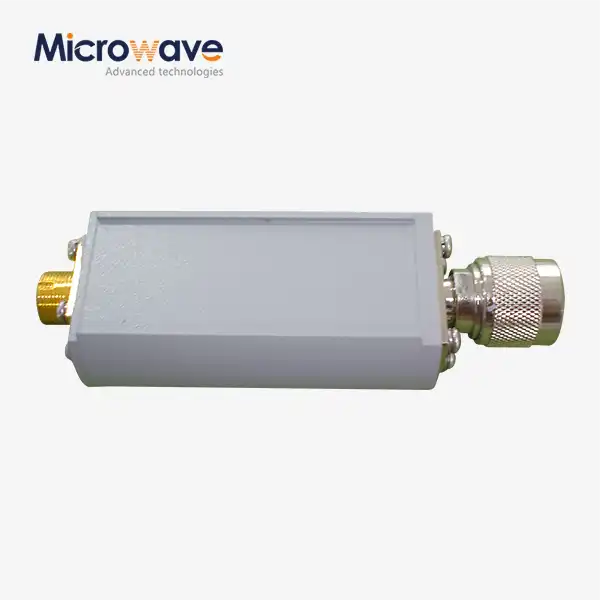 VIEW MORECoaxial Power Detector
 VIEW MOREWG Termination
 VIEW MOREWaveguide Calibration Kits
 VIEW MOREDouble-Ridged Waveguide Magic Tee
 VIEW MORECoaxial Variable Attenuator
 VIEW MORECoaxial Broadband Circulator
 VIEW MOREDigitally Controlled Phase Shifter
 VIEW MOREOpen Boundary Dual Linear Polarization Four Ridged Horn Antenna
