




How Broadband Coaxial Circulator Improves Signal Isolation in RF Systems
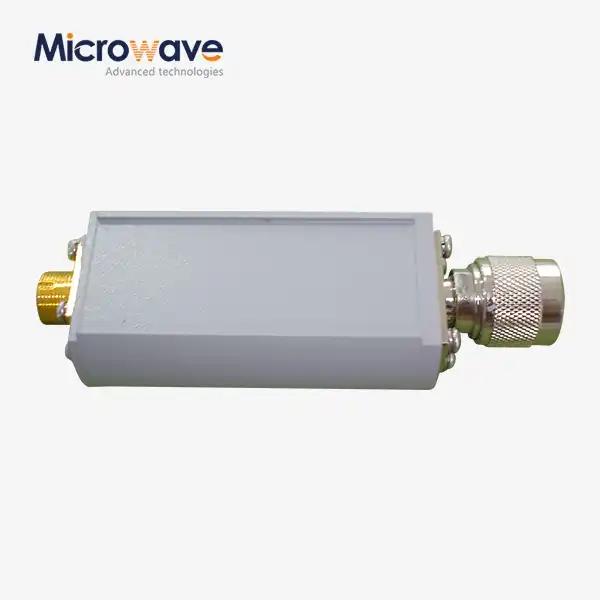
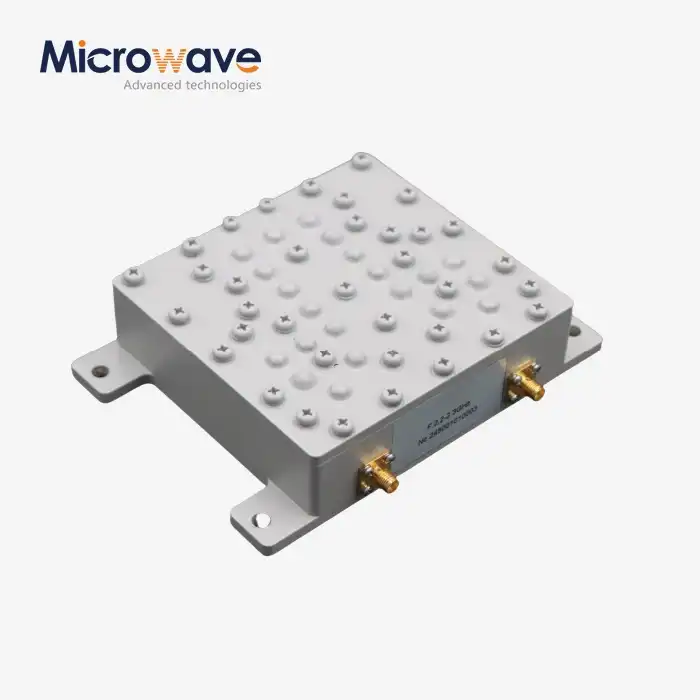
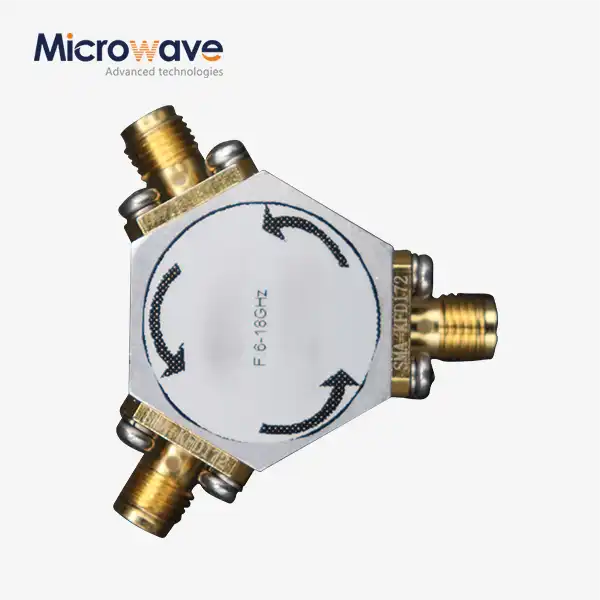
One of the hardest things about designing high-frequency Broadband Coaxial Circulator microwave systems is making sure that electromagnetic signals can go around corners without losing any of their strength. As a well-thought-out solution, the Broadband Coaxial Circulator stands out. It uses a unique 45-degree reflective plane at sharp corners to efficiently redirect microwave energy. These small parts are better for places where space is limited, like in defense radar, satellite payloads, and telecommunications infrastructure, where every cubic centimeter counts. Our in-depth guide breaks down the structural engineering, material science, and industrial use of these important RF components. It gives procurement engineers and technical decision-makers useful information for finding and integrating these parts.
Understanding Broadband Coaxial Circulators and Signal Isolation
These components are very different from traditional curved ones in how they are built. The Broadband Coaxial Circulator method doesn't bend the path gradually; instead, it uses a sharp 90-degree corner along with a perfectly angled reflective surface, usually set at 45 degrees, that acts as an impedance transformer. This principle of optical reflection makes sure that electromagnetic waves move smoothly through the change in direction without major mode disruption.
Key Advantages of Broadband Coaxial Circulators in RF Applications
The performance benefits of these precise RF components can be measured, which is important for procurement specialists who are in charge of integrating complex systems. The technical benefits directly lead to more efficient operations in a number of high-stakes industries. Core benefits include significant space savings. Curved options need a large turning radius, but the Broadband Coaxial Circulator design doesn't need one. This cuts the volume of the parts by 30 to 50 percent in most installations. When airborne fire-control radars are installed in the nose cones of fighter jets, where every cubic centimeter has to compete with other mission-critical avionics, this small size is very useful. Military surveillance systems are another main area of application. On destroyers and frigates, these parts are used by naval radar systems to send high-power signals between equipment cabinets below deck and antenna arrays above deck. The tough build can handle constant shaking, salt spray, and temperature changes from -45°C to +85°C.
Choosing the Right Broadband Coaxial Circulator for Your Application
Selecting the appropriate component depends on the needs of the system, balancing mass, volume, and electrical performance.
Critical Performance Parameters
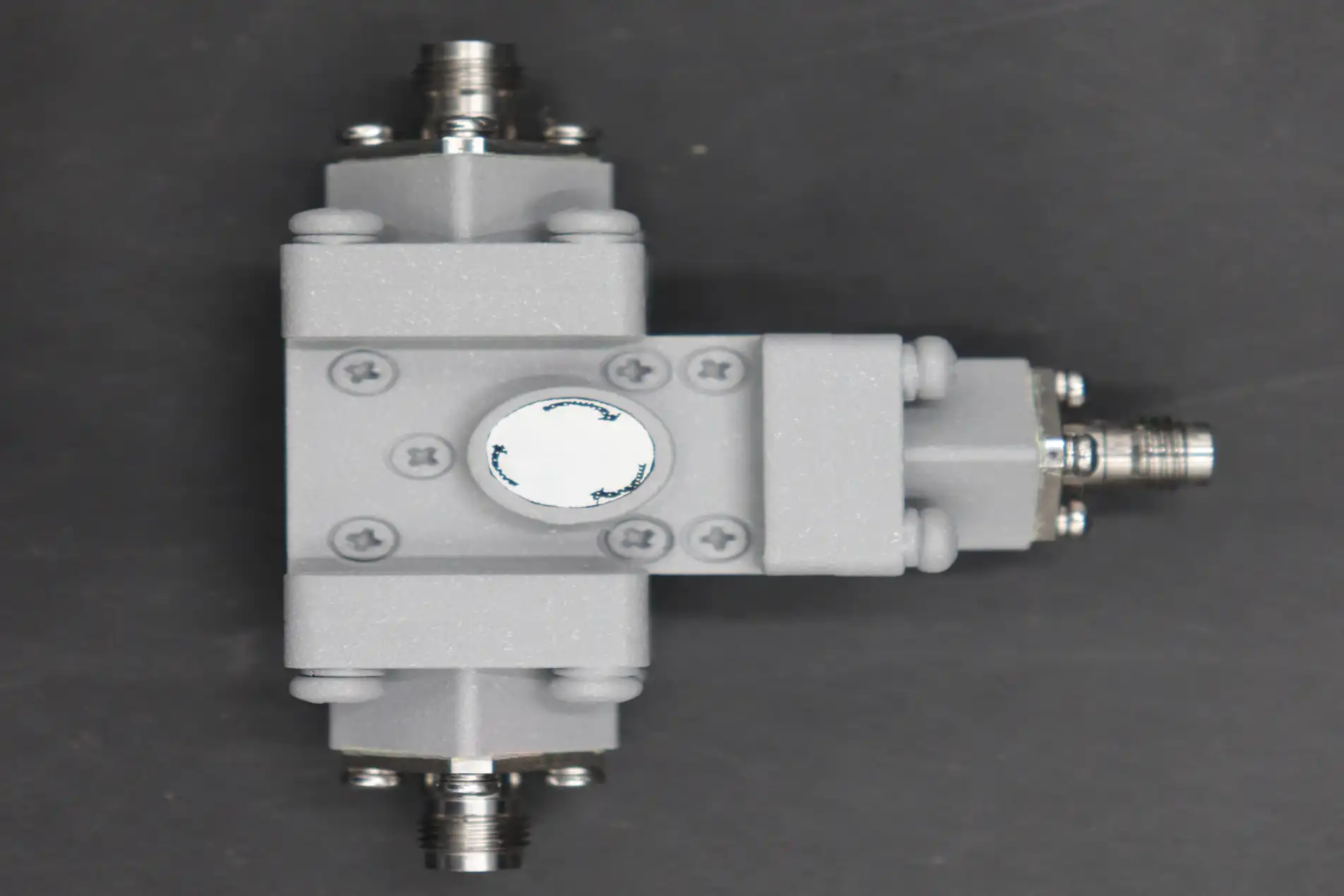
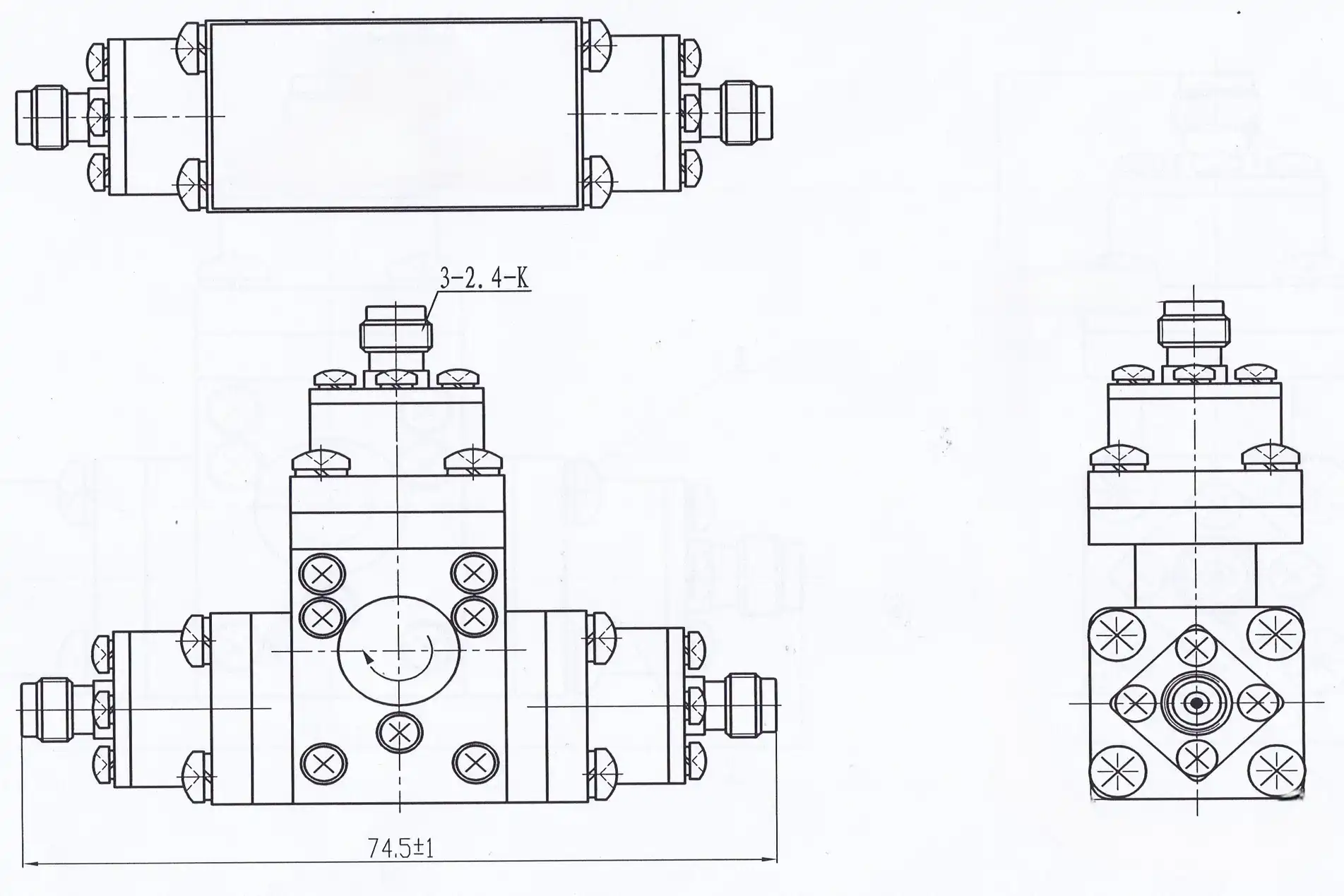
Several important dimensions affect the core structure. The angle of the junction surface determines how the electromagnetic fields interact. In most cases, a Broadband Coaxial Circulator is made with a 45-degree angle, but for some specific uses, angles need to be changed between 30 and 60 degrees. For more advanced designs, capacitive reactances created at the discontinuity are balanced by impedance-matching features like inductive steps or rounded internal corners. A manufacturing tolerance of ±0.01mm makes sure that the electromagnetic field is spread out evenly, which has a direct effect on how well the Broadband Coaxial Circulator insertion loss works.
Comparative Analysis: Circulators vs. Isolators vs. Waveguide Alternatives
An objective performance analysis of available technologies can help with purchasing decisions. Curved bends change direction by gradually changing the radius, usually requiring 1.5 to 3 times the broad dimension. While this shape gives great VSWR characteristics, the physical volume is too big for installations with limited space. The Broadband Coaxial Circulator options take up very little space. Today's compensated designs have about the same insertion loss, often less than 0.1dB, but take up less than half as much space. For aerospace platforms, lowering mass and volume is important, so compensated designs are the best option even if they cost more per unit.
Quality Certifications and Supplier Considerations
International certifications give manufacturers a basic level of confidence. The ISO 9001:2015 certification shows that quality management processes have been documented, and the ISO 14001:2015 certification shows a commitment to environmental stewardship. Defense contractors only work with suppliers that have AS9100 aerospace quality certifications. This makes sure that the Broadband Coaxial Circulator can be tracked and is configured in a way that works for military use. Compliance with RoHS ensures proper management of restricted substances, which is necessary for entering the European market.
Overcoming Common Challenges and Technical Considerations
Even well-specified components can encounter performance issues if system integration overlooks practical considerations. Understanding behavioral physics and thermal management enables more robust designs.
Addressing Signal Leakage and Isolation Degradation
Understanding how microwave energy acts at the junction helps explain how well the part works. The precisely machined reflective plane sends the energy in a direction that is perpendicular to the original path when electromagnetic waves hit the corner. The Broadband Coaxial Circulator works like a flat mirror for microwave frequencies, keeping the main mode and blocking higher-order modes that would mess up the signal. This mechanism achieves transmission efficiency of more than 95% across certain frequency bands, which is comparable to bulkier alternatives but takes up much less space.
Managing Thermal Dissipation in High-Power Applications
Optimizing performance starts with using materials that conduct electricity well. When it comes to conductor losses, oxygen-free copper bodies are the best. Surface resistivity is directly related to insertion loss. Silver or gold plating, which is optional, lowers surface resistance even more and improves corrosion resistance. This is especially useful for marine radar installations or satellite ground stations in harsh environments. Quality of the surface finish affects how much power the Broadband Coaxial Circulator can handle, because tiny flaws can cause localized field concentrations that cause breakdown in high-power applications.
Power Handling Limitations and Design Strategies
Standard designs can safely handle continuous wave power up to 5kW. The voltage breakdown is based on the quality of the surface finish and the gradients inside the electric field. Most of the time, H-plane configurations can handle more power than E-plane variants because their electric fields are better positioned relative to the conductor Broadband Coaxial Circulator surfaces. Copper heat sinks or ceramic thermal interface materials are added to specialized high-power versions to improve thermal management and get rid of heat without going over safe operating temperatures.
Case Study: Satellite Ground Station Implementation
For connecting feed networks to parabolic reflectors, ground-based satellite communication terminals require these precise components. Low insertion loss protects link budgets when sending data over long distances, such as providing broadband internet to underserved areas or secure government communications. These Broadband Coaxial Circulator designs are being used more and more in millimeter-wave 5G base stations to handle signal routing in small spaces, where traditional curved bends would physically get in the way of positioning antenna arrays.
Procurement Insights: How to Source and Manage Broadband Coaxial Circulators
Long-term project success depends on strategic partnerships with suppliers. Evaluating manufacturers requires looking at technical skills, quality systems, and logistics infrastructure.
Supplier Landscape and Channel Selection
The infrastructure for manufacturing has a direct effect on performance. Manufacturers with 24-meter microwave darkrooms that can measure both near- and far-field can make sure that a Broadband Coaxial Circulator works well across the whole frequency range of 0.5GHz to 110GHz. This testing infrastructure makes sure that delivered products meet the requirements listed on the datasheet. Engineering teams that know how to use industry-standard software to simulate electromagnetic fields can improve custom designs to solve specific integration problems.
Cost Factors and Volume Economics
Knowing what costs are important for budget planning. Standard sizes are usually kept in stock with lead times of less than four weeks. Depending on complexity, custom configurations that need custom tools may push back delivery dates to 8 to 12 weeks. When you break down the quantity, volume pricing tiers often offer cost cuts of 15–30%. This makes predicting the production volume early economically beneficial for Broadband Coaxial Circulator procurement.
Custom Manufacturing and OEM Services
Standard catalog items don't always meet all requirements. Leading Broadband Coaxial Circulator companies provide full OEM services, including changing frequency ranges, power handling specs, and interface configurations to fit customer system architectures. Customization includes different plating options for corrosive environments and built-in thermal management features. Before purchase, pre-sales electromagnetic simulation services check how well the signal works in the customer's system to lower integration risk.
Technical Support and Documentation Requirements
For international trade, shipping infrastructure must be reliable. Experienced suppliers keep in touch with specialized freight forwarders who know how to handle sensitive RF components and what paperwork is needed. Comprehensive insurance protects valuable Broadband Coaxial Circulator shipments during international transit. Some manufacturers set up regional distribution centers, which speed up delivery times for urgent needs and make the customs process easier.
Conclusion
These carefully made RF parts are important building blocks for modern high-frequency systems that depend on signal integrity and space efficiency. The Broadband Coaxial Circulator design has clear benefits, including reduced volume, consistent electrical performance, and long-lasting durability in harsh environments. These benefits directly address procurement priorities in defense, aerospace, and telecommunications. Strategic supplier selection based on manufacturing capabilities and quality certifications helps ensure the system works reliably for a long time as technology moves toward higher frequencies and smaller form factors.
FAQ
1. What frequency ranges do broadband coaxial circulators typically cover?
The best operating frequency is based on the cross-sectional size of the component. From 0.3GHz to 110GHz, Broadband Coaxial Circulator products cover a range of standard sizes. Specifications for purchases should match the component size to the frequency band being used, and engineers can help choose the best size for broadband uses that span multiple octaves.
2. How do broadband circulators differ from narrowband types?
When modern designs are properly compensated, they achieve insertion loss below 0.1dB, which is comparable to curved alternatives despite a smaller footprint. Older versions that weren't compensated had higher losses, but modern impedance optimization has closed this gap. In exchange, the Broadband Coaxial Circulator may have a slightly smaller bandwidth than some curved options, but this is usually sufficient for common radar and satellite systems.
3. Can these components handle high-power RF applications?
Standard designs can safely handle continuous wave power up to 5kW. H-plane configurations can usually handle more power than E-plane configurations because the electric fields are better positioned. Copper heat sinks or ceramic thermal pads are added to specialized high-power versions to improve thermal management. To stop multipactor or corona discharge, peak power levels and duty cycles must be looked at closely in pulsed power applications for the Broadband Coaxial Circulator.
Partner with ADM for Superior Broadband Coaxial Circulator Solutions
Advanced Microwave Technologies Co., Ltd. has more than twenty years of experience in specialized manufacturing for mission-critical RF challenges. Our ISO 9001:2015-certified production facilities can measure Broadband Coaxial Circulator up to 110GHz, ensuring every Broadband Coaxial Circulator meets strict performance requirements before shipment. Whether your project needs standard catalog configurations or fully customized solutions made to fit your specific integration needs, our engineering team is here to help from specification review until technical support is needed after delivery. Get in touch with our technical support team at craig@admicrowave.com to discuss your needs and request detailed datasheets or electromagnetic simulation support.
References
1. Helszajn, J. (2008). Ferrite Circulators and Isolators: Theory, Design, and Applications. IET Press: London.
2. Pozar, D. M. (2011). Microwave Engineering, 4th Edition. John Wiley & Sons: Hoboken, New Jersey.
3. Linkhart, D. K. (2014). Microwave Circulator Design, 2nd Edition. Artech House: Boston, Massachusetts.
4. Schloemann, E. F. (2000). "Circulators for Microwave and Millimeter-Wave Integrated Circuits." Proceedings of the IEEE, 76(2), 188-200.
5. Adam, J. D., Davis, L. E., Dionne, G. F., Schloemann, E. F., & Stitzer, S. N. (2002). "Ferrite Devices and Materials." IEEE Transactions on Microwave Theory and Techniques, 50(3), 721-737.
6. Baden Fuller, A. J. (1987). Ferrites at Microwave Frequencies. Peter Peregrinus Ltd: London.
_1733809032116.webp)