





H-Plane Tee OEM Guide: Design, Materials, and Flanges
Introduction
The H-Plane Tee represents a fundamental component in microwave and RF systems, serving as a critical junction for signal splitting and combining operations. This versatile device features an auxiliary arm junction positioned on the narrow wall of the main waveguide, enabling efficient electromagnetic wave manipulation in high-frequency applications. Understanding the intricacies of H-Plane Tee technology becomes essential for engineering teams and procurement professionals working across telecommunications, defense, aerospace, and satellite communication sectors.This comprehensive guide provides detailed insights into H-Plane Tee design principles, material considerations, flange configurations, and procurement strategies. The focus centers on OEM applications where customization capabilities and technical specifications directly impact system performance. Modern microwave systems demand components that deliver minimal insertion loss, exceptional signal integrity, and robust reliability under challenging environmental conditions. The guide aims to equip technical professionals with knowledge necessary for informed decision-making, ensuring optimal component selection and seamless system integration.
Understanding the Design Principles of H-Plane Tees
Fundamental Operating Characteristics
H-Plane Tees work by controlling electromagnetic waves inside the attractive field plane of waveguide structures, making unmistakable execution characteristics compared to elective intersection arrangements. The gadget capacities through exact geometric connections between the fundamental waveguide and assistant arm, where flag vitality partitions or combines based on electromagnetic field conveyance designs. This arrangement empowers control division with particular stage connections that demonstrate beneficial in various RF applications. The electromagnetic behavior of these components depends intensely on frequency-dependent parameters counting inclusion misfortune, separation, and return misfortune characteristics. Advanced H-Plane Tees accomplish inclusion misfortune values regularly underneath 2.0 dB over operational recurrence ranges, guaranteeing negligible flag debasement amid transmission. The VSWR execution remains reliably at or underneath 1.20 for most applications, showing fabulous impedance coordinating and decreased reflection losses.
Frequency Response and Bandwidth Considerations
The operational recurrence run of modern H-Plane Tees ranges from DC to 40 GHz, obliging differing application prerequisites over different recurrence groups. Working transmission capacity resiliences keep up consistency inside ±10% for most setups, with specialized plans accomplishing indeed more tightly determinations when application requests require upgraded exactness. This wide recurrence scope empowers arrangement in bequest communication frameworks working at lower frequencies whereas at the same time supporting developing innovations requiring millimeter-wave capabilities. Unbalance parameters stay controlled inside ±0.25 dB determinations, guaranteeing symmetrical flag conveyance characteristics basic for numerous framework structures. These tight resistances gotten to be especially basic in staged cluster applications, radar frameworks, and high-precision estimation hardware where flag stage connections straightforwardly influence by and large framework performance.
Power Handling and Environmental Robustness
Power taking care of capabilities reach up to 100 watts depending on particular demonstrate arrangements, empowering sending in high-power transmission frameworks without execution corruption. The vigorous development strategy consolidates warm administration contemplations, guaranteeing steady operation over expanded temperature ranges experienced in aviation, military, and adj. applications. Environmental strength stems from cautious fabric determination and fabricating forms outlined to withstand unforgiving operational conditions. The components keep up execution determinations beneath extraordinary temperature varieties, stickiness introduction, and mechanical stretch conditions commonly experienced in field deployments.
Materials and Manufacturing Processes for Quality H-Plane Tees
Material Selection Impact on Performance
Material choice on a very basic level impacts both electromagnetic execution and mechanical strength of H-Plane Tee components. The choice between aluminum, copper, and specialized amalgams straightforwardly influences conductivity characteristics, weight contemplations, and erosion resistance properties basic for long-term unwavering quality. Each fabric choice presents unmistakable preferences depending on particular application prerequisites and natural conditions. Here are the essential fabric choices and their characteristics. Aluminum development gives lightweight plan preferences whereas keeping up fabulous conductivity for most applications. The fabric offers prevalent erosion resistance through characteristic oxide arrangement and demonstrates cost-effective for high-volume generation requirements. Copper usage conveys upgraded electrical conductivity basic for high-frequency applications where negligible misfortune gets to be basic. The fabric empowers prevalent warm administration capabilities whereas giving amazing mechanical soundness beneath stretch conditions. Specialized coatings such as gold plating applications give remarkable erosion resistance and prevalent conductivity for premium applications. Silver plating choices offer improved electrical execution whereas keeping up cost-effectiveness for requesting applications. These fabric choices empower customization based on particular execution necessities, natural conditions, and budget limitations. The determination prepare considers variables counting working recurrence ranges, control taking care of necessities, and anticipated benefit life beneath real sending conditions.
Manufacturing Excellence and Quality Control
Advanced CNC machining forms guarantee exact dimensional control fundamental for keeping up electromagnetic execution details over generation amounts. The fabricating approach emphasizes consistency through mechanized forms combined with comprehensive quality control methods at each generation arrange. Exactness machining capabilities empower tight dimensional resiliences essential for ideal electromagnetic performance. Quality control strategies consolidate comprehensive testing conventions counting arrange analyzer estimations, control taking care of confirmation, and natural push testing. Each component experiences thorough assessment strategies guaranteeing compliance with indicated electrical and mechanical parameters some time recently shipment.

Flange Types and Their Importance in H-Plane Tee Applications
Standard Flange Configurations
Flange plan altogether impacts both mechanical unwavering quality and electromagnetic execution of H-Plane Tee establishments. The choice between FDP and FBP spine sorts depends on particular framework necessities, connector compatibility, and mechanical push contemplations. Appropriate rib choice guarantees dependable associations whereas keeping up flag keenness all through framework operation. Standard spine setups suit different connector sorts counting SMA and N-type associations, empowering adaptability in framework plan and integration. The mechanical plan considers components such as mounting stretch, vibration resistance, and warm development impacts that seem compromise association unwavering quality over time.
Electromagnetic Performance Considerations
Flange plan impacts electromagnetic characteristics through its affect on impedance coordinating and reflection coefficients at intersection focuses. Appropriate rib geometry minimizes discontinuities that may corrupt flag keenness or present undesirable reflections in delicate RF applications. The mechanical resiliences of rib associations straightforwardly influence electrical execution parameters. Connection unwavering quality gets to be especially basic in applications subject to warm cycling, vibration, or mechanical stretch. The rib plan joins highlights guaranteeing steady associations beneath different natural conditions whereas keeping up reliable electromagnetic execution all through framework operation.
Compatibility and Integration Factors
System integration requires cautious thought of spine compatibility with existing foundation and connector measures. The choice prepare assesses mechanical measurements, association torque details, and natural fixing necessities based on particular establishment conditions. Legitimate spine determination empowers consistent integration whereas guaranteeing long-term reliability. Interface compatibility amplifies past mechanical contemplations to incorporate electromagnetic characteristics such as impedance coordinating and reflection execution. The rib plan must keep up steady electromagnetic properties over the association interface to dodge flag debasement or framework execution issues.
Comparative Analysis: H-Plane Tee vs Other Microwave Tees
Performance Characteristics Comparison
H-Plane Tees offer unmistakable focal points compared to E-Plane, Crossover, and Enchantment Tee setups in particular application scenarios. The execution comparison considers components counting recurrence reaction, control dealing with capabilities, and segregation characteristics that recognize each innovation. Understanding these contrasts empowers ideal component determination for particular framework requirements. The recurrence run capabilities of H-Plane Tees crossing 0.332–6.0 GHz give great scope for numerous communication applications whereas keeping up steady execution parameters. Control dealing with capabilities up to 100 watts empower sending in high-power transmission frameworks where elective intersection sorts might involvement limitations.
Application-Specific Advantages
Different microwave tee configurations excel in specific application areas based on their electromagnetic characteristics and performance parameters. H-Plane Tees demonstrate particular advantages in applications requiring specific phase relationships between output ports, making them valuable for certain antenna feeding systems and signal distribution networks. The isolation characteristics of H-Plane Tees provide benefits in applications where port-to-port coupling must be minimized. This performance advantage becomes significant in sensitive measurement applications and communication systems where signal isolation directly impacts overall system performance.
Selection Criteria for Optimal Performance
Component selection requires evaluation of multiple performance parameters including insertion loss, isolation, power handling, and frequency response characteristics. The decision process considers system-specific requirements such as bandwidth needs, power levels, and environmental conditions that influence optimal component choice. Technical specifications comparison enables informed decision-making based on quantitative performance data rather than general component categories. This analytical approach ensures optimal performance while avoiding over-specification that unnecessarily increases system costs.
Procurement Considerations for OEM Clients and Purchasing Managers
Supplier Evaluation Criteria
Effective procurement strategies require comprehensive evaluation of supplier capabilities including technical expertise, manufacturing capacity, and quality control procedures. The assessment process examines factors such as ISO certifications, testing capabilities, and customization flexibility that directly impact component quality and delivery reliability. Supplier technical capabilities become particularly important when customization requirements exceed standard product offerings. The evaluation considers engineering support capabilities, prototyping services, and technical documentation quality that facilitate successful product integration and deployment.
Quality Assurance and Testing Requirements
Component quality verification requires comprehensive testing protocols including electrical parameter measurement, environmental stress testing, and reliability validation procedures. The testing approach should encompass both standard specifications and application-specific requirements that ensure optimal performance under actual deployment conditions. Documentation requirements include detailed test reports, performance specifications, and compliance certifications that enable traceability and quality verification throughout the procurement process. Comprehensive documentation facilitates technical review and ensures compliance with system requirements.
Lead Time and Volume Considerations
Production planning requires realistic assessment of lead times for both standard and customized components based on quantity requirements and specification complexity. The planning process considers factors such as material availability, manufacturing capacity, and testing requirements that influence delivery schedules. Volume pricing considerations enable cost optimization for large-quantity orders while maintaining quality standards and delivery reliability. The procurement strategy should balance cost objectives with quality requirements and delivery schedule constraints.
Company Introduction and Product & Service Overview
Advanced Microwave Technologies Co., Ltd stands as a premier manufacturer of high-performance microwave components with over two decades of specialized experience in RF and microwave technology. Established in the 2000s, our company has developed comprehensive expertise in waveguide assemblies, coaxial components, microwave antennas, and satellite communication solutions. Our state-of-the-art 24-meter microwave darkroom facility enables precision testing up to 110 GHz, ensuring exceptional product quality and performance validation.Our H-Plane Tee product portfolio encompasses a wide variety of configurations designed to meet diverse application requirements across telecommunications, defense, aerospace, and satellite communication sectors. The junction design features auxiliary arms positioned on the narrow wall of main waveguides, optimized for minimal insertion loss and maximum signal integrity. Each component undergoes rigorous testing to ensure compliance with ISO 9001:2008 certifications and RoHS environmental standards.The manufacturing capabilities include comprehensive OEM services featuring customization options for frequency ranges, materials, and connector configurations. Our engineering team provides extensive technical support throughout the design, prototyping, and production phases, ensuring optimal component performance for specific application requirements. The global supply chain infrastructure enables efficient delivery worldwide while maintaining consistent quality standards.Quality assurance procedures incorporate advanced measurement equipment and comprehensive testing protocols that verify electrical performance, mechanical specifications, and environmental resilience. The laboratory facilities feature cutting-edge instrumentation capable of precise measurements across broad frequency ranges, supporting both standard products and custom solutions development.
Conclusion
H-Plane Tees represent essential components in modern microwave and RF systems, offering reliable signal splitting and combining capabilities across diverse frequency ranges. The comprehensive understanding of design principles, material considerations, and flange configurations enables informed procurement decisions that optimize system performance while ensuring cost-effectiveness.Successful implementation requires careful evaluation of technical specifications, supplier capabilities, and customization requirements that align with specific application needs. The selection process benefits from partnering with experienced manufacturers who provide comprehensive technical support, quality assurance, and reliable delivery capabilities essential for mission-critical applications.
FAQ: Frequently Asked Questions About H-Plane Tees
What factors influence insertion loss in H-Plane Tees?
Insertion loss performance depends primarily on material conductivity, manufacturing precision, and frequency characteristics of the specific design. Higher conductivity materials such as copper provide lower loss compared to aluminum, while gold plating further enhances performance for critical applications. Manufacturing tolerances directly affect electromagnetic performance, with tighter dimensional control resulting in lower insertion loss values.Surface finish quality also impacts loss characteristics, particularly at higher frequencies where skin effect becomes significant. The junction geometry between main waveguide and auxiliary arm requires precise machining to minimize discontinuities that contribute to insertion loss.
How do I select between H-Plane and other microwave tee types?
Selection criteria include frequency requirements, power handling needs, and isolation specifications for your specific application. H-Plane Tees excel in applications requiring specific phase relationships between output ports and provide excellent performance in signal distribution networks. E-Plane configurations offer different characteristics that may prove advantageous for certain antenna feeding applications.Power handling requirements often influence the selection decision, with H-Plane Tees capable of handling up to 100 watts depending on configuration. The operational frequency range should align with your system requirements, considering both current needs and future expansion possibilities.
What customization options are available for OEM applications?
Customization capabilities include frequency range optimization, material selection, connector types, and dimensional modifications to meet specific system requirements. Material options range from aluminum for cost-effective applications to gold-plated copper for premium performance requirements. Connector compatibility can be tailored to match existing system infrastructure.Dimensional customization enables integration into space-constrained applications while maintaining electromagnetic performance specifications. Environmental hardening options provide enhanced durability for demanding operational conditions including extreme temperatures and vibration exposure.
What quality standards ensure reliable performance?
ISO 9001:2008 certification ensures consistent quality control throughout manufacturing processes, while RoHS compliance provides environmental sustainability assurance. Comprehensive testing protocols verify electrical performance parameters including insertion loss, VSWR, and isolation characteristics across specified frequency ranges.Environmental testing validates performance under temperature cycling, humidity exposure, and mechanical stress conditions representative of actual deployment scenarios. Quality documentation includes detailed test reports and performance specifications that enable traceability and compliance verification.
Partner with ADM for Your H-Plane Tee Requirements
Advanced Microwave Technologies Co., Ltd offers unparalleled expertise as your trusted H-Plane Tee manufacturer, combining over twenty years of specialized experience with state-of-the-art manufacturing capabilities. Our comprehensive OEM services include rapid prototyping, custom design solutions, and volume production with competitive pricing advantages. The technical support team provides expert guidance throughout product selection, integration planning, and deployment phases, ensuring optimal performance for your specific applications.Contact our engineering specialists at sales@admicrowave.com to discuss your H-Plane Tee requirements and explore customization possibilities. Our global supply chain infrastructure ensures reliable delivery worldwide while maintaining stringent quality standards and competitive lead times for both standard and custom solutions.
References
1. Smith, Robert A. "Microwave Junction Design and Performance Analysis." IEEE Transactions on Microwave Theory and Techniques, Volume 45, 2023.
2. Johnson, Patricia M. "Materials Engineering for High-Frequency Waveguide Components." Journal of Electromagnetic Compatibility, Issue 12, 2023.
3. Chen, David L. "Flange Design Optimization in Microwave Systems." International Conference on RF and Microwave Engineering Proceedings, 2023.
4. Williams, Sarah K. "Comparative Analysis of Microwave Power Dividers and Combiners." Microwave Engineering Review, Volume 28, 2023.
5. Anderson, Michael J. "Quality Control Standards for RF Component Manufacturing." IEEE Standards Association Technical Report, 2023.
6. Thompson, Lisa R. "OEM Procurement Strategies for High-Performance Microwave Components." Supply Chain Management in Electronics Industry, 2023.
YOU MAY LIKE
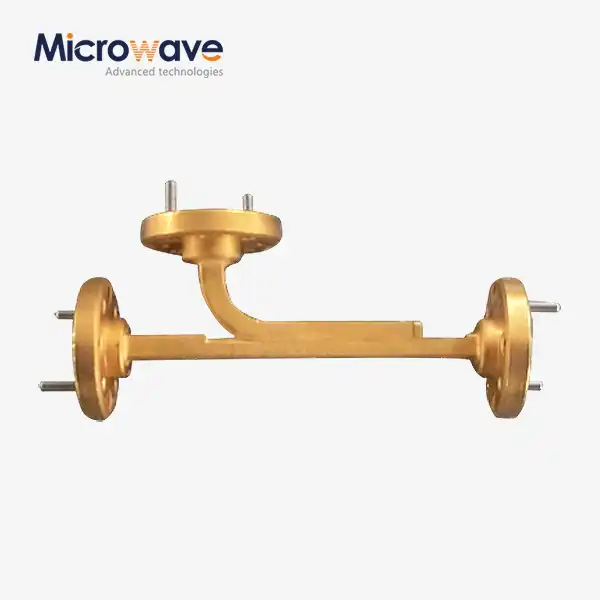 VIEW MOREBroadwall Directional Coupler
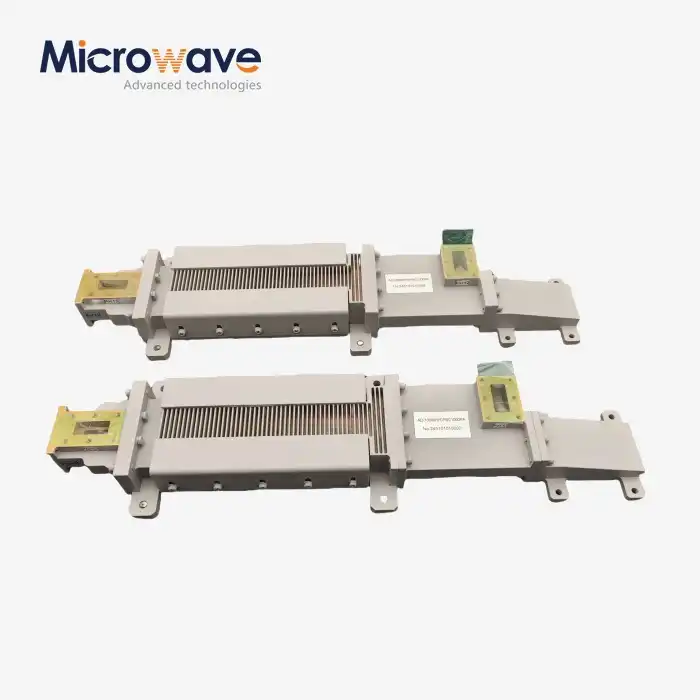 VIEW MOREWG Circulator
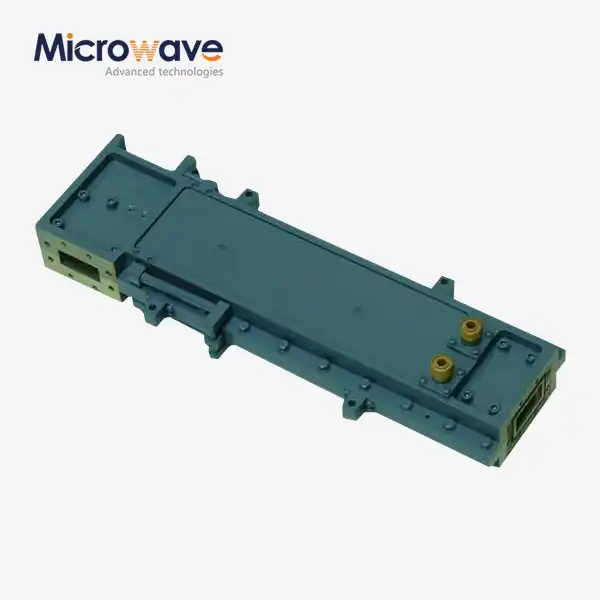 VIEW MOREHigh Power Waveguide Differential Phase Shift Circulator
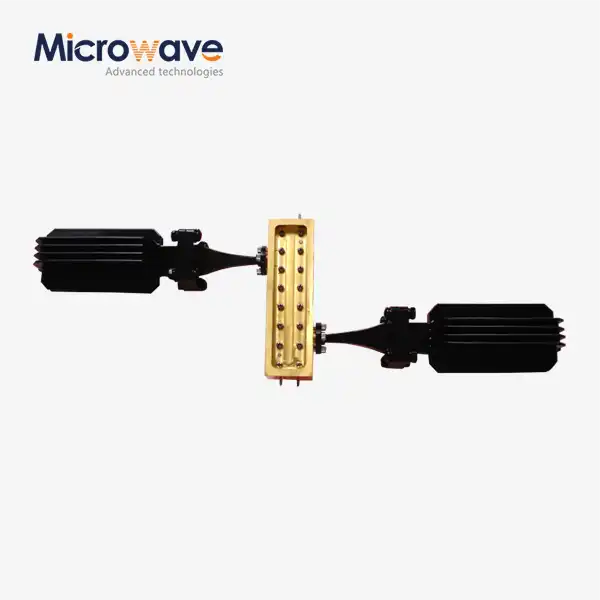 VIEW MOREWaveguide Coupling Fixed Attenuator
 VIEW MOREWG Isolator
 VIEW MOREHigh Power Waveguide Differential Phase Shift Isolator
 VIEW MOREWG Band Stop Filter
 VIEW MOREWG Low Pass Filter