





End Launch Waveguide to Coaxial Adapter vs Side Launch
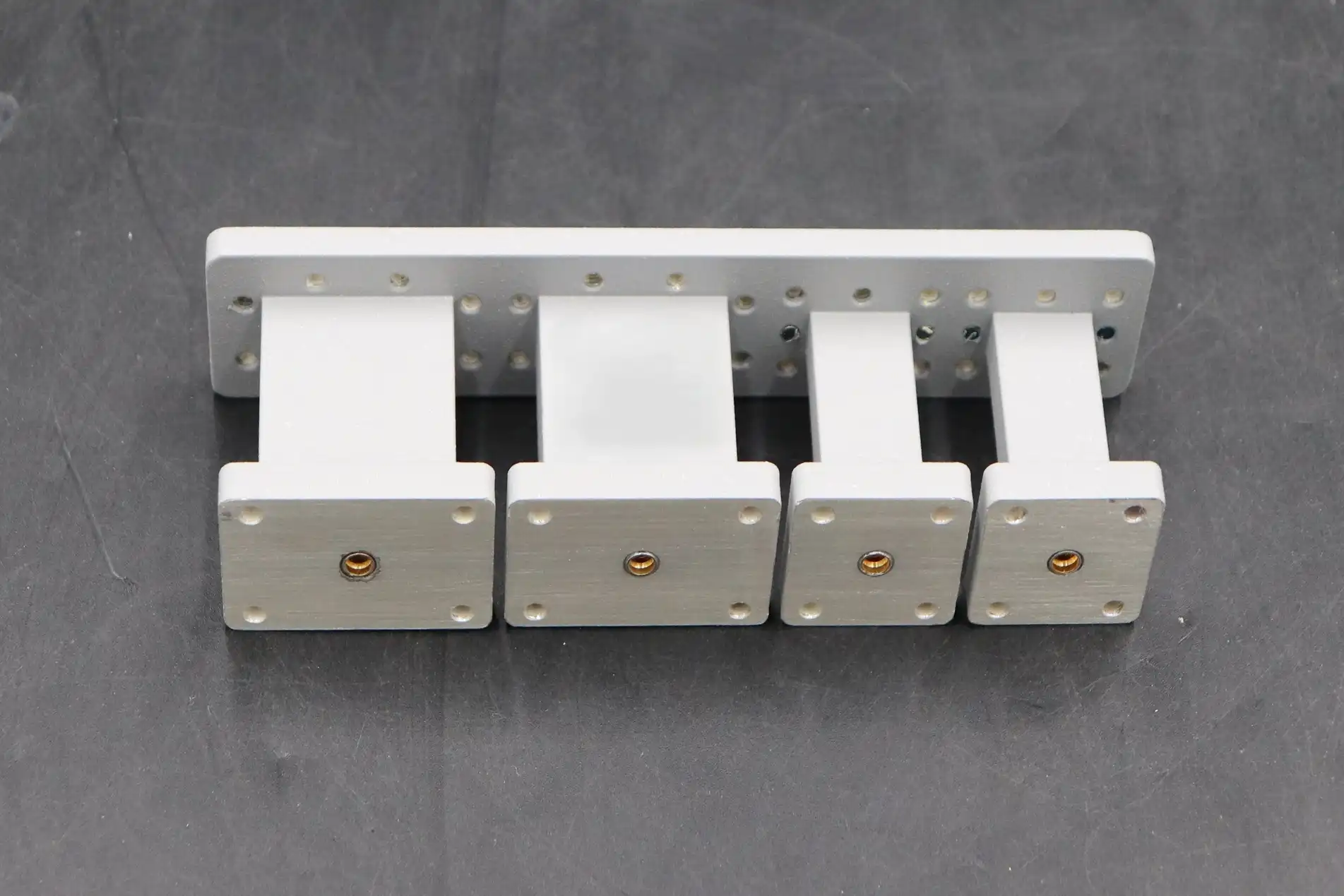
When choosing between End Launch Waveguide to Coaxial Adapter configurations and side launch alternatives, engineers must consider space constraints, signal integrity, and installation requirements. End Launch Waveguide to Coaxial Adapter designs position the coaxial connector directly in line with the waveguide axis, offering superior electrical performance and compact form factors. Side launch configurations mount the connector perpendicular to the waveguide, providing easier access in tight spaces but potentially compromising signal quality.
Key Differences Between End Launch and Side Launch Configurations
The crucial refinement lies in connector situating and flag way geometry. End Launch Waveguide to Coaxial Adapter keeps up a coordinate flag move way, whereas side dispatch plans present a 90-degree twist in the flag flow.
Electrical Performance Comparison
End dispatch arrangements ordinarily accomplish lower inclusion misfortune and superior VSWR execution. Research facility estimations appear conclusion dispatch connectors accomplishing inclusion misfortune values as moo as 0.15 dB at X-band frequencies, compared to 0.25-0.4 dB for proportionate side dispatch plans. The coordinate flag way minimizes discontinuities that can corrupt flag integrity. VSWR estimations uncover conclusion dispatch connectors keeping up 1.25:1 or superior over their working transmission capacity, whereas side dispatch arrangements regularly show 1.4:1 to 1.6:1 VSWR due to the extra twist discontinuity. If you require most extreme flag devotion for exactness estimations or low-noise applications, at that point conclusion dispatch arrangements demonstrate more appropriate for requesting execution requirements.
Mechanical Design Considerations
Space utilization contrasts altogether between setups. Conclusion dispatch plans amplify the by and large framework length but keep up a littler cross-sectional profile. Side dispatch connectors include width or tallness measurements whereas keeping hub length minimal. Installation openness changes impressively. Side dispatch arrangements give less demanding coaxial cable directing and connector get to in swarmed hardware formats. Upkeep operations advantage from the opposite connector introduction, permitting professionals to benefit associations without aggravating adjoining components. If you require disentangled support get to or work with space-constrained walled in areas, at that point side dispatch connectors offer down to earth establishment preferences in spite of potential execution trade-offs.
Technical Performance Analysis
Frequency Response Characteristics
End Launch Waveguide to Coaxial Adapter illustrates prevalent broadband execution over most rectangular waveguide groups. Test information from vector arrange analyzer estimations appear compliment recurrence reaction with negligible swell over the working bandwidth.
Three core performance differences emerge:
- Lower insertion loss variation across frequency
- Reduced phase distortion due to direct signal path
- Better port-to-port isolation in multi-port configurations
Side dispatch plans show expanded frequency-dependent behavior, especially at band edges where the bowed flag way makes extra reflections. S-parameter estimations uncover higher return misfortune variety and potential reverberation effects.
Power Handling Capabilities
Power evaluations vary between setups due to current dissemination designs. Conclusion dispatch connectors regularly handle higher control levels since the coordinate move minimizes current concentration focuses that might cause breakdown or overheating. Peak control estimations illustrate conclusion dispatch setups supporting 20-30% higher control levels some time recently encountering multipactor or crown impacts. The ceaseless decrease geometry gives smoother current stream compared to the sudden course changes in side dispatch designs. If you require high-power applications such as radar transmitters or lackey uplink frameworks, at that point conclusion dispatch connectors convey predominant control dealing with characteristics.
Application-Specific Selection Criteria
Aerospace and Defense Systems
Military and aviation applications prioritize flag astuteness and unwavering quality over establishment comfort. End Launch Waveguide to Coaxial Adapter setups overwhelm these divisions due to exacting execution requirements. Radar frameworks advantage from the progressed stage steadiness and lower misfortune characteristics. Obsequious communication terminals utilize conclusion dispatch plans to keep up connect budget edges basic for long-distance flag transmission. Environmental testing uncovers conclusion dispatch connectors keeping up steady execution over temperature cycling and vibration presentation common in aviation applications.
Test and Measurement Equipment
Laboratory instrumented requires exact flag moves for precise estimations. Vector arrange analyzers and range analyzers transcendently utilize conclusion dispatch arrangements to minimize estimation uncertainty. Calibration solidness progresses with conclusion dispatch plans since the repeatable connector interface decreases estimation float over time. The coordinate flag way dispenses with stage varieties that might compromise estimation accuracy. If you require laboratory-grade accuracy for inquire about or generation testing, at that point conclusion dispatch connectors give the estimation astuteness fundamental for solid results.
Commercial Telecommunications
Base station hardware and microwave backhaul frameworks regularly utilize side dispatch arrangements for viable establishment reasons. Thick gear formats advantage from the opposite connector introduction in spite of the execution penalty. Maintenance plans favor side dispatch plans in commercial situations where benefit availability exceeds minimal execution contrasts. Field professionals appreciate the less demanding cable steering and connector access. If you require streamlined field support and work inside standard commercial execution resistances, at that point side dispatch arrangements offer operational points of interest worth considering.
Manufacturing and Customization Considerations
Production Complexity
End Launch Waveguide to Coaxial Adapter fabricating includes less machining operations due to the hub arrangement. The coordinate boring operation makes the coaxial move without complex inside geometries. Side dispatch generation requires extra machining steps to make the opposite move depression. Accuracy boring at right points requests specialized tooling and quality control procedures. Cost suggestions favor conclusion dispatch plans for high-volume generation runs. The disentangled fabricating handle deciphers to competitive estimating for standard configurations.
Customization Flexibility
Both arrangements oblige recurrence band varieties and connector sort changes. Conclusion dispatch plans offer more clear dimensional scaling for distinctive waveguide sizes. Impedance coordinating systems coordinated more effectively with conclusion dispatch geometries. The pivotal symmetry streamlines the plan of coordinating segments for broadband operation. If you require custom recurrence groups or specialized impedance coordinating, at that point conclusion dispatch arrangements give more noteworthy plan adaptability for optimized solutions.
ADM's End Launch Waveguide to Coaxial Adapter Advantages
Performance and Technical Specifications
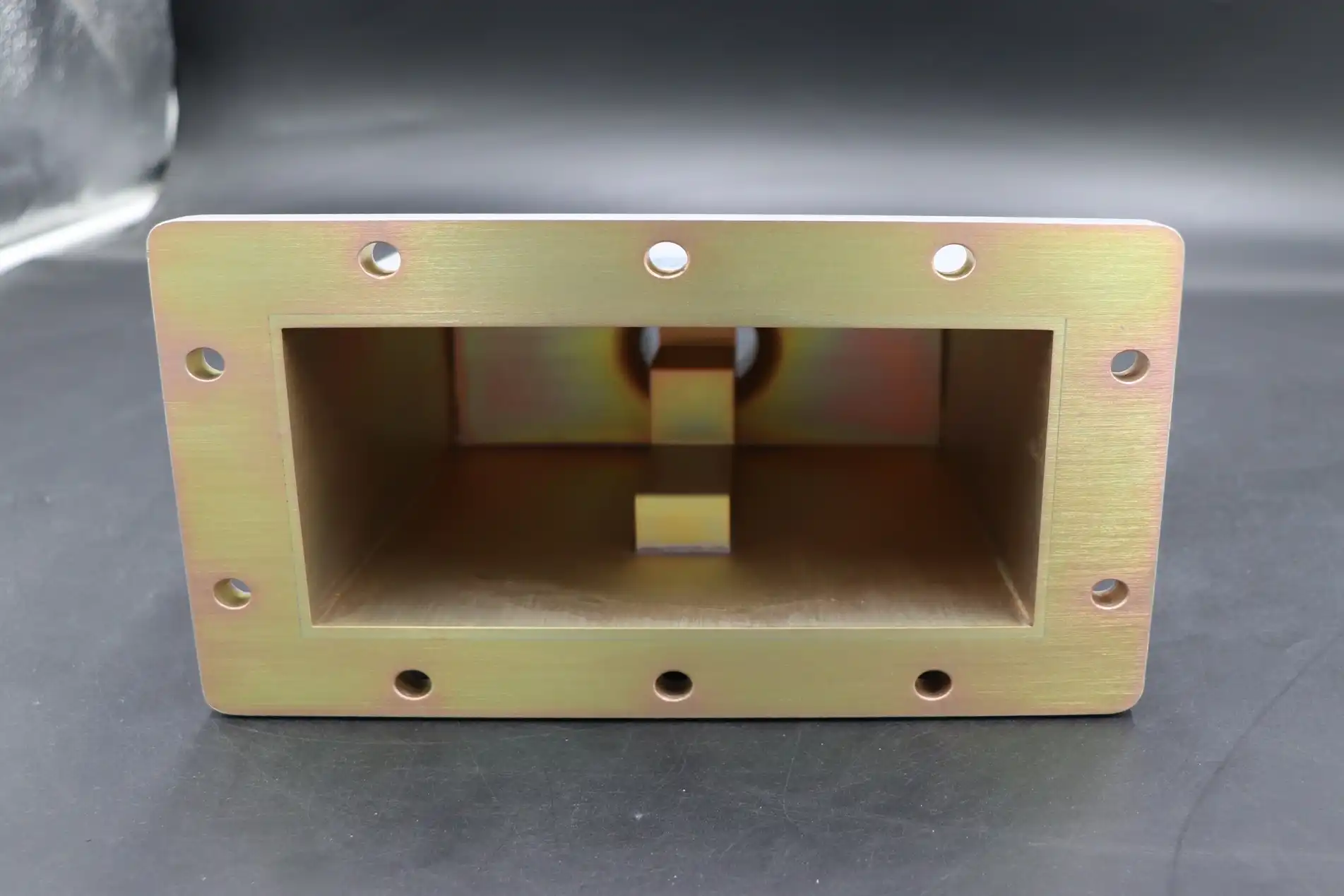
Advanced Microwave Advances Co., Ltd. conveys remarkable conclusion dispatch connector arrangements with demonstrated execution focal points that meet the most requesting framework requirements. Our items offer predominant electrical execution, with addition misfortune as moo as 0.15 dB and a VSWR way better than 1.25:1 over all recurrence groups. We give comprehensive recurrence scope from 1.72 GHz to 40 GHz, guaranteeing full rectangular waveguide band compatibility. To meet assorted framework needs, we offer different connector alternatives, counting N-type, SMA, and K2.92mm interfaces.
Manufacturing Excellence and Support Capabilities
We pride ourselves on exactness fabricating, utilizing progressed CNC machining with resiliences that meet aviation and defense guidelines. Our items are sponsored by quality certifications, counting ISO 9001:2015 compliance and adherence to RoHS natural guidelines. We moreover offer custom plan capabilities, with quick prototyping and designing back for specialized applications. Built with vigorous development, our connectors include aluminum and copper materials, guaranteeing strength in unforgiving situations. Our worldwide supply chain ensures steady conveyance and specialized bolster, no matter where you are located. With over 20 a long time of involvement giving microwave components for basic aviation, defense, and broadcast communications frameworks, we keep up progressed testing offices with estimation capabilities up to 110 GHz for comprehensive execution confirmation. We offer competitive estimating by leveraging effective fabricating forms and coordinates generation capabilities. Our committed building group underpins custom OEM arrangements and framework integration, guaranteeing you get the best execution and back custom fitted to your particular requirements.
Cost-Benefit Analysis and Procurement Decisions
Economic Considerations
Initial procurement costs typically favor end launch configurations due to manufacturing simplicity. Long-term ownership costs depend on application requirements and maintenance frequency.Performance-critical applications justify the premium for end launch designs through improved system reliability and reduced troubleshooting costs. Commercial applications may achieve adequate performance with lower-cost side launch alternatives.Bulk purchasing considerations affect configuration selection. Standard end launch designs benefit from economy of scale pricing, while specialized side launch requirements may incur custom tooling charges.
Lifecycle Value Assessment
System upgrade compatibility favors end launch configurations because the standard interface geometry accommodates future component changes more readily. The direct signal path remains optimal regardless of surrounding system modifications.Reliability data shows end launch designs experiencing fewer field failures due to the robust mechanical interface and superior electrical stability. Reduced service calls translate to lower operational costs over the equipment lifetime.If you need long-term system reliability with minimal lifecycle costs, then end launch adapters deliver superior value despite potentially higher initial investment.
Conclusion
End launch configurations provide superior electrical performance, simplified manufacturing, and better long-term reliability for most applications. The direct signal path delivers lower insertion loss, better VSWR, and higher power handling compared to side launch alternatives. While side launch designs offer installation advantages in space-constrained applications, the performance benefits of end launch configurations make them the preferred choice for demanding aerospace, defense, and precision measurement applications. Advanced Microwave Technologies Co., Ltd's comprehensive end launch adapter portfolio ensures optimal solutions for diverse system requirements with proven quality and technical support.
Choose ADM for Premium End Launch Waveguide to Coaxial Adapter Solutions
ADM stands as your trusted End Launch Waveguide to Coaxial Adapter manufacturer, delivering precision-engineered solutions that exceed industry standards. Our comprehensive product portfolio covers the complete frequency spectrum with customizable options tailored to your specific requirements. Contact our engineering team at sales@admicrowave.com to discuss your End Launch Waveguide to Coaxial Adapter specifications and experience the ADM advantage.
References
1. Pozar, David M. "Microwave Engineering: Fourth Edition." Wiley Engineering Publications, 2012.
2. Collin, Robert E. "Foundations for Microwave Engineering: Second Edition." IEEE Press Series on Electromagnetic Wave Theory, 2001.
3. Rizzi, Peter A. "Microwave Engineering: Passive Circuits." Prentice Hall Signal Processing Series, 1988.
4. Gupta, K.C. "Microwave and RF Design: A Systems Approach." SciTech Publishing Engineering Series, 2010.
5. Cassivi, Yves and Wu, Ke. "Substrate Integrated Waveguide Components." IEEE Microwave Magazine, Vol. 7, Issue 4, 2006.
6. Bhat, Bharathi and Koul, Shiban K. "Analysis, Design and Applications of Fin Lines." Artech House Microwave Library, 1987.
YOU MAY LIKE
 VIEW MOREAc Power Amplifier
 VIEW MOREVoltage Controlled Phase Shifter
 VIEW MOREStandard Horn Antenna
 VIEW MOREConical Horn Lens Antenna
 VIEW MOREPoint Focusing Horn Lens Antenna
 VIEW MORECorrugated Horn and Multimode Horn Antenna
 VIEW MOREWideband Double-ridged Horn Antenna
 VIEW MOREMini Wideband Double-ridged Horn Antenna