




Everything you need to know about helical antenna
When sourcing high-frequency communication components for mission-critical applications, understanding the distinctions between helical antennas and their planar counterparts is essential. Helical antennas are three-dimensional, coiled structures that radiate circularly polarized signals, making them exceptionally reliable for satellite telemetry, GPS navigation, and aerospace tracking systems. Meanwhile, the Planar Spiral Antenna offers a flat, broadband alternative with frequency-independent performance spanning multi-octave ranges. Both antenna types serve distinct roles across defense, telecommunications, and research sectors, and selecting the right configuration depends on bandwidth requirements, space constraints, polarization needs, and environmental resilience. This comprehensive guide walks procurement managers and technical teams through the fundamentals, performance trade-offs, and sourcing considerations for these critical RF components.
Understanding Helical Antennas and Planar Spiral Antennas
Helical Antenna Fundamentals
Helical antennas are made up of a conducting wire wound around a cylindrical shape in a spiral shape. They are usually placed above a ground plane. They have two main modes of operation: normal mode, which is omnidirectional and good for low frequencies, and axial mode, which is highly directed and has circular polarization. Axial-mode helical antennas are used a lot in satellite ground stations and space communications because they keep the circular polarization stable over narrow to moderate bandwidths and can usually get axial ratios below 3 dB. The antenna's gain goes up as the number of turns goes up, and as the helix gets longer, the beamwidth gets smaller. Because of these features, helical designs are necessary for uses that need directed, polarization-stable links over known frequency ranges.
Planar Spiral Antenna Architecture
Planar Spiral Antennas are holes with conductive lines etched onto flat substrates in Archimedean or equiangular shapes. They can work with any frequency. Unlike resonant antennas, which can only work at certain wavelengths, spiral antennas use self-complementary design principles to keep their resistance and radiation patterns fixed over very wide frequency ranges, which are often 10:1 to 30:1. Planar Spiral Antennas with 50-ohm resistance and circular polarization are made by Advanced Microwave Technologies Co., Ltd. They cover frequencies from 1 GHz to 40 GHz. Because they are small and flat, they are perfect for being built into platforms that don't have a lot of room, like UAVs, CubeSats, and portable electronic warfare systems. The antenna sends signals in both directions unless it is backed by an absorber cavity, which gives up 3 dB of efficiency to make patterns that only go in one direction.
Performance Parameters Across Both Designs
Frequency range, voltage standing wave ratio (VSWR), gain, polarization purity, and radiation efficiency are some of the most important parameters for the buying process. Helical antennas typically have moderate gain (10–15 dBi) and narrower beamwidths, whereas Planar Spiral Antennas have hemispherical coverage (70–90° beamwidth) and moderate gain (3–8 dBi). Circular polarization can be used with both types of antennas. This makes multipath fading and Faraday rotation effects less noticeable in satellite links. In flat designs, impedance matching is done by wideband baluns that are built in. In helical antennas, it depends on the shape of the ground plane and where the feed is placed. When procurement teams know these factors, they can match antenna skills with operational needs, whether they want to focus on form factor, bandwidth, or directivity.
Performance Comparison: Helical Antenna vs. Planar Spiral Antenna
Bandwidth and Frequency Coverage
Helical antennas usually work over bandwidths of 1.5:1 to 2:1, which are good for satellite bands like L-band (1-2 GHz) or S-band (2-4 GHz). Because of this, they work best in single-band situations where controlling polarization and direction gain are important. Planar Spiral Antennas, on the other hand, work great in ultra-wideband situations because they can work continuously from 1 GHz to 40 GHz without having to retune. In electronic warfare (EW) and signals intelligence (SIGINT) systems, where spectrum speed is very important, this multi-octave coverage gets rid of the need for multiple receivers. Planar spirals have a big advantage in defense and research because they can detect and send across fragmented frequency allocations.

Radiation Patterns and Polarization Characteristics
In axial mode, helical antennas send out end-fire radiation patterns that are very directional and have circular polarization along the helix axis. Because of this, they can be used for point-to-point satellite links and tracking tasks that need small beamwidths. But their rounder, larger shape makes them less maneuverable on flying platforms. Planar Spiral Antennas send out radiation in all directions along the azimuth axis and along the back axis. They provide wide-angle coverage, which is necessary for bidirectional receiving systems and equipment that finds its own direction. Their built-in circular polarization (RHCP or LHCP, based on the winding direction) keeps axial ratios below 3 dB across most working bands. This means that they stay connected no matter which way the transmitter or receiver is facing, which is very important for aerospace vehicles that are turning or mobile ground units.
Form Factor and Integration Complexity
Because helix antennas are three-dimensional, they need to be carefully mounted and given enough room, especially in places with limited space. Because their length grows with wavelength, low-frequency designs are big. Planar Spiral Antennas are a low-profile, conformal solution that can be mounted on the outside of aircraft skins, UAV fuselages, or satellite body panels. Advanced Microwave Technologies Co., Ltd lets you change the sizes and weights of their products, which makes it easier to integrate them into current systems without having to do a lot of technical work. This benefit is especially useful for original equipment makers (OEMs) and contract manufacturers who put together RF parts into bigger defense or communications products and have to choose components based on their size, weight, and power (SWaP).
How to Choose the Right Antenna for Your Application
Assessing Frequency and Bandwidth Requirements
The first step in choosing an antenna is to figure out what frequency bands and bandwidth are needed for operation. Helical antennas that work within 1.5:1 to 2:1 bandwidth ratios are simple and good for directional gain in GPS, satellite telemetry, or fixed-frequency radar systems. Planar Spiral Antennas, on the other hand, are needed for wideband radar, spectrum tracking, electronic countermeasures, and multi-band transmission devices because they can work with any frequency. For example, military aircraft radar warning receivers (RWR) have to find hostile signals across multiple radar bands at the same time. To do this, planar spirals are easier to use and lighter than antenna arrays because they don't have to be as complicated or heavy. Using a vector network analyzer (VNA) to make sure the VSWR stays below 2:1 across the intended range is how procurement teams check vendor specifications.
Evaluating Environmental and Mechanical Constraints
The operating setting has a big effect on how long an antenna lasts and how well it works. Because the coils and ground planes of helical antennas are visible, they need to be ruggedized to handle rough conditions like shaking, temperature changes, and water getting in. According to MIL-STD-810, Planar Spiral Antennas from Advanced Microwave Technologies Co., Ltd. are etched onto high-reliability Rogers or Taconic laminates (IPC-6012 Class 3). The flat shape of these materials makes it easier to add waterproof radomes, which keep out rain, ice, and contaminants. For military and defense uses, it is necessary to check for ISO 9001, RoHS compliance, and tracking documents. In line with IEEE 149 antenna test procedures, procurement specifications should require environmental qualification testing, such as vibration, thermal shock, and exposure to humidity.
Balancing Performance, Cost, and Customization
Off-the-shelf antennas are cheaper and easier to set up, but they may not work as well as they should in some situations. Custom-engineered systems take into account things like frequency allocation, mounting connections, polarization needs, and heat management. Advanced Microwave Technologies Co., Ltd offers OEM services that include custom frequency tuning, choosing the right substrate material, designing an integrated balun, and making quick prototypes. Co-development partnerships help defense contractors and aerospace integrators make sure antennas meet strict qualification standards and improve the resilience of the supply chain. Instead of just looking at unit price, procurement teams should look at the total cost of ownership, which includes testing, integration work, and lifetime support. Time-to-market is sped up, and the risk of expensive redesigns is lowered by involving providers early in the planning phase.
Procurement Guide: Buying Planar Spiral and Helical Antennas
Identifying Reputable Manufacturers and Suppliers
To get mission-critical RF components, you have to go through a lot of source approval. Leading manufacturers, like Advanced Microwave Technologies Co., Ltd, set themselves apart by having decades of experience, being certified by ISO 9001:2015, and having state-of-the-art testing facilities. Facilities with 24-meter microwave darkrooms and vector network analyzers up to 110 GHz make it possible to precisely describe the performance of antennas, including their near- and far-field radiation patterns. For dielectric substrates and metallization methods, procurement managers should ask for conformity certificates, test results, and records of how the materials were made. Consistent manufacturing standards are ensured by supplier audits that check environmental certifications (ISO 14001, ISO 45001), process controls, and quality management systems. Working with providers that offer global logistics help and expert support after the sale cuts down on downtime and speeds up the resolution of problems in the field.
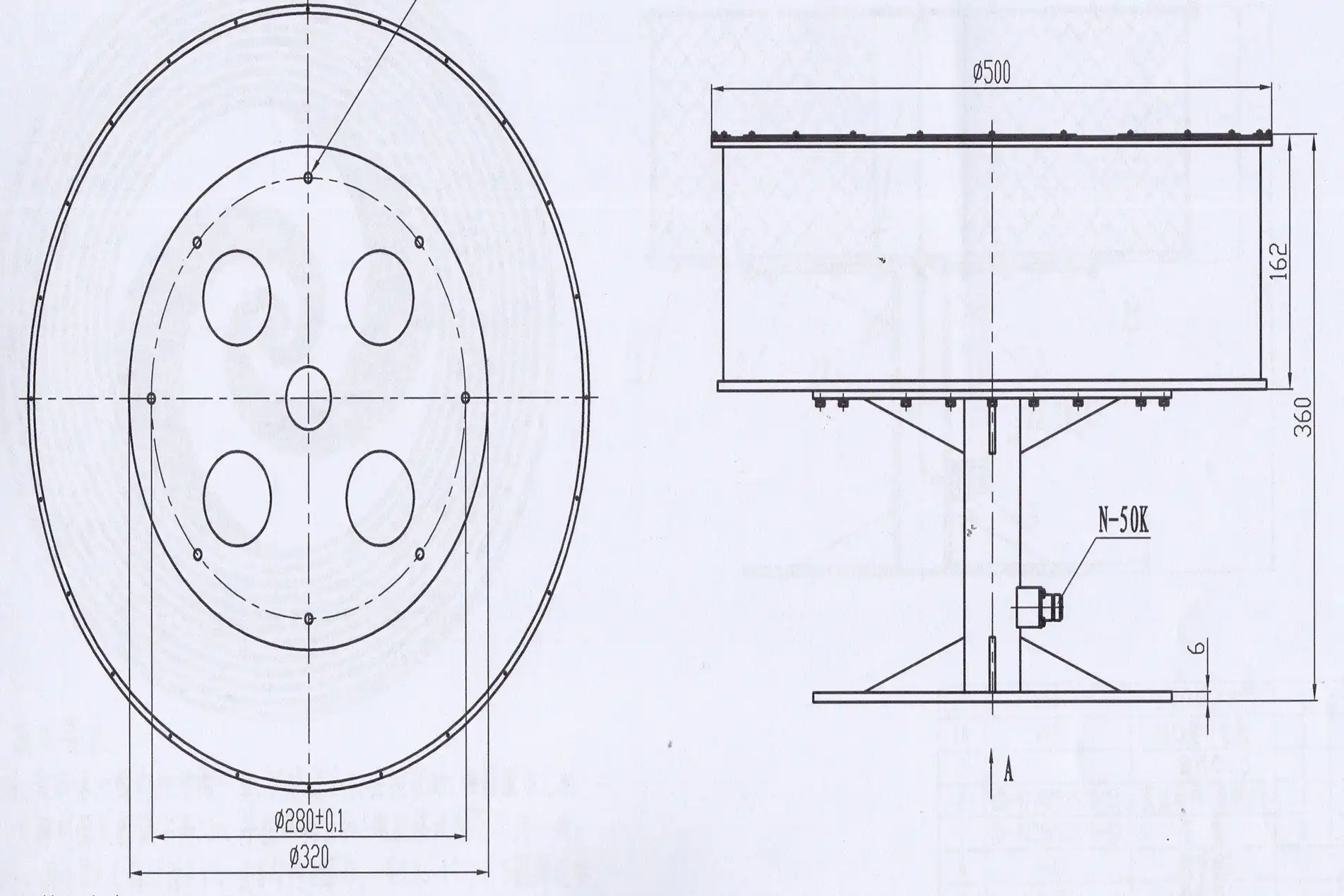
When evaluating vendors, procurement teams should consider these critical factors:
• Technical Expertise: Make sure the provider can change antenna designs in terms of frequency range, polarization, and mechanical connections. Ask for examples from defense, aerospace, or internet uses that are similar.
• Quality Certifications: Make sure the product meets ISO 9001:2015, RoHS, and industry standards like MIL-STD-810 for environmental qualification and IEEE 149 for antenna test procedures.
• Testing Capabilities: Look at your company's testing tools, like anechoic chambers, VNA equipment, and automated optical inspection (AOI) systems, to make sure the quality of the PCBs you make.
• Supply Chain Resilience: Look at wait times, inventory management, and backup plans to lower the chances of not having enough parts or dealing with international issues.
Budgeting and Pricing Structures
The price of an antenna varies a lot depending on the frequency range, the level of customization, and the number of orders. Standard catalog helical antennas can cost several hundred dollars each. Custom Planar Spiral Antennas designed for ultra-wideband defense uses can cost several thousand to tens of thousands of dollars, depending on the precise substrate materials, integrated balun design, and qualification testing. Agreements to buy in bulk and contracts that last more than one year often lead to volume discounts and first choice when supplies are low. Pricing transparency should be negotiated by procurement teams. This includes one-time engineering (NRE) fees for custom designs, the cost of tools, and the cost of making one unit. The price you pay for something includes all of its parts, including work for integrating them, testing, and care throughout their whole life. Including sources early in the planning process helps make sure that costs are predicted correctly and that the project stays on track with its goals.
Streamlining Ordering Processes and Quality Assurance
Speed and accuracy should be balanced in efficient procurement workflows. Specifying exact technical details, like frequency range, VSWR thresholds, gain requirements, polarization purity, and environmental requirements, cuts down on confusion and the need for multiple revisions. Advanced Microwave Technologies Co., Ltd. supports rapid prototyping and can send evaluation units within weeks to make sure they work well before committing to mass production. As part of acceptance testing, the VNA should be swept for return loss and VSWR. The anechoic room should be measured for radiation patterns and axial ratio, and the PCB should be checked for manufacturing limits using automated optical inspection (AOI). Compliance checks and regulatory reviews are easier to do when documentation packages include test certificates, material composition statements, and traceability records. Setting up clear lines of communication, such as technical liaisons and project management support, speeds up the resolution of problems and makes sure that program-critical milestones are delivered on time.
Future Trends and Innovations in Antenna Technology
Emerging Applications Driving Demand
Antenna technology keeps changing in answer to big changes in the Internet of Things (IoT), 5G and 6G networks, the marketing of space exploration, and self-driving cars. For sensor networks and smart infrastructure, IoT projects need small, cheap antennas that can work with a variety of frequency bands. For these uses, Planar Spiral Antennas can be scaled up or down, and their wide range lets them work with frequency-hopping and spread-spectrum protocols. Millimeter-wave antennas working above 24 GHz are needed for the spread of 5G and future 6G networks. Planar designs work best because they don't depend on frequency. NewSpace projects that use CubeSats and small satellite constellations need antennas that are flat, light, and work with standard ways of deploying them. Autonomous vehicles, drones, and unmanned surface vessels are using multi-band antennas for GPS, telemetry, and high-throughput data links more and more. This is increasing the need for RF components that can be customized and are reliable.
Advanced Design and Manufacturing Techniques
Computational electromagnetics (CEM) software speeds up the improvement of antenna designs by letting shapes, base materials, and feeding structures be changed quickly. Before they are made, electromagnetic modeling tools can predict far-field patterns, impedance matching, and polarization purity. This cuts down on the cost of development and the time it takes to get a product on the market. Making dielectric substrates and conductive traces through additive manufacturing (3D printing) opens up new ways to make complex shapes and integrate antennas in a way that fits their shape. New base materials, like low-loss ceramics and high-temperature laminates, make it possible to work with a wider range of frequencies and in harsher environments. Laser direct structuring (LDS) and other advances in manufacturing make it possible to precisely metalize three-dimensional surfaces, which blurs the line between planar and volumetric antenna architectures. When procurement teams work with suppliers who are investing in these technologies, they can get access to next-generation antenna solutions that are best for new mission profiles.
Strategic Supplier Partnerships for Innovation
Long-term ties with suppliers based on openness and cooperation give businesses an edge in fast-changing markets. OEMs and system integrators can have a say in antenna roadmaps through co-development agreements. This makes sure that future products meet changing needs. Suppliers like Advanced Microwave Technologies Co., Ltd use their more than 20 years of knowledge to give effective advice on choosing materials, planning frequencies, and following the rules. Product development processes are sped up by regular technical talks, joint engineering reviews, and early access to prototype designs. Resilient supply chains, which are strengthened by dual sources and inventory gaps, lower the risks that come with parts going out of date and political unrest. Innovation, cost savings, and supply security can be unlocked by procurement strategies that focus on business relationships over transactional ones. These are important for staying ahead of the technology curve in the defense, aerospace, and telecommunications sectors.
Conclusion
Selecting between helical antennas and Planar Spiral Antennas requires careful evaluation of bandwidth, polarization, form factor, and specific applications. While Planar Spiral Antennas offer ultra-wideband, omnidirectional coverage suitable for electronic warfare, spectrum monitoring, and small flight platforms, Helical Antennas give directional, circularly polarized signals ideal for satellite tracking and narrowband links. Advanced Microwave Technologies Co., Ltd. provides ISO-certified, flexible antenna solutions for frequencies from 1 GHz to 40 GHz. These solutions are backed by advanced testing tools and global shipping support. Buying teams that put technical performance, quality certifications, and working together with suppliers at the top of their list of priorities will be able to get high-reliability parts that improve system performance and guarantee mission success in research, defense, and telecommunications.
FAQ
What are the fundamental differences between helical and planar spiral antennas?
Helical antennas are three-dimensional coil-shaped devices that send out circularly polarized radiation in the 1.5:1 to 2:1 bandwidth range. They work great for GPS and satellite telemetry tasks that need focused gain and narrow beamwidths. Planar Spiral Antennas are flat, frequency-independent shapes that can cover all directions and all frequencies from 1 GHz to 40 GHz. They are small and work well across multiple octaves, which makes them perfect for electronic warfare, wideband radar, and systems with limited room like UAVs and CubeSats.
How do I choose the right antenna for wideband communication systems?
Antennas for wideband applications need to have stable impedance and radiation patterns across frequency ranges of many octaves. Planar Spiral Antennas from Advanced Microwave Technologies Co., Ltd. have VSWR values less than 2:1 and axial ratios less than 3 dB from 1 GHz to 40 GHz. This means that you don't need more than one narrowband antenna. Use VNA and anechoic chamber tests to look at VSWR readings, gain flatness, and polarization purity. When comparing suppliers, you should think about environmental requirements (MIL-STD-810), how hard it is to integrate, and the customization options. Early on, involve expert teams to check performance in common system setups.
Are planar spiral antennas suitable for custom OEM integrations?
Of course. Advanced Microwave Technologies Co., Ltd. focuses on original equipment manufacturer (OEM) services, offering frequency setting, substrate materials, and mechanical connections that are specifically designed to meet the needs of each client. Our Planar Spiral Antennas help with full integration advice, fast prototyping, and managing supplies around the world. Our engineering team works together during the whole design process to make sure that mission-critical projects are delivered on time, work at their best, and meet all industry standards. This is true whether the projects are for defense radar systems, satellite ground stations, or telecommunications infrastructure.
Partner with a Trusted Planar Spiral Antenna Manufacturer
Advanced Microwave Technologies Co., Ltd. (ADM) stands as a premier Planar Spiral Antenna supplier, delivering precision-engineered RF components for defense, aerospace, and telecommunications sectors. With over 20 years of expertise, ISO 9001:2015 and RoHS certifications, and testing capabilities up to 110 GHz, we ensure every antenna meets rigorous performance and quality standards. Our Planar Spiral Antennas span 1 GHz to 40 GHz, offering customizable frequency ranges, circular polarization, and low-profile integration for mission-critical applications. From rapid prototyping to full-scale production, our OEM services include technical consultation, integration support, and global supply chain management. Our 24-meter microwave lab lets us precisely characterize both near-field and far-field conditions, checking the performance of the radiation patterns and VSWR before shipping. ADM has the technical excellence and supply reliability that your projects demand, whether you are a defense contractor sourcing ruggedized components, a satellite integrator requiring wideband feeds, or a research institution developing next-generation communication systems. Contact our team today at craig@admicrowave.com to discuss your Planar Spiral Antenna requirements and discover how our customized solutions can elevate your system performance.
References
1. Balanis, Constantine A. Antenna Theory: Analysis and Design. Fourth Edition. Wiley, 2016.
2. Stutzman, Warren L., and Gary A. Thiele. Antenna Theory and Design. Third Edition. Wiley, 2012.
3. Kraus, John D., and Ronald J. Marhefka. Antennas for All Applications. Third Edition. McGraw-Hill Education, 2002.
4. IEEE Standards Association. IEEE Standard 149-2021: IEEE Recommended Practice for Antenna Measurements. Institute of Electrical and Electronics Engineers, 2021.
5. Volakis, John L., editor. Antenna Engineering Handbook. Fourth Edition. McGraw-Hill Education, 2007.
6. Nakano, Hisamatsu, and Junji Yamauchi. Spiral and Helical Antennas. In Modern Antenna Handbook, edited by Constantine A. Balanis, 591-638. Wiley, 2008.