




Precision Phase Shifters: Key Features and Applications
Precision phase shifters are essential RF and microwave components that control signal phase with exceptional accuracy, enabling advanced beamforming, radar tracking, and communication system optimization. These devices manipulate electromagnetic wave phase relationships without significantly altering amplitude, serving as the foundation for modern phased array antennas, satellite ground stations, and defense surveillance systems. With operational frequencies extending from hundreds of megahertz to over 110 GHz, precision phase shifters address critical demands in telecommunications infrastructure, aerospace navigation, and high-frequency measurement equipment where phase accuracy directly impacts system performance and mission success.
Understanding Precision Phase Shifters: Principles and Types
Phase shifters work by changing the phase or adding controlled time delays to RF signals that pass through them. Engineers can use this basic feature to automatically steer antenna beams, synchronize signal routes in complicated distribution networks, and fix transmission systems that lose phase. Changing the electrical length that a signal travels is at the heart of the idea. Depending on the technology used, this can be done in a number of different physical ways.
Analog versus Digital Phase Control Technologies
Analog phase shifters can change the phase continuously over their entire setting range. They are usually controlled by voltage or mechanical means. Voltage-controlled devices use varactor diodes or PIN diodes, whose capacitance changes depending on the bias that is applied. This makes phase transitions smooth, which is perfect for uses that need to place the beam precisely. When fine-tuned phase correction or gradual steering is needed, these parts work great. For example, satellite tracking systems that need to stay locked in place while the platform moves.
Digital phase shifters, on the other hand, offer individual phase states. They usually come in 4-bit, 5-bit, or 6-bit forms, which give 16, 32, or 64 separate phase positions. A phase shifter that is controlled digitally uses semiconductor switches to choose between different transmission line lengths or reactive network states. This allows for very fast switching speeds, measured in nanoseconds. Modern Active Electronically Scanned Array (AESA) radar systems use this architecture. Thousands of parts must be updated at the same time to track targets traveling faster than sound across many threat vectors.
Mechanical, Ferrite, and Semiconductor-Based Solutions
Knowing the three main types of precision phase shifters helps procurement teams match the right technology to the needs of the application. To change the length of a signal path physically, mechanical phase shifters use parts that can be moved, like sliding contacts, rotatable vanes, or adjustable waveguide sections. These devices can handle very high power levels (above kilowatts) and have excellent phase linearity. This makes them ideal for ground-based radar systems and high-power satellite uplink amplifiers where stability is more important than switching speed.
Ferrite phase shifters use waveguide structures with ferrite materials that are controlled by magnets. Applying magnetic fields from the outside turns the ferrite's permeability tensor, which causes phase changes that don't happen in the opposite direction without any mechanical movement. This technology is useful for specific defense uses that need latching states that keep phase settings without using power all the time. This is especially important for space-based phased arrays that have to stick to tight power budgets.
Because they are small, reliable, and can be combined with monolithic microwave integrated circuits (MMICs), semiconductor-based designs have become the standard for both industrial and tactical systems. These gadgets use GaAs, SiGe, or CMOS technologies to work across a wide range of frequencies, from 2 GHz to millimeter waves. They keep the signal strong through cascaded antenna feed networks in 5G Massive MIMO base stations set up in crowded cities because they have low insertion loss (usually less than 2 dB per bit).
Critical Design Parameters: Phase Accuracy and Noise Performance
Phase correctness has a direct effect on the accuracy of beamforming and the purity of the signal. When 1024-QAM modulation methods are used in telecommunications equipment, phase errors greater than ±3 degrees cause constellation spin, which raises bit error rates and lowers throughput. Even tighter tolerances—often within ±1 degree—are needed for military observation radars to keep their angular precision when they have to tell the difference between targets that are close together or find threats that are hard to see against ground clutter.
Both insertion loss and phase noise input are part of noise performance. Low insertion loss protects the link budget in receiver chains where every decibel counts, like at satellite ground terminals where signals are just above thermal noise floors. When phase shifters are used in local oscillator distribution networks, phase noise becomes very important. Too much jitter messes up the purity of the spectrum, hiding weak radar returns and lowering the Doppler sharpness needed to tell the difference between objects moving slowly and backgrounds that don't move.

Applications of Precision Phase Shifters in Modern Industries
Phase control technology can be used in many fields where changing signals affects the capabilities of a system and its ability to compete.
5G and Beyond: Wireless Communication Infrastructure
When telecom companies add millimeter-wave 5G networks, they use precision phase shifters to make dynamic beamforming work, which sends energy directly to user equipment instead of spreading it everywhere. This focused method gets around the high path loss at 28 GHz and 39 GHz frequency bands, increasing coverage while lowering interference between cells in busy cities. Dozens of phase shifter modules are built into each base station antenna panel. These modules work together to track mobile devices and change beam patterns automatically as users move through the coverage area.
Our engineering teams have helped ground station integrators set up next-generation wireless backhaul systems. These systems use phase-controlled antenna arrays to keep point-to-point links open even when the terrain is rough. These examples show that choosing the right phase shifter—one that balances switching speed, power consumption, and environmental toughness—allows underserved areas to get stable gigabit connections without having to build expensive fiber infrastructure.
Defense and Radar Systems: Enhanced Target Detection
For example, active electronically scanned array radars show how important precise phase control is in defense applications. Unlike their manually scanned predecessors, AESA systems split their aperture into hundreds or thousands of separate send and receive modules. Each module is controlled by its own phase shifter. This design lets you watch multiple targets at the same time, quickly rank threats, and create flexible waveforms that defend against attempts to jam electronic warfare.
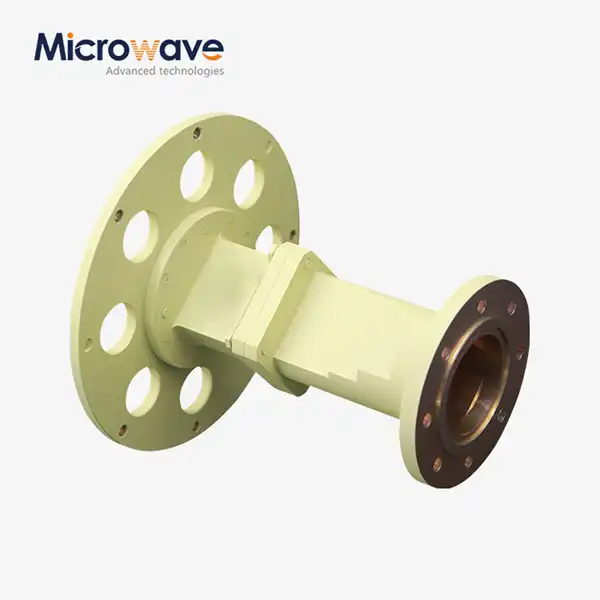
We worked together on a military monitoring radar project that used integrated waveguide phase shifter units that could work at X-band frequencies between 8 and 12 GHz. The system was able to keep its angular accuracy within 0.5 degrees while being exposed to shocks, vibrations, and salt spray corrosion for long periods of time at sea. The higher resolution let operators see small unmanned aerial vehicles from farther away, which was very helpful for getting important early warnings in areas with contested littorals.
Synthetic Aperture Radar (SAR) systems need phase synchronization between successive radar waves to make detailed pictures of the ground. The stability of the phase shifter has a direct effect on the quality of the picture. Artifacts that hide landscape features or hidden installations are caused by thermal drift or mechanical stress that doesn't account for phase changes. Aerospace contractors look for parts with temperature coefficients below 0.05 degrees Celsius so that images stay clear at all operational altitudes and during all seasons.
Satellite Communications and Ground Infrastructure
Geostationary and Low Earth Orbit satellite networks need ground stations that can quickly acquire and track beams in order to stay connected, even if the orbit or platform moves. Electronically steered antennas with phase shifter arrays get rid of the need for mechanical gimbal systems. This makes ships, commercial planes, and mobile combat command posts lighter, uses less power, and needs less upkeep.
For Ka-band satellite stations that work at 20 and 30 GHz, we have provided custom feed network systems with phase control elements. These assemblies make up for delays in the atmosphere and the movement of the car in real time, making sure that broadband links for passenger connection and operating communications stay up and running. Our waveguide implementations' ability to handle heat and power makes them important for continuous transfer through weather systems while keeping regulation emission masks in place.
Test and Measurement Equipment Across Industries
Automated test equipment (ATE) makers use precise phase shifters to describe antenna patterns, make sure beamforming algorithms work, and straighten out high-speed digital interfaces. Antenna measurement chambers use phase-controlled source arrays to create any wavefront conditions. This lets accurate characterization happen without having to measure at full far-field distances. This feature cuts down on facility costs and speeds up the product development process for companies that make wireless devices.
For research groups to make progress in quantum computing and atomic clock technologies, they need phase control and amplification with very low phase noise. Our low phase noise amplifier designs keep flicker noise to a minimum, which keeps qubit control signals coherent for as long as they're needed for gate operations. Similarly, atomic frequency standards need phase-locked loops that are very stable, because delay caused by amplifiers makes Allan Variance metrics used to measure timing accuracy less accurate.
How to Choose the Best Precision Phase Shifter for Your Needs
To choose the right phase control solutions, you have to weigh technical requirements against budget limits, delivery times, and the availability of long-term support.
Evaluating Frequency Range and Tuning Resolution
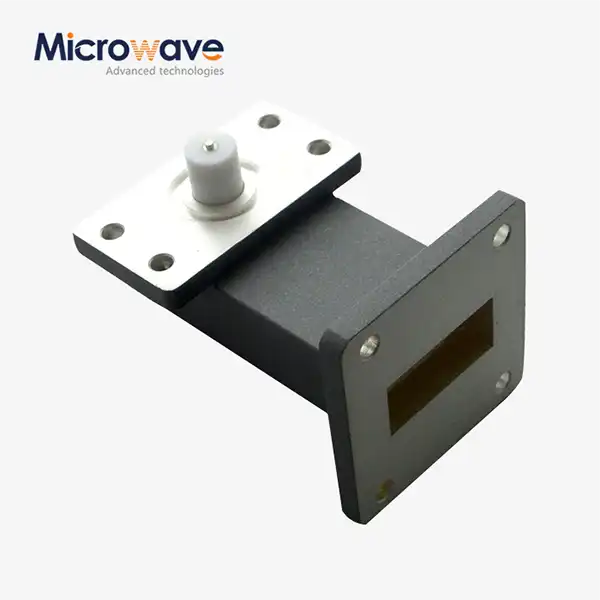
The regularity of your operations limits the technologies you can use and the levels of efficiency you can expect. Below 40 GHz, semiconductor systems are most common because they have a wide immediate bandwidth and small packages. At higher millimeter-wave frequencies, waveguide designs are better than coaxial ones because they can handle more power with less loss. For a 30 GHz satellite connection, WR-28 waveguide precision phase shifters might be needed to handle sending power of several watts without heating up.
Beam steering precision and phase correction accuracy are both based on tuning resolution. For many radar uses, a 5-bit digital shifter with 11.25-degree steps is enough. But for communications systems that use adaptive nulling to block interference, a 6-bit or higher resolution may be needed. Analog voltage-controlled solutions can tune to any frequency and offer endless resolution, but they are harder to control and can cause drift, which is not a problem with digital designs because they use discrete state selection.
Comparing Performance Benchmarks and Reliability Factors
Insertion loss builds up through components that are linked to each other, lowering the output power and sensitivity of the system. For every decibel that is lost in the phase shifter chain, the amplifier needs to gain more to make up for it. This raises the noise figure and power consumption. When used with the right frequency bands, high-quality semiconductor devices can achieve 1.5 dB loss per bit at X-band frequencies. On the other hand, ferrite waveguide designs can achieve less than 1 dB across their entire phase range.
Reflected power can't mess up signals or damage the last stages of a transmitter because of return loss and impedance matching. To make sure it works with a wide range of system designs, military standards usually require better than 15 dB return loss. During approval testing in our ISO 9001:2015-certified labs with vector network analyzers set to 110 GHz, we check these factors across a range of temperatures and mechanical stress.
Commercial-grade parts are different from those that can be used in flight and defense because they can withstand harsh environments. Operating temperature ranges from -40°C to +85°C can handle avionics bays on airplanes and infrastructure installations outside. During long-term field operation, hermetic packing with military-grade connections keeps out moisture, salt fog corrosion, and fungus growth. As part of our quality control procedures, we test for vibrations according to MIL-STD-810 and check airborne systems for high altitude and low pressure.
Analog or Digital: Making the Strategic Decision
Whether to use continuous or discrete phase control depends on how the system is built and what it needs to do. In situations where precise bias voltages are already generated by control circuitry and small changes in phase are best for performance, analog voltage-controlled phase shifters are the way to go. Smooth beam steering helps satellite tracking devices keep signals strong when switching between transponders or orbital changes.
Modern software-defined radio architectures and field-programmable gate arrays (FPGAs) that control beamforming algorithms are easier to integrate when digital control is used. You don't need digital-to-analog converters or to calibrate voltage-to-phase transfer functions to use binary control signals to set the desired phase states. This way of doing things is most common in tactical communications and radar systems, where lifetime costs are low because of features like quick change, built-in testing, and standard control interfaces.
Procurement Guide: Buying Precision Phase Shifters for B2B Clients
To easily go through the procurement process, you need to know what the supplier can do, how to send the goods, and what kind of help system is available after the initial purchase.
Identifying Trustworthy Manufacturers and Custom Capabilities
Certified test facilities, clear quality documentation, and other forms of certification from reputable suppliers show that they have a strong technical foundation. RoHS compliance shows that a product is environmentally friendly, and ISO 9001 certification shows that the quality management system is well-established. Companies that keep their own measurement tools up to 110 GHz, such as tools for characterizing antennas in both near-field and far-field situations, have the tools to check performance claims and figure out problems with integration.
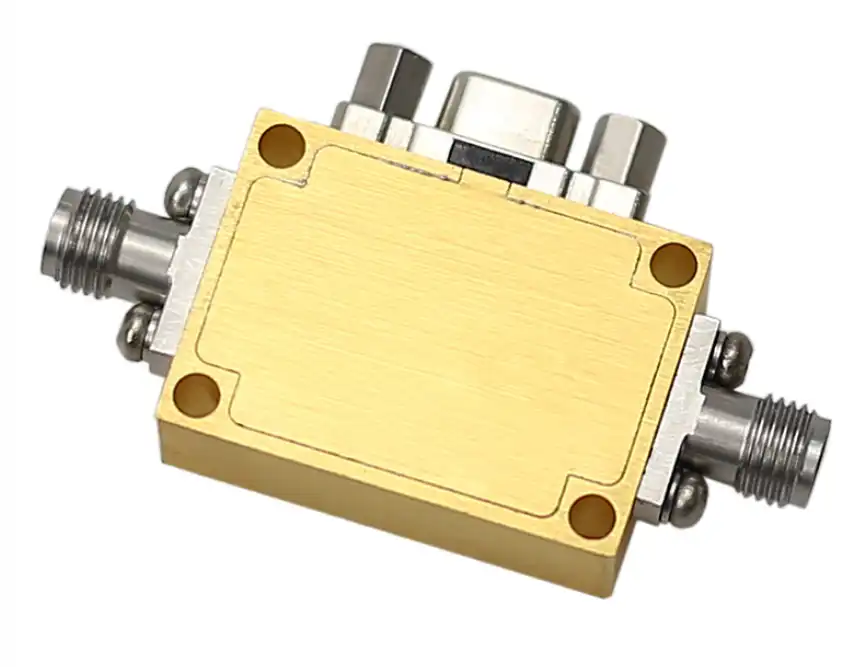
Custom design services set providers who can meet specific needs apart from catalog-only wholesalers. Your application might need frequency coverage that isn't standard, connector interfaces that aren't standard, or environmental hardening that goes beyond what's required by commercial standards. We keep engineering teams that have decades of experience turning customer needs into designs that can be made. These teams are backed by fast prototyping tools that let us get test units to customers in weeks instead of months. Our teams are specialized in delivering high-quality precision phase shifters tailored to your specifications.
Understanding Pricing Dynamics and Lead Time Management
Complexity, number, and amount of customization all affect how much a component costs. Standard catalog items get cheaper as more of them are made, but custom designs have one-time engineering costs that are spread out over many production runs. Transparent sellers give thorough quotes that separate tooling costs from per-unit costs. This lets customers make smart choices about how many to build and how to manage their inventory.
Lead times are very different for off-the-shelf items that can be shipped within days and special parts that need 8 to 12 weeks to be built and tested. Procurement managers should let people know early on about project timelines because there may be faster delivery options for urgent needs. By buying in bulk, you can save money on each unit through volume rates and make sure that parts are available for production runs that last for several quarters or years.
Leveraging Technical Support and After-Sales Services
Including full S-parameter data, mechanical drawings, and thermal features in the datasheets makes it easy to integrate into your system design. Suppliers who offer STEP files for mechanical CAD and Touchstone files for RF simulation speed up the validation of designs and lower the risk of integration. With every package, we include a thorough test report that shows measures of insertion loss, phase accuracy, and return loss that can be traced back to NIST standards.
Quick expert help is very helpful when trying to figure out why something is acting strangely or how to make the system run better. Problems can be solved faster if you have access to application engineers who know how to deal with problems in your business, whether it's flight thermal management, defense shock and vibration, or telecommunications power efficiency. Your business will keep running smoothly and get a good return on your investment if you get a warranty that covers defects in the manufacturing process and repair or replacement services that keep downtime to a minimum.
Future Trends and Performance Optimization in Precision Phase Shifters
New technologies and changing application needs are always changing the goals and abilities of phase shifter designers.
Miniaturization and Integration Advances
Better semiconductor processes allow for higher levels of integration, which means that precision phase shifters, amplifiers, switches, and control logic can all be put on the same chip. These system-on-chip designs make assembly easier, increase reliability by getting rid of failures in the connections between parts, and reduce the size of the chips—all of which are important for platforms that need to fit in limited space, like unmanned aerial vehicles and CubeSat payloads. Silicon-on-insulator (SOI) and gallium nitride (GaN) technologies raise the frequency of operation and can handle higher power densities.
Three-dimensional packing methods stack several die vertically and join them using through-silicon vias instead of wire bonds. This method cuts down on unwanted inductance and capacitance, which increases the bandwidth that can be used and makes phase accuracy better at millimeter-wave frequencies, where even tiny amounts of random inductance can hurt performance. Antenna-in-package ideas combine radiating elements with phase shifter arrays directly, so there are no need for external feed networks and the losses that come with them.
AI-Driven Tuning and Adaptive Control
Machine learning algorithms automatically find the best choices for phase shifters, taking into account changes in the environment, worn-out parts, and different working situations, so you don't have to. When neural networks are taught on measured antenna patterns, they can figure out the best phase setups to get the most gain in the places you want while reducing interference in the protected zones. This intelligence built into base station controls or radar processors improves performance even when electromagnetic surroundings change.
Predictive maintenance analytics use data to keep an eye on the health of phase shifters and notice signs of slow failure before they happen. Instead of waiting for system outages to happen, operators plan maintenance ahead of time by looking at patterns in things like control voltage needs, switching times, or phase accuracy drift. This method lowers the costs over the lifecycle of mission-critical infrastructure and makes it more available.
Preparing for Next-Generation Wireless Standards
As we move toward 6G wireless networks that work above 100 GHz, phase shifters that have a wider bandwidth, less loss, and the ability to work with terahertz components are needed. New materials with reconfigurable electromagnetic properties are being studied in research projects. These include graphene, metamaterials, and liquid crystal technologies. These new ideas offer the possibility of electronic beam steering at frequencies where current semiconductor and waveguide methods are physically limited.
To keep entangled photon states across fiber and free-space links, quantum communication networks that are still being built need phase control at levels of stability that have never been seen before. Precision phase shifters today can be accurate to the degree level, but quantum uses may need millidegree accuracy that can be kept up for hours or days. Next-generation designs will include temperature stabilization, vibration separation, and ultra-low-noise control technology in order to meet these needs.
Conclusion
Precision phase shifters remain very important in research, defense, aerospace, telecommunications, and other fields where changing the phase of a signal is needed to do things that can't be done any other way. When buying teams know the differences between analog and digital control, mechanical and semiconductor methods, and performance trade-offs, they can choose solutions that meet technical needs while staying within budget. As wireless standards move toward higher frequencies and more complicated designs, working with seasoned makers that offer customization, strict quality control, and full support will help your systems stay ahead of the competition in markets that are changing quickly.
FAQ
1. What frequency ranges do precision phase shifters typically cover?
Depending on the technology, precision phase shifters can work at speeds from a few hundred megahertz to more than 110 GHz. Most semiconductor designs work between 2 and 40 GHz, while waveguide designs can work up to millimeter waves. Choosing the right frequency depends on the application. For example, 5G base stations use ranges between 24 and 39 GHz, while satellite uplinks may need Ka-band coverage at 27 to 31 GHz.
2. How does phase accuracy affect radar system performance?
In phased array radars, phase errors directly hurt the accuracy of beam aiming and the amount of sidelobes. If there is a 1-degree phase error between array elements, the main beam can move by a few tenths of a degree, which makes it harder to track targets accurately. Higher sidelobe levels let junk and jamming signals into receiving channels, hiding real returns and making it less likely that they will be detected.
3. Can phase shifters operate in extreme environmental conditions?
Military and aerospace-grade phase shifters can handle temperatures from -55°C to +125°C, shock loads of more than 100g, and vibrations from 20 Hz to 2000 Hz. Hermetic covering keeps water, salt spray, and fungus from getting into internal parts. These natural requirements mean that the technology can be used in harsh environments without affecting its performance on planes, ships, or structures on land.
Partner with ADM for Your Precision Phase Shifter Requirements
Advanced Microwave Technologies Co., Ltd has been in the business for more than 20 years and has a lot of experience helping companies find reliable precision phase shifters sources for important projects. Our ISO 9001:2015-certified manufacturing methods and state-of-the-art 24m Microwave Darkroom testing center make sure that every part meets strict performance requirements, from the first prototype to mass production. Whether your project needs standard waveguide assemblies or fully customized digitally controlled phase shifter solutions, our engineering team works together to come up with the best designs that balance technical performance with low cost. Contact craig@admicrowave.com to talk about your specific needs and find out how our full OEM services, rapid prototyping options, and global logistics support can help you cut down on development time while keeping the quality your mission-critical systems need.
References
1. Pozar, David M. Microwave Engineering, Fourth Edition. Wiley, 2011.
2. Mailloux, Robert J. Phased Array Antenna Handbook, Third Edition. Artech House, 2017.
3. Sorrentino, Roberto and Bianchi, Giovanni. Microwave and RF Engineering. Wiley, 2010.
4. IEEE Transactions on Microwave Theory and Techniques, Special Issue on Phased Array Antennas, Vol. 64, No. 7, July 2016.
5. Skolnik, Merrill I. Introduction to Radar Systems, Third Edition. McGraw-Hill Education, 2001.
6. Bahl, Inder and Bhartia, Prakash. Microwave Solid State Circuit Design, Second Edition. Wiley-Interscience, 2003.