





Broadwall Double Ridge Waveguide Coupler vs Cross-Guide
When it comes to selecting waveguide couplers for mission-critical RF and microwave systems, procurement engineers and technical buyers face a pivotal decision: the broadwall double ridge waveguide coupler or the cross-guide coupler? The broadwall double ridge waveguide coupler stands out for its exceptional multi-octave bandwidth and directivity, making it indispensable in wideband applications ranging from 2-18 GHz to 6-40 GHz. Cross-guide couplers, conversely, offer compact geometries suited to narrower frequency bands with lower insertion loss. Understanding these distinctions empowers B2B buyers to optimize system performance while controlling procurement costs and lead times.
Understanding Broadwall Double Ridge Waveguide Couplers
Microwave engineering has come a long way with the broadwall double ridge waveguide coupler. This design capacitively loads the waveguide center with two ridge structures along the wider wall of the waveguide. This lowers the cutoff frequency by a large amount and delays the start of the higher-order mode. Getting ultra-wide bandwidth without losing power handling or directivity has been a problem in RF systems for a long time. This design solves that problem.
Technical Architecture and Core Properties
It is very important to use precise engineering in a number of areas when making a double-ridged waveguide broadwall directional coupler. Support for ultra-wide bandwidth is one of the main features. WRD standards like WRD650, WRD750, and WRD180 cover frequency ratios of up to 3.6:1. This feature gets rid of the need for multiple narrowband couplers, which makes the system simpler and lighter, which is a big plus for electronic warfare kits in the air and satellite ground sites.
Precision multi-hole coupling arrangements, which often follow the Chebyshev distribution, keep the coupling flat. This makes sure that changes in coupling stay within ±1.0 dB throughout the whole operating band, which guarantees accurate signal sampling. High directivity, usually greater than 15 to 20 dB, keeps interference from mirrored signals to a minimum during forward power tracking, which is needed in radar testing and EMC compliance labs. These couplers can handle more power than coaxial options; rates can reach kilowatts based on frequency and pressurization. This makes them perfect for testing high-power broadband radar.
Material standards are based on the harsh conditions that these parts must work in. These couplers are made from high-quality Aluminum 6061-T6 or copper alloys and are finished with chromate conversion or silver plating. They reduce resistive losses and keep them from rusting in harsh conditions. VSWR is kept very low, usually below 1.4:1, which ensures that impedance matching is perfect across a wide range of frequencies. Advanced Microwave Technologies Co., Ltd. (ADM) has measurement labs that can go up to 110 GHz and put these parameters through thorough Vector Network Analyzer testing. Before delivery, S-parameters are checked against MIL-DTL-85 standards.
Industry Applications and Use Cases
When you need reliable performance in tough working conditions, broadwall double ridge waveguide couplers are the best choice. These parts are used in airborne electronic warfare suites for systems that jam signals and find threats. They must cover multiple octaves of frequencies from 6 GHz to 18 GHz. The coupler checks the power going to antenna arrays without using multiple hardware chains. It can handle the high vibrations and fast temperature changes that are common in aircraft applications.
Testing with high-power broadband radar is another important use. These couplers are used in automatic test tools for Synthetic Aperture Radar systems. They let engineers sweep full operating bands, characterizing Traveling Wave Tubes or Solid State Power Amplifiers all the time without stopping vacuum or waveguide connections. These couplers feed high-power broadband antennas and provide precise feedback loops to amplifiers. They keep field strengths constant across octaves without thermal drift affecting coupling factors. They are also useful for EMC and EMI radiated immunity testing in B2B compliance laboratories.
Overview of Cross-Guide Waveguide Couplers
Cross-guide waveguide couplers are different from ridge-based systems because they use an orthogonal coupling method. The coupling path crosses the main waveguide at right angles, making a small footprint that is useful for setups with limited room.
Design Principles and Operating Mechanisms
The cross-guide design uses hole coupling to send energy into a secondary guide that is not connected to the first one. This setup usually works with narrow to mid-range frequency ranges, which are usually between 1.5:1 and 2:1 frequency ratios. Compared to double-ridged structures, this design is easier to make because it has fewer moving parts. This could lower production costs and lead times.
Cross-guide couplers usually have good insertion loss characteristics within their useful ranges, which are usually between 0.2 and 0.5 dB. Power handling isn't as good as with ridge couplers, but it's still enough for many industrial and telecommunications uses, with ratings in the hundreds of watts for CW operation. The level of isolation changes with frequency, but it usually stays between 20 and 25 dB in the middle of the design band. As you move toward the ends of the band, the isolation gets worse.
Application Suitability and Technical Specifications
Cross-guide couplers are popular in telecom infrastructure where small size and low cost are more important than having a very wide bandwidth. These parts are often used in base station test tools, point-to-point microwave lines, and wireless backhaul systems. Because they can only handle a modest amount of power and have a narrower bandwidth, they are not as good for electronic warfare or wideband radar uses. However, they work perfectly for fixed-frequency or narrowband systems.
In cross-guide designs, the symmetrical coupling device helps keep phase balance, which usually stays within ±3° across the operating band. This trait is useful in phased array situations where it's important that the phase relationships between linked and main line signals stay the same. Stable temperature, made possible by uniform material properties and simpler shapes, makes outdoor placement of telecoms infrastructure more reliable.
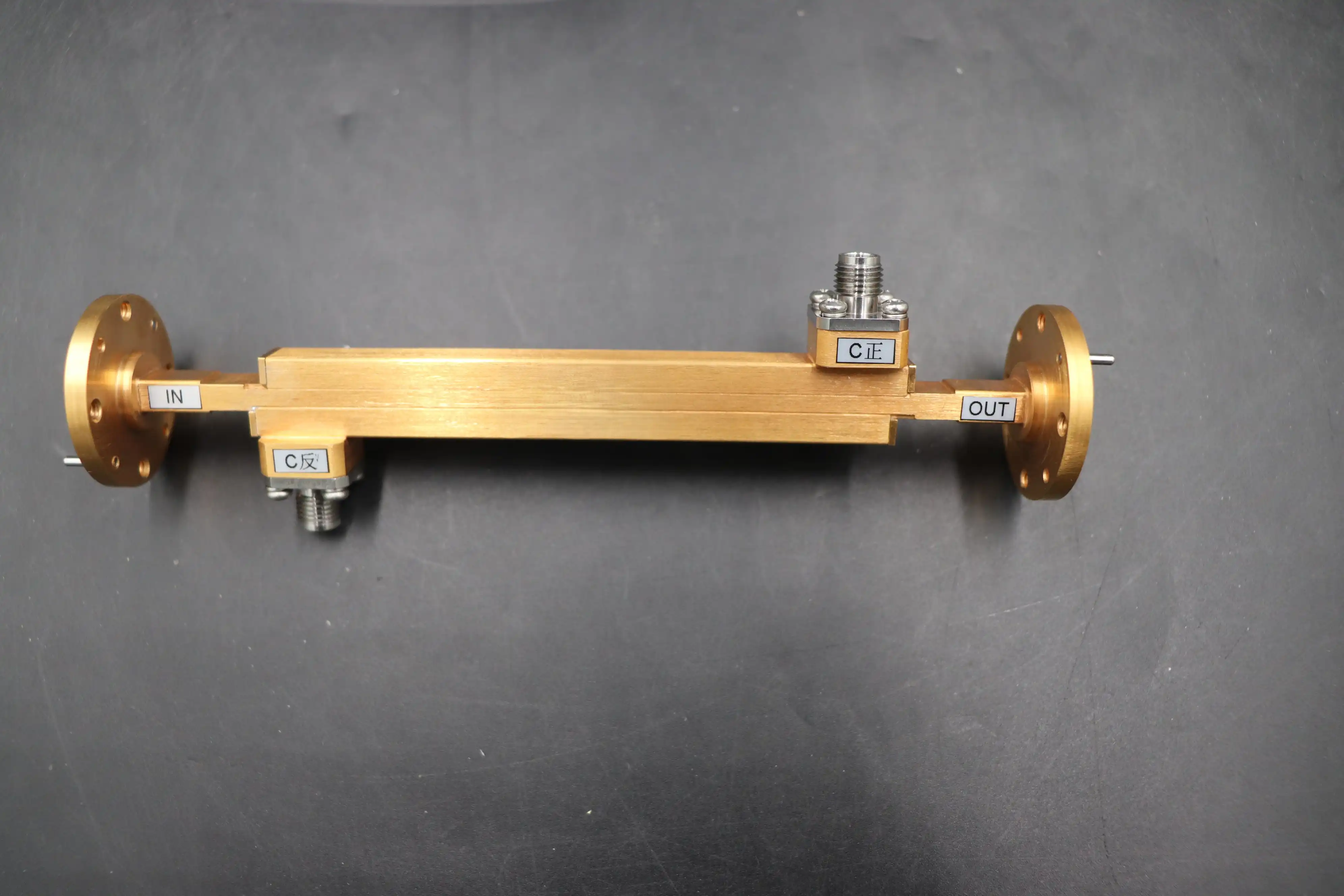

Comparative Analysis: Broadwall Double Ridge vs Cross-Guide Couplers
To judge these connection types, you have to look at how well they work, how they are made, and how reliable they are over time, all of which affect the total cost of ownership.
Performance Metrics and Application Scenarios
The most important thing that sets them apart is their bandwidth. Broadwall double ridge waveguide couplers can cover 200 to 300 percent of the bandwidth, which means they can use a single component to cover many octaves. Cross-guide couplers usually cover a bandwidth of 40 to 100%, so wideband systems need more than one unit or designs that are specific to frequencies. In electronic warfare, where danger frequencies cover very large areas, this difference is very important, and only double-ridge designs can work.
These methods also have different levels of coupling accuracy and flatness. Through precise multi-hole arrays, broadwall double-ridge waveguide couplers keep the coupling variation between ±1.0 and ±1.5 dB over their whole bandwidth. Cross-guide designs can achieve tighter coupling tolerances, often within ±0.5 dB, because they work over narrower bands. This is helpful for uses that need to precisely measure power at set frequencies. When it comes to directivity, double-ridge designs are better at the edges of the band because their multi-hole coupling keeps isolation above 15 dB. Cross-guide couplers, on the other hand, may lose directivity as they get closer to the edges of the band.
Manufacturing and Cost Considerations
Pricing and wait times are greatly affected by how complicated the manufacturing process is. When making broadwall double-ridge waveguide couplers, precise CNC machining is needed to keep the ridge gap tolerances within microns. This is because deviations change the cutoff frequencies. Because of this need, Coordinate Measuring Machine verification is needed during quality control, which makes production cycles longer. Cross-guide couplers can be made faster because they have fewer important dimensions. This lowers both unit prices and lead times, which is helpful when project deadlines are short.
The costs of materials show how complicated things are. Higher component costs are caused by the need for special coatings and high-quality alloys on broadwall double ridge waveguide couplers to stop multipaction and lower resistive losses. For narrowband uses, cross-guide systems are more cost-effective because they use normal waveguide materials and are easier to make. When examining supplier quotes, procurement professionals have to weigh these factors against performance needs and expected output numbers.
Reliability and Maintenance Factors
Long-term operational stability affects the total cost of ownership after the initial purchase. Because they are made for harsh conditions, broadwall double ridge waveguide couplers last longer in places in the air, on ships, and outside. Their strong design means they can handle pressure, shock, and changes in temperature with little effect on their performance. ISO 9001:2015 certification and RoHS compliance are normal at companies like ADM. They make sure that quality is always the same and that they are responsible for the earth.
Cross-guide couplers are easier to use, but they need to be carefully sealed at the joint and kept clean. Because they have smaller operating bands, their performance stays stable within the limits of the design. However, if they are not properly protected, environmental exposure can weaken their isolation and VSWR over time. Both types don't need much maintenance, but the pressurization seals on broadwall double ridge waveguide couplers used at high altitudes need to be checked every so often to make sure they keep protecting against voltage breakdown.
Procurement and Supply Chain Considerations for B2B Buyers
Finding the right waveguide coupler is more complicated than just meeting scientific specs. Project success depends on how well suppliers are evaluated, how much customization they can do, and how reliable the supply chain is.
Critical Procurement Criteria
Accurately defining the frequency range is the first step in matching the coupler choice to the operational conditions. B2B buyers should be very specific about what they need from the system, such as the lowest and highest frequencies, coupling values they want to reach, minimum directivity standards, and how much power they need to handle. Material and coating choices are based on environmental factors such as working temperature range, altitude, vibration patterns, and humidity exposure. Our engineering team at ADM works with sourcing specialists to turn these needs into detailed part specs. They do this by drawing on their more than 20 years of experience in defense, aerospace, and satellite communications.
Evaluating manufacturers requires assessing OEM capabilities, compliance with certifications, and delivery reliability. Certification to ISO 9001:2008 makes sure that quality control systems meet international standards. RoHS compliance, on the other hand, makes sure that environmental rules are followed, which is important for foreign markets. Companies like ADM's advanced labs that can test their products in-house up to 110 GHz offer full proof before shipping, which lowers the risks of integration. Geography is also important. Knowing how long it takes to ship goods internationally and how tariffs might affect the cost helps you make a good budget.
Customization, Pricing, and Support
Order processing that is flexible can meet a wide range of project needs. Standard stock items can be sent out fast for rapid development or replacement needs. Custom designs, on the other hand, can be made to fit specific frequency ranges, coupling values, or mechanical connections. Quick development services let you test your idea before committing to large-scale production, which lowers the technical risk. ADM's OEM services offer custom solutions for everything from small R&D quantities to large production runs. Throughout the design process, experts provide support and guidance.
Bulk pricing structures lower the cost per unit for big projects by rewarding commitments to buy a lot. Framework deals should be negotiated by procurement teams to lock in prices for multi-year projects while still allowing for flexible phased deliveries that fit with production schedules. Long-term worth is ensured by after-sales support, such as installation help, troubleshooting help, and guarantee coverage. Our expert support goes beyond delivery; it also helps integration teams improve system performance and quickly fix problems in the field.
Making an Informed Decision: When to Use Broadwall Double Ridge Couplers vs Cross-Guide
Recommendations based on scenarios make it clear which coupler design fits the needs of the business and the operations.
Application-Specific Recommendations
If you have to have ultra-wide bandwidth, choose broadwall double ridge waveguide couplers. Single-component methods that cover multiple octaves are useful for electronic warfare systems, wideband radar development, and multi-band satellite base stations. The higher initial cost is balanced by the fact that there is no longer any need for multiple narrowband couplers. This makes assembly simpler and more reliable. Ridge designs are better at handling power and keeping temperatures down in high-power uses, especially those that use more than a kilowatt of power.
Cross-guide couplers serve well in fixed-frequency telecommunications infrastructure, point-to-point microwave links, and narrowband test equipment where compact size and cost-effectiveness drive decisions. Because they are easier to build, lead times are shorter, which makes them perfect for projects with tight deadlines. Applications that can work with narrower bandwidths save money without losing speed as long as they stay within practical limits.
Cost-Benefit Analysis and Future Trends
Cost of ownership includes more than just buying something. It also includes labor for integration, upkeep, and reliability over the whole lifecycle. Even though broadwall double ridge waveguide couplers cost more per unit, they often offer better value in difficult situations because they simplify the system and make it last longer. Their ability to cover multiple bands with a single part makes managing extra parts easier and lowers the cost of keeping things in stock. Cross-guide couplers are better for projects that need to stay within a budget and don't need a lot of data because they have lower initial costs.
New developments in waveguide technology point to wider frequency bands that will support 5G millimeter-wave and future 6G systems. Manufacturers are working on different types of ridge couplers that can cover frequencies higher than 40 GHz while still having the benefits of this technology's high bandwidth. Additive manufacturing techniques could lower the cost of making complex ridge geometries, which could make cross-guide designs more affordable. B2B buyers should keep an eye on these changes and make sure that their purchasing plans are in line with how capabilities are changing so that they can stay ahead of the competition.
Conclusion
When deciding between cross-guide designs and broadwall double ridge waveguide couplers, you have to weigh technical performance against cost, complexity, and the needs of your application. In demanding aerospace, defense, and telecommunications applications, double-ridge architectures are worth the extra work because they provide unmatched bandwidth and directivity for wideband systems. Cross-guide couplers are a cheap way to meet narrowband needs where small size and ease of use are important factors. By knowing these differences and working with experienced manufacturers that offer customization options, strict quality control, and full technical support, procurement teams can get parts that improve system performance while keeping total ownership costs low over the lifecycle of a product.
Frequently Asked Questions
What frequency ranges do broadwall double ridge couplers support?
Broadwall double ridge waveguide couplers can usually handle frequency ratios of up to 3.6:1 and bandwidths of more than eight octaves. Common ranges include 2-18 GHz, 6-40 GHz, and different WRD standard bands (WRD650, WRD750, WRD180), which allow for wideband systems with only one component.
How does coupling accuracy compare between these coupler types?
Because they use precise multi-hole arrays, broadwall double ridge waveguide couplers can keep their coupling accuracy within ±1.0 to ±1.5 dB over their whole bandwidth. In their smaller operating bands, cross-guide systems can achieve tighter tolerances, usually ±0.5 dB, which is good for fixed-frequency power tracking applications.
What factors should I consider when selecting a manufacturer for custom designs?
Check if they are ISO 9001 certified, if they can test their products in-house at frequencies that match yours, if they have experience working with OEMs, how long it takes to make prototypes, and if they offer expert help after the sale. Manufacturers with decades of experience in defense and aircraft use show that mission-critical parts can be trusted.
Partner with ADM for Precision Broadwall Double Ridge Waveguide Coupler Solutions
Advanced Microwave Technologies Co., Ltd. (ADM) has been a trusted broadwall double ridge waveguide coupler manufacturer and supplier for over 20 years. They work with companies around the world in the defense, aerospace, satellite communications, and telecommunications industries. Our facilities are ISO 9001:2015 approved, and they have modern labs that can measure up to 110 GHz to make sure that every part meets strict performance standards. Our experienced engineering team can help you with everything from prototyping to mass production, whether you need normal WRD couplers or options that are specifically designed to meet your frequency range and power-handling needs. Take advantage of our perfect supply chain system, quick delivery, low prices, and strong customer service after the sale. Contact our experts at craig@admicrowave.com to talk about your project needs, get technical specifications, or get a detailed quote. We're dedicated to giving your systems the power they need with precision-engineered waveguide components that work reliably in the toughest situations.
References
1. Collin, R.E. (2001). Foundations for Microwave Engineering (2nd ed.). IEEE Press.
2. Marcuvitz, N. (1986). Waveguide Handbook. Institution of Engineering and Technology.
3. Ramo, S., Whinnery, J.R., & Van Duzer, T. (1994). Fields and Waves in Communication Electronics (3rd ed.). John Wiley & Sons.
4. Pozar, D.M. (2011). Microwave Engineering (4th ed.). John Wiley & Sons.
5. Saad, T.S. (1971). "Broadband Double-Ridged Waveguide Directional Couplers." IEEE Transactions on Microwave Theory and Techniques, 19(8), 650-656.
6. Chen, Y.C. (1982). "Design of Broadband Waveguide Directional Couplers." Microwave Journal, 25(11), 89-98.
YOU MAY LIKE
 VIEW MOREWG Probe Coupler
 VIEW MOREIndustrial Microwave Sliding Short
 VIEW MOREDouble-bend Waveguide
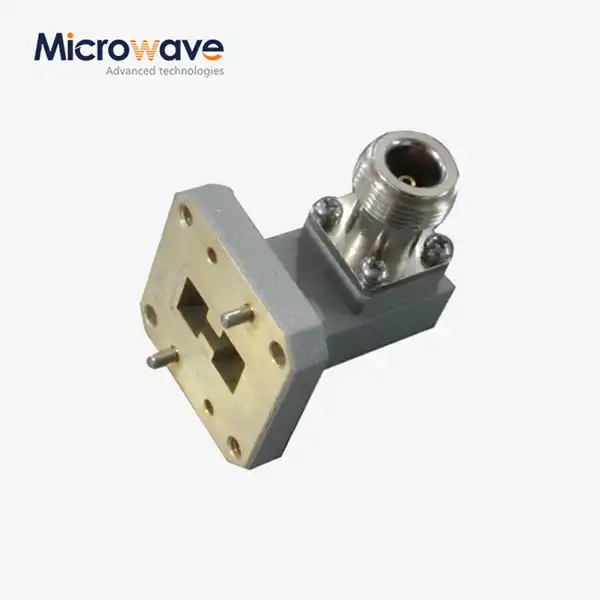 VIEW MORERight Angle Double Ridged WG To Coaxial Adapter
 VIEW MOREWG Band Stop Filter
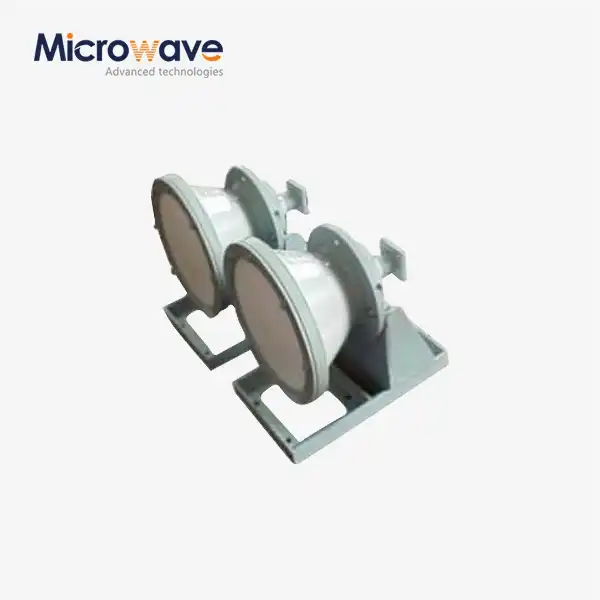 VIEW MOREConical Horn Lens Antenna
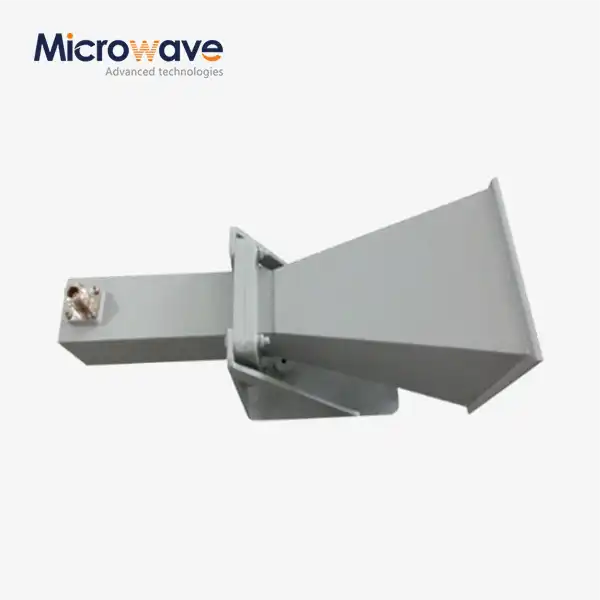 VIEW MORELadder Membrane Square Dual Circular Polarization Horn Antenna
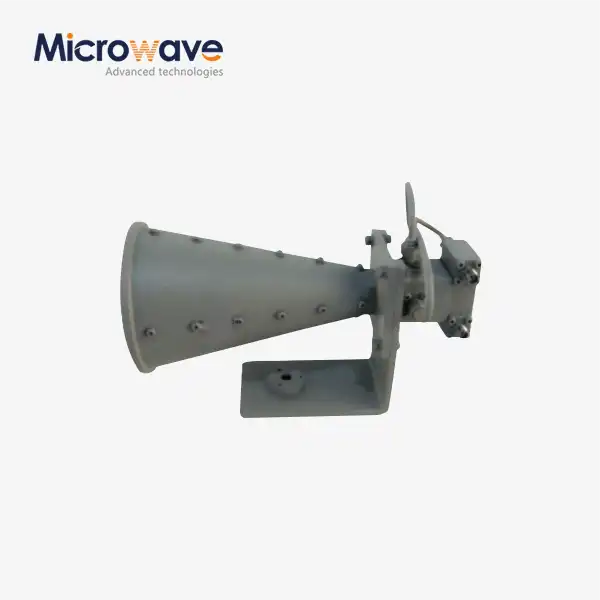 VIEW MOREDual Linear Broadband Dual Circular Polarization Horn Antenna