





Broadband RF Circulator Applications in Modern Wireless Systems
A broadband rf circulator sends signals in a single direction over a wide range of frequencies. This means that a single passive part can work for more than one band. It separates the send and receive paths in modern wireless systems, lets a transmitter and receiver share a single antenna, and keeps reflected power away from amplifiers that are sensitive to it. Radar, satellite links, 5G radios, electronic warfare, and test benches are all places where engineers use it. This book is for procurement engineers and system designers; I wrote it. It tells you how the gadget works, what specs are important, where it fits, and how to look at different sellers before you buy.
What Is a Broadband RF Circulator and How Does It Work?
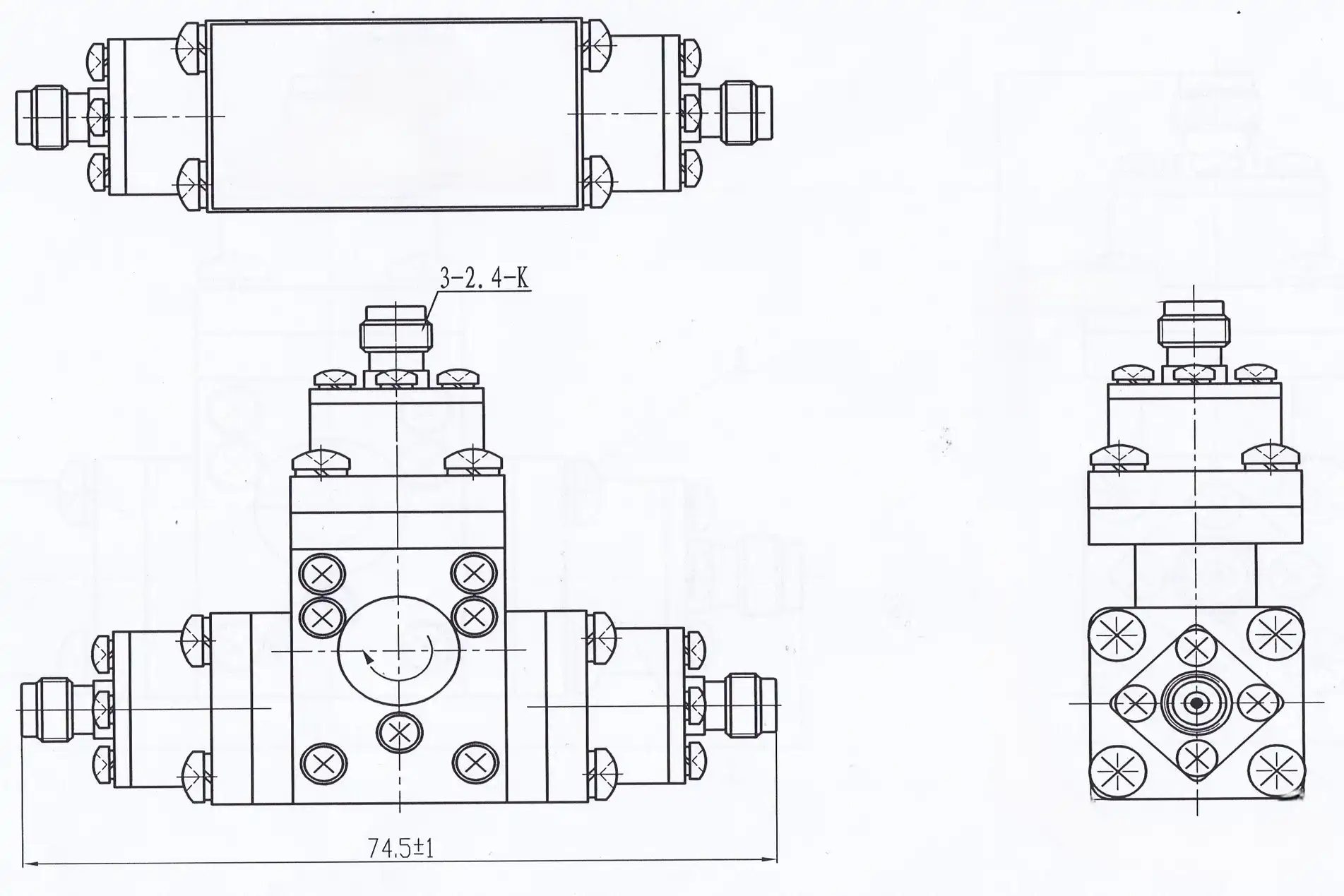
Three-Port Signal Path and Non-Reciprocal Behavior
There are three ports on a circulator, which is a passive junction. A signal that comes into Port 1 leaves through Port 2. It goes through Port 3 to get to Port 2, and it goes through Port 1 to get to Port 3. When energy moves the other way, it meets a lot of resistance. Engineers call this behavior "non-reciprocal" because the paths going forward and backward don't behave the same way. The gadget doesn't need any extra power. Port 1 is usually linked to the power amplifier, Port 2 is linked to the antenna, and Port 3 is linked to either a receiver or a termination load. Now, energy that the antenna bounces back goes to Port 3 instead of the amplifier.
Ferrite Material and Magnetic Biasing
Ferrite is what makes the one-way effect happen. A static magnetic field pushes the ferrite in a certain direction, and the material that is biased turns the electromagnetic field inside the junction. In 1965, Fay and Comstock wrote about how a ferrite junction circulator worked. This type of junction is still commonly used. Isolation and insertion loss are controlled by the magnet's strength, the type of ferrite used, and how even the field is. What makes the response flat over frequency is the impedance matching around the junction. The device loses its tune if the magnetic field moves, so a careful maker checks not only the ferrite but also the magnetic circuit and cavity sizes.
Why Wide Frequency Coverage Matters
There is a focused frequency range that a narrowband circulator is tuned for. In a coaxial model, a broadband RF circulator can operate over a range of 2–18 GHz. That helps platforms that work with multiple bands and frequency-agile radios. An engineer might need a bank of narrowband parts and switches without it. With each extra part, there is more insertion loss, more weight, and more room. That's less complicated with just one wideband unit. On the other hand, very wide units may have a little more insertion loss than narrowband models, so you should check the full band.
Key Specifications for Broadband RF Circulator System Design
Frequency Range and Insertion Loss
Do not start with the band that is printed on a catalog page, but with the band that your system needs. Make sure that the guaranteed range includes all of the frequencies you use, even the ones on the edges of the band. This is the amount of energy that is lost moving forward. In a transmit chain, that loss turns into heat, which lowers the power that can be sent. It adds noise to a receive path. In a link budget, even a few tenths of a dB can make a difference. Find out if a loss number is true for the whole band or just the center frequency. This is important because wide units can show more loss near the edges.
Isolation, Return Loss, and VSWR
The level of isolation shows how well the device stops signals that are traveling in the opposite direction. High isolation keeps the transmitter safe and keeps modules from interfering with each other. Return loss and VSWR show how well each port matches the impedance of the system. A bad match sends power back to the source and messes up measurements. The properties of ferrite change with frequency, which means that near the band edges, isolation and VSWR can go down. These dips can be missed by a single-point test, but they can be seen by a full-band sweep on a vector network analyzer. Get plots of S12, S11, and S22, and make sure the pass limit is still valid at all frequencies in your band.
Power, Temperature, and ADM Waveguide Circulator Ratings
One type of power rating is an amp. Average power causes the temperature to rise, and peak power causes the voltage to drop. As the duty cycle goes up, the safe limit goes down, and high reflected power makes it worse. Other things that can affect reliability are vibration, humidity, housing, and mounting. This is what ADM says about its waveguide circulators:.
| Parameter | ADM Listed Value |
|---|---|
| Frequency range | DC to 110 GHz |
| Insertion loss | ≤0.5 dB |
| Reverse isolation | ≥40 dB |
| VSWR | ≤1.2 (input), ≤1.3 (output) |
| Average power | 10–500 W |
| Peak power | 1–10 kW (up to 50 kW on high-power models) |
| Operating temperature | -40°C to +85°C |
Coverage of frequencies depends on the model and size of the waveguide, so make sure you know the exact band with our engineers before you design around a number.
Major Broadband RF Circulator Applications in Wireless Systems
Radar and Electronic Warfare
In radar, the sender and receiver often use the same antenna. The antenna gets the high-power pulse from the circulator, which also sends the weak echo to the receiver. The send pulse is also kept away from the low-noise receive module. This is true for civilian weather radar, military search radar, and fire-control radar. In electronic warfare, systems scan a lot of frequency ranges. To make a jamming transmitter and a reconnaissance antenna work across a lot of bands, a wideband unit blocks jamming energy from getting into the reconnaissance module. Active electronically scanned array radars put circulators in transmit/receive modules. In these modules, it's important to have both high peak power and phase linearity over the band.
Communications, Satellite, and 5G
In microwave relay links and satellite terminals, a broadband rf circulator separates the send and receive signals on a shared antenna. This keeps the transmitter from getting in the way of the receiver. High-power active antenna systems use them in 5G and 6G base stations to cut down on inter-channel interference and keep amplifiers safe from reflected power. The 3GPP says that the 5G NR frequency range 2 is from 24.25 GHz to 52.6 GHz. This means that millimeter-wave hardware needs parts that can still work at high frequencies. When low loss is important, waveguide designs work well for high-frequency, high-power links. Their job is to keep signal paths clear in satellite communication systems as well.
Test, Measurement, and Industrial Systems
In RF test platforms, the test signal and the reflected signal are split up by a circulator. So the readings for power, frequency, and VSWR stay correct, and the source doesn't get messed up when it feeds a device being tested. It separates the microwave source from the load so reflections go to a termination instead of the generator. This is used in industrial microwave heating, drying, and plasma processing. Another need is for aerospace systems, like radar on airplanes, satellite subsystems, and guidance hardware that has to deal with vibrations, changes in altitude, and big changes in temperature. Before you ask for a quote, make a list of the things that are most important to you in terms of loss, isolation, power, and size.
Broadband RF Circulator Selection Guide and Comparison
Define the Architecture and Electrical Needs
Start with the picture of the system. Look at where the circulator is placed, what goes with each port, and where the power that is reflected goes. Next, write down the VSWR targets, frequency range, impedance, average and peak power, isolation, insertion loss, and power on and off. In order to find the thermal margin, you need to add the duty cycle and the worst-case load mismatch. Next, make a list of environmental limits, such as those for vibration, temperature, humidity, and sealing. Finish with the mount and size. If there is a clear list, the supplier can suggest a model right away, instead of having to ask a lot of questions. You can also use it to compare quotes fairly.
Coaxial or Waveguide, Broadband or Narrowband
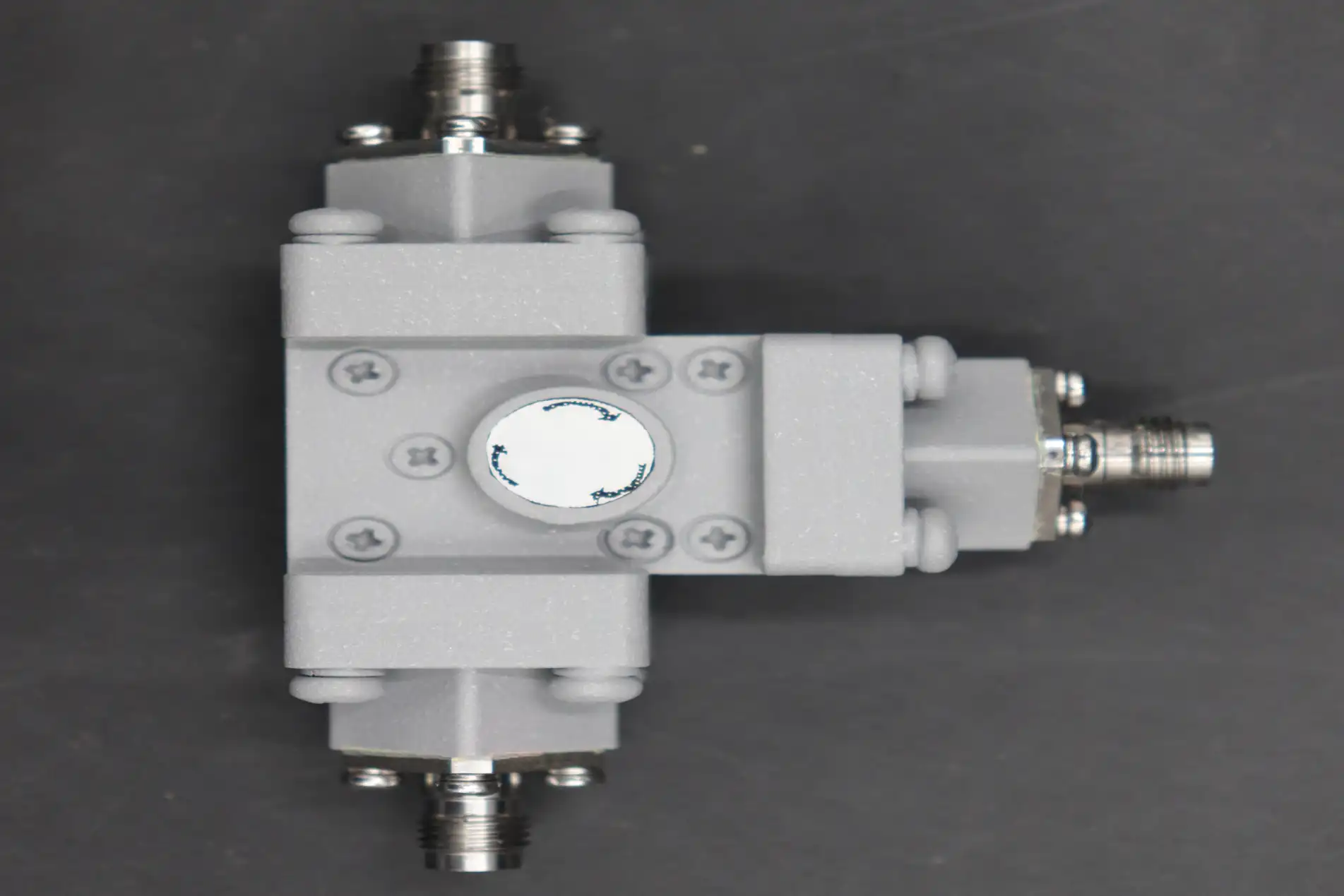
To connect to a coaxial circulator, you can use an SMA, N-type, 2.92 mm, or 3.5 mm connector. They are small and can handle a lot of different frequencies. Even though they are bigger, waveguide circulators work well with higher power and low loss because they use standard flanges. You have more options with broadband models because they have fewer parts. Models with a narrow band can provide tuned performance in a specific range. If you need an isolator, connect a matched load to one port of a circulator. It then goes from Port 1 to Port 2, and when reflections reach Port 2, they go into the load. Be sure that the load can handle the power that is being sent back.
Standard Catalog Parts or Custom Designs
A catalog part cuts down on delivery time and engineering costs. Like any other model, it works if your band, connector, and power level are the same. When you need a specific frequency band, port layout, size, flange, or protection from the environment, a custom design is the way to go. It takes longer and needs to be qualified, but it can get rid of an adapter or make room in the chassis. ADM provides OEM services with fast prototyping, so you can test samples before making the whole thing. Our labs can measure up to 110 GHz, and our products are ISO 9001 certified and RoHS compliant. Check that the first article is okay and that there is a plan to keep performance the same from lot to lot.
Supplier Comparison, Common Mistakes, and Future Trends
Compare Datasheets and Suppliers
List all of the candidates for a broadband rf circulator in one table, along with their price, warranty, lead time, frequency range, insertion loss, isolation, VSWR, power, temperature, dimensions, compliance, and VSWR. Mark each value as usual or certain. A guaranteed value is a limit that every unit must meet, while a typical value talks about an average unit. If you want test conditions, mechanical drawings, and measured plots across the whole band, you should ask for them. As part of quality checks, S-parameter sweeps, thermal cycling, vibration testing, and passive intermodulation tests for communication purposes are often used. Also, ask for inspection records. These will show if the consistency between lots is real. Not just the unit price, but also the total cost, which should include logistics, support, and the risk of having to redo the work.
Avoid Common Selection Mistakes
The first mistake is being too focused on frequency alone. It's possible for a part to cover your band and still miss power loss or isolation. It doesn't take into account reflected power. An antenna that isn't matched right can send back more energy than the load or ferrite can handle. The third mistake is forgetting to connect the termination in an isolator setup. Some others are relying on average data, not checking the fit of the connector or mounting, and not validating the samples. You can avoid these mistakes by testing a sample with a real mismatch, looking over the drawings early, and giving your approval on a first article before making a lot of them.
Plan for Future Trends
As 5G moves toward millimeter waves and 6G research starts, radios and radars need to be able to cover more bands on the same platform. This means that designers need flat loss and steady isolation over longer ranges. Because more power means more heat, high-power waveguide circulators have cavities made of thick-walled aluminum or copper alloy, and some models also have heat sinks. There is less space as well. When compared to regular products, ADM miniature models take up 30% less space because they have thin-film magnetic circuits and built-in cavities. IP67/IP68 sealed structures are used for outdoor models. To save money, it's better to work out custom bands, connectors, and port layouts while the design is still being made.
Conclusion
A broadband rf circulator sends energy in one direction through a magnetically biased ferrite junction. This separates the send and receive paths and keeps amplifiers from being reflected. In radar, electronic warfare, test benches, 5G and satellite links, and industrial microwave equipment, one wide-range part can replace several narrowband ones. This shows how useful it is. Full-band insertion loss, isolation, VSWR, power, temperature, and mechanical fit are some of the things that affect a good selection. These things should be checked against guaranteed data instead of typical data. You can choose between coaxial and waveguide shapes, broadband and narrowband options, and standard or custom designs. Each has pros and cons when it comes to size, loss, power, and lead time. Mistakes that happen a lot include matching frequency but not reflected power. As systems get better at covering more areas and packing more power into a smaller space, these risks go down thanks to sample testing and first-article approval.
FAQ
Q1: What is a broadband rf circulator?
It is a passive device that only sends signals from one port to another in one direction over a wide frequency range. It doesn't need any outside power and uses a ferrite junction that is magnetically biased.
Q2: Can a circulator work as an isolator?
Yes. Put an equal load on one port to close it. The signals then go from Port 1 to Port 2, and any reflections that reach Port 2 end up in the load instead of the source.
Q3: What limits power handling?
The voltage at the connectors or flanges determines the peak power. How much power it has on average depends on how well the ferrite and housing keep heat out. A termination load can also be overloaded by a lot of reflected power.
Q4: How does temperature affect performance?
Since the properties of ferrite change with temperature, the range of isolation and loss can move outside of what is specified. ADM says that its waveguide circulators can work in temperatures from -40°C to +85°C.
Request a Broadband RF Circulator Quote from ADM
ADM is a broadband RF circulator supplier with over 20 years of microwave experience. They have a full supply chain, a professional R&D team, strict quality control, fast delivery, competitive pricing, and strong after-sales service. If you email craig@admicrowave.com with your frequency, power, connector, quantity, and delivery needs, our engineers will help you choose a model, sample, or custom design.
References
1. Microwave Engineering, 2012
2. Operation of the Ferrite Junction Circulator, IEEE Transactions on Microwave Theory and Techniques, 1965
3. Radar Handbook, 2008
4. Microwave Ferrites and Ferrimagnetics, 1962
5. NR; Base Station (BS) Radio Transmission and Reception, 3GPP TS 38.104, 2023
6. Electronic Warfare and Radar Systems Engineering Handbook, 2013
YOU MAY LIKE
 VIEW MOREWaveguide Horn Antennas
 VIEW MORERight Angle Waveguide To Coaxial Adapter
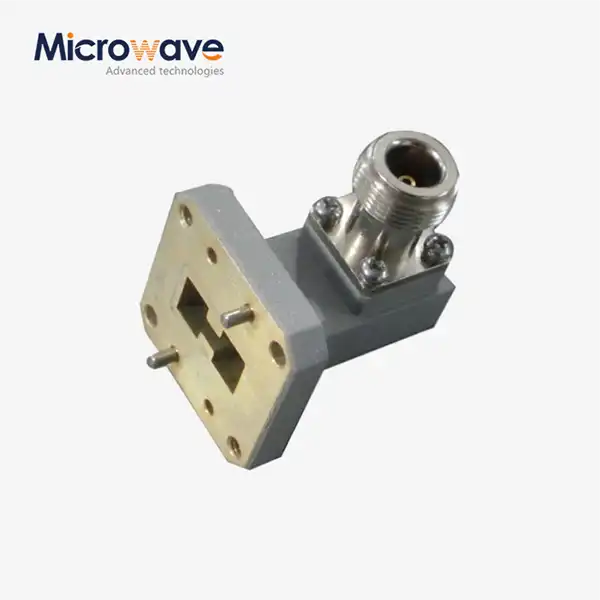 VIEW MORERight Angle Double Ridged WG To Coaxial Adapter
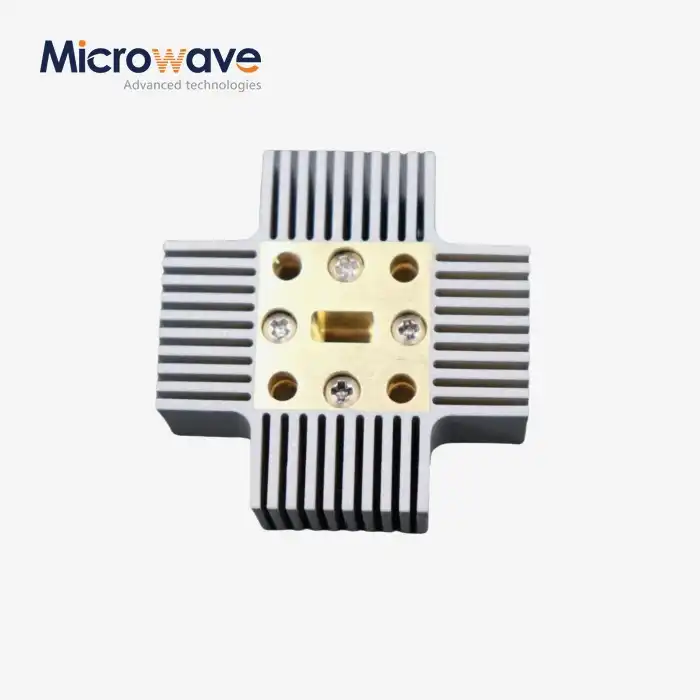 VIEW MOREWG Pressure Window
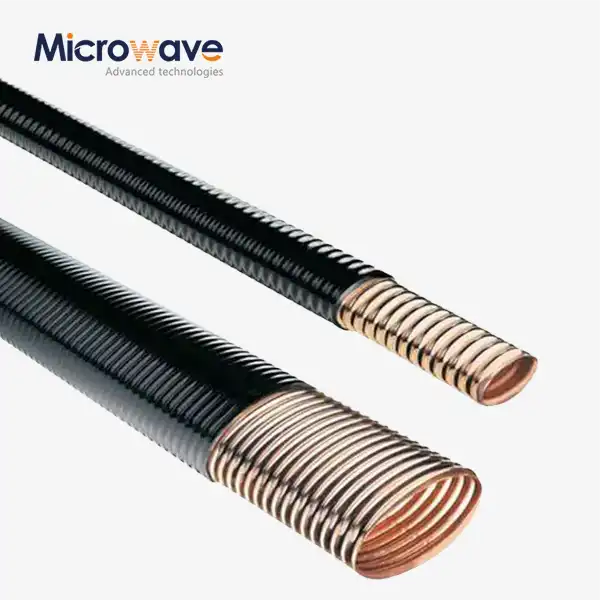 VIEW MOREElliptical WG
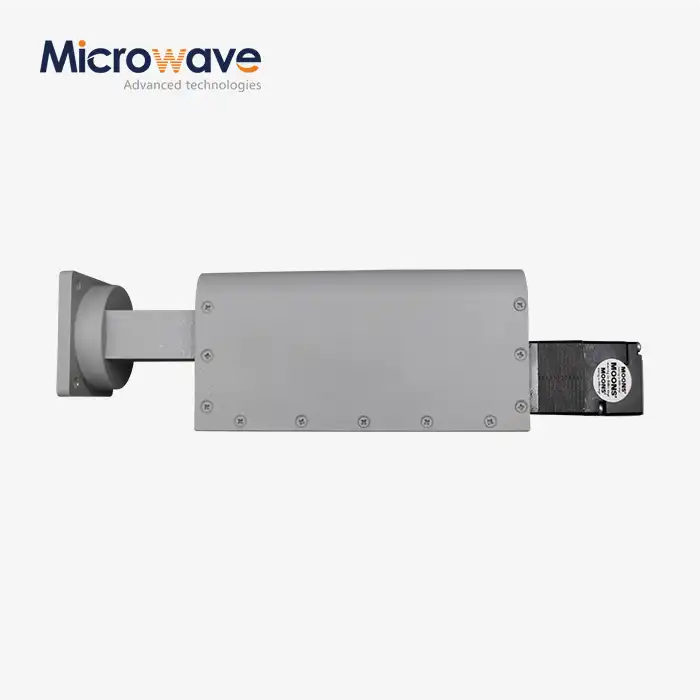 VIEW MOREWaveguide Offset Short
 VIEW MOREDouble Ridge Waveguide Bend
 VIEW MOREDual Linear Broadband Circular Polarization Horn Antenna