




Broadband Circulator Performance in Wideband Microwave Systems
When designing modern RF architectures, engineers face a persistent challenge: how to efficiently route high-frequency signals across multiple octaves while maintaining signal integrity and system protection. A broadband circulator addresses this challenge by providing non-reciprocal signal routing over wide frequency ranges, effectively isolating sensitive components from reflected power and enabling simultaneous transmit-receive operations. Unlike narrowband devices limited to specific frequencies, these components utilize advanced ferrite material compositions and precision impedance matching to deliver consistent performance from DC to 40 GHz, making them indispensable in radar, satellite communication, and 5G infrastructure, where frequency agility and system reliability are non-negotiable.
Understanding Broadband Circulators in Wideband Microwave Systems
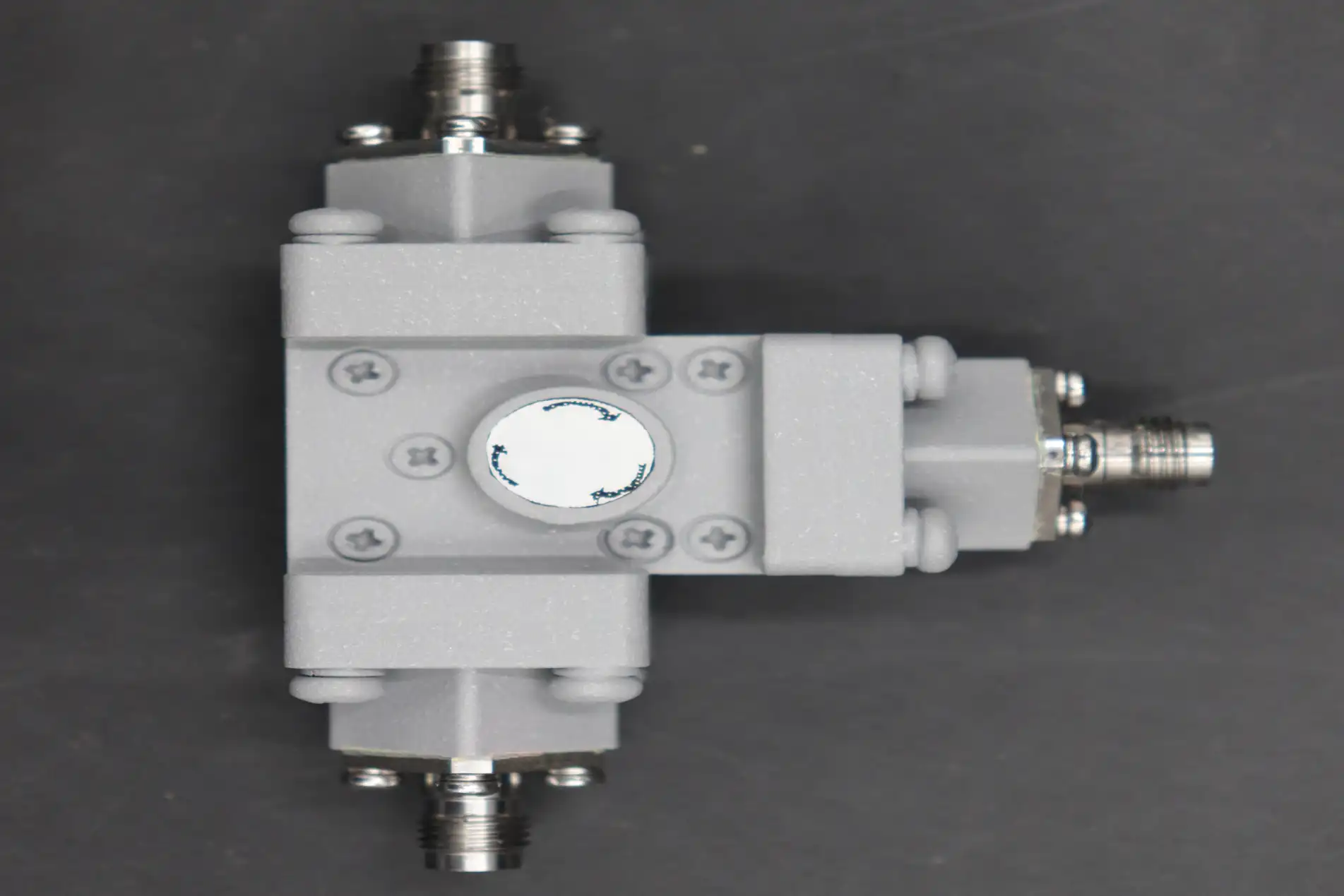
At Advanced Microwave Technologies Co., Ltd. (ADM), we've spent over two decades refining our understanding of how non-reciprocal devices function within complex RF networks. A broadband coaxial circulator operates as a three-port junction where signals enter one port and exit the next in a predetermined circular path—Port 1 to Port 2, Port 2 to Port 3, and Port 3 back to Port 1. This directional behavior stems from ferrite materials operating under carefully controlled magnetic fields.
Core Operating Principles
The magic happens inside the ferrite core, where magnetic biasing creates gyromagnetic resonance. When an RF signal encounters this magnetically saturated material, it experiences different phase velocities depending on its propagation direction. This phenomenon, known as Faraday rotation, allows signals to pass freely in the forward direction while attenuating reverse signals by 20 dB or more. Our engineers calibrate the magnetic field strength and ferrite composition to maintain this behavior across ultra-wide bandwidths, eliminating the need to swap components when operating across multiple frequency bands.
Critical Technical Specifications
Procurement teams evaluating these devices should focus on several specifications. Frequency range determines operational bandwidth—our broadband coaxial circulators cover DC to 40 GHz continuously. Insertion loss measures signal attenuation in the forward path; our units maintain ≤0.3 dB loss from DC to 10 GHz, climbing gradually to ≤0.8 dB at 40 GHz. Isolation quantifies reverse signal suppression, typically exceeding 20 dB across the entire band. Power handling capability ranges from 0.5W for sensitive receiver protection up to 500W for high-power transmitter applications.
Distinguishing Circulators from Isolators and Switches
While RF switches mechanically redirect signals and isolators simply block reverse paths, circulators offer unique advantages. By terminating the third port with a matched load, a three-port circulator becomes an isolator, dumping reflected energy safely away from sensitive amplifiers. This versatility reduces component count in test benches and communication systems. Unlike switches that introduce latency and require control signals, circulators operate passively and instantaneously across their entire bandwidth.
Real-World Applications Driving Demand
In 5G base station RF front-ends, our broadband coaxial circulators isolate transmit and receive signals sharing the same antenna, preventing high-power transmit leakage from desensitizing receivers. Satellite ground stations rely on these devices to protect low-noise amplifiers from reflected signals caused by antenna pointing errors or atmospheric conditions. Defense radar systems use circulators to route megawatt-level pulses while safeguarding receiver chains during the listening phase between transmissions.
Key Performance Metrics and Their Impact on System Efficiency
When we discuss performance metrics with procurement engineers at aerospace OEMs and telecom integrators, the conversation quickly moves beyond basic specifications to how these parameters affect total system performance and lifecycle costs.
Frequency Bandwidth and Wideband Characteristics
Achieving octave or multi-octave bandwidth represents a significant engineering challenge in broadband circulators. Narrowband circulators exploit resonance at a single frequency, but broadband designs require complex impedance matching networks that flatten performance across the spectrum. Our optimized coaxial cavity structure, precision-machined from oxygen-free copper, minimizes conductor loss and impedance discontinuities. The result is consistent performance whether you're operating at 2 GHz or 38 GHz, eliminating the inventory complexity of maintaining multiple narrowband units.
Insertion Loss: The Hidden Cost in Power Budgets
Every tenth of a dB matters in power-constrained systems. In a satellite transponder where every watt costs thousands of dollars to launch, minimizing insertion loss directly impacts payload capacity and mission economics. Our advanced ferrite material design uses low-loss, high-saturation magnetic flux density cores that maintain ≤0.3 dB loss at lower frequencies. Even at millimeter-wave frequencies approaching 40 GHz, loss remains under 0.8 dB—performance that allows system architects to close link budgets that would otherwise fail.
Isolation Performance and Interference Mitigation
High isolation protects expensive components and maintains signal quality. In test and measurement applications, insufficient isolation allows transmitted signals to leak back into the measurement receiver, corrupting readings and reducing dynamic range. Our devices maintain ≥20 dB isolation across their full bandwidth, achieved through precise magnetic field calibration and temperature-compensated permanent magnet assemblies. This stability ensures that isolation doesn't degrade as ambient temperature swings from -45°C to +85°C in aerospace applications.
Environmental Robustness in Harsh Deployment Scenarios
Procurement managers at defense contractors particularly value our environmental testing protocols. Our aerospace-grade models undergo thermal cycling, vibration testing per MIL-STD-202, and humidity exposure to verify that ferrite positioning and magnetic properties remain stable. The double-layer EMI shielding prevents external electromagnetic interference in high-noise environments like shipboard radar installations. Gold-plated contact pins resist corrosion in maritime atmospheres, ensuring connection reliability over 10,000-hour operational lifetimes.
Comparing Broadband Circulators with Alternative Components
Selecting the optimal RF component requires understanding not just what each device does, but where each excels and where compromises exist.
Broadband Circulators versus Duplexers
Duplexers separate transmit and receive signals using frequency-selective filtering, making them ideal when TX and RX bands are separated. Broadband circulators excel when TX and RX share the same frequency band or when wideband frequency agility is required. Electronic warfare systems monitoring and jamming across 2-18 GHz exemplify scenarios where circulators eliminate the need for multiple switched duplexers, reducing insertion loss accumulation and system complexity.
Circulators versus RF Switches
Mechanical and solid-state RF switches redirect signals based on control inputs, introducing switching latency and requiring DC power. Circulators operate passively without control signals, making them inherently faster and more reliable. In radar transmit-receive modules, circulators instantly route high-power pulses to the antenna during transmission, then direct received echoes to the low-noise amplifier without any switching delay or control complexity.
High Power versus Low Power Circulator Design Considerations
Power handling fundamentally changes circulator design. Low-power units (under 10W) prioritize compact size and minimal insertion loss for receiver protection applications. High-power circulators (50W to 500W) incorporate copper heat sinks or ceramic heat-conducting layers to dissipate thermal energy generated during operation. Our high-power models prevent ferrite non-linearity and thermal runaway through advanced thermal management, maintaining specified performance even under continuous high-power operation.
Evaluating Suppliers in the Global Market
When comparing suppliers like Pasternack, Triad Microwave, ADM, and Broadband Circulator, procurement teams should evaluate several factors beyond catalog specifications. Quality certifications, including ISO 9001:2015, ensure consistent manufacturing processes. Technical support capabilities—whether suppliers offer custom design services or just catalog products—can determine project success. ADM's 24-meter microwave darkroom with antenna measurement capabilities from 0.5 to 110 GHz demonstrates our investment in verification and validation, giving customers confidence that published specifications reflect actual performance.
Procurement Insights and How to Make the Right Purchase?
Having worked with procurement teams across the defense, aerospace, and telecommunications sectors, we understand that selecting a circulator involves more than comparing datasheets.
Lead Times and Supply Chain Considerations
Standard catalog circulators typically ship within 2-4 weeks, but custom designs require 8-12 weeks for prototyping and validation. When planning project timelines, account for testing and qualification periods. Our global logistics support includes expertise in navigating export controls for defense applications, ensuring compliant shipment documentation for ITAR and EAR-regulated products.
Pricing Structures and Volume Considerations
Unit pricing decreases significantly with volume. A single evaluation unit might cost $800-1200, while production quantities of 100+ units can reduce unit costs by 30-40%. Understanding your total program quantity allows suppliers to optimize pricing. Blanket purchase orders with staggered deliveries can secure volume pricing while managing inventory carrying costs.
When Do Custom Designs Justify Additional Investment?
Catalog products cover common requirements, but custom circulators address unique system constraints. If your application requires non-standard frequency coverage, unusual power handling, specialized connectors, or environmental specifications beyond commercial ratings, custom design becomes cost-effective. Our OEM services include rapid prototyping, allowing you to test and evaluate before committing to production tooling.
Supplier Evaluation Beyond Price
Technical support responsiveness often determines whether projects stay on schedule. Can the supplier's engineers assist with integration questions? Do they provide S-parameter files for simulation? Our team offers installation guidance, troubleshooting support, and application engineering throughout the product lifecycle. RoHS compliance and environmental certifications like ISO 14001:2015 matter for companies with sustainability mandates or selling into regulated markets.
Documentation and Quality Traceability
Mission-critical applications demand rigorous documentation. Expect suppliers to provide calibration certificates, material certifications, and test data for each unit. Our Vector Network Analyzer S-parameter sweeps verify insertion loss, isolation, and return loss at multiple frequency points across the band. Passive intermodulation testing ensures devices won't generate interference in sensitive receiver applications.
Optimizing Broadband Circulator Performance in Your Systems
Once you've selected and procured the right circulator, maximizing its performance requires attention to integration details and operational maintenance.
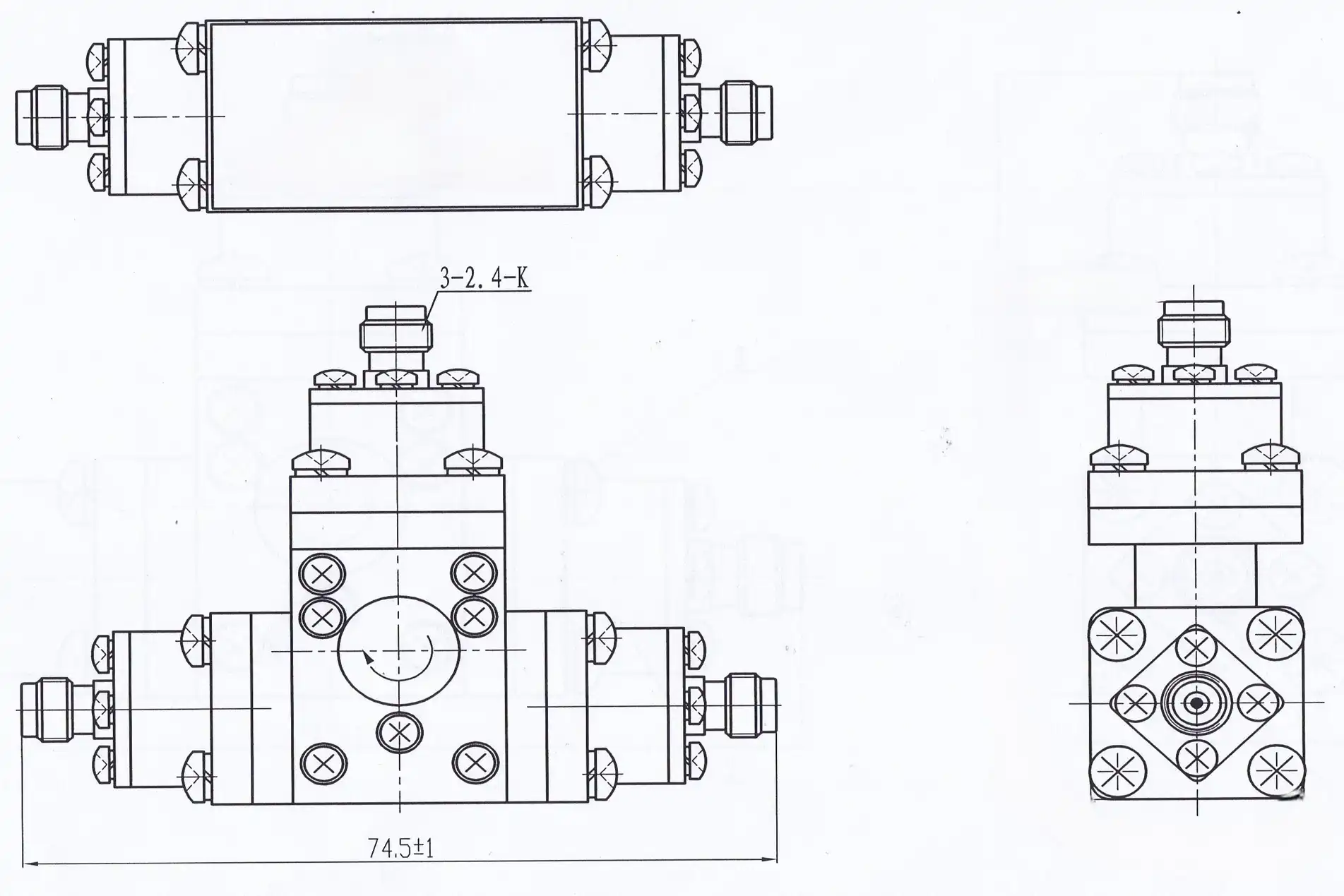
Common Sources of Performance Degradation
Several factors can degrade broadband circulator performance after installation. Impedance mismatches at connector interfaces create standing waves that increase insertion loss and reduce isolation. Using precision torque wrenches to achieve proper connector mating force ensures optimal electrical contact. External magnetic fields can detune ferrite operation—maintain 15 cm spacing from transformers, motors, and other magnetic sources. Temperature extremes outside the rated range cause ferrite properties to drift; ensure adequate ventilation for high-power units.
Material Selection and Design Optimization Techniques
When working with our engineering team on custom designs, material choices significantly impact performance. Higher-grade ferrite compositions with tighter tolerance on magnetic saturation improve bandwidth flatness. Silver-plated versus gold-plated contacts represent cost-performance trade-offs; gold resists corrosion better in harsh environments, while silver offers marginally lower resistance. Optimizing cavity dimensions through electromagnetic simulation reduces impedance discontinuities, lowering insertion loss by 0.1-0.2 dB across the band.
Integration with 5G and Emerging Technologies
As 5G networks expand into millimeter-wave frequencies and massive MIMO architectures proliferate, circulators enable efficient RF front-end designs. In beamforming systems, circulators protect each antenna element's amplifier from reflections caused by mutual coupling between closely spaced radiators. Looking toward 6G research at frequencies above 40 GHz, our ongoing material science research pushes circulator performance into new frequency regimes.
Maintenance Best Practices for Extended Lifespan
Broadband coaxial circulators are passive devices requiring minimal maintenance, but periodic inspection extends operational life. During scheduled maintenance windows, inspect connectors for oxidation or damage, verify torque specifications remain within tolerance, and check mounting hardware for vibration-induced loosening. For high-power applications, infrared thermal imaging can detect hotspots indicating thermal management issues before they cause failures. Maintaining logs of insertion loss measurements over time identifies gradual degradation trends, enabling proactive replacement before out-of-specification performance impacts system operation.
Conclusion
Broadband circulators represent critical enabling technology for modern wideband microwave systems, delivering the non-reciprocal signal routing, component protection, and frequency agility that complex RF architectures demand. Understanding the interplay between performance metrics—insertion loss, isolation bandwidth, power handling, and environmental stability—empowers procurement professionals to make informed decisions aligned with system requirements and budget constraints. As 5G networks expand, defense systems demand greater bandwidth, and satellite communications push to higher frequencies, partnering with experienced suppliers offering both catalog solutions and custom engineering capabilities becomes increasingly valuable for maintaining competitive advantage and mission success.
FAQ
1. What distinguishes a broadband circulator from a narrowband design?
Broadband circulators employ complex impedance matching networks and carefully selected ferrite compositions to maintain consistent performance across multiple frequency octaves, whereas narrowband designs optimize for a single center frequency using resonance. This allows broadband units to operate from DC to 40 GHz without component swapping, reducing system complexity in frequency-agile applications like electronic warfare and wideband test equipment.
2. Can circulators handle both low-signal and high-power applications?
Modern broadband coaxial circulators span a wide power range through different design approaches. Low-power models (0.5W-10W) prioritize compact size and minimal insertion loss for receiver protection, while high-power variants (50W-500W) incorporate enhanced thermal management, including copper heat sinks and ceramic heat-conducting layers. The limiting factors are the connector voltage breakdown for peak power and the ferrite thermal dissipation for continuous wave power.
3. How does temperature affect circulator performance?
Ferrite magnetic properties vary with temperature, potentially causing center frequency shifts and isolation degradation. Quality circulators incorporate temperature-compensated permanent magnet assemblies and specific ferrite doping to minimize these effects. Our devices maintain specified performance from -45°C to +85°C, covering aerospace, industrial, and commercial operating environments without performance drift.
Enhance Your RF Systems with ADM's Broadband Circulator Solutions
Advanced Microwave Technologies Co., Ltd brings more than 20 years of microwave engineering expertise to every broadband circulator manufacturer relationship. Our ISO 9001:2015-certified production facilities combine advanced ferrite material technology with precision coaxial cavity machining to deliver devices meeting the most demanding specifications. Whether you need catalog products shipping within weeks or custom-engineered solutions tailored to unique system requirements, our technical team provides comprehensive support from initial specification review through production and beyond. Contact craig@admicrowave.com to discuss your wideband microwave system requirements and discover how our broadband circulator technology can enhance your next-generation RF architecture.
References
1. Linkhart, Douglas K. Microwave Circulator Design, Second Edition. Artech House, 2014.
2. Baden Fuller, A.J. Ferrites at Microwave Frequencies. Institution of Electrical Engineers, 1987.
3. Helszajn, Joseph. The Stripline Circulator: Theory and Practice. Wiley-IEEE Press, 2008.
4. Pozar, David M. Microwave Engineering, Fourth Edition. John Wiley & Sons, 2011.
5. Schloemann, Ernst. "Advances in Ferrite Microwave Materials and Devices." Journal of Magnetism and Magnetic Materials, Vol. 209, 2000.
6. Bosma, H. "On Stripline Y-Circulation at UHF." IEEE Transactions on Microwave Theory and Techniques, Vol. MTT-12, 1964.