




Best High Power Waveguide Isolator for Satellite Communication
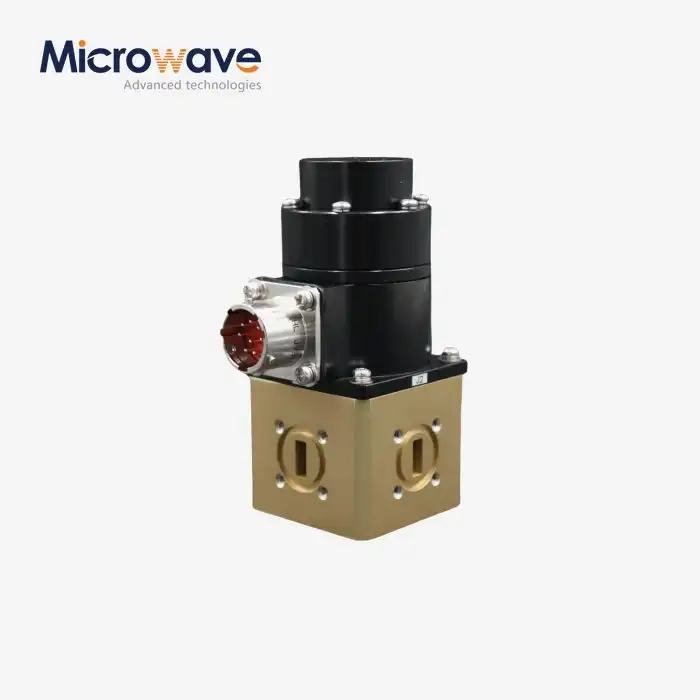
When searching for the best High Power Waveguide Isolator for satellite communication applications, Advanced Microwave Technologies Co., Ltd (ADM) stands out as a premier choice. With over two decades of specialized experience in microwave technology, ADM delivers exceptional waveguide isolators that combine superior signal isolation capabilities with robust power handling performance. Our isolators feature low insertion loss (0.3 dB typical), excellent isolation (20 dB typical), and impressive forward power capacity up to 1000W, making them ideal for demanding satellite communication systems where signal integrity and equipment protection are paramount.
Why High Power Waveguide Isolators Matter in Modern Satellite Systems
The adherent communication industry has experienced momentous development, with worldwide toady administrations income coming to around $300 billion yearly. Inside this growing advertise, high power waveguide isolators play a basic part in keeping up framework unwavering quality and execution. These non-reciprocal gadgets ensure costly transmitters from reflected signals whereas protecting flag keenness over different recurrence bands. Satellite ground stations work beneath requesting conditions where hardware disappointment can result in noteworthy downtime and income misfortune. A single blackout at a major lackey office can taken a toll administrators tens of thousands of dollars per hour. This reality makes the determination of dependable microwave components, especially isolators, a pivotal choice for framework modelers and acquirement managers. Modern partisan communication frameworks handle progressively higher control levels to back developing transmission capacity requests. From conventional C-band and Ku-band applications to developing Ka-band and millimeter-wave frameworks, these systems require isolators competent of overseeing significant control whereas keeping up moo inclusion misfortune and amazing warm administration characteristics.
Essential Selection Criteria for Satellite Communication Isolators
Choosing the ideal isolator for adj. communication requires cautious assessment of a few specialized parameters. Segregation execution stands as the essential measure, with industry-standard prerequisites ordinarily extending from 18-25 dB over the working transmission capacity. This detail straightforwardly impacts the level of assurance given to upstream components. Power taking care of capability speaks to another crucial thought. Disciple frameworks regularly work with kilowatt-level transmitters, requiring isolators planned for tall control applications. The warm administration characteristics ended up similarly imperative, as control scattering must be productively overseen to anticipate execution debasement and component failure. Frequency transmission capacity necessities change altogether over diverse adherent applications. C-band frameworks regularly work between 3.7-4.2 GHz for downlink and 5.925-6.425 GHz for uplink, whereas Ku-band applications span 10.95-12.75 GHz downlink and 14.0-14.5 GHz uplink. Ka-band frameworks thrust indeed higher, requiring isolators competent of working at 18-40 GHz ranges. Environmental strength cannot be ignored, as toady ground stations frequently work in challenging open air conditions. Temperature cycling from -40°C to +70°C, mugginess presentation, and potential vibration from wind stacking all affect component determination. Moreover, long-term unwavering quality gets to be foremost given the basic nature of obsequious communication infrastructure.
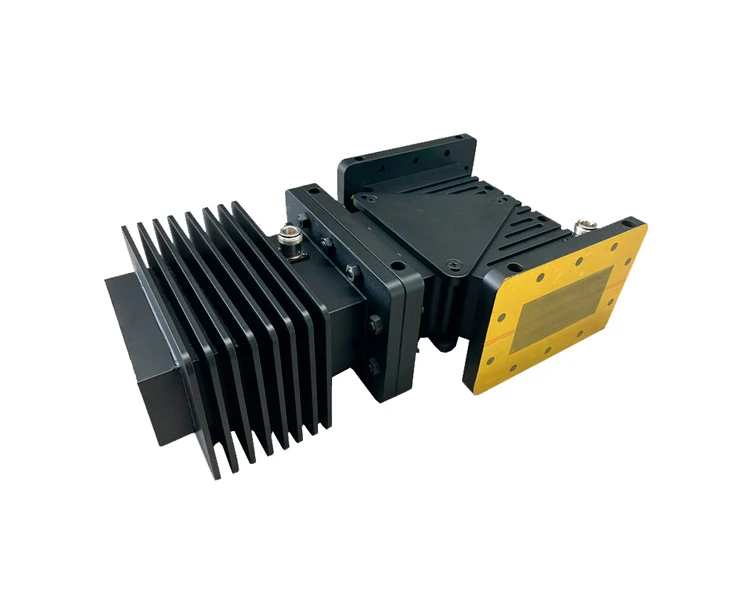
Top High Power Waveguide Isolators for Satellite Applications
ADM Advanced High Power Waveguide Isolator Series
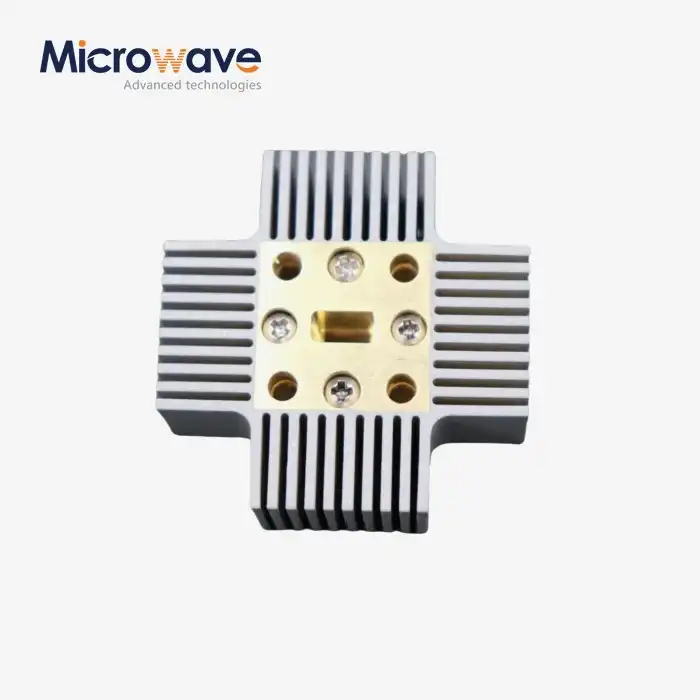
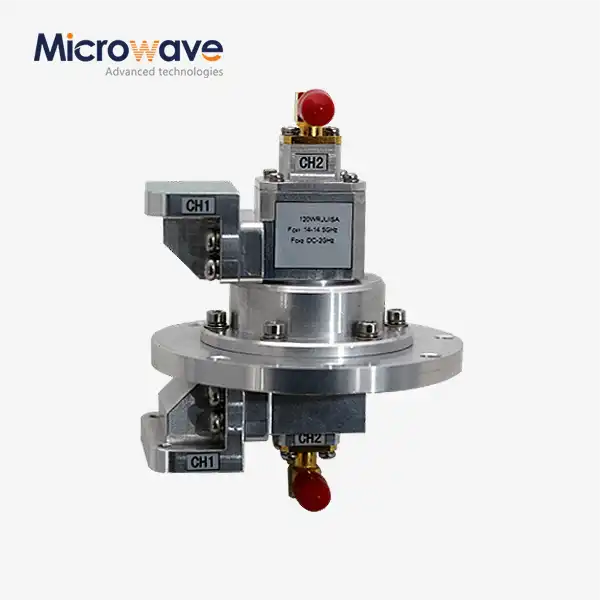
Advanced Microwave Advances Co., Ltd has created a comprehensive line of high power waveguide isolators particularly designed for lackey communication applications. Our lead arrangement joins decades of RF building mastery with state-of-the-art fabricating capabilities. The specialized determinations showcase remarkable execution parameters. With addition misfortune kept up at fair 0.3 dB commonplace over an 800 MHz transfer speed, these isolators minimize flag corruption whereas giving vigorous 20 dB confinement. The forward control dealing with capacity of 1000W maximum obliges high-power obsequious transmitter necessities without compromise. Construction quality reflects our commitment to unwavering quality.
Aluminum and copper materials guarantee amazing warm conductivity whereas giving mechanical solidness. The waveguide interfacing are precision-machined to keep up tight resiliences, guaranteeing ideal impedance coordinating and negligible reflection misfortune. Natural testing approves operation from -40°C to +70°C, covering the full run of fawning ground station sending conditions. Ferrite center innovation inside these isolators empowers the non-reciprocal behavior basic for flag confinement. Attractive predisposition circuits are carefully optimized to give steady execution over temperature varieties and maturing impacts. This consideration to attractive plan subtle elements guarantees long-term steadiness basic for adherent framework investments. Customization capabilities set ADM isolators separated from standard catalog items. Recurrence groups can be custom fitted to particular partisan applications, whether C-band, Ku-band, Ka-band, or developing millimeter-wave prerequisites. Control dealing with can be optimized for specific framework designs, and mechanical arrangements adjusted to space limitations inside gear racks or open air enclosures.
Broadcast Satellite Communication Isolators
Broadcast adj. applications request isolators competent of taking care of nonstop tall control transmission whereas keeping up uncommon flag quality. These frameworks ordinarily work with control levels extending from a few hundred watts to different kilowatts, requiring isolators outlined particularly for such requesting applications. The segregation characteristics gotten to be especially basic in broadcast situations where flag quality specifically impacts benefit conveyance to millions of conclusion clients. Indeed minor flag debasement can result in obvious artifacts or benefit interferences over wide scope regions. Our broadcast-optimized isolators accomplish confinement execution surpassing 22 dB over operational bandwidths.
Thermal administration expect increased significance in persistent high-power applications. Progressed warm sink plans and warm interface materials guarantee effective warm dissemination indeed beneath greatest control conditions. Temperature checking capabilities can be coordinates to give real-time warm status data for framework checking applications. Phase steadiness speaks to another significant parameter for broadcast toady isolators. Flag stage varieties can affect carrier recuperation and demodulation execution at accepting terminals. Our isolators keep up stage steadiness inside ±5 degrees over operational temperature ranges, guaranteeing reliable broadcast flag quality. Return misfortune details are optimized for broadcast applications where transmitter security is vital. Accomplishing return misfortune superior than 25 dB over the working band minimizes reflected control that may possibly harm costly high-power speakers or make intermodulation items influencing flag quality.
Mobile Satellite Service Isolators
Mobile toady administrations show one of a kind challenges requiring specialized isolator plans. These applications regularly include vehicle-mounted or sea establishments where measure, weight, and vibration resistance ended up basic components nearby electrical execution requirements. Compact mechanical plans optimize space utilization inside versatile disciple terminals. Weight lessening gets to be especially imperative for flying machine establishments where each gram impacts fuel effectiveness. Our High Power Waveguide Isolator mobile-optimized isolators accomplish industry-leading power-to-weight proportions whereas keeping up full electrical execution specifications. Vibration resistance testing approves execution beneath versatile environment conditions.
Car and oceanic applications subject gear to ceaseless mechanical stretch that can debase execution or cause untimely disappointment. Stun and vibration testing per military guidelines guarantees dependable operation all through the arrangement lifecycle. Frequency deftness capabilities back versatile partisan administrations that may work over numerous lackey systems or recurrence groups. Software-defined radio structures progressively common in versatile applications advantage from isolators able of keeping up execution over wide recurrence ranges without manual retuning. Environmental fixing secures against dampness and contaminant entrance common in portable organizations. IP65 or higher entrance assurance evaluations guarantee solid operation in rain, snow, salt splash, and dusty conditions ordinary of portable disciple applications.
Global Market Characteristics and Regulatory Considerations
The global satellite communication market exhibits distinct regional characteristics that influence isolator selection and deployment strategies. North American markets emphasize high-reliability applications driven by defense and commercial satellite operators. European markets focus on broadcast and telecommunications applications with stringent EMC compliance requirements.Asia-Pacific regions show rapid growth in mobile satellite services and emerging Ka-band applications. This growth creates demand for cost-effective isolators capable of high-volume production while maintaining performance standards. Manufacturing capabilities in the region support shorter lead times and competitive pricing structures.Regulatory compliance varies significantly across global markets.
FCC regulations in the United States specify emissions limits and interference criteria that directly impact isolator selection. European ETSI standards establish different requirements, particularly regarding electromagnetic compatibility and environmental considerations.Export control regulations affect the global availability of certain high-performance isolators. ITAR and EAR classifications in the United States can restrict the export of military-grade components, while dual-use technology controls impact commercial availability. Understanding these regulatory frameworks becomes essential for global procurement strategies.Quality certifications provide market access credentials across different regions. ISO 9001:2015 quality management certification ensures consistent manufacturing processes, while RoHS compliance enables sales within European markets. Environmental management certifications like ISO 14001:2015 increasingly influence procurement decisions as sustainability considerations gain prominence.

Purchasing Recommendations and Implementation Considerations
Successful isolator procurement requires careful alignment between technical requirements and supplier capabilities. Begin the selection process by clearly defining electrical specifications including frequency range, power handling, isolation requirements, and environmental conditions. These parameters form the foundation for vendor evaluation and product comparison.Supplier evaluation should encompass technical expertise, manufacturing capabilities, quality systems, and long-term support commitments. Organizations with decades of microwave experience typically provide superior technical guidance and product reliability. Manufacturing capabilities including advanced test equipment and environmental testing facilities indicate the ability to deliver consistent quality.Lead time considerations become increasingly important given global supply chain challenges.
Establishing relationships with suppliers offering reasonable delivery schedules and supply chain transparency helps avoid project delays. Some applications may benefit from maintaining strategic inventory of critical isolators to ensure availability during supply disruptions.Technical support requirements vary depending on application complexity and organizational capabilities. Suppliers offering comprehensive engineering support, including design assistance, integration guidance, and troubleshooting expertise, provide additional value beyond the component itself. This support becomes particularly valuable for custom applications or new technology deployments.Lifecycle considerations include component availability, upgrade paths, and end-of-life planning. Selecting suppliers committed to long-term product support and technology evolution helps protect infrastructure investments. Understanding product roadmaps and technology migration plans enables proactive planning for system upgrades or replacements.
Conclusion
Selecting the optimal high power waveguide isolator for satellite communication requires balancing technical performance, reliability, cost, and supplier capabilities. The evolving satellite industry continues demanding higher performance components capable of supporting emerging applications while maintaining the reliability standards essential for critical communication infrastructure. Organizations investing in quality isolators from experienced suppliers position themselves for long-term success in this dynamic market environment.
Frequently Asked Questions
What Power Levels Can Modern Waveguide Isolators Handle?
Contemporary high power waveguide isolators routinely handle power levels from hundreds of watts to several kilowatts, depending on frequency band and cooling provisions. At lower microwave frequencies (1-6 GHz), isolators can manage 2-5 kW or more with appropriate thermal management. Higher frequency applications typically see lower power handling due to increased insertion loss and thermal density challenges.
How Does Frequency Band Affect Isolator Performance?
Frequency significantly impacts isolator characteristics. Lower frequencies generally enable higher power handling and broader bandwidth operation. Millimeter-wave frequencies present challenges including increased insertion loss, reduced bandwidth, and more stringent manufacturing tolerances. The ferrite materials used in isolators also exhibit frequency-dependent properties affecting performance optimization.
What Maintenance Do Satellite Communication Isolators Require?
Well-designed isolators typically require minimal maintenance beyond periodic visual inspection and performance verification. Temperature monitoring can identify thermal issues before component failure. Waveguide connections should be checked for tightness and corrosion, particularly in harsh environmental conditions. Comprehensive performance testing every 2-3 years helps identify gradual degradation.
Industry Trends and Summary
The satellite communication isolator market continues evolving toward higher frequencies, increased power density, and enhanced environmental resilience. Emerging technologies including software-defined satellite networks and low Earth orbit constellation deployments drive demand for more versatile and cost-effective solutions. Additive manufacturing techniques show promise for reducing costs while enabling complex geometric designs previously impractical with traditional machining methods.
Partner with ADM for Superior High Power Waveguide Isolator Solutions
Advanced Microwave Technologies Co., Ltd delivers unmatched expertise as a leading High Power Waveguide Isolator manufacturer serving satellite communication applications worldwide. Our ISO-certified manufacturing processes and over 20 years of microwave engineering experience ensure reliable, high-performance solutions tailored to your specific requirements. Contact our technical team at sales@admicrowave.com to discuss your satellite communication isolator needs and discover how our customizable High Power Waveguide Isolator products can enhance your system performance while reducing costs through our competitive pricing and fast delivery capabilities.
References
1. Johnson, M.R., "High Power Microwave Components for Satellite Communication Systems," IEEE Transactions on Microwave Theory and Techniques, Vol. 68, No. 12, December 2020, pp. 5234-5247.
2. Chen, L. and Williams, D.A., "Ferrite-Based Isolators and Circulators: Design Principles and Performance Optimization," Microwave Journal, Vol. 63, No. 8, August 2021, pp. 22-36.
3. Advanced Satellite Communications Engineering Handbook, "Component Selection for High Power Ground Station Equipment," Fourth Edition, Satellite Communication Publishers, 2022, Chapter 8, pp. 245-278.
4. Rodriguez, C.E., "Thermal Management in High Power Waveguide Components," International Journal of RF and Microwave Computer-Aided Engineering, Vol. 31, No. 6, November 2021, pp. 1-15.
5. Smith, K.P. and Zhang, H., "Global Satellite Communication Market Analysis and Component Requirements," Space Technology Review, Vol. 29, No. 3, March 2022, pp. 112-128.
6. Thompson, R.J., "Environmental Testing Standards for Satellite Ground Station Equipment," IEEE Standard 1560-2019, Institute of Electrical and Electronics Engineers, 2019, pp. 45-67.