





Benefits of Waveguide Isolator in Industrial Workshop Systems
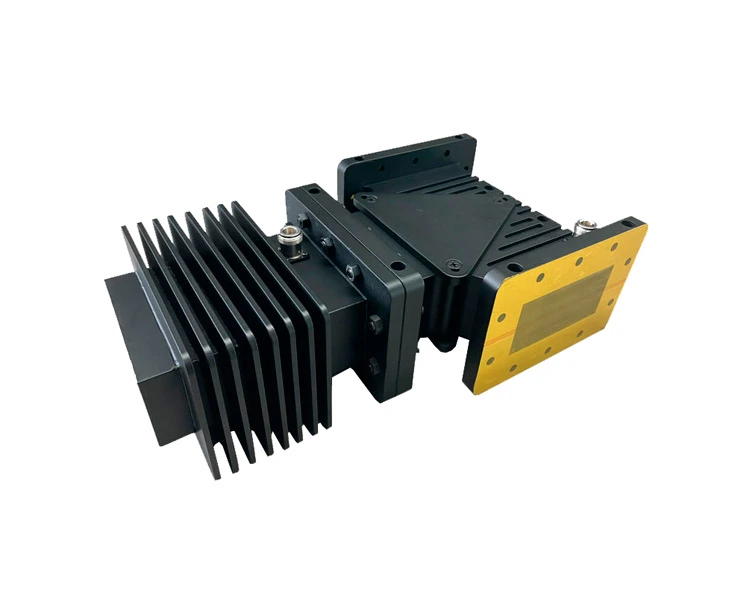
A waveguide isolator is a passive, non-reciprocal ferrite device for microwave communications that enables RF signals to propagate in the forward direction but absorbs the energy of signals flowing in reverse. In industrial workshop systems, this feature protects power amplifiers, radar transmitters, and sensitive RF sources from reflected signals from impedance mismatches. If not properly isolated, electricity that is back-reflected from the load might cause frequency instability, signal deterioration, or physical burnout of costly equipment. Procurement engineers and system integrators should first grasp how this part operates to make informed sourcing judgments.
Understanding Waveguide Isolators: Key Concepts and Operation
What Makes a Waveguide Isolator Work
The device features a permanent magnet and ferrite material so that it may employ the Faraday rotation or field displacement effects. When microwave signals enter the forward port, they are steered with minimum loss by the ferrite's interaction with the magnetic field. The internal matched termination load accepts incoming signals that are coming backward. The system is physics-based, needs no additional power, and operates silently in certain frequency ranges, generally from 1 GHz to 40 GHz or more depending on the size of the waveguide.
Core Electrical Parameters
Performance is specified by important specs. Isolation levels are typically more than 20 dB, and insertion loss is less than 0.5 dB. The voltage standing wave ratio (VSWR) is usually maintained below 1.20:1. These statistics are significant in that a slight increase in insertion loss reduces the efficiency of the output of the system. Signal sources might be harmed by reflected energy if the isolation is not enough. Buyers are usually advised to get comprehensive datasheets before committing to a provider.
Frequency Bands and Waveguide Standards
Waveguide isolators are available in all standard waveguide flange diameters from WR-28 (26.5-40 GHz) to WR-650 (1.12-1.70 GHz). This standardization makes it easy to integrate with existing systems. By adding elements such as Gadolinium or Holmium, the ferrite has a constant temperature and is equivalent from -40°C to +85°C. This is especially relevant in industrial environments where temperatures vary constantly.
Core Benefits of Using Waveguide Isolators in Industrial Workshops
Waveguide isolators improve the performance of industrial RF systems in an observable manner. They do more than simply protect. They also directly impact the system’s performance, the clarity of the signals, and the longevity of the equipment. The key advantages this technology offers to industry workshops are outlined below:
- Reflected Power Equipment Protection: High VSWR events due to antenna damage, connection defects, or load changes send reflected energy back toward the transmitter. This energy is absorbed by the isolator protecting the Traveling Wave Tubes (TWTs), Solid State Power Amplifiers (SSPAs), and magnetrons, which may cost tens of thousands of dollars to repair.
- Better signal integrity: Low insertion loss (usually < 0.5 dB) allows the forward signal to pass through cleanly. This decreases noise figure contribution and maintains signal clarity for precision measurement, radar, and communication systems where even slight distortions might impair accuracy.
- High Power Handling Capacity: The waveguide structures employ air as the principal dielectric. It dissipates heat better than the coaxial design. This permits the waveguide isolators to work at power levels from watts up to kilowatts in continuous wave (CW) and pulsed operation. This makes them suitable for high-power radar and industrial RF heating systems.
- Environmental Durability: Precision-machined aluminum or copper housings protect the internal ferrite and magnet assembly from moisture, vibration, and heat cycling. This sturdy design provides dependable operation on production floors, outdoor radar stations, and marine systems.
All of these advantages together result in less unexpected downtime and less maintenance work to be done in workshops. This implies that the purchasing teams responsible for total cost of ownership will see a clear return on their investment during the life of the part.
Comparing Waveguide Isolators with Alternative Solutions
Waveguide Isolators vs. Circulators
A three-port circulator sends signals in a certain order from Port 1 to Port 2 to Port 3. A waveguide isolator works like a circulator, but Port 3 is closed off inside the device. The isolator has a simpler two-port design for uses where protection in only one direction is needed, and load control from the outside is not needed. That being said, the isolator is the better choice for simple source security.
Waveguide vs. Coaxial Isolators
Coaxial isolators are small and cheap when the power level is low, but they can only be used in situations with less than a few hundred watts of power. Waveguide isolators, on the other hand, can handle power up to a few kilowatts and have a wider bandwidth across a waveguide band. The trade-off is size—waveguide hardware is bigger—but the performance is clearly worth it in high-power situations.
Narrowband vs. Broadband Waveguide Isolators
Standard narrowband isolators only work with a small range of frequencies, usually less than 10% of the total range of frequencies. Using advanced ferrite formulations and dielectric loading, broadband waveguide isolators can cover whole waveguide bands, like the whole WR-28 band from 26.5 to 40 GHz, without the need for mechanical tuning. This makes them better for electronic warfare, broad test systems, and multi-channel satellite uplinks that need to be able to change frequencies quickly.
Procurement Insights: How to Choose the Right Waveguide Isolator
Evaluate the Critical Specifications
To begin, you should look at the power handling, frequency range, separation level, insertion loss, and VSWR. Check to see if the isolator's internal terminal load can handle 100% reflected power at full working power, not just partial mismatch. For pulsed applications that need a lot of power, ask for information on peak power handling in addition to CW ratings.
Verify Quality Certifications and Traceability
RoHS compliance and ISO 9001 approval are basic standards for buying things for defense, space, and satellites. Materials and production records that can be tracked help with qualification processes and long-term checks of the supply chain. Waveguide isolator providers you can trust send full paperwork with every shipment.
Plan for Lead Times and Custom Requirements
Standard stock items usually ship faster, but a lot of industrial systems need special flange setups, changed power ratings, or coatings that are resistant to the elements. Working directly with the manufacturer instead of going through middlemen speeds up communication, lowers the chance of specification mistakes, and lets you test prototypes more quickly. Before you place a large order, ask for datasheets, sample units, and help from application engineers.

Real-World Applications: Where Waveguide Isolators Make a Difference
Radar and Defense Systems
For weather radar and air traffic control, isolators are placed immediately after the magnetron or klystron generator to absorb the echoes from the antenna feed, particularly when ice loading or physical damage is present. This stops the radio from breaking and keeps it running 24/7 in safety-essential places.
Satellite Ground Stations
In Block Upconverters (BUCs) and High-Power Amplifiers (HPAs) of SATCOM ground stations, isolators are used to protect amplifier stages during high-power uplinks. And sometimes there are, impedance fluctuations throughout the feed network and even brief echoes that are not shielded may cause irreparable damage to pricey amplifier modules.
Medical and Industrial RF Systems
Linear accelerators are used to speed up electrons, to purify industrial processes, and to cure cancer. They need steady RF transmissions with high peak power. Waveguide isolators are used in these systems to manage the reflected energy during the beam conditioning cycles to address the heat loads due to the absorbed power.
Conclusion
Waveguide isolators are a key component of industrial RF systems, protecting signal sources, ensuring high-quality signal transmission, and extending the service life of equipment under difficult conditions. Choose the correct isolator with its electrical specifications, power requirements, and environmental considerations, and you’ll gain in the long run compared with generic alternatives. An experienced manufacturer can help you identify what you need more easily and reduce the technical risk from first order to complete production. This is true for purchasing teams in the military, satellite, and industrial sectors.
FAQ
What frequency range do waveguide isolators typically cover?
Most waveguide isolators work with certain frequency ranges that match standard waveguide sizes. These range from about 1 GHz (WR-650) to 40 GHz (WR-28) and beyond. Broadband types can cover the whole waveguide band without having to be adjusted mechanically. The right range depends on the frequency at which your system works.
Can waveguide isolators be customized for non-standard applications?
Yes. Custom flange setups, changed power levels, temperature-hardened designs, and magnetic shielding choices are all things that manufacturers like ADM can do. You can try out custom samples before committing to full production.
How do I determine the correct power rating for my application?
Make sure you look at both the CW and peak power specs for your source. Make sure that the isolator's internal termination load can handle all of the reflected power at its highest level of operation. Talk to the application engineers at your provider about specific power and duty cycle details.
What is the difference between isolation and insertion loss?
The amount of reverse-traveling information that is lost is measured by isolation. A higher value, usually >20 dB, means better isolation. The lower the insertion loss, usually less than 0.5 dB, the better. It shows how much the forward information is lost as it goes through the device. Both factors have a direct effect on how well the system works.
Why does VSWR matter in isolator selection?
If both ports have a low VSWR (below 1.20:1), it means that the isolator itself doesn't cause much signal reflection in the system. If the VSWR at the isolator's ports is high, it will cause additional reflections that make the safety function less effective.
Partner with ADM for Reliable Waveguide Isolator Supply
Precision RF and microwave parts have been made by ADM for more than 20 years, and our waveguide isolator products meet ISO 9001 and RoHS standards. We can customize for OEMs, make prototypes quickly, and provide direct application engineering support. You can email our team at craig@admicrowave.com to get a datasheet or quote, whether you need normal catalog units or a unique design for a satellite or defense application.
References
1. Pozar, D. M. Microwave Engineering, 4th ed. Wiley, 2011.
2. Collin, R. E. Foundations for Microwave Engineering, 2nd ed. IEEE Press / Wiley-Interscience, 2001.
3. Matthaei, G., Young, L., & Jones, E. M. T. Microwave Filters, Impedance-Matching Networks, and Coupling Structures. Artech House, 1980.
4. Helszajn, J. Ferrite Phase Shifters and Control Devices. McGraw-Hill, 1989.
5. IEEE Transactions on Microwave Theory and Techniques. Special Issue on Passive Microwave Components. IEEE, 2015.
6. Montgomery, C. G., Dicke, R. H., & Purcell, E. M. Principles of Microwave Circuits. MIT Radiation Lab Series, Vol. 8. McGraw-Hill, 1948.
YOU MAY LIKE
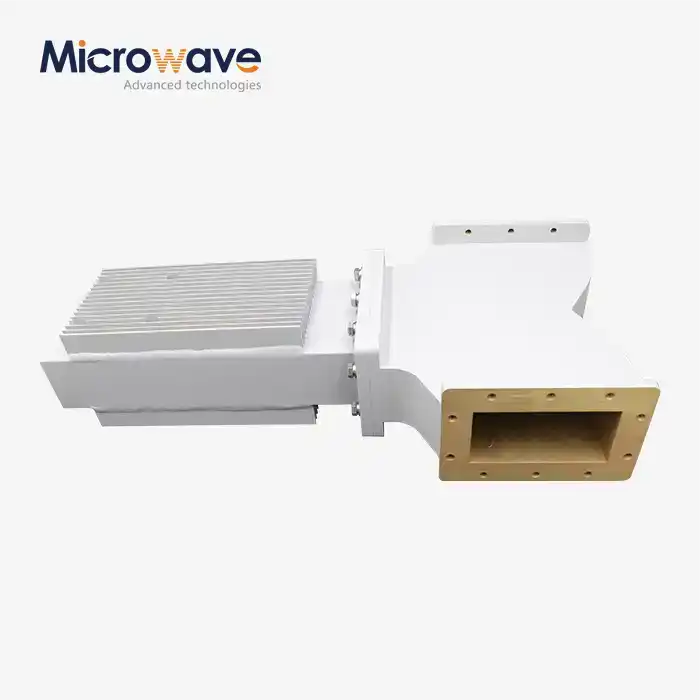 VIEW MOREIndustrial Microwave Isolator
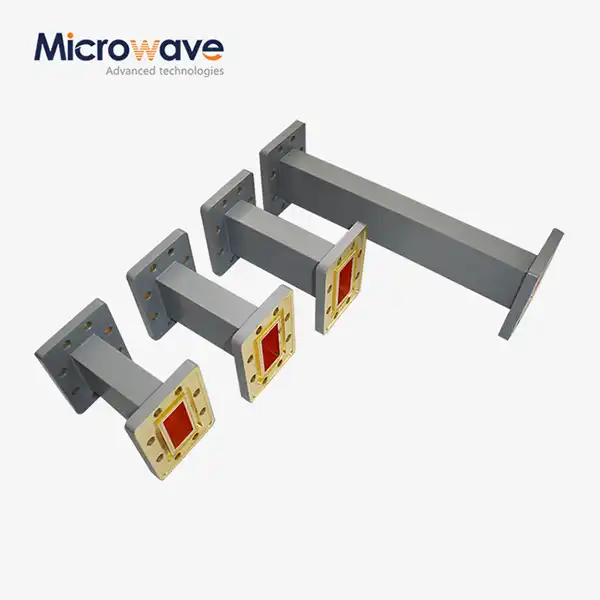 VIEW MORERectangular Straight Waveguide
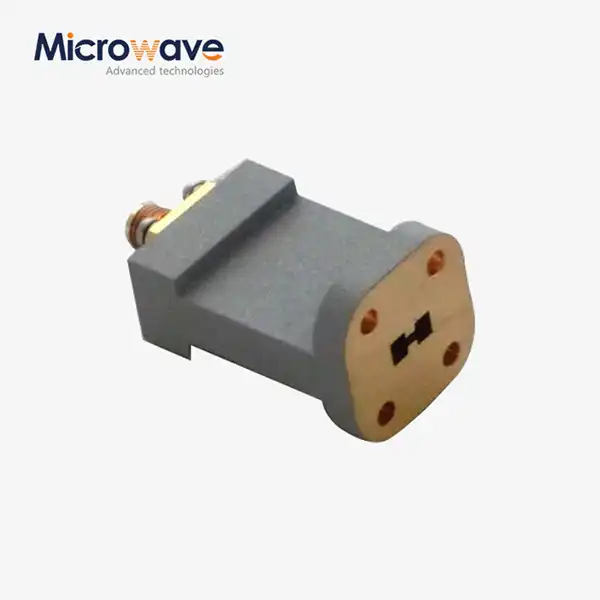 VIEW MOREEnd Launch Double Ridged WG To Coaxial Adapter
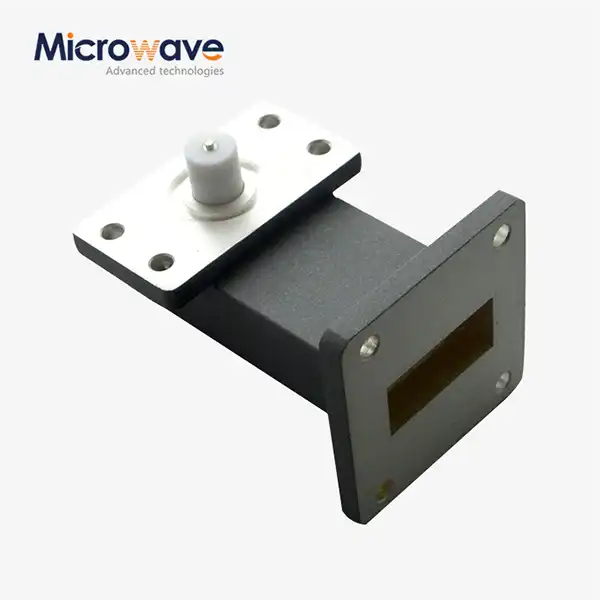 VIEW MORERight Angle Waveguide to Microstrip Adapter
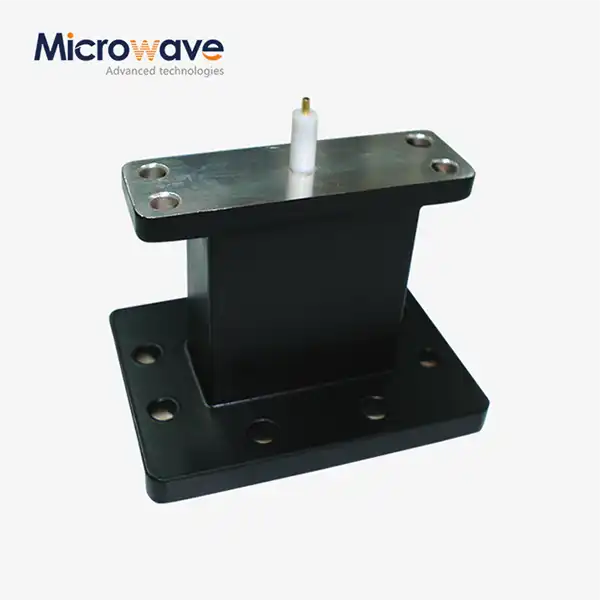 VIEW MOREEnd Launch Waveguide to Microstrip Adapter
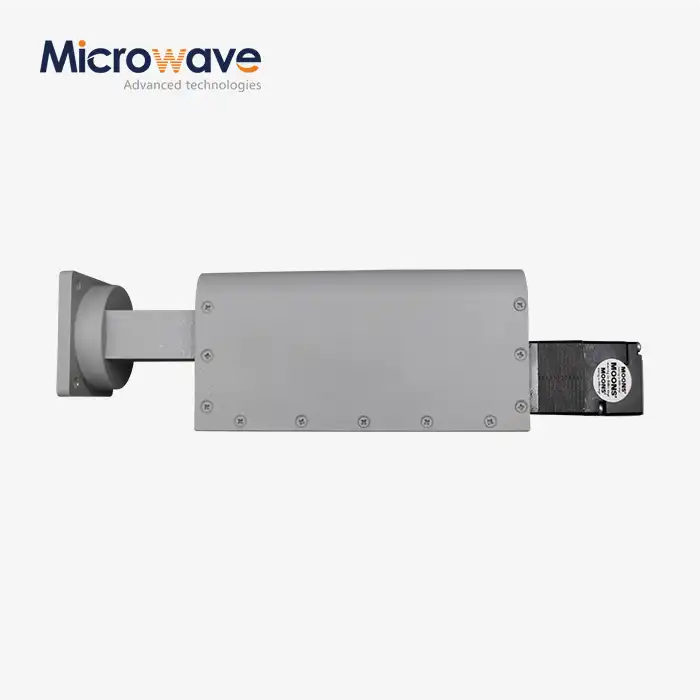 VIEW MOREWaveguide Offset Short
 VIEW MOREPlastic Flange Caps
 VIEW MOREActive Limiter