





AC Signal Amplifier Applications in Electronic Systems
AC signal amplifiers boost alternating current signals to preserve signal integrity throughout complex electronic infrastructures. These devices increase weak AC voltage or current levels without altering waveform characteristics, enabling reliable data transmission across vast distances in radar, satellite communications, and industrial measurement systems. Unlike DC amplifiers tailored for steady-state signals, AC amplification circuits handle dynamic waveforms with precise frequency response, making them indispensable in mission-critical RF subsystems where even minor signal degradation causes operational failures or compliance violations.
Understanding AC Signal Amplifiers and Their Role in Electronic Systems
At the core of modern electronic design, amplification circuits transform low-amplitude AC signals into robust outputs capable of driving antennas, actuators, or measurement instruments. The fundamental role involves maintaining proportionality between input and output while introducing minimal phase shift or harmonic distortion, a requirement critical in high-frequency communication links and precision instrumentation.
How AC Amplification Differs From DC Processing
Because the input signals change over time, amplifier designs need to be stable across certain frequency bands, without peaking or rolling off. Capacitors stop DC components in AC-coupled stages, so only signals that change over time can pass through gain stages. This method of coupling stops bias drift and makes biasing networks easier to use in multi-stage designs that are common in RF front-ends. DC amplifiers, on the other hand, have to deal with zero-frequency content and usually need more complex offset correction mechanisms, especially in low-drift situations like sensor signal conditioning.
Common Amplifier Topologies in Industrial Use
Different designs are used by the sector depending on practicality. Due to their high input resistance and set voltage gain, voltage amplifiers are excellent for sensor connections. This minimises loading impacts. Efficiency and stability are crucial when power amplifiers transfer a lot of current to low-impedance loads like radio elements or transmission lines. Instrumentation front ends employ inverting or non-inverting operational amplifiers for variable gain control. Distribution sections like microstrip lines and waveguide transitions ensure impedance matching across several octaves in radio-frequency systems for defence radar and satellite sensor chains.
Transmitters' input stages use low-noise amplifiers (LNAs) to protect weak signals from thermal noise. Here, system sensitivity is determined. The transistor operating points and matching networks in these circuits have been optimised to minimise noise and provide appropriate gain. In the massive 24m Microwave Darkroom at Advanced Microwave Technologies Co., Ltd., we test LNA performance up to 110 GHz and ensure designs fulfil military and aerospace noise standards.
Critical Performance Parameters for Procurement Decisions
Amplification gear specifications impact each other; thus, you must consider them. The range of frequencies determines the operating bandwidth. Monitoring radar uses 0.5 to 18 GHz, and narrowband designs for particular cellular bands improve communication infrastructure efficiency. System-level connection costs depend on gain (dB) and passband flatness. Internal noise is measured by the noise figure. Cryogenically cooled space-based devices can achieve values below 1 dB, although many ground-based connections may achieve sub-2 dB at ambient temperature.
Linearity measurements like the third-order intercept point (IP3) and 1-dB compression level illustrate how amplifiers handle numerous signals without intermodulation products disrupting adjacent channels. Where there are many carriers, like 5G base units, IP3 must be high. Power output must satisfy downstream components. Running a high-gain antenna array needs tens of watts; therefore, thermal management and supply filtering must be excellent. Whether a device can be utilised in avionics or on a ship depends on environmental resilience, which includes temperature stability, stress resistance, and EMI shielding.
Understanding these characteristics helps procurement engineers match amplifier specs to systems. So, they don't over-specify, which raises expenses, or under-specify, which undermines mission success. Our ISO 9001:2015-certified facilities perform controlled testing on datasheets to verify each parameter.


AC Signal Amplifier Applications Across Different Electronic Systems
Amplification technology, like an AC signal amplifier, can be used in a lot of different areas, and each one has its own technical challenges and performance requirements. By looking at these use cases, we can see how decisions made at the component level affect the overall stability of the system and its ability to compete.
Communication Infrastructure and Broadcast Networks
TV broadcast networks use broadband amplifiers to compensate for coaxial cable loss over long distances. Standard urban CATV adds line amplifiers every 500 meters. Each has 20 dB gain and a smooth 50–1000 MHz response. To prevent analogue channel ghosting, these devices must have minimal intermodulation and strong group delay linearity to maintain the digital QAM constellation.
Behind antenna arrays, mobile network base stations employ tower-mounted amplifiers (TMAs). Putting the LNA before a lossy feedline reduces uplink noise. A TMA with 0.6 dB noise and 15 dB gain boosts cell edge output by picking up weaker handset signals in 5G at 2.6 GHz. In contrast, downlink routes require 40-watt amplifiers per carrier. Advanced linearisation techniques like digital predistortion are needed for spectral mask compliance.
Commercial building WiFi signal boosters employ an LNA on the reception route and a power amplifier on the broadcast path. Duplexers divide frequencies. If you use parts with tight gain control, you may prevent donor-coverage antenna feedback swings, which often arise in improper settings.
Industrial Automation and Sensor Networks
Process monitoring devices talk to strain gauges, thermocouples, and pressure sensors to make AC signals at the millivolt level. Instrumentation amplifiers with 80 dB common-mode rejection pull out differential sensor outputs while blocking ground loop interference, which is very important on factory floors with a lot of electrical noise. Gain programmability lets a single hardware design work with different types of sensors with different levels of sensitivity. This makes inventory simpler for OEMs and contract makers.
In structural health tracking, acoustic emission testing boosts ultrasonic signals from crack growth events. Wideband preamplifiers that work from 20 kHz to 2 MHz pick up short bursts of signal and send them to data-gathering systems that use time-of-arrival triangulation to find problems. Low group delay variation ensures that the phase relationships needed for beamforming methods are correct, which has a direct effect on the accuracy of detection in aircraft composite inspections.
Aerospace and Defense Signal Processing
Military radar warning systems use narrowband comb arrays to listen for distinct danger frequencies. Logarithmic amplifiers compress an 80 dB dynamic range into linear ADC inputs using fast switching matrices. These subsystems operate in temperatures from -55°C to +125°C; thus, they require amplifiers that pass the MIL-STD-810 environmental test and are hermetically sealed with waveguide I/O to prevent electromagnetic leakage.
Satellite transponders employ TWTAs for high-power data transfer. SSPAs are replacing TWTAs on smaller platforms. GaN-based SSPAs deliver 200 watts at Ku-band with 30% efficiency, reducing heat and spacecraft power expenses. Our antenna measuring systems verify transponder feed networks. This ensures that all spacecraft get the same light and blocks sidelobes, preventing adjacent satellites from being affected.
Automotive collision avoidance radar employs silicon-germanium or GaN MMICs with LNA, mixer, and local oscillator on one device at 77 GHz. A 12 dB noise figure at millimeter-wave frequencies requires careful engineering and robust packaging to minimise parasitic inductance. We test sample designs with research institutes to overcome these issues.
Choosing the Right AC Signal Amplifier for Your Electronic System
Setting operational limits, such as minimum and maximum signal levels, required bandwidth, allowable distortion, and environmental extremes, is the first step in AC signal amplifier specification alignment. A weather monitoring Doppler radar that works outside all the time needs amplifiers that can handle changes in temperature and water getting in. On the other hand, a laboratory network analyzer can work on a desk, but it needs to be able to keep its calibration stable.
Amplifiers Versus Repeaters and Signal Boosters
The language used to describe devices makes them hard to distinguish. Any generic amplifier boosts signal amplitude, whether on a PCB or in a rack case. Repeaters receive, amplify, and return communication frames. It achieves this using protocol- and frequency-aware logic. Home or semi-professional signal boosters increase cellular or broadcast signals. They operate in both directions and feature automated gain control to prevent base station overload.
Industrial and defence amplifier customers require detailed linearity, noise, and stability criteria, not simply marketing phrases like "booster." Requesting IP3, 1-dB compression, and noise figure ensures suppliers provide designed amplifiers. Our OEM services ensure that our customised gain blocks have motherboard-compatible connections, mounting holes, and bias sequencing. Field rework is reduced, and time-to-market is accelerated.
Key Procurement Considerations for B2B Buyers
Supplier experience in key verticals reduces technological risk. Defence firms need ITAR compliance and supply chain traceability. They verify part locations to avoid fakes. Telecom OEMs choose GR-63-CORE fire and seismic protection suppliers. This lets equipment reside in central offices.
Short coverage durations indicate poor thermal designs, but a 5-year warranty on amplifiers operated 24 hours a day, seven days a week at full power demonstrates faith in their stability. Quick RMA processing, field service networks, and engineering guidance reduce deployment downtime.
Bulk purchases save money without sacrificing quality. Frame agreements with tiered pricing depending on yearly use to enhance cash flow and maintain inventories in case of component shortages. Predicting demand with procurement teams allows us to stockpile additional stock for crucial projects and adjust production schedules to client needs. We can do this because our R&D and production processes are integrated.
Installation, Troubleshooting, and Maintenance of AC Signal Amplifiers
AC signal amplifiers: Setup, Repair, and Upkeep. Using the right placement methods will extend the life of amplifiers and improve system performance. The first step in installation is to check the site assessment. This includes making sure that the input signal levels meet the amplifier's requirements, that there is enough airflow for cooling, and that the power is clean and has enough filtering. For outdoor units to work, they need to be protected from the weather, have grounding to stop lightning surges, and have surge breakers on the RF and DC ports.
Configuration Steps for Indoor and Outdoor Environments
Cable dress is important for indoor rack-mount setups because tight bent radii near connections cause impedance discontinuities that lower return loss. When you use torque wrenches to tighten SMA or Type-N connectors, you can avoid overtightening them, which can damage the dielectric insulators. Outdoor amps that are placed on towers benefit from drip loops in coaxial jumpers, which keep water out of the connector connections.
In multi-stage systems, bias sequencing is important. For example, in GaN amplifiers, adding drain voltage before gate voltage stops destructive latchup. Many units have sequencers built in, but unique designs may need control software that is outside the unit. Checking the correct polarity and voltage levels before the first power-up keeps problems from happening right away, which is an important step when putting prototypes together.
Common Issues and Troubleshooting Techniques
Insufficient input drive or mismatched impedances frequently produce weak amplification. Using a calibrated sensor to detect input power verifies a signal; discrepancies indicate faulty cables or connections upstream. By momentarily putting attenuators at the output, you may detect whether any components below are overloading the amplifier and decreasing gain.

A spectrum analyser may indicate signal distortion as spectral regrowth in adjacent channels. Driving the amplifier too hard into compression or bias drift from aged parts are reasons. Linearity is restored by reducing input power or changing DC source voltages, but chronic distortion indicates a worn part that requires replacement.
Poor insulation or grounding might let in broadband noise or false tones. Wrapping connection lines with ferrite suppressors reduces common-mode currents, while star grounding reduces ground loop regions. Check the amplifier case's soundness and replace broken gaskets to reduce EMI.
Ongoing Maintenance Practices
As part of routine checks, the tightness of connectors is checked, heatsinks are cleaned of dust, and fan operation in forced-air-cooled units is confirmed. By keeping an eye on the changes in output power over time, you can spot small changes in performance that need to be fixed before they become major problems. By annual recalibration of the gain and frequency response, you can account for component loss and keep the system in line with its specs.
When signal standards change, like when waveforms move from 4G to 5G or new frequency bands are added, digitally controlled speakers may need software changes to keep up. Our technical support team offers update packages and advice to make sure that old hardware can still work with new standards without having to be completely replaced.
Future Trends and Innovations in AC Signal Amplifier Technologies
Amplification abilities keep getting better as semiconductor physics and circuit architectures get better. Gallium nitride transistors can now handle more than 5 watts of power per millimeter of gate periphery. This makes it possible for small amplifiers that used to need liquid cooling to be used. At the same time, studies in silicon photonics look into optical amplification methods for communication between chips. However, RF amplification will still be the most common method for wireless and radar uses until 2030.
Integration with Next-Generation Networks
Amplifiers with D-band noise < 3 dB are needed for 6G research platforms over 100 GHz. This frequency band is plagued by production tolerances and ambient absorption. Lab models show that indium phosphide and graphene-based electronics operate effectively, but they won't be sold for years. We are monitoring these developments and have set up our measuring system (tested to 110 GHz) so early users may test prototype devices.
Internet of Things (IoT) should utilise less electricity. Battery-powered sensor nodes' amplifiers must operate on sub-microamp currents while not in use and offer appropriate gain during gearbox bursts. Adaptive biasing and duty-cycled operation extend battery life but complicate designs. Programmable gain stages in modular amplifier blocks simplify IoT platform adaptation. This reduces inventory SKUs and development time.
Implications for B2B Procurement Strategies
Moving toward modular, scalable designs is good for procurement teams that are in charge of projects that last more than one year. By choosing amplifier modules with standard mechanical and electrical connections, changes can be made in the middle of a program without having to redesign whole subsystems. Suppliers who offer product roadmaps with backward-compatible improvements, like higher efficiency or greater speed, are worth considering because they make sure that investments made today will still be useful as needs change.
By looking at supplier innovation pipelines during RFQ processes, partners who can help with new applications can be found. Every year, we put out technology roadmaps that show what new features we're planning to add in terms of noise performance, frequency growth, and integration density. This way, our customers can plan their development cycles around when we put out new products. This openness leads to long-term partnerships based on shared success instead of short-term purchases.
Conclusion
AC signal amplifiers are essential for making communication, defense, and industrial electronics work reliably. They turn weak signals into data that can be used, even in harsh operational environments. When choosing the right amplification options, you need to balance technical specs like noise figure, linearity, and bandwidth with practical ones like provider stability and long-term support. We have been making precise microwave parts for 20 years and have ISO-certified quality systems and advanced measurement facilities that go up to 110 GHz. This lets us provide amplification subsystems that meet the strict needs of the defense, aerospace, and satellite markets. As technology moves toward higher frequencies and tighter integration, buying strategies need to make sure they stay flexible and competitive by working with providers who are dedicated to new ideas and customer satisfaction.
Frequently Asked Questions
Can AC signal amplifiers improve WiFi and mobile signal strength?
In places with weak signals, specialized boosters made for consumer WiFi or cellular bands can improve range. These devices work in both directions and boost both uplink and downlink signals. However, if they are not installed correctly, they could cause feedback loops or go over the allowed power levels. Industrial-grade amplifiers have better power control and filtering, which makes them better for business uses that need to be FCC- or CE-compliant.
What distinguishes amplifiers from signal boosters in technical specifications?
When it comes to system engineering, noise figure, gain flatness, and linearity are important metrics for amplifiers to show performance. On the other hand, "boosters" often sell features that are more appealing to consumers without giving full RF descriptions. For devices to work successfully in designed systems, B2B buyers should ask for datasheets that show third-order intercept, group delay, and temperature stability.
Which factors matter most when sourcing amplifiers for industrial applications?
Prioritize climatic scores (temperature, vibration) that match the installation conditions, noise figures that support link budgets, and frequency ranges that meet operating bands. Supplier standards like ISO 9001, RoHS compliance, and tracking paperwork help lower supply chain risks. This is especially true for defense or aircraft projects that need to avoid fakes and follow export rules.
Partner with ADM for High-Performance Amplification Solutions
Advanced Microwave Technologies Co., Ltd. (ADM) has been making high-quality RF and microwave parts for over 20 years and is ready to help you with your important signal amplification needs. We can make custom low-noise amplifiers for satellite ground stations, ruggedized power amplifiers for defense radar, or precise instrumentation front-ends for research uses. Our design and production processes are fully integrated, and they meet ISO 9001:2015 and RoHS standards. Our global logistics network makes sure that orders are delivered on time, and our technical team helps with installation and offers support after the sale. As a trusted AC signal amplifier seller, we want your business to succeed. Email our procurement experts at craig@admicrowave.com to talk about your project requirements, get samples, or look into volume prices.
References
1. Gonzalez, G. (2019). Microwave Transistor Amplifiers: Analysis and Design (3rd ed.). Pearson Education.
2. Pozar, D. M. (2021). Microwave Engineering (5th ed.). Wiley.
3. Cripps, S. C. (2020). Advanced Techniques in RF Power Amplifier Design. Artech House.
4. Ludwig, R., & Bogdanov, G. (2018). RF Circuit Design: Theory and Applications (2nd ed.). Prentice Hall.
5. Razavi, B. (2022). RF Microelectronics (3rd ed.). Cambridge University Press.
6. Maas, S. A. (2017). Noise in Linear and Nonlinear Circuits. Artech House.
YOU MAY LIKE
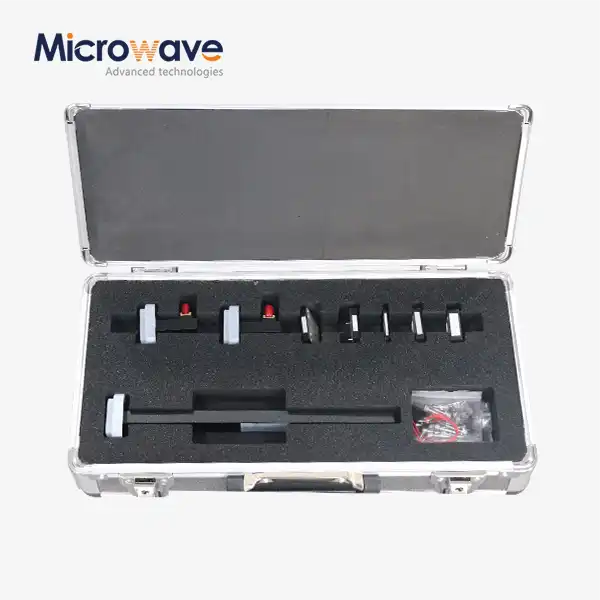 VIEW MORECoaxial Verification Kits
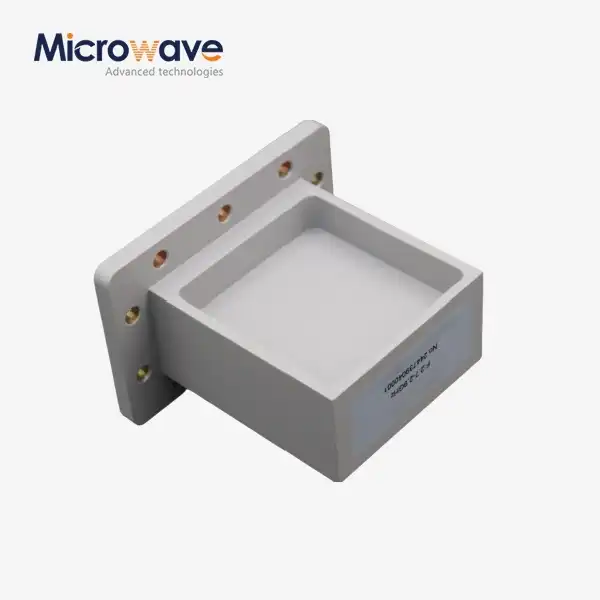 VIEW MORECustom WG to Coaxial Adapter
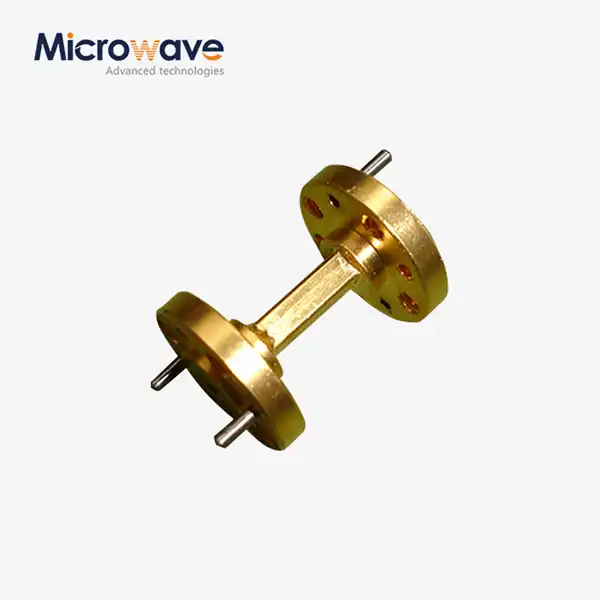 VIEW MORECircular Straight Waveguide
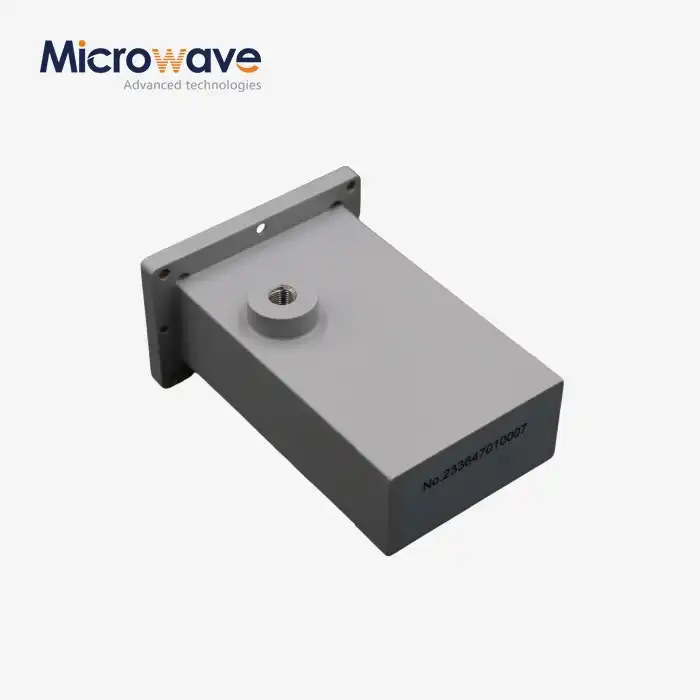 VIEW MOREWG Termination
 VIEW MOREDouble Ridge Waveguide Load
 VIEW MOREFeed Fired Lens Antenna
 VIEW MORELadder Membrane Square Dual Circular Polarization Horn Antenna
 VIEW MOREAntenna Near Field Measurement Probe