




A Buyer's Guide to Sourcing a High Power Waveguide Isolator
If you are sourcing a high power waveguide isolator for a radar system, satellite uplink, or defense platform, this guide gives you a practical framework to evaluate specifications, compare supplier options, and make a confident procurement decision. These non-reciprocal passive devices protect transmitters from reflected RF energy that can destabilize or destroy expensive power sources. With forward power ratings reaching 1,000 W and beyond, selecting the wrong component can cause system failure at the worst possible moment. This guide walks through the technical and commercial factors that matter most.
Understanding High Power Waveguide Isolators: Basics and Benefits
What This Device Actually Does
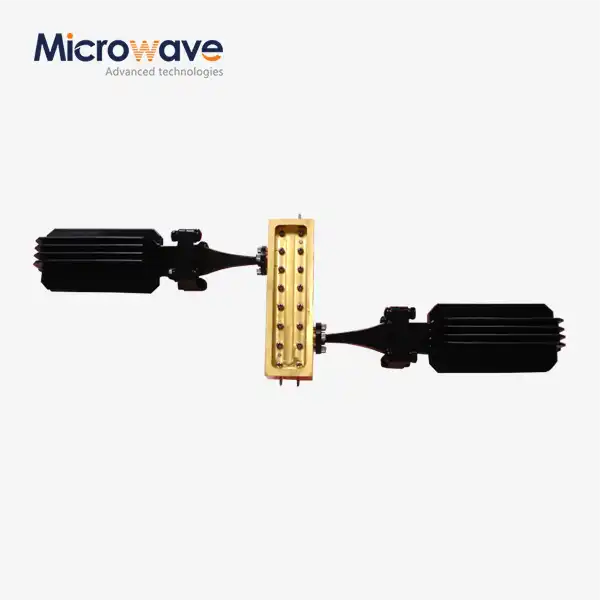
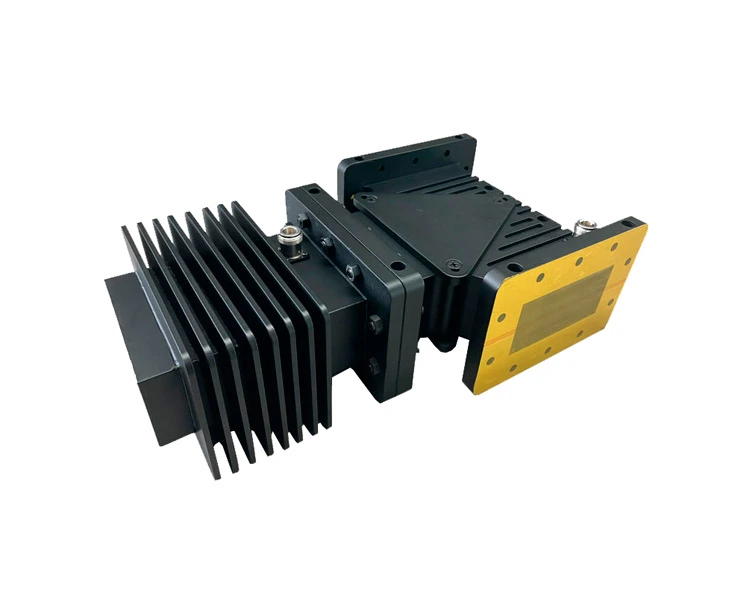
A waveguide isolator sends microwave energy in one direction and receives energy going the other way. It has a waveguide housing with a ferrite element inside that is pushed by a fixed magnet. When there are impedance mismatches at the load, like when the antenna scans, the radome ice up, or the load changes, power is reflected back toward the source. Before it gets to the transmitter, the isolator soaks up the reverse energy. This keeps parts like magnetrons, klystrons, and solid-state power amplifiers (SSPAs) safe from VSWR spikes and heat overload.
Key Technical Characteristics
Isolation level, insertion loss, and power handling are the three things that make up a waveguide isolator. Managing thermal loss is one of the biggest technical challenges in high-power versions. At 10 kW input, even a 0.2 dB insertion loss creates about 450 W of heat inside the ferrite, which is enough to exceed its Curie temperature if the heat is not managed properly. Because of this, high-power units often have housings made of aluminum or copper that have longer heat sink surfaces or active liquid cooling channels.
Where These Components Are Deployed
These isolators show up in a wide range of tough B2B settings. In S-band and X-band weather radars, they keep the magnetrons safe from reflected spikes caused by scattered rain and snow. In satellite earth stations, they keep the performance of linear amplifiers even during bursts of high traffic on the uplink. In industrial microwave heating systems that work at 915 MHz or 2.45 GHz, they keep track of kilowatts of reflected energy as the load dielectrics change while ceramics are fusing or food is drying.
Comparing High Power Waveguide Isolators: Making the Right Choice
Isolator vs. Circulator — Understanding the Difference
A circulator is a three-port device that sends information from one port to the next in a certain order. An isolator is a circulator with a matched high-power absorptive load at the end of its third port. Because of that, it is a two-port isolator; energy that is reflected goes into port two and is absorbed at port three instead of going back to port one. When choosing parts, this difference is important because a circulator can be rearranged, but a high power waveguide isolator gives up that flexibility for a simpler, more reliable protection function.
Selecting Specifications That Match Your System
Choosing a brand name is less important than making sure the specs fit your machine. Set these settings before you call any suppliers:
- Frequency band: Isolators are optimized for specific waveguide bands — L, S, C, X, Ku, Ka. A unit designed for one band cannot substitute for another.
- Forward power rating: This separates average thermal limits from peak power breakdown limits. Arcing occurs when peak power exceeds the dielectric breakdown threshold; pressurizing with nitrogen or SF6 raises this ceiling.
- Isolation level: Standard units deliver 20 dB typical. Multi-junction designs reach 40–60 dB for applications requiring stronger source protection.
- Insertion loss: Lower is safer at high power. Typical values run between 0.1 dB and 0.3 dB.
- VSWR: Most well-designed isolators maintain VSWR below 1.20:1.
These factors work with each other. Even if a unit has low insertion loss, it doesn't completely separate your source from harmful echoes.
Environmental and Mechanical Requirements
Environmental resilience is also needed by defense and aircraft acquisition teams. Standard operating temperatures for units that are put out in the field are -40 °C to +70 °C. For placements in the air or on ships, MIL-STD-810 shaking and shock testing is required. Standard waveguide housings filled with air are not ideal for space-grade or vacuum chamber testing conditions, so designs that work in vacuum and have special controls for outgassing are needed.
Procurement Considerations: Sourcing and Buying High Power Waveguide Isolators
Supplier Channel Comparison
Waveguide isolators can be bought from three main places: original equipment makers (OEMs), authorized dealers, and online stores. There are pros and cons to each program. Authorized distributors can fill orders faster from catalogs, but they can't make many changes to the products. Online platforms let you compare prices, but they don't usually help with technical validation. Procurement teams can get custom frequency bands, changed flange interfaces, and recorded factory acceptance testing when they work directly with a specialized maker. These are all important things to have when putting parts together in certified defense or aircraft assemblies.
Price Drivers and Budget Planning
High power waveguide isolators have different prices depending on the power rating, frequency band, material choice, and order volume. Aluminum-body standard units with modest power levels cost a lot less than copper-body high-power units with active cooling and MIL-SPEC testing. Catalog sellers may have low minimum order sizes of as little as one unit, but when you buy a lot of them, the cost per unit goes down a lot. Before making a final budget, make sure that the price quote includes S-parameter measurement reports, test data sheets, and compliance documentation. These are often listed as separate line items.
Lead Time and Supply Chain Risk
Delivery times for custom RF components range from 8–16 weeks for custom designs to a few days for catalog stock. If you are set on a certain deadline for the project, make sure that your provider can meet your needs for production capacity and raw materials during the RFQ stage. Suppliers who do their own machining, ferrite processing, and vector network analyzer characterization have lower supply chain risk than those who use a lot of different sub-tier vendors. Ask for written promises of wait times and make sure the seller has extra stock of frequency bands that are in high demand.
Ensuring Quality and Performance: Specifications and Verification
Critical Electrical Parameters to Verify
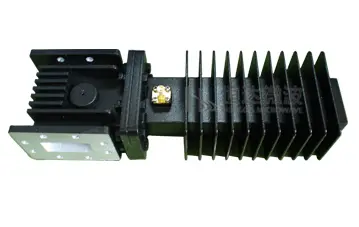
Specification sheets are just suggestions; they are not promises. Before you accept delivery on a very important order, you should use a Vector Network Analyzer (VNA) to fully characterize the S-parameters. It proves that S21 insertion loss, S12 separation, and S11/S22 return loss occur at all temperatures, not just room temperature. For instance, ADM's waveguide isolators have a 20 dB typical isolation, 0.3 dB typical insertion loss, 800 MHz bandwidth, and 1,000 W maximum forward power. They are made of Al/Cu and can work in temperatures ranging from -40 °C to +70 °C. For use in military and satellites, these values should be verified per unit or per lot.
Quality Assurance Practices
Reliable makers use structured quality methods that do more than just checking for continuity. If someone wants to buy a waveguide isolator, they should make sure it meets these basic requirements:
- Full-power aging test: The device runs at rated power for an extended period to confirm thermal equilibrium and ferrite bond integrity.
- Environmental stress screening: Thermal cycling from −40 °C to +85 °C and vibration testing per MIL-STD-810 or equivalent aerospace standards.
- Leakage and pressurization testing: Verifies hermetic sealing for pressurized waveguide systems designed to prevent arcing.
- Passive intermodulation (PIM) testing: Confirms the device does not introduce noise into communications channels — critical for telecom and satellite applications.
All of these steps together make sure that the gadget will work as expected after it is installed, not just in the test lab.
Certifications and Documentation
ISO 9001:2015 approval gives basic assurances about quality management. For regulated areas, check for RoHS compliance for environmental standards as well, and ask for environmental test results when parts will be used in harsh circumstances. ADM's waveguide products are all certified by ISO 9001:2008 and RoHS. The company's lab can handle readings up to 110 GHz, so they can be checked in-house across a wide range of frequencies without having to rely on testing by a third party.
Conclusion
It takes more than looking at a blueprint to find a high power waveguide isolator for high-power uses. Before parts go into a production system, buyers need to check the isolation levels, the insertion loss at working power, the heat management design, and the quality data. Working with a manufacturer that offers in-house testing, a unique setup, and organized quality assurance lowers the risk of buying something and ensures that the system will work well in the long run. All of these issues are taken care of by ADM's waveguide isolator line, which has clear specifications, OEM flexibility, and direct engineering support for procurement teams around the world.
FAQ
What frequency ranges do these devices typically cover?
Waveguide isolators are designed for specific frequency bands defined by waveguide dimensions. Common bands include L-band (1–2 GHz), S-band (2–4 GHz), X-band (8–12 GHz), Ku-band (12–18 GHz), and Ka-band (26.5–40 GHz). ADM produces isolators across multiple bands with 800 MHz typical bandwidth per unit.
How do I know whether I need a custom design?
Standard catalog units cover most common frequency bands and power levels. Custom designs become necessary when your system requires a non-standard flange interface, a modified housing material for weight or thermal reasons, or a frequency band that falls outside catalog coverage. Contact a manufacturer's engineering team with your full specification sheet before assuming a catalog unit will work.
What should I expect from warranty and post-sale service?
A responsible supplier provides a minimum 12-month warranty against manufacturing defects, accompanied by replacement or repair commitments. Post-sale services worth requesting include re-characterization testing after field use, application engineering support during system integration, and access to updated test data if regulatory audits require it.
Can I test a prototype before committing to volume production?
Yes. ADM offers prototyping services with fast turnaround for evaluation before full-scale production, which allows engineering teams to validate fit, form, and function in the actual system before committing to volume orders.
Partner with ADM for Your Next Waveguide Isolator Order
ADM is a trusted company that has been making and supplying high power waveguide isolators for over 20 years. They have ISO certifications and can measure up to 110 GHz in-house. Our isolators have 20 dB of isolation, 0.3 dB of insertion loss, the ability to handle 1,000 W of forward power, and are made of Al/Cu to withstand harsh field conditions. We offer OEM customization, fast delivery, and low prices for both prototypes and large orders. To get a price, email our tech team at craig@admicrowave.com.
References
1. Pozar, D. M. Microwave Engineering, 4th ed. Wiley, 2011.
2. Helszajn, J. Ferrite Phase Shifters and Control Devices. McGraw-Hill, 1989.
3. IEEE Transactions on Microwave Theory and Techniques. Special Issue on High-Power Microwave Components. IEEE, 2018.
4. Collin, R. E. Foundations for Microwave Engineering, 2nd ed. Wiley-IEEE Press, 2001.
5. MIL-STD-810H: Environmental Engineering Considerations and Laboratory Tests. U.S. Department of Defense, 2019.
6. IEC 61000-4-5: Electromagnetic Compatibility — Testing and Measurement Techniques — Surge Immunity Test. International Electrotechnical Commission, 2014.