





7 Specs That Matter When Buying a High Power Waveguide Circulator
When sourcing a high power waveguide circulator for radar, defense, satellite, or industrial heating systems, the specification sheet is your first line of defense against costly procurement mistakes. These passive ferrite devices route kilowatt- to megawatt-level RF signals in one direction while protecting sensitive sources from destructive reflected energy. Getting the specs right the first time prevents thermal failures, signal degradation, and unplanned downtime. This guide walks through the seven specifications that experienced RF procurement engineers check before placing any order.
Power Handling Capacity: Ensuring Optimal Performance Under High Loads
The most important thing to know about any high-power waveguide component is how it handles power. It's split into two separate groups that buyers must look at separately.
Peak Power Rating
Resistance to voltage breakdown and internal arcing is based on peak power. High-end waveguide circulators are often pressurized with SF6 or dry nitrogen gas to raise the dielectric threshold and stop arc discharge at very high power levels all at once. Ask for the actual high-power number, not just the nominal amount.
Average Power Rating
The device's ability to get rid of heat is shown by its average power. When exposed to RF for a long time, the ferrite junction generates heat. If the junction temperature rises above the ferrite's Curie point, magnetic saturation happens and performance drops. Units that have liquid cooling lines or forced-air fans built in are better at handling steady average power.
Matching Ratings to Your Application
A radar transmitter with a peak power of 1 MW and an average power of 10 kW needs a circulator with a rating well above both of those numbers. Even a 10–15% undersize in either grade speeds up wear and can do permanent damage within weeks of deployment. Always add at least 20% more to the expected running loads as a safety cushion.
Frequency Range Compatibility: Matching Circulators to Your Application Spectrum
If you tune the circulator to the wrong band, it won't work at all. The working spectrum controls everything from insertion loss to separation performance by how well frequencies work with each other.
Standard Frequency Bands
Different bands of frequencies are used to make high power waveguide circulators. L-band (1–2 GHz) is used for long-range observation radar, S-band (2–4 GHz) is used for weather and air traffic control radar, X-band (8–12 GHz) is used for military and airborne radar, and Ku-band (12–18 GHz) is used for satellite ground stations and telecom backhaul. Each band needs a waveguide lip size and ferrite shape that are the same.
Bandwidth Within the Band
Check the operating bandwidth around the center frequency. A circulator that is rated for 9.0–9.5 GHz will not work as well at 9.8 GHz. When buying wideband systems or frequency-agile radars, procurement teams need to make sure that the circulator keeps its isolation and insertion loss specs throughout the whole sweep.
Custom Frequency Solutions
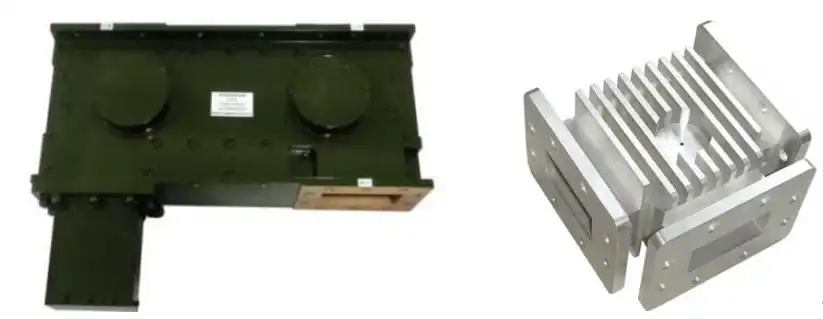
Normal units that you can buy off the shelf cover most standard bands, but for specific uses in research or security projects, they often need custom frequency coverage that is tuned at the plant. When a supplier has their own design team, they can change the shape of ferrite magnets and bias magnets to reach non-standard center frequencies without losing the ability to handle power.
Insertion Loss and Isolation Specs: Balancing Efficiency and Signal Integrity
At the same time, these two numbers describe the strength of the data and the safety of the system. Neither one can be dropped.
Insertion Loss Benchmarks
Insertion loss is less than 0.15 dB for high-power waveguide circulators that are common in the industry. If there is even 0.1 dB of resistive loss in the ferrite junction, it means kilowatts of heat that need to be managed. Having less insertion loss lowers thermal stress and improves the emitter chain's total power budget.
Isolation Requirements
For most radio security uses, isolation should be higher than 20 dB. This number shows how much of the energy that is returned goes back to the source. In radar and particle accelerator uses, cavity echoes can damage or detune the klystron or magnetron power source if there isn't enough separation. This is a costly and dangerous failure mode.
Circulator vs. Isolator Selection
A waveguide circulator with three ports sends reflected power to a termination load at Port 3. This load acts as a built-in isolator. The item is sold as a waveguide isolator when the third port is internally terminated. Knowing the difference between these two types helps procurement engineers pick the right product setup for their system layout.
Design Principles and Materials: Reliability Meets Performance
The way a high power waveguide circulator is built on the inside determines how long it will last under thermal and mechanical stress.
Ferrite Material Selection
Most of the time, lithium ferrite and nickel ferrite are used for high-power tasks. Lithium ferrite has a higher Curie temperature, which is usually higher than 500°C. This makes it less likely to lose its magnetic properties when it is under constant power loads. How the device ages over time is directly related to the ferrite composition.
Waveguide Body and Plating
Most waveguide bodies are made from aluminum or brass that has been machined and then plated with silver or gold to reduce ohmic loss. Both insertion loss and peak power handling are affected by the quality of the surface finish at the joint. When bodies are made to tight dimensional standards, the electromagnetic performance is more reliable.
Compliance and Reliability Testing
When buying things for defense or space programs, teams should make sure they meet MIL-STD-202 standards for environmental resilience, which include exposure to temperature changes, vibrations, and humidity. Suppliers who are ISO 9001-certified make sure that every unit can be tracked, which is a must in defense supply lines.
Customization and Technical Documentation: Facilitating Seamless Integration
Most of the time, standard catalog items are enough, but B2B procurement needs something more specific most of the time.
Custom Design Capabilities
When buying a waveguide circulator, unique engineering really makes a difference in these key areas:
- Non-standard frequency tuning: Factory-adjusted ferrite geometry and bias magnet strength to hit exact center frequencies outside standard band definitions.
- Modified flange interfaces: Custom WR flange dimensions or choke flanges for direct bolt-on integration into existing waveguide assemblies.
- Thermal management adaptation: Integrated water-glycol cooling channels or extended fin structures for environments where airflow is restricted.
With these customization choices, system integrators don't have to redesign adjacent parts, which lowers the risk to the project schedule and the cost of integration.
Datasheet and Documentation Standards
There should be a full bill of materials, measured S-parameter data, power handling test results, and thermal performance graphs in the technical documents. Full documentation helps with reviews for regulatory compliance, audits of procurement, and quality sign-off processes further down the line.
Supplier Reputation and After-Sales Support: Trusting Your Waveguide Partner
The relationship with the supplier goes far beyond the purchase order. Who stands behind the product determines how well it works in the long run.
Evaluating Supplier Credentials
The ISO 9001 and RoHS certifications of a supplier show that they have quality management systems in place. In addition to qualifications on paper, buying teams should look at the company's ability to produce, its lab testing facilities, and the size and expertise of its engineering team. Suppliers who have their own microwave measurement labs (that can test up to 110 GHz) give more reliable test results than those who use facilities that are not owned by the supplier.
Warranty and Technical Support
Support after the sale is most important when a system stops working. Protecting operational uptime with quick technical help that can figure out why there is more insertion loss or unexpected reflection events, which are often signs of early ferrite degradation or coolant channel problems. Ask suppliers to be clear about their warranty terms and how long it usually takes for them to answer technical questions.
Global Logistics Capability
For multilateral programs, the supplier must be able to provide accurate export paperwork, make sure that customs rules are followed, and manage freight across many regions. Make sure the supplier has shipped to your country before and can keep their promises about lead times for repeat orders.
Price vs. Performance: Making the Cost-Effective Choice
Sometimes, the cheapest choice doesn't have the cheapest total cost of ownership when it comes to high-power RF devices.
Cost Drivers to Understand
Complexity of the design, grade of the ferrite material, special machining limits, and built-in cooling systems are some of the things that affect the unit price. A unit that costs 30% more because it has liquid cooling may avoid a single thermal failure that would cost many times that amount in lost time and replacement parts.
Sample Testing Before Bulk Orders
Ask for prototypes or pre-production samples before committing to a full production order. Check the datasheet against the recorded insertion loss, isolation, and peak power values in your real system. This step gets rid of any surprises that might come up during system integration and gives buying teams hard data they can use to defend their choice of provider internally.
Conclusion
To pick the best high power waveguide circulator for high-power uses, you need to carefully consider how much power it can handle, as well as its frequency compatibility, insertion loss, isolation, material quality, customization options, and supplier support. Each standard has a direct effect on how reliable the system is and how much it costs to run. If you skip any of them during procurement, risks will show up later, and often at the worst possible time. By checking all seven, you can be sure that the circulator you install will work as it should for its whole life.
FAQ
What causes a waveguide circulator to fail in service?
The most common failure mode is ferrite cracking caused by thermal shock from rapid power cycling. Coolant channel corrosion is also frequent in liquid-cooled units. Both failures present initially as increased insertion loss before progressing to full device failure.
How do I know if my circulator needs to be replaced?
Regularly monitor insertion loss and isolation figures against baseline measurements taken at installation. A drift of more than 0.05 dB in insertion loss or a 3 dB drop in isolation typically signals that the ferrite or magnetic bias circuit requires inspection.
Can a waveguide circulator be repressurized in the field?
Most pressurized units are sealed at the factory and are not designed for field repressurization. If pressure integrity is compromised, return the unit to the manufacturer for refurbishment.
What is the typical operational lifespan?
With proper thermal management and no mechanical damage, a well-built waveguide circulator exceeds 10 years of service life in continuous-duty applications.
Is RoHS compliance available for high-power units?
Yes. RoHS-compliant waveguide circulators are available and are required for programs operating under European environmental regulations. Confirm compliance documentation before procurement.
Partner with ADM for Your Next High Power Waveguide Circulator Order
Each high power waveguide circulator that ADM (Advanced Microwave Technologies Co., Ltd.) makes is the result of more than 20 years of experience making things. Our products are certified by ISO 9001 and RoHS, and we have in-house test labs that can reach 110 GHz and an engineering team that is quick to respond to customer needs. We offer accuracy, paperwork, and reliable help after the sale, whether you need a basic catalog unit or a fully customized OEM option. You can get a quote from our team by emailing craig@admicrowave.com.
References
1. Pozar, D. M. Microwave Engineering, 4th ed. — Wiley, 2011.
2. Helszajn, J. Ferrite Phase Shifters and Control Devices — McGraw-Hill, 1989.
3. Collin, R. E. Foundations for Microwave Engineering, 2nd ed. — IEEE Press / Wiley-Interscience, 2001.
4. Microwave Journal. "High-Power Ferrite Devices: Design and Application Trends." — Microwave Journal, 2019.
5. IEEE Transactions on Microwave Theory and Techniques. "Power Handling and Thermal Management in Waveguide Ferrite Circulators." — IEEE, 2017.
6. MIL-STD-202H: Test Methods Standard — Electronic and Electrical Component Parts — U.S. Department of Defense, 2015.
YOU MAY LIKE
 VIEW MORESlotted Waveguide Array Antenna
 VIEW MOREWaveguide Switch
 VIEW MOREDouble Ridge Waveguide Termination
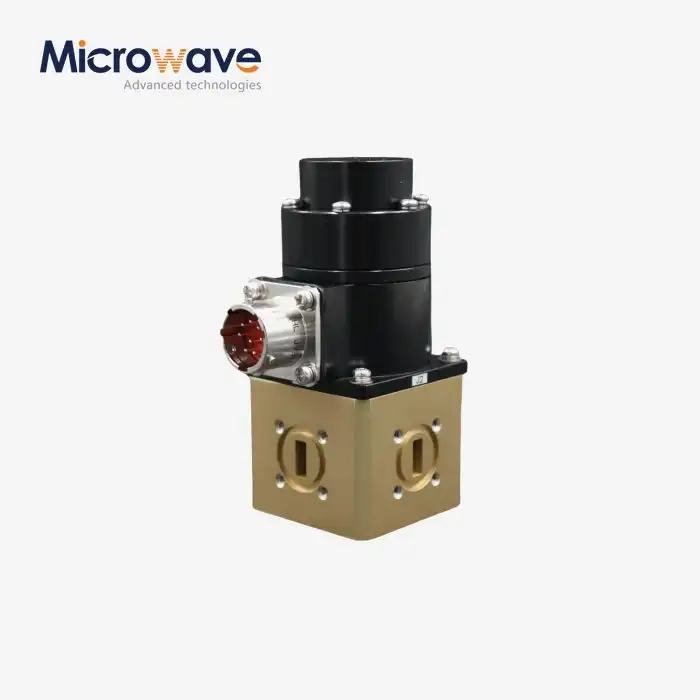 VIEW MOREWaveguide Electric Switch
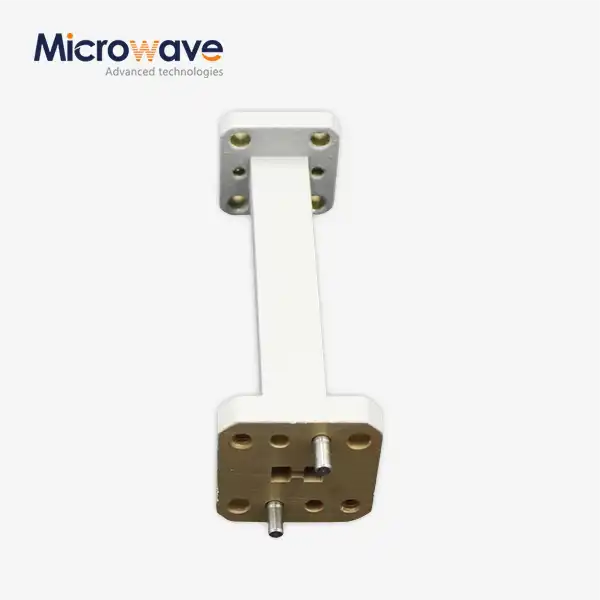 VIEW MOREDouble Ridge Waveguide Transition
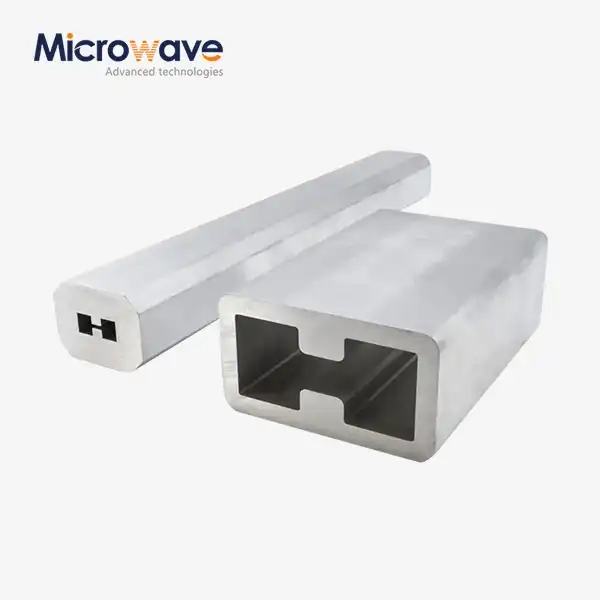 VIEW MOREDouble Ridge Waveguide Tube
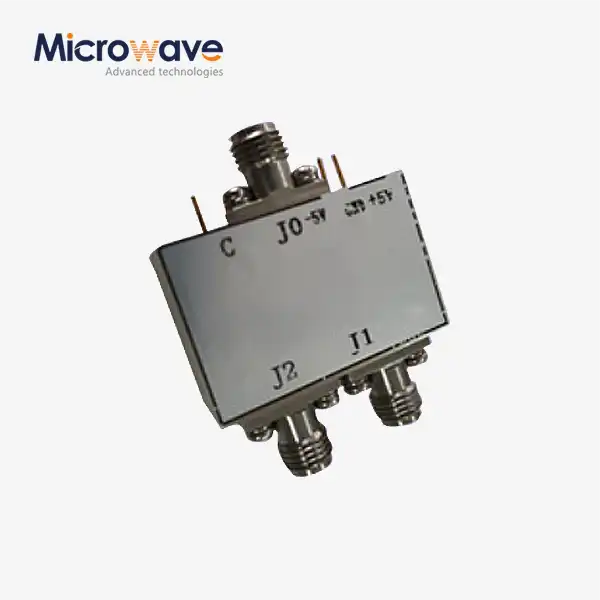 VIEW MOREHigh Power Coaxial Switch
 VIEW MOREPyramidal Linear Polarization Horn Antenna