





5 Mistakes to Avoid When Buying a High Power Coaxial Switch
Buying a high power coaxial switch sounds straightforward — until a specification mismatch shuts down your radar system mid-operation, or a cheap component triggers thermal failure inside a broadcast transmitter. Having spent years working alongside defense contractors, satellite integrators, and RF test engineers, I've seen these procurement errors happen repeatedly. This guide breaks down the five most costly mistakes buyers make, so you can source smarter and protect your system's signal integrity from day one.
Mistake 1 — Overlooking Key Technical Specifications
Power Rating and Frequency Range
There is a certain power and frequency range for each RF switching application. A switch that can handle 10 kW at 100 MHz might only be able to handle 2 kW at 1 GHz. This is because as frequency goes up, resistive losses and dielectric breakdown margins go down, making the switch less able to handle power. It's important that these parameters are perfectly matched to your working conditions, especially in radar or satellite ground stations where signal quality has a direct impact on system output.
Insertion Loss and Isolation Values
Standard requirements for precision-grade RF switches include insertion loss below 0.05 dB and VSWR below 1.15:1. Poor insertion loss causes heat to build up, which eventually causes parts to fail due to thermal stress. If the isolation level is high enough, above 70 dB, transmitter energy can't leak into nearby reception routes. The manufacturer's manual should make both numbers easy to see. If they don't, that's a bad sign.
Coaxial vs. Waveguide Switch Specs
Coaxial switches work best for small, wide-band applications up to tens of gigahertz because they use center conductor contacts. At millimeter-wave frequencies, waveguide switches can handle much higher power levels and send data through hollow metal structures. When the two designs are mixed up during buying, it costs a lot to fix performance gaps, interface mismatches, and connectors that don't work with each other after delivery.
Mistake 2 — Neglecting the Type and Control Mechanism
Manual, Solenoid, and Motorized Options
There are pros and cons to each of the three main types of action. Manual switches work well in labs where operators can make direct changes, but they can't be used in larger settings. Solenoid-actuated switches can switch quickly and work with automatic test systems, but they get hot in the coil when they're used for a long time. Motorized high power coaxial switches allow for precise positioning and work well in high-cycle situations, but they make the mechanical design more complicated. If you pick the wrong type based on price instead of how it will be used, you will have to do more maintenance and have less uptime.
Latching vs. Failsafe Actuators
Latching switches stay in place after being pressed without constantly drawing power, which is very helpful in places with limited heat or power, like spaceship modules. When the power goes out, failsafe switches go back to their original state. This keeps the radio hardware safe. In defensive or broadcast applications where uptime is legally needed, knowing this difference before buying can keep you from having to make expensive changes to the field.
Long-Term Operational Scalability
A well-designed electrical RF switch can usually handle between one and five million switching cycles. If your system needs to route signals often, like in automatic test equipment or electronic warfare platforms, choose a switch with a high cycle life from the start to avoid having to replace it too soon. Don't just take the supplier's word for it; always ask for written cycle life data.
Mistake 3 — Failing to Evaluate Supplier Credibility
Transparency in Datasheets and Custom Support
Reliable manufacturers give full, checked performance data across the whole frequency range, not just from one test point. When looking at different providers, make sure they have clear records of insertion loss, separation, power handling, and VSWR across a range of temperatures. System integration works better with suppliers who offer OEM customization with clear tolerances, traceable parts, and documentation that is kept up to date than with suppliers who only offer catalog solutions.
Lead Times, Warranties, and After-Sales Response
When the government or the military buys something, missing a delivery time can lead to penalties in the deal. Before making a deal with a seller, get written confirmation of their normal wait times, minimum order quantities, and warranty terms. A supplier with dedicated technical support—one who can help with questions about installation, troubleshooting, or making changes to the product—lowers project risk much more than one that just ships and disappears.
Supply Chain Proximity and Logistics
For procurement teams in the US, it is necessary to work with a supplier that offers responsive export logistics and technical communication in English. ADM has been making high-precision radio frequency (RF) parts for over 20 years and has ISO 9001:2015 certification. They have sold these parts to defense, space, and research users all over North America. When delivery dates and system performance are at stake, that kind of proven track record is important.
Mistake 4 — Ignoring Compatibility with Existing RF Systems
Application-Specific Frequency and Power Requirements
A high power coaxial switch that works well in a broadcast emitter might not work at all in an MRI RF coil system, where passive intermodulation (PIM) levels need to stay above -160 dBc to keep image data from getting messed up. Defense radar, telecom backhaul, and particle collider use different frequency ranges, duty cycles, and stress levels in the surroundings. Buying without first planning out these needs is a shortcut that leads to problems with integration later on.
Connector Types and Physical Interfaces
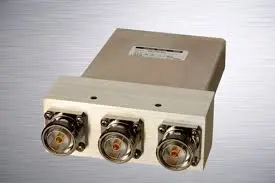
The contact surface area and dielectric breakdown thresholds of standard SMA and N-type connectors are small. 7/16 DIN or EIA flange connections are best for multi-kilowatt systems because they have bigger contact areas, better heat dissipation, and better voltage handling. If the connector interface doesn't match the right size or thread, it can either not be installed at all or cause impedance discontinuities that slow down the system from the moment it is turned on.
Maintenance Protocols and Lifespan Planning
It lowers the total cost of ownership over the service life of a component if repair rounds are taken into account during the sourcing stage. For example, high-power switches in transmission settings that are open 24 hours a day, seven days a week should be checked for stable contact resistance. For constant signal routing, contact resistance should be kept below 15 m©. The most durable high-voltage RF lines have gold-plated beryllium copper contacts that are held in precisely machined, nitrogen-pressurized cavities.
Mistake 5 — Basing the Decision Solely on Price
Total Cost of Ownership Over Upfront Cost
When you add up failure rates, labor costs, and system downtime, the cheapest switch on a quote sheet isn't always the cheapest in the long run. When used in military radar or satellite ground stations, an unexpected outage can cost a lot more than the difference in price between a cheap part and a properly rated one. When purchasing managers look at costs over a 5–10 year period, they consistently make better choices about where to buy things.
Performance Trade-Offs Between Power Tiers
Low-power switches are less expensive because their housings are lighter, their contacts are smaller, and their dielectrics are thinner. Putting them to use in high-power situations speeds up contact degradation, leads to thermal runaway, or starts arcing, especially if hot-switching happens by mistake. It costs more up front, but a switch designed for high CW power (5 kW+ at 1 GHz) that has full proof of its thermal rise and confirmed dielectric withstanding voltage test data lasts a lot longer under real working loads.
Balancing Price Against Supplier Reliability
It only makes sense to compare prices between suppliers if the technical details are the same and can be checked. It's not a fair comparison when one supplier only gives you a price list, and another gives you full VNA sweep data, PIM test results, and life cycle endurance documentation. It's much better for your organization's reputation and your procurement decision to pay a small premium for traceable, certified performance data than to save a few dollars per unit.
Conclusion
RF switching components that were bought wrong don't always show up right away. Many weeks or months later, they show up as broken signal paths, thermal failures, or extra work needed to integrate things that costs a lot of money and takes a long time. If you don't make these five mistakes—ranging from not checking specifications to focusing on price—you'll be able to find high power coaxial switches that work well under load, for their full rated service life, and within the operating range of your system.
FAQ
Can a high-power coaxial switch perform hot switching?
In most cases, no. Most electromechanical high-power switches are made to change state when RF power is not present. When you switch while an RF load is running, it leads to arcing, contact damage, and faster wear. For hot switching, you need special arc-suppressed or solid-state systems.
How does temperature affect switch performance?
High temperatures in the environment weaken the dielectric and raise the resistance of the contact. Always look at the document to see the recommended temperature range and make sure that the temperature rise at full load stays within the manufacturer's limit, which is usually no more than +35°C above ambient.
What connector type is right for high power applications?
Standard N-type or SMA links don't work as well with multi-kilowatt systems as 7/16 DIN and EIA flange connections do. They have a bigger contact area, better heat transfer, and higher dielectric breakdown voltage margins.
What is a realistic switch lifespan?
An electromechanical RF switch that is well taken care of can usually last between one and five million cycles. The actual life span depends on how often the unit is switched, how often it is cold-switched, and how much power it uses while running.
Partner with ADM for Your Next High Power Coaxial Switch Order
Defense, satellite, and research customers in the US and around the world buy precision-grade RF switching parts from ADM. ADM is an experienced company that makes high power coaxial switches. Their products are ISO 9001:2015-certified, and they offer full OEM customization as well as quick expert help from the time of inquiry until delivery. You can talk to our engineering team about your application needs by sending your specifications to craig@admicrowave.com.
References
1. Pozar, D. M. — Microwave Engineering, 4th Edition. Wiley, 2011.
2. IEEE Std 287-2007 — Standard for Precision Coaxial Connectors. IEEE, 2007.
3. Laverghetta, T. S. — Handbook of Microwave Testing. Artech House, 2000.
4. Collin, R. E. — Foundations for Microwave Engineering, 2nd Edition. IEEE Press / Wiley, 2001.
5. Microwave Journal — "RF Switch Technologies for High Power Applications." Microwave Journal, 2019.
6. IEC 62037-1 — Passive Intermodulation (PIM): Measurement of PIM Products in RF and Microwave Components. IEC, 2012.
YOU MAY LIKE
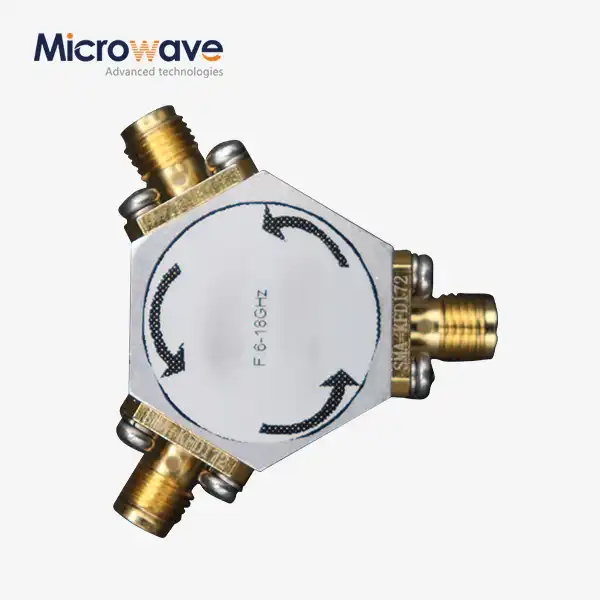 VIEW MOREBroadband Coaxial Circulator
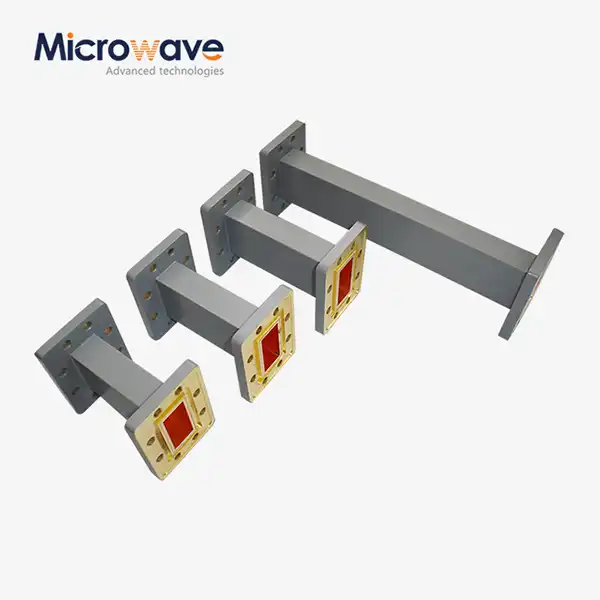 VIEW MORERectangular Straight Waveguide
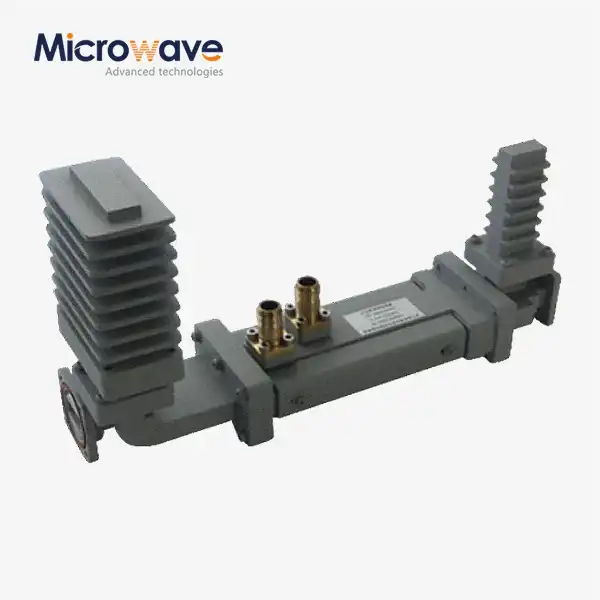 VIEW MOREHigh Power Waveguide Differential Phase Shift Isolator
 VIEW MOREWG Low Pass Filter
 VIEW MOREDouble Ridge Waveguide Transition
 VIEW MOREDouble-Ridged Waveguide Broadwall Directional Coupler
 VIEW MORECoaxial Detector
 VIEW MOREVoltage Controlled Phase Shifter
