




Applications of Waveguide Bandpass Filter in Workshop
Waveguide bandpass filters are passive RF components that allow specific frequency bands to pass while blocking unwanted signals outside the designated range. In workshop settings — particularly those running microwave test benches, radar calibration rigs, or satellite ground equipment — these filters protect measurement accuracy and signal purity. Their air-filled metallic cavity construction delivers unloaded Q-factors ranging from 2,000 to over 10,000, translating to insertion loss often below 0.5 dB. For procurement engineers sourcing components for industrial RF systems, understanding where and why these filters fit is the first step toward confident purchasing decisions.
Understanding Waveguide Bandpass Filters in Workshop Environments
How the Filter Structure Works
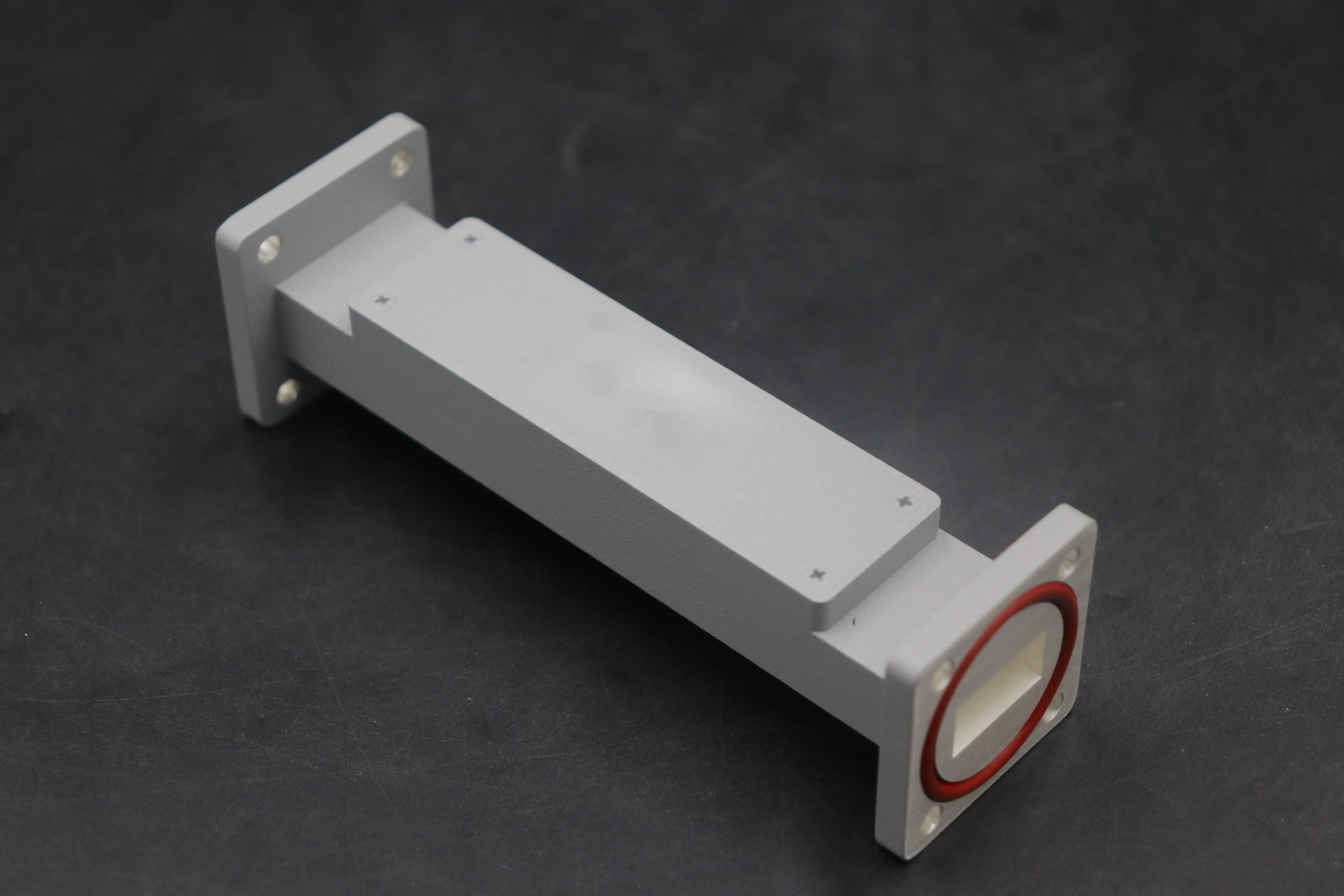
A waveguide bandpass filter uses paired resonant holes, which are usually made from copper, aluminum 6061, or Invar, to set a clear passband. Coupling coefficients are controlled by irises or posts between cavities. This changes the transfer function into Chebyshev, Butterworth, or elliptic responses. Because there is no center conductor and no dielectric material, two major loss mechanisms are not present. This is why waveguide structures work better than coaxial or microstrip alternatives at frequencies above 1 GHz.
Key Performance Parameters
In any workshop, choosing a filter is based on three factors: insertion loss, return loss (with a target VSWR below 1.3:1), and out-of-band rejection. If you design a waveguide bandpass filter well, you can get stopband rejection of more than 80 dB. This is very important when adjacent-frequency interference would mess up measurements or lower system output. In wideband digital systems, where phase distortion impacts modulation quality, group delay stability across the passband is also important.
Role of Simulation Before Deployment
Before a filter goes into production, electromagnetic simulation tools like HFSS or CST Microwave Studio model the size of the cavities and the openings for coupling. This step predicts the frequency response, finds unwanted resonance modes, and cuts down on expensive re-machining processes. As part of their due diligence, procurement teams should ask suppliers for simulation data. This shows that the design is thorough and cuts down on the time needed to fix problems in the field after installation.
Core Applications of Waveguide Bandpass Filters in Workshops
RF and Microwave Test Benches
Clean signal conditions are needed on test benches in workshops. Putting a bandpass filter at the input or exit of a vector network analyzer (VNA) setup gets rid of the harmonic content in stimulus signals, which stops false readings. Inter-equipment interference is a real problem in workshops where many instruments are being used at the same time. A narrow-band waveguide filter blocks out-of-band noise without changing the phase of the measurement band significantly.
Industrial Microwave Processing Systems
Systems for industrial heating and plasma production use set ISM frequencies, which are usually 915 MHz or 2.45 GHz at lower bands and X-band for specialized systems. In these situations, waveguide filters stop the overtones that magnetron sources make. This meets regulatory emission limits and keeps control electronics safe from interference that is sent out into space. Coaxial filters don't work well in this situation because they can't handle continuous wave power at the kilowatt level without overheating.
Internal Workshop Communication Networks
Dedicated wireless or wired RF data links are used between computers in some workshop settings, such as defense integration facilities and aircraft assembly lines. In these networks, waveguide bandpass filters stop frequency channels from talking to each other, keeping data safe during important assembly tasks. Waveguide structures are good for sealed metal workshops where vibrations and temperature changes are common because they can handle a lot of power and are mechanically strong.
Comparing Waveguide Bandpass Filters With Alternatives for Workshop Needs
Waveguide vs. Coaxial Filters
For low-power uses below 1 GHz, coaxial bandpass filters are small, cheap, and useful. But above 3 GHz, skin-depth losses in the middle wire make insertion loss much higher, and it becomes hard to handle power. In the C-band or X-band, a waveguide bandpass filter will usually have 30–50% less insertion loss than a similar coaxial design. This means that the system will have less heat load and a better signal-to-noise ratio.
Waveguide vs. Dielectric and Microstrip Filters
Dielectric resonator filters are small, but their frequency drifts with temperature because the dielectric constant changes with temperature. Microstrip filters are cheap, but they lose signal and break easily in rough workshop conditions. Procurement managers who look at total cost of ownership instead of unit price will choose waveguide filters because they last longer and are more stable. For example, a waveguide cavity that is properly silver-plated (3–5 µm, as shown by XRF analysis) will stay calibrated for years without needing to be re-tuned.
Matching Filter Type to Procurement Criteria
Ultimately, the choice is based on four things: the frequency of operation, the level of power, the stress in the environment, and the budget cycle. Off-the-shelf waveguide bandpass filters cover common bands like C, X, Ku, and Ka with known lead times. For 4–6 weeks, EM modeling, CNC machining, and silver plating are needed for custom designs that deal with odd passbands or rejection masks. This is a time frame that procurement teams must include in project plans. Asking the seller for proof of MIL-STD-202 or MIL-STD-810 compliance is another way to make sure it is suitable for harsh settings.
Procurement Guide: Sourcing Waveguide Bandpass Filters for Workshops
Evaluating Supplier Credentials
At the very least, a qualified supplier will have ISO 9001:2015 certification. RoHS compliance is a must for companies that sell goods in controlled markets. Ask for more than just certificates. You should also see full S-parameter sweeps (S21 and S11) of the VNA test data, which should include passband ripple, insertion loss, and rejection curves, compared to the design modeling. This ability to track sets precise makers apart from distributors of common goods.
Pricing, Bulk Orders, and Lead Times
Standard waveguide bandpass filters in well-known frequency ranges are often ready to ship, which makes fast development possible. When buying in bulk, make sure you know the minimum order quantity and whether tiered pricing applies. Orders for custom filters should come with engineering paperwork like modeling files, material certifications, and records of finishing inspections. These papers help with rearranging and protect the buyer during system integration checks.
Logistics and Delivery Planning
For workshops with tight production schedules, the reliability of delivery is just as important as the quality of the product. Make sure the seller can export to any country and gives you tracking information that meets foreign shipping standards. ADM has been making things for more than 20 years, and ships waveguide assemblies and RF components to customers in the defense, space, and industrial sectors in North America and beyond. They do this with the help of a well-organized supply chain and a skilled after-sales team.
Enhancing Workshop Efficiency Through Optimal Filter Use
Maintenance and Long-Term Stability
When installed correctly with matched EIA flanges (e.g., CPR-137 for C-band, UG-387 for millimeter-wave bands), a waveguide bandpass filter doesn't need much upkeep. Check the surfaces of the flanges that fit together on a regular basis for burrs or dirt that could cause leaks or passive intermodulation (PIM). For uses that are sensitive to temperature, Invar-body filters or designs that adjust for temperature keep the center frequency within a few ppm/°C. This stops passband drift when the temperature in the workshop changes with the seasons.
Troubleshooting Common Issues
If insertion loss goes up without warning, it's usually because the flanges aren't lined up right, the silver covering is wearing off, or the tuning screw is out of tune. With a handheld VNA and a quick S21 check, you can tell if the passband has moved or widened. Corona discharge or multipaction events under vacuum mean that there isn't enough power headroom for high-power uses. This is a problem with the supplier's specifications that should be found during the purchase review, not after the installation.
Integration With Modern Automated Systems
Workshops that use automated RF test and measurement platforms can add waveguide bandpass filters straight to switched filter banks. Precision makers are making tunable waveguide filter designs more and more affordable. These let you choose the passband using software instead of physically replacing the filter. With this method, flexible production lines can switch between frequency bands while testing is going on.
Conclusion
Waveguide bandpass filters have low insertion loss, can handle a lot of power, and are mechanically durable, all of which are important in workshop settings. Matching filter specs to practical needs makes systems more reliable, no matter if they are used in an RF test bench that has been measured, an industrial microwave processing line, or an integrated defense assembly facility. If B2B procurement teams put supplier documentation, certified manufacturing standards, and traceable supply chains at the top of their list of priorities, they will be able to find filters that work well for the long time that these parts are meant to last.
FAQ
Why do waveguide bandpass filters outperform coaxial options in high-power workshops?
Waveguide structures don't have a center conductor or dielectric material. This means that they don't have the two main ways that coaxial filters break down at high power: dielectric breakdown and center-conductor heat overload. Waveguide filters are the best choice for radar and industrial microwave uses because they can handle both high peak pulse power levels and steady waves of kilowatts.
What is a realistic lead time for a custom waveguide bandpass filter order?
Standard band filters might be ready to ship right away. Custom designs, like those with non-standard flange setups, tight rejection masks, or odd center frequencies, usually take 4 to 6 weeks. In this electromagnetic modeling, CNC machining, silver plating, and VNA acceptance tests are all covered. Include this gap in the project schedule from the start.
Can a waveguide bandpass filter be tuned after installation?
Yes. Many designs have tuning screws on the resonant cavities that let you make small changes to the center frequency after installation. Wide-range field retuning, on the other hand, shouldn't be done without the right VNA gear. If your application needs to change bands often, an adjustable or switchable filter bank is the better thing to buy.
What flange standard should I specify when ordering?
The frequency band of operation determines which flange to use. Some common EIA rectangular standards are UG-387 for millimeter-wave frequencies and CPR-137 for C-band frequencies. Before you order, you should always check that the mating flange on your existing system matches the one on the filter. If they don't, reflection and signal leakage will happen, which means the filter won't work as it should.
Partner With ADM for Precision Waveguide Bandpass Filter Solutions
Every time ADM works with a waveguide bandpass filter provider, they bring more than 20 years of experience making things. Every order comes with technical data that can be checked. Our production is ISO 9001:2015-certified, our materials are RoHS-compliant, and we have an in-house measurement lab that is calibrated to 110 GHz. OEMs, defense companies, and research institutions can get everything from prototypes to large quantities from us. We also help with full paperwork and logistics for exporting goods around the world. To get a price, email our tech team at craig@admicrowave.com.
References
1. Matthaei, G. L., Young, L., & Jones, E. M. T. — Microwave Filters, Impedance-Matching Networks, and Coupling Structures, Artech House, 1980.
2. Pozar, D. M. — Microwave Engineering, 4th Edition, Wiley, 2011.
3. Cameron, R. J., Kudsia, C. M., & Mansour, R. R. — Microwave Filters for Communication Systems, Wiley-Interscience, 2007.
4. IEEE Transactions on Microwave Theory and Techniques — "Design of Waveguide Bandpass Filters With High Power-Handling Capability," IEEE, 2018.
5. Hunter, I. C. — Theory and Design of Microwave Filters, IET Electromagnetic Waves Series, 2001.
6. MIL-STD-810H — Environmental Engineering Considerations and Laboratory Tests, U.S. Department of Defense, 2019.
_1733809032116.webp)