





Why Variable Waveguide Attenuator Range Exceeds 30 dB in Test Labs?
In RF and microwave test settings, where accuracy is crucial, variable waveguide attenuators are vital instruments. Engineers can correctly simulate real-world situations with these devices because they let them change the amplitude of signals on the fly. Modern test labs must be able to reach attenuation ranges greater than 30 dB, especially those that support defense radar systems, satellite ground stations, and the approval of telecommunications infrastructure. At Advanced Microwave Technologies Co., Ltd., we've seen how choosing the right attenuator can make testing much more efficient in research, defense, and aircraft organizations. The wider attenuation range isn't just a coincidence; it's based on basic needs for fully characterizing a system. It lets engineers test how well parts work in very strong signal conditions while keeping measurement accuracy across the entire dynamic range.
Understanding Variable Waveguide Attenuators
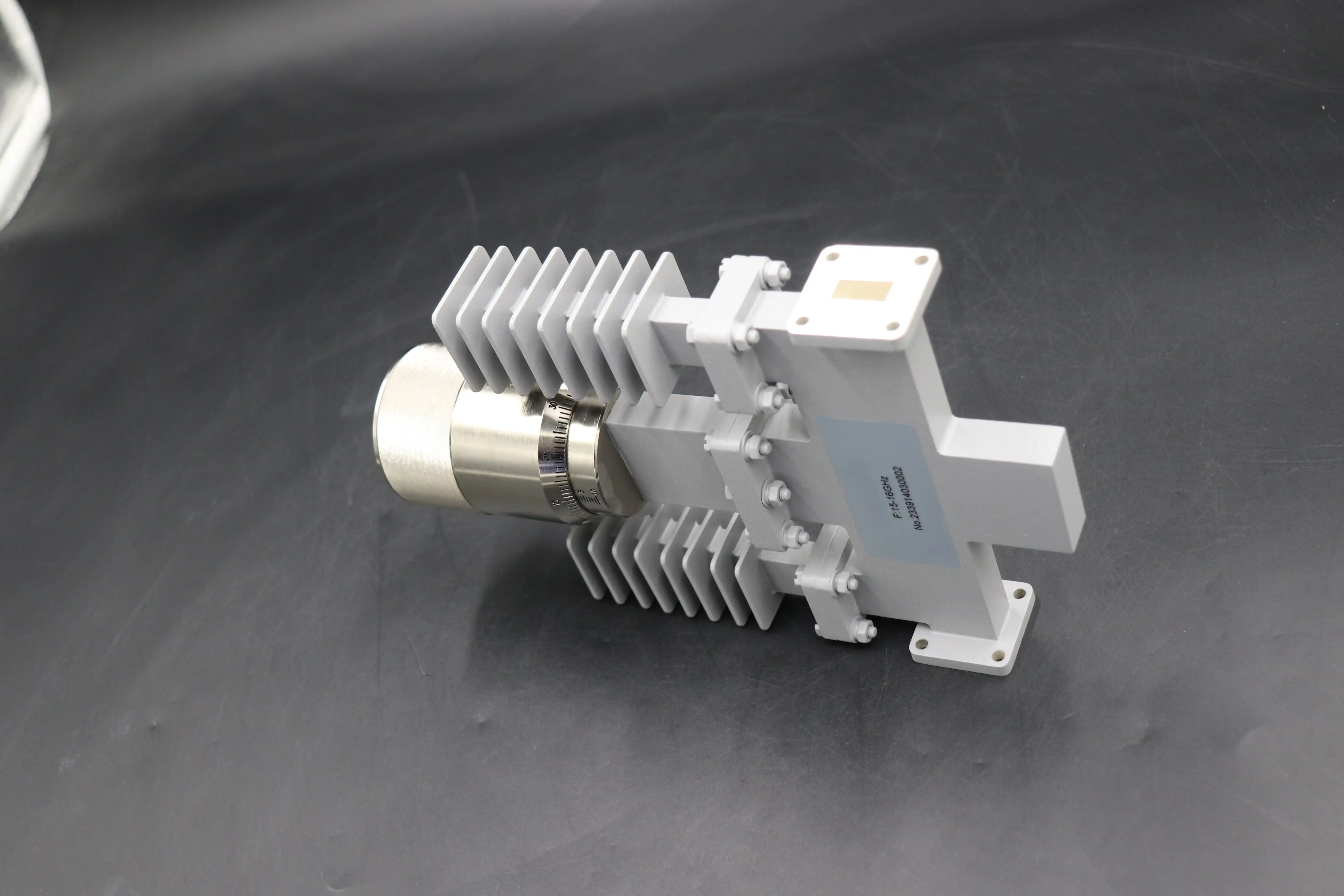
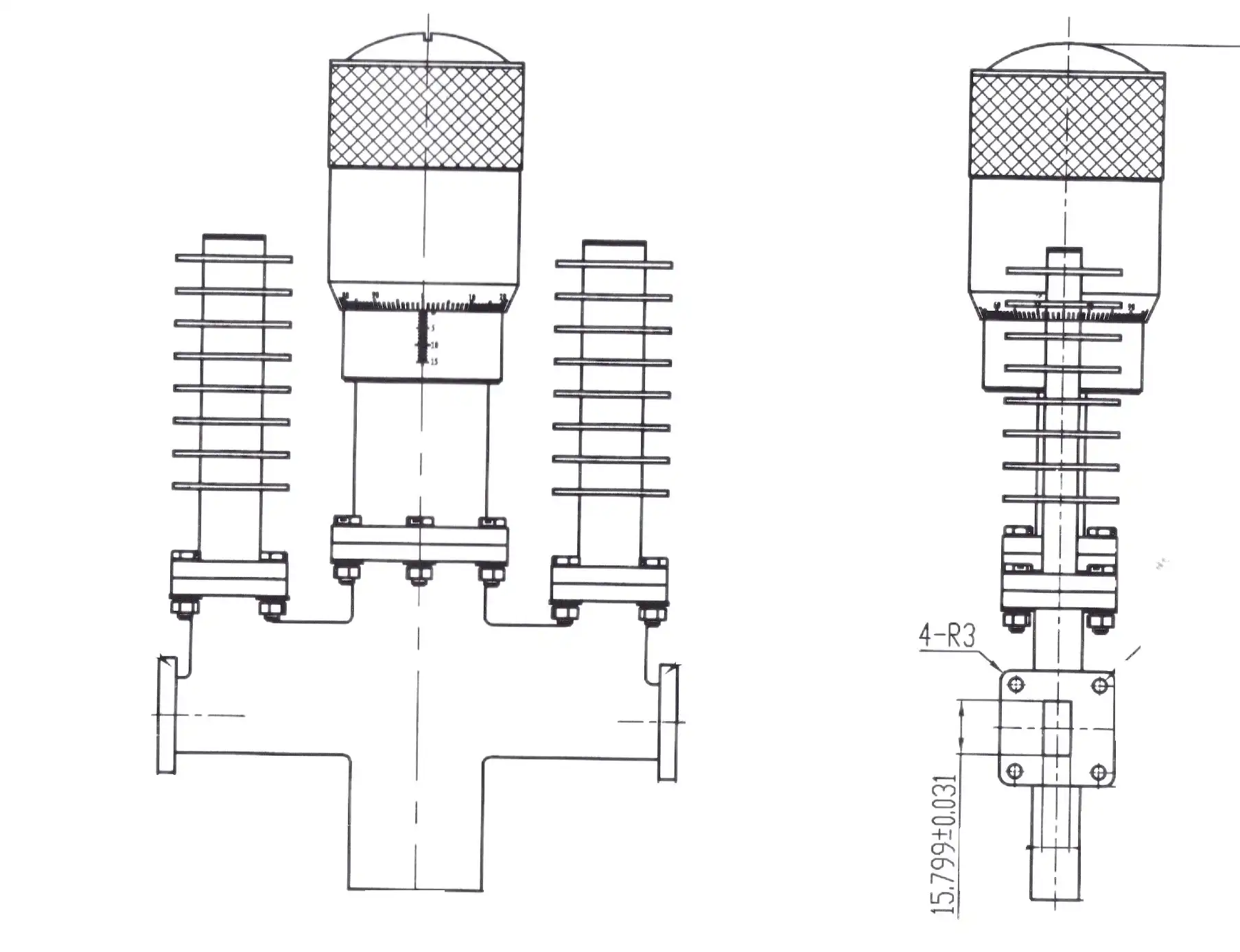
Variable waveguide attenuators are different from fixed ones because they have mechanical or electrical processes that change the signal's amplitude without stopping the transmission line. A resistive blade that moves perpendicular to the electric field inside the waveguide hole is used in most designs. This vane takes more and more energy as it moves deeper into the electromagnetic field. This is called controlled reduction.
Mechanical Design Principles
Basic electromagnetic absorption rules govern how the resistance vane system works. Precision-machined resistive materials, like carbon-impregnated dielectrics or thin-film resistors, are placed on movable tracks in high-quality units. The resistance curves of these parts were carefully designed to make sure that the attenuation response is linear across the adjustment range. At the zero-attenuation point, the waveguide housing, which is usually made of aluminum or copper plated with silver or gold, keeps the characteristic impedance constant while minimizing insertion loss.
Frequency Coverage and Bandwidth
Waveguide attenuators work in certain frequency ranges that are set by their actual size. Standard waveguide sizes are based on well-known frequency ranges. For example, WR-90 is good for X-band (8.2-12.4 GHz) uses, WR-28 is good for Ka-band (26.5-40 GHz), and WR-10 goes into W-band land (75-110 GHz). Each waveguide size works best within its own band. This is because the internal dimensions support the spread of dominant modes while blocking higher-order modes that would affect the accuracy of measurements.
Power Handling Capabilities
One important reason why waveguide attenuators are better than coaxial ones is that they can handle more power. Larger physical cross-section and an air-dielectric structure make it possible to get rid of big heat loads. Most units can handle continuous wave power levels between a few hundred watts at higher frequencies and several kilowatts at lower frequencies. Waveguide attenuators are necessary for pulsed radar testing because the instantaneous power levels reach very high levels. Peak power rates often go well above these numbers. At our ISO 9001:2015-certified sites, we use calibrated measurement systems that can be traced back to international standards to check that power handling specs are met.
Why Does the Attenuation Range Often Exceed 30 dB in Test Labs?
Dynamic Range Requirements in Modern Testing
In test labs, situations often arise that need a wide range of reduction adjustment options. For checking receiver sensitivity, signal levels must be able to run from near-noise floor conditions to saturation thresholds, which is usually more than 80 dB. Level control is possible with amplifiers and signal sources, but adding a measured variable waveguide attenuator between measurement places gives you more accuracy and consistency. The 30 dB cutoff is a realistic minimum for thorough testing. It lets engineers check the linearity, noise figure variation, and gain compression features of components across signal levels that are important to their use.
Precision Engineering for Linear Response
It takes careful mechanical design to get a wide reduction range while keeping uniformity. The resistance blade must have the same absorption properties as it moves across the waveguide cross-section. Attenuation mistakes are caused by uneven material qualities or geometrical flaws that get worse as the adjustment range gets bigger. Gradient resistive profiles are used in high-precision units to account for changes in field strength inside the waveguide channel. Direct-reading models have measured drum scales that show attenuation in decibels, while micrometer-driven models have mechanical readings that are close to 0.01 dB but need reference charts to convert position to attenuation.
Measurement Flexibility Benefits
The test is more flexible when the absorption range is increased. Engineers who are measuring radar cross-sections have to model target returns that cover a wide range of dynamic ranges, from big ships that make strong echoes to stealth aircraft that make very few signatures. Communication system validators check how well a link works when signals are weakening by 40 dB or more. As part of the calibration process for satellite ground stations, exact power leveling is needed across frequency bands where air absorption changes a lot. All of these uses need to be able to change the strength of the signal over a wide range, without having to change the way the tests are set up physically or add to the measurement errors by switching out parts.
Comparing Variable Waveguide Attenuators with Other Types
Variable versus Fixed Waveguide Attenuators
Fixed waveguide attenuators use resistance elements that are permanently fixed to provide set attenuation values. At the attenuation level they're supposed to have, these parts are very repeatable and have very little insertion loss, but they can't be adjusted in any way. When test methods need more than one attenuation value, physical component swapping has to be done. This wears down waveguide flanges mechanically, wastes test time, and increases the chance of measurement errors by needing multiple connections. These worries are taken away by variable waveguide attenuators, which allow continuous adjustment within a single device and keep measurement reference lines constant during testing processes.
Waveguide versus Coaxial Variable Attenuators
Lower-frequency users use coaxial variable attenuators the most because they are small and have easy-to-use connections. But at microwave and millimeter-wave frequencies, they run into serious problems. Due to the wire skin effect and dielectric losses, insertion loss goes up a lot above 20 GHz. As the size of something gets smaller to fit higher frequencies, its ability to handle power decreases. Waveguide attenuators get around these problems by using an air-dielectric structure and spreading out the field transmission. They keep low insertion loss and high power handling across all of their working bands. Our test rooms have network analyzers that can go up to 110 GHz, and these performance benefits are regularly confirmed in frequency bands from X-band to W-band.
Performance Comparison with Resistive Pad Attenuators
Thin-film resistive attenuators made on ceramic surfaces offer constant attenuation in small sizes. These parts work great in situations where they need to be permanently installed and have a small physical size. To be able to change, variable resistive systems use either switching resistor networks or PIN diode arrays. Although electrical switching can quickly change the attenuation, which is good for automatic test equipment, these designs usually don't work as well as mechanical waveguide attenuators when it comes to linearity. Changes in resistance that depend on temperature cause measuring shift, and nonlinear semiconductor properties cause harmonic distortion. Mechanical waveguide attenuators work consistently and reliably no matter the surroundings. This makes them the best choice for precise lab work where measurement accuracy is more important than switching speed.
Selecting the Right Variable Waveguide Attenuator for Your Lab
Critical Specification Parameters
Before making a purchase choice, attenuator specs must be matched with application needs. Adjustment limits are set by the attenuation range. Most laboratory units have a range of 0 to 40 dB, but some specialized types have ranges up to 60 dB or more. Your waveguide equipment and test bands must be compatible with the frequency range. When the reduction is set to zero, insertion loss has a direct effect on the measurement system noise figure. Premium units get numbers below 0.3 dB. VSWR specs show how well the impedances match. Keeping the ratios below 1.15:1 throughout the change range reduces signal reflections that hurt measurement accuracy. The power handling ratings need to take into account both the normal amount of heat loss and the peak voltage breakdown levels that are important for your uses.
Evaluating Supplier Capabilities
Reliable makers keep a lot of technical information, like calibration data, mechanical models, and test results for environmental qualification. When looking for attenuators, make sure they have ISO 9001 quality management certification and RoHS environmental compliance. These are standards that we keep across all of our products. Customization is very important for specific uses that need non-standard frequency bands, better power handling, or motorization built in for automatic test systems. At Advanced Microwave Technologies Co., Ltd., our engineering team works with procurement professionals to create custom solutions that meet all practical needs. Our 24-meter microwave darkroom facility also has advanced testing tools to back up these solutions.
Procurement Considerations
Lead times are very different depending on how complicated the customization is and when the product is being made. Standard catalogue items usually ship within a few weeks, but engineering, development, and validation testing for unique designs can take up to a few months. Having samples available for evaluation testing is a great way to lower your risk because you can check the mechanical accuracy and electrical performance in your own test setting before committing to large amounts. Think about the total cost of ownership, which goes beyond the unit price. For example, better mechanical construction increases working life, lowers the need for upkeep, and keeps calibration stable, providing long-term value that supports the higher initial investment.
Practical Applications and Case Studies in Test Labs
Radar System Calibration
For phased array radar systems to keep their beam-pointing accuracy, the send and receive channels must be carefully calibrated. During tests, known signal levels are sent to each channel, and output reactions are recorded. Variable waveguide attenuators let you quickly change the power level without having to rearrange the test sets. This speeds up the tuning process. A defense contractor recently added our X-band variable attenuators to an automatic radar test bench. This cut the time needed for calibration by 40% and improved the accuracy of measurements by getting rid of the need to manually switch out parts.
Satellite Communication Ground Station Testing
To validate a ground station, you have to describe how well the receiver works in situations that are similar to those of a satellite link budget. At Ka-band frequencies, rain fade events can weaken signals by 30 dB or more. To make these conditions seem real, test engineers use changeable attenuators and make sure that automatic gain control systems and forward error correction methods keep the link's integrity. Integrators of telecommunications systems like being able to sweep attenuation constantly during these tests because it lets them see changes in behavior during fade-in and fade-out that would be missed by individual attenuation steps.
Research Laboratory Measurements
Universities that are looking into new ways to communicate and advanced signal processing methods need test setups that are easy to change. Without complicated signal source programming, variable waveguide attenuators offer the adjustment range required to characterize algorithm success at practical signal-to-noise ratios. Precision rotary vane designs are mechanically stable and maintain phase consistency, which is important for measuring with a vector network analyzer, where phase relationships between test ports must stay stable while attenuation is changed. This is a key requirement for characterizing active components using S-parameters.
Conclusion
Modern test labs use a lot of variable waveguide attenuators that can lower or raise signals by more than 30 dB. This is because it's important to fully characterize a system in real-world situations. These high-precision instruments let engineers test how well parts work over wide dynamic ranges while keeping measurement accuracy high thanks to their ability to handle large amounts of power, have low insertion loss, and match impedances very well. Long-term testing efficiency and measurement reliability are ensured by purchasing choices that balance technical specifications, the ability to customize, and the qualifications of the provider. Microwave and millimeter-wave uses are growing in the telecommunications, military, and defense industries. To support mission-critical tests, properly specified variable attenuators are still very important.
FAQ
1. What frequency ranges do variable waveguide attenuators typically support?
L-band through W-band frequencies are covered by variable waveguide attenuators. WR-90 is used for X-band (8.2-12.4 GHz), WR-62 is used for Ku-band (12.4-18 GHz), WR-28 is used for Ka-band (26.5-40 GHz), and WR-10 is used for W-band (75-110 GHz). Each waveguide size only works at its best within its own frequency range, where its physical dimensions allow dominant-mode transmission to happen. Choosing the right waveguide size for your test frequencies will keep the stated VSWR performance and minimize insertion loss.
2. How does insertion loss affect attenuator selection for high-power applications?
Insertion loss at a setting of zero attenuation is caused by signal loss that is built into the device. Even though high-end waveguide attenuators have an absorption loss of less than 0.5 dB, this is a very important factor in high-power situations where even small losses cause a lot of heat to be lost. This much power must not hurt the resistance vane or the waveguide changes. Choosing attenuators with proven thermal management and the right average power levels keeps resistive elements from breaking and ensures that the tuning stays stable over time when the device is used continuously.
3. Can manufacturers provide customized attenuation ranges or specialized configurations?
Leading makers offer a wide range of customization options to meet specific needs. Custom choices include attenuation ranges longer than the normal 40 dB, motorized drives with GPIB or Ethernet connections for automated test systems, phase-matched pairs for differential measurements, and better power handling for radar uses that use a lot of power. Our engineering team at Advanced Microwave Technologies Co., Ltd. comes up with custom solutions with the help of fast prototyping and full-proof testing in our ISO-certified measurement facilities. We encourage people who work in procurement to talk to our expert staff about special needs so that we can look into custom setups.
Partner with ADM for Precision Variable Waveguide Attenuator Solutions
Advanced Microwave Technologies Co., Ltd has been a major maker of variable waveguide attenuators for over 20 years, working with defense companies, aerospace system integrators, and research institutions all over the world. Our wide range of products covers frequencies from X-band to W-band and has attenuation ranges greater than 30 dB, as well as the best insertion loss specs and power handling skills in the business. Every unit goes through strict validation tests in our 24-meter microwave darkroom using measuring tools that are measured and traceable to international standards. This makes sure that the performance specs meet all of your practical needs. Our quality control systems are ISO 9001:2015 certified, and our production methods are RoHS compliant. This gives mission-critical uses the reliability they need. Our technical team can help you with everything from creating specifications to testing prototypes and putting them into production. This is true whether you need catalogue setups that can be delivered quickly or custom-engineered solutions that can handle specific test scenarios. You can talk to our procurement specialists about your variable waveguide attenuator needs and get access to specific technical documentation that will help you make sourcing choices by emailing craig@admicrowave.com.
References
1. Collins, R. E. (2020). Foundations for Microwave Engineering, 3rd Edition. IEEE Press.
2. Pozar, D. M. (2021). Microwave Engineering, 5th Edition. John Wiley & Sons.
3. Saad, T. S. (2019). Handbook of Microwave Component Measurements: with Advanced VNA Techniques, 2nd Edition. Wiley-IEEE Press.
4. IEEE Standard 149-2021. IEEE Standard for Test Procedures for Antennas.
5. Ellinger, F. (2018). Radio Frequency Integrated Circuits and Systems, 2nd Edition. Cambridge University Press.
6. Jansen, R. H. (2022). "Precision Waveguide Attenuation Standards for Millimeter-Wave Metrology." IEEE Transactions on Microwave Theory and Techniques, Vol. 70, No. 4, pp. 2156-2169.
YOU MAY LIKE
 VIEW MOREBroadband Coaxial Circulator
 VIEW MOREDouble-bend Waveguide
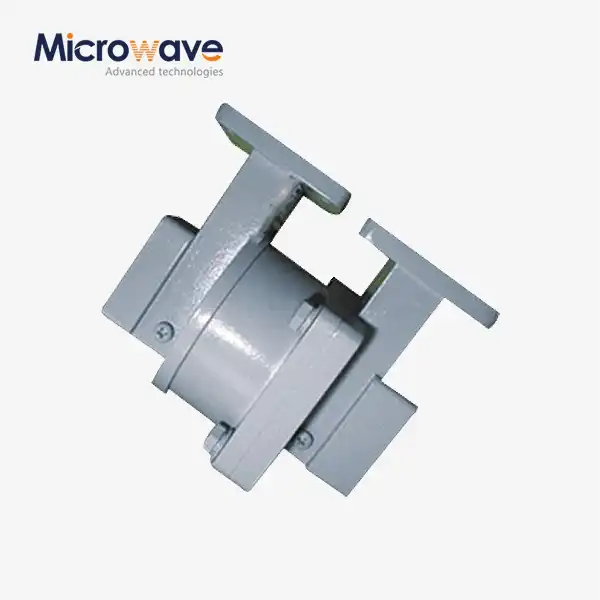 VIEW MOREWaveguide Single Channel Rotary Joint
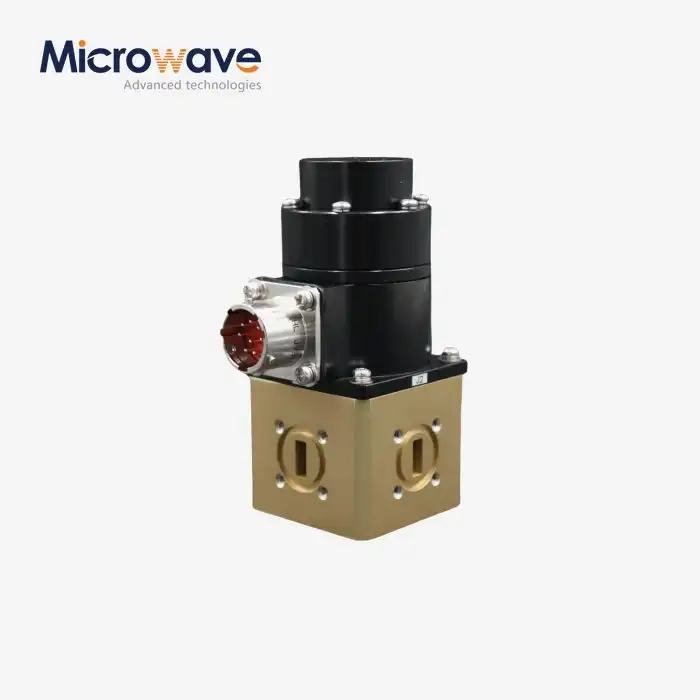 VIEW MOREWaveguide Electric Switch
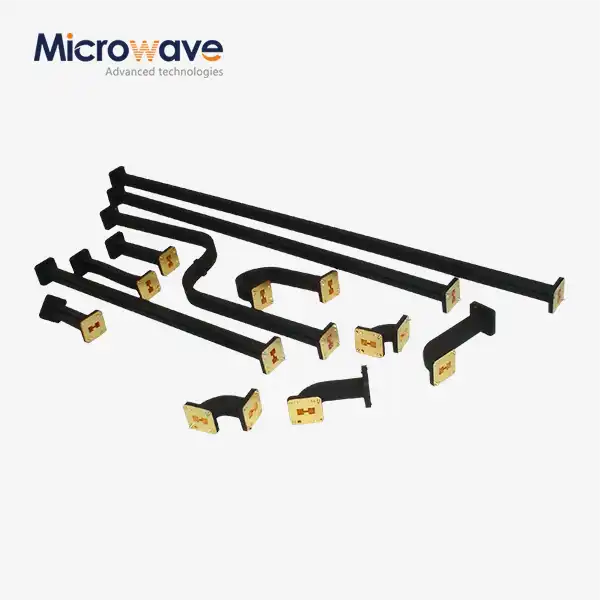 VIEW MOREDouble Ridged Flexible Waveguide
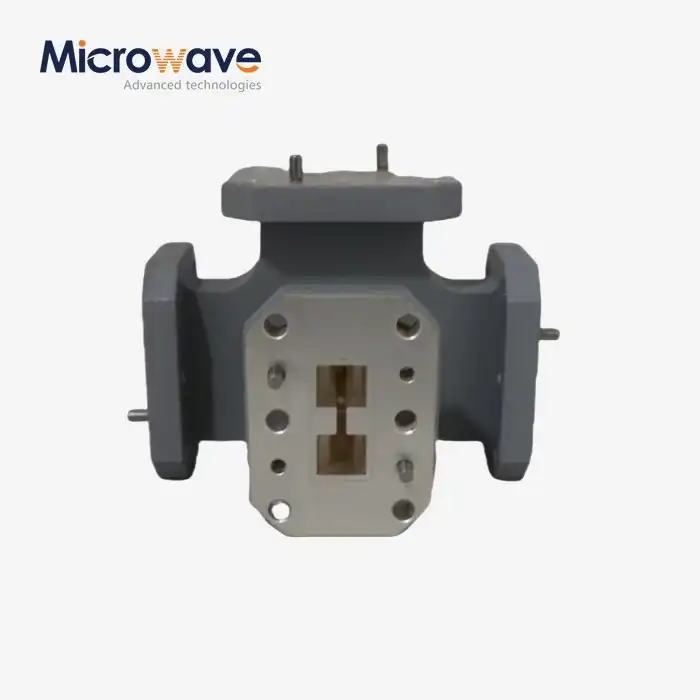 VIEW MOREDouble-Ridged Waveguide Magic Tee
 VIEW MORECoaxial Bandpass Filter
 VIEW MOREDigitally Controlled Phase Shifter