





When Do You Need a Dual Channel Coaxial Rotary Joint in Your System?
If your system involves a rotating platform that must continuously transmit two independent RF or microwave signals without cable entanglement or signal degradation, you likely need a dual channel coaxial rotary joint. This precision electromechanical component enables simultaneous, uninterrupted signal transmission between a stationary structure (stator) and a 360-degree rotating structure (rotor). Whether your application involves radar, SATCOM, or EO/IR turrets, this device eliminates phase fluctuation and crosstalk that plague simpler solutions — keeping mission-critical systems online around the clock.
Understanding Dual Channel Coaxial Rotary Joints
What It Is and How It Works
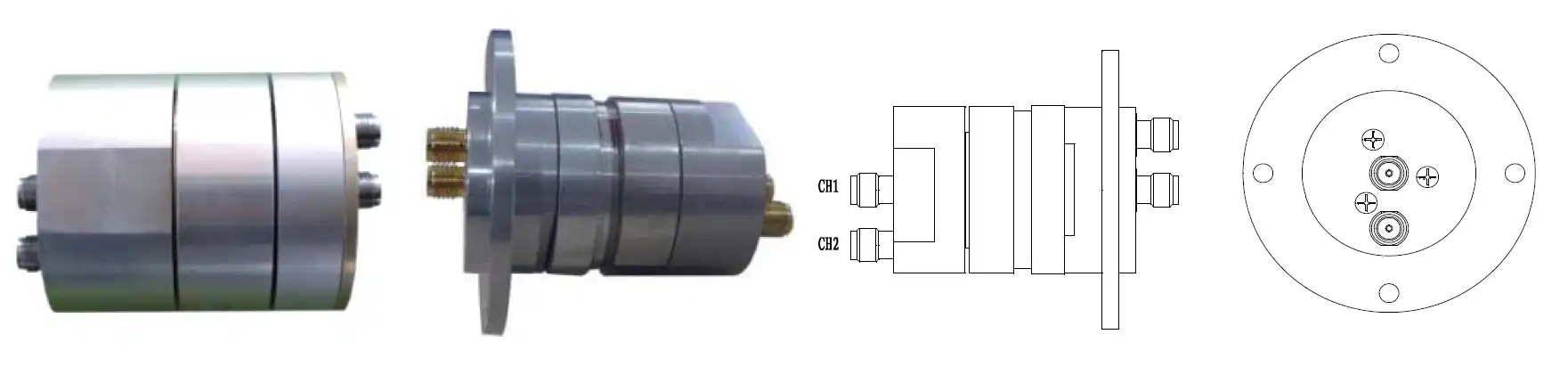
A dual-channel coaxial rotary joint sends two separate RF signals across a rotating interface at the same time. It has a concentric or stacked design on the inside, with a center conductor path and an outer conductor path divided by precision dielectrics. This allows it to rotate continuously in a circle of 360 degrees without any mechanical interference. Imagine an electrical tunnel that is spinning. Signals come in at one end, go through the rotating joint, and come out at the other end. The rotation itself doesn't change the phase or amplitude of the signals.
The "II Type" structural variant is common in designs with limited space. It uses parallel port integration or flange-mount geometries that make the mechanical footprint much smaller. This makes it very useful for gimbal systems and small radar platforms where each millimeter is important.
Key Technical Specifications to Know
Before you choose a dual-channel coaxial rotary joint for your platform, you must first understand its basic features. These are the most important criteria that determine performance:
- Frequency range: Most dual-channel coaxial rotary joint models work from DC to 18 GHz, and high-performance models can go up to 40 GHz or higher, which means they can support X-Band, Ku-Band, Ka-Band, and L-Band uses.
- Channel isolation: Standard designs separate channels by more than 50 dB; high-performance models separate channels by more than 70 dB, which is necessary for full-duplex radar and SATCOM systems.
- Phase stability (WOW): For the system to stay intact, signal changes must stay within ±3 degrees or ±0.05 dB during a full 360-degree turn.
- Insertion loss: Usually less than 1.5 dB across the working range, but this can change depending on the frequency and type of connector.
Together, these factors show if the part can maintain signal integrity in real-world operating settings.
When to Choose a Dual Channel Coaxial Rotary Joint Over Other Solutions
Comparing Against Single-Channel and Alternative Technologies
Single-channel coaxial rotary joints can only handle one signal path at a time. If your system needs to send and receive at the same time, like in a pulsed radar that sends high-power pulses on one channel and picks up low-level echo returns on another, then a single joint can't do the job without adding extra hardware that makes it bulkier and more complicated.
Slip rings are good at handling low-frequency electrical signals or DC power, but they add noise to high-frequency RF waves through dynamic contact resistance and micro-arcing. Optical rotary joints are great for moving data quickly, but they can't be used to send RF power.
The dual-channel coaxial rotary joint is one of a kind because it has two separate RF paths, can handle a lot of power, covers a wide range of frequencies, and comes in a small package. It's hard to get that combo to work with any other device.
Decision Criteria That Matter in B2B Procurement
Engineers should carefully consider the following practical facts when deciding whether to use this component instead of others:
- Dual-signal requirement: Systems that send both Tx and Rx signals at the same time or deal with dual-polarized feeds (RHCP and LHCP) need two separate channels in the same housing.
- Environmental severity: Applications that need to meet MIL-STD-810 standards, like SATCOM-on-the-move (SOTM) terminals on armored vehicles, require high vibration resistance and IP65/IP67 sealing, which coaxial rotary joints can provide.
- Rotational life: Well-made units can turn between 10 and 50 million times under normal conditions, as shown by accelerated life tests. This is a lot more than most slip ring groups used in RF applications.
These factors make the dual channel design the best choice when both signal integrity and mechanical durability are important.
Troubleshooting and Maintenance Insights
In field operations, two types of failure happen most often. Most of the time, amplitude spikes or phase changes during rotation are used to describe the first type of rotating noise. This usually happens because the contact surfaces are worn down or there isn't enough shielding. Gold-on-gold contacts and advanced slip ring integration technologies are used in high-quality units to keep the electrical path stable and stop rotating noise at the source.
Second, there is slow insertion loss creep, which means that the contact joint is wearing out mechanically. Engineers should use a Vector Network Analyzer (VNA) to check the S-parameters (S11, S21) of the joint while it is spinning. This is known as "Rotational Variance Testing" or WOW testing. If the difference in amplitude is more than 0.05 dB or the difference in phase is more than 3 degrees, the unit needs to be inspected or replaced.
Environmental Stress Screening (ESS) during production, which includes temperature cycling from -40°C to +85°C and vibration testing, greatly lowers failures in the first few years of use. This is why buying teams should check ESS compliance as part of the process of qualifying suppliers.
Procurement Guide for Dual Channel Coaxial Rotary Joints
Getting a perfect dual channel coaxial rotary joint from the right company is just as important as following the specs. When procurement experts check out a dual channel coaxial rotary joint source, they should make sure of the following:
- Certifications: You must meet the standards for ISO 9001:2015 quality management and RoHS compliance. The ISO 14001:2015 and ISO 45001:2018 certifications show how well a manufacturer runs their business in a wider sense.
- Customization capability: Each channel should be able to be optimized on its own. Channel 1 could be set up to work at X-Band (8–12 GHz), while Channel 2 could work at L-Band (1–2 GHz). The internal shape impedance of each channel is matched to its own frequency band.
- Testing documentation: Request phase and amplitude stability data, cross-channel isolation verification reports, and sealing/torque test results are all parts of the testing documentation. These papers prove that the unit works the way it's supposed to in real life.
Getting the manufacturer's engineering team involved early, before the mechanical drawings are finalized, cuts down on expensive redesigns and speeds up delivery times.
Real-World Use Cases and Future Outlook
There are three situations where dual-channel coaxial rotary joints are always useful in the workplace:
Radars used for air traffic control (ATC) depend on these joints to send high-power pulses (Channel 1) and receive low-power return messages (Channel 2). Since the system is outside all the time, it needs to be able to handle high peak power and be sealed against the weather.
SATCOM-on-the-go receivers use dual-channel coaxial rotary joints to handle both RHCP and LHCP polarizations at the same time. This doubles the amount of data that can be sent or allows for polarization variation to make the link more reliable over rough terrain.
On one channel, EO/IR defense turrets send high-bandwidth sensor video. On the other channel, they send command-and-control RF links. The small II Type design is necessary because it fits inside small gimbal housings and doesn't put extra force on the drive motors.
In the future, dual-channel coaxial rotary joint design will be changed by making them smaller, using better dielectric materials, and connecting them to digital signal monitoring systems. Companies that spend money on precise CNC machining and automatic RF testing will be better able to make next-generation parts that work with Ka-Band and millimeter-wave systems.
Conclusion
A dual-channel coaxial rotary joint is not a common part; it is a precision-engineered answer for systems that must maintain signal integrity, keep signals separate, and last for a long time while rotating. From monitoring radars to mobile SATCOM terminals, using the right part keeps the signal strong, cuts down on upkeep, and keeps the system running. Procurement engineers can make confident buying choices when they understand the technical specs, qualification standards, and source skills that are talked about here.
FAQ
What frequency ranges does a dual channel coaxial rotary joint support?
From DC to 18 GHz, most basic models can handle it. High-performance versions go up to 40 GHz or more and can handle X-Band, Ku-Band, Ka-Band, and L-Band tasks. Within the same housing, each channel can be optimized for a different frequency band on its own.
How is it different from a slip ring?
Slip rings are made for messages with a low frequency or DC. At microwave frequencies, they cause rotational noise and changes in contact resistance that hurt the quality of the signal. Precision RF contact technology and a shielded design are used in a dual-channel coaxial rotary joint to keep signals intact at high frequencies.
Can one channel carry RF power while the other carries data?
Yes, it is common to route RF power on one channel and data signals on the other. To make sure the right dielectric material is chosen, the power rating must be given, including both peak and continuous wave (CW).
Is customization available for specific connector types or housing dimensions?
Yes, you can change the housing measurements, flange shapes, and connector interfaces (like N-Type, SMA, 2.92mm, etc.) to meet your specific integration needs.
What causes signal noise during rotation, and how is it prevented?
Most of the time, noise during rotation is caused by dynamic contact resistance or micro-arcing at the electrical interface. High-quality units don't have this problem because they use gold-on-gold contact surfaces and precision contact assembly technologies.
Get a Custom Quote from ADM — Trusted Dual Channel Coaxial Rotary Joint Manufacturer
Defense, SATCOM, and radar system designers have been getting precision dual-channel coaxial rotary joints from ADM for more than 20 years. Our ISO 9001:2015-certified manufacturing, in-house VNA testing up to 110 GHz, and OEM customization service make sure that your part works exactly as you need it to. Visit craig@admicrowave.com to talk to our engineering team about your dual channel coaxial rotary joint needs right away and get a unique price.
References
1. IEEE Transactions on Microwave Theory and Techniques — IEEE, 2021
2. Microwave Engineering, David M. Pozar — Wiley, 4th Edition, 2011
3. MIL-STD-810H: Environmental Engineering Considerations and Laboratory Tests — U.S. Department of Defense, 2019
4. IEC 60068-2: Environmental Testing Standards for Electronic Components — International Electrotechnical Commission, 2020
5. Journal of Electromagnetic Waves and Applications — Taylor & Francis, 2022
6. RF and Microwave Engineering: Fundamentals of Wireless Communications, Frank Gustrau — Wiley, 2012
YOU MAY LIKE
 VIEW MORESlotted Waveguide Array Antenna
 VIEW MOREWaveguide Circulator
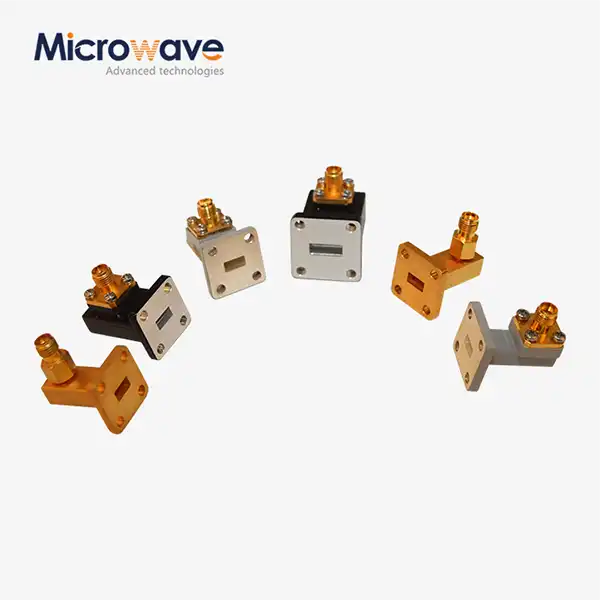 VIEW MORERight Angle Waveguide To Coaxial Adapter
 VIEW MOREWG Circulator
 VIEW MOREHigh Power Waveguide Differential Phase Shift Isolator
 VIEW MOREWG Harmonic Filter
 VIEW MOREDouble Ridge Twist Waveguide
 VIEW MOREDual Linear Broadband Circular Polarization Horn Antenna